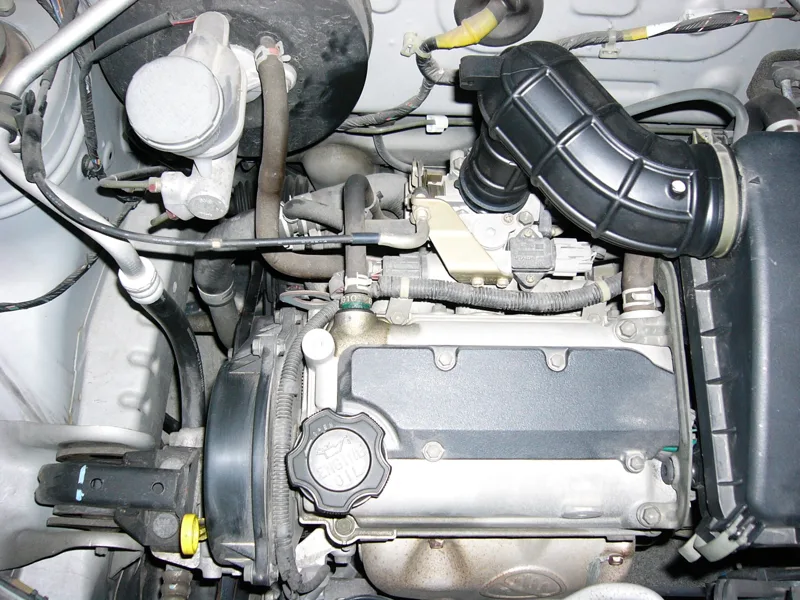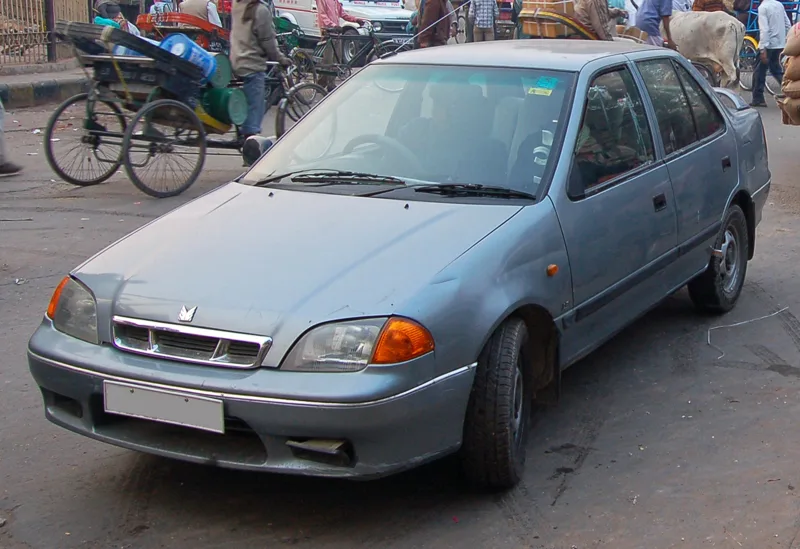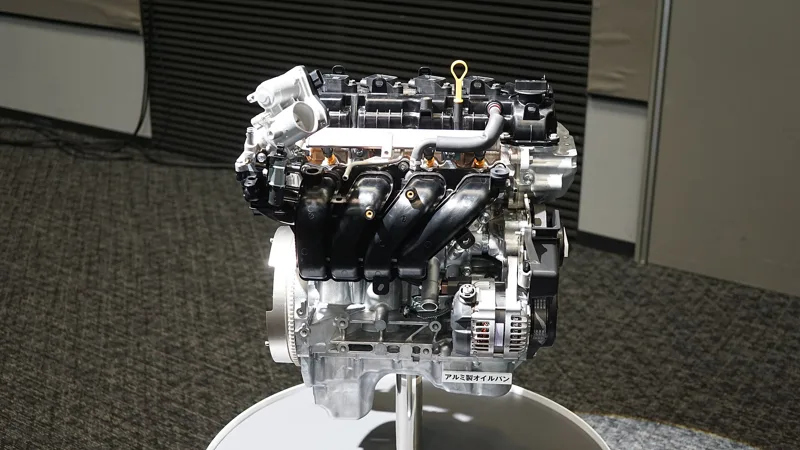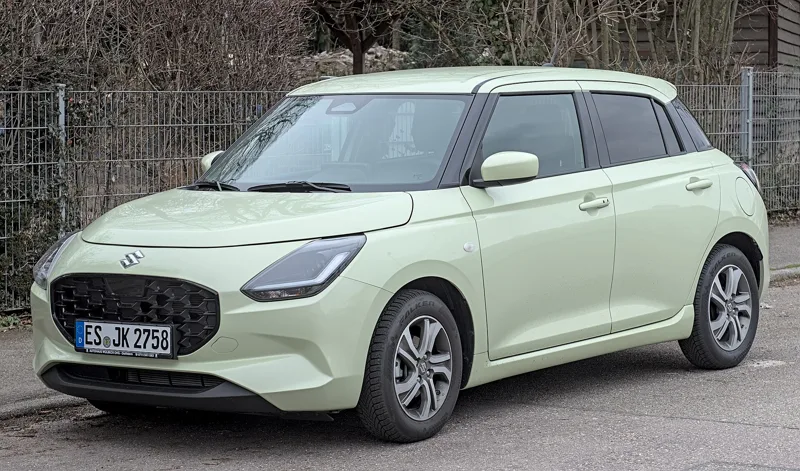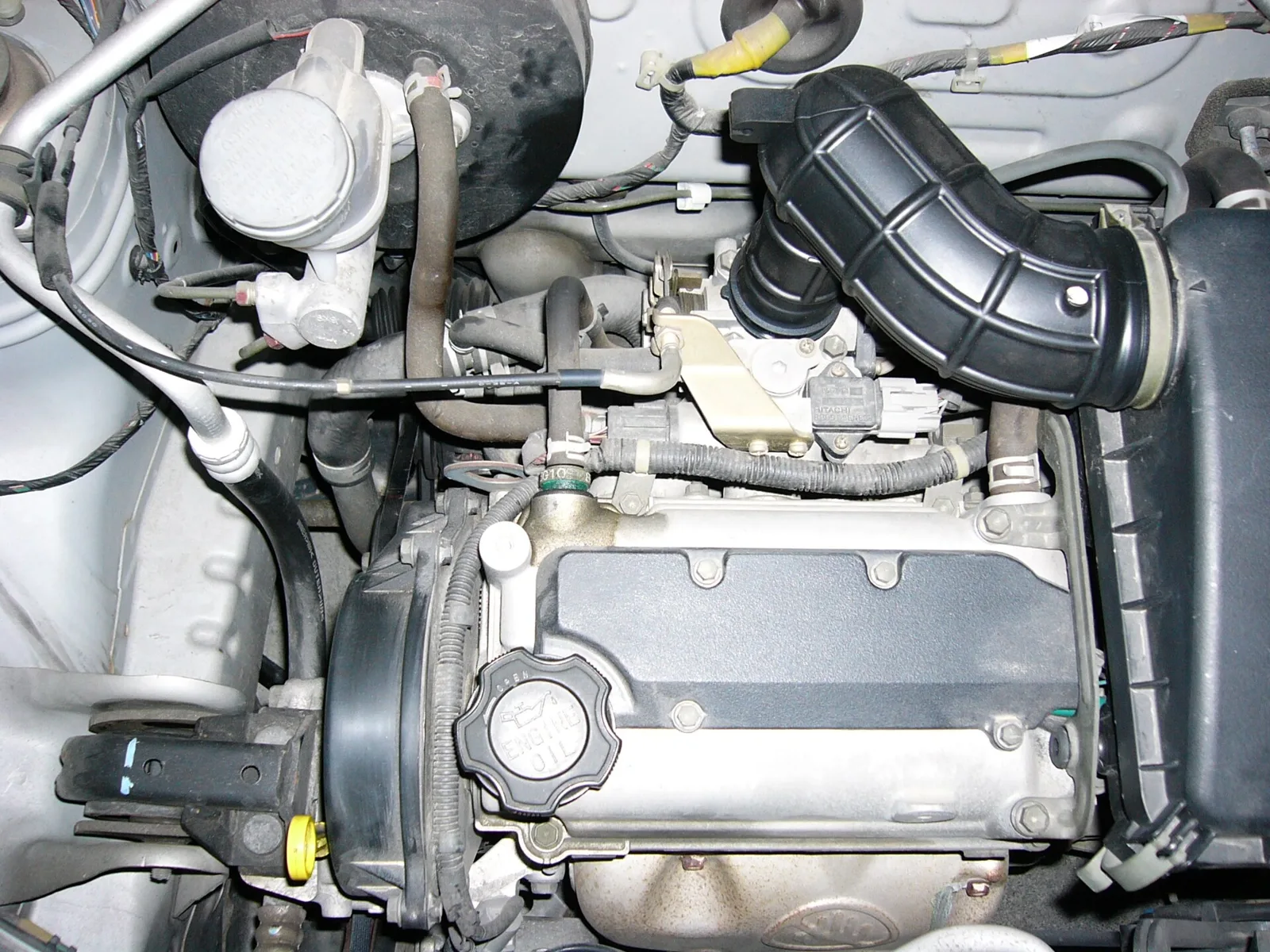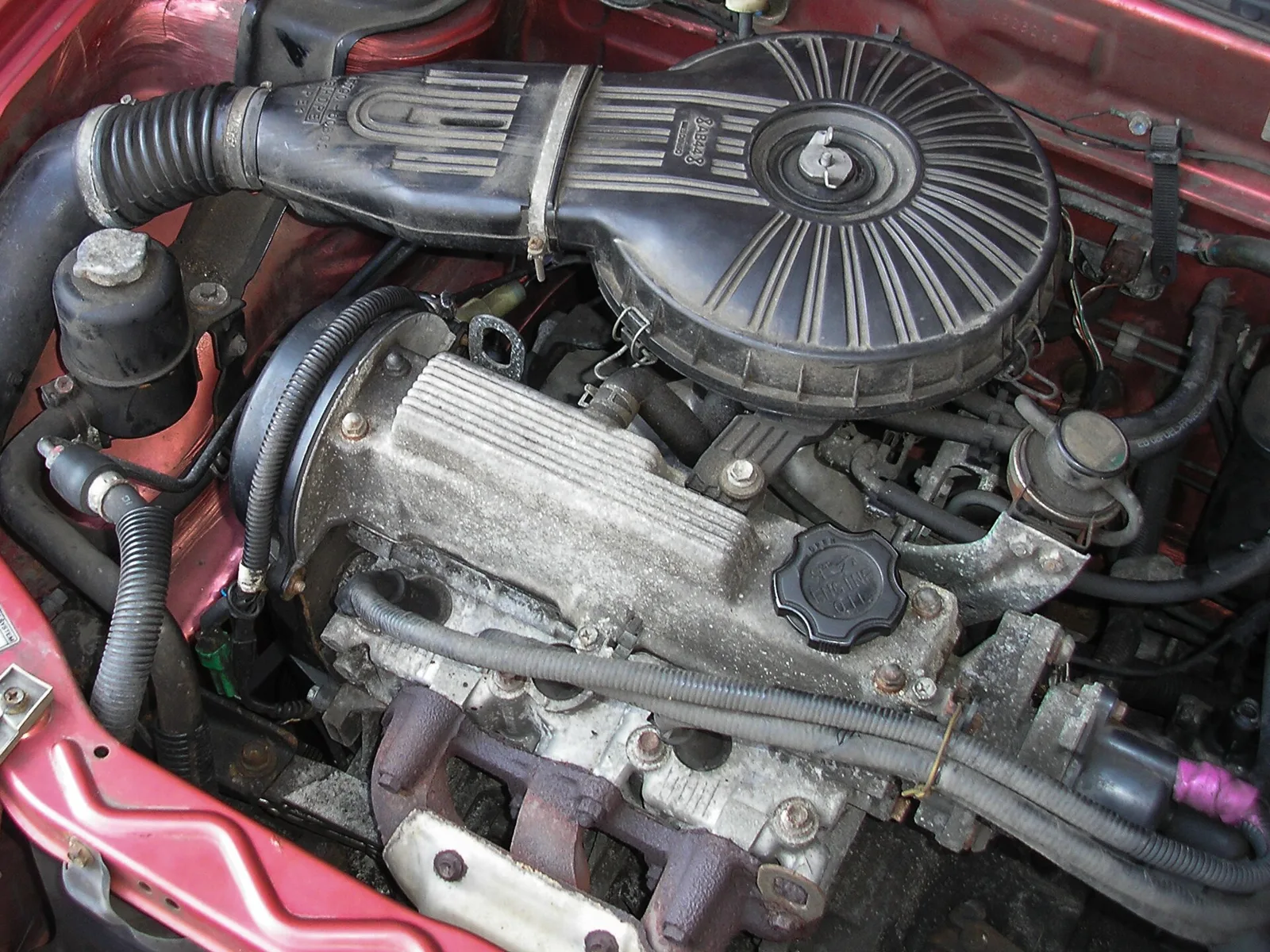
A long-running Suzuki family of small petrol engines, from the 993 cc G10 three to the 1.6 L G16B used in the Vitara.
Suzuki built the G engine in three- and four-cylinder petrol forms for small cars and trucks, including the Samurai and Vitara. Its members range from the 993 cc G10 straight-three and turbocharged G10T up to the 1.6 L G16B.
The Suzuki G engine family was a series of three- and four-cylinder petrol engines that Suzuki Motor Corporation built for many automobiles and small trucks. Its members ran from the 993 cc G10 straight-three up to the 1.6 L G16B, and several versions were sold under other manufacturers' badges.
Where did the G engine family come from?
Suzuki built the G series for a range of cars and small trucks, including the Samurai and Vitara and their derivatives. The engines came as three-cylinder units and four-cylinder units, and much of the family was linked to the GM M platform.
The three-cylinder side began with the G10, which was joined by the turbocharged G10T. The four-cylinder side grew from the G10B, the G12B and the G13 series to the G15A and the G16 family, covering everything from city cars to small off-roaders.
Small, light engines that powered everything from kei-class city cars to the Vitara, with a turbo three and a 16-valve four in the mix.
How did the G10 three-cylinder work?
The G10 was a 993 cc straight-three with an aluminium block, head and pistons. It had a single overhead camshaft driving six valves, and its 74 mm x 77 mm (2.91 in x 3.03 in) bore and stroke gave the 1.0 L displacement. The G10T used an IHI RHB31/32 turbocharger on the same basic engine.
Early G10 engines, up to 1988, used a hemispherical head with rocker arms and mechanical lifters, with 36 mm intake and 30 mm exhaust valves. From 1989 the engine adopted throttle-body injection and a direct-acting camshaft with hydraulic lifters. The valves shrank to 35 mm intake and 28 mm exhaust, yet horsepower still rose.
The G10 was built with a non-interference valvetrain, and its compression was 9.5:1 for most naturally aspirated models. Carburettor economy variants used 9.8:1, while early and late G10T engines shared an 8.3:1 ratio. Because of the physics of a straight-three, the G10 does not idle as smoothly as a straight-six.
What made the Geo Metro XFi economical?
A detuned G10 in the Geo Metro XFi produced 49 hp (37 kW; 50 PS), with a slightly different camshaft, two-ring pistons and a revised engine control unit. Its economy reached 58 mpg-US (4.1 L/100 km; 70 mpg-imp), which made it one of the most efficient cars of its time.
The G10 in the 2000 Chevrolet Metro was the final US-market vehicle engine to rely on throttle-body injection. That closed a chapter that had begun with the 1989 update.
How did power ratings vary between markets?
Output varied from region to region, and Japanese models often had the highest ratings. The 1982 Netherlands G10 was rated at 50 PS (39 kW; 49 BHP) at 5800 rpm, while the 1983 Japanese G10 reached 60 PS (59 BHP) at 5500 rpm. The Japanese G10T pushed that to 80 PS (59 kW) at 5500 rpm, with 12.0 kg m of torque at 3500 rpm.
The standard North American G10 was rated at 48 horsepower at 5100 rpm. The efficiency-focused G10 in the Chevrolet Sprint ER was lowered to 46 horsepower at the same speed. The early North American G10T was rated at 70 hp (52 kW) at 5500 rpm, with torque rising to 80 lb ft by 1989.
Terminology also differed. North American models usually used "Electronic Fuel Injection", while international markets used "Electronic Petrol Injection", and Japanese models had a different air filter shroud.
What changed in the 1989 and 1992 updates?
For 1989 the G10 engines received fuel injection and valvetrain changes, and power rose in most markets, with Japan the exception. The Netherlands version reached 53 PS (39 kW) at 5700 rpm and 80 Nm at 3000 rpm. In North America the standard G10 reached 55 horsepower at 5700 rpm, the economy G10 made 49 horsepower, and the G10T was nearly unchanged at 70 horsepower. Japan dropped slightly to 57 horsepower at 6000 rpm.
The G10 was updated again in 1992 for some markets, with smaller changes that matched the facelift of the GM M-Body cars. Ignition advance became electronic and was controlled by the ECU, nearly all markets gained exhaust gas recirculation, and the valve cover became a smoother, finned housing. Output dropped to 52 horsepower at 5700 rpm in that year.
What was the G10T turbo?
The G10T was a turbocharged MPFI version offered in some markets from 1983 to 1991. Output was 70 hp (52 kW; 71 PS) at 5500 rpm, with 79 lb ft (107 Nm) at 3500 rpm. It was available in the US and Canadian Firefly, Sprint and Forsa from 1987 to 1988, and only the Canadian Firefly and Sprint kept the option with hydraulic lifters in 1989 to 1991.
In Japan the turbo was first carburetted, with 80 PS (59 kW; 79 hp) at 5500 rpm and 118 Nm at 3500 rpm, and went on sale in June 1984. The October 1987 facelift brought fuel injection and 82 PS (60 kW; 81 hp), but the Japanese turbo was gone by September 1988. Canada continued to receive the engine for its second-generation Cultus.
What was the G10B four-cylinder?
The G10B was an all-aluminium four-cylinder of 993 cc with 72 mm x 61 mm (2.83 in x 2.40 in) dimensions and an SOHC 16-valve head. It made 60 PS (44 kW; 59 hp) at 6000 rpm and 78 Nm of torque at 4500 rpm, and it came in carburetted and MPFI forms. Its light weight and tunability made it popular in Indian motorsport.
The G10B's mounting points resembled those of the G13, so an engine swap was relatively simple. It was made only in India but sold in every market that received the Zen, and it was phased out when Zen production ceased in 2006. The Zen sold as the Suzuki Alto in Europe used a detuned 8-valve version of the G10B, with 54 PS (40 kW; 53 hp).
What was the G12B?
The G12B is an aluminium inline-four derived from the G13BB, with its bore reduced to 71 mm (2.80 in) for a 1.2 L (1,196 cc) capacity. The stroke stayed at 75.5 mm (2.97 in), and the engine used a SOHC 16-valve head with multi-point fuel injection. Its lighter pistons and detail changes made it more economical than the G13BB.
The G12B is BS6 compliant, which is equal to early Euro 6. Maruti kept the displacement below 1200 cc to take advantage of the lower excise duty on such vehicles in India. The petrol version peaked at 73 PS (54 kW; 72 hp) at 6000 rpm, with 98 Nm at 3000 rpm, while the CNG version delivered 65 PS (48 kW; 64 hp) and 85 Nm at 3000 rpm.
The G12B went into the Maruti Eeco from 2010 and into the Super Carry CNG from 2016.
How did the G13 family differ?
The G13 was an aluminium inline-four in two capacities: 1.3 L (1,324 cc) for the G13A and 1.3 L (1,298 cc) for the other G13 engines. Fuel delivery could be carburettor, throttle body or multi-point injection, and the valvetrain came as 8 or 16-valve SOHC or 16-valve DOHC.
The Indonesian G13C was bored out by a millimetre to a 1,360 cc (1.4 L) engine, first used in the 1991 Suzuki Carry Futura. In Japan the G13K was a JDM version of the G13B with different cams, intake and exhaust manifolds, and a higher ECU cut-off. It produced 115 hp and replaced the first-generation Swift GTi in the Cultus GT-i.
What were the G13A and G13BA?
The G13A was a 1324 cc SOHC 8-valve engine with a non-interference valvetrain. It produced 60 to 70 PS with 90 to 100 Nm of torque and had a compression ratio of 8.9:1. It went into the Cultus and Swift from 1984 to 1988, the Jimny 1300 and the Samurai from 1986 to 1990, and the Margalla in Pakistan into the 1990s.
The G13BA was an SOHC 8-valve unit with carburettor or single-point injection and a 9.5:1 compression ratio. It made 68 to 73 PS (50 to 54 kW; 67 to 72 hp) and 100 to 103 Nm (74 to 76 lb ft). It was used in the Swift from 1989 to 1997, the Samurai from 1991 to 1995 and the Geo Metro from 1992 to 1997, and in 1995 to 1997 US and Canadian engines it gained hydraulic lash adjusters.
What set the G13B and G13BB apart?
The G13B was a 1,298 cc DOHC 16-valve engine with 74 mm x 75.5 mm dimensions. It used a distributor driven from the intake camshaft and produced 75 to 101 hp (56 to 75 kW; 76 to 102 PS) at 6500 rpm. Its redline sat at 7400 to 7600 rpm, and compression ran from 10.0 to 11.5:1. Because it was an interference design, timing belt changes were vital to its life.
The SOHC 16-valve G13BB arrived in March 1995 with electronic multi-point fuel injection, producing 76 to 86 PS (56 to 63 kW; 75 to 84 hp). It used a wasted-spark arrangement of two coils bolted to the valve cover, and a MAP sensor monitored manifold pressure. It is a non-interference engine, and its shared G-series block made it a popular swap into Samurai bays, since the mounts are identical.
The G13BB went into the Cultus Crescent from 1995 to 2002, the Swift from 1997 to 2003, and the Jimny from 1998 to 2003. It was also used in the Maruti Esteem, the Changan Linyang, the Gypsy King and the Subaru Justy.
What was the G15A?
The G15A was a 1.5 L (1,493 cc) 16-valve SOHC engine with a 75 mm (2.95 in) bore and an 84.5 mm (3.33 in) stroke. It produced 78 to 105 PS (57 to 77 kW; 77 to 104 hp) at 5500 to 6500 rpm, and its torque of 120 to 128 Nm (89 to 94 lb ft) peaked between 3000 and 4000 rpm.
The G15A was used in the Cultus sedan from 1991 to 1995, the Cultus Crescent and Baleno from 1995 to 2002, and the Carry Futura in Indonesia from 2000 to 2018. It also powered the APV in Indonesia and Pakistan from 2004, and the Mega Carry from 2011 to 2019.
What was the G16 family?
The G16 is a 1.6 L (1,590 cc) inline-four that shares the G15A's 75 mm (2.95 in) bore, but with a 90 mm (3.54 in) stroke. The G16A came as an 8-valve SOHC engine with carburettor or injection before 1990, and as a 16-valve engine with fuel injection after 1990. The 16-valve version was mainly used in Japan and some selected markets.
The carburetted G16A in the Australian Vitara was rated at 55 kW (75 PS; 74 hp) at 5250 rpm, while the European Vitara's single-point injected G16A made 59 kW (80 PS; 79 hp) at 5500 rpm and 127 Nm at 3000 rpm.
The worldwide G16B was the 16-valve version with an aluminium block, wet liners and a 9.5:1 compression ratio. Its multi-point injection and distributorless or distributor ignition varied by year and market. It produced 94 to 97 PS (93 to 96 hp; 69 to 71 kW) at 5600 rpm, with 132 to 140 Nm (97 to 103 lb ft) of torque at 4000 rpm. It went into the Vitara from 1992 to 2005 and the Chevrolet Tracker in the Americas from 1995 to 2002.
G engines at a glance
| Engine | Cylinders | Displacement | Output | Notable use |
|---|---|---|---|---|
| G10 | 3 | 993 cc | 49 hp (37 kW; 50 PS), detuned XFi | Geo Metro, Chevrolet Sprint |
| G10T | 3 | 993 cc | 70 hp (52 kW; 71 PS) at 5500 rpm | Firefly, Sprint, Forsa |
| G10B | 4 | 993 cc | 60 PS (44 kW; 59 hp) at 6000 rpm | Maruti Zen |
| G12B | 4 | 1.2 L (1,196 cc) | 73 PS (54 kW; 72 hp) at 6000 rpm | Maruti Eeco |
| G13A | 4 | 1.3 L (1,324 cc) | 60 to 70 PS | Cultus, Samurai |
| G13BB | 4 | 1.3 L (1,298 cc) | 76 to 86 PS (56 to 63 kW) | Cultus Crescent, Swift |
| G15A | 4 | 1.5 L (1,493 cc) | 78 to 105 PS (57 to 77 kW) | Cultus, Baleno, APV |
| G16B | 4 | 1.6 L (1,590 cc) | 94 to 97 PS (69 to 71 kW) | Vitara, Tracker |