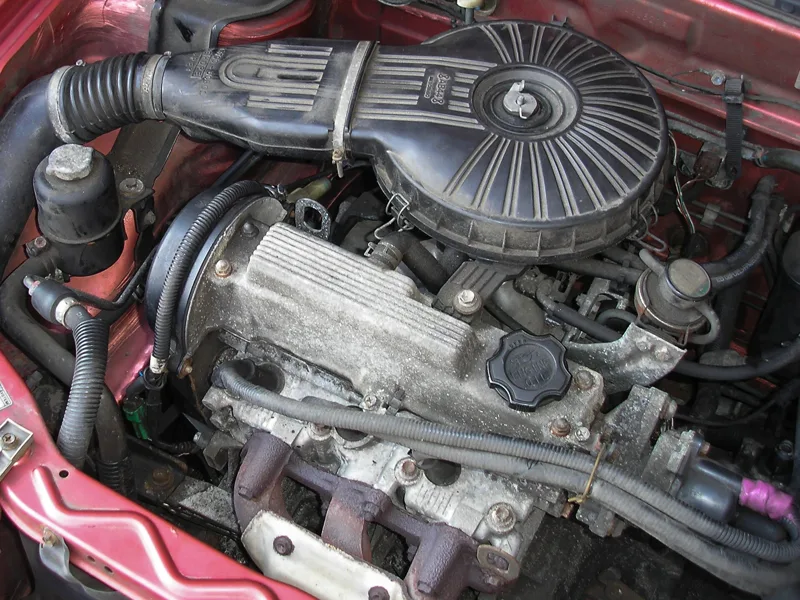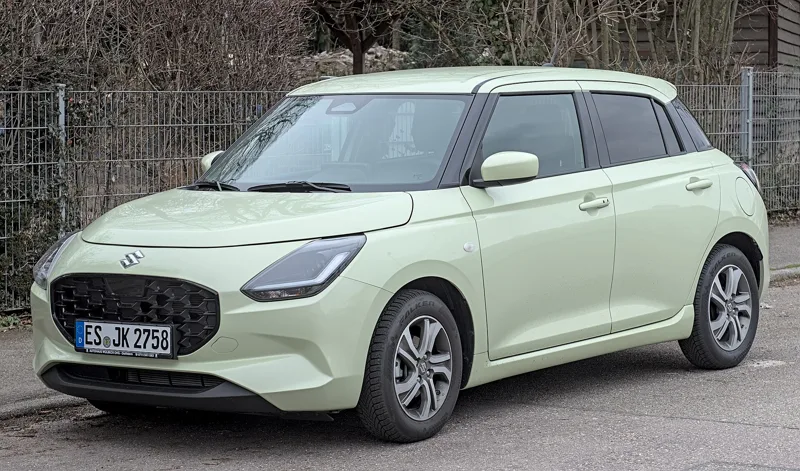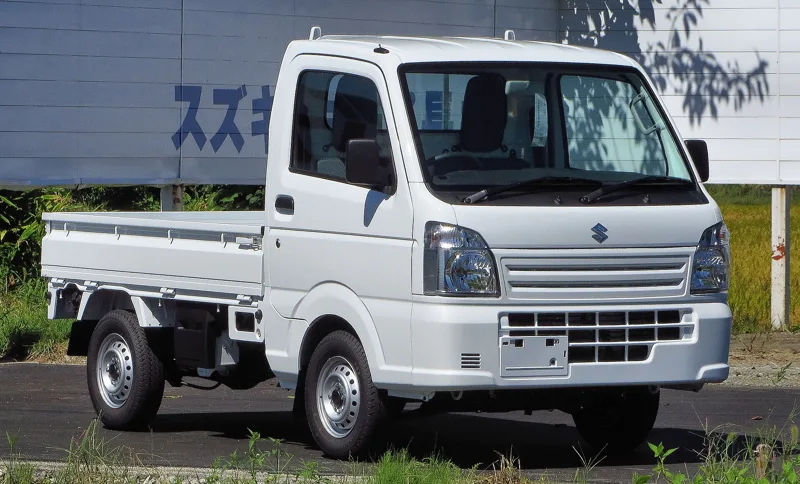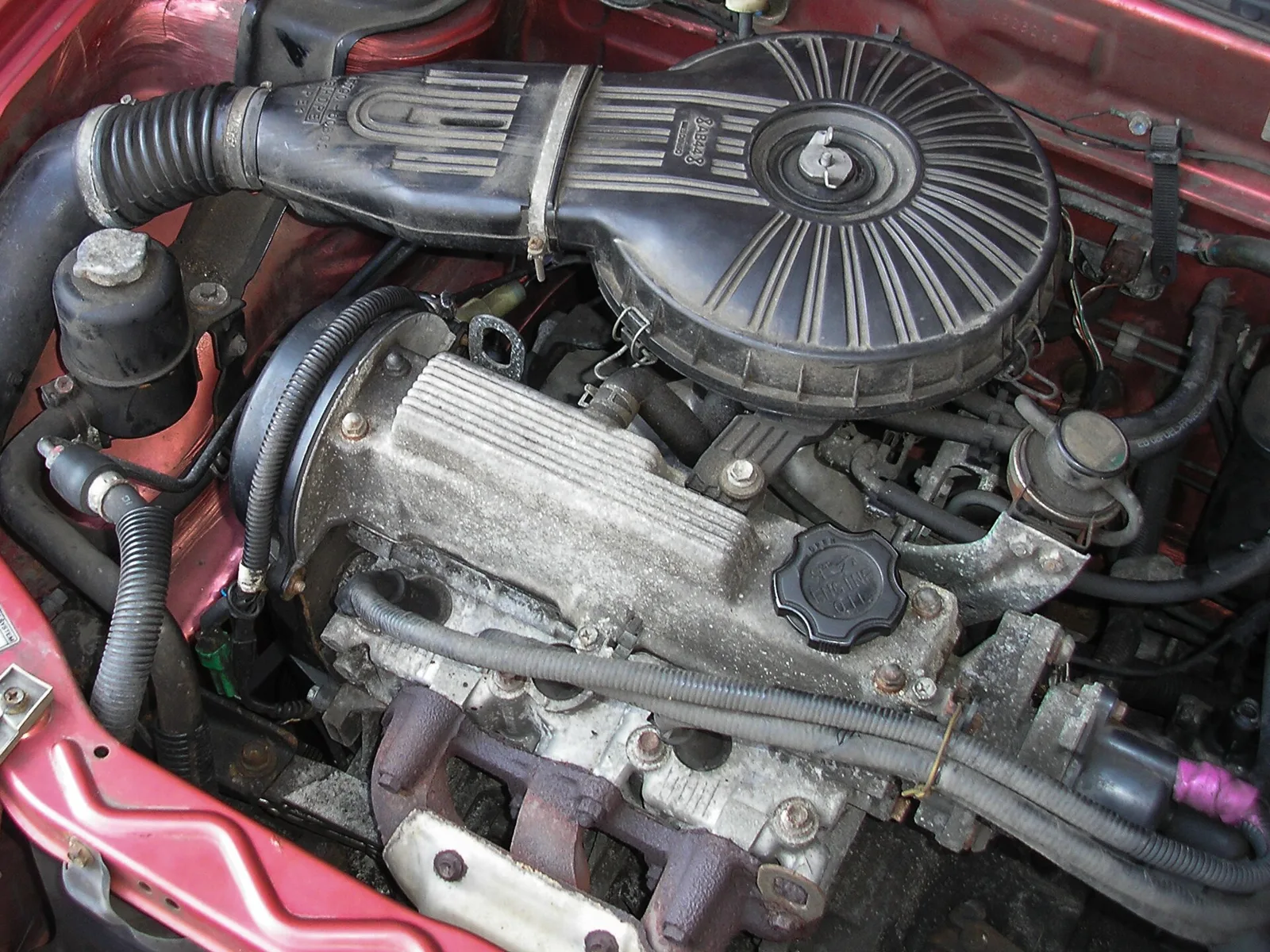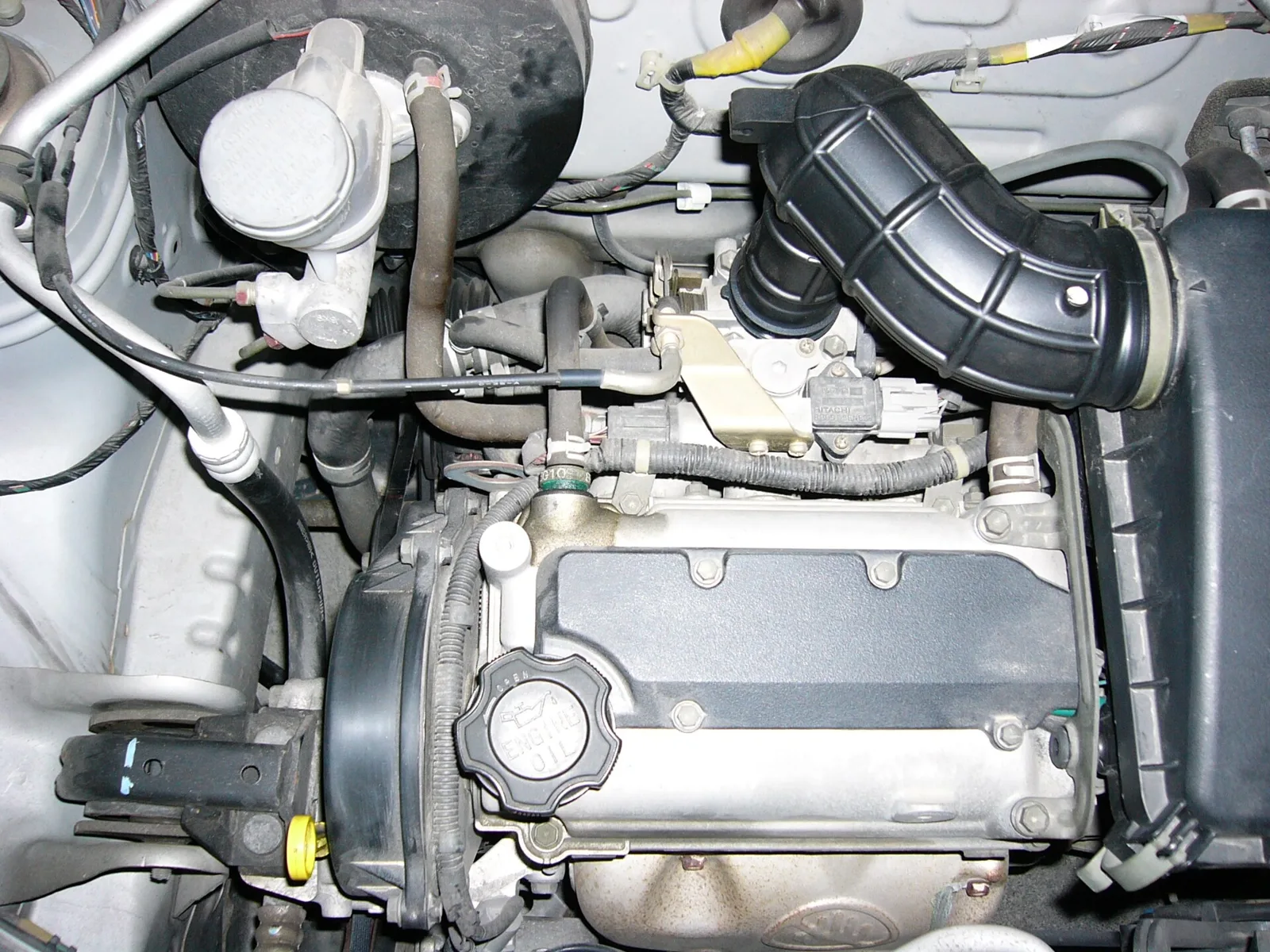
Suzuki's small-capacity petrol family, from the 1977 F8A to the 1,061 cc F10D built by Maruti Suzuki in India.
The Suzuki F engine is a family of inline three- and four-cylinder petrol engines built by Suzuki Motor Corporation and licensed to other manufacturers. The family began in 1977 with the F8A, Suzuki's first four-stroke car engine, and grew into a long-running small-capacity line that found homes across Asia.
The Suzuki F engine family has been built since 1977 in inline three- and four-cylinder petrol form, and some versions were still on sale in the 2020s. Suzuki built the engines itself and licensed them to other manufacturers, and the small displacements made them a common choice for kei cars and budget models across Asia.
Where did the Suzuki F engine family begin?
The F family began in 1977 with the F8A, a 797 cc SOHC four-cylinder that was Suzuki's first four-stroke car engine. Over the following decades the family grew to include three-cylinder units from 543 cc upward, and it was licensed to many makers for their cars.
The F engines fall into two groups. The three-cylinder group includes the F5A, F5B, F6A, F8B, F8C and F8D, while the four-cylinder group includes the F6B, F8A, F10A and F10D. The F5A was essentially a three-cylinder F8A with the fourth cylinder removed and its stroke reduced from 66 to 60 mm.
A small, long-lived family that started as Suzuki's first four-stroke car engine and kept finding new homes across Asia.
How did the three-cylinder F5A and F5B work?
The F5A measured 62 mm x 60 mm in bore and stroke for 543 cc. It came in 6, 9 or 12-valve forms, with SOHC or DOHC heads, carburettor or fuel injection, and aspirated, turbocharged or supercharged layouts. Output ranged from 28 to 64 PS (21 to 47 kW), with torque of 41 to 86 Nm.
The F5B succeeded it with a larger 65 x 55 mm cylinder size for 547 cc. It was offered with 6 or 12-valve SOHC and DOHC heads, and naturally aspirated and turbocharged models were available, with an intercooler offered on the turbo versions. Output reached 34 to 64 PS (25 to 47 kW) at 6500 to 7500 rpm. The F5B was built only from 1989 to 1990, because the Japanese government then raised the kei car limit to 660 cc.
Which cars carried the F5A?
The F5A went into kei cars such as the Alto, Carry, Fronte, Cervo, Mighty Boy and Every from 1980 into the late 1980s. The base 6-valve SOHC was the most common form, and the 12-valve DOHC version powered the Alto and Fronte in 1987 and 1988.
Turbocharged F5A units went into the Cervo SS40C, the Alto CA71 and the Jimny JA71, while a supercharged 9-valve version was fitted to the Carry DA71T. The Alto Works CA71 used a turbocharged DOHC 12-valve setup before the family passed on to the F6A.
The F6A and its turbocharged 12-valve variants
The F6A arrived in 1990, the year after the kei limit rose to 660 cc, as a 657 cc three-cylinder based on the earlier F5B. It keeps the 65 mm bore of its predecessor but uses a new 66 mm stroke. Power in the F6A ranged from 36 to 64 PS (26 to 47 kW) at 6000 to 7000 rpm; torque peaks at 50 to 90 Nm between 3500 and 4000 rpm.
Its applications stretched from Autozam and Mazda Scrum, Carol and Carry or Every models to Suzuki's Alto, Cervo Mode, Jimny and Wagon R. The turbocharged 12-valve version was reserved for more sporting cars, powering the Alto Works RS, the Autozam AZ-1 and the Cappuccino.
The SOHC 12-valve version of the same F6A was a wider choice, used in the Cervo Mode CN22, the Carol AC6, the Alto CL22 and the Wagon R CT21 between 1990 and 2000. It gave the family's kei models a more lively option without the turbo.
What was the F8B and why did it matter abroad?
The F8B was a 796 cc SOHC six-valve engine with dimensions of 68.5 mm x 72 mm (bore x stroke). It was never offered in Japan and was originally intended for export Suzuki Alto models. It later became widely available in India, Pakistan and China, where it was installed in a wide variety of vehicles.
The F8B first used a carburettor, which was later replaced by multi-point fuel injection. That gave more precise control of the air-fuel mixture, cleaner emissions and better performance. Output was 35 to 40 PS (26 to 29 kW) at 5000 to 5500 rpm, and torque is 62 Nm (46 lb ft) at 3000 rpm.
The engine appeared under many names. It powered the Maruti 800 in India from 1983 to 2014, the Maruti Omni from 1984 to 2019 and the Suzuki Mehran in Pakistan from 1988 to 2019, as well as a range of Chinese Alto-based vehicles from the 1990s onward.
What were the F8C and F8D variants?
The F8C is the same engine as the F8B, built under licence by Daewoo for its own vehicles, as part of a technical tie-up between Suzuki and Daewoo in 1991. Power sat at 41 to 52 PS (30 to 38 kW) between 5500 and 6000 rpm. It went into the Daewoo Tico and Fino from 1991 to 2001 and the Matiz, sold as the Chevrolet Spark, from 1998 to 2010.
The F8D is an SOHC 12-valve version of the F8B developed by Maruti Suzuki in India and introduced in 2000. It makes 47 PS (35 kW; 46 hp) at 6000 rpm, with 69 Nm of torque at 3500 rpm. It is also the cleanest engine in the family, having met Bharat Stage VI emission standards in April 2020, which is equivalent to Euro 6. The Alto 800 that carried it ran from 2000 to 2022, one of the longer runs in the family.
What was the F8A and why does it still matter?
The F8A was a 797 cc SOHC 8-valve four-cylinder measuring 62 mm x 66 mm (bore x stroke). Being the first four-stroke car Suzuki built, it is also the oldest member of the family. Its peak figures were 42 PS (31 kW; 41 hp) at 5500 rpm, with 60 Nm at 3500 rpm.
The F8A powered the 1977 to 1981 Jimny 8 (SJ20 and LJ80) and the Carry ST80 to ST90 from 1977 to 1989. It also appeared in the Cervo SC80 in Chile, in Chinese Jilin and Changan vehicles, and in the Ford Pronto in Taiwan from 1985 to 1992.
What was the F6B?
The F6B is a 658 cc inline four and the smallest four-cylinder in the family. It is also the only F engine with DOHC 16-valve valvetrain, and the only four-cylinder version with a turbocharger and intercooler. Its 65 mm x 49.6 mm (2.56 in x 1.95 in) bore and stroke keep the displacement close to the three-cylinder F6A, even with the extra cylinder.
The F6B peaked at 64 PS (47 kW; 63 hp) at 7000 rpm, while torque reached 82 Nm at 3500 rpm. It was used in the Cervo Mode SR-Four CN31 from January 1990 to May 1997.
How long did the F10A run?
The F10A is a 970 cc SOHC 8-valve engine measuring 65.5 mm x 72 mm (bore x stroke). It is the longest-running F engine family, debuting in the 1978 Suzuki SC100. Most applications ended by the late 1990s in international markets with tighter emissions rules, such as Europe.
The engine was upgraded in 2005 with fuel injection and a catalytic converter to meet Euro 2 for the Indonesian Suzuki Carry 1.0. In 2017 it was upgraded again to Euro 4 for the Vietnamese Suzuki Super Carry. As of December 2020 it was still available in Vietnam and Myanmar.
Power ranged from 40 to 60 PS (29 to 44 kW) at 5500 rpm, while torque runs from 62 to 78 Nm (46 to 58 lb ft) between 3000 and 4000 rpm. Applications included the SC100, the Jimny and Samurai 1.0, the Carry ST100 and the Maruti Gypsy and Maruti 1000 in India.
Chinese partners such as Jilin, Changan, Changhe and Hafei produced related versions of 870 cc and 1051 cc, mostly used in small vehicles based on the Carry and Alto.
What made the F10D different?
The F10D is an inline four of 1.1 L (1,061 cc), developed in India by Maruti Suzuki for the domestic market. It debuted in the Maruti Wagon-R in 1999 and was briefly fitted to the Maruti Alto. It was also the engine the first Maruti Zen Estilo came with. It shares its bore, stroke, pistons, rings, connecting rods and valves with the three-cylinder F8D.
Its block closely resembles that of the older F10A, and the two engines share the same stroke length. The transmission bellhousing bolt patterns match, and the engine mounts and oil filter mounting points are common, but the intake and exhaust manifolds do not interchange.
The F10D had a contemporary SOHC alloy head with 4 valves per cylinder and MPFI. It first made 62 bhp (46.2 kW), and a later 32-bit ECU raised it to 64 bhp (47.7 kW). Maruti later re-engineered it as a low friction engine, with a revised block, lighter crank and revised oil pump. Its bore to stroke ratio is 0.95, with a unitary capacity of 265.25 cc per cylinder and a bmep of 146 psi (1,006.6 kPa).
Maruti said in September 2009 that the F10D would not meet Euro 4 norms and would be phased out in 2010. It was replaced by the new three- and four-cylinder K-series engines.
Where did the F family appear?
The F family appeared in Japanese kei cars, Indian Maruti models, Pakistani Suzuki and Maruti vehicles, Daewoo vans and Chinese Alto-based cars in several markets. Its reach came partly from licensing, which put the same basic engines into cars sold under other badges.
In Pakistan the F8B appeared as the Suzuki Mehran, and as the Bolan and Ravi from 1983 to 2024. In China, Alto-based versions of the F8B came from partners such as Changan, Xi'an Qinchuan and Anhui Anchi through the 1990s and 2000s. Later Chinese entries included Jiangnan Alto and Zotye TT models in the 2000s and 2010s.
Daewoo's Damas, Labo and Attivo vans used the F8C until 2021 and were also labelled Chevrolet CMV and CMP. In India the F8D, F10A and F10D each had a turn in Maruti models, and the F10D later filled the Wagon R and Alto from 1999 and 2001.
F engines at a glance
| Engine | Cylinders | Displacement | Output | Notes |
|---|---|---|---|---|
| F5A | 3 | 543 cc | 28 to 64 PS (21 to 47 kW) | Kei cars, 1980 to 1988 main run |
| F5B | 3 | 547 cc | 34 to 64 PS (25 to 47 kW) | Built 1989 to 1990 |
| F6A | 3 | 657 cc | 36 to 64 PS (26 to 47 kW) | Introduced 1990 |
| F8B | 3 | 796 cc | 35 to 40 PS (26 to 29 kW) | Export and licensed use |
| F8A | 4 | 797 cc | 42 PS (31 kW; 41 hp) | First four-stroke car engine, 1977 |
| F6B | 4 | 658 cc | 64 PS (47 kW; 63 hp) | DOHC 16-valve, turbocharged |
| F10A | 4 | 970 cc | 40 to 60 PS (29 to 44 kW) | Longest-running family, from 1978 |
| F10D | 4 | 1,061 cc | 62 bhp (46.2 kW), later 64 bhp (47.7 kW) | Maruti Suzuki, from 1999 |