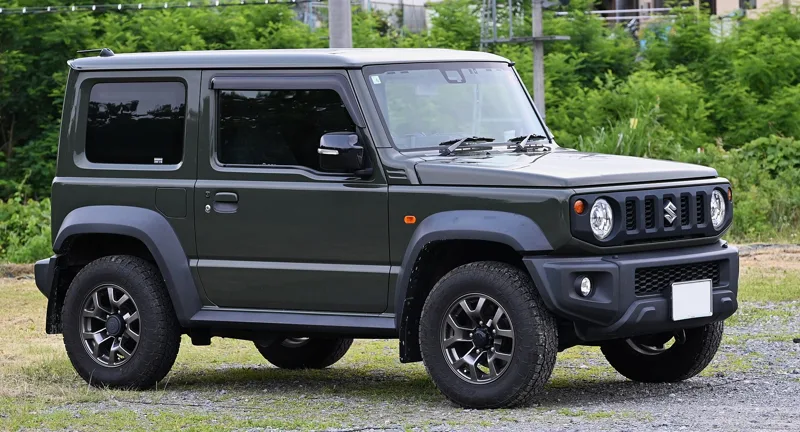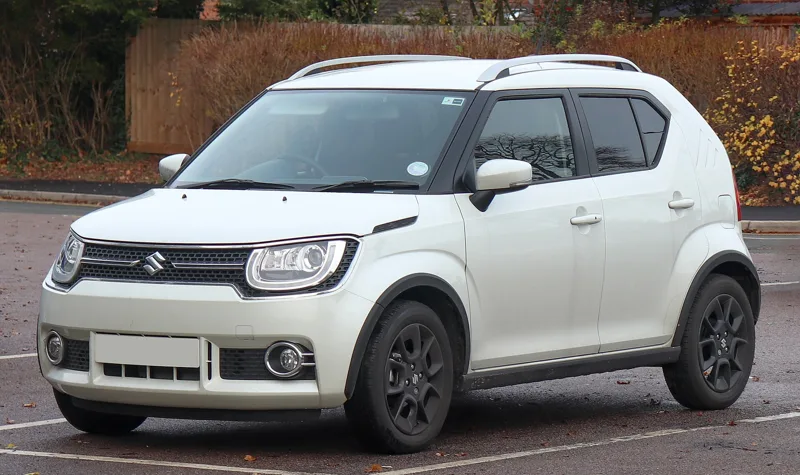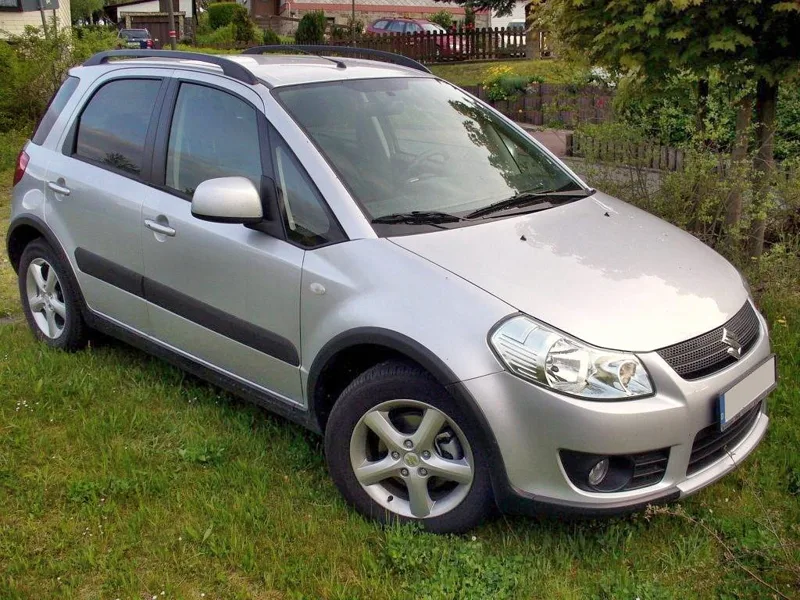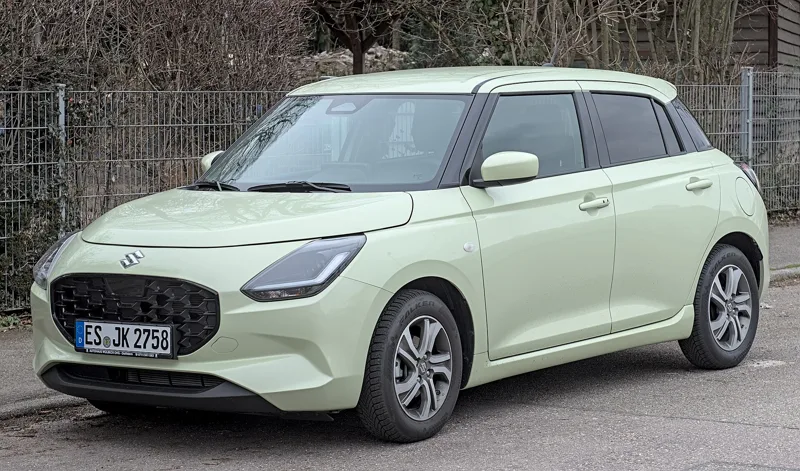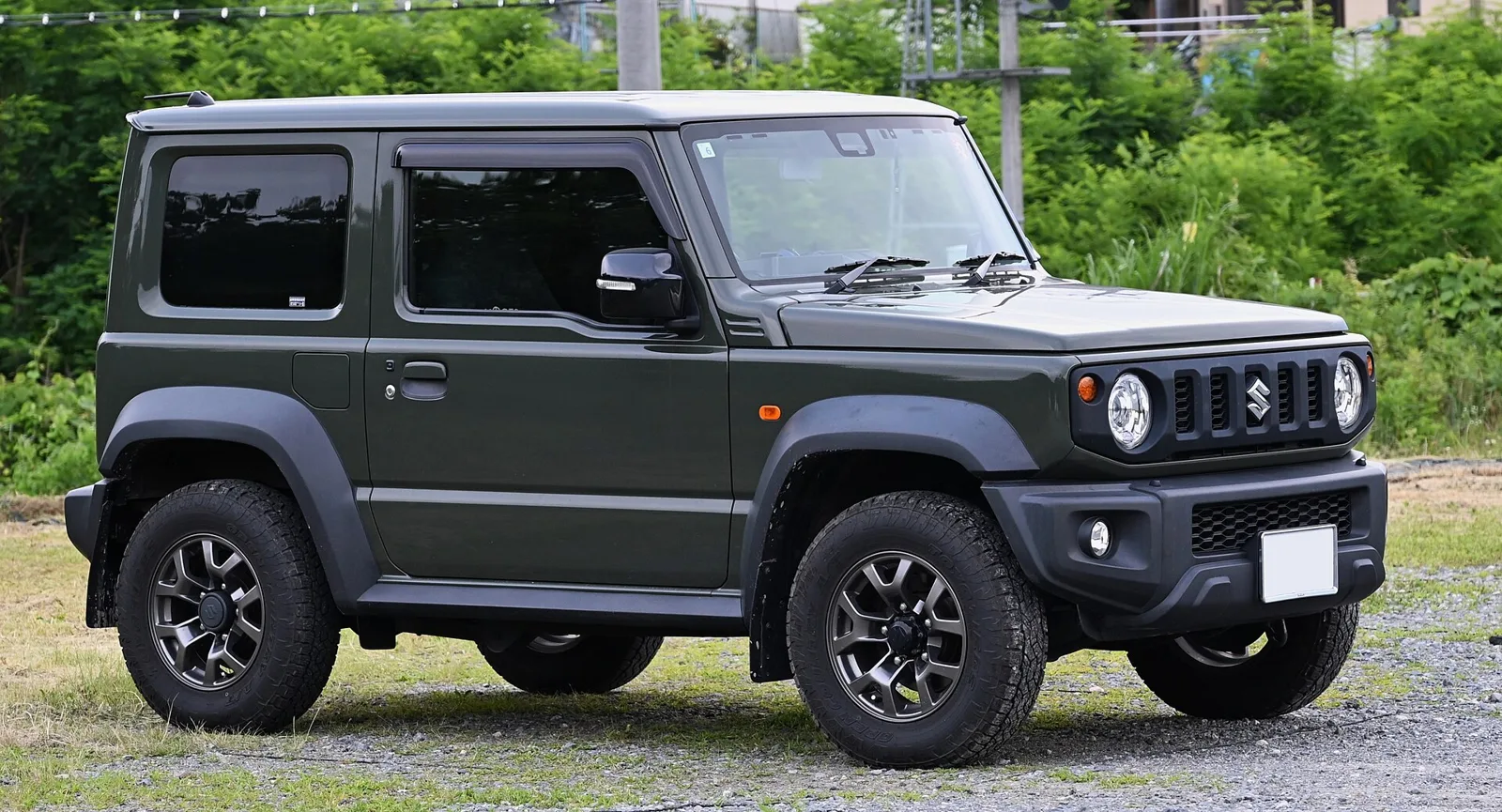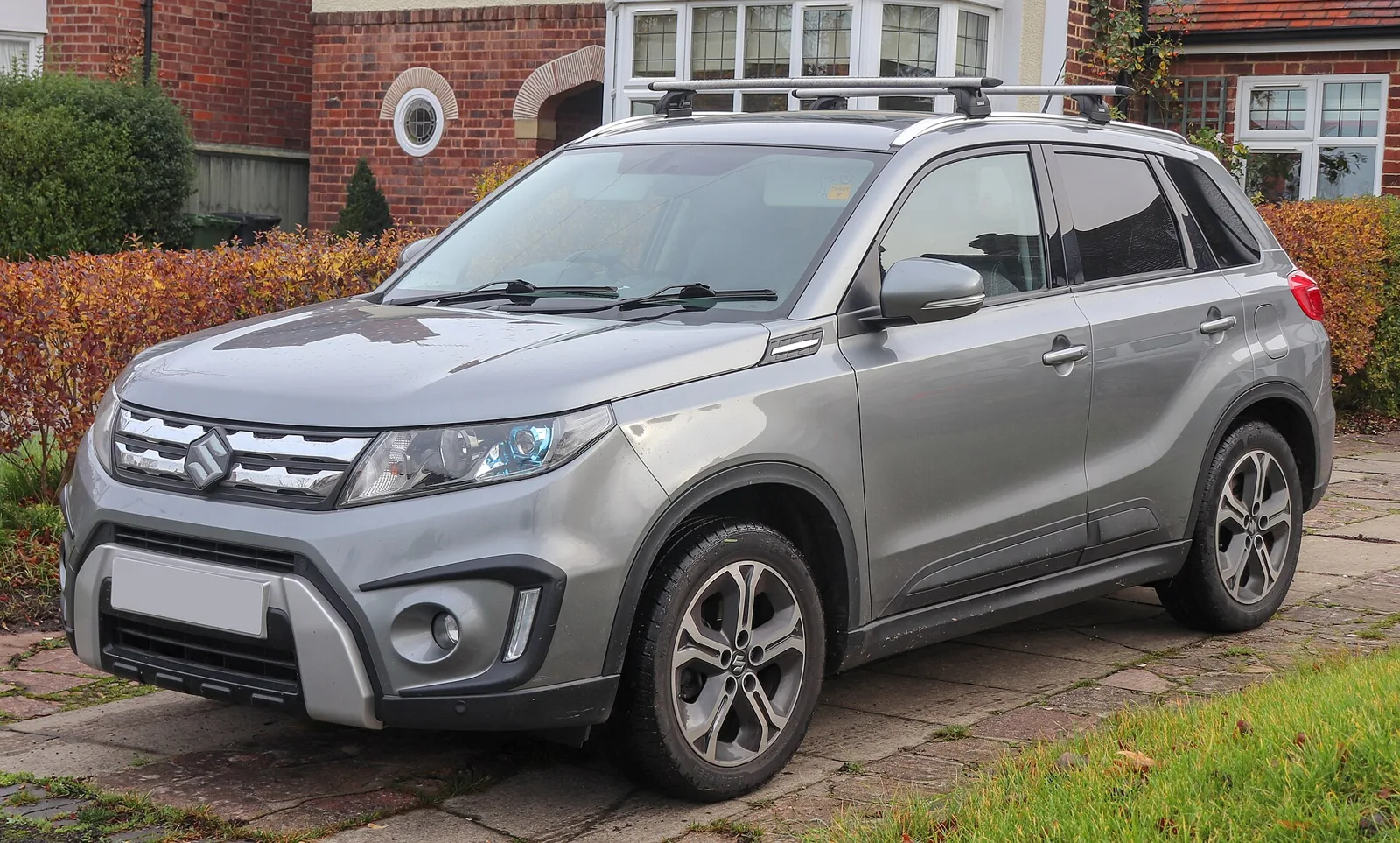
A small off-road SUV born in 1988 as the Escudo, rallied and hill-climbed in its early years, then reborn as a unibody crossover.
The Suzuki Vitara is a series of SUVs produced in five generations since 1988, known as the Escudo in Japan. It began as a small off-road model, moved to unibody construction in 2005 and became a crossover from 2015. Hybrid versions arrived in the later years.
The Suzuki Vitara is a family of SUVs that Suzuki has produced in five generations since 1988. Japan and a number of other markets knew it as the Escudo until 2024, and the Grand Vitara badge covered the second and third generations. The car has a long record on the road as well as in rallying and hill climbs.
Where did the Suzuki Vitara come from?
The Escudo was first introduced in the Japanese market in July 1988, and it was designed to fill the slot above the Suzuki Jimny. The North American version, called the Sidekick, was built in a joint venture with General Motors known as CAMI. Those beginnings produced a small, rugged SUV family that grew over the decades.
The names were chosen with care. Vitara comes from the Latin word vita, as in the English word vitality, while Escudo refers to the old monetary unit of Portugal.
The first generation also had a Spanish life. The car was sold in Spain as the Santana 300 and 350, which gave buyers there a locally badged version of the same design.
An SUV of this period was usually built on a separate ladder frame that carried the engine, drivetrain and body. That approach suited off-road work but added weight.
Five generations of a small SUV that began as the Escudo in Japan and ended as a unibody crossover family.
Why does the Vitara have so many names?
The Vitara has been sold under several badges: Escudo in Japan and many other markets, Sidekick in North America, Grand Vitara for the second and third generations, and Santana in Spain. The fourth generation returned to the Vitara name in most markets.
The Escudo name stayed in Japan through the whole run until 2024. Its Portuguese root is a reminder that Suzuki was naming the car after a national currency rather than a model code.
Badge changes are common in the car industry, because a model often sells under different names in different regions to suit local tastes, trademarks or market rules.
Each name tracked a generation's role, from the off-road Escudo of the early years to the more road-oriented crossover of the fourth generation.
How did the first-generation engines perform?
The early Escudo used a fuel-injected 1.6-litre, 8-valve G16A rated 81 PS (60 kW; 80 hp). A 16-valve G16B rated 100 PS (73.5 kW) arrived in Japan in August 1990, and the 1992 US engine produced 95 hp (71 kW). The G16B was a 1.6-litre in both markets.
Suzuki followed up in December 1994 with a 2.0-litre V6, its first six-cylinder engine. The 1996 facelift upsized that V6 to 2.5 litres and slotted a 2.0-litre four-cylinder into the range.
Rear anti-lock brakes arrived in 1991. In Australia the 2.0-litre J20 DOHC engine, rated 97 kW (130 hp), came along in May 1997.
Valve count matters as well. A 16-valve head lets more air through the engine than an 8-valve design, so the move to 16 valves was an important step for the family.
Which markets got their own versions?
Several markets got their own versions. Spain built the Santana 300 and 350, while the United Kingdom had body kits such as the Wideboy and Fatboy. Italy's rules shaped the car's sales from 1989 onward, when the Vitara became subject to the quota there.
The Italian quota story began with a 1988 law requiring at least one differential lock for an off-roader, which the Vitara did not meet. From 1 January 1989 the car was classified as a passenger car and subject to the quota.
Body kits of the kind sold in Britain changed the look of an SUV without changing its mechanicals, which is why they proved popular with owners who wanted a sharper stance.
China was a special case. The first generation was never sold there officially, and grey-market Vitaras were brought in during the 1990s. The 9898 smuggling case led to more than 200 officials being arrested in Zhanjiang on September 8, 1998.
Grey-market imports of that kind were common in the period, and the crackdown showed how tightly the Chinese state guarded its car market.
What changed with the second generation?
The second generation was launched in 1998 under the Grand Vitara badge, with rack-and-pinion steering in place of the earlier recirculating ball. The Grand Escudo, a longer seven-seat version, arrived in 1998 as well, giving the range a bigger option within the same family.
Sales in the United States were modest, with only 4,860 units sold in 2004. All North American Vitaras were built at CAMI in Ingersoll, Ontario.
Argentina had its own assembly. General Motors built the car in Alvear, Santa Fe, from 2000 to 2005.
Local assembly was a common way to serve markets with import duties, because building a car in the country could avoid higher tariffs.
How did the third-generation Grand Vitara differ?
The third generation, introduced for the 2005 model year, moved to unibody construction with a built-in ladder frame. Engines ranged from a 1.6-litre to a 2.7-litre V6, with a 1.9-litre Renault-sourced diesel also offered. A 2.0-litre inline-four rated 140 PS (103 kW) sat in the middle of the range.
The system was full-time four-wheel drive with a 47:53 front to rear torque split. The low range ratio was 1:1.97, which gave the car a useful gearing option for slow, heavy going.
The 2008 facelift brought a 2.4-litre inline-four rated 166 PS (122 kW; 164 hp), and the V6 was replaced by a GM-sourced 3.2-litre rated 233 PS (172 kW; 230 hp). The third generation was discontinued in Japan in April 2017, and South Africa ended it in October 2019.
Unibody construction generally reduces weight and improves ride comfort, although it gives up some of the off-road durability of a separate ladder frame.
What did the fourth generation change?
The fourth generation moved from a ladder frame to a lightweight unibody, and it shares its platform with the SX4 S-Cross. It went on sale in Japan as the Escudo on 15 October 2015. Production by Magyar Suzuki in Hungary started in March 2015.
Its luggage space was 375-litre, expanding to 710-litre with the rear seats folded. The 1.6-litre petrol came with a 5-speed manual.
The sporty Vitara S used a 1.4-litre K14C Boosterjet rated 140 PS (103 kW; 138 bhp). It delivered 20 percent more power and 40 percent more torque than the standard 1.6-litre, which made it the performance pick of the range.
Mild hybrid systems use a small electric motor to assist the engine, which improves economy without the cost of a large battery.
European models later switched to the K14D mild hybrid rated 129 PS (95 kW). The full hybrid used a 1.5-litre K15C Dualjet with an electric motor, producing 115 PS combined.
Did the Vitara race?
Yes. In 1994 Suzuki built a twin-engined Escudo for hillclimbing, and Nobuhiro Tajima finished fifth overall at Pikes Peak that year. He won the event outright in 1995, becoming the first Japanese driver to take the title. That first run started a hillclimb programme that ran for several years.
Pikes Peak is a hill climb on a mountain road with thin air and steep gradients, which tests an engine's power and a driver's nerve in equal measure.
The twin-engined 1994 car made 900 PS (662 kW; 888 hp). For 1996 Suzuki built a single twin-turbo 2.0-litre H20A V6 hillclimb car rated at 600 PS (441 kW; 592 hp), and in 1997 the car was upgraded to a 2.5-litre H25A V6 rated 995 PS (981 hp; 732 kW).
Tajima finished second overall at Pikes Peak in 1996, 1998 and 1999, and he won the Queenstown Gold Rush Hill Climb in 1998, 1999 and 2000. A newer Escudo won Pikes Peak in 2006.
Off the hill, the Vitara took part in rallies such as the Dakar Rally and the Australasian Safari.
Long-distance events such as the Dakar Rally test durability more than outright speed, which is why a road-based SUV could take part.
What were the Vitara's specifications?
Engine sizes across the five generations ran from a 1.6-litre four with 81 PS (60 kW; 80 hp) to a 3.2-litre GM-sourced V6 rated 233 PS. The fourth generation's mild and full hybrid systems brought the range up to date. The table below lists the key figures.
| Item | Detail |
|---|---|
| Production | 1988 onward, five generations |
| First-generation engine | 1.6-litre 8-valve G16A, 81 PS (60 kW; 80 hp) |
| Third-generation V6 | 2.7-litre, 185 PS (136 kW) |
| Third-generation facelift V6 | GM-sourced 3.2-litre, 233 PS (172 kW; 230 hp) |
| Fourth-generation luggage | 375-litre, up to 710-litre with seats folded |
| Vitara S engine | 1.4-litre K14C Boosterjet, 140 PS (103 kW; 138 bhp) |
| Mild hybrid | 1.4-litre K14D, 129 PS (95 kW) |
| Full hybrid | 1.5-litre K15C Dualjet, 115 PS combined output |
Each figure in the table comes from a different point in the car's life, so the engine and body numbers should be read in the context of their generation.
What came after the Vitara?
The Vitara nameplate continued in later models. The Vitara Brezza was released in India in 2016, and the 2022 Grand Vitara replaced the S-Cross there. A battery electric e Vitara followed in 2024. The name continued to appear on models built for other regions.
A battery electric model is a different proposition from a petrol SUV, with its own charging and running-cost considerations for buyers.
The Brezza was built only in India, and it was renamed simply Brezza from the second generation of that model onward. The Grand Vitara was based on the lengthened platform of the fourth-generation car.
What is the Vitara's legacy?
The Vitara built a long run as a small off-road SUV family, with the Escudo name carrying it through Japan until 2024. Its success in Europe, its rallying history and its many names together form a legacy that runs from 1988 onward.
The first generation's success across Europe was immediate, and the car's place in Italian law shows how far its appeal reached. Later generations moved toward road comfort, with the fourth a more road-oriented crossover than its ancestors.