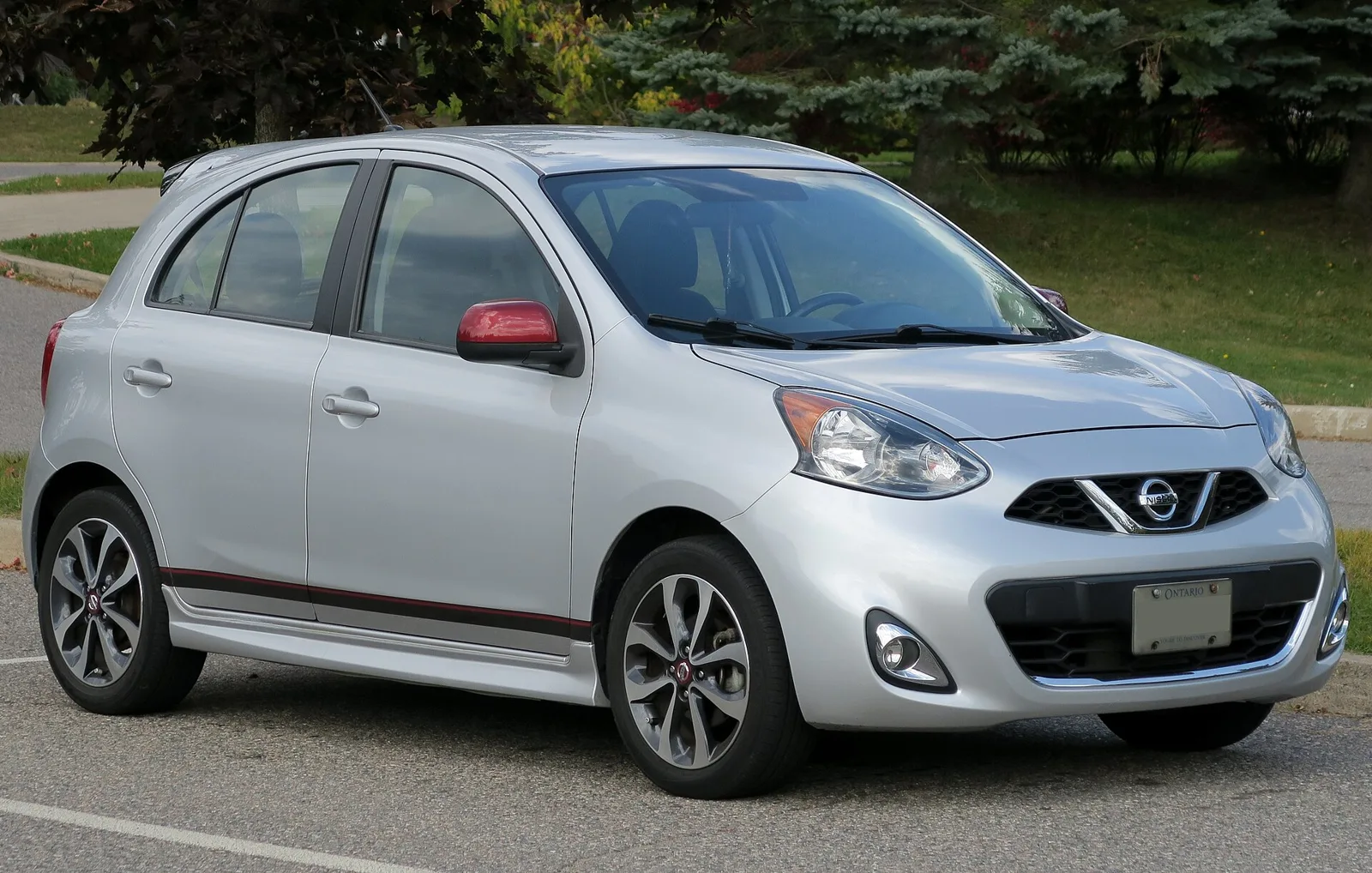
Two early-1980s superminis, one from Japan and one from Wolfsburg, compared on engines, performance, breakdown records and the models that followed.
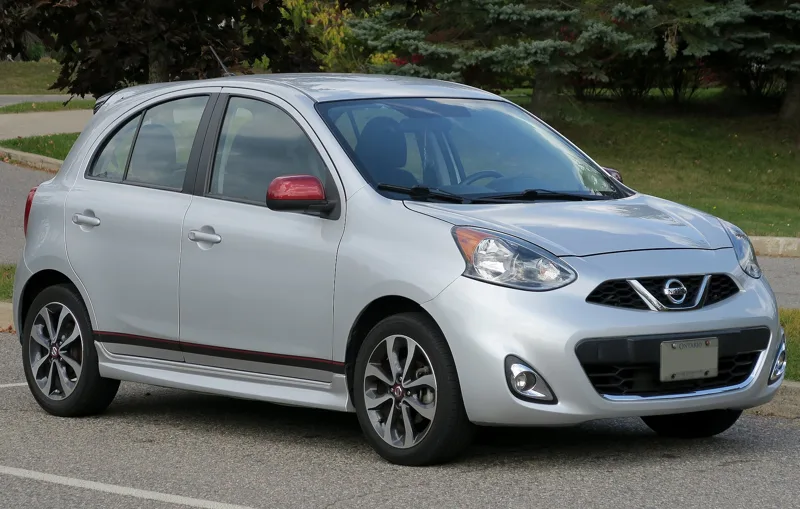
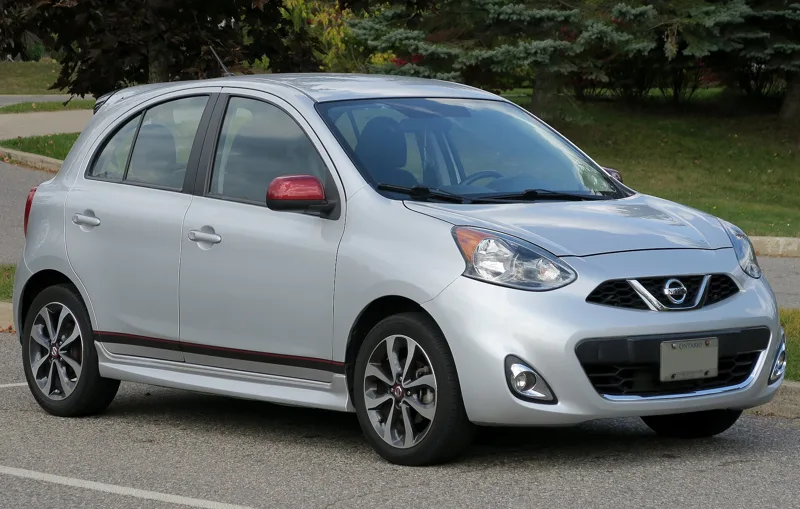
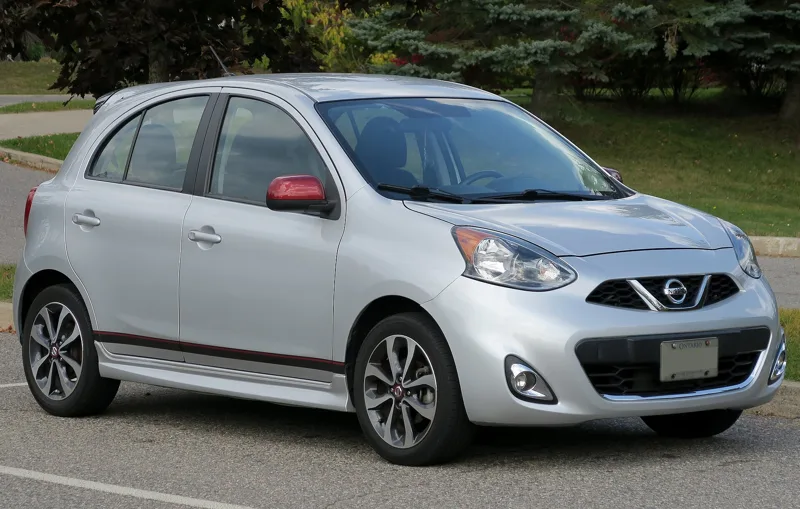
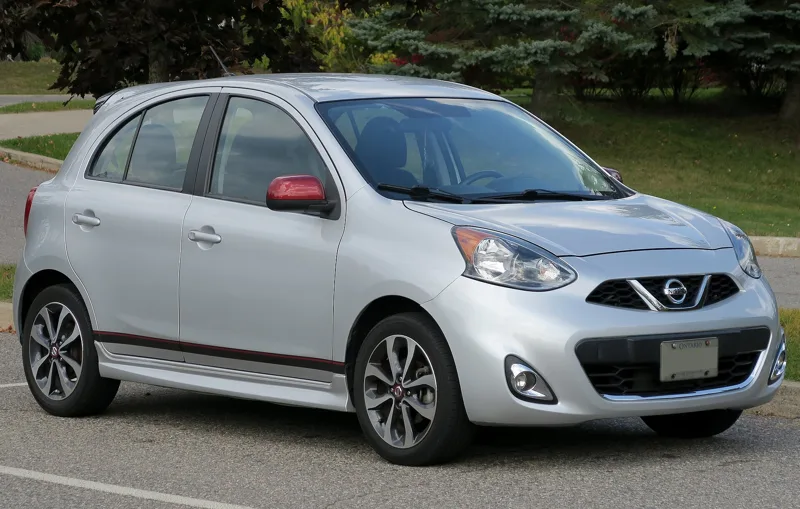
The Micra and the Polo competed in the European supermini market in the early 1980s, and both produced a special performance model. The Polo G40 had the higher top speed, while the Micra Super Turbo was quicker to 100 km/h.
The Nissan Micra and the Volkswagen Polo Mk2 were both small, cheap and aimed at the same European buyers in the early 1980s. The Micra came out of Japan in 1982, while the Polo had already been on sale since late 1981. Together they span the class from the early 1980s to the arrival of the second-generation Micra in 1992.
Were the Micra and Polo direct rivals?
They were, in the European supermini market that both cars were built to serve. The Polo's own competitor list at the time included the Opel Corsa, the Fiat Uno, the Nissan Micra and the Peugeot 205, all arriving in or around 1982 and 1983.
The Micra reached Europe in June 1983, by which time the Polo Mk2 had been on sale for well over a year. That timing gave Volkswagen a head start, but Nissan's car was clever in its own way, with unusually high gearing and very low weight.
Two superminis, one with the better breakdown record and the other with the wider range of body styles.
Where did the Micra come from?
The Micra began life as the March in Japan in October 1982. Its rivals there were the Honda City, the Charade from Daihatsu, the Cultus from Suzuki and the Starlet from Toyota. It was meant to take over the supermini role from the Nissan Cherry, which had grown larger with each generation.
Engineering owed something to Nissan's 1966 takeover of the Prince Motor Company, which had developed the Cherry. In Japan the March was sold only through Nissan's Cherry Store network, and it was never badged under other names through other distribution chains.
How was the Micra's body designed?
The body was first drawn up for Fiat as a successor to the 127, but Fiat went with the Giugiaro-styled Uno. Nissan adopted the shape, and the Micra reached the European market in June 1983.
Weight was the car's great strength in early European trim, where it came in at 630 kg (1,389 lb). That target meant very little insulation, so early Micras were rather loud. Japanese owners benefited from an engine under 1000 cc when it came to annual road tax.
Where did the Polo Mk2 come from?
The Polo Mk2, known internally as Typ 86C, appeared in October 1981. Its hatchback had a steeply raked rear window that gave it an estate-like profile, and a saloon version was badged as the Derby in most markets.
A three-door coupe joined the range in 1983 for buyers who did not like the new hatchback shape. The saloon was renamed the Polo Classic in 1984, and production began in Spain at Pamplona on 27 April 1984, as part of Volkswagen's early collaboration with SEAT.
What did the engines offer?
The first Micra used the MA10S, an all-aluminium SOHC 1.0-litre engine that produced 37 kW (50 PS) or 40 kW (55 PS) in its high-compression form. A 44 kW (60 PS) version of the same 1-litre engine came in the Nissanmatic. The 1.2-litre MA12 arrived in late 1987 with 42 kW (57 PS) from an electronically controlled carburettor.
The Polo's range was built around 1,043 cc and 1,272 cc four-cylinder petrol units, with a 1,398 cc diesel from August 1990. The GL produced 60 PS (44 kW), while the GT's 1.3-litre engine made 75 PS (55 kW). The supercharged G40 was the top of the range, producing 113 PS (83 kW) from 1,272 cc.
The K11 Micra that followed used new DOHC 16-valve engines. The 1.0-litre CG10DE made 55 PS (40 kW; 54 hp), and the 1.3-litre CG13DE made 75 PS (55 kW; 74 hp). Power for the 1.0 later rose to 60 hp (44 kW) in the second facelift.
Specifications side by side
| Specification | Nissan Micra | Volkswagen Polo Mk2 |
|---|---|---|
| Years | K10 from October 1982; K11 from January 1992 | Mk2 from October 1981 to 1994 |
| Body styles | Hatchback; five-door in Europe from March 1989 | Hatchback, three-door coupe and Derby or Polo Classic saloon |
| Engines | 1.0-litre MA10S SOHC (K10); CG10DE and CG13DE DOHC (K11) | 1,043 cc and 1,272 cc petrol fours; 1,398 cc diesel from 1990 |
| Power | 50 to 57 PS in K10 Europe; 110 PS (81 kW; 108 hp) on the Super Turbo | 60 PS (44 kW) on the GL; 75 PS (55 kW) on the GT; 113 PS (83 kW) on the G40 |
| 0-100 km/h | 7.7 seconds on the Super Turbo | 8.1 seconds on the 1987 G40 |
| Top speed | 180 km/h (112 mph) on the Super Turbo | 196 km/h (122 mph) on the G40 |
| Breakdowns at six years | 11.5 per 1,000 cars (ADAC, 1995) | 15.3 per 1,000 cars (ADAC, 1995) |
Which car was quicker?
The fastest Micra and the fastest Polo were both special models. The Micra Super Turbo reached 100 km/h in 7.7 seconds, which beat the 1987 Polo G40's 8.1 seconds. The Polo's 196 km/h (122 mph) top speed was higher than the Micra's 180 km/h (112 mph).
The Super Turbo's 930 cc engine used a supercharger and a turbocharger together, giving 110 PS (81 kW; 108 hp) at 6400 rpm. It covered the quarter mile in 15.5 seconds, and its top speed was set at the limit Japanese production cars were allowed at the time. Nissan built only 10,000 of them.
The G40 was a homologated sports version of the Polo, with about 500 cars built in 1987, mostly for Volkswagen staff. Its G-Lader supercharger was small-bore, and Volkswagen used the car to set 1300 cc class endurance records. The later production G40 was quoted at 8.6 seconds to 100 km/h.
What were the Micra's unusual specials?
The Be-1 was a limited edition with a more rounded body, first shown at the 1985 Tokyo Motor Show and sold from 1987. Only 10,000 were made. The canvas-topped Pao hatchback followed in 1987 as a Tokyo show car and reached the public in 1989, with 51,657 units sold.
The Figaro coupe was unveiled at the 1989 show but not released until 1991. Demand outran the 20,000 vehicles built, so Nissan sold it by lottery. Its popularity with celebrity owners helped it become a cult car, and it is one of the most imported K10 derivatives despite being a Japan-only model.
Europe had its own sporting trim. The Super S arrived in 1989 with a body kit from the factory, plus racing seats and a rev counter, and it came only in black, grey, white and red. It kept the MA12 engine, but its catalytic converter meant it ran a little below the output of the non-catalysed cars.
How did the two cars fare on breakdowns?
The Micra built a strong reputation for reliability and economy. The German Automobile Association (ADAC) surveyed cars that were four to six years old in 1995, and the Micra came top of the small-car class.
The Micra recorded 7.5 breakdowns per 1,000 vehicles at four years and 11.5 at six years. The Polo recorded 8.0 at four years and 15.3 at six. The Fiat Uno came last, with 20.7 and 37.3 breakdowns per 1,000 cars.
The Micra also went on to have a much higher survival rate in the long term than many of its rivals, which helped its reputation outlast its production run.
What did the second-generation Micra bring?
The K11 was produced in Britain, Japan and Taiwan. It went on sale in Japan in January 1992 and reached Europe in the final quarter of that year. Its new 1.0 and 1.3 engines had DOHC 16-valve heads and ECCS fuel injection.
The K11 took the European Car of the Year prize for 1993, the first Japanese car to do so. It also collected the Good Design Award and the Car of the Year Japan prize in 1992. Nissan built 2,000 examples of a limited V3 Award edition to mark the three honours.
Euro NCAP was less kind. The K11 managed only two stars in its 1997 test. That gap is worth noting for any buyer weighing the car against a modern supermini.
What did the Polo's GT and Formel E offer?
The Coupe GT appeared in August 1982, part of the 1983 range. It had a 75 PS (55 kW) 1.3-litre engine, servo-assisted brakes, twin headlights, sports seats, a digital clock and a rev counter. Its power rose by 25 percent through dished pistons, which allowed a flat cylinder head, and The chamber design was known inside Volkswagen as HCS, meaning High Compression and Squish.
The Formel E, introduced in 1983, was the economy version. It used a high-compression 1,272 cc engine with longer ratios, plus an early stop-start system that cut the engine after two seconds at idle. The system could be switched off with a toggle, and similar systems later appeared on the Volkswagen Golf Mk3.
How did the Polo Mk2 evolve?
A 1990 facelift, for the 1991 model year, gave the Polo square headlamps, deeper bumpers and a fresh interior. Aerodynamics improved by about ten percent, and servo-assisted brakes became standard on every model.
Soon after, the supercharged G40 became a full production model rather than a limited run. It sat 25 mm (1.0 in) lower than the standard Polo and wore 5.5J x 13 BBS alloys. Volkswagen ended its experiments with supercharged hot hatches at the close of the Mk2 run, citing manufacturing costs and modest sales.
The Mk2 was built until 1994, when the Mark 3 arrived. The Polo's trim names had changed along the way, from Fox to CL, GL, Boulevard and Genesis.
How did the K11 facelifts change the car?
A facelift arrived in Japan in May 1997, and the UK-built car followed in March 1998. The revised front grille was merged into the bonnet and carried Nissan's corporate face, while the dashboard, bumpers and rear light lenses were all redone. The Japanese market also received the four-speed automatic on the 1.3.
The K11C followed in November 1999, with coilpack ignition in place of the distributor and a smaller secondary catalytic converter. The 1.3 was swapped for a 1,348 cc unit, and a four-wheel-drive hatchback with a 1.35-litre engine and CVT joined the range. In 2001, Muji issued a limited run of 1,000 badgeless, decontented Marches sold only online.
How well did they sell?
The Micra sold strongly in Britain, with sales peaking above 50,000 in 1989. It ranked among the most-bought imports of its day.
The Polo was also a regular British seller, frequently topping 30,000 sales a year. It reached 11th place among the country's best sellers in 1983, the same year the Micra arrived there.
Which car suits which buyer?
A buyer who values low running costs and a reputation for fewer breakdowns will look closely at the Micra. Its K10 weight and economy, plus the K11's awards, make a strong case on paper.
A buyer who wants a broader choice of body styles, including a coupe and saloon, will find more in the Polo. Its G40 was also the faster car at the top end, reaching 196 km/h (122 mph).
The Micra family also produced more unusual specials, from the Super Turbo to the Figaro and the Pao, while the Polo's specials centred on the G40. Neither car is better across the board, and the choice depends on whether economy or variety matters more.