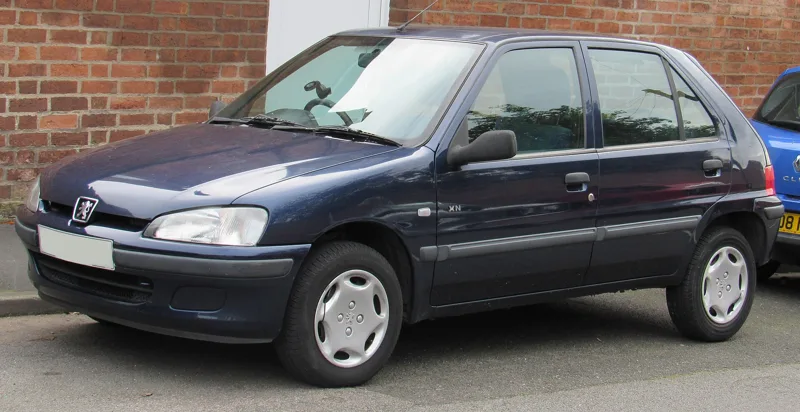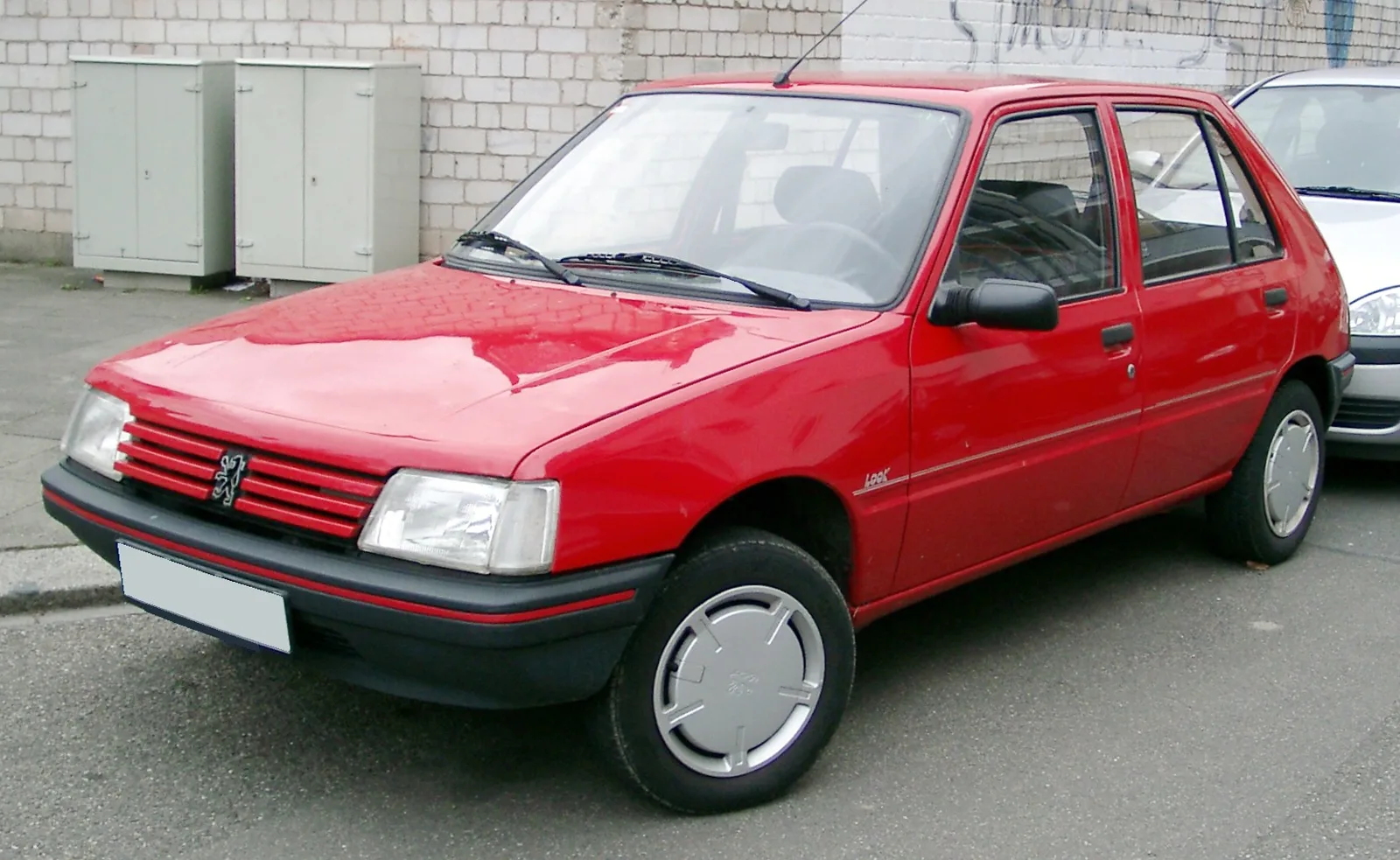
From its 1983 launch to its 1999 finish, the 205 sold in the millions, won rally titles as the Turbo 16 and gave the GTI its legend.
The Peugeot 205 was a supermini built from 1983 to 1999 that replaced the 104 and Talbot Samba. It won What Car? Car of the Year for 1984, sold 5,278,050 units and spawned the GTI, Rallye and Group B Turbo 16.
The Peugeot 205 was a B-segment supermini that Peugeot built from 1983 until 1999 as a single generation. It replaced the 104 and the Talbot Samba, and it helped shift the image of a maker that had long been regarded as the most staid of the three big French brands.
Why did Peugeot need the 205?
Before the 205, Peugeot was known for large saloons such as the 504 and 505. The company had entered the supermini market in 1973 with the 104, but the 205 was the car that would redefine its small-car range. It was developed from Projet M24 and launched on 25 February 1983.
The 1978 takeover of Chrysler's European divisions, Simca and Rootes, brought small-car expertise into the group. The period that followed saw Peugeot begin work on a new supermini for the 1980s.
The 205 arrived alongside a crowded field. The Austin Metro and Volkswagen Polo Mk2 launched at about the same time, and the Fiat Uno, Ford Fiesta, Opel Corsa and Nissan Micra all appeared within the same year.
A supermini that turned a conservative maker into a car company that people wanted to drive.
Who styled the 205?
Styling is often credited to Pininfarina, but Gerard Welter says the design was done in-house. Pininfarina only styled the Cabriolet, so the familiar hatchback shape was Peugeot's own work.
The car's exterior barely changed over its 15-year run, apart from small details. A dashboard redesign arrived for the 1988 model year, and a late-1990 facelift brought new doors, clear front indicators and smoked rear light clusters.
The 205's look became a reference point for the rest of the range. Its styling was echoed in the Peugeot models that followed, which changed how buyers saw the brand.
How was the 205 suspended and packaged?
The 205 used a fully independent suspension based on the PSA layout first seen in the Peugeot 305 estate. MacPherson struts sat at the front, while the rear had trailing arms with torsion bars.
The rear suspension was compact so that it did not intrude on the boot. That kept the boot floor flat and useful, which mattered in a car this size.
Ride and handling won praise, and the layout played a key part in the car's success.
What engines did the 205 use?
The first 205s relied on the X petrol unit carried over from the 104. XU and TU engines replaced it from 1987 to 1988, and the range eventually spanned capacities from 954 cc to 1905 cc, the largest of which later powered the 1.9 GTI.
Engines were offered in carburettor or fuel-injected form. The XU and TU families were PSA designs, and they gave the 205 a more modern engine line through the late 1980s.
The diesel engines came from the PSA XUD family, first fitted to the Citroen BX. The XUD7 displaced 1769 cc and the XUD9 displaced 1905 cc, and both were closely related to the petrol units in the BX.
Were the diesel 205s any good?
Yes, and many buyers were won over by how petrol-like they felt. The 1.8 diesel GRD produced 59 bhp at 4,600 rpm, while the 1.4 petrol GR made 59 bhp at 5,000 rpm, so the diesel matched the petrol car for output.
The diesel's torque gave it an advantage. The 1.8 diesel made 81 lb ft at 2,000 rpm, which let it pull strongly at low revs and kept fuel use low. Many buyers liked that mix of petrol-like feel and diesel economy.
Single-point injection and catalytic converters arrived in late 1990, to meet the 1992 pollution limits. In 1991 a turbocharged diesel, the dTurbo, joined the range.
What was the 205 GTI like?
The GTI debuted in 1984 with the three-door body and a 1.6-litre XU5J engine producing 105 PS (77 kW; 104 hp). Group tests of the newest GTI models still treat the car as a benchmark.
The 1.9 GTI arrived in 1986 with the XU9JA engine, rated at 128 PS (94 kW; 126 hp). Catalysed versions later produced 122 PS (90 kW; 120 hp), after the engine was re-engineered to work with a catalytic converter.
The two GTIs were told apart by their wheels. The 1.6 used 14-inch Speedline alloys, while the 1.9 had 15-inch Speedline wheels.
The 1.6 model was dropped in 1992, and the 1.9 was sold for roughly two more years. The GTI itself was discontinued in 1994, when Peugeot was building high-performance versions of the 106 and 306.
What was the 205 Rallye?
The Rallye ran from 1988 to 1992 and offered a sporty character at a lower cost than the GTI. It used the TU24 engine, a 1.3-litre unit producing 103 PS (76 kW; 102 hp).
Peugeot stripped the Rallye of much of its soundproofing and electrical extras. That brought its weight down to no more than 794 kg (1,750 lb).
Peugeot had expected to build around 5,000 Rallyes, but 30,111 were produced. The cars sold in several mainland European markets, including France, Italy and the Netherlands.
Which special editions did Peugeot make?
Peugeot produced several limited 205 editions over the car's life. The Gentry used an automatic gearbox and special trim, while the Griffe and the 1FM were produced for particular markets.
The Griffe was a special GTI for mainland Europe, and 1,652 were made in laser green. It came with nearly every available option, including black leather seating, anti-lock brakes, power steering and a sunroof, but no air conditioning.
The 1FM was made in just 25 units for the UK market in 1992, to mark the 25th birthday of BBC Radio 1. Each car was individually numbered, and the cars carried a bespoke stereo system.
What was the Turbo 16 rally car?
The Turbo 16 was a Group B rally car that needed 200 road-going examples for homologation. Peugeot based it on the two-door 205, and the road version was built to comply with the Group B rules.
Heuliez built the bodies by heavily modifying standard three-door shells from the production line. The engine was a 1,775 cc unit placed in the middle of the car, which also drove all four wheels.
The road version made about 200 PS (197 bhp; 147 kW), which was less than half the power of the rally cars. An upward-opening rear section gave access to the engine, a feature that set it apart from the standard hatchback. The chassis and engine later underpinned the Peugeot Quasar concept car.
Peugeot Talbot Sport's Turbo 16 cars won the 1985 and 1986 constructors' titles. Timo Salonen took the drivers' title in 1985, and Juha Kankkunen did so in 1986.
Did the 205 go electric?
Yes. Peugeot partnered with the battery specialist Saft in 1983 and produced 20 electric prototypes from 1984 onwards. The batteries used nickel-iron chemistry, which was chosen for its longevity and capacity.
The battery pack weighed 300 kg and sat in the engine compartment, with twelve cells in total. Many of the 20 prototypes were exported as three-door, five-door, convertible and van versions. The electric motor was rated 8 kW (11 hp), with a maximum of 17.5 kW, and the car could reach 100 km/h.
The electric 205 accelerated from 0-50 km/h in 11.6 seconds. None of the 20 prototypes are known to have survived. The work fed into the later 106 Electrique and several electric Citroens built during the late 1980s and 1990s.
How many 205s were sold?
The 205 sold 5,278,050 units in total and stayed on sale until 1999. In the UK, registrations peaked at 374,773 in 1994, the strongest year of the car's life there. The success also helped lift the Peugeot brand's popularity in the country.
By 2014 about 14,000 were still on UK roads. Peugeot is thought to have sold potentially 400,000 cars in the UK, making the 205 the company's best-selling model in that market.
The 106 arrived in September 1991 and reduced the 205's role in the range. The 306 then replaced the 309 at the start of 1993, which further changed the line-up around the 205.
How did the 205 end?
The 205 was discontinued in the UK in 1996. The Sacre Numero and Generation models carried on until 1998, and the last cars were GLD 1.8 models sold in Argentina.
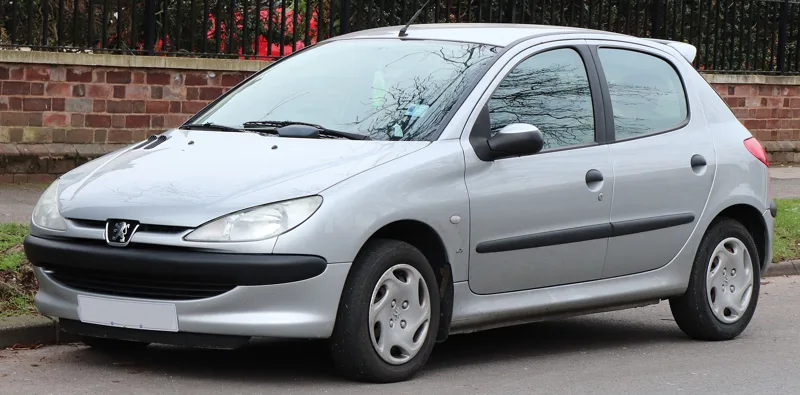
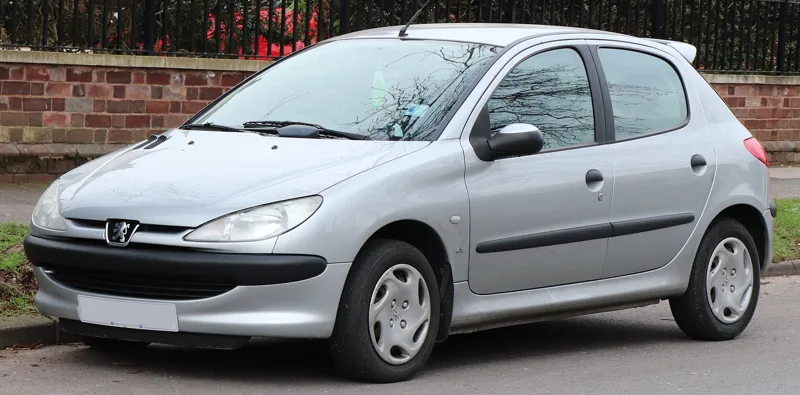
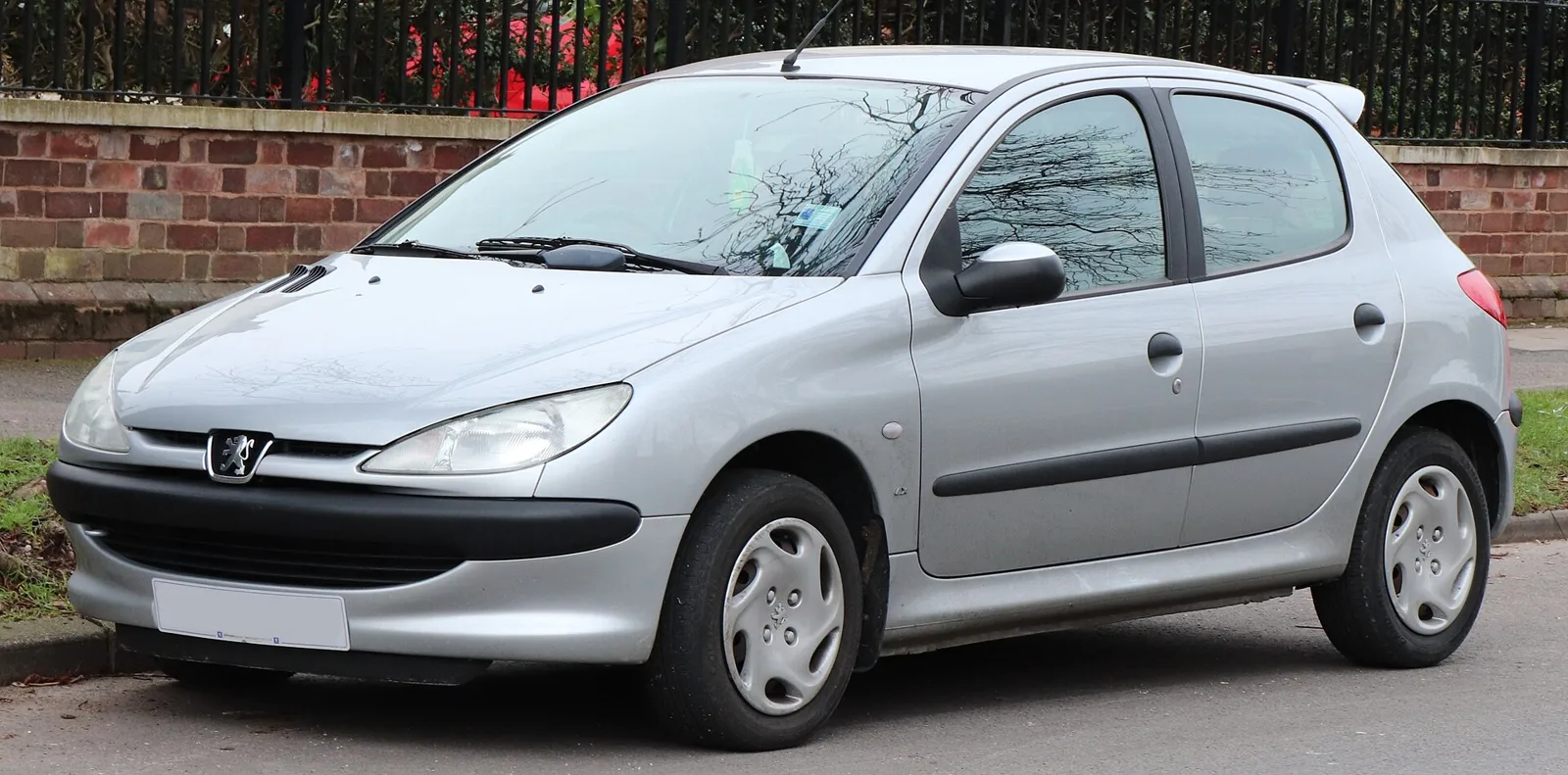
Buyers had wanted a Peugeot supermini in the 205's mould, so the 206 launched in 1998 as its direct replacement.
Why does the 205 still matter?
The 205 remains a benchmark in group tests of new GTI-style hot hatches. Its influence on Peugeot's design and its success in rallying keep it in the conversation among enthusiasts.
In October 2020 Peugeot announced a factory restoration programme for the 205 GTI, which was to start in 2021 and was linked to the marque's 210th birthday celebrations. The cars were to be restored to as-new condition, with some unavailable parts made on 3D printers.
What are the Peugeot 205 specifications?
The table lists the main figures across the 205's life. Where a figure belongs to one version, the table says so, so the GTI and Rallye values do not get mixed up with the standard car.
| Specification | Detail |
|---|---|
| Body | Supermini (B-segment); three-door (X) and five-door (G) bodies |
| Production years | 1983 to 1999, single generation |
| Launch | 25 February 1983 |
| Suspension | MacPherson struts front; trailing arms with torsion bars rear |
| Engine range | 954 cc to 1905 cc, carburettor or fuel injection |
| Diesel | PSA XUD; 1769 cc (XUD7) and 1905 cc (XUD9) |
| GTI 1.6 | XU5J, 105 PS (77 kW; 104 hp) |
| GTI 1.9 | XU9JA, 128 PS (94 kW; 126 hp); 122 PS (90 kW; 120 hp) catalysed |
| Rallye | TU24, 1294 cc, 103 PS (76 kW; 102 hp); no more than 794 kg |
| Turbo 16 road car | 1,775 cc; about 200 PS (197 bhp; 147 kW); 200 built |
| Total sales | 5,278,050 units |
| UK peak | 374,773 registrations in 1994 |
Frequently asked questions
Was the 205 sold as a three-door and a five-door?
Yes. Three-door models carried the X badge and five-door models carried the G badge, with the GTI as a separate case. The trim scheme was unusual, and the badges helped buyers tell the body styles apart at a glance.
How many Peugeot 205s were built?
The total sales figure is 5,278,050 units across the 1983 to 1999 production run. That makes the 205 one of the most successful Peugeot models, and its UK sales alone reached potentially 400,000 units.
How much did a Rallye weigh?
The Rallye weighed no more than 794 kg (1,750 lb). Peugeot achieved that by removing much of the soundproofing and electrical equipment, which turned it into a lightweight driver's car with a spartan interior.
What replaced the 205?
The 206 launched in 1998 as the direct replacement for the 205. The 106 had already become Peugeot's smaller front-engined car from 1991, and the 306 arrived in early 1993 to replace the 309 rather than the 205. The 205 nonetheless kept selling in the markets that still wanted it.