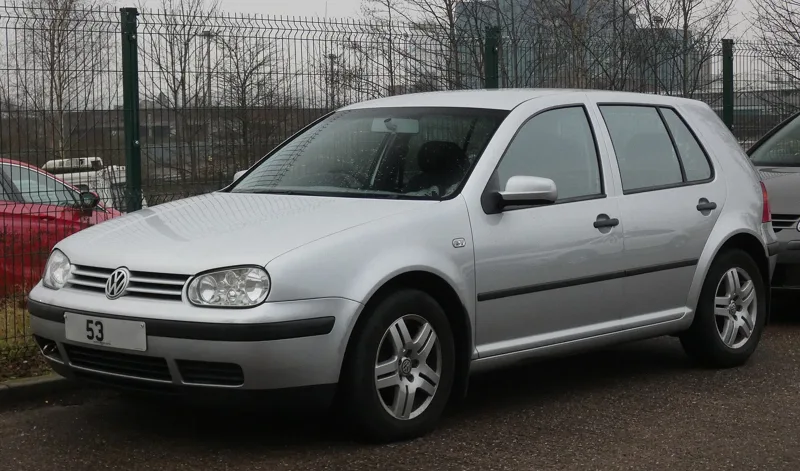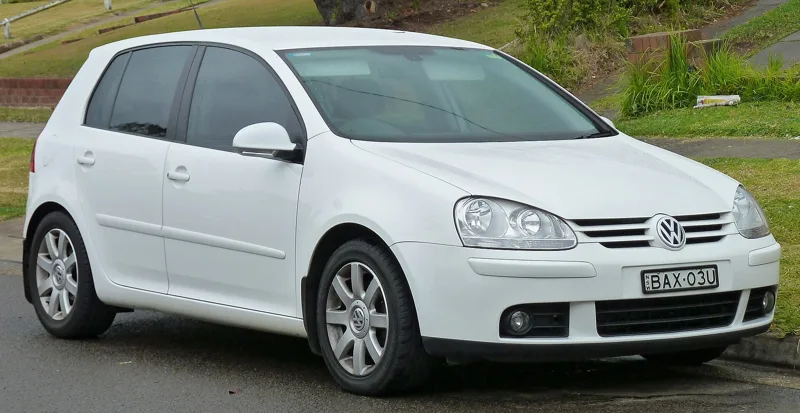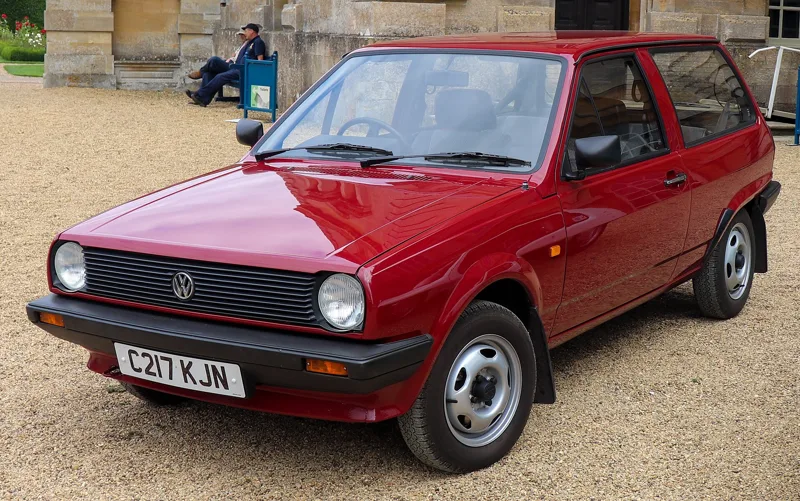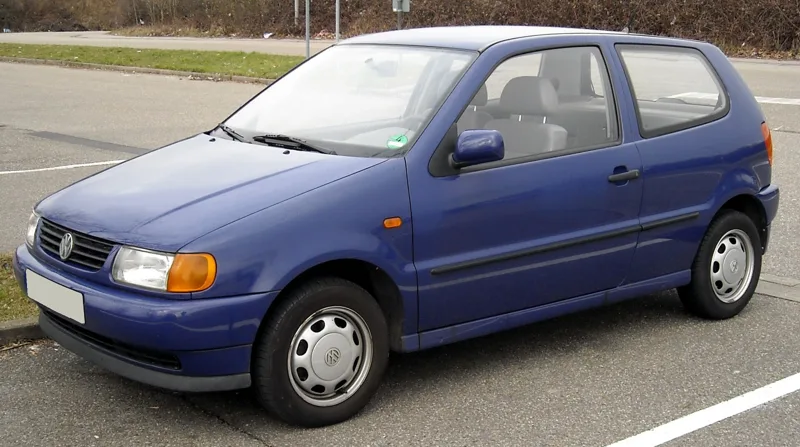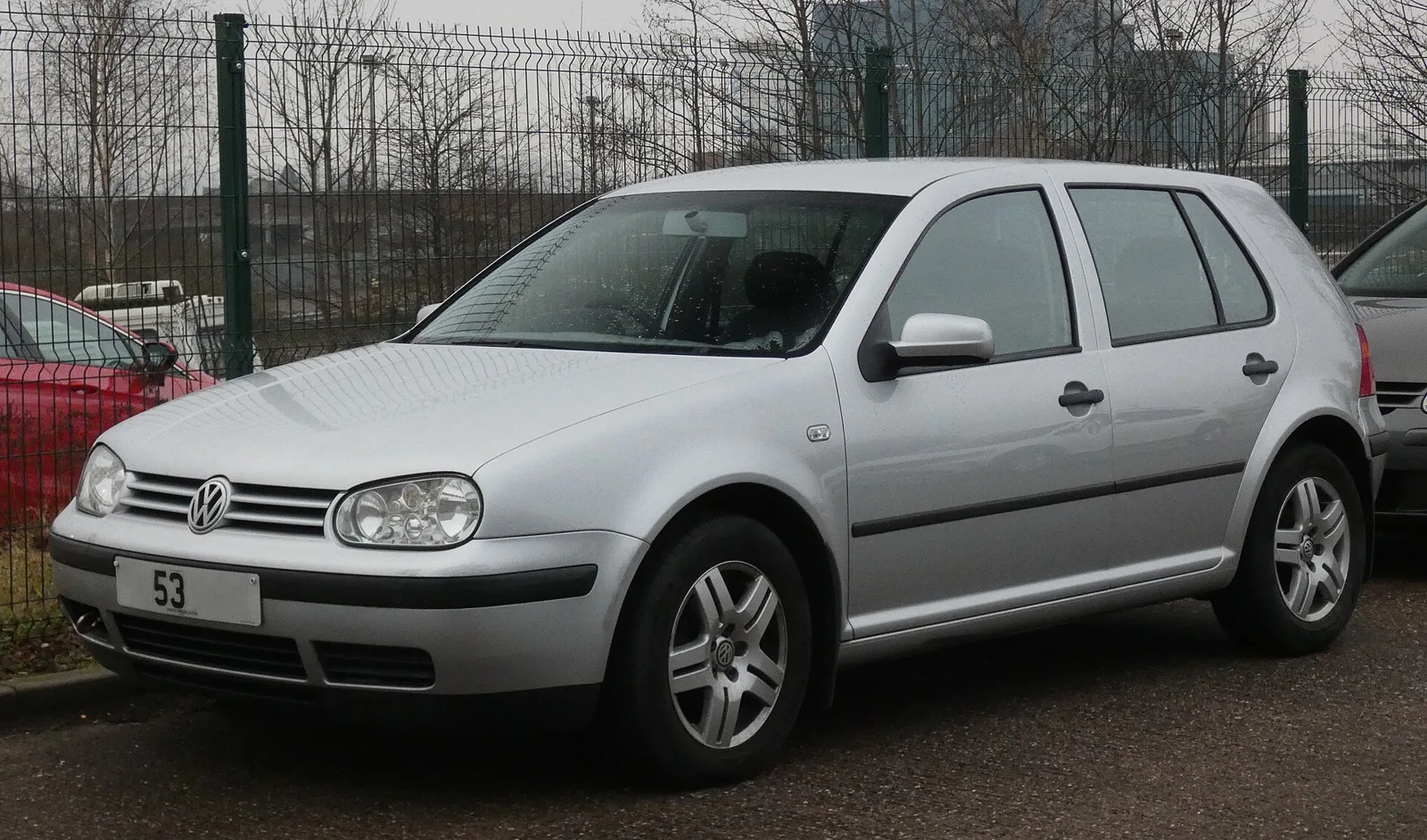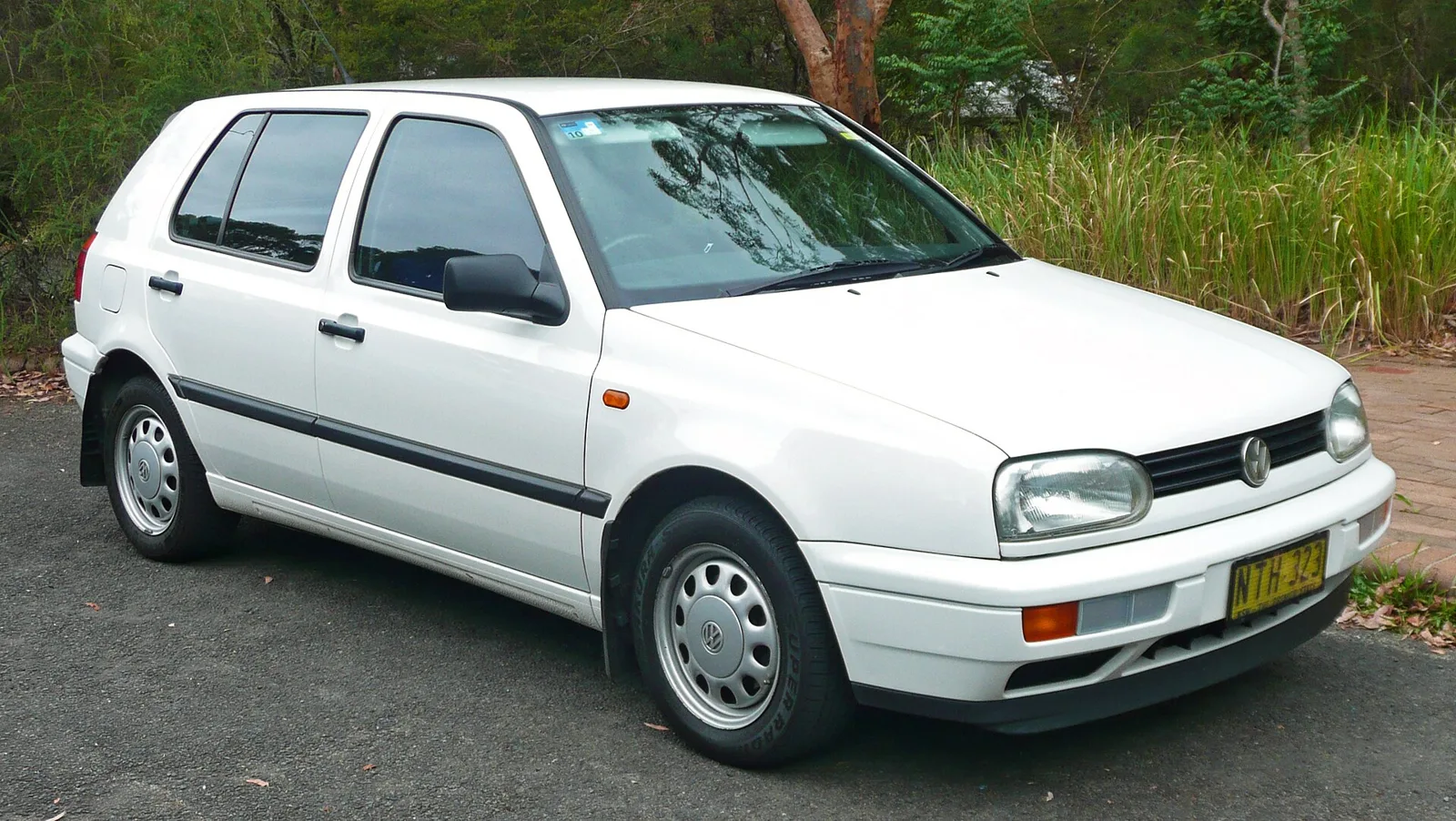
The third Golf brought a 16-valve GTI, a diesel with direct injection, an estate and a Cabrio, and it became the first Volkswagen to win Europe's top award.
The Volkswagen Golf Mk3 was the third-generation Golf, launched in Europe in 1991 and sold until 1997 in most markets. It introduced a 16-valve GTI and a direct-injection TDI, added an estate, and won European Car of the Year for 1992.
The Volkswagen Golf Mk3 is the third generation of the compact family hatchback, and it succeeded the Mk2. It reached mainland Europe in August 1991 and British showrooms in February 1992. A 16-valve GTI, a direct-injection diesel and an estate all joined the range during its run, and the car went on to win European Car of the Year for 1992.
Why did the Golf Mk3 take so long to reach North America?
The North American launch slipped to the spring of 1994, and the Jetta name had been preserved there from the start. Volkswagen first planned to supply American and Canadian dealers from its plant in Puebla, Mexico, but quality control problems led the American arm to reject those cars. Labour unrest at the plant added further delays.
The third-generation Golf and Jetta finally arrived as 1993 models in the San Diego area of California and in Canada. The rest of the continent followed in the autumn, with 1994 models.
A Golf that took the Volkswagen badge to the top of European motoring awards and still won fans with its GTI and diesel engines.
What body styles did the Mk3 come in?
As with earlier Golfs, the Mk3 was offered as a three-door or five-door hatchback. An estate arrived in early 1993, bringing the range into line with rivals such as the Ford Escort and the Vauxhall and Opel Astra, which had long offered estates.
The three-box sedan, now with four doors only, took the Vento name in Europe to escape the Jetta's stodgy image there. In North America the old Jetta name stayed. Some markets also sold a light commercial van based on the three-door, with a flat plywood floor, often blanked rear windows and a payload of 510 kg (1,124 lb).
Britain's version used only the Umwelt engine, with blanked rear glass, a cloth interior, power steering and a five-speed gearbox. The Umwelt diesel was a 1.9-litre turbodiesel with a catalytic converter and 75 PS (55 kW) of output.
Which engines defined the Mk3 range?
The entry-level engine was an all-new 1.4-litre petrol unit. A 16-valve GTI arrived in 1993 with a 2.0-litre engine producing 150 PS (110 kW; 148 hp). Above it sat the more powerful VR6 six-cylinder, so buyers could move from a small petrol engine right up to a six.
The Mk3 also marked the start of the European diesel boom. Volkswagen introduced direct injection to the Golf in 1993 with the TDI, rated at 90 PS (66 kW; 89 hp). A naturally aspirated 1.9-litre SDI with 47 kW (64 PS; 63 hp) sat lower in the range. Every version came with fuel injection from launch, which suited EEC rules requiring new cars sold from January 1993 to have either fuel injection or a catalytic converter.
The Ecomatic was a clutchless diesel manual that freewheeled once the driver lifted off the accelerator. The engine cut out once the car had been coasting for 1.5 seconds more, and pressing the throttle restarted it. Volkswagen had pioneered similar technology on the Polo Formel E in the 1980s.
Why did the Mk3 win European Car of the Year?
Judges picked the Mk3 as the 1992 European Car of the Year, which made it Volkswagen's first winner of that title. The same year it also won the What Car? Car of the Year title in Britain, a double that signalled how well the car was received across Europe.
The range covered family hatchbacks, estates and performance models, and the GTI and VR6 gave enthusiasts a reason to look twice at the badge. The Mk3 was also marketed in Japan alongside the Polo, where both cars fitted the small size class rules that encouraged sales.
How did the Mk3 Cabrio come about?
The Mk3 Cabrio replaced the earlier Cabriolet, which had been based on the first-generation Rabbit. It arrived in 1994 for the 1995 model year, and it shared its body with the hatchback, so the convertible looked like a natural extension of the range.
In 1998 the Cabrio was facelifted, with front, rear and steering wheel styling borrowed from the Golf Mk4. The revised car reached non-euro markets in mid-1999, and enthusiasts often call these facelifted cars Mk3.5 Cabrios. Volkswagen discontinued the Golf Cabrio in 2002 with a special edition named the Last Edition.
What were the Mk3's performance models?
The GTD was the diesel-powered variant of the high-performance GTI, and it carried the sporting look of its petrol sibling with a diesel engine under the bonnet. Enthusiasts could have the GTI's styling without the petrol engine's thirst, which fitted the diesel craze that later swept Europe.
The cancelled A59 was meant to be a four-wheel-drive car with a 275 hp (205 kW) turbocharged 1998 cc engine, a body built from carbon fibre and Kevlar, and a full roll cage inside. The team hoped it could take the 1994 World Rally Championship, and a prototype survives at the Volkswagen Museum.
In the United Kingdom the Golf Driver offered the GTI look, with a GTI body kit, Orlando alloys and a small boot spoiler. It was essentially a standard Golf 3 dressed to suggest the hot hatch.
What was the CitySTROMer?
The CitySTROMer was a fully electric version of the Mk3, with a limited production run of around 250 cars. It was mainly sold in Germany and carried six lead-acid batteries in the engine bay, with a further 10 underneath the luggage area.
Its range was approximately 50 km (31 mi). A small amount of diesel could be added to provide heat for the cabin, so the car kept a conventional heater alongside its electric drive.
Which special editions did the Mk3 get?
Volkswagen produced a long list of special editions for the Mk3, from anniversary cars to tour tie-ins. Most were built in small numbers, and many were differentiated by a sticker, a badge or a set of trim parts rather than by mechanical changes. Some editions were sold in a single market only, so the list varies from country to country.
Anniversary and sporting editions
The 20th Anniversary GTI marked two decades of the GTI name. Volkswagen built 1,000 of them, in both three-door and five-door form, split into 600 8-valve cars, 150 16-valve cars and 250 TDI models. The diesel version was produced exclusively for Europe and was not sold in the UK.
Checkered Recaro front sport seats, red seat belts, a leather golf ball gear knob and red stitching on the wheel and gaiter set the anniversary car apart. It rode on 16-inch BBS RS 722 alloy wheels, and buyers could add an electric sunroof, air conditioning or metallic black paint. Insurance was rated on the standard GTI, which helped the car's appeal.
The Sport edition carried a Sport Edition sticker, while the Classic used a silicone badge and a retro look. The Cool was marked with a Cool sticker and a handful of minor design changes, and the Rabbit Edition sold only in Austria with a rabbit badge.
Lifestyle and tour editions
The Otmar Alt edition was limited to 1,000 units and displayed artwork by the artist Otmar Alt across a fully customised interior. The Highline added full leather, wood accents and a Highline sticker on the boot, while the Coast was a Cabrio-only edition with a Coast graphic.
Volkswagen also sponsored three rock tours in the 1990s, with a special Golf for each. The Pink Floyd Edition arrived in 1994, the Rolling Stones Edition in 1995 and the Bon Jovi Edition in 1996, all with distinctive exterior markings. The TREK and K2 editions followed in 1997, with a bicycle carrier and a ski or snowboard carrier respectively.
UK and continental editions
The Kamei Edition used a complete body kit from the Wolfsburg aftermarket maker Kamei and wore a badge on the right of the grille. The Colour Concept came in five colours, including Flash Red and Salsa Green, with a leather interior matched to the paint and 15-inch BBS Solitude wheels.
In Britain the SE, built from 1996 to 1997, adopted a GTI body kit, tinted glass and GTI taillights. The Match edition added a CD player by Sony, power steering and six-spoke wheels, and Match II kept the theme with a metallic badge and a custom fabric interior. The Henri Leconte edition offered a leather interior with signed seats.
The Henri Lloyd Yachting edition came from the GT model, with a special front lip, a rear bumper extension and a unique grille. The Ryder edition had minor design changes but no sunroof, and the Family edition was essentially a standard Mk3 with a custom sticker.
North American editions
The 1997 model year brought the GTI Driver's Edition, available in Ginster Yellow and Jazz Blue. It had red stitching on the steering wheel, a shift knob made of aluminium and leather, silver gauge faces and 15-inch Speedline alloys with red brake calipers. Many of its extras later became standard on the 1998 GTI VR6, so the VIN is the best way to confirm a Driver's Edition.
The Harlequin was a 1996 North American special built in Puebla. Each one had a grey and black interior that tied the four body colours together. Its four body colours were Pistachio Green, Chagall Blue, Ginster Yellow and Tornado Red, with the panels swapped so no two adjacent parts shared a colour. Reported totals varied between 264 and 275 cars, each costing $150 more than a stock Golf.
The Wolfsburg Edition was sold in the United States alongside the Jetta of the same name. It added an enhanced white and tan interior, smoked tail lamps, premium alloys, remote entry and a tilt-slide sunroof, and it used the 8-valve SOHC 2.0 L engine only.
Why are Mk3 Golfs hard to find today?
Many anniversary cars and other specials passed through company fleets and leasing in Britain before reaching the second-hand trade. Only a few hundred of the anniversary cars, out of 1,000 built, are thought to remain today, so surviving examples are scarce.
Reports tie the steel Volkswagen used to serious corrosion, most often in the floor pan, the door sills and the rear hatch. Before buying one, a prospective owner should inspect the floor pan closely for holes and patches.
What happened to the Sarajevo factory?
The plan had been to build the Mk3 at the TAS factory in Sarajevo, as with the two earlier generations. The Yugoslav War broke out as the car was launched, and the factory was destroyed. TAS went bankrupt in 1995, so the car was never built in Bosnia and Herzegovina.
A single example rolled off the assembly line in Sarajevo, and its fate is unknown. The Mk3 was replaced by the Mk4 in October 1997, though it lived on in some markets, including South Africa for the 1998 model year and in Canada, Mexico and the United States into 1999.
Golf Mk3 specifications at a glance
| Specification | Detail |
|---|---|
| Generation | Third generation Golf, successor to the Mk2 |
| European launch | August 1991, mainland Europe |
| UK launch | February 1992 |
| North American launch | 1993 models in San Diego; 1994 models nationwide |
| 16-valve GTI | 2.0 L, 150 PS (110 kW; 148 hp), from 1993 |
| TDI | 90 PS (66 kW; 89 hp), direct injection, from 1993 |
| SDI | 1.9 L naturally aspirated, 47 kW (64 PS; 63 hp) |
| Van payload | 510 kg (1,124 lb) |
| CitySTROMer range | Approximately 50 km (31 mi) |
| Successor | Golf Mk4, October 1997 |