A richer interior, Haldex four-wheel drive borrowed from Audi and an R32 that brought the first dual-clutch gearbox to a production car.
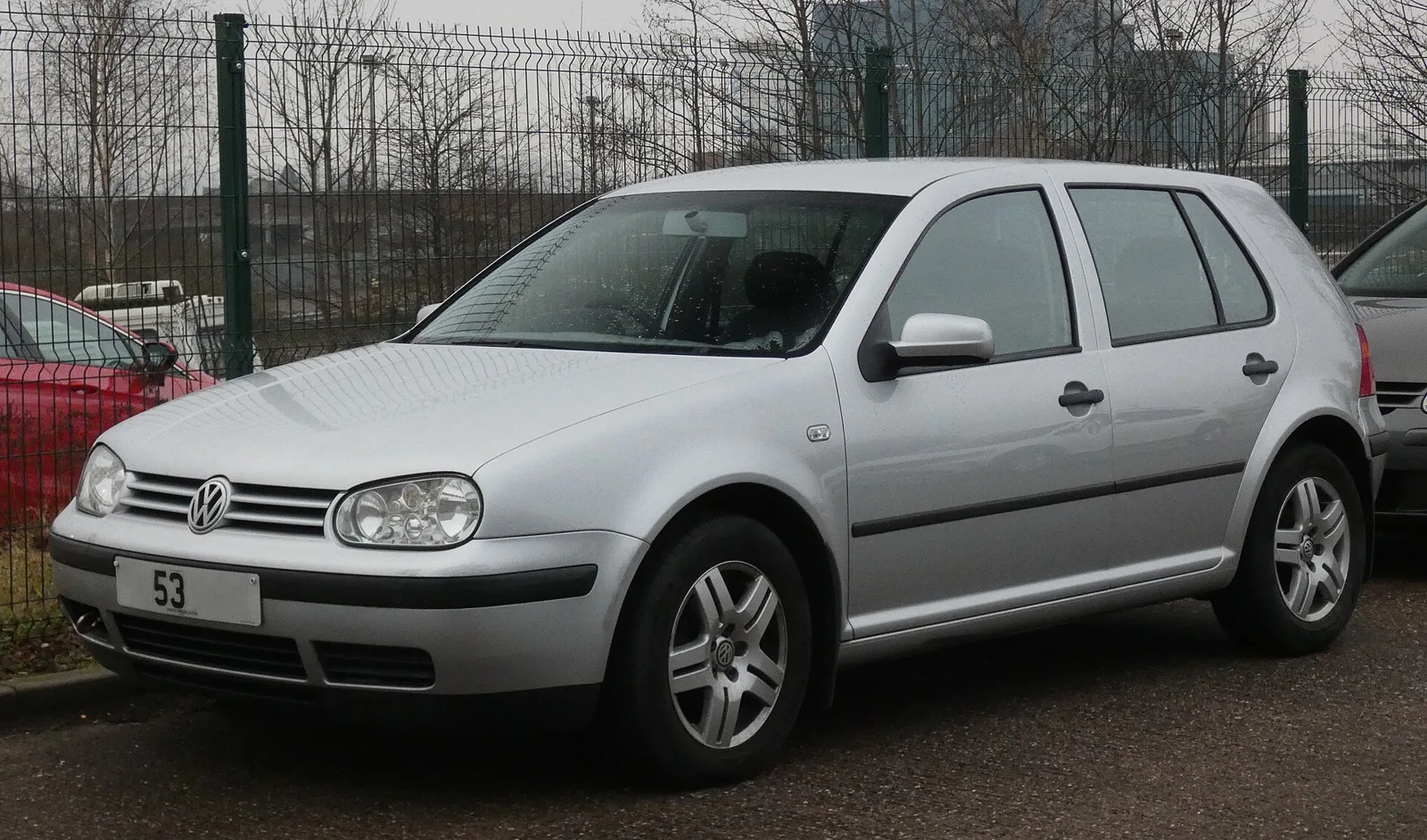
The Volkswagen Golf Mk4, or Type 1J, was launched in 1997 as the fourth-generation Golf. It moved the car upmarket with a richer interior and Haldex four-wheel drive, and it was succeeded in European markets by the Mk5 in late 2003.
The Volkswagen Golf Mk4, also known as the Type 1J, was the fourth generation of the Golf compact car. It was launched in October 1997 for the 1998 model year, and it became Europe's best-selling car in 2001 before slipping to second place behind the Peugeot 206 in 2002.
Why did the Mk4 move the Golf upmarket?
Volkswagen used the Mk4 to push the Golf further upmarket, with a higher quality interior and higher equipment levels. The policy had begun a year earlier with the Passat B5. Some higher trim versions of the Golf cost as much as the Audi A3.
That move placed the Golf in direct competition with Volkswagen's luxury sibling. The Audi A3 was the first car built on this floor pan, and the quality of the Golf was comparable with it.
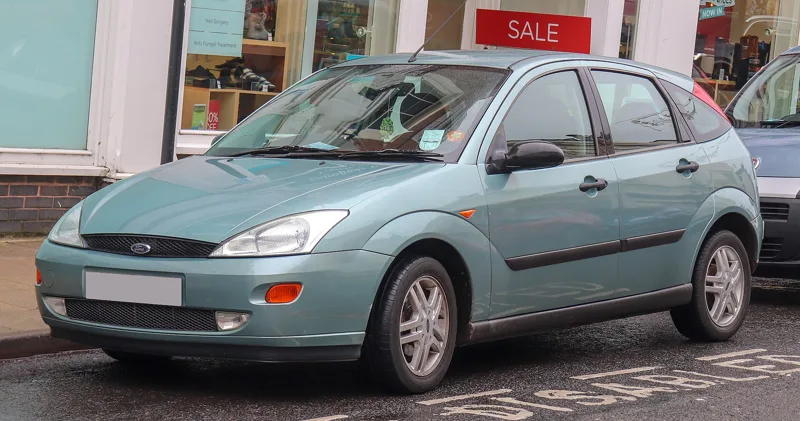
The Mk4 was praised for its quality improvements, but it was criticised for its handling. The car was also compared with the Mk1 Ford Focus of the time, which had independent rear suspension in its 2WD models.
The Mk4 put the Golf on a higher price point, and the R32 gave it a dual-clutch first.
What was new under the skin?
The Mk4 introduced Haldex 4 Wheel Drive, a system previously found only on Audi products. It was used with the 1.9 TDI PD engines and with the VR6-powered models, and its rear axle and rear floor pan were revised and shared with the Audi TT 8N.
Rear suspension varied by model. The 2WD cars used a torsion beam rear axle, which drew comparisons with the Mk1 Ford Focus, whose 2WD models had independent rear suspension.
Xenon headlamps were optional, and rain-sensing wipers were offered as well. Volkswagen backed the car with a 12-year anti-corrosion warranty, a level of cover that was rarely offered at the time.
How did the GTI change in the Mk4?
The Mk4 was the only Golf generation without a GTD nameplate. Its GTI came in petrol and diesel forms, and it ran slightly lowered suspension. That placed the GTI between sport and comfort within the range. Its equipment reflected that balance.
Premium interior features set the GTI apart from the standard car. Those touches reflected the upmarket policy, but they also made the car less sporty than the generations before it.
The Mk4 GTI is often looked down upon for that softer character, since Volkswagen had downplayed its sportiness in favour of comfort. Volkswagen rebuilt the GTI's sporting image through the 25th Anniversary Edition and then the Mk5 Golf that came next.
Which engines did the Mk4 offer?
Engines ran from 1.4 to 3.2 litres, with outputs between 90 and 150 PS (66 to 110 kW). The range added a 2.3-litre VR5 and kept the 2.8-litre V6 and the 3.2-litre R32 at the top. The choice ran from economical diesels to the top-end R32.
The VR6 used a narrow 15-degree Vee design, which made it a distinctive engine in the Golf range. A 24-valve VR6 arrived for the 2002.5 model year, producing 204 hp, which was 26 hp more than the 12-valve engine it replaced.
In Europe the VR6 4Motion variant was produced from 1999 with 204 hp, a 24-valve engine from the start.
The 1.9 TDI gained the Pumpe-Duse direct-injection system in 2004. In North America the 1.9 TDI was the diesel choice, rated at 48 mpg.
Across North America, the line-up grew in steps. A 1.8-litre turbocharged petrol engine arrived in 2000, and the GTI took a 1.8T 20-valve unit as its base engine. The GLX topped the range with the 2.8 VR6 at 174 hp (130 kW).
Naturally aspirated diesel power came from the 1.9-litre SDI unit, which sat alongside a 1.9-litre turbodiesel in the range.
Where was the Mk4 built and sold?
Production of the Golf 4 took place in Germany, South Africa, Slovakia, Brazil, Belgium and China. The plants spanned six countries, a wide spread for one model. The Mk5 replaced it in European markets in late 2003, for the 2004 model year.
Building continued in South America and China until 2014, long after the European car had changed. Vogosca in Bosnia and Herzegovina also built the Golf, as it had made the Mk1 and Mk2 models. Those later plants built the car for developing markets.
The Golf was introduced to North America in mid-1999. There the saloon was the Jetta, and the wagon was sold as the Jetta Wagon rather than under the Bora name used in Europe.
What body styles did the Mk4 come in?
The Mk4 came as a three-door or five-door hatchback, and it was also offered as a five-door estate. In Europe the estate was called the Variant, and it arrived in 1999. Each body shared the same basic underpinnings. That gave buyers a choice without a separate platform.
In 2006 the Variant was discontinued, and in 2007 the Mk5 Variant took over. The Mk4 platform remained in use across the Volkswagen Group for longer, lasting until 2004, or 2006 for the Bora and Variant models.
Bora was the name given to the saloon version of the Mk4. It launched around a year after the hatchback, and it had its own identity, with unique rear doors, front wings and bonnet. Inside, its cabin was almost identical to the Golf's.
What trims did buyers choose in Europe?
In Europe the base trims were Trendline, Comfortline, Highline and GTI. Trim levels were country-specific in their detail, but those four names were the common base across markets. Ocean, Pacific and Edition trims were modifications of those four. The UK added its own engine line-up on top.
The United Kingdom sold the V5 engine with 150 bhp from 1997 to 2000, and with 170 bhp from 1999 to 2003. The UK line-up also included the GT TDI, GTI TDI, GTI and V5, V6 and 4MOTION versions.
What was the GTI 25th Anniversary Edition?
The 25th Anniversary GTI was a European special edition that marked the first GTI of 1976. It was launched in 2001 and came in Tornado Red, Reflex Silver and Diamond Black. Its launch year was 2001, which matched the car's quarter-century mark.
Its equipment included 18x7.5-inch BBS RC wheels and a 02M 6-speed manual gearbox. Its brakes were larger, with 312 mm front discs and red-painted calipers, and its suspension was lowered and sport-tuned.
The US version, announced at the 2002 New York International Auto Show, was called the GTI 337 Edition. Only Reflex Silver was offered for it, and it was otherwise substantially the same as the European car.
How did the GTI 20th Anniversary Edition differ?
Volkswagen of America built 4,200 GTI 20th Anniversary cars for 2003, of which 4,000 went to the United States and 200 to Canada. The car marked 20 years of the GTI in North America. Its extra features were mostly shared with the 337 Edition.
Colours were limited to Imola Yellow, Jazz Blue and Black Magic Pearl. The cars wore 18-inch OZ Aristo alloy wheels, and most of the interior features came from the 337 Edition.
The GTI reached North America in 1983, about seven years after Europe, so the 20th anniversary marked two decades of the car there. The 20th Anniversary car had a sunroof, Recaro seats with red GTI embroidery and an eight-speaker Monsoon stereo as standard. Its mechanical package was nearly identical to the 337 Edition, with a 1.8T engine and the 6-speed manual 02M transmission.
What was the R32?
The R32 was built in 2002 for the 2003 model year, and it was the world's first production car with a dual-clutch gearbox. It was offered first on the German market, and its engine was a 3.2-litre VR6 producing 241 PS.
Output was 241 PS (238 bhp; 177 kW) at 6,250 rpm and 320 Nm (236 lb-ft) at 2,800 rpm. Its drive system was Haldex 4motion four-wheel drive, with a six-speed manual transmission.
Many of its mechanical parts came from the 3.2-litre Audi TT.
Acceleration to 0-100 km/h (62.1 mph) took 6.6 seconds, or 6.4 seconds with the DSG gearbox. Over the quarter-mile it took 14.1 seconds, reaching 99.2 mph (159.6 km/h) at the line.
Australia received 200 Edition 200 cars, while the US allocation of five thousand cars was planned over two years and sold out in 13 months.
How did the Mk4 fare in reviews and awards?
The Mk4 won awards in both new-car and used-car settings. Those included the 1998 What Car? Best Small Hatch and the 1998 Top Gear Best Family Car. Its wins spanned small hatch, family car and used car categories. The list ran across new and used car honours in the UK and elsewhere.
Further honours include a 2004 SEMA Gran Turismo Award and a 2000 CAP Used Car of the Year title in the best small hatch category. The used-car award suggests the Mk4 kept a strong reputation after it left showrooms.
A quieter story appears in the Golf's public life. Joseph Ratzinger bought a fourth-generation Golf in 1999 to drive around Rome, years before he became Pope Benedict XVI.
How long did the Mk4 platform last?
The Mk4 platform ended in North America in 2005, except in Canada. In Brazil, the facelifted car known as the Mk4.5 continued until 2013. The platform's life outlasted the car's European production. Its use in China and South America extended it further.
Volkswagen Brazil introduced a major restyling in 2007, and the facelifted car was also sold in Canada. Those changes kept the model in step with the wider Golf family.
China followed a different path, with production from 2003 by FAW-Volkswagen alongside the Bora HS. A Canadian entry-level City Golf was priced from C$15,300 in 2008 and was offered.
What did the Golf Cabriolet look like?
The Golf Cabriolet was a facelifted Mk3 Golf Cabrio, styled to resemble the Mk4 and known as the Mk3.5. The restyling covered the front bumper, grille, fenders and bonnet, so the open car looked like its closed sibling from the front.
Inside, the Cabriolet gained a three-spoke leather steering wheel and a textured dashboard known as the dimpled dash. Those changes brought the convertible's cabin closer to the Mk4 hatchback in feel. Those were largely non-structural changes, which kept the work straightforward.
From the 2000 model year, the immobilizer and engine computer from the Mk4 were fitted to the older Mk3 engine mechanicals. That shared hardware was one of the ways the Mk4 styling reached the Mk3 car.
What did the North American Golf offer?
The Golf 4 reached North America in mid-1999. Its launch engines included the 1.9 TDI, rated at 48 mpg, which gave the car a clear economy claim in the market. Those choices shaped the range for the first years of sales.
A 1.8-litre turbocharged petrol engine followed in 2000, alongside the 12-valve 2.8-litre VR6. Those two engines covered the economy and the performance ends of the North American range.
Volkswagen Golf Mk4 specifications
| Specification | Detail |
|---|---|
| Launch | October 1997, 1998 model year |
| Engine range | 1.4 to 3.2 litres, 90 to 150 PS (66 to 110 kW) |
| Drive system | Haldex 4 Wheel Drive, previously only on Audi |
| Rear axle (2WD) | Torsion beam |
| R32 engine | 3.2-litre VR6, 241 PS (238 bhp; 177 kW) at 6,250 rpm |
| R32 torque | 320 Nm (236 lb-ft) at 2,800 rpm |
| R32 0-100 km/h | 6.6 seconds; 6.4 seconds with DSG |
| R32 quarter-mile | 14.1 seconds at 99.2 mph (159.6 km/h) |
| Successor | Golf Mk5, late 2003 (2004 model year) in Europe |
| Production end | South America and China until 2014 |