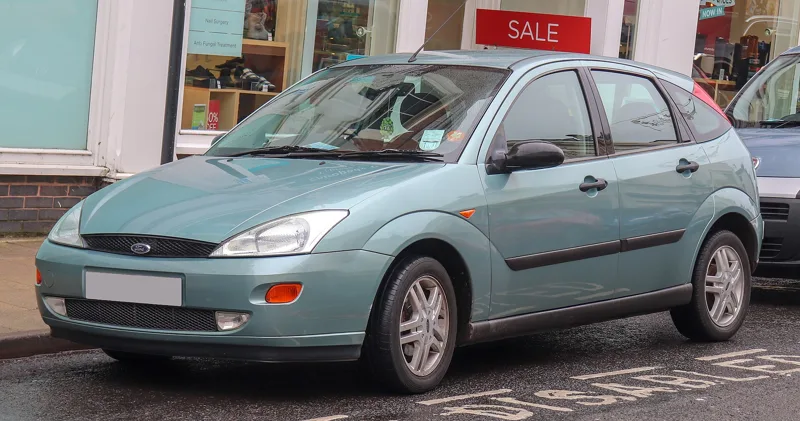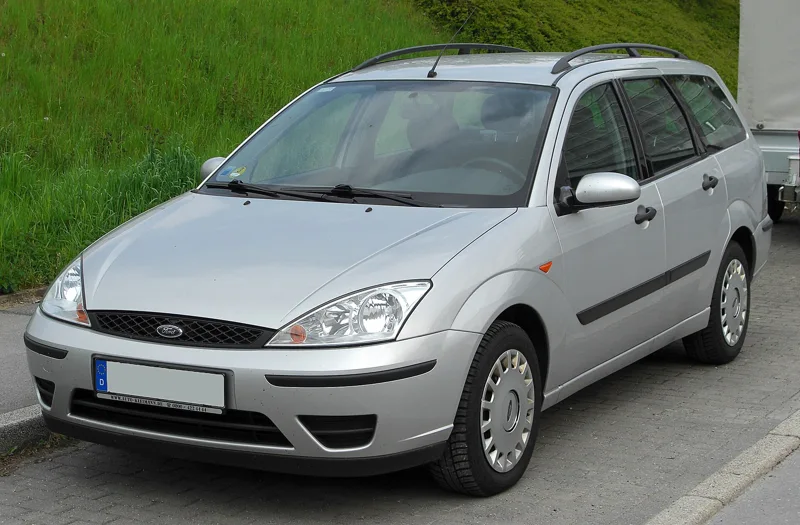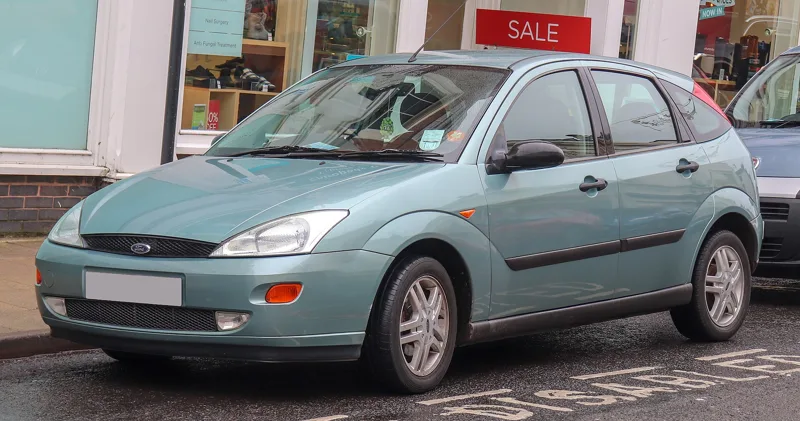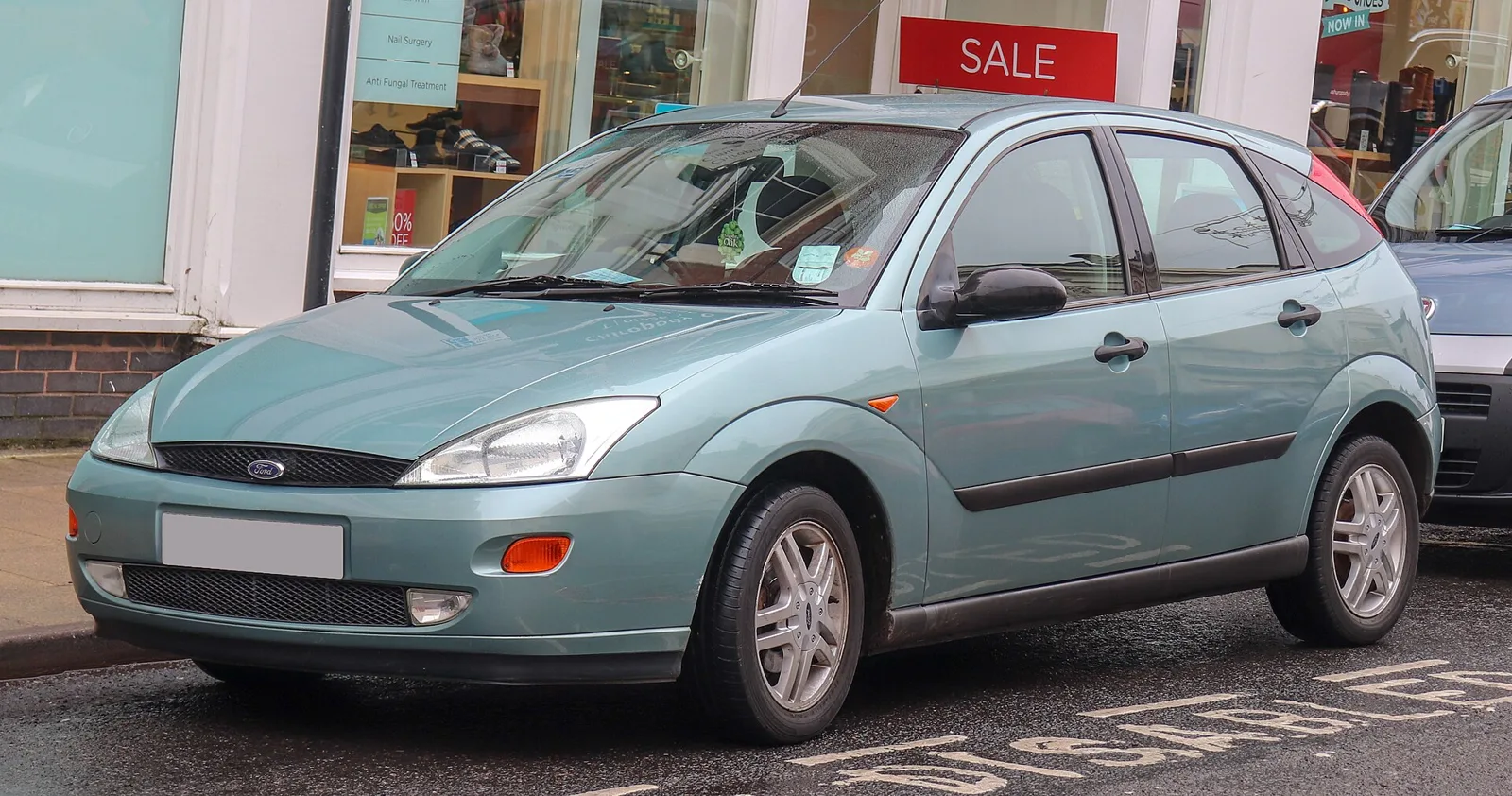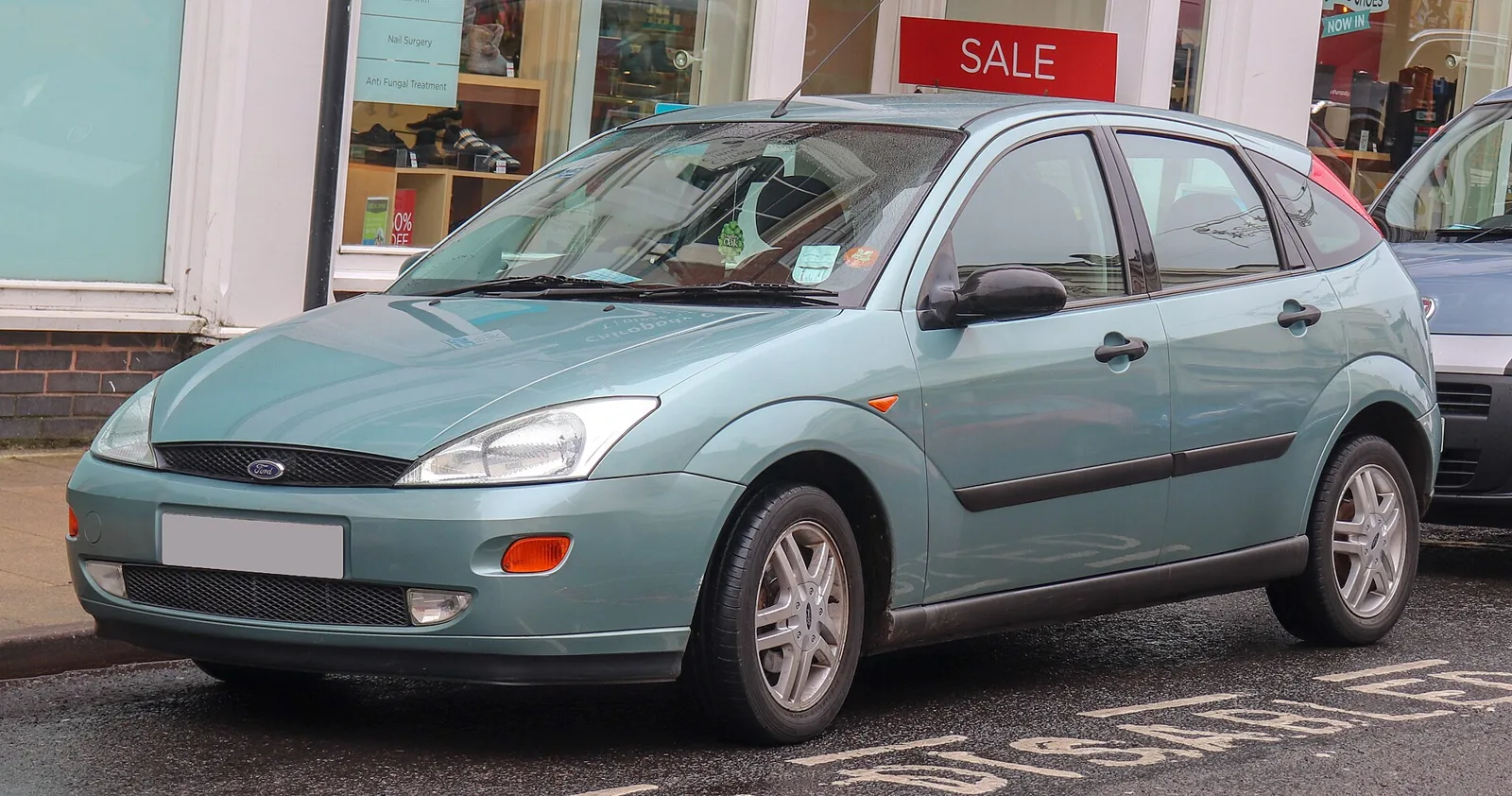
Two new compacts from the late 1990s, one with a rear suspension that set the pace and one that sold more copies across Europe, judged on handling, engines and equipment.
The Focus was revealed in March 1998 with Control Blade rear suspension and won European Car of the Year in 1999. The Golf Mk4, launched in October 1997, sold more cars across Europe in 2001 and offered a wider engine range, including diesels and a VR6.
The Ford Focus Mk I and the Volkswagen Golf Mk4 went head to head in the European compact class at the close of the 1990s, when both makers were lifting their small cars upmarket. The Focus won European Car of the Year in 1999, and its Control Blade rear suspension drew praise from testers. The Golf Mk4 led European sales in 2001, although reviewers were less kind about its handling.
Why were the Focus and Golf Mk4 compared?
Both were new compacts that arrived within months of each other, and both were built for the mainstream of the class. The Golf Mk4 went on sale in October 1997, while the Focus was revealed at Geneva in March 1998 and reached Europe in July of that year.
Volkswagen described the Golf Mk4 as a deliberate attempt to take the Golf further upmarket, a policy it had begun a year earlier with the Passat B5. The move put the Golf in direct competition with its luxury stablemate, the Audi A3, and some higher Golf trims cost as much as the A3.
The Focus was Ford's attempt at a true world car, sold in disparate markets with little modification. Ford had earlier tried the same idea with the Escort and the Mondeo, with mixed results, so the Focus was built to avoid the differences that had split those cars.
A compact with the better rear suspension met a Golf that sold more copies across Europe and asked more of its buyers.
Where did the two cars come from?
The Golf Mk4, type 1J, was the fourth generation of the Golf and the successor to the Golf Mk3. It was the best-selling car in Europe in 2001 and slipped to second behind the Peugeot 206 in 2002, before being replaced in late 2003 by the Mk5 in European markets.
The Focus was codenamed C170 during development, and it took its name from a Ghia concept car shown at Geneva in 1991. Ford had planned to keep the Escort nameplate, but the name Focus was chosen in early 1998, and a Cologne court dispute over the name in Germany was resolved without a separate German name.
In Europe and South Africa the Focus replaced the Escort, and in Asia and Australia it took over from the Laser. Halewood kept building the Escort until 2000 as a cheaper option beside the Focus, and Escort vans lasted until 2002.
The Focus received its mid-life facelift in late 2001. Revised headlamps with integrated indicators, revised bumpers and grille, and optional Xenon headlights and navigation came with it, along with a six-disc CD changer option and a damped and lit glovebox.
How did the two cars handle?
The Focus's rear suspension was a class-leading independent multi-link design, marketed as Control Blade. In 2WD models it gave the Focus strong body control and a quiet, absorbent ride, where many rivals used a cheaper twist-beam set-up.
Control Blade used a wide, pressed steel trailing arm with a hub carrier in place of two longitudinal rods and an expensive cast knuckle. Engineers said the design lowered the centre of gravity, reduced road noise and cut production costs while keeping the same body control.
In 2000 Motor Trend clocked the Focus at an average 62.6 mph through its slalom, and its testers said that beat a Jaguar XJ8L costing $62,000 and a $300,000 Bentley Continental. The Focus also benefited from engineers removing friction from its front suspension components.
The Golf Mk4 was praised for its quality gains but criticised for its handling. Its 2WD models kept a torsion beam rear axle, and reviewers compared it directly with the Focus, which had independent rear suspension on the same models.
Other makers followed the Focus. Volkswagen with the Golf V was among those that began offering multi-link rear suspension in the compact class after the Focus popularised the design.
How did critics react to the two designs?
Reviewers were split on the Focus's look from the start. Edmunds' Karl Brauer wrote in 2000 that editors either loved or hated the New Edge styling, and MachineDesign's Sherri Koucky said it mixed round shapes with funky geometric ones in a way that worked.
After the Focus took the European Car of the Year prize in 1999, William Diem of the New York Times argued that the prize vindicated Ford's risky design, especially the New Edge styling built from straight lines, curves and planes.
The Focus was also praised for its interior packaging. Its raised roofline, long wheelbase and raised front seating gave better sight lines and more rear footroom, and Ford marketed the higher seating as Command Seating.
The Golf Mk4 was judged in a different light. Its quality was a clear step up for Volkswagen, but the car's handling, especially in the 2WD models with torsion beam rear axles, was the point on which reviewers kept returning.
How did Volkswagen handle body styles beyond the hatch?
Volkswagen never built a convertible version of the Mk4 Golf. Instead it facelifted the Mk3 Golf Cabrio, giving it the front bumper, grille, wings and bonnet of the Mk4, a version colloquially called the Mk3.5.
The Cabrio's interior was largely the Mk3's, though it received a Mk4 three-spoke leather steering wheel, a textured dashboard and heavily bolstered seats with side airbags. Technical updates from 2000 brought the Mk4's immobilizer and engine computer to the older engine mechanicals.
The Golf Mk4 Variant estate arrived in 1999 and was in production until 2006, when the Mk5 Variant took over in 2007. In North America the estate was sold as the Jetta Wagon rather than the Bora name, and it was nearly identical to the European Golf wagon.
Specifications side by side
| Specification | Ford Focus Mk I | Volkswagen Golf Mk4 |
|---|---|---|
| Launch | Revealed March 1998; Europe from July 1998 | October 1997 for the 1998 model year |
| Body styles | Hatchback, sedan and wagon; five-door ZX5 hatch in North America from 2002 | Three- and five-door hatchback, five-door Variant wagon and Bora saloon |
| Rear suspension | Control Blade independent multi-link | Torsion beam on 2WD models |
| Petrol engines | 2.0-litre Zetec in North America; 2.3-litre Duratec nationwide from 2004 | 1.4, 1.6, 1.8, 2.0 and 2.3-litre VR5; 2.8-litre VR6; 3.2-litre R32 later |
| Diesel engines | Not given | 1.9-litre SDI and 1.9-litre turbodiesel, with 48 mpg rating for the North American TDI |
| Four-wheel drive | Not given | Haldex 4Motion with the 1.9 TDI and the VR6 |
| Safety | Airbags, available side airbags, ISOFIX, battery saver; AdvanceTrac in North America | Optional xenon headlamps and rain-sensing wipers |
| Warranty | Not given | Full 12-year anti-corrosion warranty |
| Recognition | European Car of the Year 1999 | Best-selling car in Europe in 2001 |
Which had the stronger engine range?
The Golf Mk4 offered the wider range, from a 1.4-litre petrol to a 2.8-litre VR6 and a 3.2-litre R32 that arrived much later. Its diesels included a naturally aspirated 1.9-litre SDI and a 1.9-litre turbodiesel, and power ran from 90 to 150 PS (66 to 110 kW).
The VR6 used a narrow 15-degree Vee design unique to Volkswagen, which made it shorter and lighter than other V6s with a single cylinder head. The 2.8-litre in the GLX produced 174 hp (130 kW), and a 24-valve version for the 2002.5 model year offered 204 bhp.
The Focus began in North America with a 2.0-litre Zetec. Ford refined its 110 hp engine in 2003 with a recalibrated throttle, and the 2.3-litre Duratec became available nationwide in 2004.
From 2000 the GTI's base engine was a 1.8-litre 20-valve turbocharged unit.
How did the two cars compare on economy?
The Golf's North American 1.9-litre TDI was rated at 48 mpg, which is the most eye-catching economy figure for either car. Volkswagen also brought the 1.9-litre pump-nozzle engine to the North American Golf and Jetta in 2004.
The Focus's efficiency offering was a flexfuel 1.6-litre Zetec that could run on gasoline or bioethanol. It was sold only in Sweden, although it stayed available in some countries after the Mk2 Focus arrived.
Golf diesel buyers had a broader choice of outputs, while the Focus leaned on its petrol engines for most of its range. For buyers who prized diesel economy, the Golf was the more complete offer.
Which special editions did each brand produce?
The Golf GTI 25th Anniversary Edition in 2001 celebrated the first GTI from 1976, and it came in Tornado Red, Reflex Silver and Diamond Black. It had 18-inch BBS wheels, red-accented Recaro seats, a six-speed manual and a lowered, sport-tuned suspension.
In 2002 Volkswagen sold the 25th Anniversary car in the US as the GTI 337 Edition, available only in Reflex Silver and only as a three-door. Volkswagen of America then built 4,200 GTI 20th Anniversary cars for 2003, with 4,000 for the US and 200 for Canada.
Ford's Focus editions were smaller in scale, from the Sony Limited Edition and Kona Editions in 2000, through the S2 Edition, to the Centennial Edition in 2003. The Mach Audio Edition followed in 2002, and the SVT models brought sportier variants to North America.
How did the Focus fare in North America?
Ford began selling the Focus in North America in October 1999 for the 2000 model year, as a three-door hatch, four-door sedan and five-door wagon. The five-door ZX5 hatch arrived for the 2002 model year and the car was among the ten best-selling cars in America shortly after launch.
AdvanceTrac electronic stability control was offered from the 2001 model year, and Ford ended the optional system in 2004. The 2002 Personal Safety System added dual-stage airbags, a crash severity sensor and pretensioners to the standard specification.
For 2005 the North American car gained styling and engineering changes, and the ST model of the ZX4 sedan replaced the SVT models that had been sold on the ZX3 and ZX5.
Where were the two cars built?
The Focus was built at Saarlouis and Valencia in Europe, and it was also produced in Santa Rosa in the Philippines, in General Pacheco in Argentina, in Chungli in Taiwan and in Vsevolozhsk in Russia. The Santa Rosa cars were exported only.
The Golf Mk4 was produced in Germany, South Africa, Slovakia, Brazil, Belgium and China. Its platform stayed in use across the Volkswagen Group until 2004, and the Bora and Variant models kept it until 2006.
Which car suits which buyer?
On the figures, the Focus suits a buyer who wants a compact with an independent rear suspension, a long equipment list and a flexfuel option. The Golf suits a buyer who wants a more upmarket interior, a wider engine line-up and a diesel that rated 48 mpg in North America.
The Focus has the better-regarded rear end for a driver who cares about handling, while the Golf offers the stronger engine line-up and the more upmarket cabin for a buyer who values comfort and choice.
Neither car wins outright. The Focus earned its European Car of the Year title and a reputation for handling, and the Golf won European sales in 2001 with a wider engine range. The decision depends on whether a buyer weighs the chassis or the cabin more heavily.