A 1981 to 1994 supermini with three body styles, a 1990 facelift and a supercharged G40 that cost little less than a Golf GTI.
The Volkswagen Polo Mk2 was built from late 1981 to 1994 as a hatchback, Coupe and Derby saloon. It introduced the 1043 cc engine with a Heron cylinder head, a 1990 facelift with square headlights and a supercharged G40 variant that reached 196 km/h (122 mph).
The Volkswagen Polo Mk2 was a supermini that ran from late 1981 to 1994. It came as a hatchback, a three-door Coupe and a saloon, and Volkswagen used it to develop its supercharged G40, which reached 196 km/h (122 mph).
The Mk2 spanned a 1990 facelift, a Spanish production story that began with SEAT and a supercharged model that Volkswagen built in small numbers.
Why did the Mk2 Polo look so different from the Mk1?
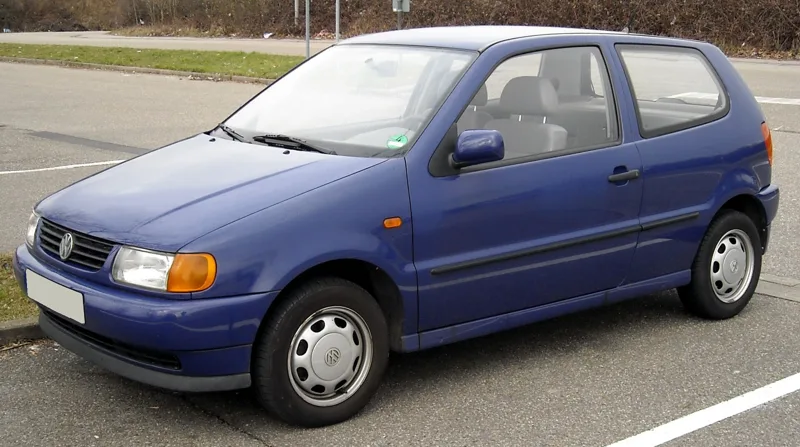
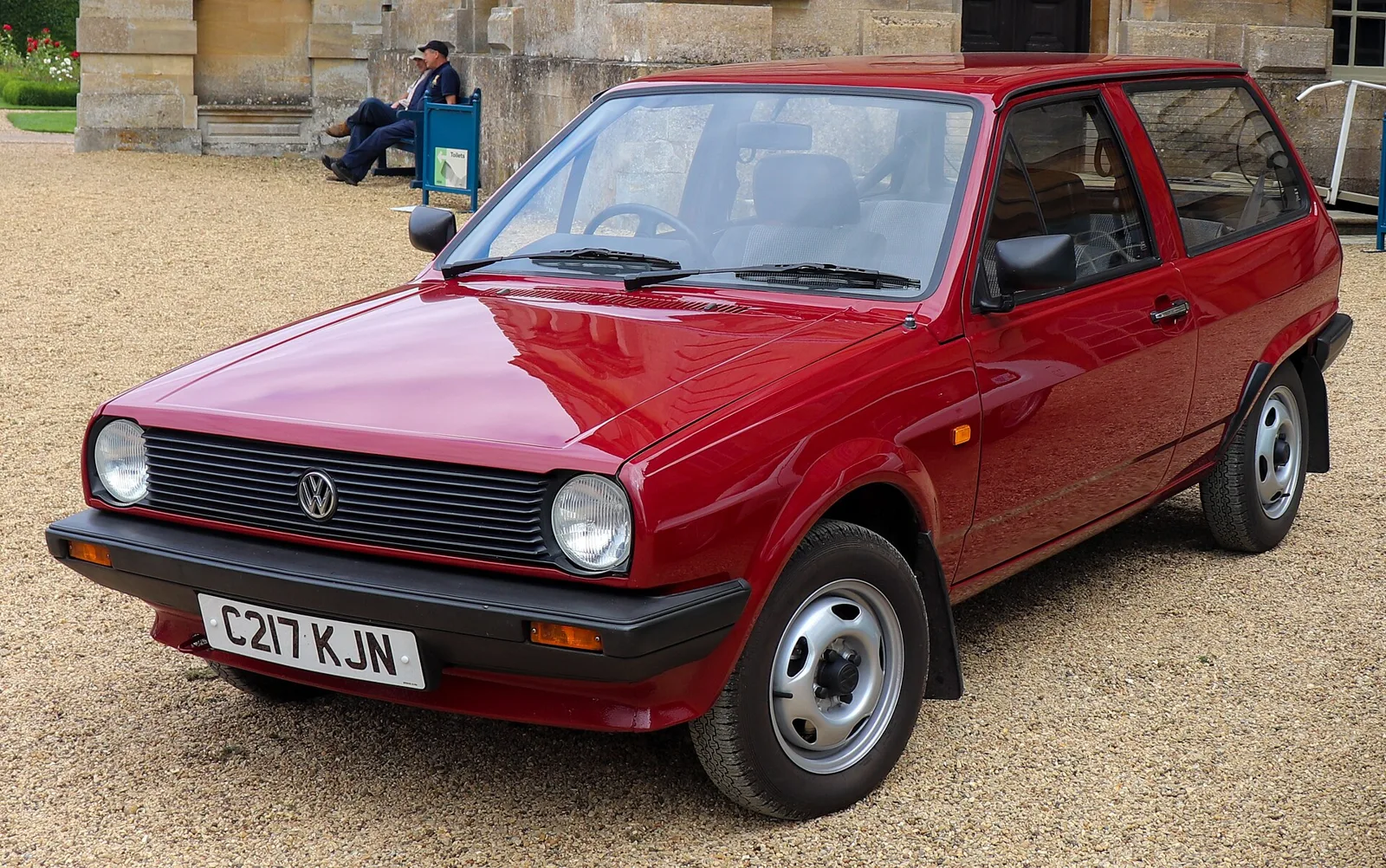
The hatchback was redesigned in October 1981 with a steep, almost vertical rear window that made it resemble an estate. A saloon badged as the Derby arrived alongside it, and the radical hatchback styling was not welcomed by all.
A Coupe that more closely recalled the Mk1 Polo was added in 1983. It used the roof panel and side windows of the Derby saloon and was still technically a three-door, like the hatchback. At first it came only with the 55 PS and 75 PS engines, and a base 40 PS (29 kW) unit was added after a mild facelift in August 1984.
Germany called the hatchback a Steilheck, or steep tail, while the UK knew it as the breadvan.
The hatchback was the lightest of the three body styles, 5 kg (11 lb) lighter than the Coupe and 15 kg (33 lb) lighter than the three-box sedan.
The UK received only the 1.0, 1.1 and 1.3 versions of the Polo, yet it was one of the most popular imported cars there. It frequently managed over 30,000 sales a year and peaked as the 11th best-selling car in 1983.
A supermini that ended its life with a supercharged G40 costing little less than a Golf GTI.
How did the Derby become the Polo Classic?
From 1984 the saloon was no longer called the Derby in all countries, and it became the Polo Classic in every market. Production of the Polo began in Spain at Pamplona on 27 April 1984, and the Polo Classic followed there in 1985.
The Spanish plant was a product of Volkswagen's early collaboration with SEAT in the early 1980s. That relationship led to Volkswagen's full takeover of SEAT in 1986.
What engines did the Mk2 use?
At launch the Mk2 carried over the 1093 cc and 1272 cc engines from the Mk1. A new 1043 cc unit replaced the 895 cc engine and became the first Polo engine to use a Heron cylinder head, and the 1.3-litre engine of 1984 went on through several generations of Polo until 1996.
The 1043 had a higher compression ratio than the 895 it replaced, which improved its torque. At launch the 1272 was kept for the GL saloon, and in 1983 two new 1272 units arrived with the same Heron head and higher compression ratios.
The 1986 update brought hydraulic tappets, new camshafts and valve gear, and an automatic choke. The tappets were chosen for lower maintenance. The 1043 replaced the 1093, and in some markets the 1.3 could be had with fuel injection and a catalytic converter.
The full engine list for the Mk2 ran as follows:
- 1,043 cc straight-four petrol, 1981 to 1994 (UK from 1983)
- 1,093 cc straight-four petrol, 1981 to 1983
- 1,272 cc straight-four petrol, 1981 to 1994
- 1,272 cc with a Pierburg 2E3 carburettor, 41 kW (55 hp), 1983 to 1990, Coupe S in the UK and GT elsewhere
- 1,272 cc with fuel injection and a catalytic converter, 55 kW (75 hp), 1991 to 1994, GT only
- 1,272 cc supercharged petrol, 83 kW (113 hp), GT G40 in 1987 only
- 1,272 cc diesel, 1986 to 1990
- 1,398 cc diesel, August 1990 to 1994
The 1,398 cc diesel was the largest engine offered in the Mk2 line-up.
How sporty was the Coupe GT?
The Coupe GT arrived for the 1983 model year with a 75 PS (55 kW) version of the 1.3-litre engine, servo-assisted brakes, twin headlights, a digital clock, sports seats and a rev counter. Its power rose by 25 percent through dished pistons, which allowed a flat cylinder head.
Volkswagen called the head design HCS, for High Compression and Squish, although it is often described as a Heron head. The extra power came from a flat cylinder head, with the compression chambers set into dished pistons for higher and more even compression. The carburettor remained a twin-barrel, and the only transmission at launch was a very long-geared four-speed manual.
The GL had a 60 PS (44 kW) engine. The Coupe's standard kit included sporting seat trim, wheel arch extensions, a rear spoiler, low-profile tyres and a rev counter, and other special models such as the Twist, Parade and Country came later.
What was the Formel E?
The Formel E, introduced in 1983, used a high-compression 1272 cc engine, longer gear ratios and an early stop-start system called SSA. The system cut the engine after more than two seconds of idling, then restarted it when the gear lever was moved to the left in neutral.
A toggle switch below the light switch could enable or disable the system, which made it a driver's choice rather than a fixed feature. Similar systems later appeared on the Volkswagen Golf Mk3, and other manufacturers developed their own versions.
Volkswagen also prototyped a very economical two-cylinder diesel in the mid-1980s, fitted with a G40 supercharger to overcome its small capacity. It did not reach production.
What was the G40 Polo?
The GT G40 arrived in 1987 with a supercharger on the 1272 cc engine, giving 113 PS (83 kW) at 6000 rpm. The first batch of about 500 cars was built only as left-hand-drive Coupes, and most went to Volkswagen workers as a homologated car for the G40 Cup race series. It used the bodywork of the standard GT Coupe, with modified suspension.
The G40 reached 100 km/h (62 mph) in 8.1 seconds and had a top speed of 196 km/h (122 mph). Volkswagen used it to set a number of world endurance speed records, including the 1300 cc class records for speed over 24 hours and over a distance of 5000 km.
The Mk2 Polo was used extensively by Volkswagen to develop future innovations, and the G40's G-Lader supercharger was later used on the larger and more technically demanding G60 engine in the Golf and Corrado.
How was the G40 updated after the facelift?
Soon after the facelift, a full production G40 arrived in all markets rather than as a limited batch. It used a slightly different version of the Digifant injection system to take a catalytic converter, produced 113 PS (83 kW), and reached 0-100 km/h in 8.6 seconds.
The car sat 25 mm (1.0 in) lower than the standard Polo, with Le Mans sports seats, a bee sting aerial and 5.5J x 13-inch BBS RA cross spoke alloy wheels. Otherwise its exterior matched the GT.
The G40 Cup cars raced in a one-make series run by VW Motorsport. Reliability problems and high maintenance costs damaged the supercharging concept, because parts of the G-Lader could wear out quickly if the car went unmaintained.
Volkswagen ended its experiments with supercharged hot hatches at the end of the Mk2F run. High manufacturing costs and less than enthusiastic sales were the reasons, and the G40's price was little less than that of a basic Golf GTI.
Which trims and special editions were offered?
The Fox was the entry-level model. The line-up ran from the Fox and C to the CL, GL, GT, S and CX. For the 1985 model year the GL was dropped, and a bargain limited edition Fox appeared in some markets.
In the UK the spartan Fox arrived in 1987 with only a 1.0-litre engine and no side marker lights as standard. Continental Europe also received the Fox with a 1.3-litre petrol engine and as a diesel, but neither the 1.3 nor the diesel was sold in the UK.
Later trims were the Fox, CL, GL, Boulevard and Genesis. In 1992 Volkswagen produced a small run of special editions, fitted with special trim and the G40's engine and suspension, and the Genesis G40 was made to special order only.
A single right-hand-drive Genesis reached the UK, where it became a competition prize on the Volkswagen-sponsored Genesis tour.
What did the 1990 facelift change?
The facelift arrived in October 1990, for the 1991 model year, and brought square headlights, bigger bumpers and a new dashboard and door trim. The three body styles were kept, and aerodynamics improved by about ten percent.
Much of that gain came from a rounder front end, along with glued-in rear windscreens on the Coupe and hatchback. Under the skin the car received chassis and suspension changes, plus servo-assisted brakes on every model, including right-hand drive.
The four-cylinder engines were carried over, but fuel injection now came as single-point on some models, and every engine came with a catalytic converter to meet tighter EU emissions rules. Carburettor models stayed on sale where unleaded fuel was harder to obtain, and the carburettor GT made 77 PS (57 kW) at 6100 rpm.
How did the Mk2 end production?
The Polo Classic, the saloon once called the Derby, was built only in Spain and ceased production in 1992. The hatchback and Coupe continued until 1994 in Wolfsburg and Spain, while Volkswagen used the extra years to rework the Typ 6N before its 1994 debut. The follow-up was already well developed when the Mk2 hatchback and Coupe production was extended.
By the end the Mk2 looked dated, with its fuse box in the engine room. The car was smaller than its direct rivals, and it had only three doors.
The competition had moved on, too. By the time an all-new Fiesta arrived in early 1989, the Polo was the only popular European supermini without a four- or five-door version, and the Citroen AX had gained five doors by the end of the decade.
Which rivals did the Polo face?
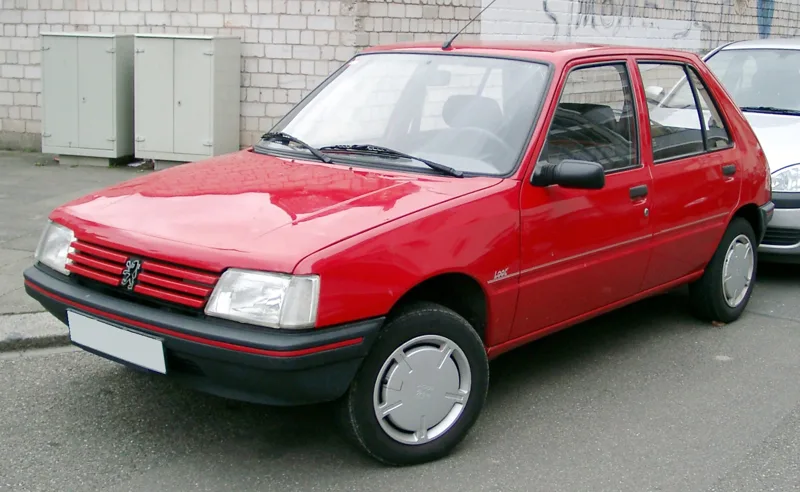
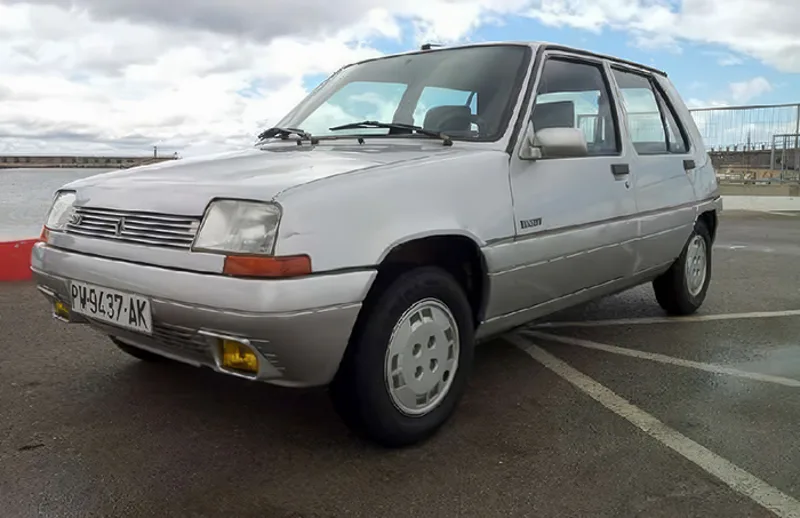
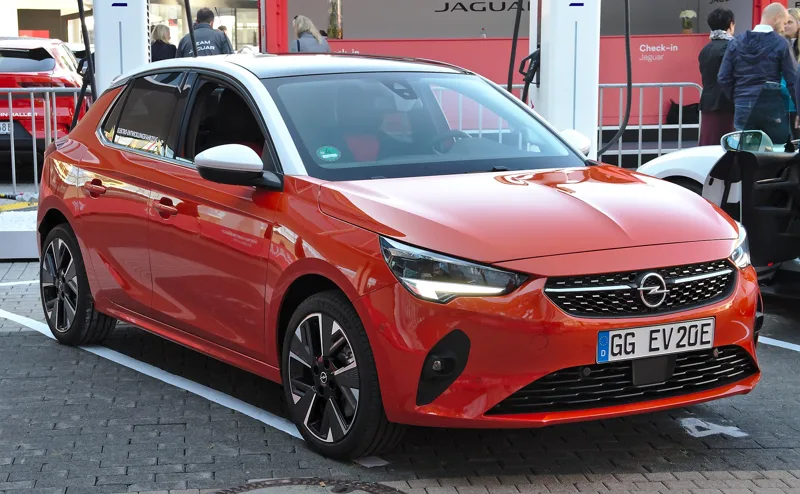
The Opel Corsa, sold as the Vauxhall Nova in the UK, arrived in 1982. The Fiat Uno, Nissan Micra and Peugeot 205 followed in 1983, along with an updated Ford Fiesta, and the Renault 5 arrived a year later.
The August 1984 update kept the Polo competitive: the dashboard was new, the fuel tank was bigger and the kit list was longer. The CL took over from the GL, and all models received round headlights.
Volkswagen Polo Mk2 specifications
| Specification | Detail |
|---|---|
| Production | Late 1981 to 1994 |
| Internal code | Typ 86C |
| Engine range | 1,043 cc to 1,398 cc |
| Facelift | October 1990, 1991 model year |
| Coupe GT | 75 PS (55 kW) 1.3-litre, 1983 model year |
| Carburetted GT, facelift | 77 PS (57 kW) at 6100 rpm |
| G40 output | 113 PS (83 kW) at 6000 rpm |
| G40 0-100 km/h (62 mph) | 8.1 seconds, or 8.6 seconds after the facelift |
| G40 top speed | 196 km/h (122 mph) |
| G40 first batch | About 500 cars |
| Diesel | 1,272 cc, 1986 to 1990; 1,398 cc, August 1990 to 1994 |