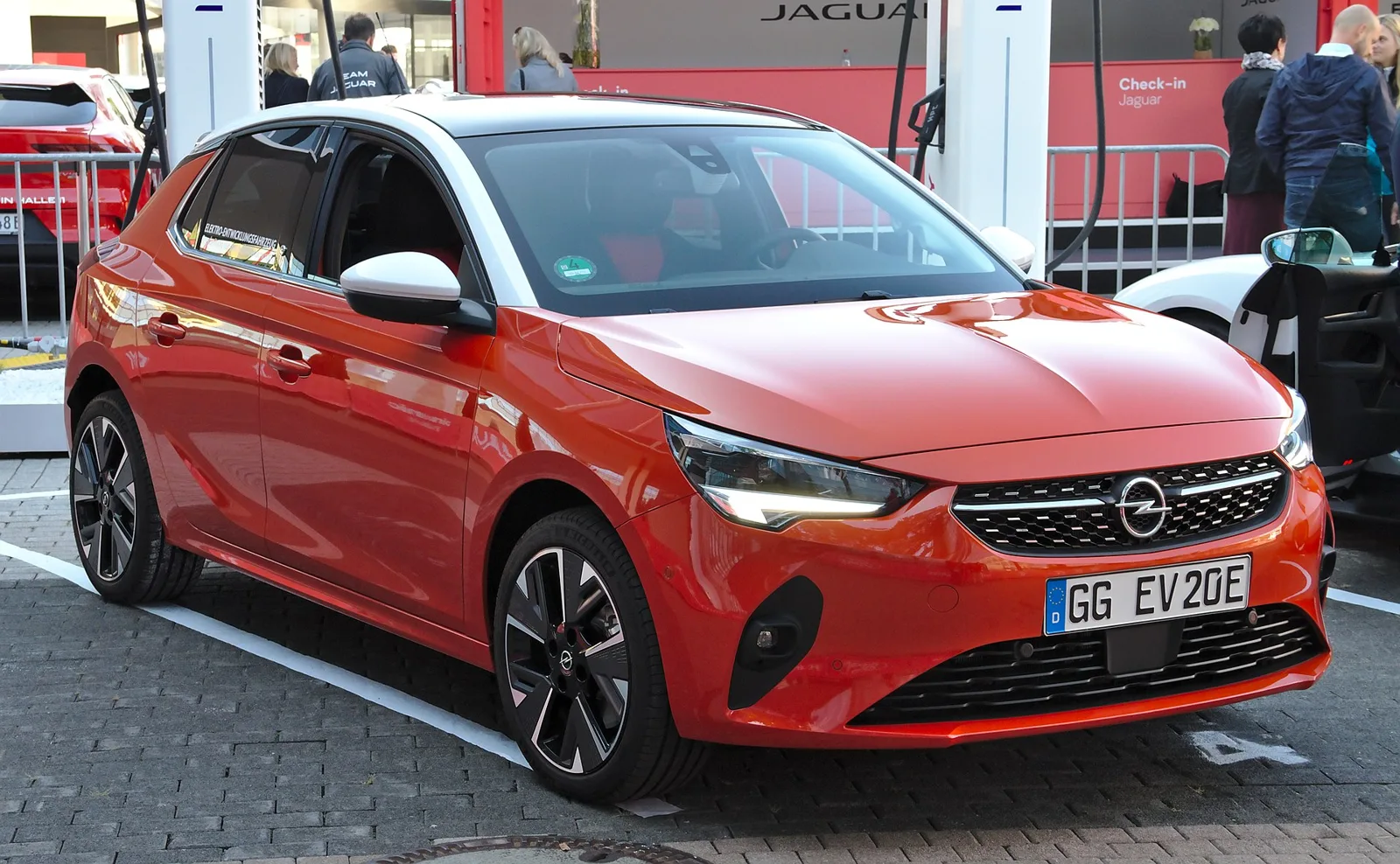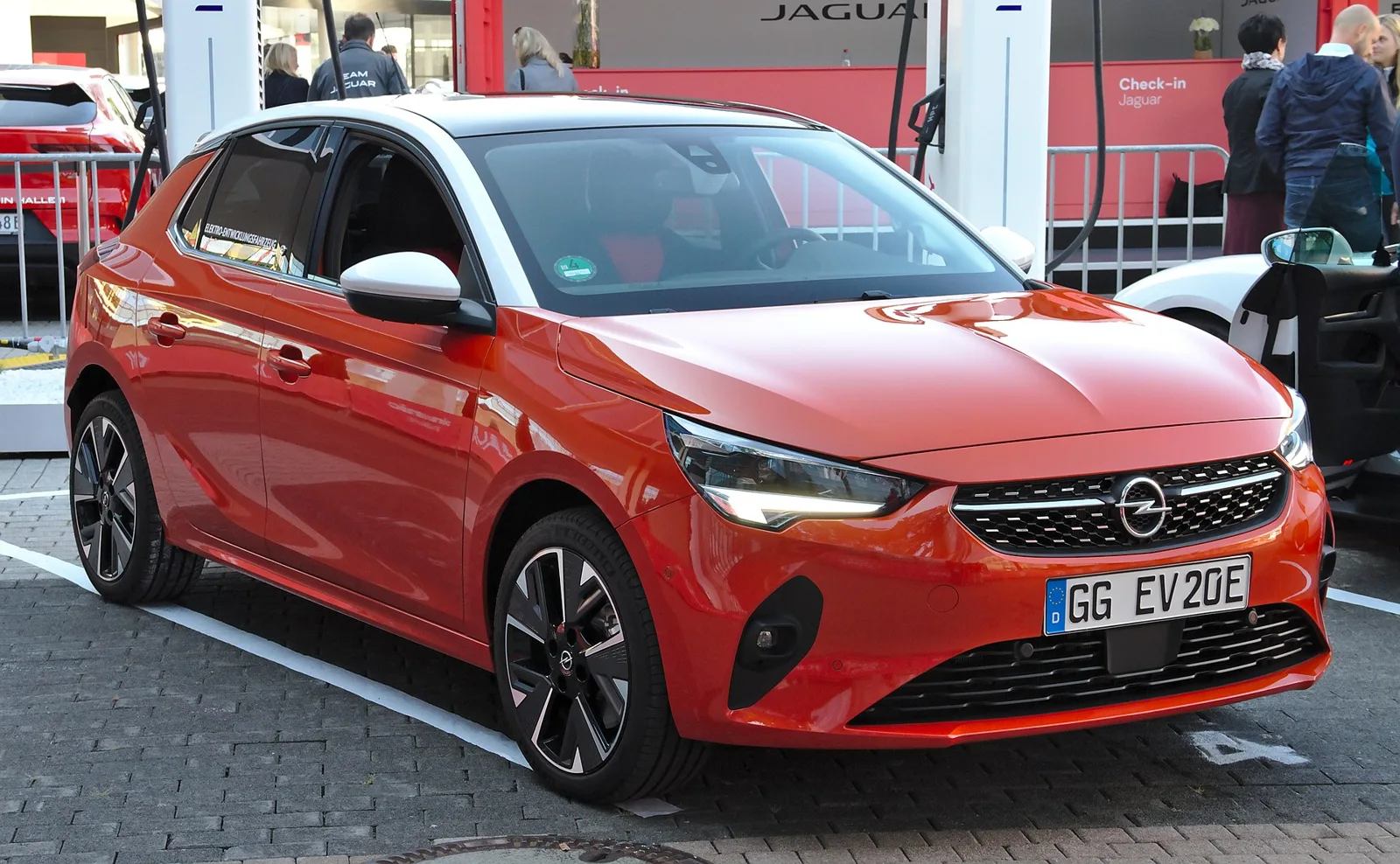
The first Corsa and the Mk2 Polo both came from Spanish factories and fought for the same small-car buyers, though they ran different performance and body programmes.
The Opel Corsa and Volkswagen Polo Mk2 were Spanish-built superminis that competed in Britain and across Europe in the early 1980s. The Corsa Sport and Polo G40 were the sharpest models, and the Corsa took a different name in Britain as the Nova.
The first Opel Corsa and the Volkswagen Polo Mk2 were built in Spain, sold to the same European buyers and designed to fit the same small budgets. The Corsa arrived in September 1982, while the Polo had been on sale since late 1981. Both grew sporty variants of their own, and in Britain the Corsa took a different name altogether.
Were the Corsa and Polo rivals?
They were, in the supermini class that both carmakers were chasing. The Polo's competitor list at the time named the Corsa alongside the Fiat Uno, the Nissan Micra and the Peugeot 205, and the Corsa's entry into that class was a deliberate move by General Motors' European arm.
Both were also built in Spain. The Corsa came from Zaragoza, and the Polo Mk2 started production in Pamplona, where Volkswagen was working with SEAT in the early 1980s. That made them Spanish-built rivals, a point British buyers sometimes raised about imports.
Two Spanish-built superminis, one with a rally homologation and the other with a supercharged performance model.
Where did the Corsa come from?
General Motors used the internal code S-car. The name had first been attached to an abandoned early-1970s supermini proposal, which became the three-door City hatchback of the Kadett C and Chevette, and the Corsa acted as its de facto replacement.
GM Europe needed a supermini, and the Corsa was that car. Opel and Vauxhall had no entry in the class, because the Kadett C and Chevette were rear-wheel drive and not true superminis, while the Kadett D moved up into the C-segment. That left an empty space at the lower end of the lineup, and the new car followed the layout of established rivals such as the Fiat 127, the Volkswagen Polo and the Ford Fiesta.
Launch came in September 1982, after a roadster concept had been shown as a teaser at Geneva six months earlier. Sales began in France, Italy and Spain first, markets where small cars made up between 34 and 43 percent of sales.
How did the Corsa's body and trim work?
The first Corsas were three-door hatchbacks and two-door saloons. Four-door and five-door versions followed in 1984, and in some markets vans were offered too, with rear glass depending on local rules.
The saloon was known as the Corsa TR in mainland Europe until May 1985. It had a traditional eggcrate grille and no wheelarch blisters, and it was aimed at buyers of the Kadett C and Chevette who still wanted a three-box shape. Only about a tenth of French Corsa sales in the first half-year were TRs, but in Spain the TR accounted for half of Corsa sales.
The sporty SR wore a spoiler around the rear window, alloy wheels and checkered sport seats, and it had a 70 PS (51 kW) engine that was stronger than the standard unit. The facelift six years on brought new front styling and the LS, GL, GLS and GT trim names.
Why did the Corsa become the Nova in Britain?
In the United Kingdom the Corsa went on sale as the Vauxhall Nova, a name GM had already used in North America. The Corsa name was rejected because it sounded too much like coarser.
The Nova launched in April 1983, after a seven-month dispute by British workers angry that the car was built in Spain. Rival Ford and Austin cars were built at home. Tariffs added to the friction, with cars moving from Spain into the European Community paying only 4.4%, while cars moving the other way paid 36.7%.
What engines did the Corsa and Polo use?
The first Corsa engines were 1.0-litre 45 PS, 1.2-litre 55 PS and 1.3-litre 70 PS petrol units, all initially carburetted. The 1.0 never received fuel injection. The 1.0 and early 1.2 engines were based on Opel's long-running OHV unit, which had been in the Kadett for four generations.
The Polo's engines were built around 1,043 cc and 1,272 cc four-cylinder petrol units, with a 1,398 cc diesel from August 1990. The GL made 60 PS (44 kW), and the 1.3-litre GT made 75 PS (55 kW). The supercharged G40 was the top of the range, with 113 PS (83 kW) at 6000 rpm from 1,272 cc.
Most of the Corsa's engines used GM's Family I design, while the 1.0 and early 1.2 kept Opel's OHV unit. The Isuzu-built 1.5-litre turbodiesel came in 1987, and a turbocharged version arrived in January 1988 with 67 PS (49 kW).
Specifications side by side
| Specification | Opel Corsa A | Volkswagen Polo Mk2 |
|---|---|---|
| Launch | September 1982 | Typ 86C introduced October 1981 |
| Built in | Zaragoza, Spain | Pamplona, Spain, from April 1984; Wolfsburg and Spain to 1994 |
| Body styles | Three-door hatchback and two-door saloon; four and five-door from 1984 | Hatchback, three-door coupe and saloon |
| Petrol engines | 1.0-litre, 1.2-litre and 1.3-litre petrol | 1,043 cc and 1,272 cc straight-four petrol |
| Power | 45 PS, 55 PS and 70 PS; GSi 101 PS (74 kW) | 60 PS (44 kW) GL; 75 PS (55 kW) GT; 113 PS (83 kW) G40 |
| Sporty model | Sport, 93 hp, 0-60 mph in 8.9 seconds | G40, 0-100 km/h in 8.1 seconds |
| Top speed | 112 mph (180 km/h) on the Sport; 116 mph (186 km/h) on the GSi | 196 km/h (122 mph) on the G40 |
| Name in Britain | Vauxhall Nova, April 1983 to March 1993 | Volkswagen Polo |
Which car was quicker?
On the figures quoted, the fastest models were the Corsa Sport and the Polo G40. The Sport reached 0-60 mph in 8.9 seconds and topped out at 112 mph (180 km/h), while the G40 reached 0-100 km/h in 8.1 seconds and 196 km/h (122 mph).
Those figures are measured against different benchmarks, so the two cars cannot be ranked neatly on acceleration. The G40 has the higher top speed, but the Corsa Sport's sprint figure was quoted in mph and the Polo's in km/h.
How did the sporty Corsas work?
The Sport was a rare model built in 1985 to qualify the car for Group A rallying in the sub-1,300 cc class, as part of the British Rally Championship. Its 13SB engine had twin Weber carburettors, an optional bespoke camshaft and a replacement rear silencer. Only about 500 were built, and they were painted white with unique vinyl decals.
The fuel-injected GSi came at the 1987 Frankfurt Motor Show. Its 1.6-litre engine made 101 PS (74 kW) at 5600 rpm and gave a top speed of 186 km/h (116 mph). Opel's tuning specialist Irmscher carried out its engine mapping, and the same engine was fitted to the UK's Nova GTE before later cars took the GSi name.
The Nova SRi used a 1.4-litre injected engine with 82 PS (60 kW), and was otherwise mechanically identical to the GSi.
How did the Polo's sporty and economy models compare?
The Polo's first sporty car was the Coupe GT of August 1982, for the 1983 model year. It had a 75 PS (55 kW) 1.3-litre engine, servo-assisted brakes, twin headlights and sports seats. Its extra 25 percent of power came from dished pistons, which allowed a flat head and more even compression.
The economy-minded Formel E arrived in 1983 with a high-compression 1,272 cc engine and longer gear ratios. It also had an early stop-start system that cut the engine after two seconds at idle, which Volkswagen later used in the Golf Mk3.
The G40 was the Polo's real performance model. It began as a limited run of about 500 cars in 1987, mostly sold to Volkswagen staff, and it was used to set 1300 cc class endurance records.
How did the Polo's trims and body styles develop?
The Polo Mk2 offered a range of trim names. From August 1984 the Fox became the bargain entry point, and for the 1985 model year the GL was dropped in some markets. The Fox was sold in the UK from 1987 with only a 1.0-litre engine, while the Continent also received 1.3 petrol and diesel versions.
The UK range was narrower than the European one. Britain never received more than the 1.0, 1.1 and 1.3 Polo versions, yet the car still sold strongly there.
How did the early 1980s superminis fit the market?
By the time the Mk2 was in its stride, the early 1980s supermini class was crowded. Fiat's Uno, Nissan's Micra and Peugeot's 205 all arrived in 1983, the Fiesta was updated the same year, and the Renault 5 followed a year later. The Polo was then the only popular European supermini without a four- or five-door version, until the all-new Fiesta of early 1989.
Competitors kept coming. The Polo gained a new rival in the Citroen AX, and it faced the Peugeot 106 and Renault Clio in the years before its 1994 end. Volkswagen made technical updates in 1986, including hydraulic tappets and an automatic choke, and the 1.3 engine that arrived in 1984 stayed in use until 1996.
How did each car change in midlife?
The Corsa received a light facelift in September 1987, with a new grille common to hatchbacks and saloons. In 1989 the 1.3 grew to 1.4 litres by boring, keeping its power but gaining torque.
A freshening in September 1990 brought new bumpers, headlights, grille and interior, although the design still looked like an early 1980s car next to the Peugeot 106 and Renault Clio. The 1.0-litre models were dropped in 1992 because the Opel OHV engine could not meet Euro 1 rules.
The Polo's 1990 facelift for the 1991 model year gave it square headlights and a new interior. Its aerodynamics improved by about ten percent, and servo-assisted brakes became standard on every model. A new Mark 3 Polo arrived in 1994, ending the Mk2's run.
What was the Nova's British life like?
The Nova replaced the ageing Chevette, which ended production in January 1984. It gave Vauxhall its first modern supermini against the Ford Fiesta and the Austin Metro. A small van version, the Nova Van, arrived with the late 1990 facelift.
Motorsport gave the Nova a short life on the rally and rallycross circuit. The Nova Challenge series was a feature of British rallycross from 1990 to 1993, and presenter John Leslie took part in the series in 1992 for a Blue Peter feature. By February 2014 only 1,757 Novas were still on the road.
How did the cars sell in Britain?
The Nova was a strong seller in Britain. Nearly 500,000 were sold over ten years, and its best year was 1989, when it ranked seventh among British car sales with more than 70,000 registrations.
The Polo was also popular, and it frequently sold over 30,000 a year in the UK. It reached 11th place among British best sellers in 1983.
The Nova also had memorable advertising. A 1987 television advert set the car to a Ritchie Valens hit, with CGI showing it drive over other vehicles in a busy city, and a 1990 advert had the Nova behaving like a pet.
Which car suits which buyer?
A buyer who likes a broad sporty line-up will look at the Corsa, which offered the Sport, the GSi and the Nova SRi. The Polo's sporty models were built around the GT and G40.
A buyer who wants the strongest performance on the published figures will find the G40 more attractive. Its top speed of 196 km/h (122 mph) and its 113 PS (83 kW) supercharged engine show the Polo at its most extreme.
In Britain the choice shifts again. The Nova carried the Corsa's sales in the UK, while the Polo carried the Volkswagen badge into a market that already rated the brand highly. Neither car is better across the board.