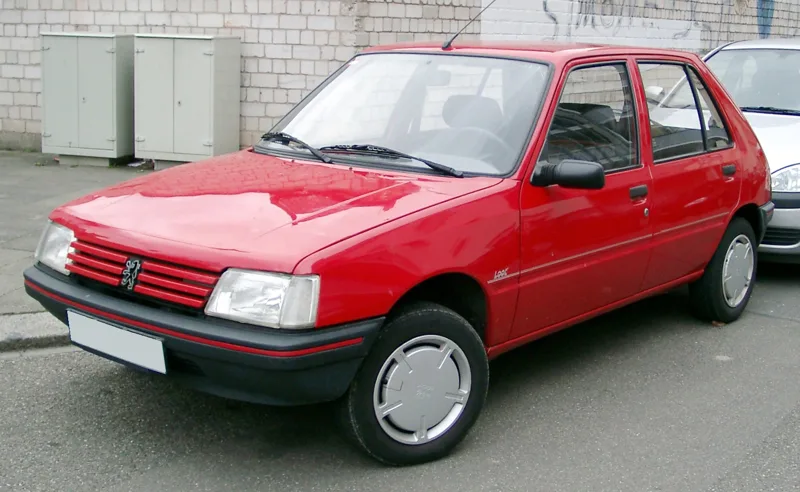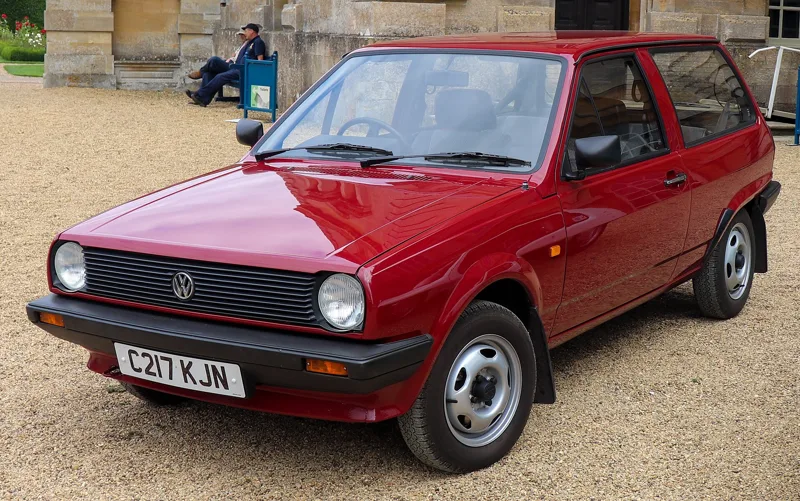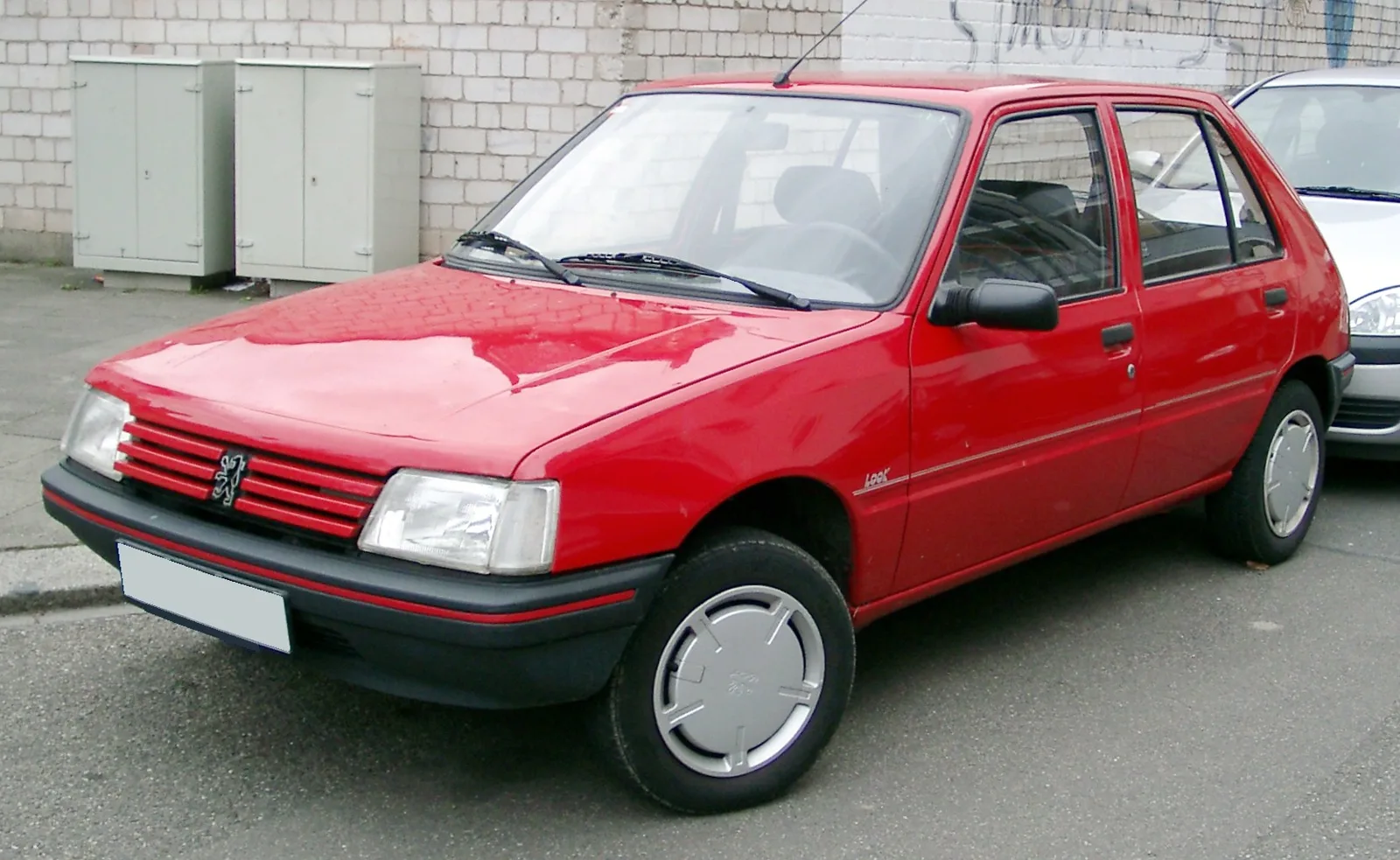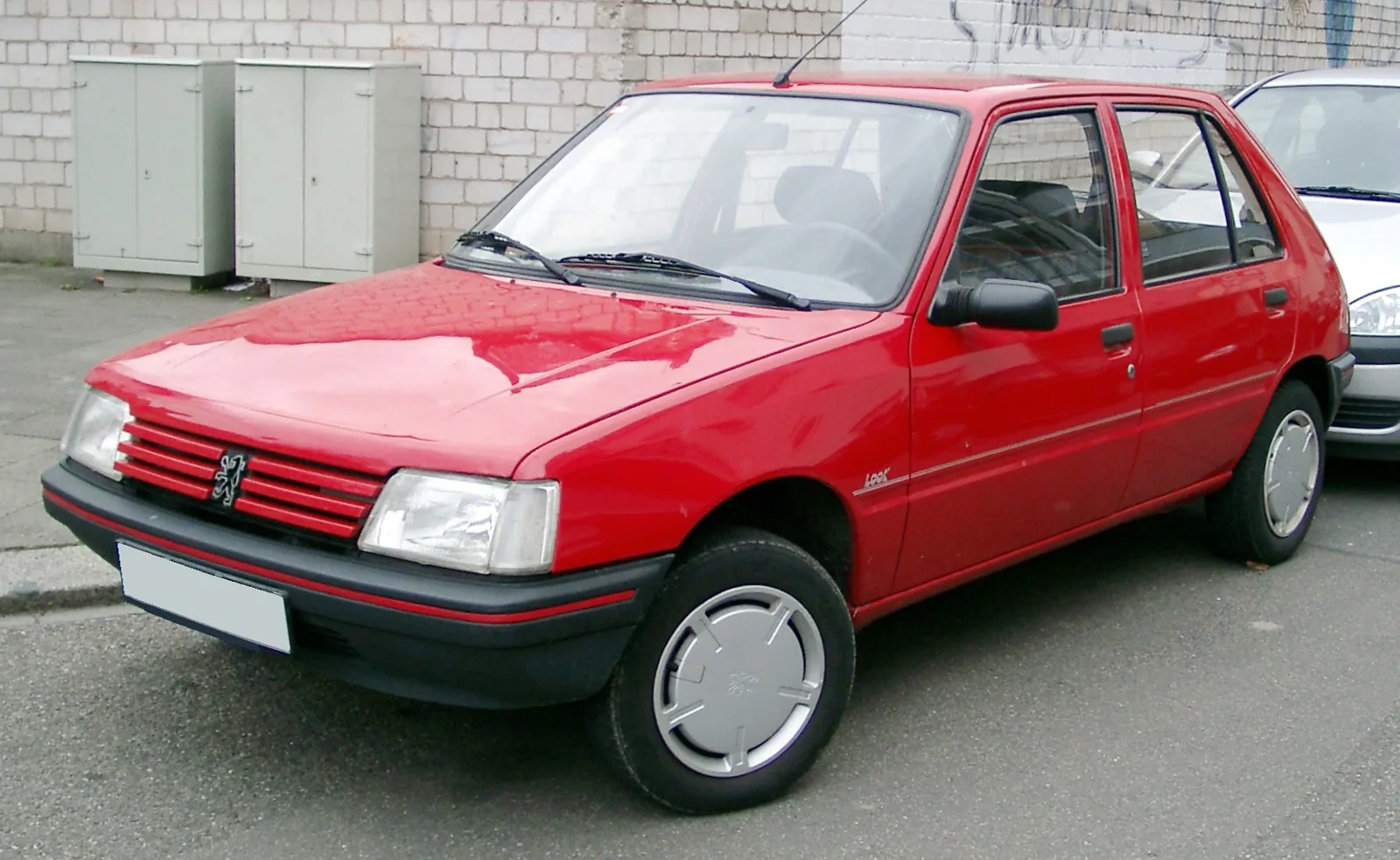
Peugeot's 205 sold more than five million cars, while Volkswagen's Polo Mk2 offered a supercharged G40 and a sporting Coupe.
The Peugeot 205 was a supermini built from 1983 to 1999, which sold 5,278,050 units in total. The Volkswagen Polo Mk2 was the second-generation Polo, built from 1981 to 1994 with a supercharged G40 version. Both were small cars that changed their makers' fortunes in the early 1980s.
The Peugeot 205 and the Volkswagen Polo Mk2 were two of the superminis that set the standard for small cars in the early 1980s. The 205 arrived in February 1983 and sold more than five million units. The Polo Mk2 had reached the market in October 1981 and stayed in production until 1994.
Where did the 205 and Polo Mk2 come from?
The car was worked on as Projet M24 and reached showrooms on 25 February 1983. It took over from the Peugeot 104 and the Talbot Samba, reusing some of their design elements.
Peugeot had been the most conservative of France's big three makers, known for large saloons such as the 504 and 505. Its takeover of Chrysler's European divisions, Simca and the former Rootes Group, in 1978 brought small-car expertise, including the Simca 1100 and the Hillman Imp.
The Polo Mk2 was the second generation of the Volkswagen Polo supermini. It was internally designated Typ 86C and was produced from late 1981 until 1994, with a saloon version called the Derby and later the Polo Classic.
Peugeot's supermini sold more than five million units, while Volkswagen's Polo offered a supercharged G40 that set endurance speed records.
Why were the 205 and Polo Mk2 rivals?
The 205 was one of five important small cars launched within about a year of each other, along with the Fiat Uno, the second-generation Ford Fiesta, the Opel Corsa and the Nissan Micra. Its launch closely followed that of the Austin Metro and the Polo Mk2.
A crowded field greeted the 205 in 1983, that already included the Opel Corsa, the Fiat Uno, the Nissan Micra and an updated Ford Fiesta. The Polo was the only popular European supermini without a four- or five-door version by 1989.
The UK market only ever received the 1.0, 1.1 and 1.3 versions of the Polo, but it remained one of the most popular imported cars there. It frequently sold over 30,000 a year and peaked as the 11th best-selling car in 1983.
The Polo Fox, a bargain limited edition, was introduced in some markets for 1985. In the UK it arrived in 1987 with a 1.0-litre engine only, and the car lacked side marker lights as standard.
In August 1984 the Polo received a new dashboard, a bigger fuel tank, more standard equipment and round headlights across the range. In 1986 its engines moved to hydraulic tappets, and the 1043 cc unit replaced the 1093 cc.
The 1990 facelift also made servo-assisted brakes standard on all models, including right-hand drive versions, and every engine came with a catalytic converter to meet tighter EU emissions laws.
How were the two cars styled?
The 205's styling is often thought to be a Pininfarina design, although Gerard Welter claims that it was an in-house design, and Pininfarina only styled the Cabriolet. The car is often credited as the one that turned Peugeot's fortunes around.
The 205 styling was echoed in every Peugeot model that followed, and it changed how buyers saw a company long regarded as the most conservative of France's major manufacturers. Its exterior was never significantly altered in its 15-year production run, apart from small details.
The first 205 GTI appeared in 1984, the same year the three-door bodystyle debuted. The 1990 update brought a new door design and cards, clear front indicators and smoked rear light clusters, plus single-point petrol injection and catalytic converters for the 1992 pollution limits.
The 1990 arrival of the Renault Clio, updates to the Rover Metro and Volkswagen Polo, and a third-generation Ford Fiesta all surrounded the 205. Even so, the car was still widely regarded in the motoring press as the benchmark in its sector by 1990.
There were commercial versions too, including the two-seater XA. The 205 Multi was a tall-bodied special built by independents such as Gruau and Durisotti, who also made two-seat and five-seat variants.
The 205 remained on sale in special editions until the end of production in 1998, and the last models were sold in Argentina. Most of the later European versions were sold only in France.
The Polo Mk2 took a more varied approach. The hatchback had a steep, almost vertical rear window that made it resemble an estate, and it earned the nickname breadvan in the UK. The Coupe, added in 1983, looked more like the Mk1 Polo and was still technically a three-door.
What suspension and packaging did each car have?
The 205 had fully independent suspension using the PSA layout first seen on the Peugeot 305 estate. It used MacPherson struts at the front and trailing arms with torsion bars at the rear, and the rear was compact to keep suspension out of the boot.
That compact rear gave the 205 a wide, flat loadspace while still delivering excellent ride and handling. The Polo Mk2 had its own engineering story, and its hatchback was the lightest body style, 5 kg (11 lb) lighter than the Coupe and 15 kg (33 lb) lighter than the three-box saloon.
Which engines did the 205 and Polo offer?
The 205 used the X petrol engine from the Peugeot 104 at first, then the newer XU and TU engines of PSA design from 1987 to 1988. Engines ranged from 954 cc to 1905 cc, in carburettor or fuel-injected forms.
The diesels used the PSA XUD engine, lifted from the Citroen BX. Its 1769 cc XUD7 and 1905 cc XUD9 versions were world-beating, and the 1.8 diesel GRD with 59 bhp (44 kW) at 4,600 rpm was as fast as the 1.4 petrol GR, which made 59 bhp (44 kW) at 5,000 rpm.
The 1.6 GTI arrived in 1984 with the XU5J engine at 105 PS (77 kW; 104 hp). The 1.9 GTI followed in 1986 with the XU9JA at 128 PS (94 kW; 126 hp), and the GTI was discontinued in 1994.
The most important engine story in the Polo's range was the supercharged G40. Its 1272 cc engine with a small-bore G-Lader supercharger produced 113 PS (83 kW) at 6000 rpm, and the car reached 100 km/h in 8.1 seconds with a top speed of 196 km/h (122 mph).
The efficient side of the Polo was the Formel E, introduced in 1983, which used a high-compression 1272 cc engine, longer gears and a stop-start system called SSA. The engine cut out after two seconds at idle and restarted when the gear lever moved into neutral.
How did the two cars perform as hot hatches?
The Coupe gained sporting seats, wheel arch extensions, a rear spoiler, low-profile tyres and a rev counter, and it introduced the round headlights later fitted across the range. The GL kept a 60 PS (44 kW) engine, and the Coupe was the first sporty Polo of the Mk2 run.
The Polo Mk2 Coupe GT used a 75 PS (55 kW) version of the 1.3-litre engine from August 1982, with a flat cylinder head and dished pistons that Volkswagen called HCS, short for High Compression and Squish. The GT's power was up by 25 percent over the standard car.
The G40 supercharged model was introduced in 1987 in left-hand drive Coupe form only, as a limited batch of about 500 cars, most sold to Volkswagen workers. Volkswagen used it to set world endurance speed records, and the G-Lader later appeared on the larger G60 engine.
The 205 GTI showed the other side of the hot-hatch story. The 1.6 GTI's shorter stroke made it revvy and eager, while the 1.9 felt lazier and torquier, and the 1.9 GTI also had disc brakes all round and half-leather seats.
What did the 205 and Polo sell and win?
What Car? gave the 205 its Car of the Year award for 1984, and CAR Magazine declared it car of the decade in 1990. It was pipped to the European Car of the Year title by the Fiat Uno, although its UK success was enormous.
Top Gear's Jeremy Clarkson described the 1990 205 as an instant modern classic. The 205 sold 5,278,050 units in total, and around 400,000 of them sold in the UK, which made it the best-selling car Peugeot had ever sold there.
The Polo's UK sales were steady, and the G40 showed the limits of its supercharging concept. Its reliability was hampered by early production mistakes and high maintenance costs, and Volkswagen ended its supercharged hot hatch experiments at the end of the Polo 2F run. The G40 Cup cars ran in a one-make series, and the production G40 cost little less than the basic Golf GTI.
Peugeot 205 and Volkswagen Polo Mk2 side by side
| Feature | Peugeot 205 | Volkswagen Polo Mk2 |
|---|---|---|
| Production | 1983 to 1999, single generation | 1981 to 1994 |
| Introduction | 25 February 1983 | October 1981 |
| Body styles | Three-door and five-door; Cabriolet by Pininfarina | Hatchback, Coupe and saloon (Derby, later Polo Classic) |
| Suspension | MacPherson struts front; trailing arms with torsion bars rear | None described |
| Engine range | 954 cc to 1905 cc, petrol and diesel | 1043 cc, 1272 cc and 1398 cc; supercharged G40 |
| Hot hatch | GTI 1.6 (105 PS) and 1.9 (128 PS) | Coupe GT 75 PS; G40 113 PS |
| Top sporting time | GTX 0-100 km/h in 10.6 seconds | G40 0-100 km/h in 8.1 seconds |
| Awards | What Car? Car of the Year 1984 | None described |
| Sales | 5,278,050 in total | None described |
| Facelift | 1990 minor facelift, catalytic converters for 1992 | October 1990 facelift for 1991 |
| Successor | Peugeot 206 in 1998 | Polo Mk3 in 1994 |
Peugeot had entered the modern supermini market in 1973 with the 104, so the 205 was a second attempt at a segment the company already knew. The Simca and Rootes expertise, with the Simca 1100 and the Hillman Imp, fed directly into its small-car development.
Which buyer suits each car?
The 205 suits a buyer who wanted a French supermini with a strong ride, a wide flat loadspace and a diesel option that combined petrol-like performance with economy. The Polo Mk2 suits a buyer who wanted a German supermini with a supercharged G40 or a sporty Coupe GT option.
Neither car wins outright on the facts given. The 205 won the bigger sales story, while the Polo offered the wider range of sporting variants.
A buyer looking at either car secondhand should check the engine and the trim, since the GTI, GT and G40 models differ widely from the base cars.
What became of the 205 and the Polo Mk2?
The 205 was discontinued in the UK in 1996 and ended production in 1998, when the 206 replaced it. The 106, introduced in September 1991, had become Peugeot's smaller front-engined model before that.
The Polo Mk2 gave way to the Mk3, which was launched in 1994 after Volkswagen used the extra two years to revise the design. The G40 name lived on in limited editions such as the 1992 Genesis.
By 2014 there were still as many as 14,000 205s on UK roads, compared with a peak of 374,773 in 1994.