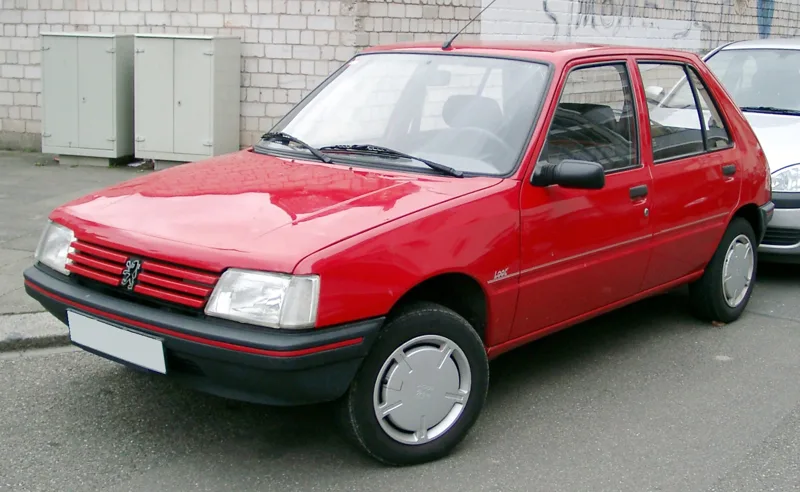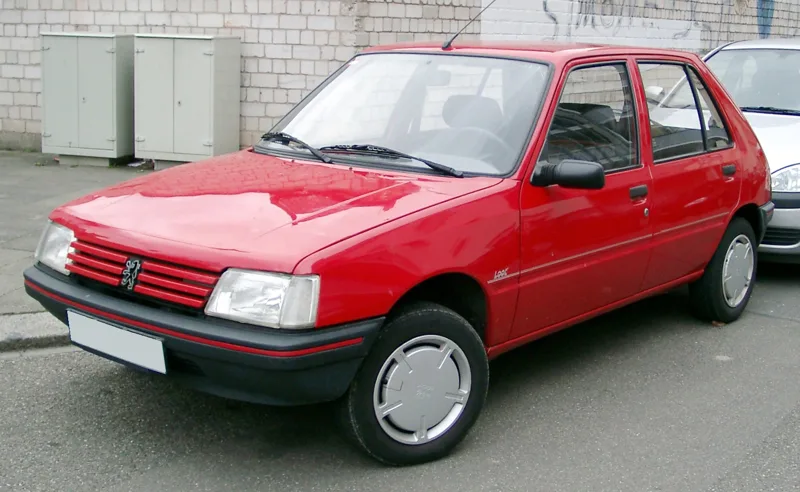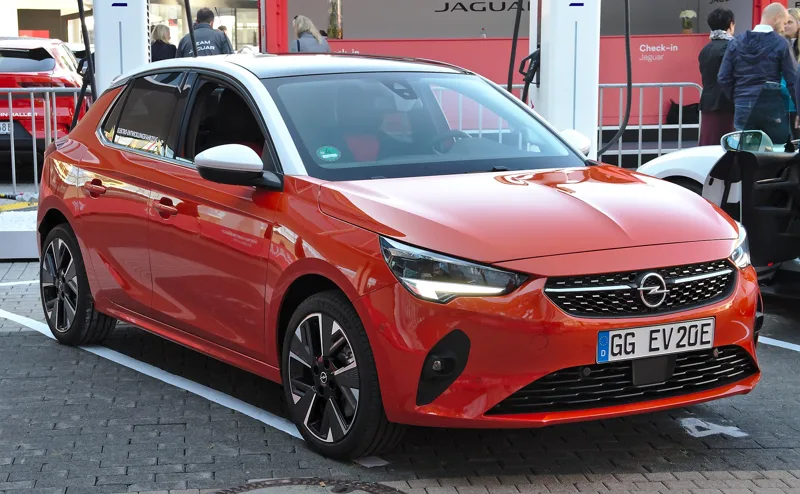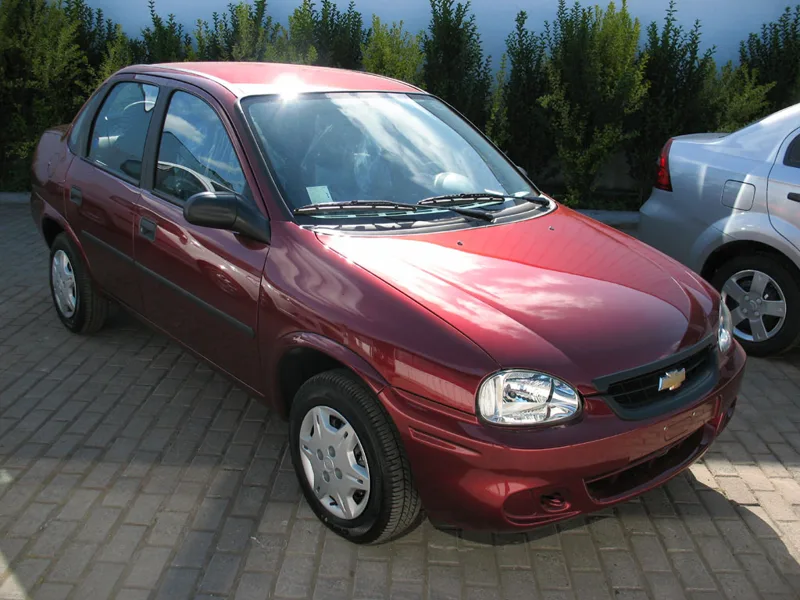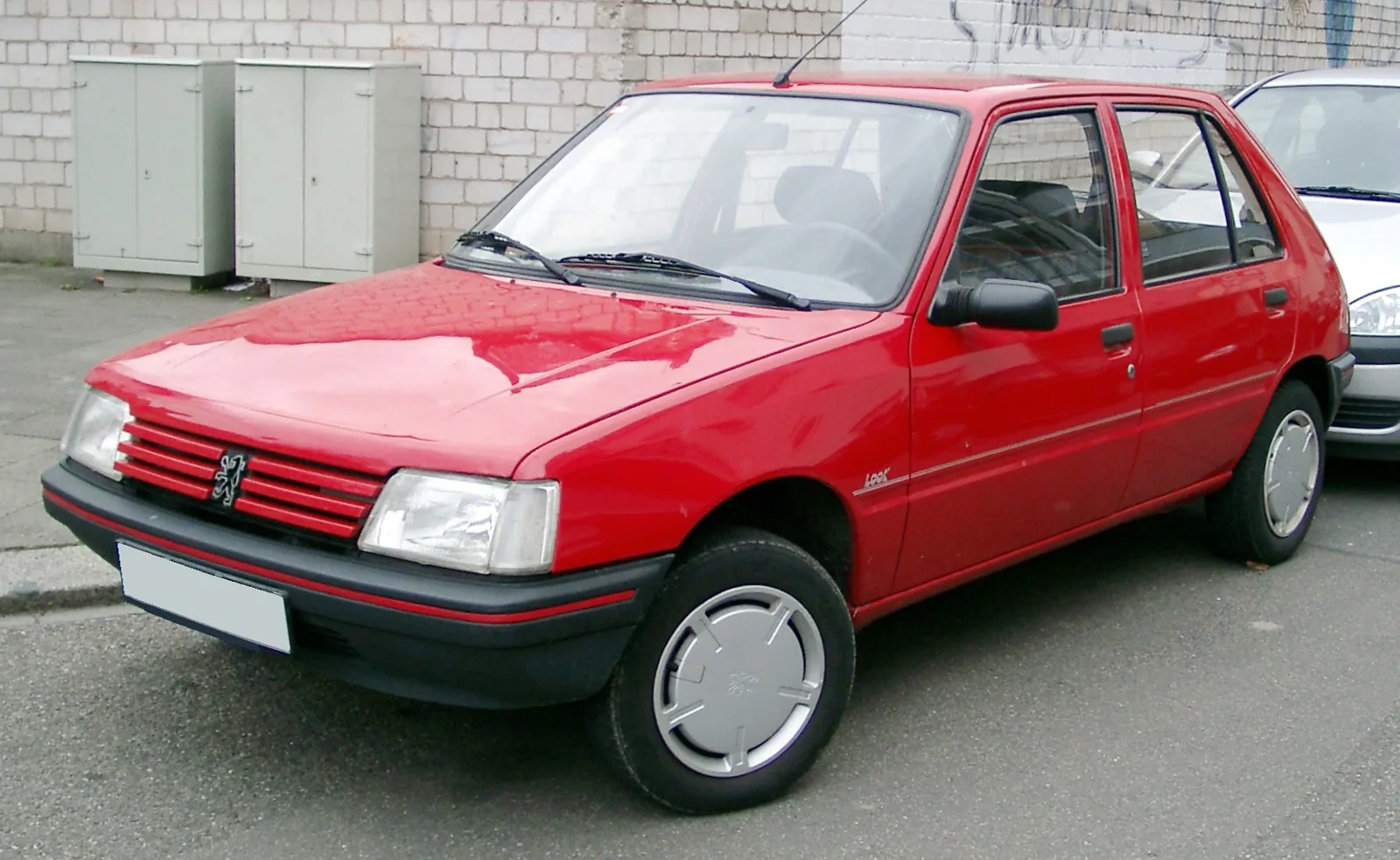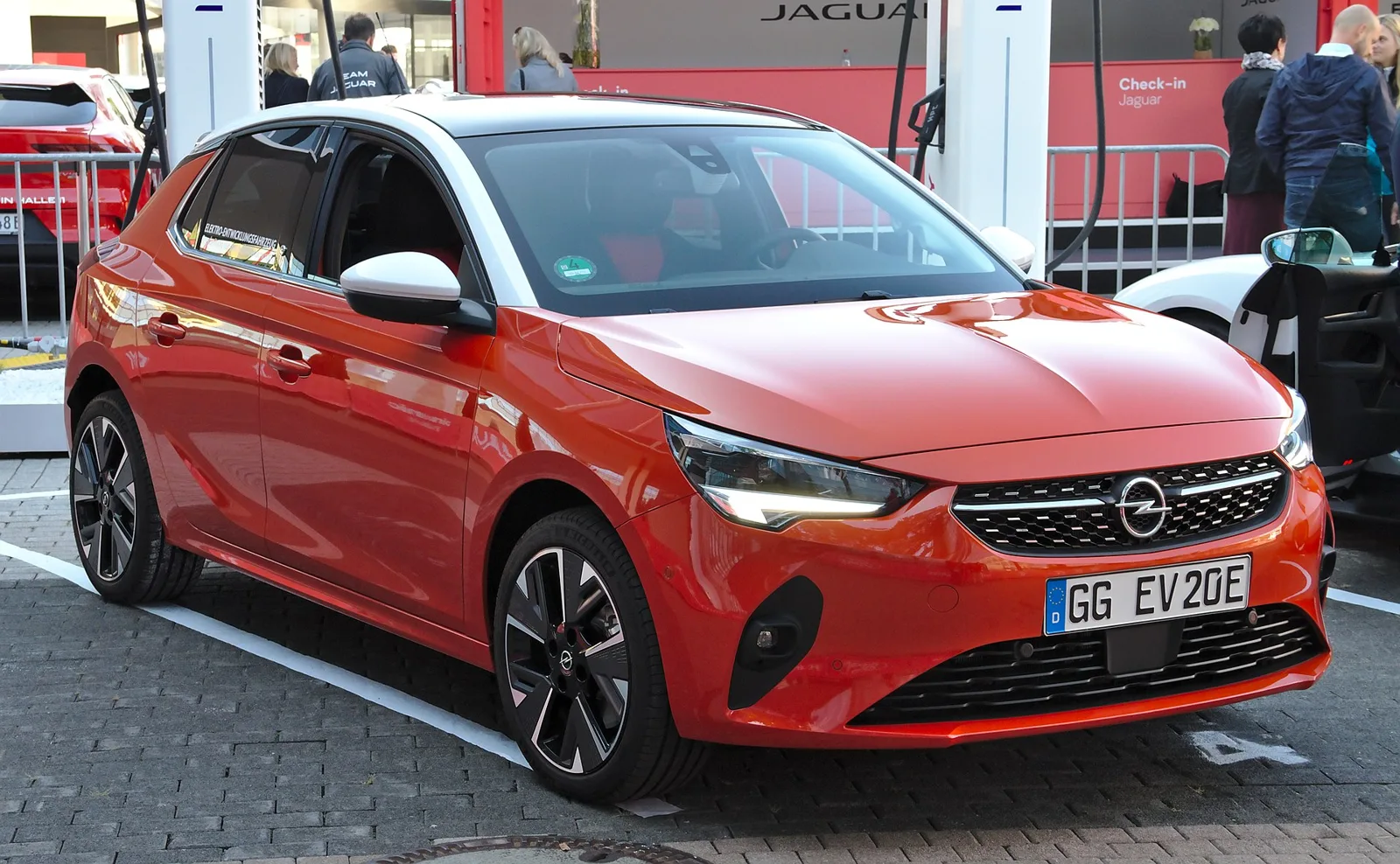
The Corsa A and the Peugeot 205 arrived in the same European window, and each became a benchmark in its own market, with different engines, trims and sales stories.
The Opel Corsa and Peugeot 205 were launched within months of each other and competed in the European supermini class. The 205 won What Car? Car of the Year for 1984, while the Corsa sold in Britain as the Vauxhall Nova.
The Opel Corsa A and the Peugeot 205 reached showrooms in the same European window, and each became a reference point in the supermini class. The Corsa arrived in September 1982, while the 205 followed on 25 February 1983. Both cars spread across body styles, petrol and diesel engines and hot variants, but the Corsa took a different name in Britain.
Were the Corsa and the 205 rivals?
They were, and the 205 was one of five important small cars launched in Europe within about a year of each other. The others were the Fiat Uno, the second-generation Ford Fiesta, the Corsa and the Nissan Micra, while the 205 also arrived close to the Austin Metro and the Volkswagen Polo Mk2.
Peugeot's 205 was a clean break for a maker long seen as the most cautious of France's big three. The Corsa was GM Europe's own answer to the same segment, and the two cars competed for the same buyers.
One a French benchmark with a famous GTI, the other a GM supermini that wore the Nova name in Britain.
How did the Corsa arrive?
The Corsa was first launched in September 1982, after a two-seat roadster concept had been shown at Geneva six months earlier. Its first sales went to France, Italy and Spain, where small cars took between 34 and 43 percent of the market.
General Motors used the S-car code for the project, a name first given to an abandoned early-1970s supermini proposal. The Corsa filled a gap, since Opel and Vauxhall had no supermini of their own and the Kadett D had moved up the market into the C-segment.
The first cars were built in Zaragoza, Spain. They came as three-door hatchbacks and two-door saloons, with four-door and five-door versions following in 1984. Vans were offered in some markets, depending on local rules about rear windows.
How did the 205 come about?
The 205 grew out of Projet M24 and reached the market on 25 February 1983. It succeeded the 104 and the Talbot Samba, borrowing a few of their design elements. Peugeot had entered the modern supermini market earlier, in 1973, with the 104.
Peugeot's 1978 purchase of Simca and the former Rootes Group, both Chrysler European units, brought the small-car know-how it needed. Work on a new supermini for the 1980s followed, and the 205 went on to earn a 1984 What Car? top-car title.
The styling is often credited to Pininfarina, although Gerard Welter says it was an in-house design. Pininfarina styled only the Cabriolet. CAR Magazine later named the 205 its car of the decade for 1990, and the car is often credited with turning Peugeot's fortunes around.
Specifications side by side
| Specification | Opel Corsa A | Peugeot 205 |
|---|---|---|
| Launch | September 1982 | 25 February 1983 |
| Production | 1982 to 1993 (Corsa B from April 1993) | 1983 to 1999, over a single generation |
| Body styles | Three-door hatchback and two-door saloon; four and five-door from 1984 | Three-door and five-door, with XA commercial and Multi conversions |
| Petrol engines | 1.0-litre, 1.2-litre and 1.3-litre at launch; 1.6-litre GSi | 954 cc to 1,905 cc, carburettor or fuel injection |
| Power | 45 PS, 55 PS and 70 PS; GSi 101 PS (74 kW) | 44 PS (32 kW; 43 hp) on the 1.0; 105 PS (77 kW; 104 hp) on the 1.6 GTI; 128 PS (94 kW; 126 hp) on the 1.9 GTI |
| Diesel | 1.5-litre turbo diesel, 67 PS (49 kW), from 1987 | 1.8-litre XUD, 59 PS (43 kW; 58 hp) |
| Sporty model | Sport, 93 hp, 0-60 mph in 8.9 seconds | GTI, with the 1.6 and 1.9 engines |
| British name | Vauxhall Nova, April 1983 to March 1993 | Peugeot 205 |
Which was quicker?
The fastest Corsa in the published figures is the Sport, with 0-60 mph in 8.9 seconds and 112 mph (180 km/h). No sprint time for the GTI is published, so a direct sprint contest is not possible.
The only 205 sprint time is the GTX's 10.6 seconds to 100 km/h with 75 bhp, which cannot be set directly against the Corsa Sport's 0-60 mph run. The 1.9 GTI's 128 PS (94 kW; 126 hp) was the largest power output in the 205 family quoted here.
How did the Corsa's hot versions work?
The Sport was a rare, homologated model from 1985, built to qualify the car for Group A rallying in the sub-1,300 cc class. Only about 500 were built. It came in white with unique decals, a 13SB engine with twin Weber carburettors and few luxuries.
The GSi arrived at the 1987 Frankfurt Motor Show with a 1.6-litre fuel-injected engine rated at 101 PS (74 kW) at 5600 rpm. It was capable of 186 km/h (116 mph), and Opel's tuning specialist Irmscher mapped its engine. The Nova SRi used a 1.4-litre injected engine with 82 PS (60 kW), and it shared the GSi's mechanicals otherwise.
How did the 205's hot versions compare?
The 1.6-litre GTI arrived in 1984, and its XU5J unit was rated at 105 PS (77 kW; 104 hp). For the 1987 model year the 1.6 gained a head with larger valves, lifting its rating to 115 bhp (86 kW; 117 PS).
The 1.9-litre GTI relied on the XU9JA unit, rated at 128 PS (94 kW; 126 hp), and a catalysed version made 122 PS (90 kW; 120 hp). The 1.6, with its shorter stroke, revved freely, whereas the 1.9 felt lazier and more torquey.
The GTI's three-door body appeared in 1984, the same year the GTI arrived. The 1.9 GTI arrived in 1986. The GTI was dropped in 1994, by which time Peugeot was building high-performance 106 and 306 versions.
How did the 205 diesel and economy versions work?
Diesel 205s used the PSA XUD engine, taken from the Citroen BX, which had been introduced in September 1982. Engines of 1,769 cc and 1,905 cc were offered, and the diesel's performance-and-economy combination won over many buyers who wanted a petrol-like drive.
The 1.8 diesel GRD made 59 bhp (44 kW) at 4,600 rpm and 81 lb ft (110 N m) at 2,000 rpm. The 1.4 petrol GR, with 59 bhp (44 kW) at 5,000 rpm and 79 lb ft (106.9 N m) of torque, was similarly quick, but the diesel's peak torque came lower in the rev range and used much less fuel.
The 1.8 GLD became a popular used buy. What Car? recommended it in August 1992, and Which? picked it as a best buy in five consecutive years spanning the late 1980s and early 1990s.
Which trims and body styles did each car offer?
The Corsa's basic trim was simply the Corsa, followed by the Luxus, Berlina and the sporty SR. The SR had a rear-window spoiler, alloy wheels, checkered sport seats and a 70 PS (51 kW) engine. A facelift six years on brought new front styling and the LS, GL, GLS and GT names.
The 205 used a different system, with three-door cars badged X and five-door cars badged G. The XA and XAD were two-seat commercial versions, and independent coachbuilders such as Gruau and Durisotti built tall-bodied Multi versions on the same platform. Durisotti began the 205 Multi in 1986.
Corsa trims and 205 trims followed their own naming systems, so the two ranges are hard to match one for one. Most 205 versions came with a manual gearbox.
How did critics and the press treat the 205?
The 205 was pipped to European Car of the Year by the similar-sized Fiat Uno shortly after launch. The award organisers later said the 205 enjoyed a longer period of high demand than its Italian rival,
Top Gear's Jeremy Clarkson called the 1990 edition an instant modern classic, and the car was still the benchmark in its sector by then. Its exterior styling was barely changed over a 15-year run, apart from small details, and a dashboard redesign arrived for the 1988 model year.
How did the Nova sell in Britain?
In the United Kingdom the Corsa sold as the Vauxhall Nova from April 1983. It effectively replaced the Chevette. Britain took close to 500,000 Novas over the decade that followed.
The Nova's best year was 1989, when it ranked seventh among British car sales with more than 70,000 registrations. Just 1,757 were still registered for the road by February 2014.
The 205 did well in Britain too. Around 400,000 UK sales potentially made it the best-selling car Peugeot ever sold in the country. About 374,773 were on UK roads at the 1994 peak, compared with around 14,000 by 2014.
What changed in the 205's engines?
Early 205s used the X petrol engine carried over from the 104. The newer XU and TU engines, which were PSA designs, replaced it in 1987 and 1988, and the TU range arrived in 1988. Engines ran from 954 cc to 1,905 cc, in carburettor or fuel-injected form.
The late 1990 facelift brought single-point injection and catalytic converters to meet the 1992 pollution limits. In 1991 the 205 dTurbo arrived, fitting a turbocharger to the 1,769 cc XUD diesel.
What did the Corsa B add to the range?
The Corsa B was unveiled in April 1993 and reached Australia as the Barina in May 1994. Unlike the Corsa A, it had no European saloon, but a saloon was designed in Brazil for Latin America, where saloons were preferred.
A 1.0-litre three-cylinder Family 0 economy engine arrived in 1997, along with a Lotus-tuned suspension and an exterior refresh. The Corsa range kept growing well beyond Europe, with versions built in South Africa and India.
How did the 205 end its run?
The 205 was discontinued in the UK in 1996, and the last models were sold in Argentina and France. The 206 arrived in 1998 as the direct replacement, after buyers had asked for a Peugeot supermini in the 205's mould.
Peugeot introduced the 106 in September 1991, and it effectively took over as the smaller front-engined model. The 306 followed in early 1993 and replaced the 309, which reduced the 205's role in the range.
The Corsa's line moved on as well. Vauxhall dropped the Nova name when the Corsa B arrived, and the new model reached Australia as the Barina.
Which car suits which buyer?
A buyer who wants a French hatchback with a strong diesel and a famous GTI pedigree will look at the 205. Its record in the UK, its awards and the 1.9 GTI give it a clear identity in the supermini class.
A buyer who wants an Opel with a broad petrol and diesel range, and a model that also sold as the Nova in Britain, will find more in the Corsa. The Sport and GSi showed how far the Corsa could go in its performance versions.
Sales alone do not decide the choice. The 205 sold 5,278,050 units across its life, while the Corsa family was the world's best-selling car in 1998. The better car depends on whether the buyer values French character or the Opel and Vauxhall badge.