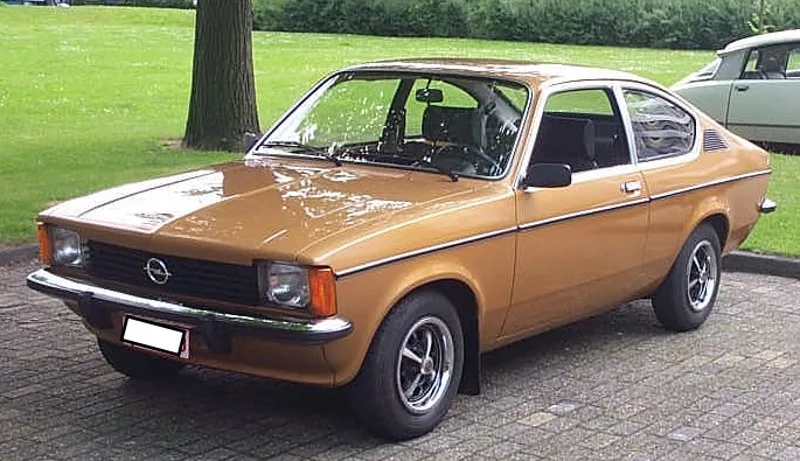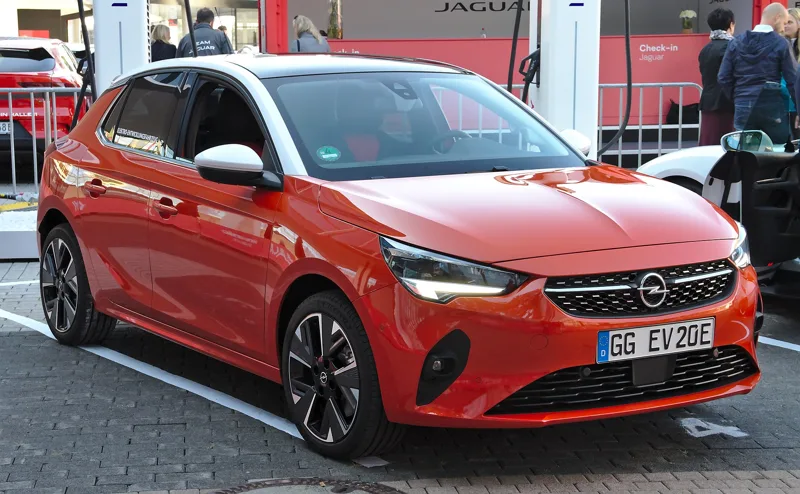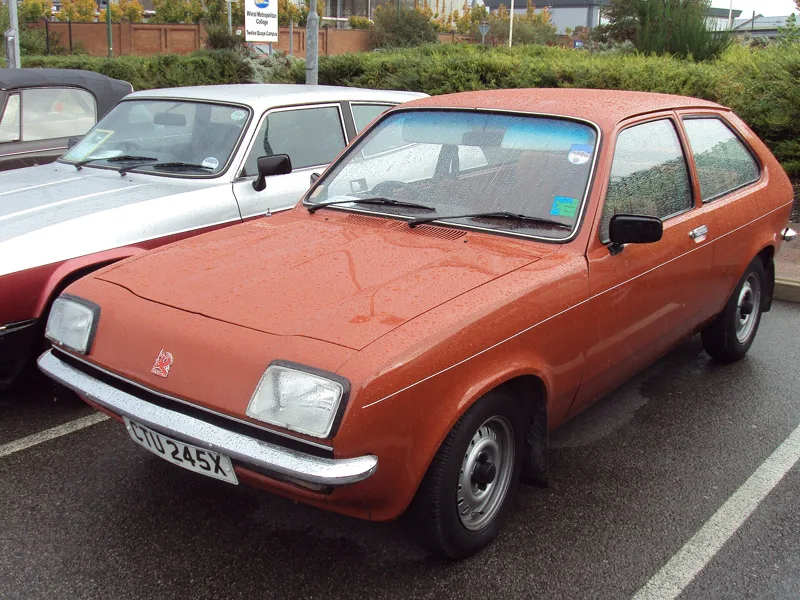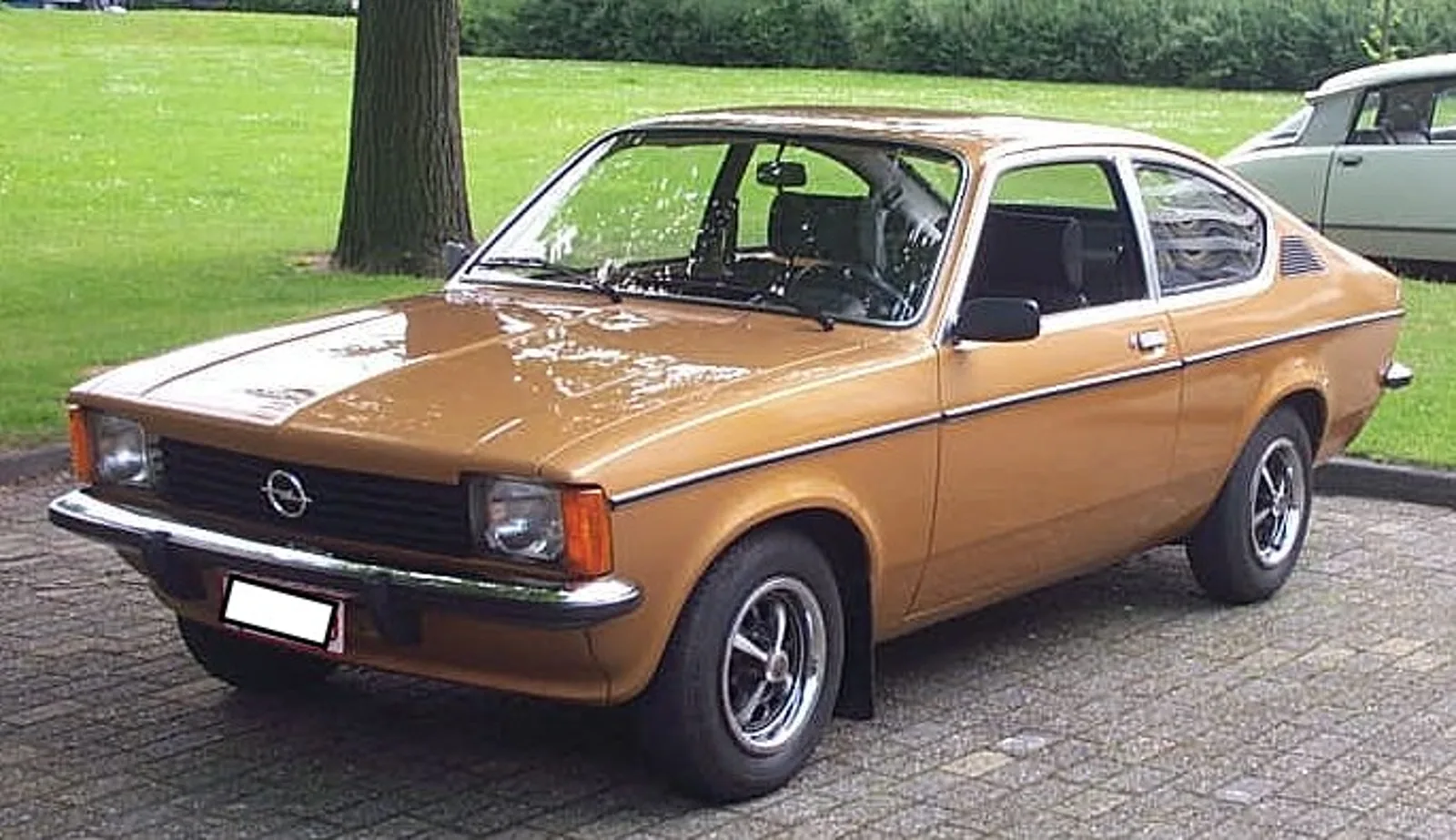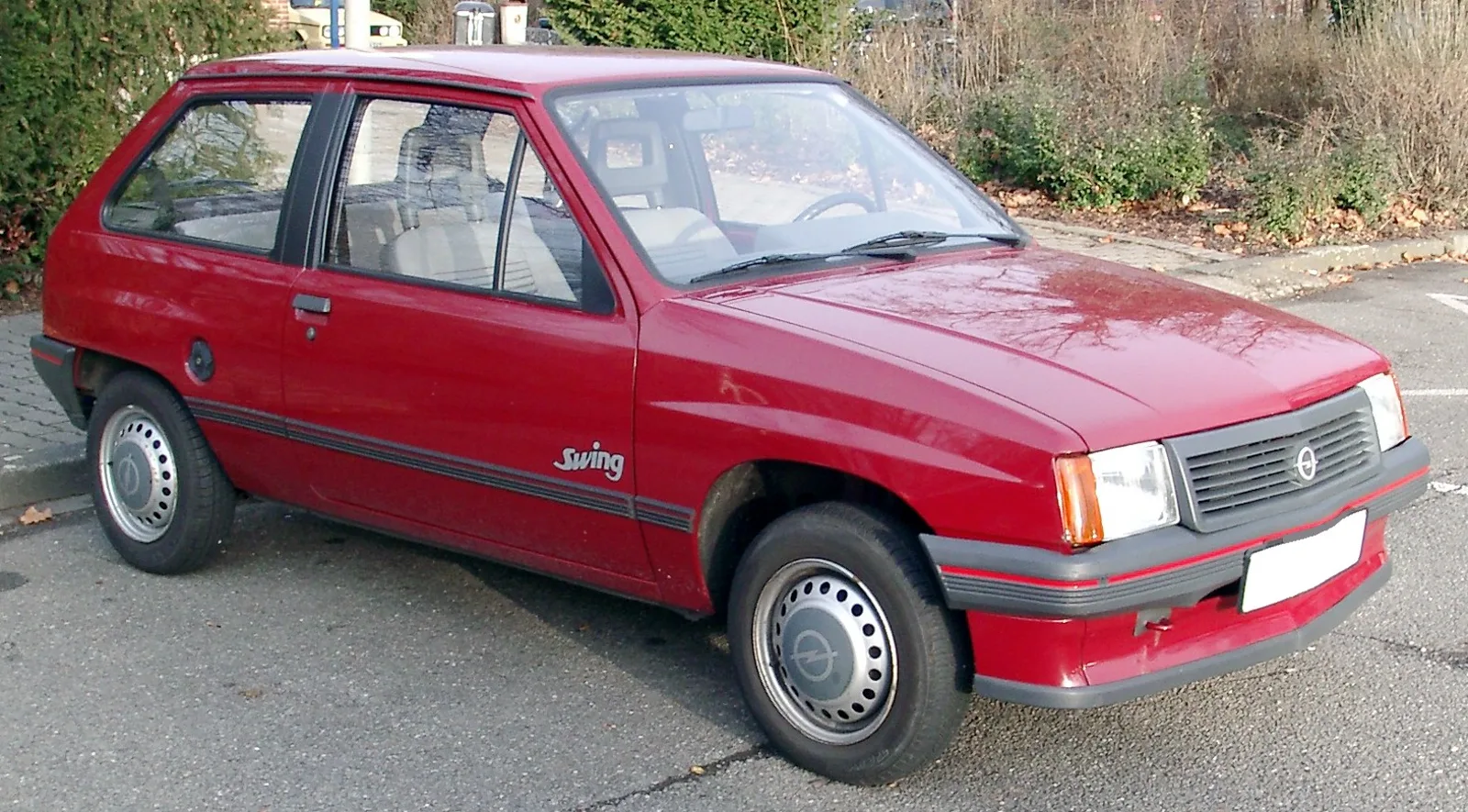
A 1969 mini study, a GM front-drive project and a new factory at Figueruelas gave Opel its first supermini, sold in Britain as the Vauxhall Nova.
The Opel Corsa A was the first supermini Opel developed, built from 1982 to 1993 and sold in Britain as the Vauxhall Nova. Series production began on 30 August 1982 at a new factory in Figueruelas near Zaragoza, Spain. Its engines ran from 993 cc to 1,297 cc.
The Opel Corsa A started life as a 1969 study for a mini Opel, but the car that reached showrooms in 1982 came out of a long run of rejected ideas. One notable part of the story is the factory at Figueruelas, which Opel built in Spain in just 899 days.
Where did the idea for a small Opel begin?
Opel first prototyped a small car in 1969, when the Russelsheim company wanted a budget model to sit below the Kadett B. A Mini was bought from a scrapyard near Russelsheim, and its whole front-axle unit, engine and gearbox included, went into the first study model.
The design group looked at the Mini as its model. Almost all GM cars were rear-drive at the time, so a dedicated department was set up for future front-drive models.
The B segment was thinly populated in the late 1960s. The Fiat 850, the Mini and the Hillman Imp were among the few budget models, but the Fiat 127, Peugeot 104 and Renault 5 were already in advanced development.
A car that began as a 1969 mini study and became Spain's most exported car by the end of 1983.
What did the 1969 prototypes look like?
The 1969 prototypes resembled the Kadett City more than the production car that followed. Their body was a simple tubular cage around the mechanics, and several test cars were disguised under Kadett A bodies, some with front drive and some still rear-driven. All of them had clearly widened wheel arches to suit the wider track.
The project also produced a prototype of a fresh one-litre three-cylinder engine, though problems in its development stopped further work on it.
Why was the mini project cancelled?
Opel's then chief, Elliot Estes, backed the project at first. Later neither the American manager nor the executive committee judged a fifth model in the range necessary. There were no production plants, and it was estimated that sales would not reach high enough volumes.
The project was cancelled, but its ideas carried on. The Kadett D of 1979, the first Opel with a transverse engine and front-wheel drive, owed part of its development to the experimental work of the early seventies.
Why did the S-car project restart in 1977?
GM's top management revived the idea of a small front-drive Opel in 1977. The lukewarm response to the Kadett City played a part, and so did the success of small front-drive cars already on the market. Two orders were issued: one for the S-car, with the internal code 2170, and one for a factory at Zaragoza in Spain. Opel budgeted 300 million euros for the development of the car.
Aerodynamics were a central target. The new car had to improve on the Kadett D's Cx of 0.39 and the Ascona C's 0.38. The two-box body reached 0.36, and the SR version dropped to 0.35 with its front and rear spoilers.
How was the car tested before production?
GM's crash specialists used vehicle front ends at 1:2 scale. They were easy to handle, cheap to make and gave precise deformation data, so the team could work before any pre-production car existed. Crash tests on real pre-production cars came later.
A new multiaxial rig simulated driving loads in the laboratory, using data recorded with a car on the Dudenhofen test track. Testing took the Corsa to the Nurburgring, Hockenheim and a circuit in Italy, as well as the Arctic Circle, Spain and Arizona. The brakes were proved on the Grossglockner and the Stelvio.
Where did the name Corsa come from?
Corsa was first a GM name, used to denote the more powerful Chevrolet Corvair versions of 1964. In spring 1982 Opel revived it for a sporty Kadett Corsa special, priced affordably, and then for the new supermini, which had been called Junior and A3 during development. The name itself was announced in spring 1982 with the first official photograph.
Why did Opel build a factory in Spain?
Opel signed an agreement with the Spanish government partly for market reasons, since small cars made up only 12% of the German market, against 44% in Spain and Italy and 34% in France. The site chosen at Figueruelas, near Zaragoza, faced regional unemployment of about 15%, and 80,000 people applied for the jobs.
The new industrial site created 8,200 jobs.
How was the Figueruelas plant built?
Excavation began in March 1980. On 14 March, at the groundbreaking ceremony, Elliot Estes planted a tree. By May the foundations for the press hall were finished, and in June work started on the assembly lines. The press shop covered 50,000 square metres, and the building used 180,000 cubic metres of concrete and 36,000 tonnes of steel.
A year later, all the assembly lines were installed, and the plant's natural-gas power station and transformers were switched on. The building took 899 days and 1.5 million working hours. In January 1982 the first components were made there, 2,000 plates for mounting the flexible brake cables. The eighteen presses started a month later, and on 14 May 1982 Adam Opel's president, F. Beickler, took the wheel of the first of twenty pilot cars, which were used to set up the lines.
What were the production targets?
From 7 June 1982, 1,500 pre-production examples were built. A total of 150 robots was installed, with the aim of reaching 270,000 Corsas and Novas a year, and another 800 people were hired to reach it.
Series production began on 30 August 1982. After years of setbacks and second thoughts, and with GM's investment worth 3,000 billion old lire behind it, Opel's first supermini could finally enter the market.
How did the Corsa sell in its first years?
The public debut of the Corsa came at the 1982 Paris show, which ran from 30 September to 10 October. Sales started in Spain and France, Italy followed in November, and German buyers had to wait until 25 February 1983 for their presentation at home, with sales following in the next month.
In Germany the Corsa won the Golden Steering Wheel for its class in November 1982. By the end of 1983, with 220,000 examples, the Corsa or Nova was Spain's most exported car. In April 1983 the British subsidiary of General Motors also began selling the Vauxhall Nova, the Corsa A under a British badge.
What did the body styles look like?
Buyers could choose a two-box three-door with a rear hatch, or the longer three-box TR, which stretched about thirty centimetres further. Both had front doors only, with fixed quarter-lights. The three-door two-box had sporty widened wheel arches, plus a grille with thick horizontal slats merged into the bumper, while the TR had classic arches and a fine square grille set apart from the bumper.
Both body variants had a rational, unadorned front end, with rectangular light clusters and slim vertical indicators on the outer side. The grilles differed, with four thick horizontal slats on the two-box and a fine square mesh on the TR, similar to that of the late pre-facelift Rekord.
From April 1985 four-door and five-door bodies arrived. The trim names changed to LS, GL, GLS and GT, with the GT carrying a red line along its bumpers and side panels.
Inside, the dashboard was basic, with just a speedometer, water temperature and fuel gauges. The boot held 275 litres in the two-box and 450 litres in the three-box, and the seats were cloth at the front, with headrests only there. The centre of the dashboard had a recess for the radio, with central vents below it and side vents at the ends, near the steering column.
Which engines and specifications did the Corsa A offer?
At launch the car came with three carburettor engines. The 10S had 993 cc (60.6 cu in) and 33 kW (45 PS; 44 hp), the 12ST had 1,196 cc (73.0 cu in) and 40 kW (55 PS; 54 hp), and the 13SB had 1,297 cc (79.1 cu in) and 51 kW (70 PS; 68 hp). The 10S was not offered in every market.
| Specification | Value |
|---|---|
| Built | 1982 to 1993 |
| Engines at launch | 993 cc (60.6 cu in), 1,196 cc (73.0 cu in), 1,297 cc (79.1 cu in) |
| Top engine at launch | 51 kW (70 PS; 68 hp) |
| Boot, two-box | 275 litres |
| Boot, three-box | 450 litres |
| Platform | GM4200 |
| Cx (SR version) | 0.35 |
| Millionth Corsa or Nova | 3 September 1986 |
The 1-litre engine derived from the one fitted to the Kadett from 1962, and the larger units came from the OHC Four family, slightly modified. Their long use across the Opel range meant the engines needed no in-depth trials.
Were there regional differences in the range?
Regional differences went beyond the British name. The 10S was not offered everywhere, and in markets without the 1-litre base engine a 1.2 with its output reduced to 45 PS (44 hp) appeared at the same time as the new 1.3 in February 1986.
The Swiss market had its own version of the GT, fitted with the less powerful 1.2 engine rated at 55 PS (54 hp) rather than the 1.3.
The 12ST drew on an overhead-camshaft engine of the OHC Four family, while the 10S belonged to the older OHV Four pushrod family, so the range drew on two engine lineages from the start.
What changed in 1983 and 1984?
The 1.3-litre engine got digital idle control in August 1983, and the following month the whole range was given self-adjusting drum brakes at the rear. In 1984 the 1.3 S arrived in some markets with the 13S engine, rated at 75 PS (74 hp), and a Swing special series with low-priced equipment was launched.
The 500,000th example left the Figueruelas plant in November 1984. In its class the Corsa held 24% of the Spanish market and more than 10% of the European market.
What changed in 1985 and 1986?
The 1.3i of September 1985 became the first Corsa with injection. Its C13N engine used electronic single-point Multec injection and a catalytic converter, and it made 60 PS (59 hp). The GT, previously fitted only with the 1.3 engine at 70 PS (69 hp), later became available with that injected engine too.
In February 1986 the 13NB arrived as a carburettor engine without a catalyst, and power was close to the C13N. Opel also offered a six-year cover against body corrosion in 1986 and a one-year warranty on the main mechanical spares from August. The millionth Corsa or Nova, counted across both names, rolled off the line on 3 September 1986.
What did the Cup series offer?
The Cup special of spring 1986, timed for the World Cup, had white bumpers, mirrors and wheel trims, plus decals and interior trim in the sports department's yellow and two shades of grey. A February 1987 Cup for Germany was an economy trim with three doors.
How did the Vauxhall Nova fit in?
In Britain the same car was sold under the Vauxhall name as the Nova. Its British sales began in April 1983, and the combined Corsa and Nova output passed a million in September 1986, counted across both badges.