A small Fiat from 1964 that grew out of the 600 and spawned a Spider, a seven-seat van and a long run of tuned Abarth and licence-built versions.
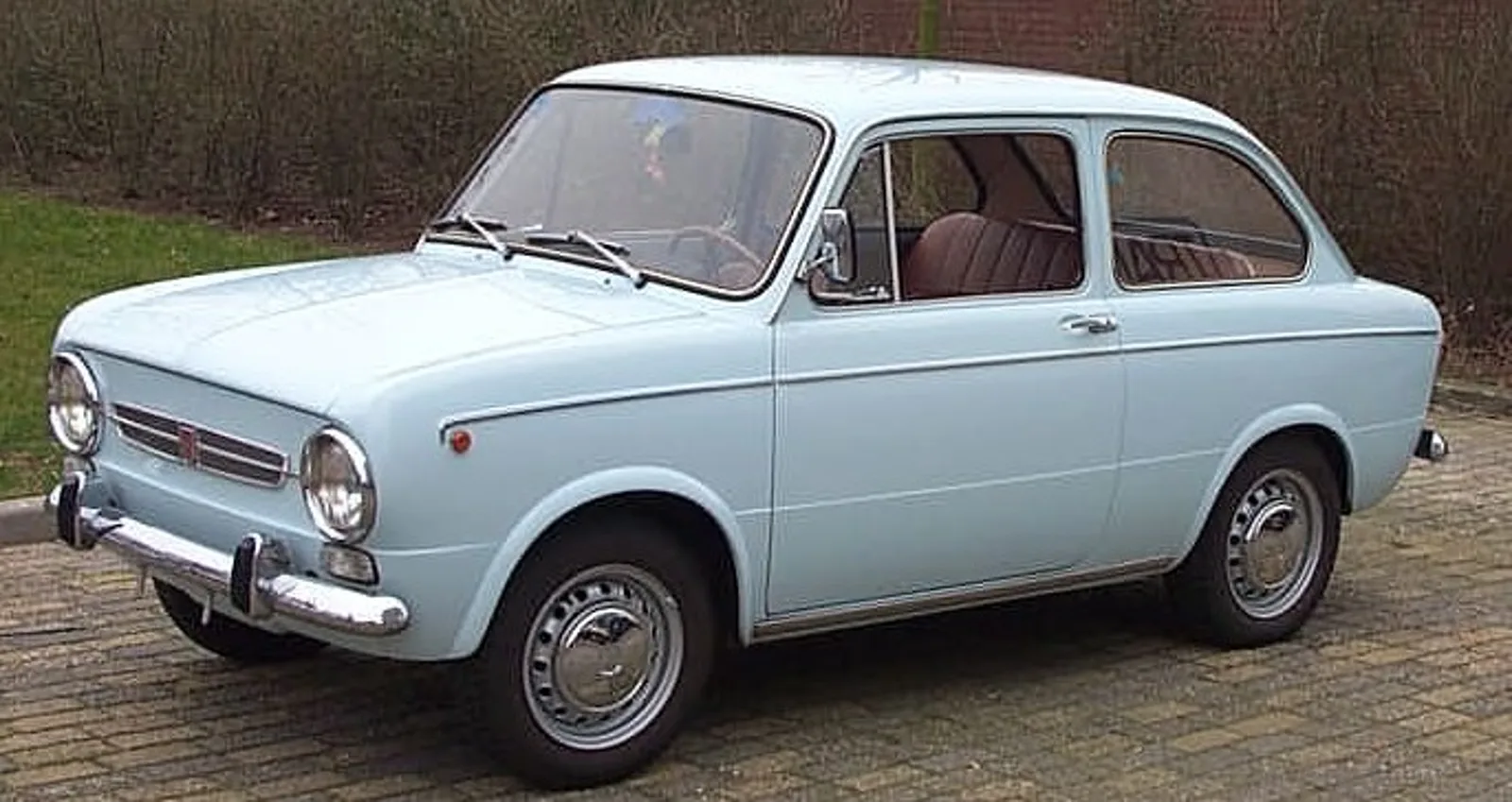
Fiat's 850 was an evolution of the 600 that became a family of rear-engined saloons, coupes and Spiders from 1964. Its 843 cc engine grew to 903 cc in later models, and Abarth and licence builders produced tuned and foreign versions.
The Fiat 850 was a small rear-engined car that Fiat built from 1964 to 1973. Its family ran from a saloon through a coupe and a Spider to a seven-seat van, and its engine grew from 843 cc to 903 cc during the decade, in a line that the company went on to tune and license widely.
Where did the Fiat 850 come from?
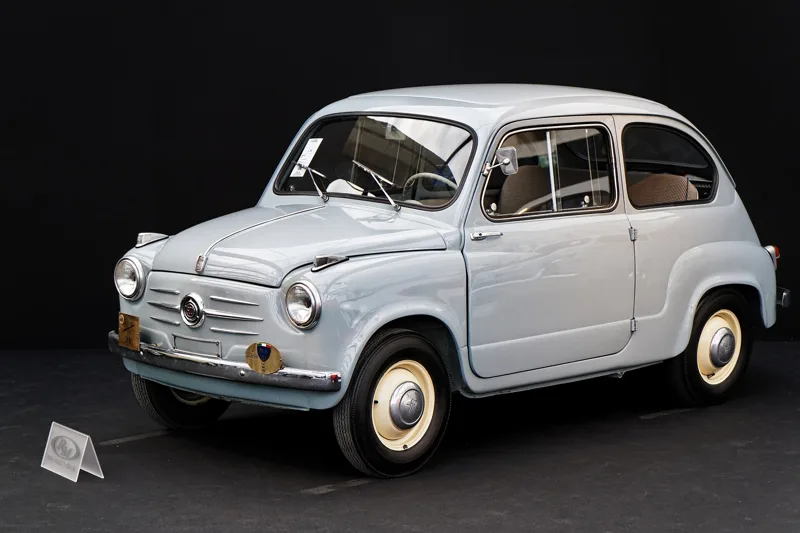
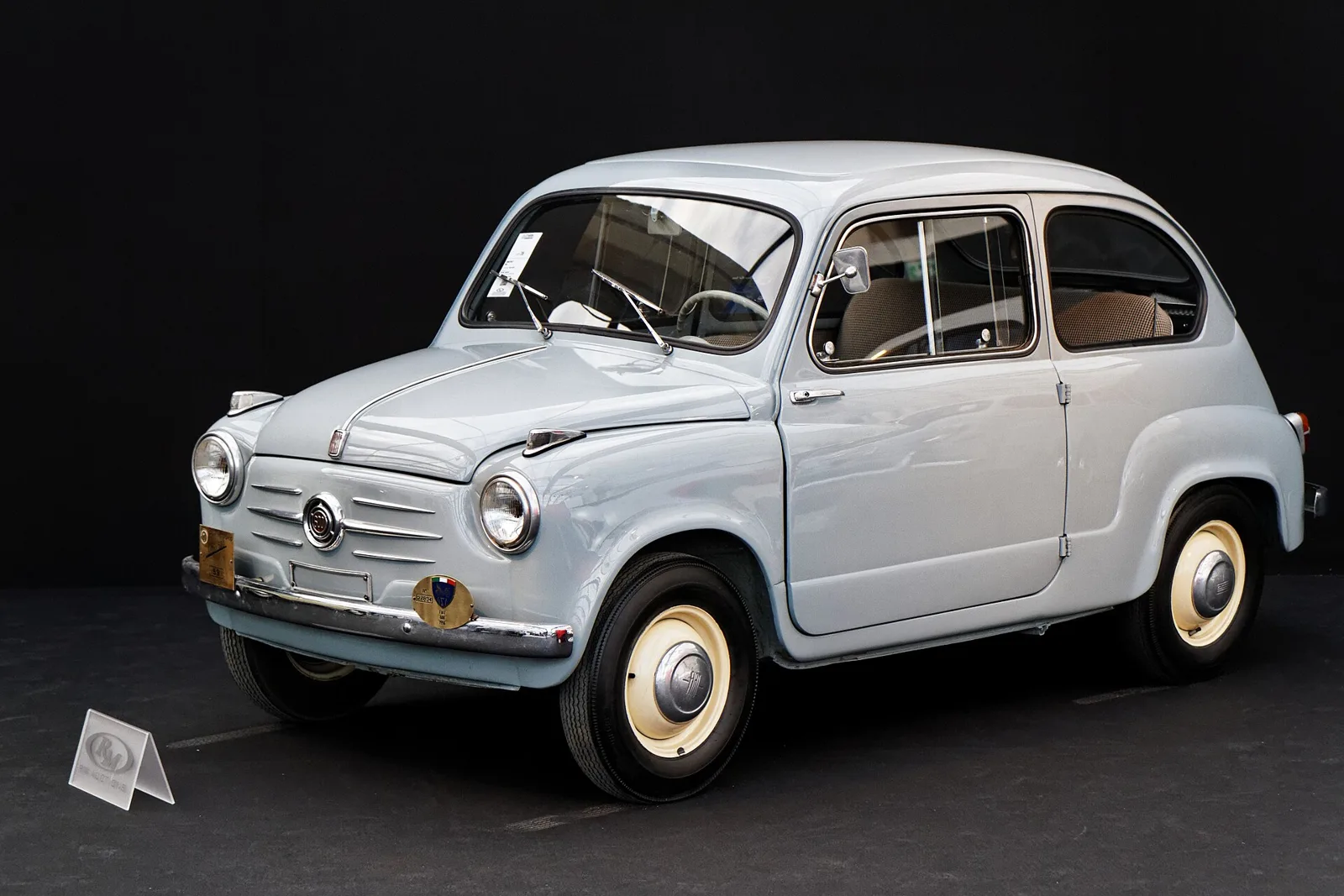
The 850 was an evolution of the Fiat 600, and it was originally expected to succeed that car. The 600 remained in production for almost the whole of the 850's life, which meant the newer model settled into a larger and more expensive niche rather than replacing its predecessor outright.
The internal name for the 600's follow-up project was Project 100, and the 850 carried the Fiat codename 100G. The G continued the lettering used for 600 variants, which had run from A to F, so the car inherited a clear place in the company's own naming system.
The engine was derived from the 600 unit, enlarged to 843 cc. The standard car came in two tunes: the normale at 34 hp (25 kW), engine code 100G.000, and the super at 37 hp (27 kW), engine code 100G.002. Top speed was roughly 125 km/h (78 mph).
The technical step forward was modest, but the car had real character. Its large rounded eyes and short tail, with the engine sitting in that tail, gave it an individual look that made it easy to tell apart from the rest of the small-car market.
A rear-engined Fiat that began as a 600 successor and became a coupe, a Spider, a van and a family of tuned derivatives.
What body styles did the 850 family include?
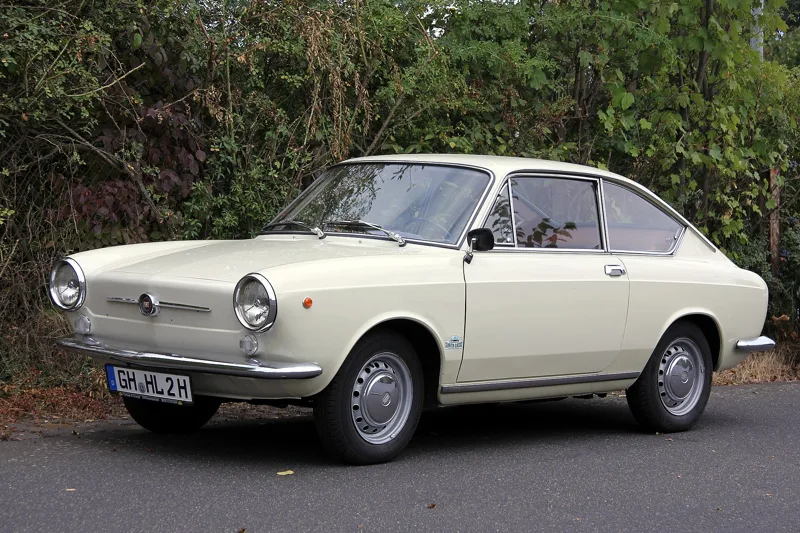
The 850 family included a saloon, a coupe, a Spider and the Familiare, a boxy van with room for up to seven people in three rows. The coupe and Spider arrived in 1965, and sporting versions with bigger engines followed in 1968.
A revised saloon called the Special arrived in 1968 with 47 hp (35 kW), front disc brakes, a sport steering wheel and improved trim. Its 13-inch wheels held the disc brakes, and the car gave a sporting impression for its size without becoming a true performance machine.
The Familiare was a larger and boxier successor to the Fiat 600 Multipla, with a squared-off rear and a full rear hatch. It was capable of carrying seven people in three rows, although seven adults would have been cramped on any journey of distance.
In 1976 the Fiat 900T followed the Familiare. It kept most of the van's body panels but used the 903 cc engine from the Fiat 127, and it was renamed the 900E in 1980 before production stopped in 1985.
The coupe was introduced at the 1965 Geneva Motor Show with the original 843 cc engine producing 47 hp (35 kW). Its top speed was 135 km/h (84 mph), a figure that made it competitive with the sporting small cars of its time.
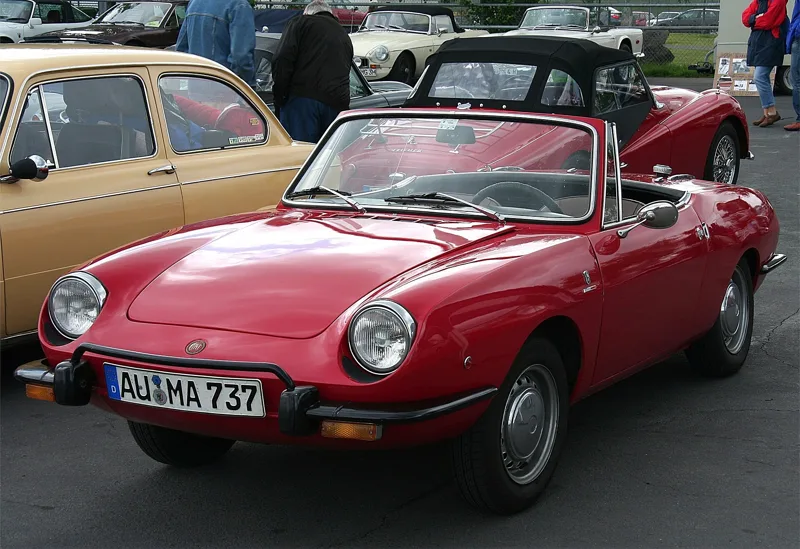
The Spider appeared at the same show as a two-seat convertible, with 49 hp (36 kW) and a ceiling of 145 km/h (90 mph). Bertone designed and built its body at its Grugliasco plant near Turin, and the fabric roof folded away under a rear metal panel.
In 1968 Fiat gave the Spider and the coupe a larger 903 cc engine with 52 hp (38 kW). These cars became the Sport Spider and Sport Coupe. The Sport Spider was restyled at the front, with headlamps moved forward and their glass covers removed, creating the famous frog-eye look.
How did critics rate the 850?
Road and Track called the coupe one of the most handsome small cars it had seen in 1967. Consumer Reports took a different view of a 1968 example, finding it noisy and sluggish, with a poor ride and weak handling.
Those contrasting verdicts captured the car's divided reputation. Enthusiasts admired its balance and styling, while buyers who wanted refinement and comfort often found the car less convincing when they drove it on everyday roads.
The Sport versions were livelier, and the front disc brakes that came with them were a clear step up from the drums of the base car. The rear wheels kept drum brakes, a common compromise on small cars of the period that kept costs down.
The 1968 Special paired front disc brakes with a sportier steering wheel and extra power, which made it one of the sportier sedans in the range. It showed that Fiat could make the 850 more appealing without changing its basic structure.
What happened with the 850 recall in America?
Between 1978 and 1983 the US government issued an unusual recall covering the Fiat 850, reaching back ten years to cars built much earlier. The recall concerned rust, and its long reach across the model's life made it an unusual action for the period.
American cars had also been different from European ones from the start. The saloon, coupe and Spider were sold with a reduced-capacity 817 cc engine, designed to stay within emissions rules that applied only to engines of 50 cubic inches or more.
To make up the lost capacity, the American engine's compression was raised from 8.8:1 to 9.2:1. That change meant the car needed premium octane fuel, which was a practical consideration for owners in a market where fuel choice mattered.
The American story shows how a small European car could be shaped by regulation rather than design. Engineers adjusted the engine to meet local rules and then faced a recall decades later that focused on the body rather than the powertrain.
Which non-Fiat versions of the 850 were built?
SEAT kept building the 850 in Spain through the 1970s, offering a four-door saloon in two versions. The Spanish cars were a substantial business in their own right, and they carried the design well beyond Italy.
In Germany NSU-Fiat built the car at Heilbronn as the Neckar Adria. Between June 1965 and September 1969 some 6,619 Adrias were assembled there, until falling German tariffs made local assembly pointless. Those tariffs had fallen from 90 percent in 1957 to none by July 1968.
Pirin-Fiat assembled the 850 in Lovech, Bulgaria, from kits between 1967 and 1971. The Kilang Pembena Kereta-Kereta plant in Johor Bahru, Malaysia, also built the car, which showed how widely the design was adopted in markets far from Turin.
In 1970 Zastava began making the 430 at Sombor. It was little more than a cosmetically modified 850T, with a 767 cc engine rated at 25 hp (18 kW). The range included a minivan, a panel van, a pickup and a crew cab, and the line continued until 1990.
What were the Abarth 850 and 1000 models?
Abarth's catalogue of tuned Berlina, coupe and Spider models grew with each larger displacement. These cars carried the OT badge, which stood for Omologato Turismo, meaning touring homologated, and the name was also used on a series of two-seat competition cars.
The first of these was the OT 850 Berlina of July 1964. Its 847 cc engine was lifted from 34 to 44 hp (25 to 32 kW), and the top end went from 120 km/h (75 mph) up to 130 km/h (81 mph). By October that year the Oltre 150 had arrived with 53 PS (39 kW; 52 bhp), front disc brakes and a maximum of 150 km/h (93 mph).
The OT 1000 Berlina arrived in October 1964 with a 982 cc engine producing 61 hp (45 kW) and 79 N m of torque, and it switched to front disc brakes. The OT 1000 Coupe and Spider followed in October 1965 with a 62 hp (46 kW) engine and top speeds of 155 km/h (96 mph) and 160 km/h (99 mph).
The OTR 1000 coupe had a head designed in-house by Abarth, with its valves set in a V shape and fed by twin Solex carburettors. It produced 75 hp (55 kW) at 6500 rpm, and Abarth quoted 172 km/h (107 mph) as the road car's maximum.
The OT 1300 Coupe of 1966 used a bored-out Fiat 124 engine at 1280 cc, producing 75 hp (55 kW) at 6000 rpm. The 1.6-litre OT 1600 Berlina had a 155 hp (114 kW) twin-cam engine and reached 220 km/h (137 mph), with only four examples built.
The OT 2000 Coupe America of February 1966 used a 1946 cc twin-cam engine producing 185 hp (136 kW). It could reach 240 km/h (149 mph), and only three were built. Fiat declined to approve the larger projects, so the OT 1600 and the Mostra remained the most extreme examples of the family. The Mostra took its name from the Italian word for display, and its rear badge read OT Fiat Abarth 2mila, meaning two thousand.
Which independent 850 specials were built?
Several independent makers built special versions of the 850, including the Francis Lombardi Grand Prix and the Michelotti Shellette beach car. Each took the car's basic mechanical layout and wrapped it in a body with a distinct personality.
The 1968 Francis Lombardi Grand Prix was a small sports coupe with a fastback body on the 850 base. OTAS marketed a version as the OTAS 820 with Giannini engines, and an Abarth version was called the Scorpione.
The Michelotti Shellette was a beach car styled by Giovanni Michelotti, in the mould of the Ghia Jolly. Only about 80 were built, the first two on DAF 33 underpinnings, and it used the 47 PS engine of the Special and coupe.
The Siata Spring was a two-seat roadster with retro styling, a fake upright grille, detached wings and running boards. It was introduced in 1967 at 795,000 lire, 255,000 lire less than Fiat's Bertone 850 Spider, and it reached 125 km/h (78 mph).
Siata went bankrupt around 1970 after building around 3,500 Springs. The line was taken over by ORSA near Cagliari, where it used the SEAT 850 engine enlarged to 903 cc with 47 hp (35 kW), and added front disc brakes. The 1973 oil crisis hurt sports car sales in Italy, and ORSA ended production in spring 1975.
What are the Fiat 850 specifications?
| Specification | Detail |
|---|---|
| Type | Small rear-engined, rear-wheel-drive car, Tipo 100G |
| Production | 1964 to 1973; nearly 2.3 million built, 140,000 of them Spiders |
| Engine | 843 cc, derived from the Fiat 600 |
| Normale and Super | 34 hp (25 kW) and 37 hp (27 kW) |
| Coupe | 47 hp (35 kW); top speed 135 km/h (84 mph) |
| Spider | 49 hp (36 kW); top speed 145 km/h (90 mph) |
| Sport models | 903 cc; 52 hp (38 kW), from 1968 |
| Special | 47 hp (35 kW); front disc brakes; 13-inch wheels |
| US engine | 817 cc; compression raised from 8.8:1 to 9.2:1 |
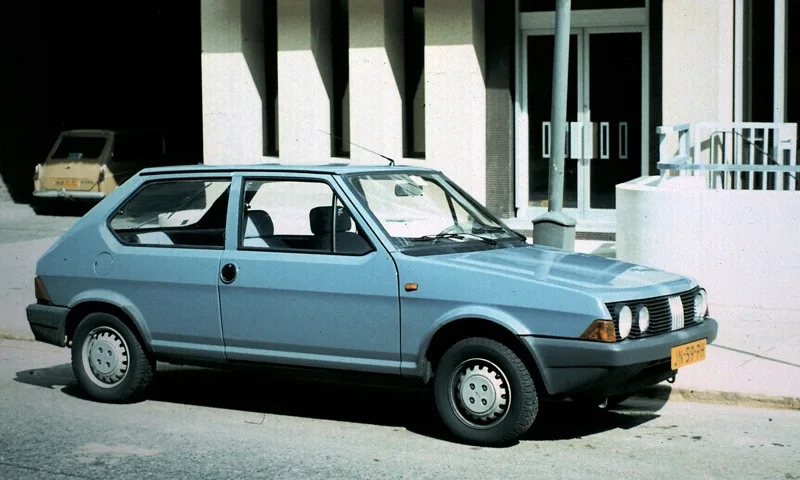
| Successor | Fiat 127 from 1971 |
| Zastava 430 | 767 cc; 25 hp (18 kW) |