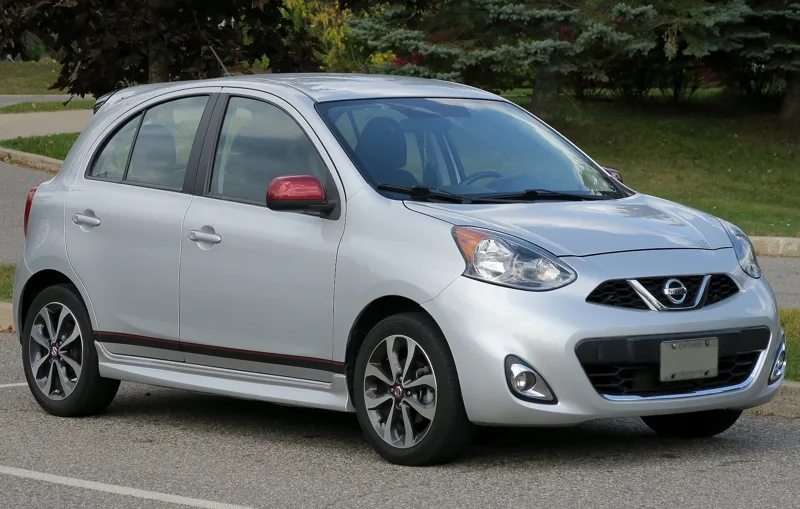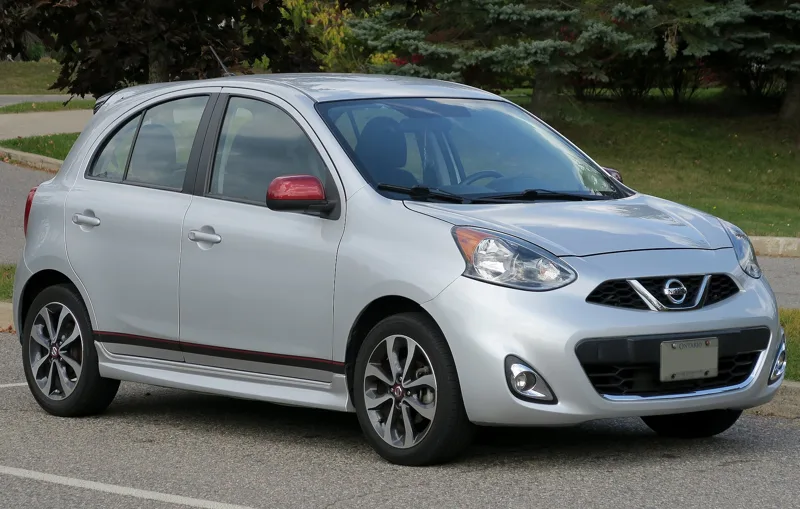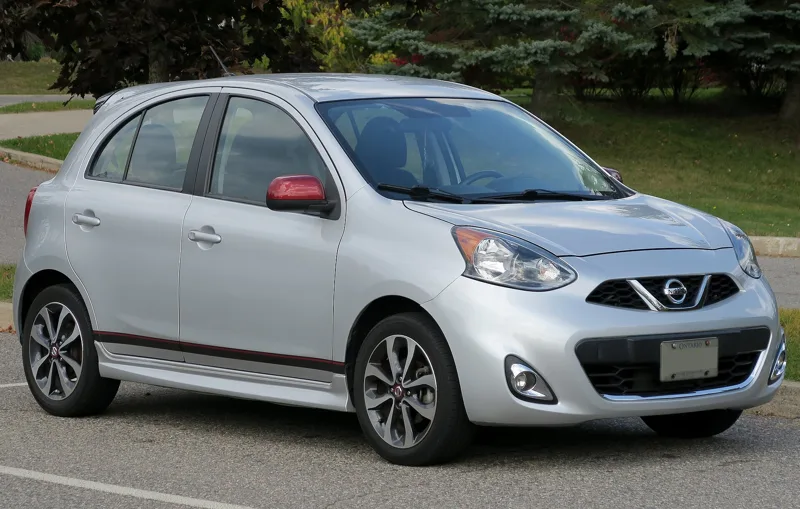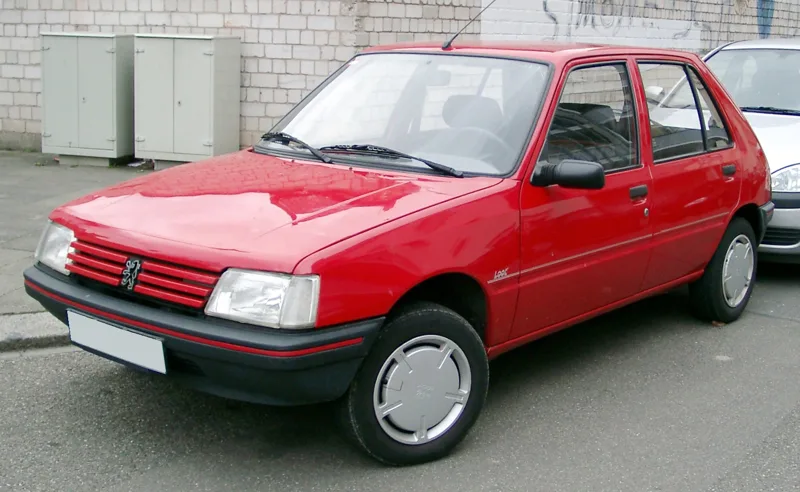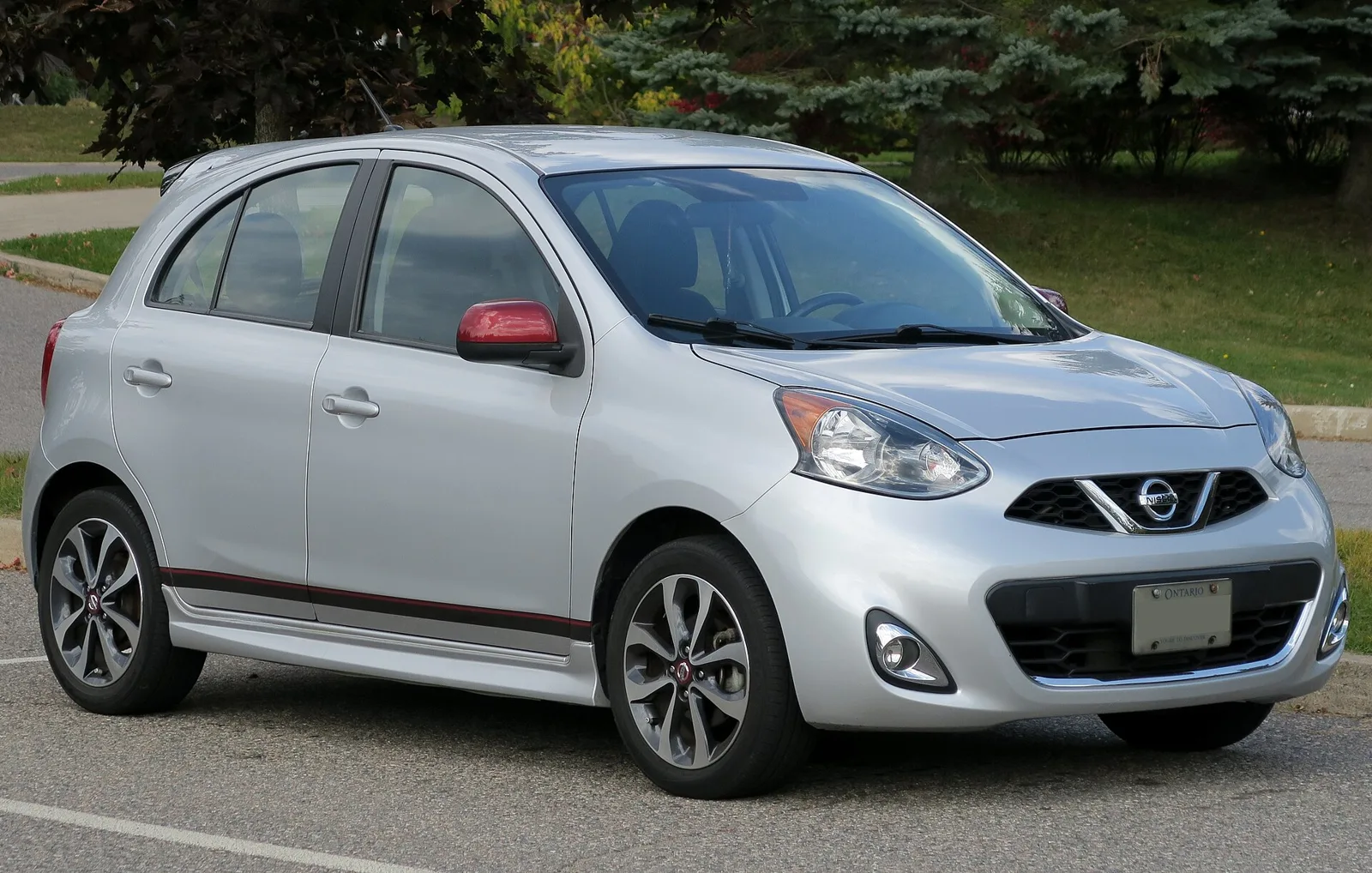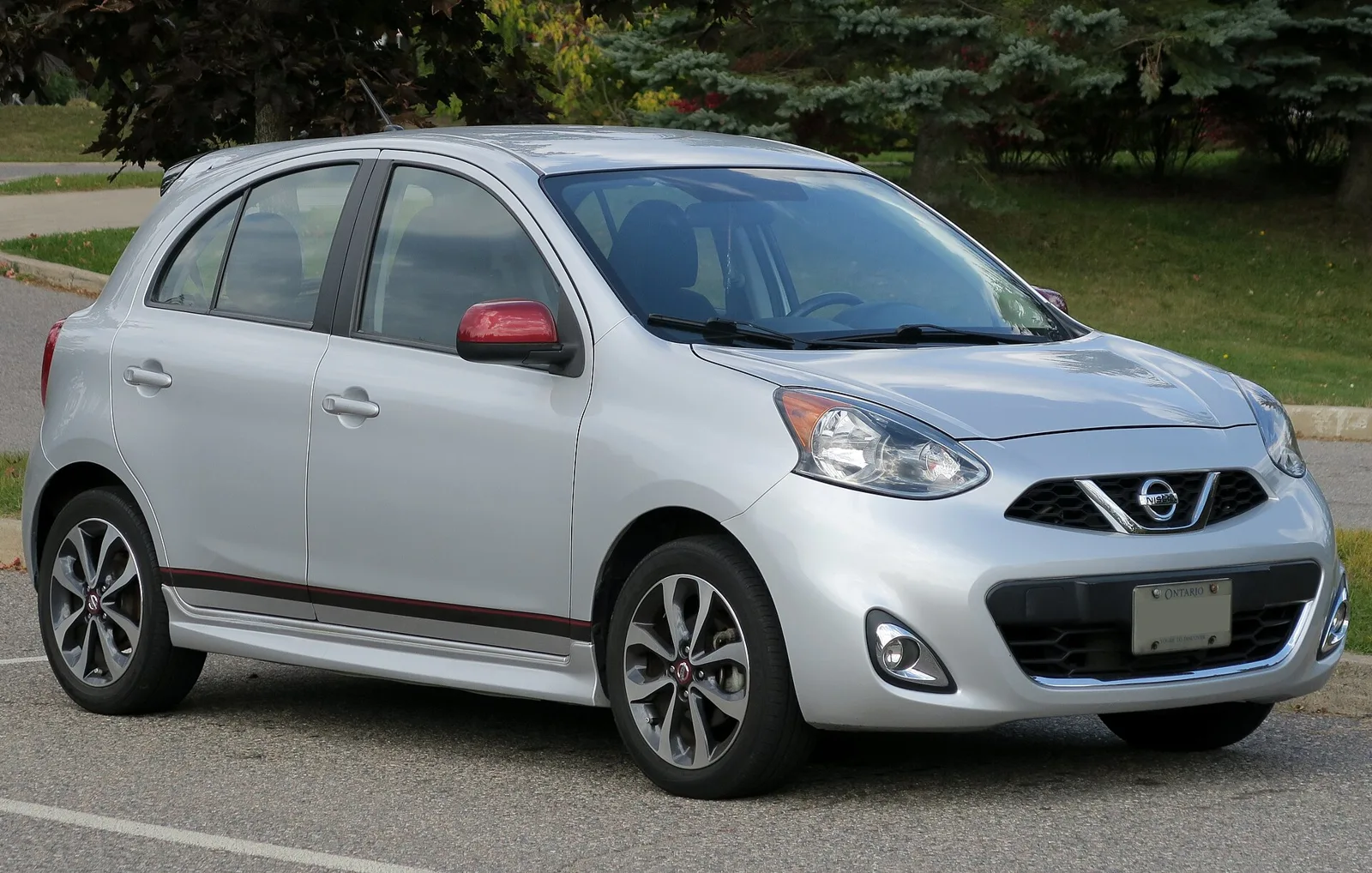
Nissan's Micra was built light and frugal and later won European Car of the Year, while Peugeot's 205 became the benchmark that restored its maker's image.
The Nissan Micra was a supermini from Nissan that went on sale in Japan in October 1982 and in Europe in June 1983. The Peugeot 205 was launched on 25 February 1983 and became the benchmark in its class. The K11 Micra won the European Car of the Year award for 1993.
The Nissan Micra and the Peugeot 205 were both superminis that arrived in Europe in 1983. The Micra came from Japan and was light and frugal, while the 205 came from France and became a benchmark for its class. Both were built to win buyers who wanted a small car that did not feel cheap.
Where did the Micra and 205 come from?
The Micra was known in Japan as the March. The first generation, chassis code K10, went on sale in October 1982, pitched against cars such as the Honda City, the Daihatsu Charade, the Suzuki Cultus and the Toyota Starlet. It replaced the Nissan Cherry, which had grown larger with each generation.
The 205 was developed from Projet M24 and introduced on 25 February 1983, with right-hand drive UK cars following in September that year. It replaced the Peugeot 104 and the Talbot Samba, reusing some of their design elements, and it was the car that many credit with turning Peugeot's fortunes around.
The Micra's body was originally designed for Fiat as a replacement for the Fiat 127, but Fiat adopted the Uno instead. The Micra arrived in Europe in June 1983 and in Canada in 1984. Its early European cars carried a small Datsun badge on the tailgate for the first two years of the rebranding effort. The March name was used across Asia and Latin America, while in Japan the car was exclusive to Nissan Cherry Store locations. In Canada the Micra gave way to the rebadged Sentra Classic from 1991, after Nissan stopped importing it.
The 1985 revision brought a restyled tailgate and larger rear lamp clusters. Japan saw the Micra Turbo, which was never sold in Europe, where only the 1.0 and 1.2 engines were available. The 1.2 with its electronically controlled carburettor, rated at 42 kW (57 PS), arrived in late 1987.
The March 1989 facelift added deeper bumpers, a new front grille, minor interior details and new headlights. It was also when the five-door hatchback reached Europe, shortly before Ford launched a third-generation Fiesta that offered a five-door version for the first time.
The European Super S trim arrived with the 1989 facelift. It had a factory body kit, racing seats and a tachometer, and it came in black, grey, white or red, using the same MA12 engine as the standard car with catalytic converters.
Nissan's light Micra topped a German reliability survey, while Peugeot's 205 became the benchmark that restored its maker's image.
What made the Micra light and economical?
The Micra was built around a specially developed engine, uncommonly high gearing and a low weight of 630 kg (1,389 lb) in early European trim. Its MA10S engine was an all-aluminium SOHC unit developing 37 kW (50 PS) or 40 kW (55 PS) in high-compression form.
The low weight target meant little insulation, so early Micras were quite loud. Japanese owners gained from an engine under 1000 cc when the annual road tax was due, and the engineering benefited from Nissan's 1966 acquisition of the Prince Motor Company, which had developed the Cherry.
Its four-speed or five-speed Nissanmatic automatic and its five-speed manual were both unusual in a supermini at the time.
How did the 205 compare on engines and handling?
The 205 used the X petrol engine from the Peugeot 104 at first, then the XU and TU engines from 1987 to 1988. Its engines ran from 954 cc to 1905 cc, in carburettor or fuel-injected forms, and its diesels used the PSA XUD engine from the Citroen BX.
The 205's suspension used MacPherson struts at the front and trailing arms with torsion bars at the rear. That layout gave excellent ride and handling, and the compact rear kept suspension out of the boot, which gave a wide flat loadspace.
The 205 GTI brought the sporty side. The 1.6 GTI came in 1984 with 105 PS (77 kW; 104 hp), and the 1.9 GTI followed with 128 PS (94 kW; 126 hp). The 1.6 was revvy and eager, while the 1.9 felt lazier and torquier.
The 1990 facelift gave the 205 new door design and cards, clear front indicators and smoked rear light clusters. Single-point petrol injection and catalytic converters arrived to meet the 1992 pollution limits, and the car was still the benchmark in its sector.
Motoring writer Jeremy Clarkson described the 1990 205 as an instant modern classic, and the car was a hit that changed buyers' perception of Peugeot as a maker of large saloons.
How did the Micra's performance models compare?
The Micra Super Turbo was a limited run of 10,000 units in 1988. It used a supercharged and turbocharged 930 cc straight-four producing 110 PS (81 kW; 108 hp) at 6400 rpm, and it still holds the title of the fastest production Micra in Nissan's history.
The Super Turbo reached 100 km/h in 7.7 seconds and covered the quarter-mile in 15.5 seconds, with a top speed of 180 km/h (112 mph), which was the legal ceiling for Japanese production cars then. It was built until December 1991.
The 205 GTI and GTX did not chase those figures, but the GTX reached 100 km/h in 10.6 seconds in its UK form. Its 1,360 cc TU3 engine delivered 75 bhp, and the GTX was a UK-only version from 1993 to 1994.
How did the Micra's special models sell?
The Micra family included the Be-1 limited edition, of which 10,000 were sold, and the Pao, a retro canvas-topped hatchback that sold 51,657 units after its 1989 release. The Figaro coupe was built in about 20,000 examples, and Nissan sold it by lottery.
The Figaro was a JDM-only model, but it became one of the most imported K10 derivatives, and its popularity among celebrity owners helped it gain cult status. The K10 ceased production on 21 December 1992.
The 205 had its own special run, the GTI, which was discontinued in 1994. Peugeot also produced high-performance versions of the 106 and 306 as the decade went on.
Which car did better in reliability tests?
In 1995 the Micra topped the small-car class in a reliability survey of cars aged four to six years, run by the German motoring club ADAC. It recorded 7.5 breakdowns per 1,000 four-year-old cars and 11.5 for six-year-old cars.
The Volkswagen Polo recorded 8.0 and 15.3 breakdowns per 1,000 cars on the same measure, while the Fiat Uno was the class loser with 20.7 and 37.3. The Micra also went on to achieve a much higher survival rate than many of its competitors.
The 205's reputation rested mainly on its sales, its awards and its role in restoring Peugeot's image.
The 205 was discontinued in the UK in 1996, and in 1993 the 306 officially replaced the 309 in the Peugeot range, further reducing the 205's role. The 106, introduced in 1991, took over as the smaller front-engined model.
How did the Micra K11 change the car?
The second-generation K11 was launched in Japan in January 1992 and reached Europe in the final quarter of that year. It was built in the UK, Japan and Taiwan, with the British version made at the Nissan Motor Manufacturing UK plant in Washington, Tyne and Wear.
Its engines were new all-aluminium DOHC 16-valve 1.0 and 1.3-litre units producing 55 PS (40 kW; 54 hp) and 75 PS (55 kW; 74 hp). A 1.5 PSA diesel arrived in Europe as the Micra 1.5 D, and a continuously variable transmission was an option.
The K11 took the European Car of the Year title for 1993, the first Japanese car to be honoured that way. It had earlier collected the Good Design Award and Japan's Car of the Year prize in 1992, and Nissan built 2,000 examples of a limited V3 Award edition to mark the wins.
Airbags, anti-lock brakes, electric windows, central locking and air conditioning were standard or optional. Its safety features included a toughened safety cage and side-impact door beams as standard, though the car scored only two stars in Euro NCAP testing in 1997.
The K11C facelift arrived in Japan in May 1997, with the grille now incorporated into the bonnet, redesigned headlights and bumpers, and major interior changes. The UK-built car was updated in March 1998 and built until early 2003.
The second facelift, the K11C, followed in November 1999 and reached UK-built cars in late 2000. It introduced coil packs in place of the distributor, enlarged the primary catalytic converter and moved the centre high-level brake lamp to the top of the rear window.
Micra and 205 side by side
| Feature | Nissan Micra (K10 and K11) | Peugeot 205 |
|---|---|---|
| Launch | Japan October 1982; Europe June 1983 | 25 February 1983 |
| Origin | Japanese, with a body designed for Fiat | French, developed from Projet M24 |
| Early weight | 630 kg (1,389 lb) in early European trim | None described |
| Early engines | MA10S SOHC, 37 to 40 kW (50 to 55 PS) | X petrol engine from the 104, then XU and TU |
| Sporting model | Super Turbo, 110 PS (81 kW; 108 hp), 7.7 seconds to 100 km/h | GTI 1.6 at 105 PS and 1.9 at 128 PS |
| Diesel | 1.5 PSA diesel as Micra 1.5 D in the K11 | XUD engines from the Citroen BX |
| Transmission | Nissanmatic automatic and five-speed manual; CVT on the K11 | Manual, with automatic in some versions |
| Awards | European Car of the Year 1993 (K11) | What Car? Car of the Year 1984 |
| Reliability | Top of the small-car class in ADAC 1995 | None described |
| Sales | Peaked at over 50,000 in Britain in 1989 | 5,278,050 in total |
| Facelifts | 1985, 1989, K11 facelifts in 1997 and 1999 | 1988 dashboard and 1990 facelift |
| Successor | K11 from 1992 | Peugeot 206 from 1998 |
Which buyer suits each car?
The Micra suits a buyer who wanted a light, economical supermini with an automatic option and a strong reliability record. The 205 suits a buyer who wanted a French supermini with a sporty GTI option and a firm, well-regarded ride. Both reached European showrooms in 1983, so buyers compared them side by side from the start.
Neither car wins outright on the facts given. The 205 sold 5,278,050 cars in total, while the Micra had the stronger reliability result in the survey and its 1993 European accolade.
A used buyer should check the age and the specification, since the early Micra's loud cabin and the 205 GTI's engine differ widely from the later cars. A Micra Super Turbo or Figaro should be checked for originality given their rarity.
What became of the Micra and 205?
The 205 was replaced by the Peugeot 206 in 1998, after it was discontinued in the UK in 1996. Its overall production ended in 1999.
The Micra's K11 was followed by later generations, and the K11 facelifts of 1997 and 1999 added new grilles, interior changes and the 4WD option. The March Box estate was unveiled in November 1999.
The Micra was quietly discontinued in August 2023, with only the fourth-generation model still sold in some markets.