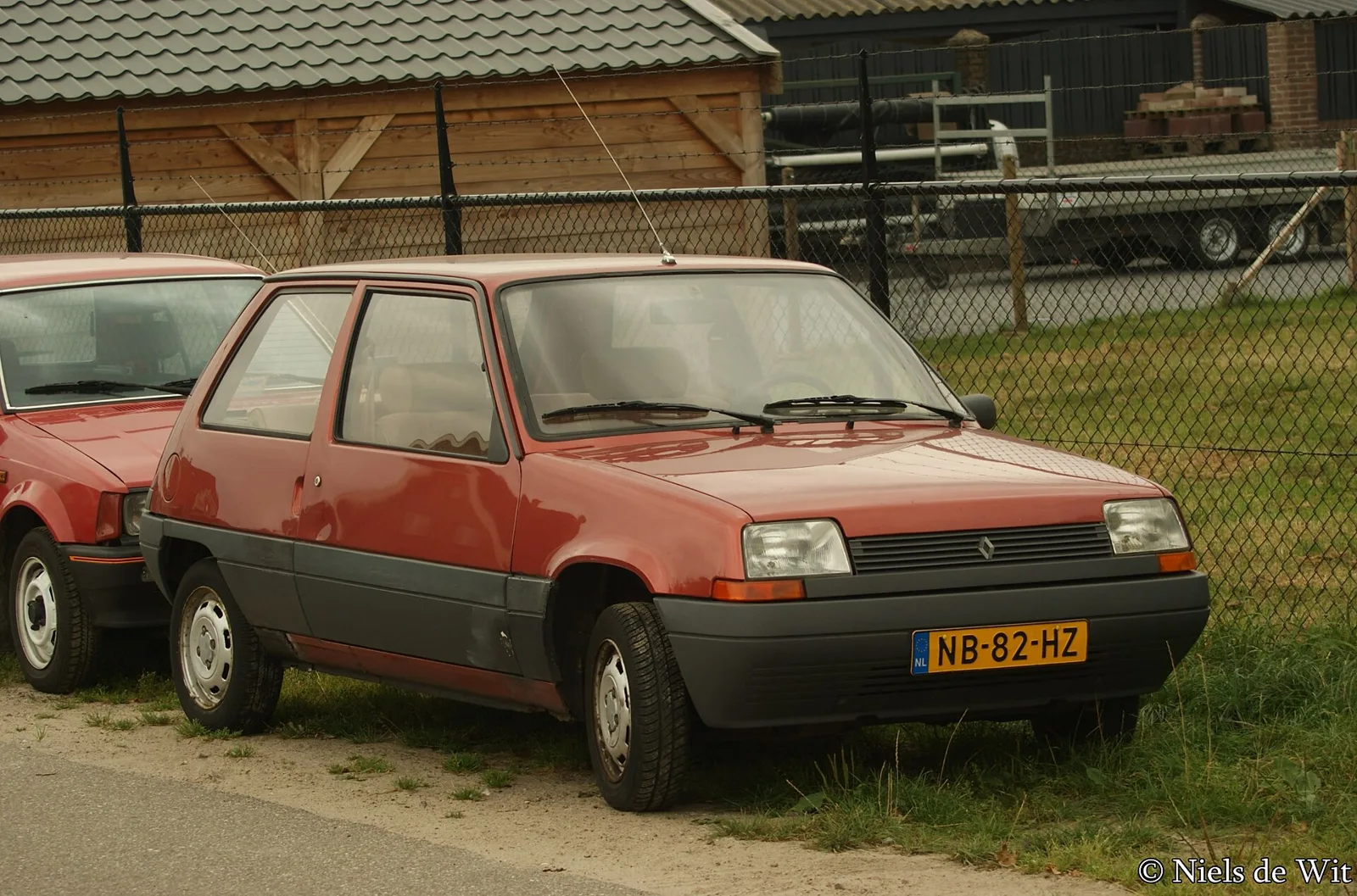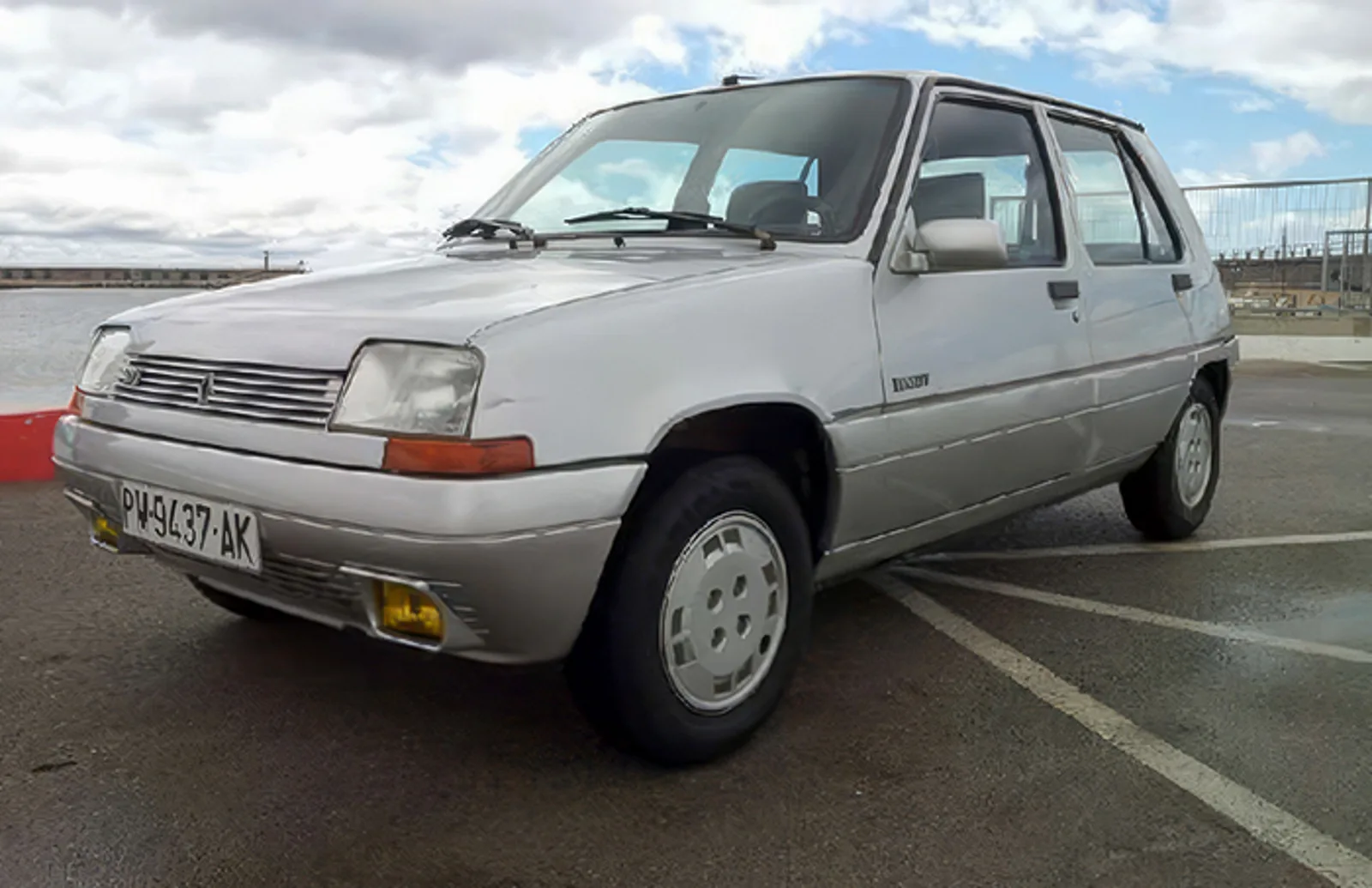
The Super 5 was France's best-selling car for several years, while the Polo Mk2 offered a supercharged G40 that set world endurance records.
The Renault Super 5 was a supermini made for twelve years, and it sold 518,910 units across Europe in 1988. The Volkswagen Polo Mk2 was produced from 1981 to 1994 with an optional supercharged G40 version. Both cars fought for the same European small-car buyers.
The Renault Super 5 and the Volkswagen Polo Mk2 were both front-wheel-drive superminis that fought for the same small-car buyers in the early 1980s. The Super 5 was France's best-selling car for several years, while the Polo Mk2 was a popular German supermini with a supercharged G40 version. Both were sold in Britain, but the Polo's UK range was narrower.
Where did the Super 5 and Polo Mk2 come from?
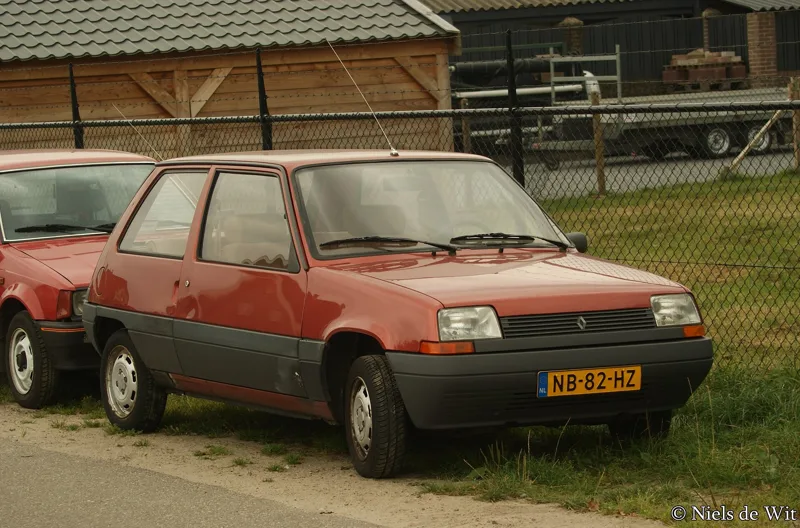
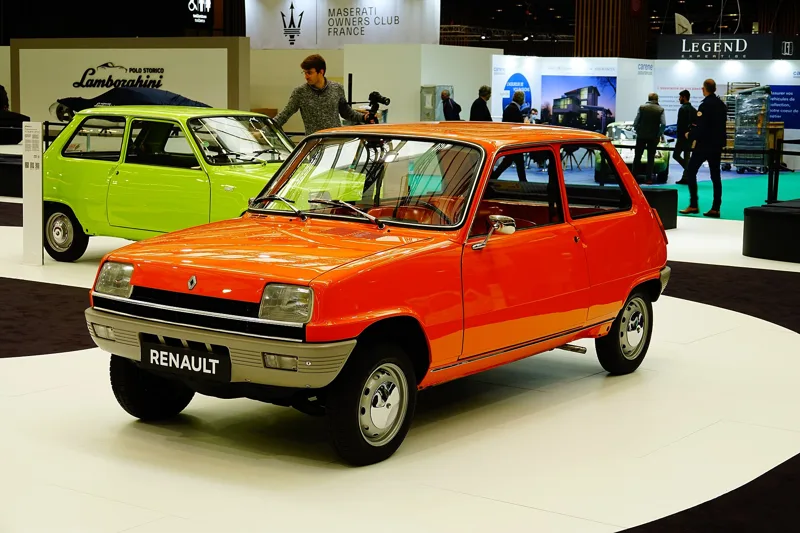
The Super 5 was built by Renault from 1984 to 1996, and was also known as the Renault 5, Supercinque or Supercinco. Its design was inspired by the Renault 5 but it was slightly longer and lower, and the name Renault 5 always appeared on its rear.
The development began in 1978 under the codename Project 140. The plan lasted more than six years because the proposals lacked consensus, until the designer Marcello Gandini joined. His plan was to adapt the R5 to the new market, reusing a shape that buyers already liked.
Gandini's method was one that luxury brands had used for decades: create a vehicle whose appearance recalled its predecessor, which already had public favour. Gandini had designed many Italian sports cars of the 1960s and 1970s.
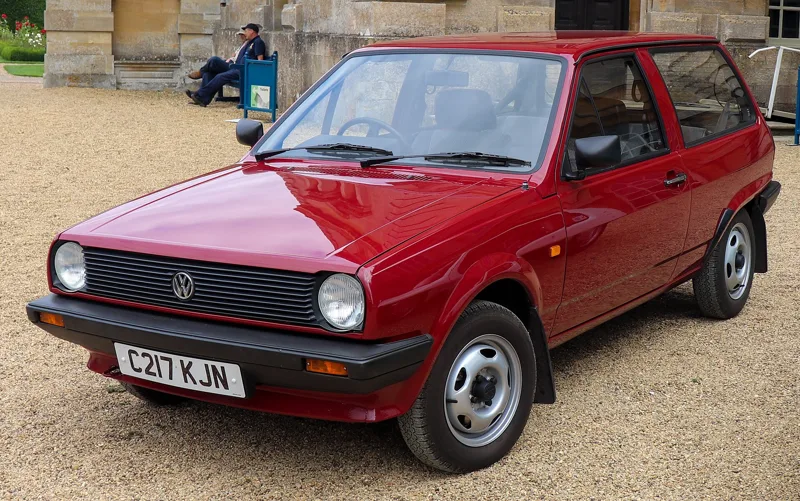
The Polo Mk2 was the second generation of the Volkswagen Polo, internally designated Typ 86C. It was introduced in October 1981 and produced until 1994, with the saloon sold as the Derby and, from 1984, as the Polo Classic. Production began in Pamplona on 27 April 1984.
France's best-selling car from 1986 to 1990 faced a German supermini whose G40 used a supercharger to set endurance speed records.
How did Gandini's design shape the Super 5?
The Super 5 used the chassis of the Renault 9 and 11, which gave it more interior space than its predecessor. It kept the characteristic plastic bumpers and side mouldings of the R5, though they were modified so they would not damage the paintwork.
The seats were praised for comfort and convenience compared with rivals such as the Peugeot 205 and the Citroen AX. The three-door versions lost some rear-seat space because the front seats could not move as far back.
The controls and dashboard were based on those of the Renault 11, and the bodywork was pressed sheet metal welded into a rigid structure. Its bumpers and side mouldings were made of reinforced polyester.
Before Gandini, the team tried many prototypes, including the Renault Gabbiano, which was shown at Geneva in 1983. It had futuristic lines and was reminiscent of the Renault Fuego, but it remained a prototype. Some of its elements were later used on the Super 5.
The new design was wider, lower and longer than the R5, with slightly larger windows and a lower nose. The gains included better aerodynamics as well as interior space, and the project was the company's most expensive ever at that stage.
How did the Polo Mk2 evolve in its early years?
The Polo Mk2's hatchback had a steep, almost vertical rear window that made it resemble an estate, and it was nicknamed the breadvan in the UK. The Coupe added in 1983 looked more like the Mk1 Polo and was still technically a three-door.
The 1043 cc engine replaced the 895 cc unit of the Mk1 as the first Polo engine with a Heron cylinder head. The 1.3-litre engine of 1984 was used in various Polo generations until 1996, and the August 1984 update brought a new dashboard, a bigger fuel tank and round headlights.
In 1986 the engines switched to hydraulic tappets, and the 1043 cc unit replaced the 1093 cc. The Polo was then the only popular European supermini without a four- or five-door version by 1989, when an all-new Fiesta arrived.
Which engines did each car offer?
The Super 5 came in a range from the 1.1-litre C version with 48 bhp to the 1.4-litre GT Turbo with 120 bhp. Its top model, the GT Turbo2, reached 204 km/h (127 mph) and 100 km/h in 8 seconds.
The Polo Mk2's 1.3-litre Coupe GT used a 75 PS (55 kW) version of the engine from August 1982, with a flat cylinder head and dished pistons that Volkswagen called HCS, short for High Compression and Squish. That was a 25 percent power gain over the standard car.
Volkswagen's Polo G40, introduced in 1987 in left-hand drive Coupe form only, used a 1272 cc engine with a G-Lader supercharger that produced 113 PS (83 kW) at 6000 rpm. The car reached 100 km/h in 8.1 seconds, with a top speed of 196 km/h (122 mph), and it cost little less than the basic Golf GTI.
The production G40 that followed the 1990 facelift used a digifant system adapted for a catalytic converter and reached 100 km/h in 8.6 seconds. It was lowered by 25 mm and had Le Mans sports seats, a bee sting aerial and BBS alloy wheels.
How did the two cars sell?
The Super 5 finished second in its first year on sale, behind the Peugeot 205. From 1986 to 1990 it was France's best-selling car, and its best year in France was 1988, with 241,849 sold.
In 1993 the last completely new units reached dealerships. From 1994, production was cut back in favour of the Clio, although the Super 5 stayed on sale alongside its successor until the end of the decade.
By the end, Novo Mesto in Slovenia was the only Renault factory still making the Super 5, and most of its units went to export markets with emerging economies, including the former Yugoslavia and Morocco.
Advertising helped the car. The first television commercials presented it as Supercar, and the 1984 advert showed a personified R5 saying goodbye before the Super 5 took its place. The 1989 advert was known for its rap song.
The 1985 range of nine versions cost 38,900 to 61,900 francs in France. Five-door versions, six centimetres longer than the three-door, and diesel engines arrived that year.
The sales pattern varied by country. The Super 5 sold well in Belgium, Slovenia, Spain, France, Italy and Portugal, with market shares of three to eleven percent, but it went more unnoticed in Germany, the Netherlands, the United Kingdom and Sweden, where shares stayed below two percent.
Coincidentally, the countries where the Super 5 sold best, apart from Italy, had a Renault factory building it. Renewed ranges from 1986 to 1988 added limited editions such as the Laureate and Baccara.
Across Europe the Super 5 sold 518,910 units in 1988, its best year, and finished as the fourth best-selling car on the continent. That placed it behind the Volkswagen Golf with 739,445, the Fiat Uno with 635,663 and the Opel Kadett with 622,690.
The Polo's UK sales were steady, frequently managing over 30,000 a year and peaking as the 11th best-selling car there in 1983. The Polo offered only the 1.0, 1.1 and 1.3 versions in Britain.
The Derby, sold as the Polo Classic, was produced only in Spain and ended in 1992. By then the Polo looked dated, with its fuse box in the engine room, and it was only built with three doors.
The 1991 facelift improved aerodynamics by about ten per cent, partly through a more rounded front end and glued-in rear windscreens on the Coupe and hatchback. Carburettor models remained for markets with less access to unleaded fuel.
For the 1985 model year the GL was dropped, and a bargain limited edition Fox appeared in some markets. In the UK the spartan Fox arrived in 1987 with a 1.0-litre engine only.
The Mark 2 Polo was used extensively by Volkswagen to develop future innovations such as supercharging. Similar stop-start systems to the Formel E's SSA were later used on the Golf Mk3.
How did the Super 5 and Polo Mk2 win races and rallies?
The Super 5 GT took part in the World Rally Championship from 1986 to 1991, until the Renault Clio Williams replaced it. Alain Oreille was twice champion of the WRC Production Cars in 1989 and 1990 at the wheel of a Super 5 GT Turbo.
Oreille also won the 1989 Rallye Cote d'Ivoire in a Super 5, the most outstanding milestone in the car's competition record. The Super 5 continued to appear in regional and national championships afterwards.
The Polo's motorsport work came through its engineering. Volkswagen used the G40 to set world endurance speed records, including 1300 cc class speed records over 24 hours and over 5000 km, and the G40 Cup cars raced in a one-make series.
Renault Super 5 and Volkswagen Polo Mk2 side by side
| Feature | Renault Super 5 | Volkswagen Polo Mk2 |
|---|---|---|
| Production | 1984 to 1996; over 3 million cars in total | 1981 to 1994 |
| Design basis | Renault 9 and 11 chassis, Gandini styling on the R5 shape | Second-generation Polo, Typ 86C |
| Dimensions | 3,590 mm long; width 1,590 mm; height 1,390 mm | None described |
| Weight | 760 to 860 kg | None described |
| Boot | 233 dm3 with seats up; 657 dm3 folded | None described |
| Engine range | 1.1-litre C at 48 bhp to 1.4 GT Turbo at 120 bhp | 1043 cc, 1272 cc and 1398 cc engines; supercharged G40 |
| Top model | GT Turbo2 at 204 km/h (127 mph) | G40 at 196 km/h (122 mph) |
| Sales | 518,910 in Europe in 1988 (best year) | Over 30,000 a year in the UK |
| Motorsport | WRC Production Cars titles in 1989 and 1990 for Alain Oreille | World endurance speed records with the G40 |
| Factories | Eight plants, including Flins-sur-Seine and Novo Mesto | None described |
| Facelift | Renewed range from 1986 to 1988 | October 1990 for the 1991 model year |
| Successor | Renault Clio from 1990 | Polo Mk3 in 1994 |
Which buyer suits each car?
The Super 5 suits a buyer who wanted a French supermini with spacious seating, a larger boot and the R5's familiar shape. The Polo Mk2 suits a buyer who wanted a German small car with a sporty Coupe GT or a supercharged G40 option.
Neither car wins outright on the facts given. The Super 5 sold far more cars across Europe, while the Polo's sporting variants gave it the greater range of performance options.
A used buyer should check the trim and engine, since the GT Turbo and G40 cars differ widely from the base models, and the Super 5's electrical and body condition should be examined as with any car of its age.
What became of the Super 5 and the Polo Mk2?
Production of the Super 5 ended in 1996. A final limited series called Bye Bye went on sale in March that year, and the last unit was assembled in Slovenia in July.
The Super 5 had been replaced by the Renault Clio in 1990, and the Polo Mk2 gave way to the Mk3 in 1994. The G40 name lived on in limited editions such as the 1992 Genesis.
Renault's Super 5 was made in eight factories, including Flins-sur-Seine, Billancourt and Dieppe in France, and in Palencia, Setubal and Mariara. The Polo Mk2 was built in Wolfsburg and Spain, where the Derby and Polo Classic were made.