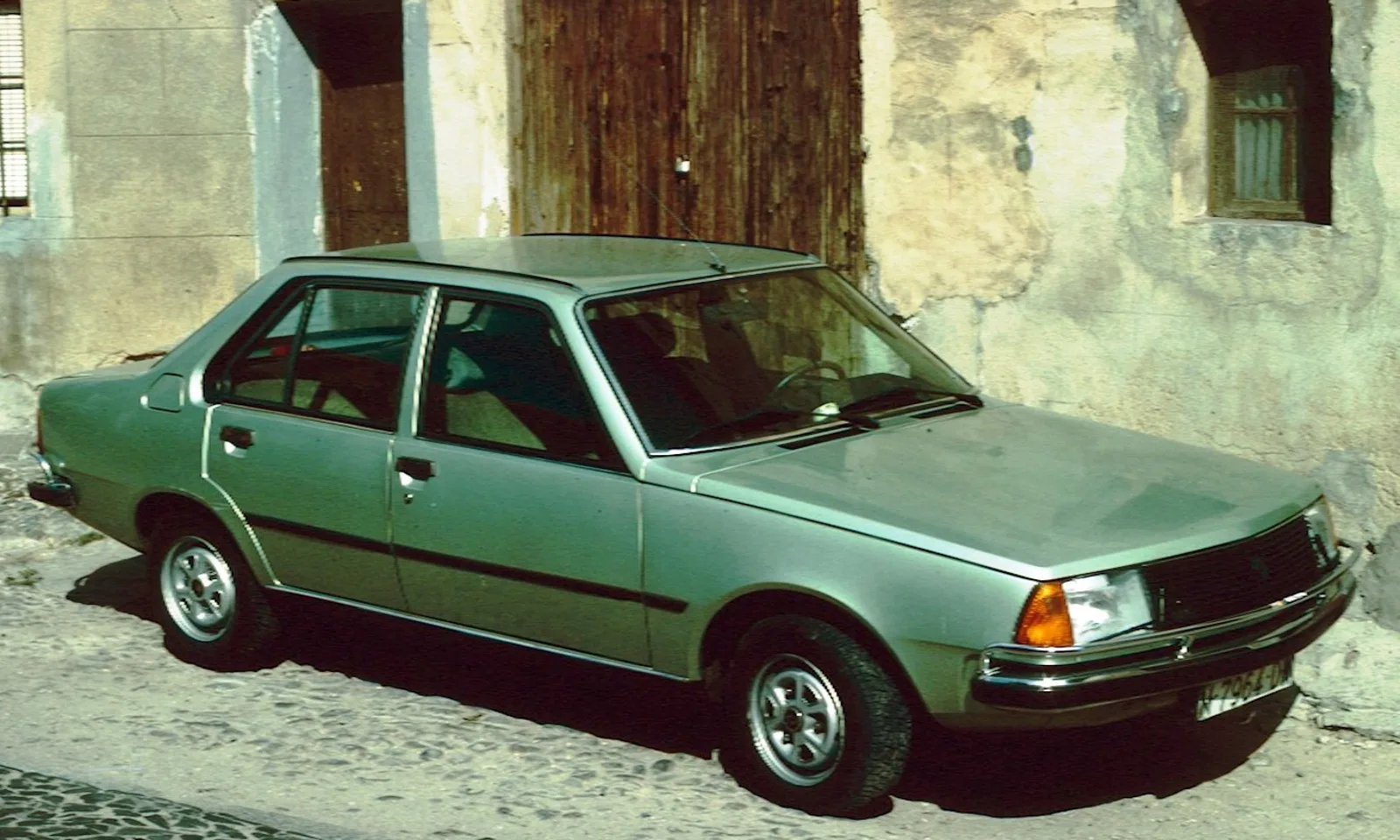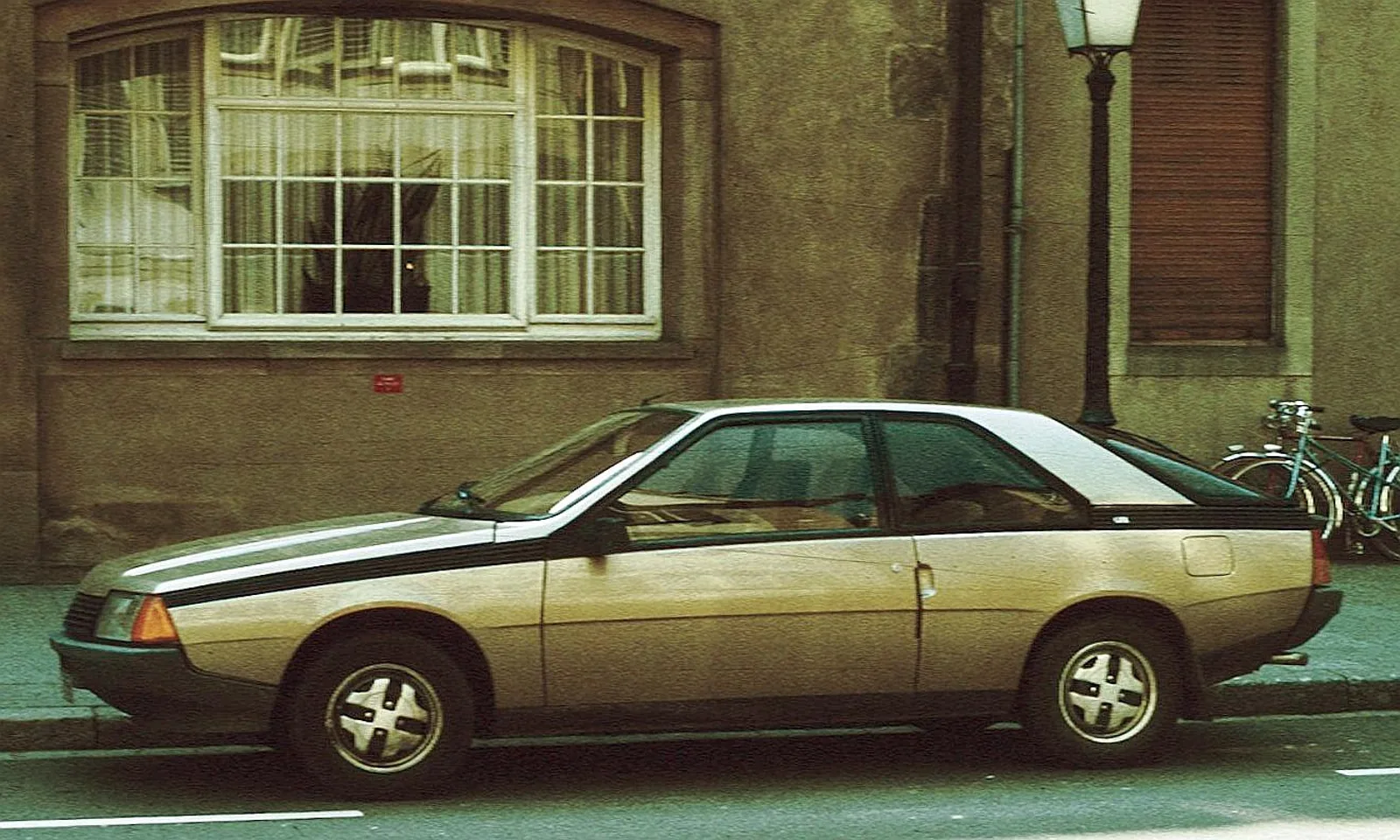
Renault's 1980 sports hatchback coupe, built on the Renault 18 floorpan and sold from France to Argentina, with early remote keyless entry.
Built by Renault from 1980 to 1986, the Fuego succeeded the R15 and R17 coupes and rode on the Renault 18 platform. Around 85% of the 265,367 cars built were assembled in Maubeuge, France, and South American production continued until 1992.
The Renault Fuego was a sports hatchback coupe that Renault built from 1980 to 1986 to replace its R15 and R17 coupes. It borrowed the floorpan and drivetrain of the Renault 18, and 265,367 examples were produced across Europe and South America.
Most cars were assembled at Maubeuge in France. American Motors sold the car in the United States, and it also reached Britain, Australia and New Zealand. Its sales were strongest in Europe, and its remote keyless system was one of the earliest offered on a production car.
Where did the Renault Fuego come from?
Renault revealed the Fuego in 1980 at the Geneva show, positioning it as the replacement for the R15 and R17 coupes of the 1970s. The name is Spanish for fire. Renault had planned to call the coupe the R19, but the finished car borrowed heavily from the Renault 18.
The Fuego took its floorpan and drivetrain from the Renault 18 but wore its own body. Its front suspension was developed from the one used on the larger Renault 20 and 30 range.
The car launched in February 1980 as a three-door coupe, with the TL, GTL and GTS available from the start. That early line-up set the pattern for a model that was revised in most years of its life.
A sporting hatchback coupe on Renault 18 running gear, with remote keyless entry from 1982.
How was the Fuego styled?
Michel Jardin shaped the exterior and Francois Lampreia designed the interior, with both working under Robert Opron. Wind tunnel testing let the car keep sporting coupe lines while still giving rear passengers real room. Its drag coefficient sat between 0.32 and 0.35.
The glass hatchback was the Fuego's most practical feature. It opened onto a large cargo area, which made the car more useful than its sporting profile suggested.
Automotive journalist L. J. K. Setright praised the car as roomy, aerodynamically efficient and good-looking. His praise covered the same three qualities that the wind tunnel work had been used to improve.
Power steering was available on the higher-end models. Left-hand drive cars received a revised dashboard from September 1983, for the 1984 model year.
What was the Fuego's suspension like?
The Fuego shared no suspension parts with the Renault 18, yet it kept that car's double-wishbone front layout. The geometry included negative scrub radius. Renault later reused the design on the facelifted Renault 18 and then on the Renault 25, where larger bushings were fitted.
MotorWeek's 1982 review was broadly positive about the car but pointed to subpar braking and noticeable understeer. Those two points were the main handling criticisms the car received in that test.
What technology did the Fuego introduce?
The Fuego was among the first cars to provide central locking that could be operated remotely, from September 1982. The system was invented by Frenchman Paul Lipschutz and sold in Europe as the PLIP remote, a name taken from the inventor. Steering-wheel audio controls followed on European left-hand drive GTX and Turbo models from September 1983.
The steering-wheel audio layout was later popularised on the 1984 Renault 25, which carried the idea into Renault's larger range.
Buyers could order leather trim, a trip computer, cruise control, air conditioning from the factory or a dealer, and a full-length Webasto sunroof with an electric fabric panel.
How fast was the turbo diesel Fuego?
In 1982 the turbocharged diesel Fuego was named the quickest production passenger diesel anywhere, and its top speed was 180 km/h (112 mph). It was a manual-only 2.1 L model sold in certain left-hand drive European markets from 1982 to 1985.
Buyers could spot the diesel from a distance. A bonnet bulge, extra front bumper vents and Turbo D badges on the grille, flanks and hatch glass gave it away.
The diesel sat apart from the petrol range, which ran from the 1397 cc TL to the 1995 cc TX and GTX.
Which engines and trims did the Fuego offer in Europe?
European buyers could choose from the TL, GTL, TS, GTS, TX, GTX and Turbo, with petrol engines from 1397 cc to 1995 cc and a 2.1 L turbo-diesel in certain markets. The TX was a downgraded GTX, and its equipment differed from one country to another.
The main trims and their engines were:
- TL: 1397 cc engine, 64 PS (47 kW; 63 hp), with a four-speed manual and the most basic equipment.
- GTL: economy-tuned 1647 cc engine, with electric front windows and a tachometer, sold in left-hand drive markets only.
- GTS: 1647 cc engine, 96 PS (71 kW; 95 hp), with power steering and a choice of five-speed manual or three-speed automatic.
- TX and GTX: 1995 cc engine, 110 PS (81 kW; 108 hp), with a five-speed manual from 1981.
- Turbo: 1.6 L (1565cc) with a manual gearbox, introduced with the 1983 facelift.
What changed year by year?
The Fuego was revised in most years from its launch in February 1980. Changes included a fuel reserve light in 1981, electronic ignition on the GTS in 1982, a 1983 aerodynamic update and a facelift for the 1984 model year.
- February 1980: three-door coupe launch with the TL, GTL and GTS.
- 1981: fuel reserve warning light fitted to all models, and the TX and GTX arrive with a 1995 cc engine.
- 1982: the GTL gains a five-speed gearbox, the automatic moves to the 2 L engine, and remote central locking spreads across the GTS, TX and GTX. The 2.1 L turbo-diesel arrives in certain European markets, and the fuel-injected 1.6 L and turbo versions reach the United States.
- 1983: the GTL gets a 1647 cc engine rated at 73 PS (54 kW; 72 hp), electronic ignition becomes standard and small spoilers and deflectors are added.
- 1984: the facelift, from October 1983, brings a new grille, bumpers and interior trim, and a turbo joins the European range.
- 1985: production ends in France with the arrival of the Renault 21.
- 1986: production ends in Spain, and the lines move to Argentina and Venezuela.
- 1990: the phase III GTA arrives with new bumpers, and the GTA Max is introduced in Argentina.
- 1992: South American production ends.
How did the Fuego sell in Europe?
The Fuego was the best-selling coupe in Europe from 1980 to 1982, and it was the top-selling coupe in the UK during 1981 and 1982. In Britain Renault pitched it against the Opel Manta and Ford Capri, and its sales later slipped.
The British line-up started with the TL, GTS and GTX in 1980 and 1981, then grew to include the TX, GTS Automatic and TS before shrinking. By 1985 and 1986 it had dwindled to two models, the GTS and the Turbo, as sales declined.
A limited run of turbo models with electronic fuel injection went to Switzerland to meet that country's emission controls, which set those cars apart from the rest of the European range.
How did the Fuego perform in the United States?
American Motors Corporation dealers handled Fuego sales in the US from 1982 to 1985. The cars were modified to meet US regulations. Reinforced bumpers lengthened them to 4,540 mm (178.7 in), and they had sealed beam headlights and a base price of $8,495.
The US engine line-up changed quickly. For 1982 and 1983 buyers could choose between a 1.6 L (1565cc) turbo with fuel injection and a naturally aspirated 1647cc engine. For 1984 a 2.2 L engine arrived with manual or automatic gearboxes, and by 1985 only the 2.2 L was left.
Options included leather upholstery, power windows and door locks. A visibility group added a rear window wiper and a right-hand exterior mirror, and automatic transmission could be ordered with cruise control.
MotorWeek praised the 1982 model's stylish design and its standard electric sunroof. The magazine noted 30 mpg-US (7.8 L/100 km; 36 mpg-imp) alongside 80 kW (107 hp; 108 PS), The highway rating stood at 39 mpg-US (6.0 L/100 km; 47 mpg-imp).
Despite those notices, the Fuego did little for Renault's standing in America. Sales fell steadily, and rebates of up to $1,000 were offered to AMC dealers in 1984 to clear stock. US imports ended in 1985.
Was a Fuego convertible ever built?
Yes, but only as a prototype. Renault commissioned Heuliez to build a Fuego convertible for the American market, and it appeared at the Paris Motor Show in October 1982. The company dropped the idea because coupe sales in America came in below expectations.
To suit the US market, the prototype used sealed-beam lamps, side markers, reinforced bumpers and a catalytic converter. Reportedly three cars were produced with leather seats and white roofs.
Work had already begun on a sub-compact Renault Alliance convertible for AMC to build in Kenosha, Wisconsin, from 1985, and American Sunroof Corporation's expertise was part of that effort.
What was the Fuego like in Australia and New Zealand?
In Australia the GTX, a 2 L manual, was the core model from 1982 to 1987, while New Zealand took UK-specification GTS and GTX manuals from late 1981. The Australian GTX came with factory air-conditioning and TRX alloy wheels, but no trip computer.
Australian cars also had emission controls, along with side intrusion beams in the doors, to meet local design rules. The wheels accepted only one specific Michelin tyre, so aftermarket alloys were often fitted.
Some basic TX models were sold in Australia too, though in small numbers. New Zealand's line-up moved through GTX Automatic and Turbo models in 1984 and 1985, and the 1986 imports included Australian-specification GTX models alongside GTX Automatic and Turbo versions.
How long did the Fuego survive in South America?
Renault Argentina built the Fuego from 1982 until 1992 and reached 63% local parts integration. Production moved to Argentina and Venezuela in 1986, and the car stayed in production in both countries after the French and Spanish lines closed. Its South American life therefore outlasted its European production by several years.
In 1987 the only Argentine engine was a 2165 cc unit producing 116 PS (85 kW; 114 hp). The phase III GTA arrived in 1990 with revised bumpers, pale front indicators and dark taillights.
The GTA Max was the top model. Berta Motorsport tuned its 2.2 L engine to make 123 PS (90 kW; 121 hp), and it was the version that ended production in 1992.
Why was there no Fuego II?
Renault planned a Fuego II styled like the new Renault Alpine GTA, but the project was cancelled at the last minute. Renault's financial problems and falling demand for sports coupes both counted against it at that time, so the Fuego had no direct successor.
Production in France had already ended in 1985, when the Renault 21 arrived. No direct replacement arrived, because the Fuego II never reached production.
What is the Fuego's legacy?
The Fuego is remembered for early remote keyless entry, steering-wheel audio controls and a turbo diesel named the quickest production passenger diesel in 1982. Total output reached 265,367 cars before South American production ended in 1992. Each of those features was a notable part of the range in the early 1980s.
Several of its ideas moved into Renault's wider range, with steering-wheel controls appearing on the 1984 Renault 25. The suspension design also travelled into the facelifted Renault 18.
Its combination of a glass hatchback, a sporting coupe profile and production on two continents makes it a useful case study in how Renault spread a single platform across markets with very different rules.
What are the Renault Fuego specifications?
| Specification | Detail |
|---|---|
| Type | Three-door sports hatchback coupe |
| Built | 1980 to 1986 in France and Spain; Argentina to 1992 |
| Total produced | 265,367 |
| Assembly | About 85% at Maubeuge, France |
| Petrol engines | 1397 cc to 1995 cc; 1647 cc in GTS and GTL |
| Power range | 64 PS (47 kW; 63 hp) to 123 PS (90 kW; 121 hp) in the GTA Max |
| Turbo-diesel | 2.1 L, manual only, 180 km/h (112 mph) top speed |
| Drag coefficient | 0.32 to 0.35 |
| US length | 4,540 mm (178.7 in) after bumper reinforcement |
| US highway economy | 39 mpg-US (6.0 L/100 km; 47 mpg-imp) |
| US base price | $8,495 |
| Remote keyless | Central locking from September 1982; PLIP name in Europe |
| Convertible | Heuliez prototype shown at the Paris Motor Show, October 1982 |