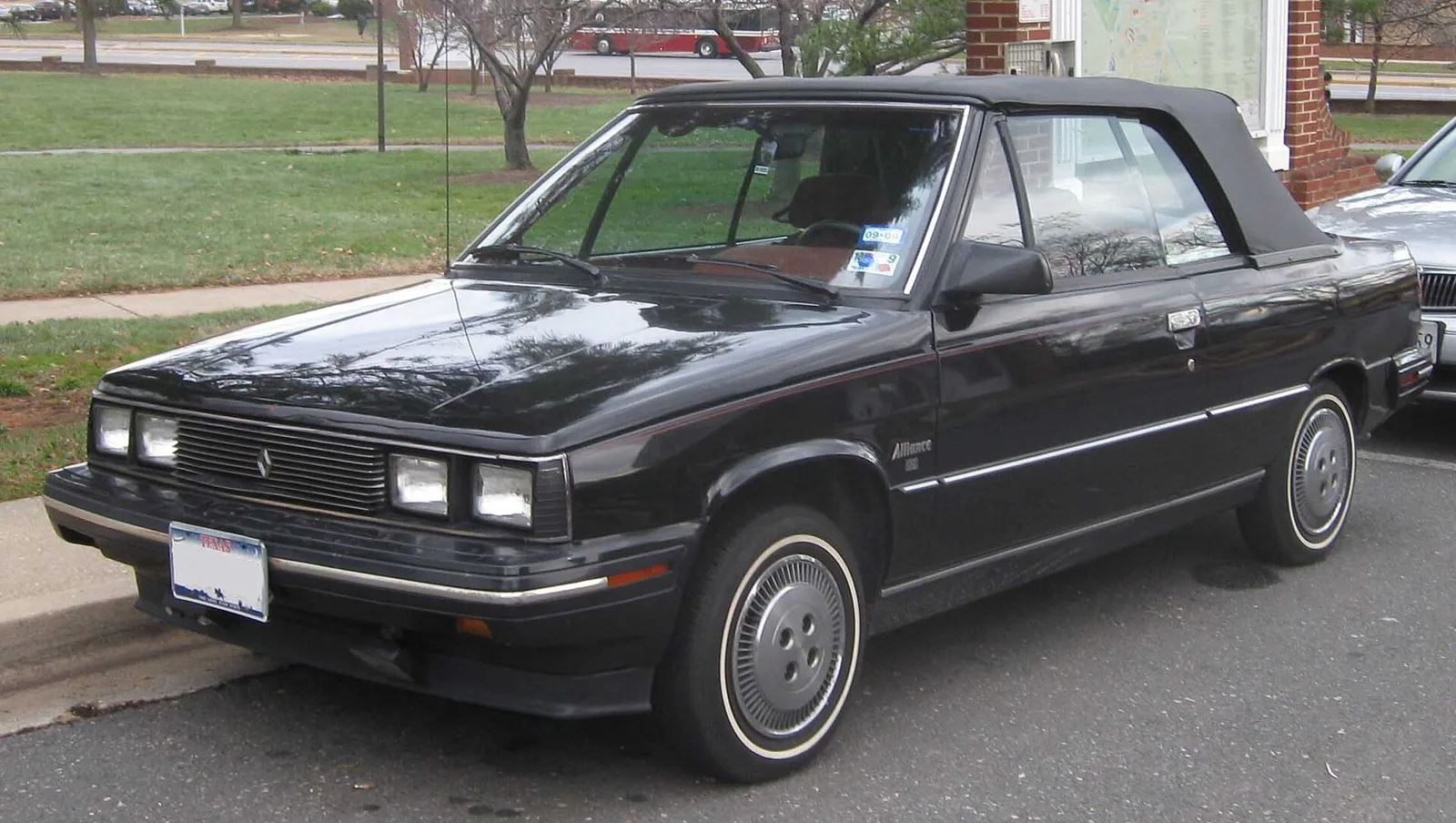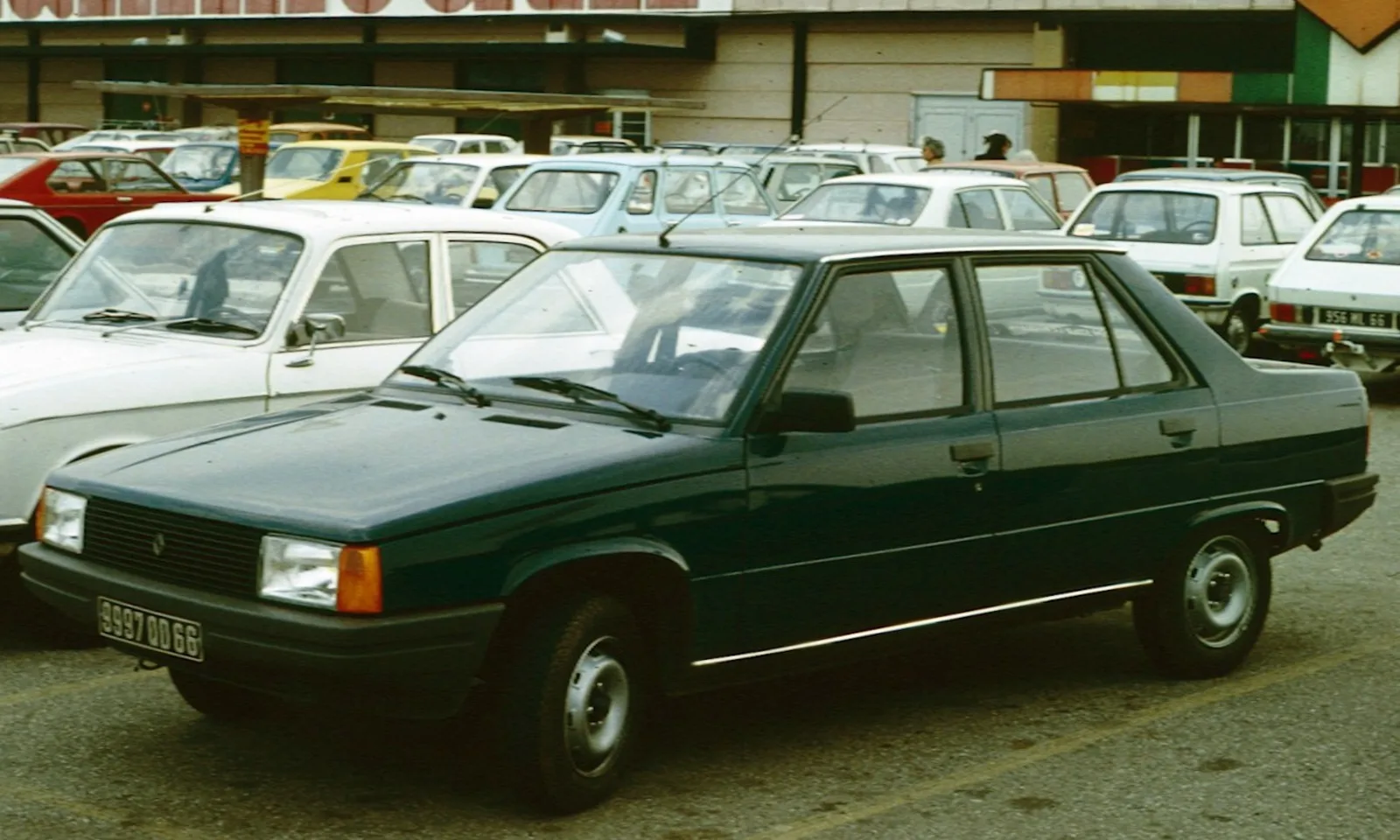
Two versions of one front-drive family car, from the 1982 European Car of the Year to rally stages, Colombian roads and Turkish production.
The Renault 9 saloon and Renault 11 hatchback were small front-drive family cars styled by Robert Opron and built from 1981. They used Renault's Cleon engines, shared one platform and sold in many countries, including the United States as the Alliance and Encore.
The Renault 9 and Renault 11 were small family cars that Renault built in France from 1981 to 1989. The 9 was a saloon and the 11 a hatchback, and both were drawn by Robert Opron. The 9 won the 1982 European Car of the Year title, and production continued in Turkey until 2000.
What were the Renault 9 and Renault 11?
The Renault 9 and Renault 11 were two body styles of one small car. The 9 was a four-door saloon, and the 11 a three- or five-door hatchback. Both used front-wheel drive and four-wheel independent suspension, and both were designed by Robert Opron under the code name L42.
The 11 shared its underpinnings with the 9 but was styled to echo the executive Renault 25, which Opron had also designed. The two cars were identical under the skin and were meant to replace the older Renault 14 together.
One front-drive family car in two body styles, which carried Renault's small cars for about fifteen years.
Where did the Renault 9 and 11 come from?
Work on the Renault 9 began in 1977, when it was conceived as a four-metre model. It was meant to sit between the Renault 5 and the Renault 14, and Renault gave it a traditional three-box shape to win over conventional buyers.
Opron's brief followed the poor reception of the Renault 14's styling. Consumer studies suggested that buyers rejected innovation, which produced a rather nondescript but modestly elegant design. The roofline was taller than many rivals, which gave the cabin useful space.
How much work went into the L42 project?
Before production started, Renault assigned more than 500 employees to the L42 project. They logged 14.5 million hours of study and testing, built 44 prototypes and tested 130 engines.
The prototypes were driven over 2,200,000 kilometres (1,367,017 mi) in total.
Why did the engineering change from the Renault 14?
Both cars were more conservatively engineered than their predecessor, but they kept front-wheel drive. Renault dropped the Douvrin transmission, a sump-mounted unit it had shared with Peugeot-Citroen on the Renault 14, and moved to its in-house C-type Cleon engine with an end-on transmission.
This layout, together with the 9 and 11 suspension, became the basis of Renault's small cars for roughly the next 15 years.
How did the first engines perform?
At launch both cars used Renault's ageing Cleon-Fonte overhead-valve engines in 1.1 or 1.4-litre sizes. The basic suspension won few plaudits for its driving feel.
The C1E 1.1-litre was offered only on the Renault 9 and the three-door 11. Five-door TC and GTC models gained the C1G 1.2-litre engine in 1985, which then became the smallest engine in the range once the C1E was phased out.
What were the Renault 9 and 11 phases?
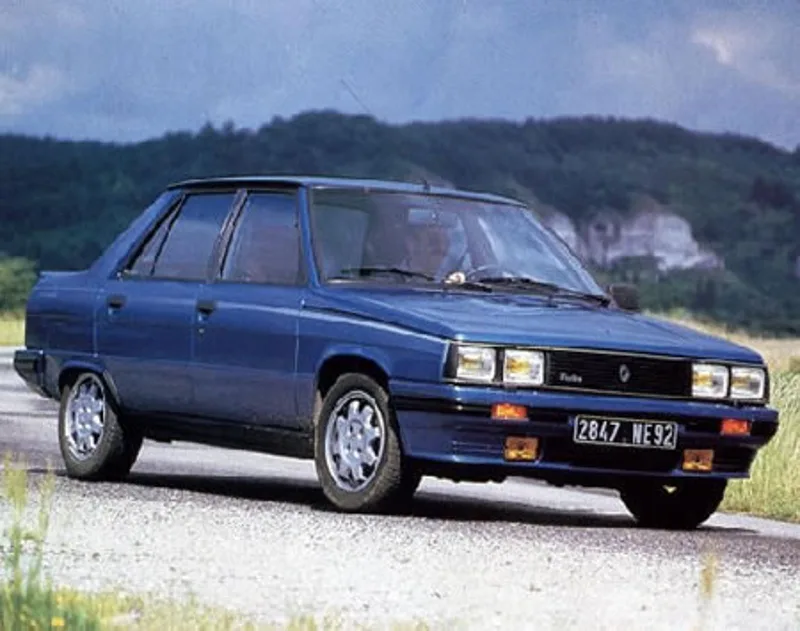
The cars went through three facelifts on the Renault 9 and two on the Renault 11. The 11 arrived in 1983 with double headlights that set it apart from the 9. In 1985 the 9 took the same double-headlight front on its sportier GTS, GTD, TSE, TDE, TXE and GTX levels.
The more aerodynamic Phase 2 arrived in 1987, after which the two cars differed mainly at the rear. A Phase 3 revision was sold in Turkey from 1997, with rounder head and tail lamps and ovoid body cladding that gave it a more modern look. Turkish-built cars of this phase also carried a Broadway badge alongside the Renault 9 name, although that name had already appeared on earlier special editions.
The later Broadway series of the Renault 9 also used the four-headlight front of the first-phase 11, so the two cars again looked alike in that trim.
How was the Renault 11 different from the 9?
The 11 deliberately echoed the executive Renault 25, which launched at almost the same time. It had the wraparound rear window and a hooded dashboard, and the Electronique trim added a digital instrument cluster and a synthesised voice trip computer.
The 9 had a simpler, more conservative dashboard, and digital instruments were never offered on it. A light commercial Societe version of the three-door 11, with a cargo platform in place of the rear seat, was shown at the Brussels Motor Show in January 1985.
What did the Renault 11 TSE Electronic add?
The Renault 11 TSE Electronic of 1983 was the first car in its class with a synthetically voiced trip computer. Renault brought its launch forward by a few days to beat Austin's Maestro Vanden Plas to the feature.
How did the cars sell in North America?
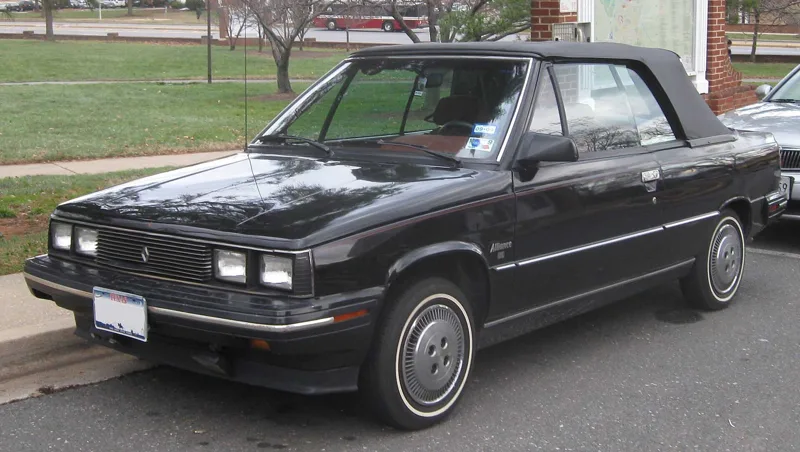
In North America the 9 became the Renault Alliance, built by American Motors Corporation with a small AMC badge, and the 11 was offered as the Encore. Around 623,573 Alliance examples were manufactured for model years 1982 to 1987.
AMC offered the Alliance as a four-door saloon, a two-door saloon with higher rear wheel arches and a convertible from 1984. The American version earned the 1983 Motor Trend Car of the Year title and a place on Car and Driver's Ten Best list.
Did the Renault 9 win any awards?
Yes. The Renault 9 was named European Car of the Year for 1982, and the American Alliance was chosen as Motor Trend's Car of the Year for 1983. Car and Driver also placed the car on its Ten Best list that year.
Awards aside, the cars were not praised for their driving experience. The suspension and engines were judged as conventional rather than sparkling, and the appeal lay in practicality and value.
Did the Renault 11 Turbo compete in rallying?
Yes. Renault Sport used the 11 Turbo extensively for its Group A car in the 1987 World Rally Championship. Frenchman Alain Oreille won a Group N class at the 1985 Rallye Monte Carlo and then took the Group A win in 1986, which was enough for an eighth finish overall.
Jean Ragnotti finished second at the 1987 Portuguese Rally and third at the San Remo Rally in the same car. The 11 Turbo also won the Polish Rally Championship in 1985 and 1988, and the Swiss and Portuguese titles in 1987. Oreille's last major result was fourth overall at the 1988 Rallye Monte Carlo.
What made the Renault 11 Turbo quick?
The 9 Turbo and the 11 Turbo both used the turbocharged engine from the Renault 5. Its 115 PS (85 kW; 113 hp) gave it a more comfort-oriented character than the Renault 5 Turbo or the 205 GTi, and the extra power offset the car's extra weight.
The rally-tuned version was much more potent, producing up to 220 PS (162 kW; 217 hp).
How were the cars built around the world?
In Argentina, the 11 was built at Renault Argentina's Santa Isabel plant from October 1984 to December 1994, and the 9 followed from 1987 to 1997. Argentine production totalled 144,262 R9 vehicles and 79,037 R11 vehicles.
In Colombia, SOFASA began building the 9 in 1983 with the 1,400 cc GTL. The car became the quintessential Colombian family car, with more than 115,000 units built and sold between 1983 and 1999.
SOFASA introduced the TL in 1987 with a 1,300 cc engine, followed by the TSE 1.3 and GTX 1.4 in 1988. The GTX added front power windows and a spoiler, and the TXE of 1989 brought an infrared remote to lock the car. In 1992 the range was reset around the Brio, the Super and the Maximo, and by mid-1996 the R9 Personnalite let buyers choose engines and accessories through dealership software.
In Taiwan, Sanfu Motors assembled the 9 from 1983 to 1996. Its 1993 facelift, called the Renault Luxmore, used a 1.4-litre Energy SOHC engine borrowed from the Clio, rated at 72 PS (53 kW).
Sanfu Motors offered an automatic 9 from January 1985. The same year it brought in the five-door 11 with sporting GTX trim, a 1,721 cc F2NA engine and 95 PS (70 kW). The 9 took the 11's twin headlights in April 1986, and the 11 GTX gave way to the TXE.
The Luxmore restyle paired new front styling with the taillights of the Renault 19 Chamade and carried over part of the 19's cabin. It was sold as a sedan only.
What was built in Turkey?
Oyak-Renault began making the 9 in Bursa in 1985. The diesel GTD joined the GTL in 1986 and became the first diesel-engined passenger car built in Turkey. The Broadway replaced the GTL in 1988, and power ranged from 60 to 72 PS (44 to 53 kW) across the early models.
In April 1993 the range adopted the Phase 2 front. A 1.6-litre Fairway with 80 PS (59 kW) joined it, using an Argentinian engine with a twin-barrel Weber carburettor, and the Fairway was dropped in the first half of 1996 as sales fell.
The 11 Flash came in 1988 with a 92 PS (68 kW) 1.7-litre TXE. A special edition of 500 cars called the Flash Galatasaray marked the club's 1989 run to the European Champions Clubs' Cup semi-finals. The 11 ceased production in Turkey in 1995, and the Broadway phase 3 car was sold until 2000.
Did the cars have known problems?
Yes. The dashboard material degraded under ultraviolet light in Argentina, Colombia and Turkey, and the ends often cracked, especially on the right-hand side where the steering column gave no support.
In Taiwan, production later relied on parts sourced from Argentina and Colombia after French production ended in 1989. Although that cut prices, it hurt quality and damaged Renault's reputation locally.
What are the key specifications?
| Model or trim | Engine | Output |
|---|---|---|
| C and TC | 1.1-litre, 1,108 cc | 48 PS (35 kW) |
| GTC | 1.2-litre, 1,237 cc | 55 PS (40 kW) |
| TL, GTL and TLE | 1.4-litre, 1,397 cc | 60 PS (44 kW) |
| GTL, higher tune | 1.4-litre, 1,397 cc | 68 PS (50 kW) |
| GTS and TSE | 1.4-litre, 1,397 cc | 72 PS (53 kW) |
| TX | 1.7-litre, 1,721 cc | 75 PS (55 kW) |
| TXE | 1.7-litre, 1,721 cc | 82 PS (60 kW) |
| GTX | 1.7-litre, 1,721 cc | 90 PS (66 kW) |
| GTE | 1.7-litre, 1,721 cc | 95 PS (70 kW) |
| Turbo | 1.4-litre, 1,397 cc | 105 or 115 PS (77 or 85 kW) |
| TD, GTD and TDE | 1.6-litre, 1,595 cc diesel | 55 PS (40 kW) |
How are the Renault 9 and 11 remembered?
The pair is remembered as a steady, practical family car that gave Renault a lasting platform. Its layout carried the small Renaults for about 15 years, and its European award showed that a sensible design could still win praise.
The 11 also had a cinematic moment. The 1985 Bond picture A View to a Kill featured an 11 TXE taxi, and a stunt coordinated by Remy Julienne that tears off its roof and cuts it in half in a collision with a Renault 20.