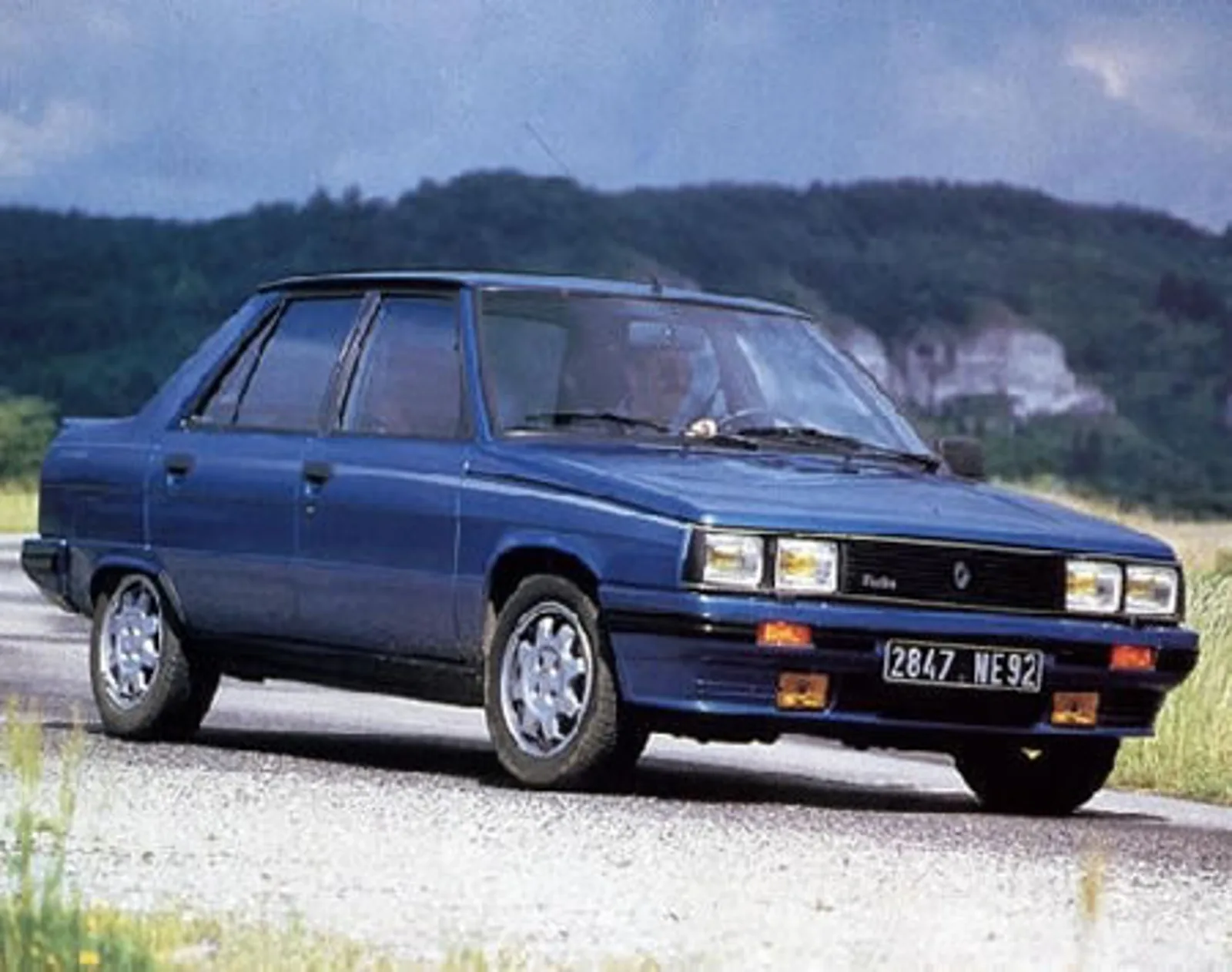
A turbocharged four-door with the Cleon-Fonte engine, a four-link rear axle and a reputation borrowed from the R11 Turbo's rally wins.
The Renault 9 Turbo is a four-door saloon from Renault's R9 family, offered from the 1986 model year with a turbocharged 1,397 cc (85.3 cu in) four-cylinder that made 105 PS (77 kW; 104 hp). Renault built fewer of these than any other Renault Sport model, and collectors now pay more for it than for an ordinary R11 Turbo.
The Renault 9 Turbo is a turbocharged four-door saloon from the R9 family, offered as the sporting model from the 1986 model year. It used the rugged Cleon-Fonte four-cylinder that also powered the R11 Turbo, and it is the least produced model in the Renault Sport line. That scarcity now lifts its prices above an ordinary R11 Turbo, although the R11 remains the more sought-after car.
How did the R9 and R11 split their roles?
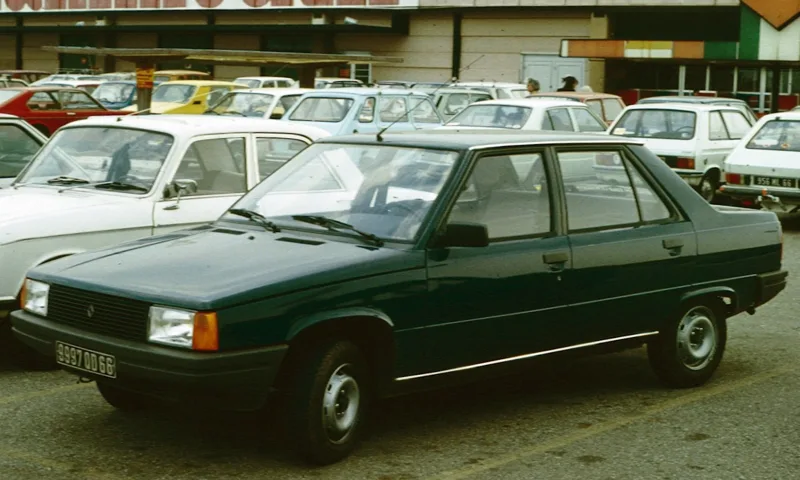
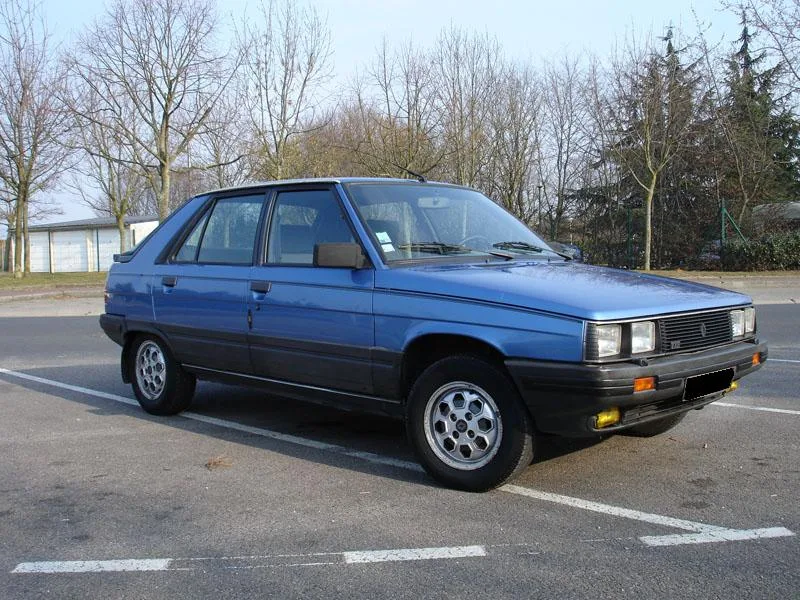
The R9 and R11 shared a platform but targeted different buyers. The R9 leaned on chrome trim and a traditional saloon shape, while the R11 offered a hatchback body and very little brightwork. Robert Opron, a former Citroen designer, drew both cars, and their chassis later underpinned several Renault models.
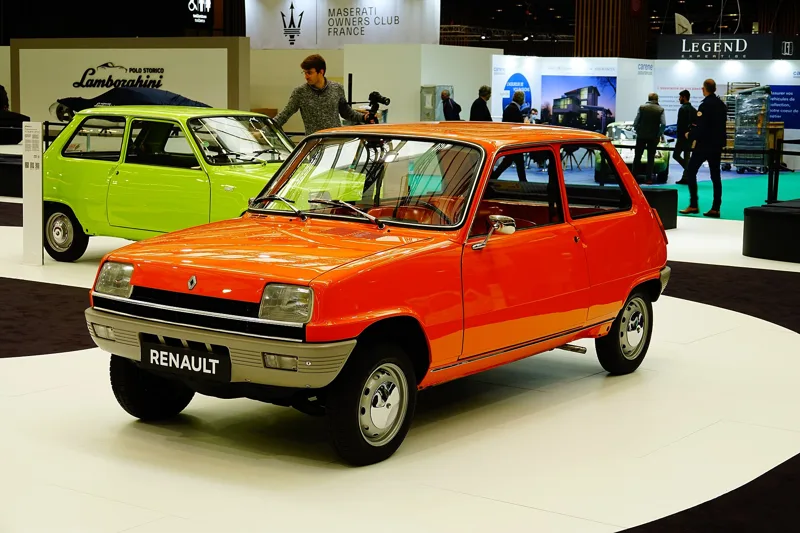
The two cars marked a turning point for Renault's engineering. They were the first cars to use a Renault engine mounted across the body, a layout that led to the JB gearboxes still found in the Twingo II. The Renault 14 had gone transverse first, but it used a front end derived from the Peugeot 104 and an engine that Peugeot, Talbot and Citroen also fitted.
The same chassis went on to underpin the Renault 19, Megane I and Scenic I, and it was later adapted for the Super 5, the Express, the Clio I and II, the Kangoo I and the Twingo II. That made the R9 and R11 the start of a family of cars rather than two standalone models.
The sporting trim came from the GTS and GTX versions of the R9, which had four-spoke steering wheels, rev counters, oil pressure gauges, black velvet seats with red stripes and red-trimmed bumpers. Renault had first planned a Turbo for the R11 alone, and the R9 Turbo came later.
The R9 Turbo is the least produced Renault Sport, and that scarcity is now its main appeal.
What made the Cleon-Fonte turbo engine work?
The Cleon-Fonte is a side-camshaft four-cylinder designed by engineer Rene Vuaillat, and it had been in service since the 1960s. In the Turbo it was enlarged to 1,397 cc (85.3 cu in) with a long-stroke crankshaft, and a T2 turbocharger pushed it to 0.7 bar as standard.
Phase 1 cars made 105 PS (77 kW; 104 hp) at 5,750 rpm. Phase 2 cars, which had a water-cooled turbo, made 115 PS (85 kW; 113 hp) at the same speed. The engine had first appeared in the Renault Floride S and the Renault 8, and it earned its reputation in rallying with the Renault 8 Gordini.
Electronics took over the job of the old contact breakers. Full electronic ignition handled the spark timing through a computer and used knock control to trim the advance. A piezo sensor in the middle of the cylinder head listened for knock, and the timing ran on a chain.
Air passed through an air-to-air intercooler and a safety pressure switch set at 1.1 bar, which limited the rise in pressure. The turbo sat upstream of a single-barrel 32 DIS carburettor, and phase 2 cars gained an electric anti-percolation device to ease hot starts.
Key specifications
| Item | Figure |
|---|---|
| Engine | 1,397 cc (85.3 cu in) four-cylinder, type C1J |
| Power, phase 1 | 105 PS (77 kW; 104 hp) at 5,750 rpm |
| Power, phase 2 | 115 PS (85 kW; 113 hp) at 5,750 rpm |
| Turbo boost | 0.7 bar as standard |
| Pressure switch limit | 1.1 bar |
| Top speed, Ferry version | 200 km/h (124 mph) |
| GTE engine (fuel injection) | 1,721 cc (105.0 cu in), type F3N |
| Alliance GTA engine | 1,965 cc (119.9 cu in), type F3R |
What special editions were built?
Two special versions shaped the range's image. The Zender was a limited series from May 1985, built with the German tuner Zender, with a body kit and a four-link rear axle. The Ferry was a supercharged R11 Turbo that could reach 200 km/h (124 mph).
The Zender was a three-door R11 Turbo. Its body kit included a spoiler painted in body colour, red pinstripes that carried the Zender badge, and a larger spoiler on the tailgate glass. It rode on 15-inch alloy wheels with 195/50 VR 15 tyres, and it was the first of the R9/R11 range to receive the four-link rear axle, a layout shared with the Super 5 GT Turbo.
The Ferry kept its suspension standard. Its front pads were a little harder, and high-temperature brake fluid replaced the standard fluid. Its 15-inch wheels carried 195/60 tyres, which filled the arches so completely that small body changes were needed. The result looked far more aggressive than the standard car.
A five-door R11 Turbo joined the range in March 1985. It was sold only in France and Argentina, and it carried the B37500 Mines type code, against C37500 for the three-door.
What changed for the 1986 model year?
The 1986 model year brought a light facelift to the whole R9 and R11 range, and it introduced the R9 Turbo. Renault gave the new car body-coloured bumpers and a matching spoiler, plus its own alloy wheels and stripes, to make the older R9 look younger and lift sales.
The R9 Turbo was a paradox. It removed much of the chrome that had given the R9 its elegance, so only the grille, the dashboard and the interior door handles kept any, yet it was still recognisable at a glance. Its equipment was close to the R11 Turbo's, but it dropped the on-board computer, electric windows and power steering, and it came with an anthracite and red velvet interior.
The R9 facelift gave it the four-headlamp grille of the R11 with a chrome surround, a slimmer centre console for more legroom and the R11's instruments. The R11 received a black grille with thick bars, and the R11 Turbo lost its sand-coloured interior option.
Phase 2 arrived in September 1986 for the 1987 model year. Almost all the chrome disappeared, and only the rear and the dashboard told the two models apart. Turbo versions took the phase 1 R9 Turbo alloy wheels and body-coloured bumpers, and tinted windows, electric windows and remote locking became standard, while headlamp washers were dropped. Phase 2 Turbos also had four disc brakes, 10 hp more and a water-cooled turbo.
What competition record did the R11 Turbo build?
The R11 Turbo built a rally record that gave the R9 Turbo much of its reputation. Alain Oreille won Group N at the 1985 Monte Carlo Rally, then won Group A at the 1986 event in the same model. He returned in 1988 and finished fourth with Jean-Marc Andrie as co-driver.
Oreille was also third in the French Rally Championship in 1986 and again in 1987. In 1987 he won the 8th Rallye des Garrigues - Languedoc-Roussillon, a European championship round, and he finished second at the Rallye Alpin-Behra.
Other drivers also took titles with the R11 Turbo. Andrzej Koper-Geborys won the Polish rally championship in 1985, Jaime Sornosa took the Spanish circuit touring car title in 1986, Eric Ferreux-Audemars won the Swiss rally championship in 1987, and Jose Antonio Inverno Amaral-Neto won the Portuguese rally championship that year.
Fuel-injected successors and the Alliance GTA
From the 1987 model year in Switzerland, Germany, the Netherlands and Austria, the R11 Turbo was replaced by the R11 GTE, and the R9 GTE also went on sale. Both used a 1,721 cc (105.0 cu in) F engine with multipoint injection and a catalytic converter.
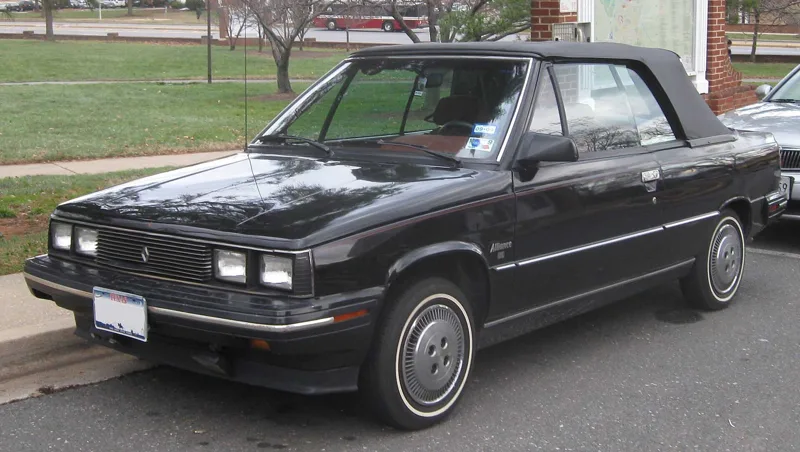
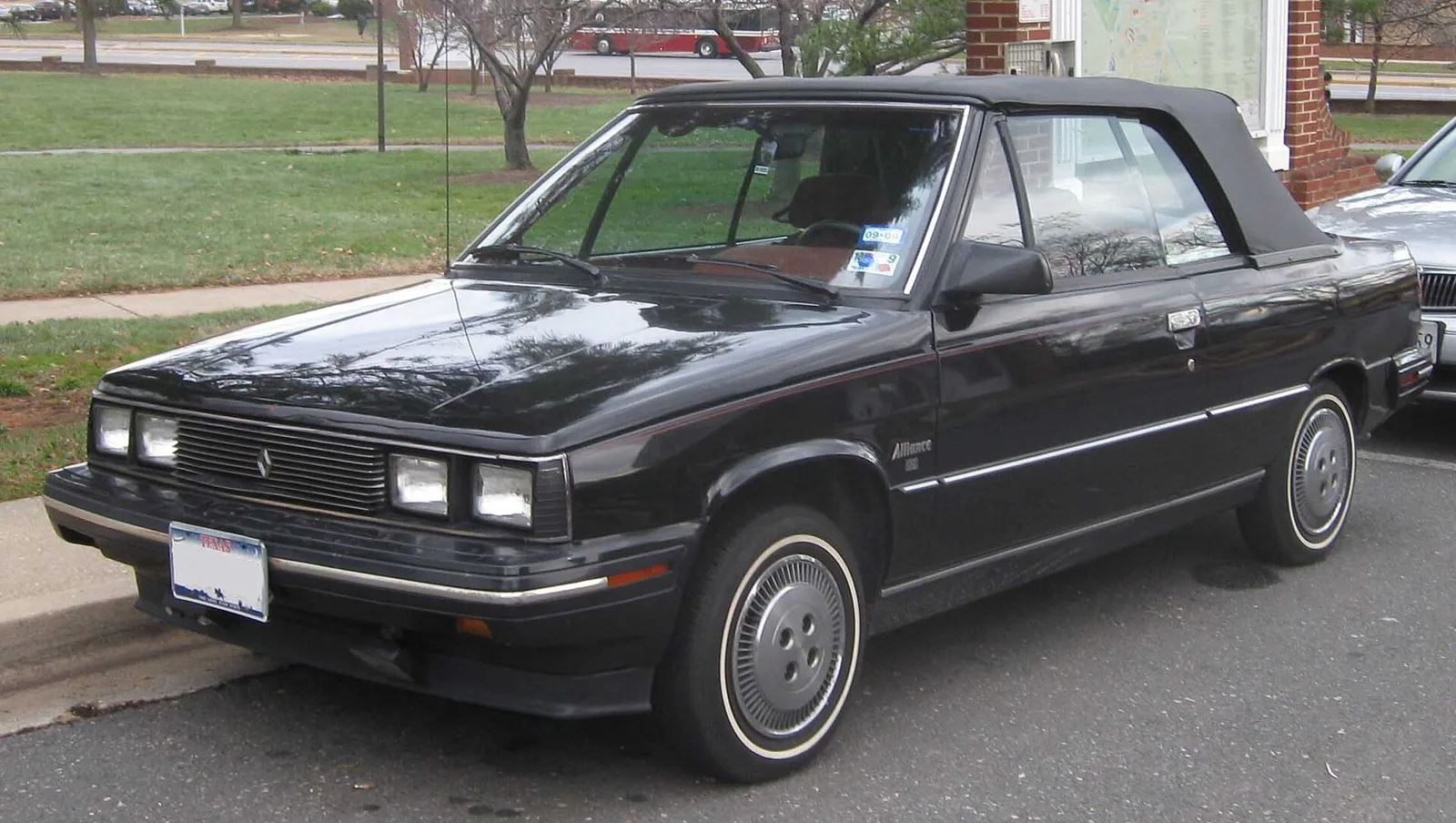
North America had its own R9 variant. The Renault Alliance was the R9 for that market, and from 1986 the sporting Alliance GTA arrived with a 1,965 cc (119.9 cu in) F3R engine. It was offered only as a two-door and a convertible, and a little over 3,500 were produced in 1987 at the AMC plant in Kenosha.
Why do collectors value the R9 Turbo?
Collectors value the R9 Turbo because it is the rarest Renault Sport model, and its market value now sits noticeably above an ordinary R11 Turbo. Nostalgia adds to that, since many buyers grew up with an R9 in the family or drove one as a first car.
Supply is thin relative to demand for the R9 Turbo. The R11 Turbo is more sought after, but there are fewer R9 Turbos for the buyers who want one. Some collectors are chasing a complete set of Renault Sport or 1980s Renault turbo models, and the R9 Turbo is often the missing piece.
The R9 Turbo borrows its standing from the R11 Turbo's competition results and from the Super 5 GT Turbo, since the mechanical parts are shared. It also sits among the sporting saloons with a boot, a group that includes the Renault 8 Gordini, the Simca 1000 Rallye and the Peugeot 405 MI16. Unlike the Renault 18 Turbo, it does not suffer from a weak image.
Phase 1 cars are the most prized, thanks to their four-headlamp grille and body-coloured bumpers. Only phase 1 R11 Turbos came with the sand-coloured interior, and that trim is very rare on five-doors, which were built only from March to June 1985.