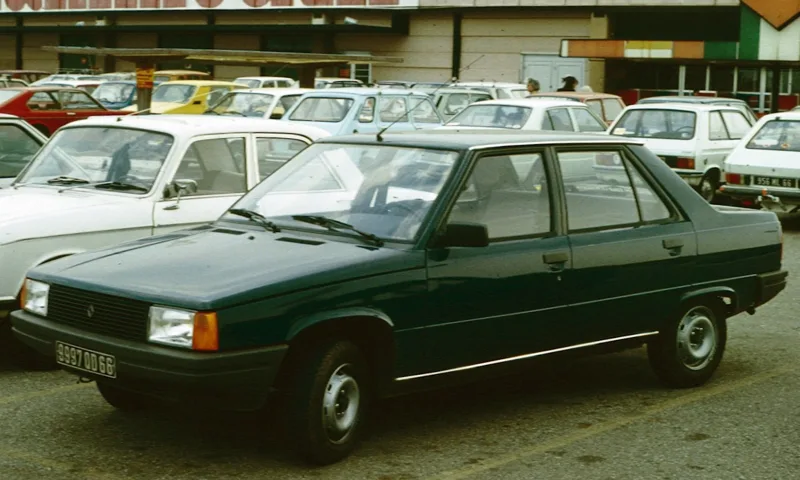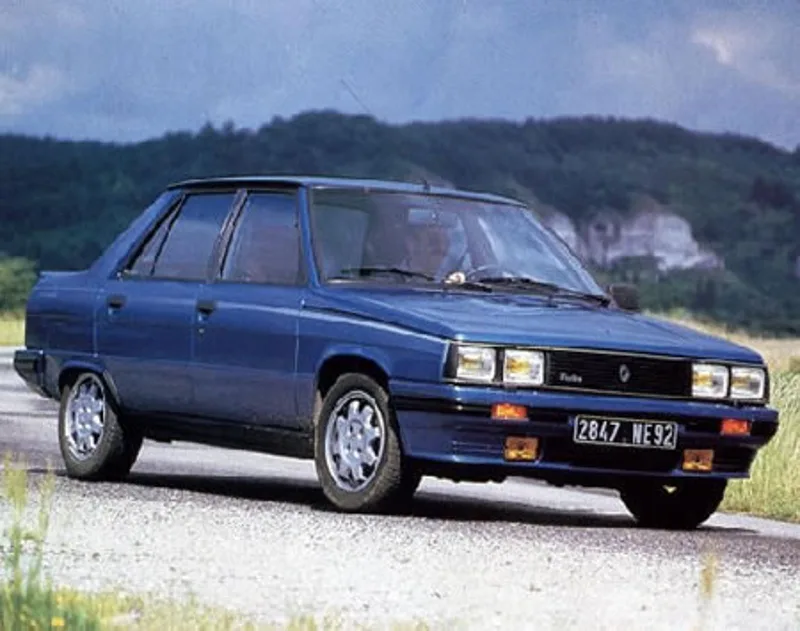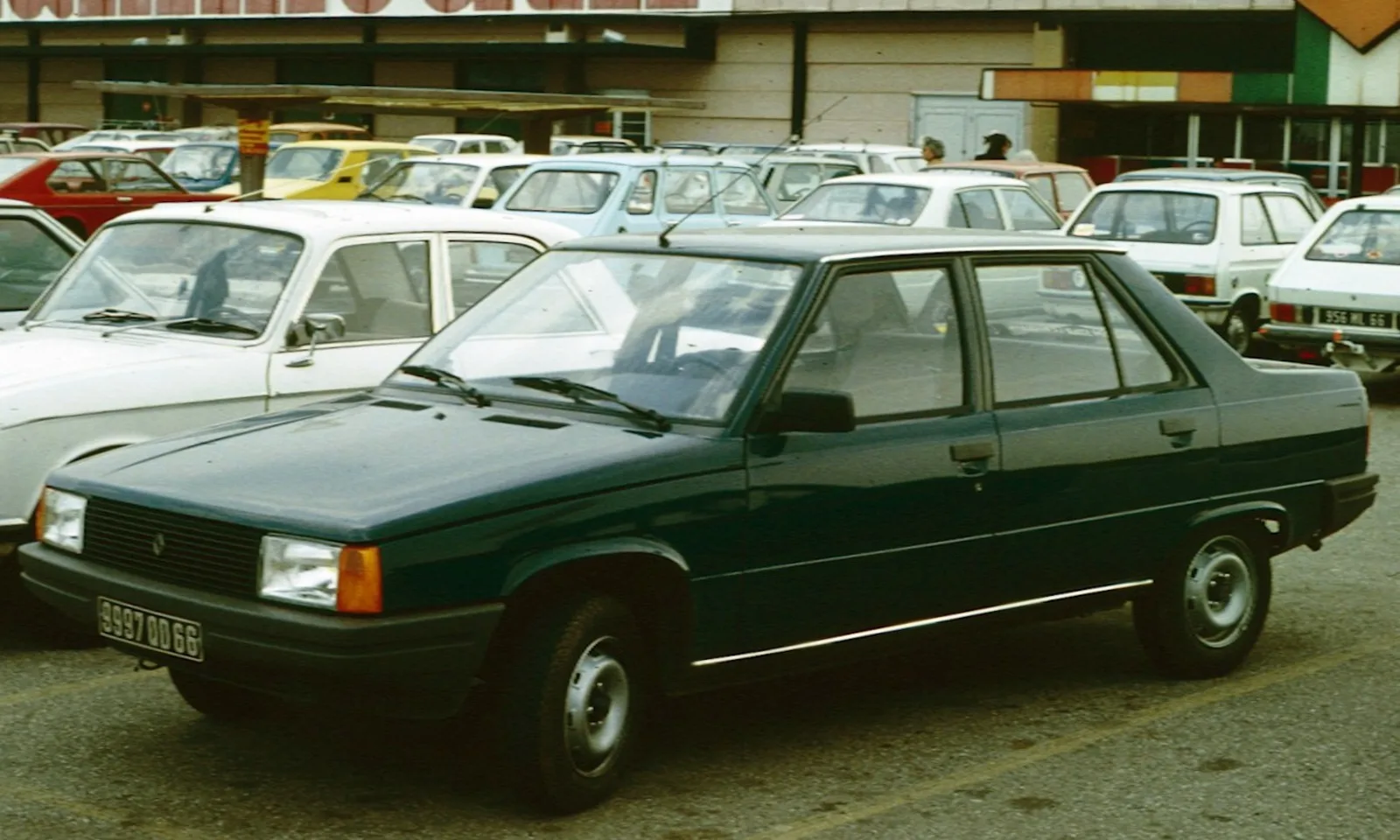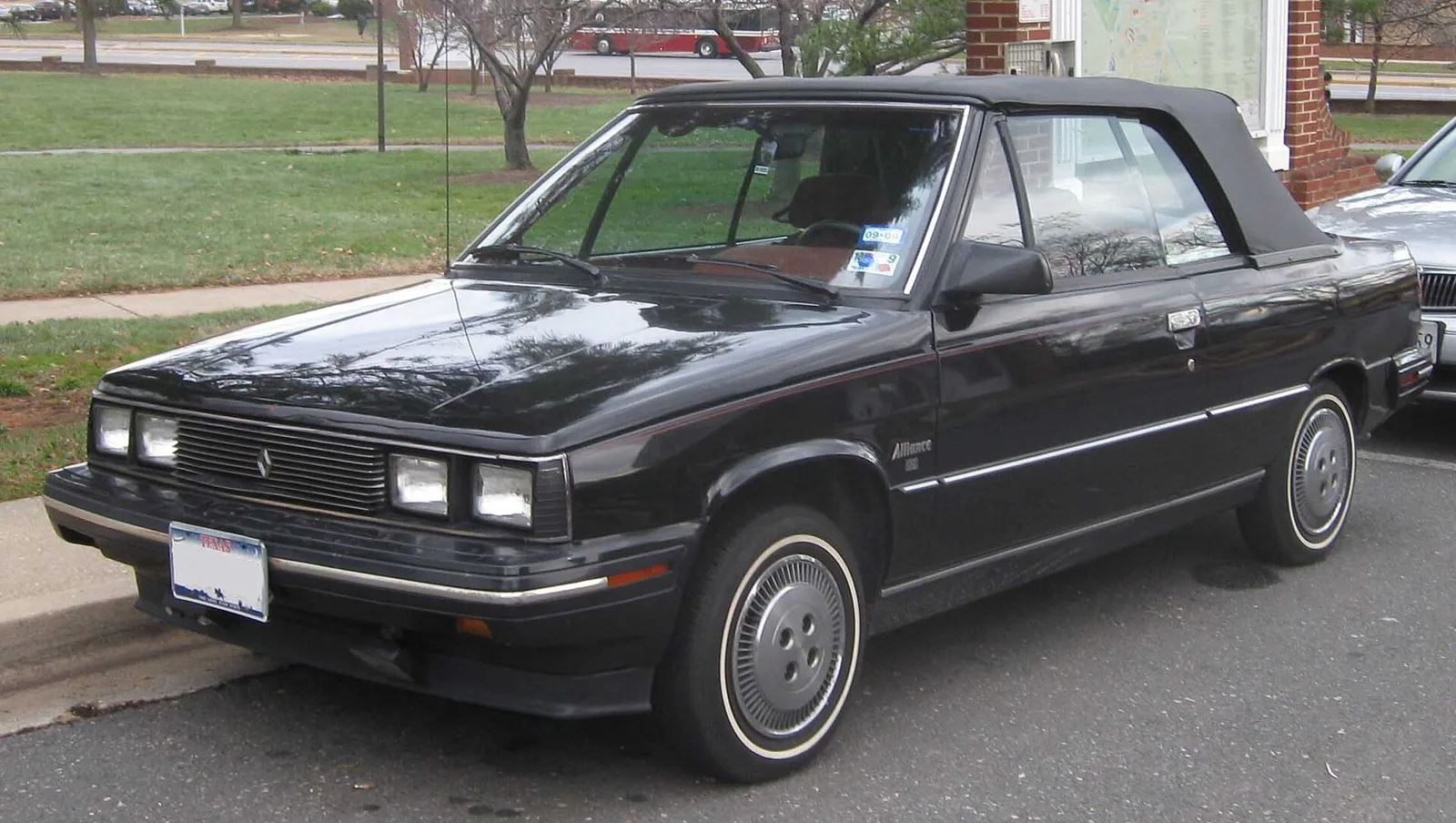
A Renault 9 design built in Kenosha, Wisconsin, a Car and Driver top pick for 1983, and a 623,573-car run that ended with Chrysler's takeover in 1987.
The Renault Alliance was a subcompact made by American Motors from 1983 to 1987, based on the Renault 9 and 11. It was built at Kenosha, Wisconsin, reached 623,573 vehicles, and was discontinued when Chrysler bought AMC.
The Renault Alliance was a subcompact car that American Motors Corporation built and sold in North America from 1983 to 1987. It was based on the Renault 9 and 11, re-engineered for American and Canadian conditions, and built at Kenosha, Wisconsin. Production reached 623,573 vehicles before AMC was sold to Chrysler in 1987.
Why did AMC work with Renault?
AMC had a partnership with Renault from 1979, and the French company came to hold a controlling interest in the smallest American automaker by the end of 1980. Banks refused AMC further credit, so the company turned to Renault for a $90 million loan. In return, Renault gained the right to sell its cars in the United States.
Some observers called the combined company Franco-American Motors, a pun on the French-American food company. Its partnership with Renault became its route to new products. The Alliance was the first result of that alliance.
The partnership ran in both directions. Renault wanted its newer models built in America at existing AMC plants, and each design team produced variations on the other's work. Richard Teague, AMC's design chief, and Robert Opron, director of Renault Styling, travelled between France and the United States to coordinate the work.
A Renault design built in Wisconsin that rescued AMC for a few years, then left with its owner.
How was the Alliance designed?
The Alliance derived closely from the Renault 9 and 11, re-engineered for the American and Canadian markets. Robert Opron designed the exterior, while Richard Teague handled the interior, the two-door sedan and the convertible bodies, which were unique models developed by AMC.
Originally the car was only a four-door sedan. Teague's team decided to build a two-door coupe mock-up just before Opron was due to review the American work. Consumer clinics ran from 1979 to 1982, using a fiberglass mock-up and later real cars, to test various issues that concerned AMC officials.
Market research showed that consumers preferred the Renault name over AMC, though not strongly. The car was sold as a Renault, and the AMC logo appeared only on a small sticker inside the rear window and in the small print of advertising. That choice reflected the partnership's strategy of putting Renault in front of American buyers.
How did the Alliance's engine and transmission work?
The Alliance used a Renault-supplied 1.4-litre OHV four-cylinder engine taken from the Le Car. Cars sold in the 49 states used Renix throttle-body fuel injection, while California cars needed multi-point injection to meet the stricter emissions standards there.
Electronic controls ran through the whole system. An electronically controlled fuel system and a digital ignition were fitted, and a microprocessor managed the optional three-speed automatic transmission. The automatic was an innovation for the American mass market at the time.
Power went through a four- or five-speed manual or the three-speed automatic. The base engine produced 64 hp (48 kW; 65 PS), enough to accelerate the car to 60 mph in 14.3 seconds. A 1.7-litre fuel-injected engine arrived for 1985 as an option on all versions except the base model.
What were the Alliance's dimensions and handling?
The Alliance was a modern front-drive sedan with a length of 163.8 inches (4,161 mm) and a wheelbase of 97.8 inches (2,484 mm). It weighed 2,030 lb (921 kg) in base form, which made it the lightest car assembled in the United States at the time.
The suspension used MacPherson struts at the front, while the rear had transverse torsion bars and trailing arms. Steering was by rack and pinion. Seats were mounted on a 9-inch (229 mm) central rail, which allowed generous rear foot room on either side.
The upscale DL models added a curved seat track, so that the seat could be moved along an arc to find a comfortable position for the driver and passenger. Interior space was good for four people and occasionally five, which made the car look larger inside than it was outside.
When did the Alliance go on sale?
The Alliance went on sale in June 1982 as a 1983 model. It was a two- or four-door sedan, launched after a $150 million overhaul of AMC's Kenosha plant. The two-door had a sticker price starting at $5,595 and was aimed at the lowest price range of the American market.
The car was officially classed as a domestic automobile because more than 70% of its parts were produced in the United States. Output started in 1982, and Renault became the second European carmaker to assemble vehicles in the US.
How did the Alliance compare with its rivals?
The Alliance competed in a subcompact segment that included the Chevrolet Chevette, the Toyota Corolla E70, the Volkswagen Rabbit, the Dodge Omni and Plymouth Horizon twins, and the Honda Civic.
The first-generation Ford Escort was a rival in the same market. The Alliance managed 37 mpg-US (6.4 L/100 km; 44 mpg-imp) in city driving.
What were the Alliance's model years?
The first year, 1983, offered two- or four-door sedans with the 1.4-litre engine. The Encore hatchback followed for 1984 in two- and four-door versions, and a convertible was added for 1985. The GTA performance version arrived for 1987, and the two Encore hatchbacks were renamed the Alliance Hatchback that year.
The 1984 Encore hatchbacks were 3.2 inches (81 mm) shorter than the sedans. They were marketed as more versatile and more upscale, although they were largely the same cars with a redesigned rear end. The 1985 convertible was developed with American Sunroof Company and was the first AMC convertible since 1968.
For 1986 the car received a revised instrument panel, slightly revised headlights and front fascia, and revised Renix fuel injection for the 1.4-litre engine. Minor trim changes followed, but the car was becoming dated by then.
How did the Alliance GTA differ?
The GTA was a performance version of the Alliance for the 1987 model year. It used a 2.0-litre fuel-injected four-cylinder engine producing 95 hp (71 kW; 96 PS) at 4,900 rpm, and it was the only engine offered on the model. Car and Driver recorded a 10.2 second run to 60 mph in its test.
The GTA used Zender ground-effects bodyside cladding styled by the West German aftermarket designer. It came only in silver, white, red or black, with 15-inch alloy wheels and Michelin tires. The model was available as a coupe or a convertible, and it had no automatic option.
The GTA was built for the 1986 and early 1987 production runs. It was intended as a low-volume model rather than a mainstream sales driver, and it was discontinued when Chrysler bought AMC and Renault left the American market.
Who bought the Alliance and how did sales change?
Sales peaked early. Over 142,000 Alliances were sold in the debut 1983 model year, and the total rose to 208,000 for 1984. The Renault models helped AMC post an annual profit in 1984 for the first time since 1979, when the company had lost $637.6 million.
Sales then fell. The total dropped to 150,000 for 1985, and then to 65,000 in 1986. Zero-interest financing was offered in the fall of 1986, and around 2,000 hourly workers at Kenosha were placed on temporary layoff in December 1986 to balance inventory with sales.
By 1987 the figures had fallen further. Only 13,390 Alliances were sold in the first five months of the year, and about 35,000 were sold in the year as a whole. AMC's share of the car market had declined to about 1 percent.
Why did Chrysler buy AMC?
Chrysler agreed to buy Renault's share in AMC on 9 March 1987, for about US$1.5 billion. The deal also covered all the remaining shares, and AMC's operations became the new Jeep-Eagle division of Chrysler.
Chrysler's focus was on the profitable Jeep vehicles and the new Brampton Assembly plant in Ontario. Alliance production at Kenosha closed on 5 June 1987, and the car competed with Chrysler's own subcompacts in the market until that point.
How did critics and the press receive the Alliance?
The Alliance was named number one on Car and Driver's Ten Best list for 1983. The magazine said the car blended compact dimensions with surprising comfort, excellent fuel economy and good looks. It also won the Motor Trend Car of the Year award for 1983, the first car with a foreign nameplate to do so.
Popular Mechanics called the four-door a faithful servant in a long-term test in 1985, and Popular Science described the Alliance as a miracle for AMC. The New York Times reported that the car had lifted AMC's United States sales 117.6 percent ahead of 1982 levels.
Renault was not always well served by its American network. Renault's handling of the dealer network was weak, and many AMC dealerships sold other brands as well. The quality of the car was not the only issue for buyers.
Did the Alliance race?
The Alliance also played a role in motorsport. The SCCA's Renault LeCar Cup was a successful spec-racing series, and the Alliance's ride and handling helped establish the Alliance Cup in 1983. Modifications to the showroom cars were limited to a roll cage, free-flow exhaust, upgraded shock absorbers and wider wheels and tyres.
The Sports Renault race car was a single-make series car designed by Roy Lunn and developed under Vic Elford at Livonia, Michigan. More than five hundred were built, and most still exist, many now running Ford engines as Spec Racer Fords in SCCA club racing.
What are the Renault Alliance specifications?
| Specification | Detail |
|---|---|
| Production years | 1983-1987 in North America |
| Built | 623,573 at Kenosha, Wisconsin |
| Length | 163.8 inches (4,161 mm) |
| Wheelbase | 97.8 inches (2,484 mm) |
| Base engine | 1.4-litre OHV four, 64 hp (48 kW; 65 PS) |
| 1985 engine option | 1.7-litre fuel-injected, 77.5 hp (58 kW; 79 PS) |
| GTA engine | 2.0-litre, 95 hp (71 kW; 96 PS) |
| Base weight | 2,030 lb (921 kg) |
| Sticker price | From $5,595 (two-door, 1983) |
| Ownership change | Chrysler bought AMC, 9 March 1987 |