The compact that began as a 1972 fastback sedan, went through eleven generations, sold over 27 million units and still carries a hybrid badge.
The Honda Civic is a compact car that Honda has built since 1972, now in its eleventh generation. It has sold over 27 million units and includes hybrid versions, CVCC-era engines, and Type R and TCR racing variants. Its CVCC engine met 1975 emissions rules without a catalytic converter.
The Honda Civic is a series of cars that Honda has built since 1972, and it is now in its eleventh generation. More than 27 million units had been sold through 2021, which makes it one of the best-selling automobiles in history. A hybrid version first appeared in the seventh generation and returned in the ninth.
Where did the Civic come from?
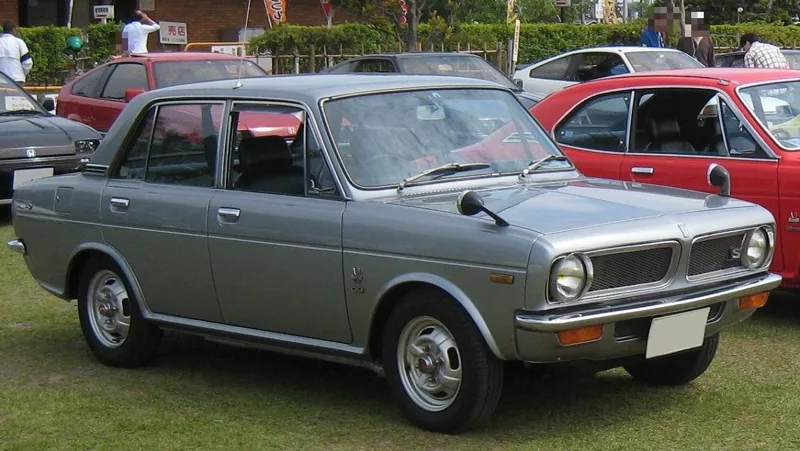
Honda began car production in 1963 and introduced the N360 minicar for the 1967 model year. It used a transverse front-engine, front-wheel drive layout that the Honda 1300 and the Civic later adopted. The first generation debuted in July 1972 as a fastback two-door saloon, and a three-door hatchback joined it that September.
The Civic gave Honda its first market success against compact cars, a growth segment as kei car sales plateaued in the early 1970s. It became an influential design of the decade, alongside the Volkswagen Golf of 1974, the Ford Fiesta of 1976 and the Fiat Ritmo of 1978, and the Renault 5 had arrived six months earlier.
A compact that began as a 1972 fastback and still carries a hybrid badge after eleven generations and more than 27 million sales.
What did the first generation offer?
The first generation had a 1,169 cc water-cooled four-cylinder engine mounted transversely, with front-wheel drive. It gave good interior space despite its small overall dimensions. Front power disc brakes, reclining vinyl bucket seats and simulated wood trim on the dashboard were standard features.
The Civic was offered as a two- or four-door fastback sedan, as a three- and five-door hatchback and as a five-door station wagon. Because of the 1973 oil crisis, demand for fuel-efficient vehicles was high, and the engine could run on either leaded or unleaded fuel, which gave drivers more flexibility.
How did the CVCC engine change things?
The Compound Vortex Controlled Combustion engine debuted in December 1973 with a cylinder head design that improved combustion. Because of it, the CVCC system did not need a catalytic converter or unleaded fuel to meet the 1975 EPA standards for hydrocarbons and carbon monoxide.
The Civic's three-door hatchback platform was expanded into the Honda Accord in 1976. All second-generation Civic engines then used the CVCC design, which added a third valve per cylinder and introduced lean-burn swirl technology.
What did the second and third generations bring?
The second generation first appeared in June 1979 for the 1980 model year. It grew in size, adopted sharper lines and offered more power from its 1,335 cc and 1,488 cc engines. Buyers chose among a four-speed manual on the cheapest cars, a five-speed manual, or a two-speed semi-automatic branded Hondamatic.
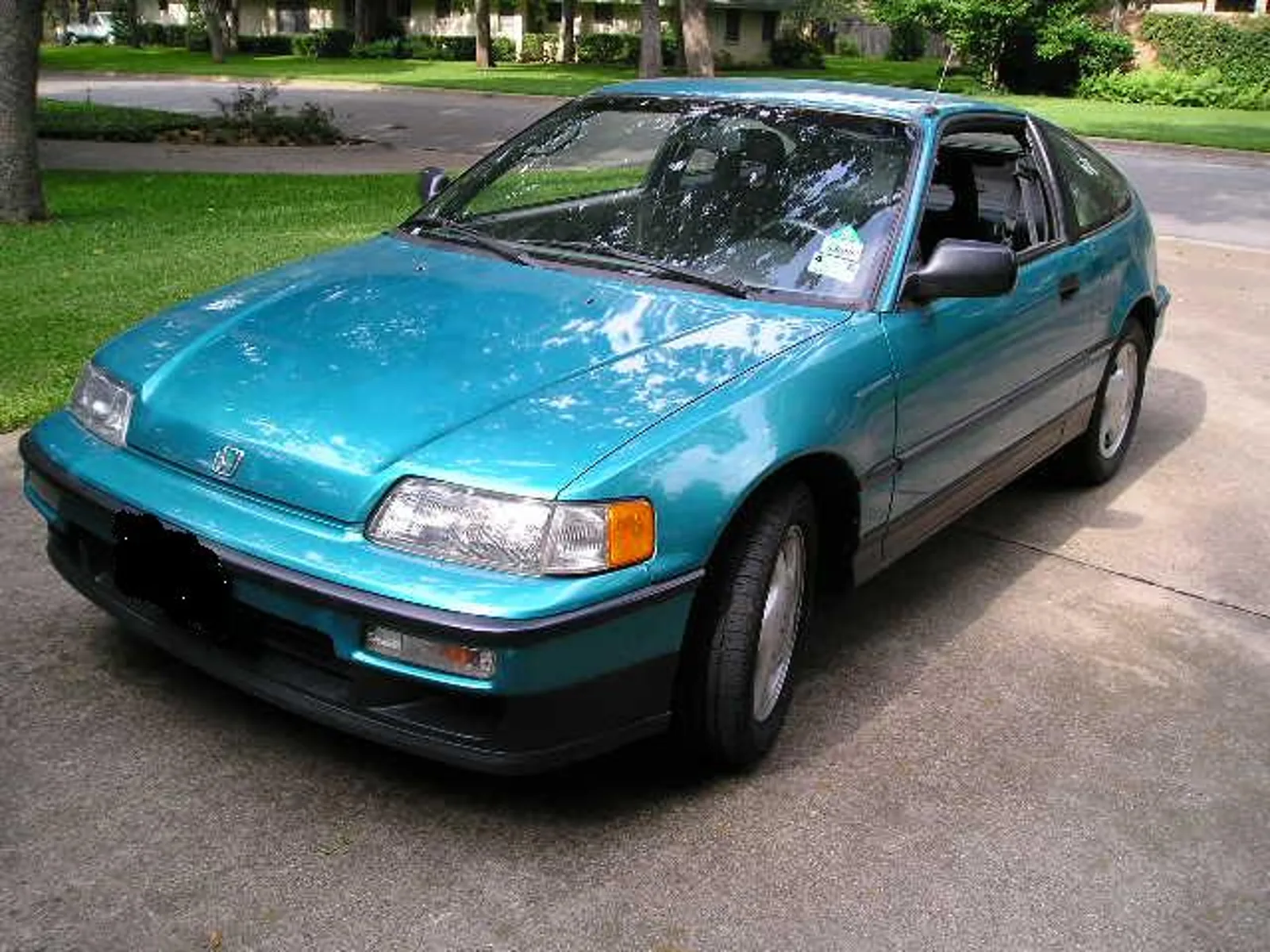
The third generation was released in September 1983 for the 1984 model year. The separate hatchback and wagon were merged into the five-door shuttle wagon, and the two-seat CRX coupe joined the range. It introduced the long-running D-series four-cylinder engine, and the Japanese Si used a 1.6 litre DOHC ZC rated at 96 kW; 130 hp (130 PS).
A four-wheel drive configuration appeared in 1984, operated by a push-button until it was improved in 1987. The later system, called Realtime, used a viscous coupler to engage the rear wheels automatically once the front wheels lost traction. The synchronised sixth gear, called SL for super-low, gave high torque at very low speeds.
How did the fourth and fifth generations develop?
The fourth generation of September 1987 had increased dimensions and a lower hood line. The Japanese SiR used the B16A 1.6 litre DOHC VTEC engine, and the fourth generation brought a fully independent rear suspension across the model range. The Ballade four-door was built under agreement by Mercedes-Benz South Africa.
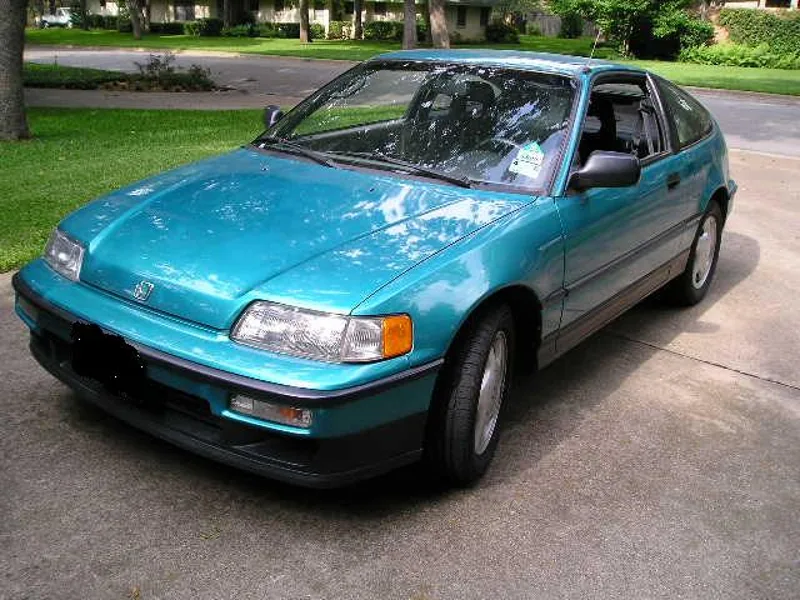
The fifth generation of September 1991 had more aerodynamic styling and the Civic Coupe body style, which was sold in North America, Europe and Japan. The VX hatchback was rated at 48 / 55 miles per US gallon, making it the most fuel-efficient Honda sold at the time. The fifth generation remains popular with tuners and racers.
What changed with the sixth and seventh generations?
The sixth generation arrived in September 1995 for the 1996 model year, with less radical styling and the first natural gas Civic, the GX. The Si and Canadian SiR used a 1.6 litre DOHC VTEC engine producing 160 hp (119 kW), while the EX used a 127 hp (95 kW) SOHC VTEC unit.
The seventh generation of September 2000 kept its exterior dimensions but used a flat rear floor, which made the interior roomier. Its front suspension changed from double wishbones to MacPherson struts to lower costs. Honda also introduced its first Civic Hybrid, powered by a 1.3 litre engine, in the seventh generation.
How did the eighth and ninth generations differ?
The eighth generation of September 2005 split into two platforms: one for the sedan and coupe, and another for a European hatchback that used a simpler rear suspension from the Honda Fit. Both Si and Type R trims continued, and a Mugen-tuned Civic Si four-door was offered in the US.
The ninth generation sedan went on sale in the US on 20 April 2011 for the 2012 model year. It was developed during the 2008 financial crisis, when Honda believed buyers would accept less upscale content if the cars were efficient and affordable. Honda updated the car in late 2012 after criticism of quality and refinement.
How efficient was the ninth-generation hybrid?
The ninth-generation hybrid used a larger 1.5 litre i-VTEC engine producing 67 kW (90 hp) and 132 N m (97 lb ft) of torque, with a lithium-ion battery. It averaged 5.3 L/100 km, or 53 mpg-imp (44 mpg-US), on the combined EPA cycle, which was an improvement of 5.7 percent over the previous generation hybrid.
The hybrid version was offered only for the sedan model in the ninth generation. The hybrid for the 2006 model year was manufactured in Japan.
What did the tenth generation bring?
The tenth generation of 2015 was based on an all-new Honda compact global platform, which unified the Civic range worldwide. Honda developed the car for the key US market and sold it in other regions as well, reviving a lead-country approach it had once discarded. The sedan debuted in the US in September 2015 for the 2016 model year.
The tenth-generation Civic had a fastback exterior with the rear C-pillar flowing into the tailgate, and a chrome wing that flowed across the top of the headlamps. The driver information interface was a 180 mm (7 in) LCD screen behind the steering wheel, and the hatchback returned to North America for the first time since 2000.
What was the eleventh generation?
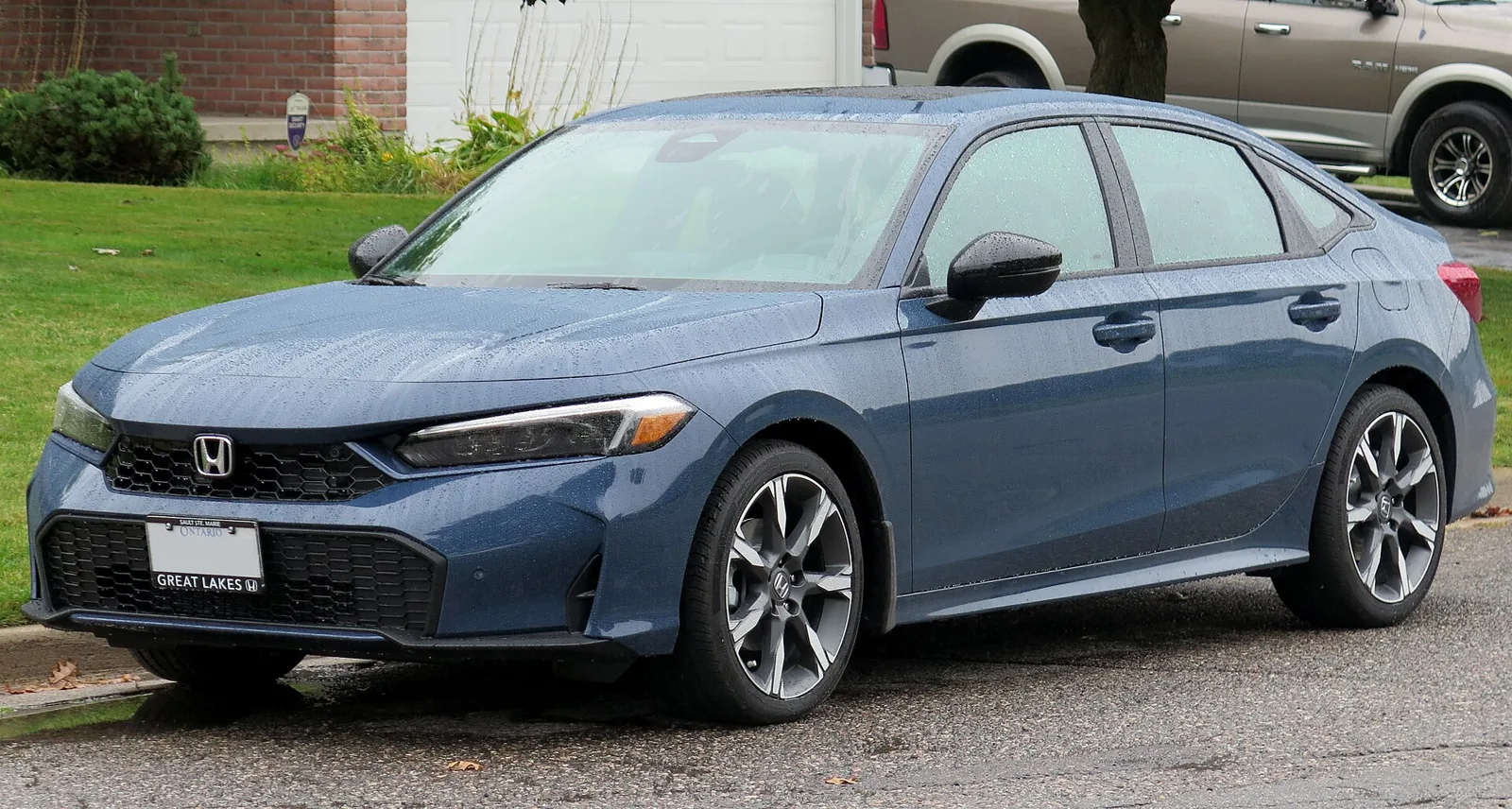
A prototype of the eleventh-generation sedan appeared in November 2020. Production models followed in June 2021, offered as a sedan and as a liftback named Civic Hatchback. North American sales began the same month, followed by Southeast Asia in August and Japan and China in September.
It was the first Civic since the second generation not to offer a coupe, because of declining coupe sales. Several markets, including Japan, Taiwan, Europe, New Zealand and Australia, dropped the sedan after its predecessor sold poorly. Australian and New Zealand sales began in December 2021.
How has the Civic sold around the world?
By 2006 a total of 16.5 million Civics had been sold worldwide, 7.3 million of them in the United States. As of February 2015 the total had reached 18.5 million, with 7.3 million bought in the US. The Civic ranked second among US car sales in 2019, behind only the Toyota Camry.
Canada made the Civic its top-selling car for 14 years through 2012. Honda's Japanese sales fell as customers shifted to minivans and compact cars like the Fit, and production of the non-hybrid Civic in Japan ended in August 2010, before the nameplate returned there with the tenth generation in 2017.
Where are Civics built?
The Civic hatchback has been built exclusively at Honda's Swindon plant in England since 2002. The 2006 standard North American Civics were built at Alliston in Ontario and East Liberty in Ohio, while the hybrid was made in Japan. Honda's Brazilian subsidiary later began building flex-fuel versions of the Civic and the Fit.
In Brazil the Civic was not available until 1992, when official imports began. Production of the sixth-generation sedan started in 1997 at the Sumare factory, and Brazilian cars adapted the engines for fuel containing about 25 percent ethanol.
How has the Civic performed in racing?
Civics have been raced since their introduction. They competed in the Bathurst 1000 up to 1300 cc class from 1973 to 1976, with second place in class in 1974 and 1976. The Type R made its British Touring Car Championship debut in 2002 with Arena Motorsport.
Honda returned to the BTCC as a works team in 2010 and won the manufacturers' title with Team Dynamics. Andrew Jordan won the 2013 BTCC title in an NGTC Civic. In the World Touring Car Championship, Honda won the 2013 Manufacturers' World Championship with four wins and 20 podium finishes in its first full season.
Honda partner JAS Motorsport has built three TCR variants, the FK2, FK7 and FL5, introduced in 2015, 2018 and 2023. Customers have won over 600 races and 125 championships with them, and the car won the global TCR Model of the Year title in 2019, 2020 and 2024.
What awards has the Civic won?
The Civic won Car of the Year Japan from 1972 to 1974. In the 1973 European Car of the Year contest it finished third, the best placing for a Japanese car up to then. US Road Test magazine also gave it the 1974 Car of the Year title.
Honda Civic EX was International Car of the Year in 2005, and the Civic was Motor Trend's Import Car of the Year for 1980 and its Car of the Year for 2006. It has been on Car and Driver's Ten Best list six times. In 2022 the Civic was chosen as the Scottish Car of the Year.
How safe is the Civic?
The eighth-generation sedan earned good ratings in both frontal and side impact crash tests from the IIHS, which listed it as the second-best 2007 small car for crashworthiness. The coupe was rated acceptable in the side impact test, and NHTSA also gave the sedan frontal crash ratings.
In Australia, 1984 to 2005 Civics were assessed in the used car safety ratings for occupant protection, and from 2007 onwards they received ANCAP ratings. Since 2017 the ratings have covered all hatchback variants except the Type R.
Key specifications
| Specification | Detail |
|---|---|
| Launch | July 1972, two-door fastback sedan |
| First engine | 1,169 cc water-cooled four-cylinder, front-wheel drive |
| CVCC debut | December 1973 |
| Second generation engines | 1,335 cc and 1,488 cc |
| Third generation Japanese Si | 1.6 litre DOHC ZC, 96 kW; 130 hp (130 PS) |
| Sixth generation Si | 1.6 litre DOHC VTEC, 160 hp (119 kW) |
| Fifth generation VX | 48 / 55 miles per US gallon |
| Ninth generation hybrid | 1.5 L i-VTEC, 67 kW (90 hp); 132 N m (97 lb ft) |
| Ninth generation hybrid economy | 5.3 L/100 km; 53 mpg-imp (44 mpg-US) |
| Tenth generation display | 180 mm (7 in) LCD |
| Total sales | Over 27 million units through 2021 |