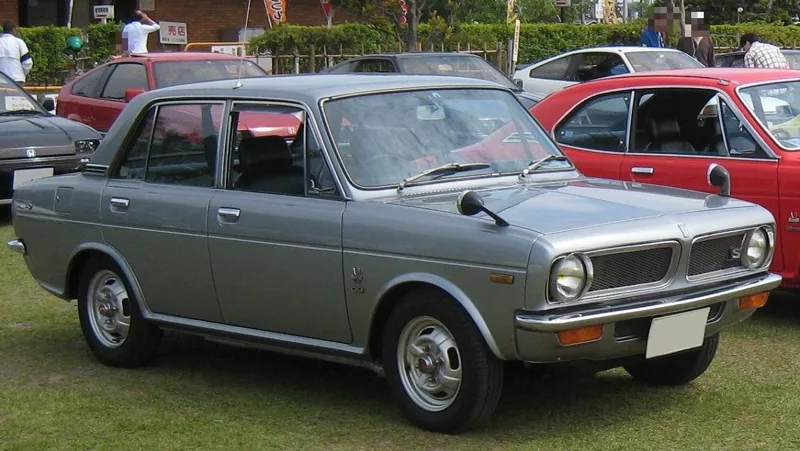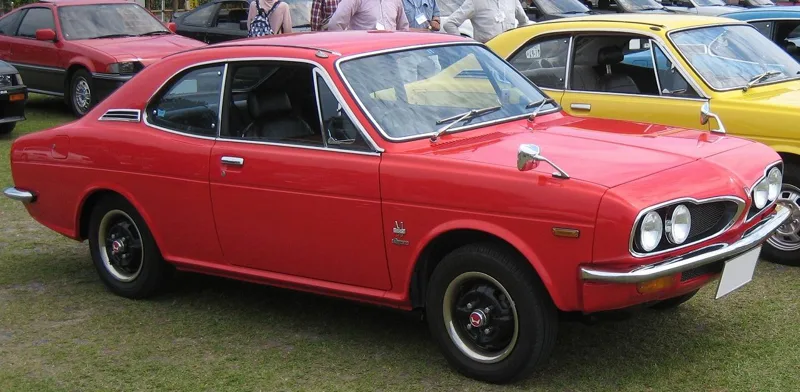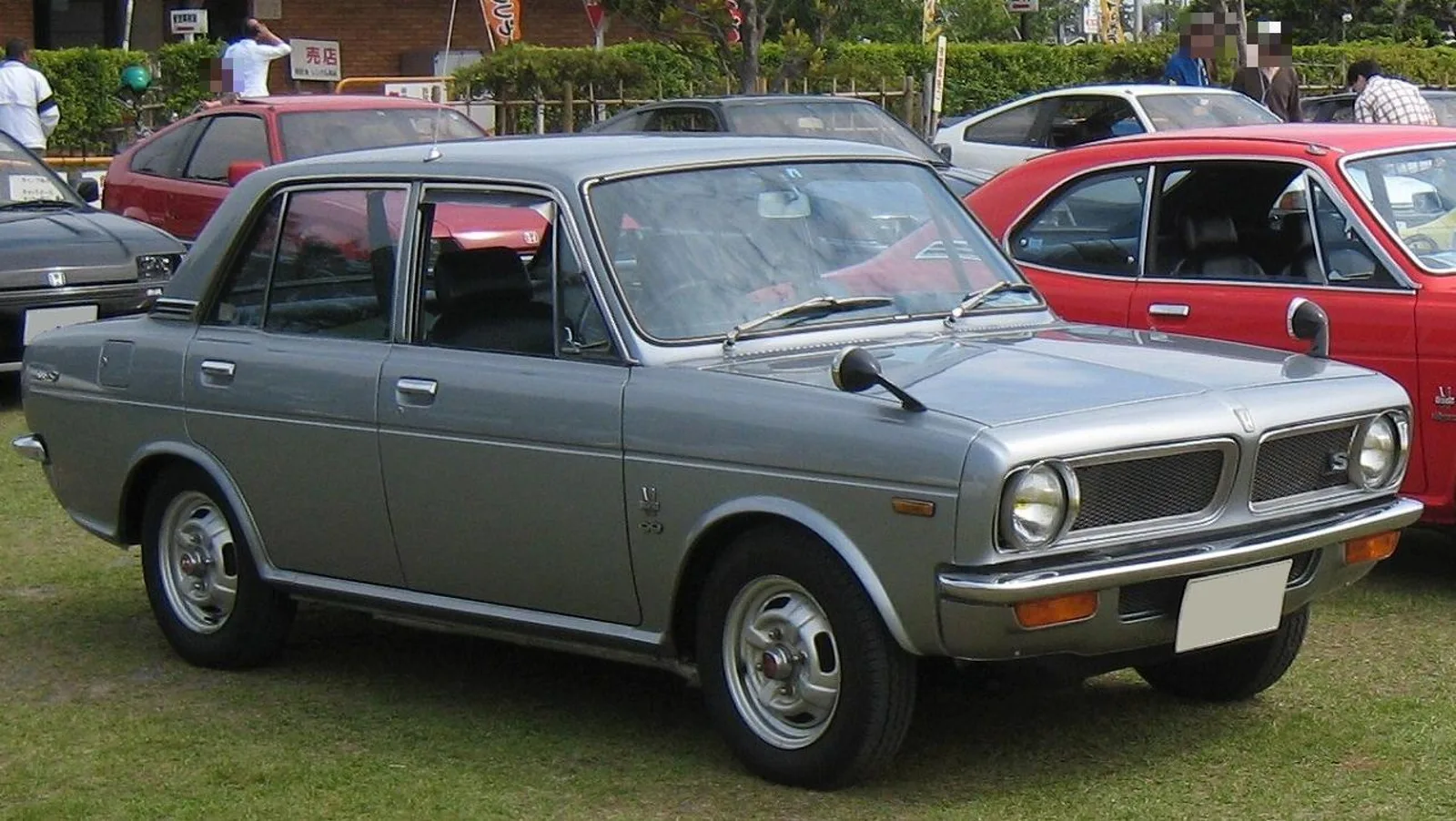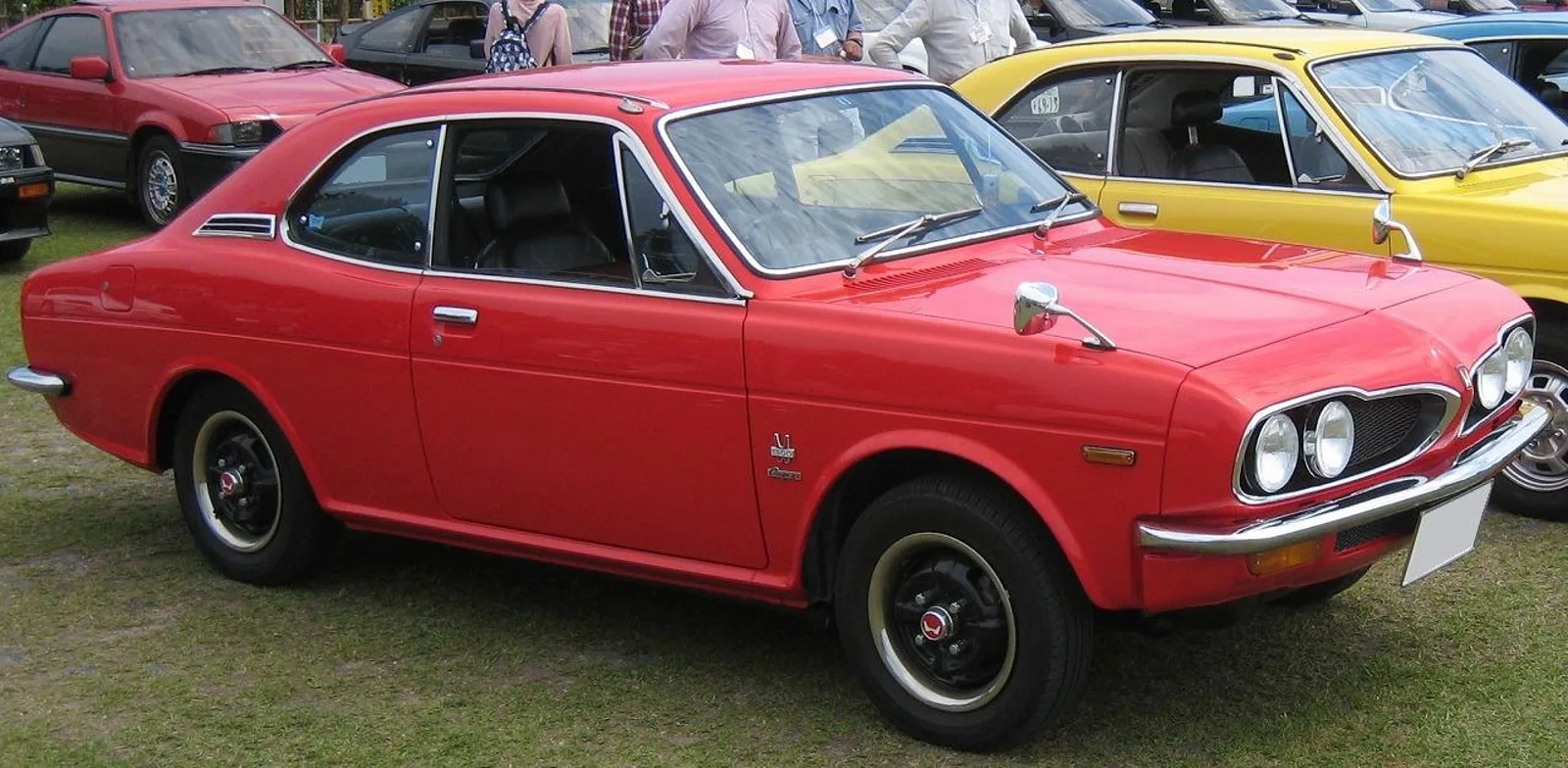
Honda's air-cooled 1300 was built to take on the Toyota Corona, a car that stayed in production for more than four decades and became a major Toyota export success.
The Honda 1300 was a front-drive, air-cooled Honda sedan and coupe built from 1969 to 1972, intended to compete with the Toyota Corona. The Corona was a Toyota family sedan produced across eleven generations from 1957 to 2001, and it grew into a major export success.
The Honda 1300 and the Toyota Corona were both Japanese family sedans aimed at buyers who wanted size and value. The 1300 was an ambitious front-drive Honda with an air-cooled engine, built for a short run from 1969 to 1972. The Corona was a Toyota line that started in 1957 and reached eleven generations, becoming one of Toyota's most important exports. Honda intended the 1300 to compete with the Corona, which makes this a direct match.
Were the Honda 1300 and Toyota Corona rivals?
Yes. Honda intended the 1300 to compete primarily against other Japanese cars including the Toyota Corona, Mazda Capella, Mitsubishi Galant and Nissan Bluebird.
The Corona was positioned as the family sedan just below Toyota's Crown, and it was sold through Toyopet Store dealerships in Japan. The 1300 came into that same mid-range space, which made the two cars natural competitors.
Their prices were also close. Six of the seven versions of the 1300 were priced noticeably above the Toyota Corolla Deluxe, and the Corona sat in the same family sedan price band.
Honda's air-cooled 1300 set out to beat the Corona, the Toyota family sedan that outlasted it by more than four decades.
When did each car go on sale?
The Honda 1300 was introduced at the Tokyo Motor Show in October 1968 and went on sale in Japan in May 1969. It was produced until 1972, when it was facelifted and rebranded as the Honda 145.
The Toyota Corona was produced across eleven generations between 1957 and 2001. Its first generation was introduced in May 1957, and its third generation arrived in September 1964, a month before the Tokyo Olympics.
The two cars were therefore on sale together in Japan from 1969 to 1972, when the 1300 faced the third-generation Corona and the Corona Mark II's arrival in 1968 had already widened the family range.
How were the two cars engineered?
The Honda 1300 was front-wheel drive, with an air-cooled SOHC engine that Honda named Duo Dyna Air Cooling. It used rack and pinion steering, front disc brakes and MacPherson struts at the front.
The Corona's early models were built to suit the 910 cc limit for small taxis in Japan, which shaped the car's size. Its first generation also used a monocoque chassis and independent front suspension with double wishbones.
The 1300's development was marked by delays. Frequent changes of plan during development, sometimes made daily, held production back, and the air-cooled engine was insisted upon by Soichiro Honda from the start.
What are the Honda 1300 and Toyota Corona specifications?
| Specification | Honda 1300 | Toyota Corona (third generation) |
|---|---|---|
| Years | 1969 to 1972; Honda 145 to 1974 | September 1964 to the 1970 fourth generation |
| Layout | Front-wheel drive, air-cooled SOHC | Not recorded in this comparison |
| Body styles | Sedan and coupe | Sedan, two-door hardtop, van, wagon, coupe utility and five-door hatchback |
| Launch engine | Series 77: 100 PS (74 kW; 99 hp) SAE, single carburettor | 1.2-litre 2P at 55 PS (40 kW) at 5,000 rpm |
| Top engine | Series 99: 115 PS (85 kW; 113 hp) SAE, four carburettors | 1587 cc 4R at 90 bhp (67 kW; 91 PS), with twin SU carburettors |
| Transmission | Manual; three-speed automatic from March 1970 | Manual; Toyoglide automatic introduced on this generation |
| Prices | 488,000 to 710,000 yen | Corolla Deluxe at 520,000 yen was the benchmark |
| Acceleration | 17.2 seconds for the quarter mile, factory claim | 0 to 60 mph in 15.1 seconds |
| US market | Not sold in the United States | More than 20,000 sold in 1966; 1969 Road Test Import Car of the Year |
| Output | Honda 145: 9,736 built | 80,000 Toyotas built in September 1967, 30,000 of them Coronas |
What did the Japanese press make of the 1300's launch?
Honda's power claims were met with scepticism among competitor manufacturers and in the trade press. Drivers who tried the car reported an engine that revved freely and performed well for a 1300 cc car.
The launch price was high against the competition, and six of the seven versions sat noticeably above the Corolla Deluxe. The 1300 was therefore a premium proposition in a segment where value mattered.
The DDAC engine's double-wall design took the water-jacket idea from liquid cooling and applied it to air cooling. The outer wall of the cylinder block formed part of a two-casting mould, so cooling air could pass through the space that coolant would fill in a water-cooled engine.
How did the engines compare?
The 1300's air-cooled engine used two fans, one forcing cool air through the passages and the other directing the hot air away. It was all aluminium, which added weight compared with a typical air-cooled design, but it gained cross-flow cooling.
The 1300's Series 77 used a single Keihin carburettor for 100 PS, while the Series 99 used four Keihin carburettors for 115 PS at 7,300 rpm. In December 1969 both were detuned to 95 PS and 110 PS.
The third-generation Corona's engines ran from a 1.2-litre 2P at 55 PS up to the 1587 cc 4R at 90 bhp. Its 1.35-litre 3P at 77 PS and 1.5-litre 2R at 65 PS were introduced in April 1967.
How quick was the Corona compared with the 1300?
The Corona's third generation also introduced Toyoglide, the automatic transmission that Toyota marketed under that name.
The Corona reached 0 to 60 mph in 15.1 seconds, which was modest by later standards. The 1300's factory claim of 17.2 seconds for the quarter mile was felt to be reasonable for a 1,300 cc car, and the engine could rev freely to an indicated 8,000 rpm.
The Corona's sporting variant came in the 1600GT, built from August 1967 with a DOHC 9R engine at 110 PS. It was a junior version of the 2000GT, and 2,222 were built in 13 months.
The 1300's coupe and the Corona 1600GT were sporting answers from different companies, with different engines and different aims.
How did the Corona succeed in America?
The Corona played a key role in Toyota's North American success. Toyota had first entered the American market in 1957 as Toyopet, met little success and withdrew in 1961, then came back in June 1964 under the Toyota name.
The Corona was well received and won the 1969 Road Test Import Car of the Year. It helped boost Toyota's US sales to more than 20,000 units in 1966, a threefold increase, and by 1967 Toyota was the third-best-selling import brand in the United States.
In 2014 Car and Driver called the Corona one of the best Toyotas ever made, and argued that Toyota survived long enough to thrive in America because of it. That verdict came decades after the car's first American success.
Why was the 1300 never sold in America?
Honda's US dealers pressed for the 1300 to be sold there, but it never was. There was no sustained effort to sell it in Europe either, and every 1300 built was right-hand drive.
The Corona faced no such barrier, because Toyota had built a US network and exports of the Corona proved popular in the United States and Europe. Toyota's US sales of the Corona had passed 20,000 in 1966, before the 1300 reached showrooms anywhere. That gave the Corona a foothold the 1300 never had.
The 1300's export reach was therefore narrow, and surviving examples outside Japan are mostly in Pacific-rim countries. The Corona went on to be assembled in several countries and sold widely.
What did the Corona's earlier generations add to the range?
The Corona's second generation, called the Tiara in export markets, was introduced in March 1960 with a 1.0-litre engine. Coronaline vans and pickups followed in 1960 with a 500 kg payload, to fill the commercial segment below the Toyota Stout.
In the United States the Tiara was for a time the only Toyota sedan on sale, and it sold better than the Crown. Only 318 of these vehicles were sold in the US, but it gave Toyota a foothold before the Corona's later success.
Which car sold more?
The Honda 1300 sold a small volume, and the Corona's US head start was never matched by the Honda. Australia took 731 coupes from 1969 to 1973, and the Honda 145 that followed sold 9,736 units before production ended in October 1974.
The Corona's sales were far larger. Toyota built 80,000 cars in September 1967 alone, of which 30,000 were Coronas, and the car's eleven generations stretched over four decades.
The two cannot be compared on a like-for-like basis, since the 1300 was a short-lived model and the Corona a long-running family line. The Corona's record is clearly the larger.
How did the Corona grow into the Mark II and beyond?
In September 1968 Toyota released the larger Corona Mark II, a slightly larger vehicle with a higher level of equipment, sharing some features of the Crown. It was longer at 4,295 mm, compared with 4,125 mm for the Corona sedan.
The Mark II was later spun off as a separate platform and dropped the Corona name. The Corona itself moved on to a fourth generation in February 1970, which was a complete redesign on a separate platform.
The Toyota Corolla arrived in November 1966 to take the smaller-car role, which allowed the Corona to grow in size. The Corona's later replacements were the Premio in Japan, the Avensis in Europe and the Camry in other markets.
Which car suits which buyer?
The 1300 suits a buyer who wanted something technically unusual from Honda, with a coupe option, and who could accept a high price and a short production life.
The Corona suits a buyer who wanted a family sedan with a choice of body styles, an automatic option and a long line of successors.
The figures do not settle which was the better car, because they were built for different aims and different lengths of life. The 1300 was the more technically ambitious, while the Corona was the more successful over time.