Honda's largest car of 1969 used a complex air-cooled engine and sold at a high price, but the lessons it taught shaped the Civic and the Accord.
The Honda 1300 was Honda's largest car when it went on sale in Japan in 1969. It was a front-wheel-drive sedan or coupe with an air-cooled engine, and its lessons shaped the Civic, Accord and Prelude.
The Honda 1300 was a front-wheel-drive car that Honda built from 1969 to 1972. It was the largest car the company had produced to that point, sitting above the S800 sports car, and it came as a sedan or a coupe. Its air-cooled engine and high price made it difficult, but the lessons learned from its development shaped Honda's later cars.
Why did Honda build the 1300?
The 1300 was an ambitious project spearheaded by Soichiro Honda. It was intended to compete mainly with Japanese rivals such as the Toyota Corona, the Mazda Capella, the Mitsubishi Galant and the Nissan Bluebird, which were the cars families and fleets were buying at the time.
Development was not smooth. Engineering delays and frequent changes of plan, sometimes made on a daily basis, hampered production. The finished car was also expensive compared with its competitors, which did not help its sales.
The car had been shown at the Tokyo Motor Show in October 1968, but production only got under way in the early months of 1969. Launch was held back by a couple of months after Soichiro Honda judged the styling he had seen at the show too bland and called for a redesign.
An air-cooled front-driver that cost Honda dearly in development, then paid back in the Civic and Accord.
How did the 1300 get an air-cooled engine?
Soichiro Honda was adamant that the engine should be air rather than water cooled. His argument was that water-cooled engines ultimately use air to cool the water, so air cooling could be built in from the start and would avoid water leaks and make maintenance easier.
The problem was noise. Engineers had to reduce the loud racket typical of an air-cooled engine to a level comparable with a water-cooled unit, and the answer was a system Honda named Duo Dyna Air Cooling, or DDAC. It was presented in 1968, and the initial prototype was completed in July 1968.
DDAC borrowed the idea of the water jacket and applied it to air. The outer wall of the cylinder block formed part of the structure in a two-casting mould, and cooling air flowed through the space where coolant would circulate in a water-cooled engine. Two fans were used, one to push cool air into the passages and one to carry the heated air away from the engine.
The heated air was not wasted. It was used to warm the passenger compartment, which was an unusual approach that was not commonly used afterwards. The engine was all aluminium, and that made it heavier than a conventional air-cooled design, although it benefited from cross flow cooling.
What engine options did the Honda 1300 offer?
The 1300 used a single overhead cam engine with plain bearings, moving away from the roller bearings Honda had used on the crankshaft before. The engine was a dry-sump design with a pressurised oil system feeding from a tank, and it used an electric fuel pump, which was a high-tech novelty that later became common.
Two versions were offered. The 77 sedan and Coupe7 had a single Keihin carburettor and produced 100 PS (74 kW; 99 hp), while the 99 sedan and Coupe9 used four Keihin carburettors for 115 PS (85 kW; 113 hp) at 7,300 rpm. By December 1969 the four-carburettor engines had settled at 95 PS (70 kW; 94 hp) for one and 110 PS (81 kW; 108 hp) for the other.
Honda's power claims met with scepticism from competitors and the trade press at first. Drivers who tried the car reported an engine that revved freely to an indicated 8,000 rpm. The factory quarter-mile figure of 17.2 seconds was felt to be not unreasonable for a car of 1,300 cc.
The electrical system was less impressive in its layout. It had a separate, redundant set of wiring on each side of the car, a sign of how much engineers were trying to protect against failure in an unfamiliar design.
How was the 1300 sold in Japan?
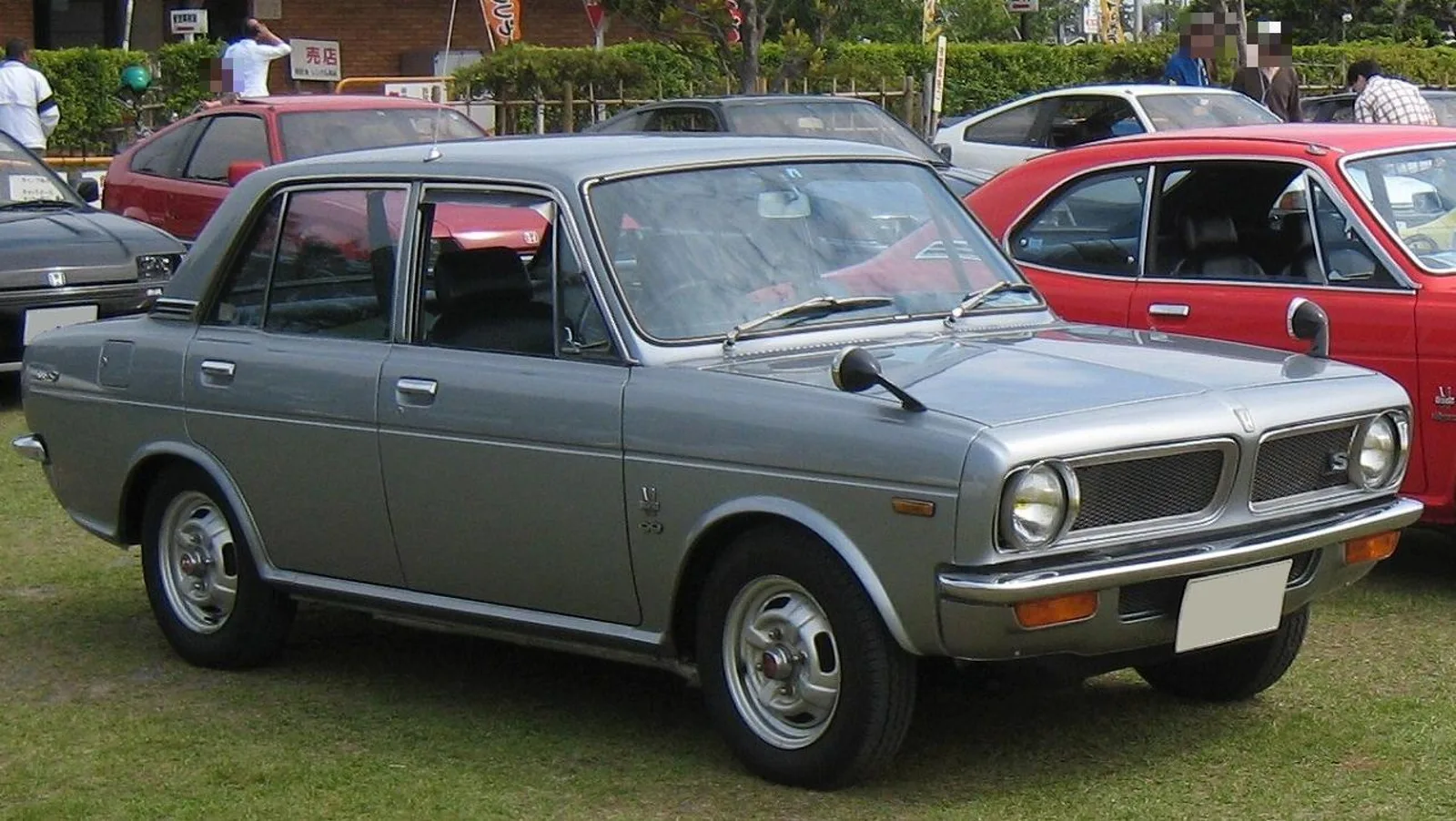
Final specifications and prices for the Japanese market were announced in May 1969, and the car went on sale that month. The sedan was offered in four trim levels: Standard, Custom, S and Deluxe. The top three could also be had with the four-carburettor engine. Automatic transmission and air-conditioning were optional extras.
Prices ran from 488,000 yen for the entry 77 standard saloon to 710,000 yen for the 99 Custom saloon. Six of the seven versions cost noticeably more than the slower Toyota Corolla Deluxe four-door, which retailed at 520,000 yen and included delivery to the Tokyo area.
What changed with the coupe and the facelifts?
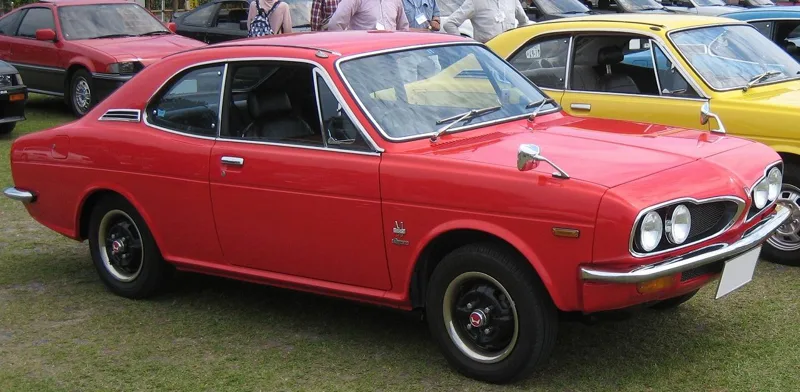
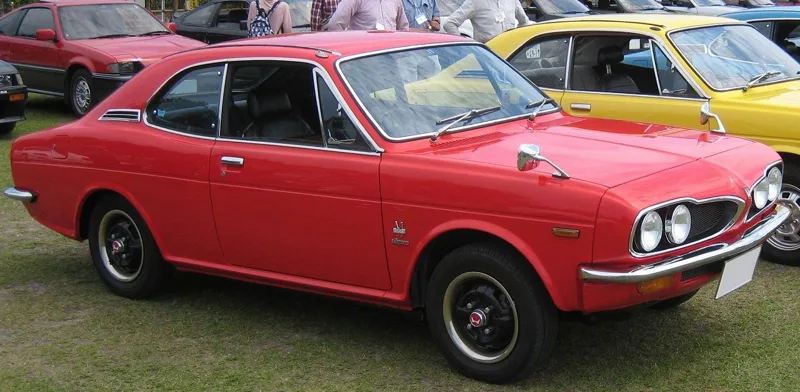
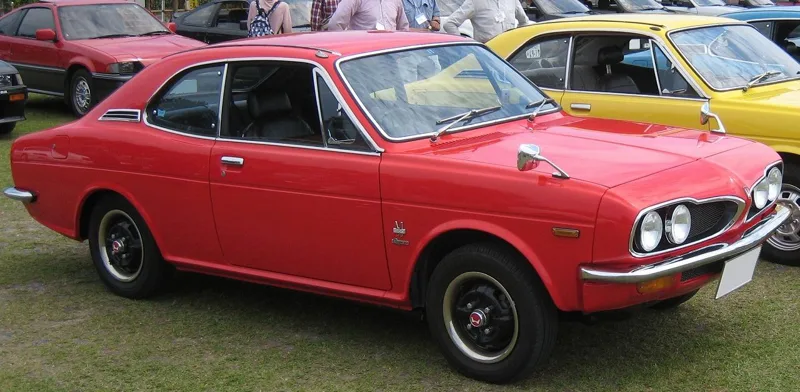
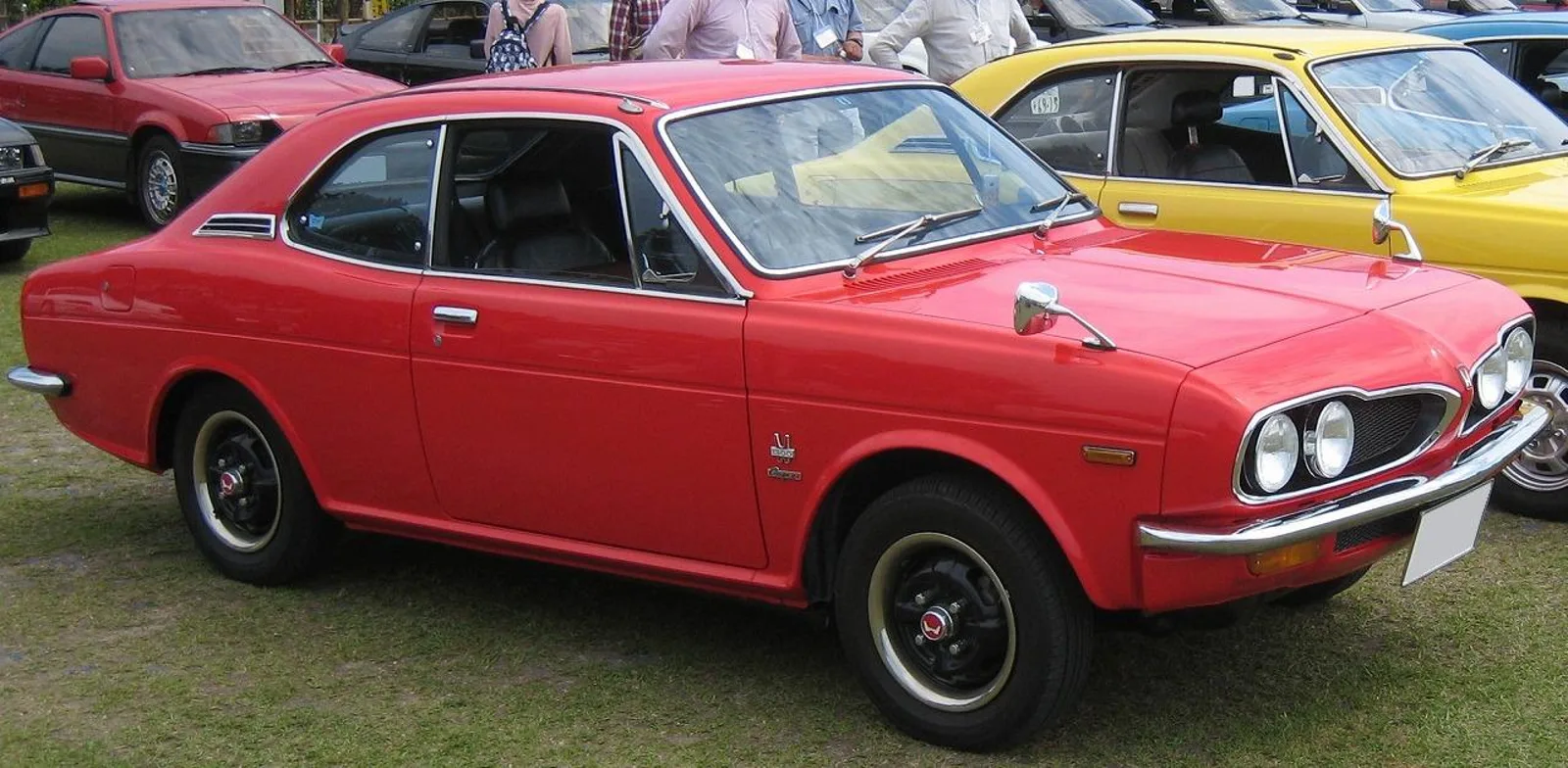
A two-door coupe with a longer and sportier front end joined the range in February 1970. It was sold as the Coupe7 and Coupe9, with the same trims as the sedans. A three-speed automatic followed a month later, but only for the 77 sedan and the Coupe7. Automatic cars ran at 80 PS (59 kW; 79 hp).
In November 1970 the 77 sedan got a fresh nose with round headlights and revised rear lamps, and the 99 sedan and the 1300 badge were axed. The facelifted coupe arrived in June 1971 as the Coupe Golden Series and the Coupe Dynamic Series. The Golden Series shared the sedan's new front fascia, while the Dynamic Series kept its earlier design with a new vertical grille and an extra boot ornament.
Was the Honda 1300 sold outside Japan?
No. Honda's US dealers pressed for the car, but it was never sold there, and there is no evidence of a sustained effort to sell it in Europe. Every Honda 1300 built was right-hand drive.
The 57-inch (1,400 mm) width was reportedly chosen to qualify for a lower tax class in Japan, and it was significantly narrower than the European norm represented by cars such as the Ford Escort. The 1.3-litre engine also gave Japanese buyers tax savings over competitors with larger engines. Figures from the Australian Bureau of Statistics show that 731 units of the 1300 coupe were sold in Australia between 1969 and 1973.
What was the 1300's chassis like?
The car used rack and pinion steering, with disc brakes at the front and drums at the rear, controlled by a dual-line hydraulic system. The front suspension used MacPherson struts, while the rear combined full-width swing axles with half-elliptic leaf springs, an unusual arrangement for the time.
Production cars received a revised front suspension after the car was first shown. The geometry was modified, the steering ratio was lowered and a steering damper was added to reduce the strong self-centring tendency of the pre-production cars that journalists had driven. The gearbox, final drive ratios and wheel sizes were also updated before sale.
Did the 1300 engine go racing?
Yes. The high-revving character and dry-sump oil system made the engine a natural choice for competition. Honda's competition department, the Racing Service Club, built a mid-engined, tubular-framed car called the Honda R 1300.
The Carman-Apache made its racing debut at the 1969 Japan GP with a Honda 1300 unit tuned to 135 PS (133 hp; 99 kW) at 7,000 rpm, sitting transversely amidships. It weighed 490 kg (1,080 lb). The car completed 29 of the 120 laps before retiring, but it continued to race with some modest success through the following year.
The engine block also provided the basis for a 2991cc V8 used in the Honda RA302 Formula One car. That car was built on Soichiro Honda's order to develop an air-cooled Formula One engine, and it was introduced by Honda Racing France during the 1968 Formula One season.
What did the 1300 leave behind?
The 1300 project forced a change in how Honda operated. Its teams had endured a painful development process, and that experience pushed the company toward a new structure, from which the water-cooled Life and Civic emerged as its mini car and small passenger car.
The Civic, fitted with a CVCC engine that complied with the Japanese government's Air Pollution Control Act, drew world attention to Honda's engineering approach. Those involved in the 1300 agreed that the difficulties of finishing it had contributed greatly to the company's later models.
What was the Honda 145?
In October 1972 the 1300 was facelifted again and rebranded as the Honda 145, again as a sedan or a coupe. Its body was little changed, but it used a water-cooled 1,433 cc EB5 engine in carburettor form at 80 PS (59 kW; 79 hp), or with fuel injection at 90 PS (66 kW; 89 hp) on the coupe only.
The 145 used a four-speed manual or a two-speed Hondamatic semi-automatic. The market was not impressed, and only 9,736 were produced. The model was quickly overshadowed by the Civic, which arrived four months earlier, and production ended in October 1974. The sedan's successor was the Accord, and Honda did not build another coupe until the Prelude in 1978.
What are the Honda 1300 specifications?
| Specification | Detail |
|---|---|
| Production years | 1969 to 1972; Honda 145 from October 1972 to October 1974 |
| Layout | Front-wheel drive, sedan or coupe |
| Engine (77 and Coupe7) | Air-cooled SOHC, one carburettor, 100 PS (74 kW; 99 hp) SAE |
| Engine (99 and Coupe9) | Air-cooled SOHC, four carburettors, 115 PS (85 kW; 113 hp) SAE |
| Detuned output (December 1969) | 95 PS (70 kW; 94 hp) and 110 PS (81 kW; 108 hp) |
| Automatic output | 80 PS (59 kW; 79 hp) |
| Width | 57 inches (1,400 mm) |
| Quarter-mile at launch | 17.2 seconds (factory figure) |
| Ex-works prices | 488,000 yen to 710,000 yen |
| Honda 145 engine | 1,433 cc water-cooled EB5, 80 PS (59 kW; 79 hp) or 90 PS (66 kW; 89 hp) |
| Honda 145 production | 9,736 units |