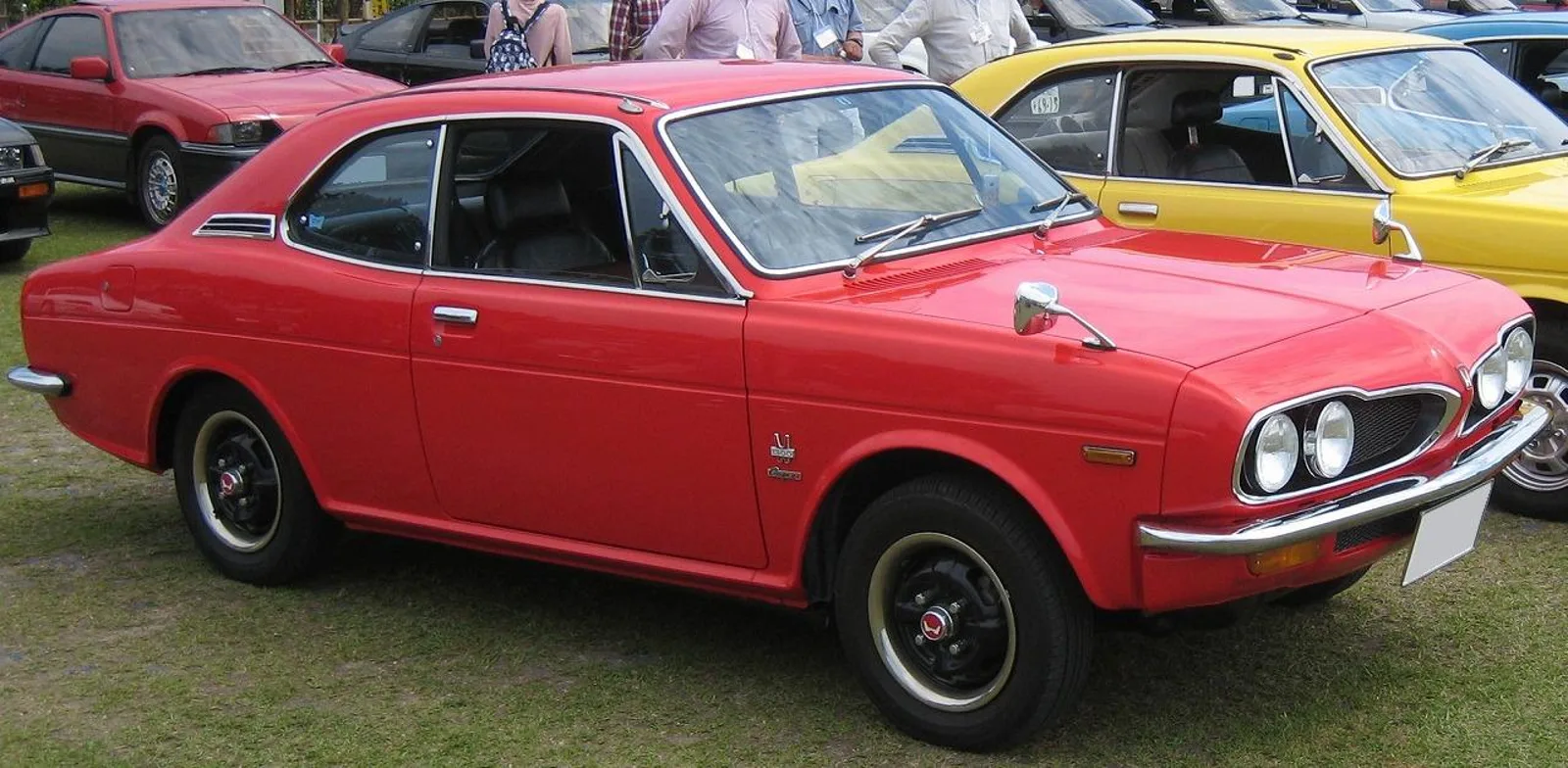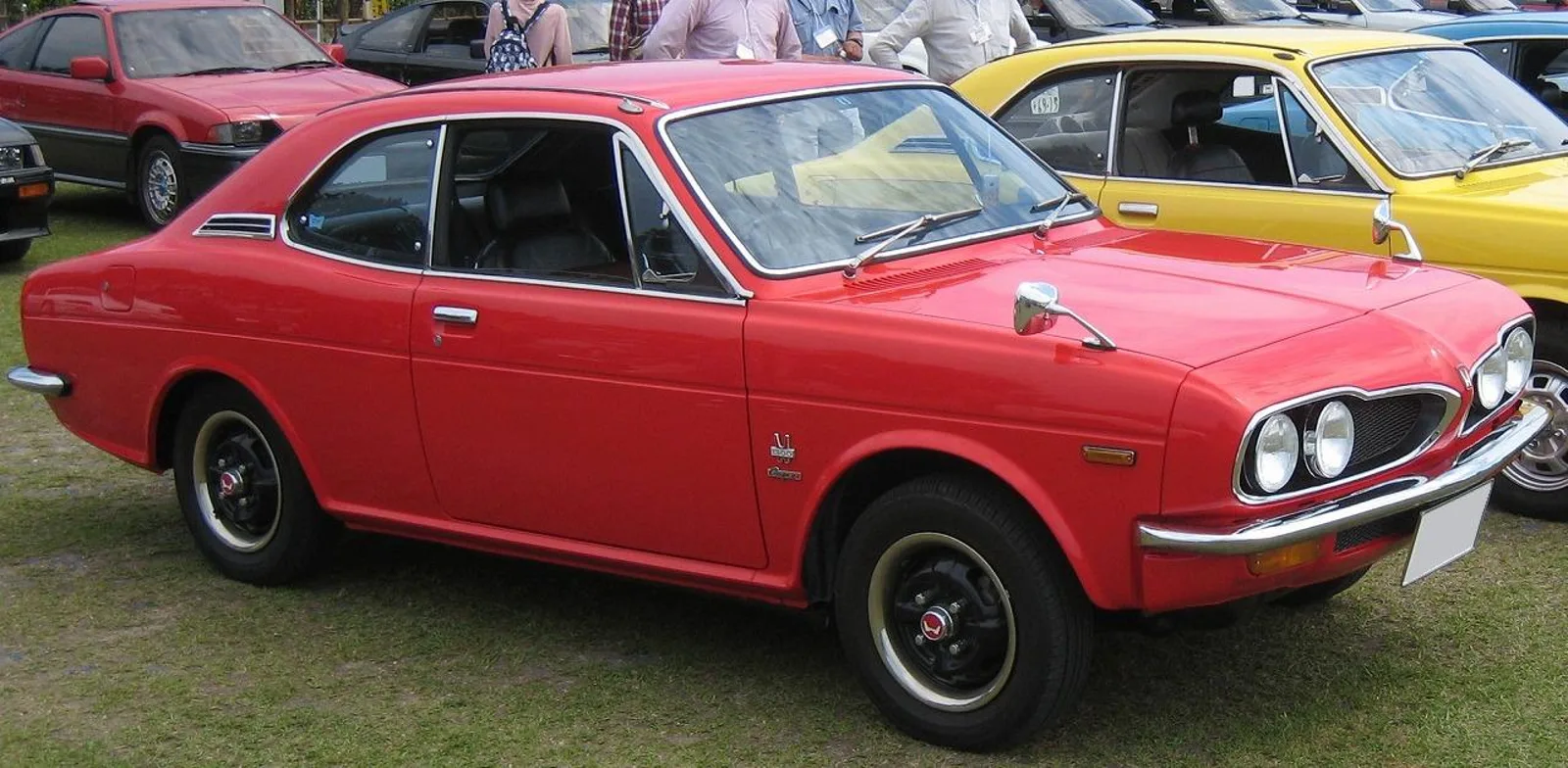
Honda's front-drive 1300 and Mitsubishi's first Galant both launched into Japan's mid-size sedan market in 1969, and Honda's ambitious air-cooled car was built to beat rivals like the Galant.
The Honda 1300 was a front-drive, air-cooled Honda sedan and coupe built from 1969 to 1972, aimed at the Galant among other rivals. The Mitsubishi Galant began in December 1969 and became a family car that ran through nine generations to 2012.
The Honda 1300 and the Mitsubishi Galant both arrived in Japan in 1969, aimed at the same family sedan and coupe buyers. The 1300 was Honda's largest car up to that point, a front-drive machine with an air-cooled engine. The Galant was Mitsubishi's first compact sedan of the Dynawedge styling, and it went on to become a long-running family car. The 1300 was built to compete against the Galant, among other Japanese sedans.
Were the Honda 1300 and Mitsubishi Galant rivals?
Yes. Honda aimed the 1300 at rival Japanese sedans, with the Galant among the cars it was built to take on.
Mitsubishi pitched the Galant against the Corona, the Bluebird, the Accord and the Capella. The two cars therefore faced many of the same rivals and buyers in Japan.
Their price points also overlapped. Six of the seven versions of the 1300 were priced noticeably above the Toyota Corolla Deluxe, and the Galant was pitched in the same compact sedan space.
Honda's air-cooled 1300 and Mitsubishi's Dynawedge Galant met head to head in Japan, and only one of them became a long-running family car.
When did each car go on sale?
The Honda 1300 was introduced at the Tokyo Motor Show in October 1968 and went on sale in Japan in May 1969. It was produced until 1972, when the Honda 145 replaced it.
The Galant's first generation was released in December 1969 at Mitsubishi's new Galant Shop dealership network. The Galant lasted until 2012 through nine generations, and the first generation was initially known as the Colt Galant.
The two cars were on sale together in Japan from 1969 to 1972, the window in which the 1300 competed directly with the first Galant.
How were the two cars engineered?
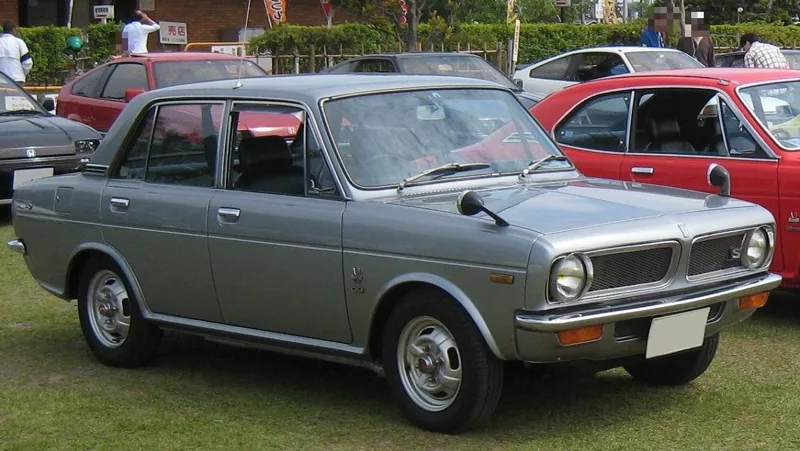
The Honda 1300 was front-wheel drive, with an air-cooled SOHC engine that Honda called Duo Dyna Air Cooling. Its suspension used MacPherson struts at the front and full-width swing axles with half-elliptic leaf springs at the rear.
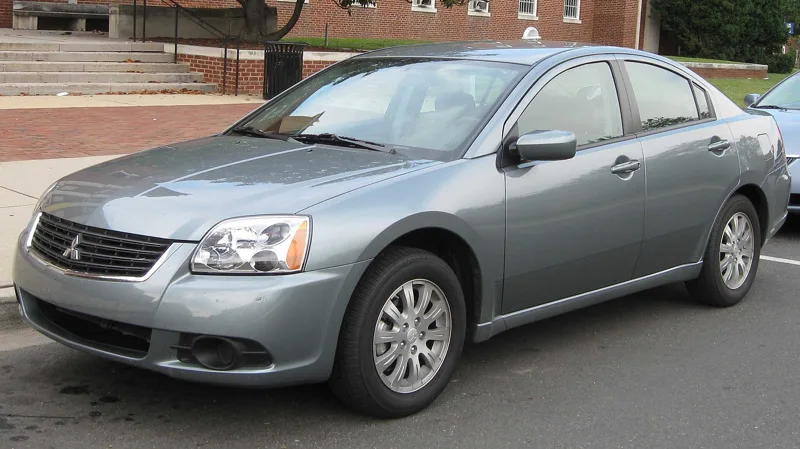
The Galant used the Saturn engine family, and it was styled with the Dynawedge concept, which referred to the influence of aerodynamics on its silhouette.
The 1300 had rack and pinion steering, front disc brakes, and rear drums on a dual-line hydraulic system. Production cars received a lowered steering ratio and a steering damper to reduce the strong self-centring of the pre-production cars shown to journalists.
The 1300's engineering came with long delays. Frequent changes of plan during development, sometimes daily, held production back, and Mr Honda insisted the engine be air-cooled from the start.
What are the Honda 1300 and Mitsubishi Galant specifications?
| Specification | Honda 1300 | Mitsubishi Galant (first generation) |
|---|---|---|
| Years | 1969 to 1972 | December 1969 onward |
| Layout | Front-wheel drive, air-cooled SOHC | Rear-wheel drive, Saturn engine family |
| Body styles | Sedan and coupe | Four-door sedan, five-door estate and two-door hardtop |
| Launch engine | Series 77: single carburettor, 100 PS (74 kW; 99 hp) SAE | Saturn 1.3 or 1.5 litre |
| Top engine | Series 99: four carburettors, 115 PS (85 kW; 113 hp) SAE | 1.7 litre with 115 PS (85 kW) for the GS from January 1973 |
| Width | 57 inches (1,400 mm) | not recorded |
| Price | 488,000 to 710,000 yen | not recorded |
| Quarter mile | 17.2 seconds, factory claim at launch | not recorded |
| Sales | 9,736 Honda 145s built after the 1300 | More than five million across nine generations |
| Export | Not sold in the United States or Europe; Australia took 731 coupes | Sold in the United States as the Dodge Colt from 1971 |
| Successor | Honda 145, then the Accord and Prelude | Second generation A11 series from May 1973 |
How did the Honda 1300's launch unfold?
Development changed plan frequently, sometimes on a daily basis, and that hampered production. Final specifications and prices were settled in May 1969, and the car went on sale that month.
The launch had been delayed by a couple of months after Soichiro Honda found the styling shown at the 1968 Tokyo Motor Show unacceptably bland and called for a redesign. Commentators noted that Honda himself owned and often drove a Pontiac Firebird.
The split air intakes on the front of the car as it reached the market suggested that the design team was aware of the boss's fondness for his Pontiac. The initial DDAC prototype was completed in July 1968, and performance and temperature tests followed.
How did the engines compare?
The 1300 used an air-cooled SOHC engine with two fans, one forcing cool air into passages and the other directing the heated air away. The engine was all aluminium, which added weight compared with a typical air-cooled design, but it gained cross-flow cooling.
The Series 77 used a single carburettor for 100 PS, and the Series 99 used four Keihin carburettors for 115 PS at 7,300 rpm. In December 1969 both were detuned to 95 PS and 110 PS.
The Galant's engines were the Saturn units, at 1.3 and 1.5 litres, with 1.4 and 1.6 litres from September 1971. The 1.7 litre with 115 PS came for the top GS model in January 1973.
How fast was the Honda 1300?
Honda's power claims were met with scepticism at first, but drivers reported an engine that would rev freely to an indicated 8,000 rpm. The factory figure of 17.2 seconds for a standing quarter mile was felt to be reasonable for a 1,300 cc car.
The engine was a dry-sump design with a pressurised oil system fed from a tank. Its electrical fuel pump was a high-tech novelty that later became common in cars.
The high-revving character and dry-sump layout suited racing, and the RSC built the mid-engined Honda R-1300. A 1300 engine tuned to 135 PS also powered the Carman-Apache at the 1969 Japan Grand Prix.
Which car had the better coupe?
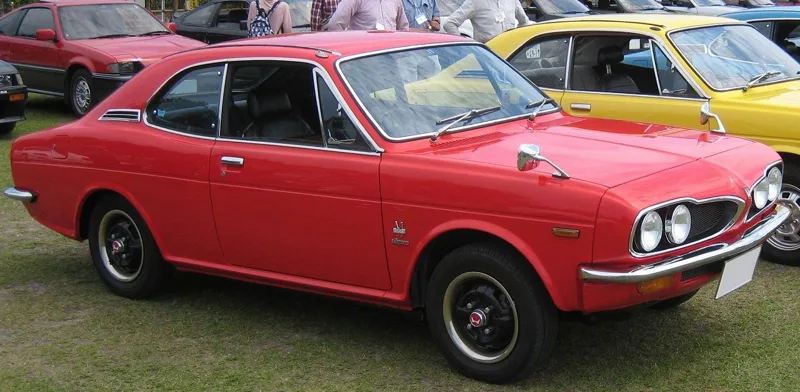
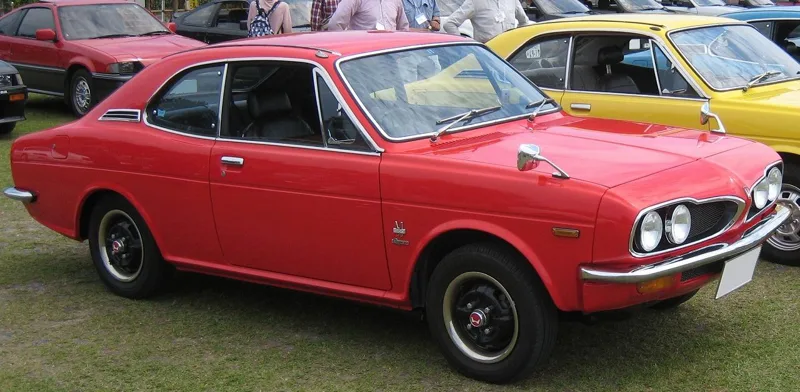
The 1300's two-door coupe was added in February 1970 as the Coupe7 and Coupe9, with a longer and sportier front end. The Coupe9 used the four-carburettor engine, while the Coupe7 used the single carburettor.
The Galant's coupe came as the Galant GTO from 1970, a fastback modelled on American muscle cars. It was available with a choice of Saturn engines and the 2-litre Astron 80, and it lasted until 1975.
A third, more compact coupe, the Galant FTO, arrived in 1971 on a chassis 12 cm shorter. It used the 4G41 1.4 litre engine and left a legacy for the company to return to in the 1990s.
Did either car reach America or Europe?
Honda's US dealers pressed for the 1300 to be sold in America, but the car was not sold there. There was no sustained effort to sell it in Europe either, and every 1300 built was right-hand drive.
The Galant reached America as the Dodge Colt from 1971, when Chrysler began importing it as the answer to the new American subcompacts. It was also sold by Chrysler Australia as the Valiant Galant.
The Galant's export reach grew with each generation, and Chrysler sold it under several names in different countries. It was sold through Chrysler in many guises, including the Plymouth Colt and Plymouth Cricket in Canada from 1974 and the Chrysler Galant in Australia.
What did the Galant's third and fourth generations bring?
The third generation, known as Galant Sigma, arrived in 1976 and was the Car of the Year in South Africa in 1977. A new two-door Lambda coupe replaced the GTO in 1976.
The fourth generation of 1980 was slightly larger than the third, with extra emphasis on ergonomics, aerodynamics and safety. Shoulder room, leg room and head space all increased, and the trunk was enlarged.
In America the Lambda wore the Dodge Challenger and Plymouth Sapporo names from 1978 to 1980, giving the Galant a sporting face there.
Which car sold more?
The Galant's cumulative sales exceeded five million units over nine generations, which places it among the most successful Mitsubishi cars. It began as a compact and grew into a mid-size car.
The 1300 struggled partly because of its high price, which sat well above the Corolla Deluxe. Its engineering promise did not translate into a large customer base.
The Honda 1300 sold far fewer units. Sales in Australia reached 731 coupes from 1969 to 1973, and the Honda 145 that followed sold 9,736 examples before production ended in October 1974.
The Honda 1300's total is not recorded in full here, so a complete sales race cannot be called. The Galant's record is clearly the larger over the long run.
What did the Honda 145 and the Galant's second generation change?
In October 1972 the 1300 was facelifted again and rebranded as the Honda 145. Its body was little changed, but it used a water-cooled 1,433 cc engine with 80 PS or 90 PS, and it was overshadowed by the Civic introduced four months earlier.
The Galant's second generation was introduced on 24 May 1973, in Japan, with a more curvaceous look influenced by coke-bottle styling. Transmissions were now floor mounted, with a four-speed manual and a five-speed for sportier models.
The second generation also brought larger Astron engines up to 125 PS in 2000 cc form, and the first Astron 80 engines with Mitsubishi's Silent Shaft balance technology.
Which car suits which buyer?
The Honda 1300 suits a buyer who wanted an unusual, technically ambitious front-drive Honda with an air-cooled engine and a sporting coupe option, and who could accept a high price and a short life.
The Galant suits a buyer who wanted a compact Mitsubishi with a range of body styles, a coupe, estate and sedan, and an engine line that grew through its generations.
The figures do not settle which was the better car, because they were built with different aims. The 1300 was the more technically ambitious, while the Galant was the more successful over the long run.