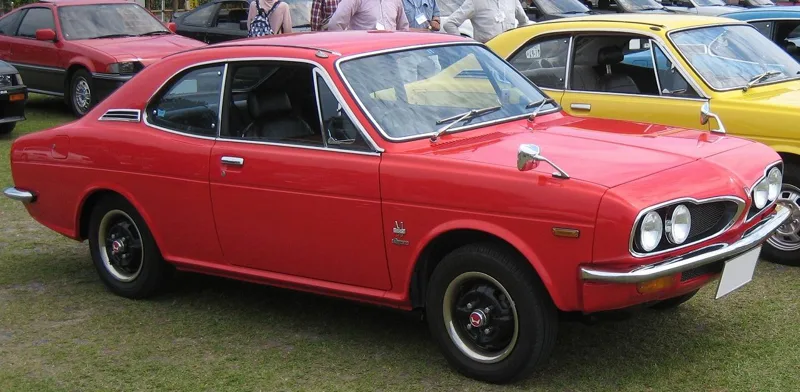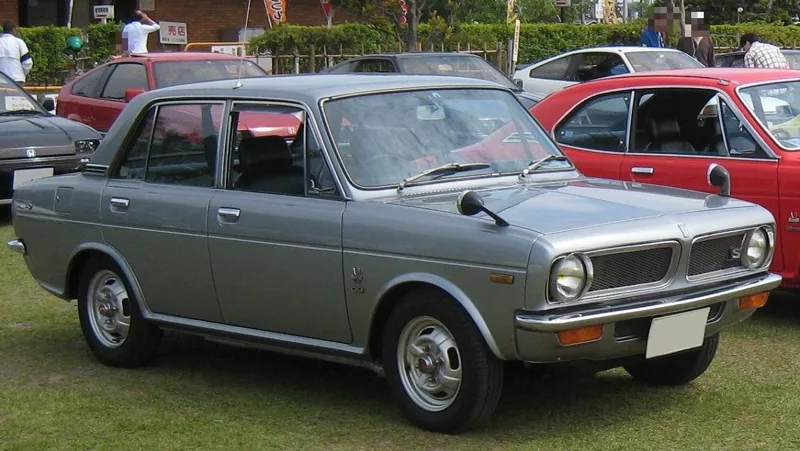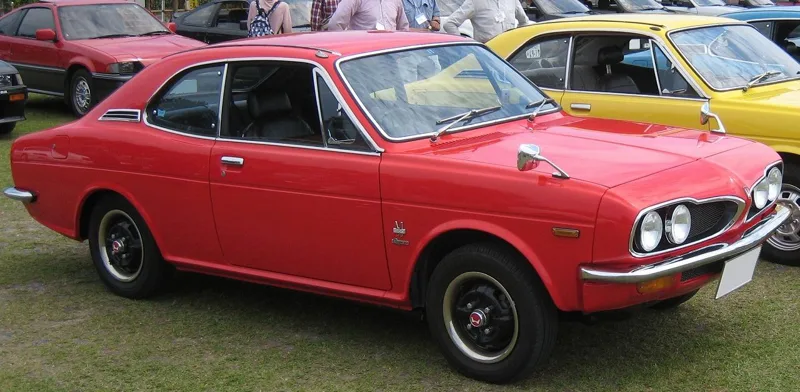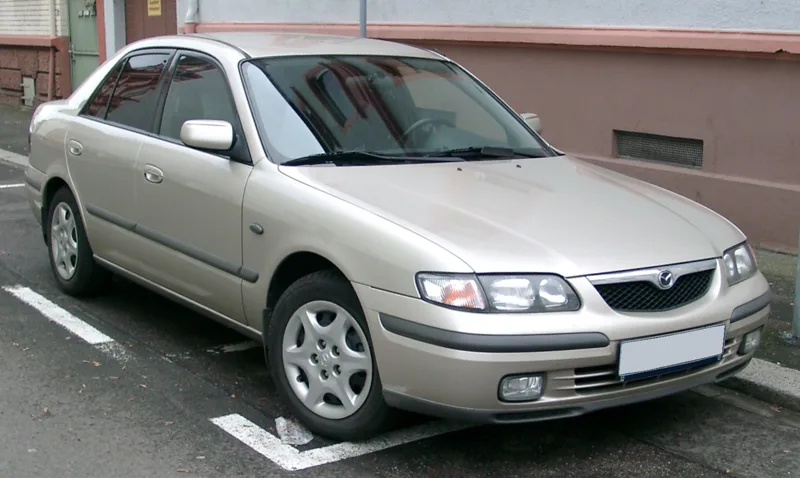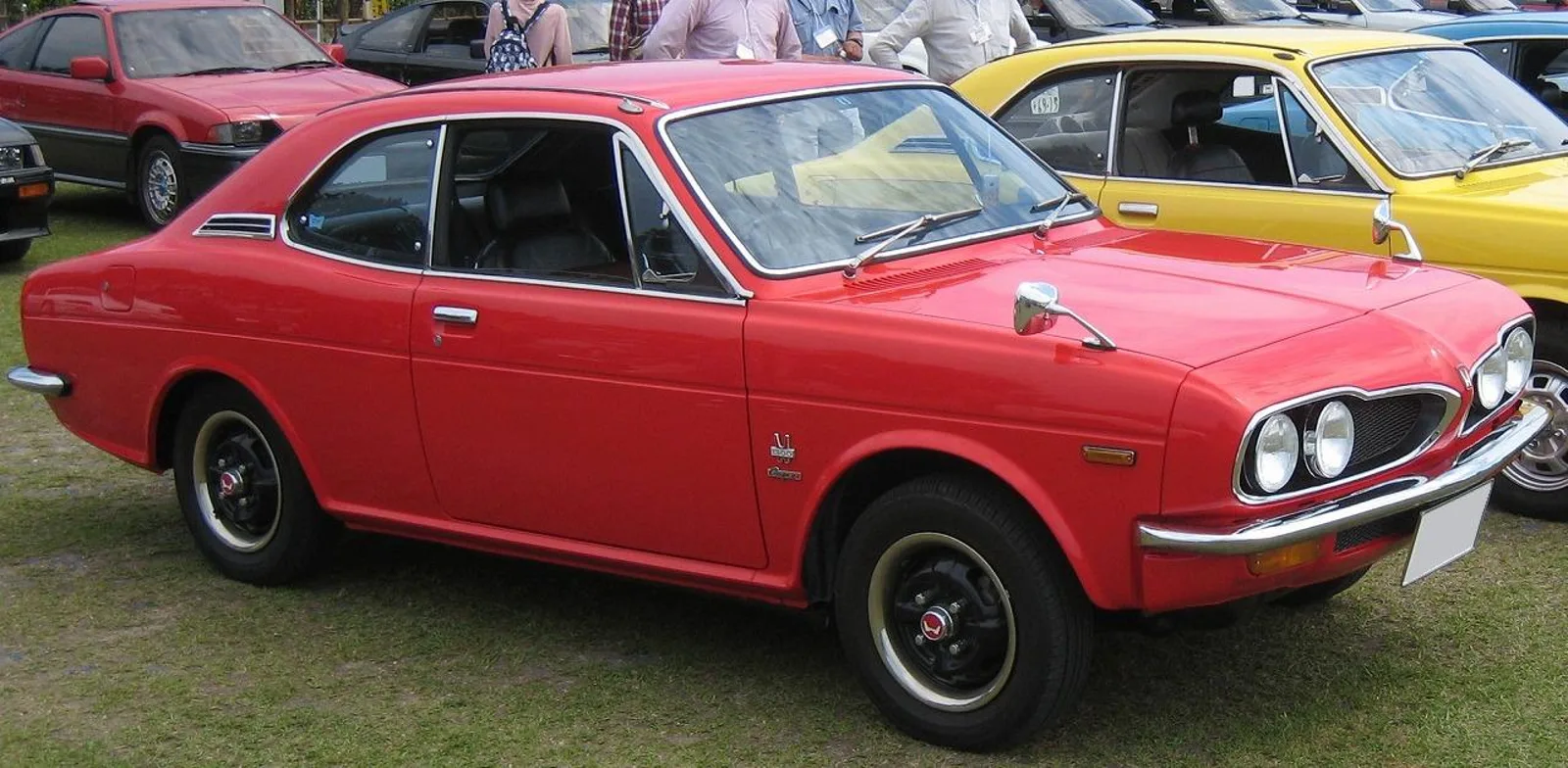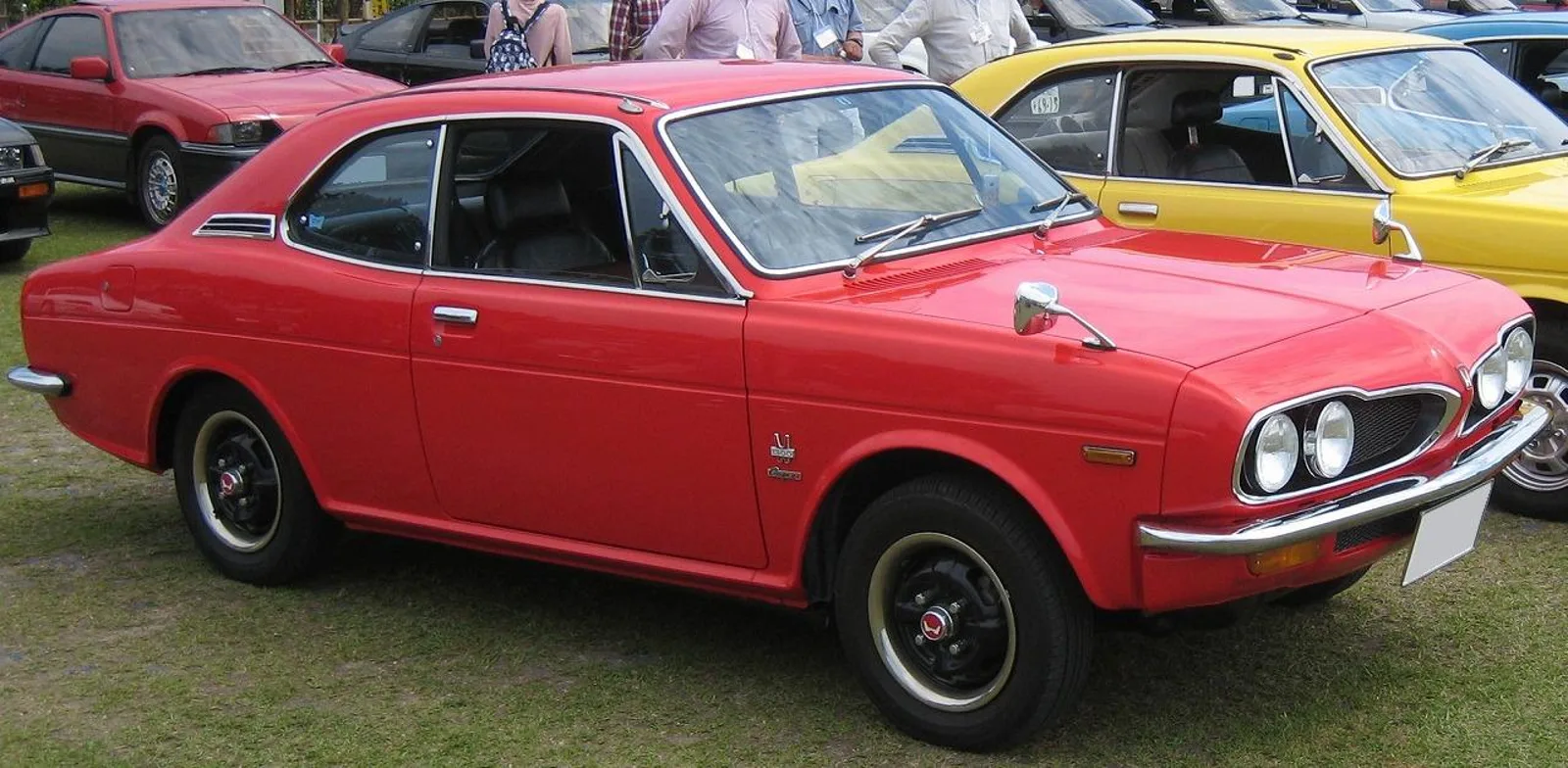
Honda's air-cooled 1300 was designed to beat rivals including the Nissan Bluebird, a nameplate that outlived it by more than half a century.
The Honda 1300 was a front-drive, air-cooled Honda sedan and coupe built from 1969 to 1972, designed to beat rivals including the Bluebird. The Nissan Bluebird was a compact family line that began in 1955 and was produced until 2007.
The Honda 1300 and the Nissan Bluebird were both Japanese family cars of the late 1960s and early 1970s. The Honda was an ambitious front-drive sedan and coupe with an air-cooled engine, built for a single short run. The Bluebird was a compact Nissan line that began in the 1950s and ran for decades. Honda built the 1300 to take on the Bluebird among others, which makes the two directly comparable.
Were the Honda 1300 and Nissan Bluebird rivals?
Yes. Honda intended the 1300 to compete primarily against other Japanese cars including the Bluebird, and the Bluebird was positioned to compete with the Toyota Corona from its launch.
Each car had a set of rivals in the same Japanese sedan market. The Corona was the Bluebird's traditional opponent, and the 1300 was built to take on the Corona, the Mazda Capella and the Mitsubishi Galant as well.
Their prices were also set in the same range. Six of the seven versions of the 1300 sat noticeably above the Toyota Corolla Deluxe, which put the Honda in the upper compact sedan price band.
Honda's air-cooled 1300 set out to beat the Bluebird, a nameplate that lasted from 1955 to 2007, while the 1300 itself was built for only a few years.
When did each car go on sale?
The Honda 1300 was introduced at the Tokyo Motor Show in October 1968 and went on sale in Japan in May 1969. It was produced until 1972, when it was facelifted and rebranded as the Honda 145.
The Bluebird was produced by Nissan between 1955 and 2007, with the model name introduced in 1957. Its family ran through dozens of generations, export names and taxi variants.
The two cars were therefore on sale together in Japan from 1969 to 1972. The Bluebird's history before and after that window is far longer than the 1300's entire life.
How were the two cars engineered?
The Honda 1300 was a front-wheel-drive car with an air-cooled SOHC engine that Honda named Duo Dyna Air Cooling. It used rack and pinion steering, front disc brakes and MacPherson struts at the front.
The Bluebird's roots lie in Datsun small cars of the 1930s and 1950s. The Datsun 110 series of 1955 used an 860 cc engine that produced 25 PS, and the A110 is the direct forerunner of the modern Bluebird line.
The Honda's engineering came with long delays. Constant changes of plan during development, sometimes made daily, held production back, and Soichiro Honda insisted the engine be air-cooled from the start.
What are the Honda 1300 and Nissan Bluebird specifications?
| Specification | Honda 1300 | Nissan Bluebird |
|---|---|---|
| Years | 1969 to 1972; Honda 145 to 1974 | 1955 to 2007; model name from 1957 |
| Layout | Front-wheel drive, air-cooled SOHC | Compact rear-drive family car in its early generations |
| Body styles | Sedan and coupe | Sedan, estate and coupe, with taxi variants |
| Launch engine | Series 77: 100 PS (74 kW; 99 hp) SAE, single carburettor | 988 cc, 34 PS in the 1957 four-door sedan |
| Top engine | Series 99: 115 PS (85 kW; 113 hp) SAE, four carburettors | not recorded for the 1969 to 1972 cars |
| Prices | 488,000 to 710,000 yen | not recorded |
| Export | Not sold in the US; 731 coupes in Australia | Sold as Datsun 510 and 180B; Stanza in the US in the 1980s |
| Production | Honda 145: 9,736 built | Not recorded in full |
| Successor | Honda 145, then the Accord | Altima in North America from 1992 |
How did the engines compare?
The 1300's air-cooled engine had two fans, one forcing cool air through the passages and one directing the hot air away. The engine was all aluminium, which added weight compared with a typical air-cooled design, but it benefited from cross-flow cooling.
The Series 77 used a single Keihin carburettor for 100 PS, while the Series 99 used four Keihin carburettors for 115 PS at 7,300 rpm. In December 1969 both were detuned to 95 PS and 110 PS.
The Bluebird's early engines were far more modest. The 1957 four-door had a 988 cc unit producing 34 PS, based on an Austin design, and Nissan's engineering ties with Austin shaped the early small cars.
How fast was the Honda 1300?
Honda's power claims were met with scepticism at first, but drivers reported that the engine would rev freely to an indicated 8,000 rpm. The factory claim of 17.2 seconds for a standing quarter mile was felt to be reasonable.
The engine was a dry-sump design with a pressurised oil system fed from a tank. Its electrical fuel pump was a novelty that later became common, and its wiring was duplicated, with a separate set on each side of the car.
The high-revving character and dry-sump layout made the engine suited to racing. The RSC built the mid-engined Honda R-1300, and a 1300 engine tuned to 135 PS powered the Carman-Apache at the 1969 Japan Grand Prix.
How did the Bluebird's export names work?
Export Bluebirds were originally sold as Datsun models named after their engine displacement, such as the Datsun 1000 and Datsun 1300. They were also sold as the Datsun 510 and the Datsun 180B.
By about 1982 the Bluebird name was showing up abroad, as Nissan replaced the Datsun brand. In the United States the Bluebird was sold as the Nissan Stanza in the 1980s.
In 1992 the next generation became the Nissan Altima in North America, which was the last Bluebird-line car sold there. In Europe between 1986 and 1990 the Bluebird was a rebadged Nissan Auster, and the Primera replaced it in 1990.
How did the Bluebird's 1950s roots take shape?
The Bluebird's ancestry runs through the Datsun 110 series of 1955, which was built to comply with Japanese dimension rules. Its engine stayed below 1000 cc to reduce the annual road tax, and it was also kept below 910 cc, the upper limit for small taxis.
The 110 series used mass-production techniques, unlike the hand-made cars of earlier years. Shozo Sato, Nissan's head of design, was behind the look, which took a 1956 industrial design award from the Mainichi Shimbun.
Early 110 and 112 models used the four-speed floor-mounted transmission from the Austin A40, while the later 113 received a column-shifted four-speed that was 10 kilograms lighter than the Austin unit.
Which car had the stronger coupe?
The Honda 1300's coupe was added in February 1970 as the Coupe7 and Coupe9, with a longer and sportier front end. The Coupe9 used the four-carburettor engine, while the Coupe7 used the single carburettor.
The Bluebird's sporting coupe history is not recorded for the early 1970s in this comparison, so its coupes can only be placed within the family's wider range.
The 1300's coupe was therefore its sporting highlight of the period, and it reached buyers for only a few years before the 145 replaced it.
How did Honda's and Nissan's markets differ?
Honda's US dealers pressed for the 1300 to be sold in America, but it was never sold there. Nor was there a sustained effort to sell it in Europe, and every 1300 built was right-hand drive.
The Bluebird reached far more markets, sold as Datsun in some and as Nissan in others. Its taxi role was an important part of its market, since every generation was available as a taxi.
The Honda's export reach was therefore narrow, and the Bluebird's wide. The 1300's market was largely Japan and Pacific-rim countries, while the Bluebird spanned several continents.
Which car sold more?
The 1300 was sold at a high price compared with its competition, which narrowed the number of buyers willing to pay for it.
The Honda 1300 sold a small volume. Australia took 731 coupes from 1969 to 1973, and the Honda 145 that followed sold 9,736 units before production ended in October 1974.
The Bluebird's sales are not recorded in full here, so a complete sales race cannot be called. The Bluebird's long production run from 1955 to 2007 suggests a far larger total.
The Honda 1300's total is therefore much smaller, and its career was short. The Bluebird's longevity was the main reason it outsold the Honda over time.
What replaced the Honda 1300 and the Bluebird's early cars?
The 1300 was facelifted and rebranded as the Honda 145 in October 1972, a car that was overshadowed by the Civic introduced four months earlier. The 145 ended production in October 1974, and its sedan was succeeded by the Accord.
The Bluebird's early cars gave way to a long line of generations. The Australian Bluebird ran from 1981 to 1985 and was replaced by the Pintara in 1986. Australia later brought its range into line with Japan, using the U13 series from 1993 to 1997.
The Honda's successors reached a different market, with the Accord and later the Prelude. The Bluebird's successors continued the family line with names that varied by region.
What did the 1300 teach Honda?
The 1300 was a turning point for Honda's operating structure, and after it the company moved to water-cooled Life and Civic models for its smaller cars.
The Civic, with a CVCC engine that met Japan's emissions law, earned Honda worldwide notice. Those who worked on the 1300 felt that its difficulties had shaped the company's later cars.
Which car suits which buyer?
The Honda 1300 suits a buyer who wanted an unusual front-drive Honda with an air-cooled engine and a coupe option, and who could accept a high price and a short career.
The Bluebird suits a buyer who wanted a compact Nissan with a long history, a range of body styles and a reputation for dependability and durability.
The figures do not settle which was the better car, because they were built with different aims and sold over different periods. The 1300 was the more technically ambitious, while the Bluebird was the more enduring.