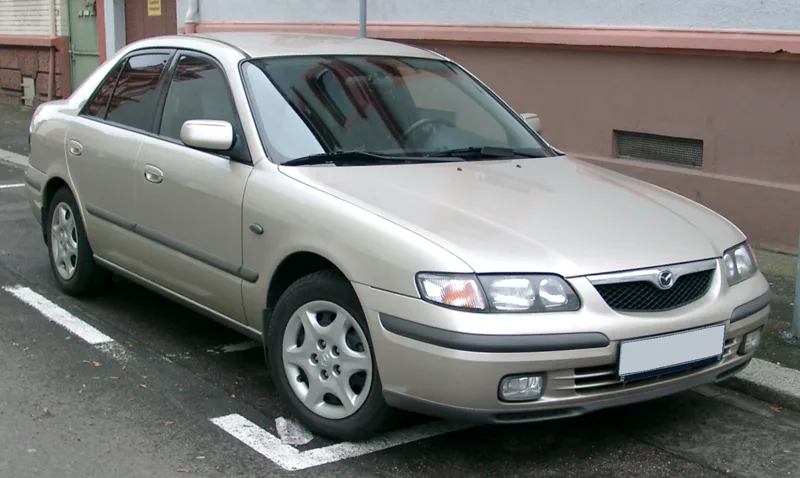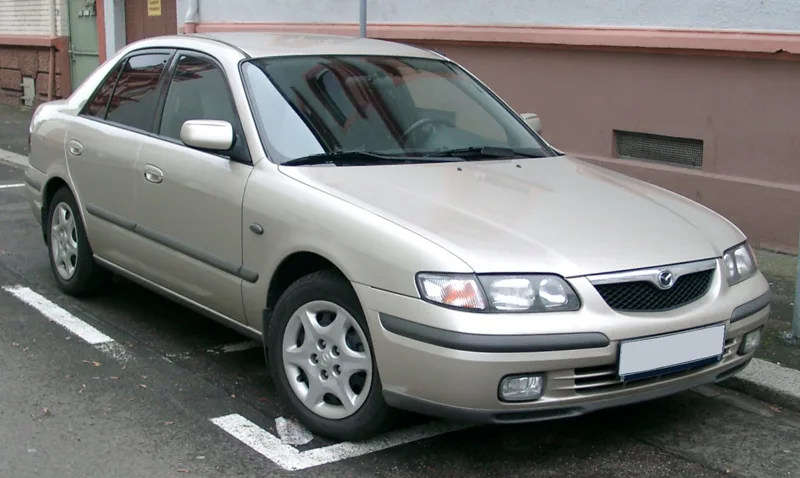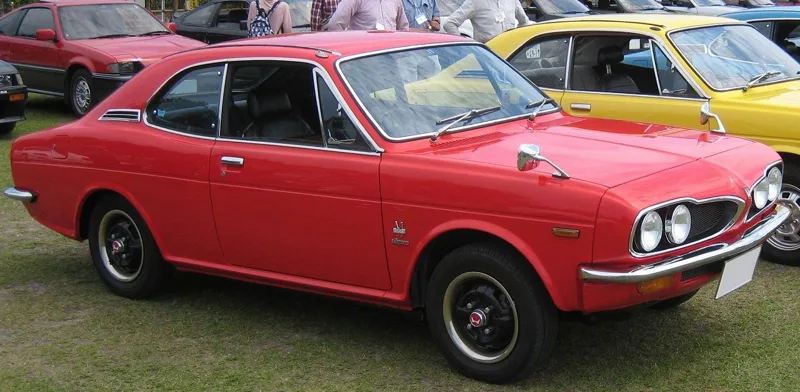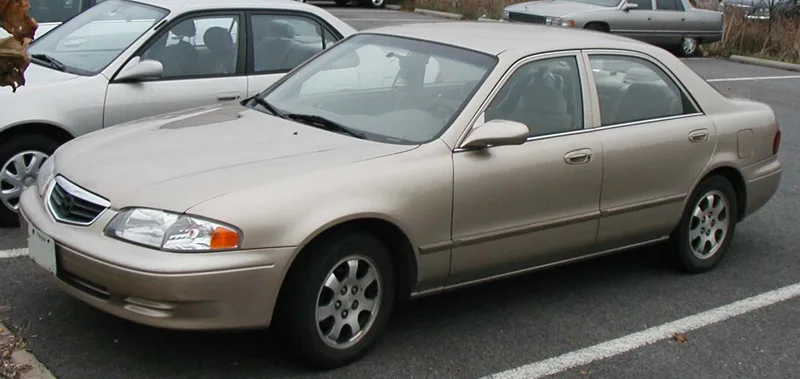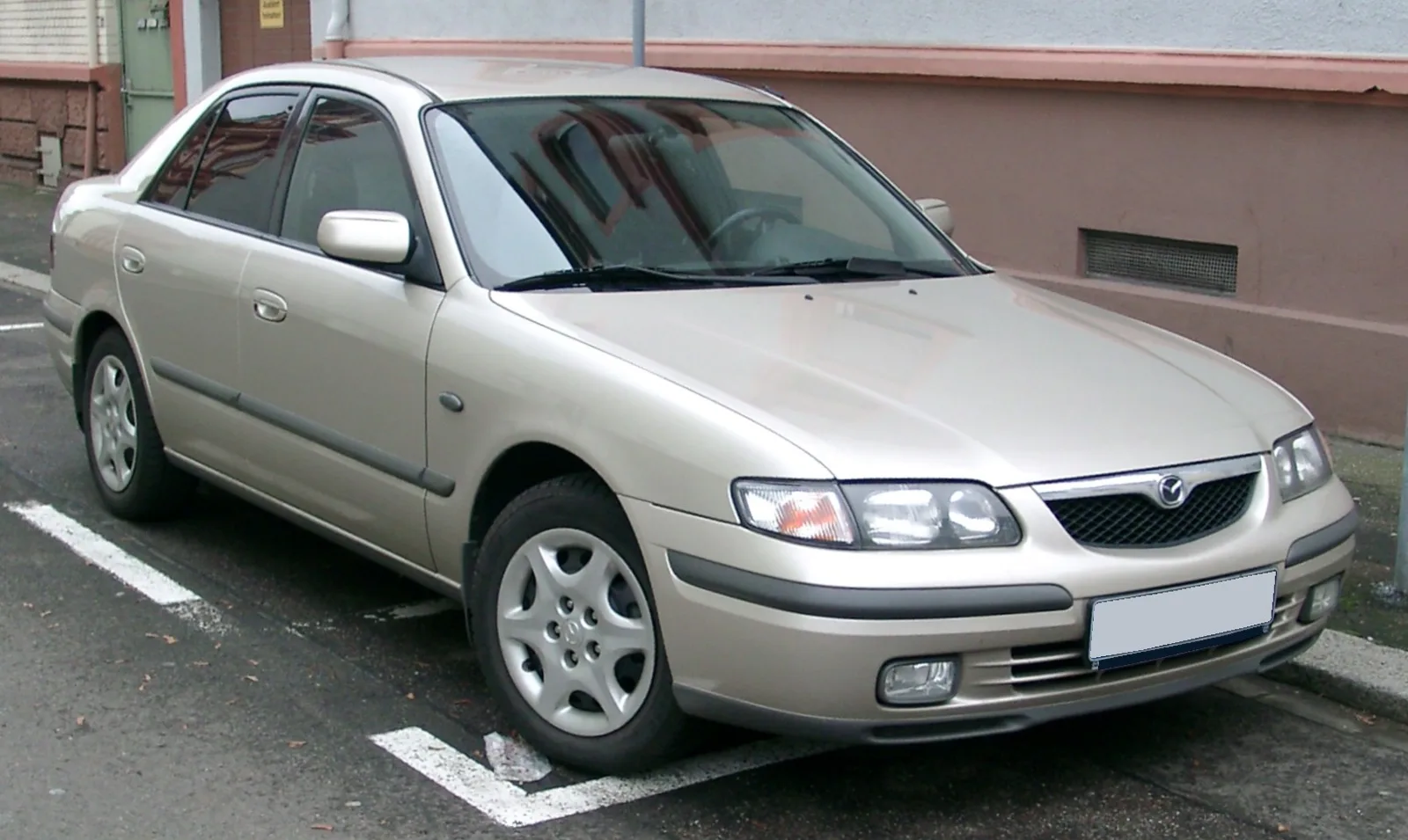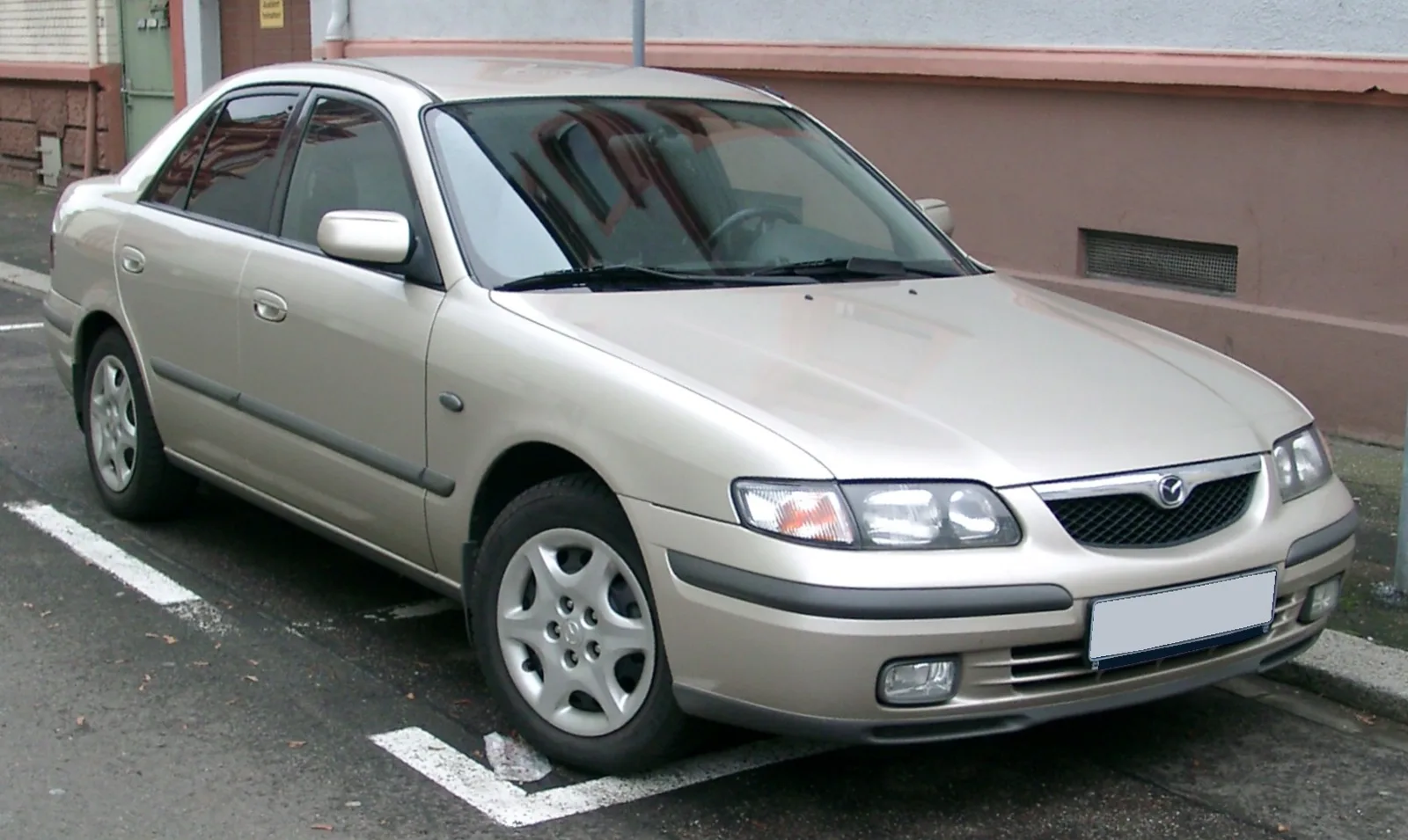
The Capella, sold as the 626 outside Japan, and Nissan's Bluebird, both designed to take on the Toyota Corona, compared on engines, body styles, markets and longevity.
The Mazda Capella, sold as the 626 abroad, was a mid-size car from 1970 to 2002. The Nissan Bluebird, named from 1957, was a compact car built from 1955 to 2007, and both were aimed at the Toyota Corona.
The Mazda Capella, sold as the 626 in Europe, North America and Southeast Asia, and the Nissan Bluebird were both Japanese mid-size or compact family cars that lasted for decades. The Capella ran from 1970 to 2002, while the Bluebird began in 1955 and stayed in production until 2007. Both were designed with the same rival in mind, the Toyota Corona.
This comparison covers origins, engines, body styles, export names, markets and longevity. Where a figure exists for only one car, the gap is shown rather than estimated, and metric figures come first with imperial values in brackets.
Were the 626 and Bluebird rivals?
Yes. The record says the Capella was designed to compete against Japanese mid-size stalwarts such as the Honda Accord, the Toyota Corona and the Nissan Bluebird. The Bluebird, for its part, was positioned against the Corona from the start, since the Corona was developed to continue offering a sedan used as a taxi.
Their life spans overlapped for many years. The Capella and the Bluebird were both on sale through the 1970s and 1980s, and the record describes the Bluebird as one of the longest-running nameplates from a Japanese automaker.
Two Japanese family cars built to beat the Corona, one a Mazda with a rotary option and the other a Nissan that kept the Bluebird name for decades.
How did the Capella begin?
Mazda placed the first Capella, introduced in May 1970, between the smaller Familia and the larger Luce. It was named after Capella, the brightest star in the constellation Auriga, and it was sold in export markets as the Mazda 616 in sedan and coupe configurations.
The Capella was powered by four-cylinder SOHC engines of 1.5 or 1.6 litres, producing 92 or 100 PS (68 or 74 kW). The 1.6 also gave 144 N m (106 lb ft) of torque, and an optional Wankel engine was offered as the Capella Rotary in Japan and the RX-2 for export.
The Capella's 1500 was added in October 1970, and in February 1974 the front end was lengthened by 110 mm. For the United States, the 1972 618 used a 1.8-litre (1796 cc) VB engine that was not used elsewhere.
How did the Bluebird begin?
The Bluebird's roots lie in the 110 series of 1955, which Nissan introduced within a month of the Toyota Crown RS series. The 110 used the D10 engine, an 860 cc water-cooled in-line four producing 25 PS (18 kW) at 4,000 rpm, and it was designed to meet Japan's dimension regulations of 1950.
The record also notes that Nissan ran an engineering relationship with the Austin Motor Company, and that its 1950s cars were built under licence from Austin designs.
Shozo Sato, Nissan's head of design, drew the car, and the Mainichi Shimbun gave it a 1956 industrial design prize. The name Bluebird appeared with the 210 series in 1957, on a 988 cc sedan of 34 PS (25 kW) whose engine was based on an Austin design.
The 210 series grew from the 110 series, which was smaller than the Prince Sedan of 1952 and the Subaru 1500 of 1955.
What engines did the two cars use?
The Capella's first engines were 1.5- and 1.6-litre fours, and in 1974 an optional 1.8-litre (1769 cc) engine arrived for some markets. In Japan the second-generation CB came with 1.6-, 1.8- and 2.0-litre engines producing 90, 100 and 110 PS JIS (66, 74 or 81 kW).
The Bluebird's engines in the range included the early 988 cc unit of 1957 and, in later years, the larger engines that Nissan shared across its models. The record does not give a full engine table for the Bluebird in the material, so the comparison is limited to the early and mid-period figures.
The 110 series engine had two crankshaft bearings and side valves, and its capacity of 860 cc was kept below 910 cc, the upper limit for small taxis of the time.
How did the rotary Capella compare?
The Capella's rotary variant was offered in Japan as the Capella Rotary and in export markets as the RX-2. In Japan, the rotary gave buyers a road tax advantage, since it provided more power without falling into the higher 1.5-litre tax bracket. The rotary was the only Capella generation to offer that engine in the material.
The RX-2 was assembled under contract in New Zealand from 1972, and in South Africa the rotary claimed 97 kW (132 PS; 130 hp). The Bluebird had no rotary variant in the material, so this part of the comparison is one-sided.
The Capella Rotary stayed on sale in South Africa until 1979, because Sigma chose the Colt Galant over the second-generation Capella there.
How did the body styles differ?
The second-generation Capella, the CB, came in sedan and coupe forms, and the third-generation GC added a five-door hatchback. The Bluebird was available as a sedan, a station wagon, a two-door coupe and a commercial van, with the 120 series sharing its platform.
Both makers used body styles to suit local markets. The Capella's second generation was sold as the Mazda Montrose in the United Kingdom, where the name honoured a local dealership in Montrose.
The 110 series included a station wagon with a horizontally split tailgate and a two-door cabriolet coach version, while the 120 series built on it offered a commercial van, a double cab truck and a pickup.
How were the names sold abroad?
The Bluebird was sold abroad under many names. Export versions were first sold as Datsun models named by engine displacement, such as the Datsun 1000 and Datsun 1300, and also as the Datsun 510, the Datsun 180B and the Datsun Bluebird. From about 1982, as Datsun was phased out, the Bluebird name began to appear on export models.
The Datsun Type 13 was the first car exported from Japan, with 44 vehicles sent to South Africa and Australia. The Type 14 followed in 1935 with a 722 cc side-valve engine.
The Capella's export identity was the 626, which was used in Europe, North America and Southeast Asia. The 626 badge replaced the earlier 616 in some markets, and in Asia Pacific Ford sold a Telstar version from 1983.
What were the Bluebird's later markets?
In Australia the Bluebird was used from 1981 to 1985, and it was replaced in 1986 by the Nissan Pintara. The Pintara was also rebadged as the Ford Corsair for Ford Australia, reviving a Ford UK nameplate last used in the 1960s.
The Bluebird's early history includes the Datsun Type 10, a 1929 small car limited to half a litre of displacement, which was replaced by the Type 11 in 1932.
In the United States the Bluebird was sold as a Datsun, and later as the Nissan Stanza in the 1980s. It also sold as the Datsun 510 for a time. In 1992 the next Bluebird became the Nissan Altima, the last Bluebird-line car sold in North America. In Europe between 1986 and 1990 the Bluebird was a rebadged Nissan Auster.
The Bluebird's Datsun roots
DAT had produced cars since 1914, but its profits in the 1920s depended on government subsidies for its large trucks. A 1930 ordinance let drivers use cars with engines up to 500 cc without a licence and taxed them at a lower rate, which led DAT to build a small car. It was called Datson, and later Datsun.
The 1932 Type 11 had the same engine displacement and external dimensions as an Austin Seven. The record says the exact relationship between the two cars is in dispute, and Herbert Austin imported a 1935 Datsun to examine but decided not to file a complaint. When the licence limit rose to 750 cc in 1933, Nissan answered with the Type 12, which had a larger 747 cc engine.
Side-by-side specifications
| Specification | Mazda 626 (Capella) | Nissan Bluebird |
|---|---|---|
| Introduced | May 1970 | 1955 (name from 1957) |
| Production end | 2002 | 2007 |
| Class | Mid-size car | Compact car |
| Early engine | 1.5 or 1.6 L four, 92 or 100 PS (68 or 74 kW) | 988 cc, 34 PS (25 kW) on the 1957 Bluebird; 860 cc D10 on the 110 series |
| Later engine | 1.8 L (1769 cc) from 1974; CB 1.6, 1.8 and 2.0 L | Not given in the material |
| Rotary | Capella Rotary in Japan; RX-2 export | None in the material |
| Body styles | Sedan, coupe, hatchback (GC) | Sedan, station wagon, coupe, van |
| Export names | 626; 616 and 618 in the US; Montrose in the UK | Datsun 1000, 1300, 510, 180B, 160B, 200B; Stanza; Altima |
| Sales | 4,345,279 of the 626 and Telstar | Not given |
| Rival | Honda Accord, Toyota Corona, Nissan Bluebird | Toyota Corona |
| Top speed | Not given | Not given |
| Successor | Mazda6 (Atenza) from 2002 | Not given in the material |
Which buyer suits each car?
On the figures available, the Capella suits a buyer who wanted a mid-size Mazda with a rotary option and a long run of generations. The Bluebird suits a buyer who wanted a Nissan compact with a long history, a range of export names and a taxi heritage.
Neither car is shown to be better overall, because the material gives different types of detail for each. The Capella has the stronger sales figure, while the Bluebird has the longer production history.
A buyer comparing the two today would find that the Capella's career ended with the Mazda6 in 2002, while the Bluebird continued until 2007.
What does the record leave open?
Several points are missing. The record gives no price for either car, no top speed for either, and no Bluebird sales total. The Bluebird's later engines are also not given in the material, so a full engine comparison cannot be made. The record also gives no sales total for the Bluebird across its run.