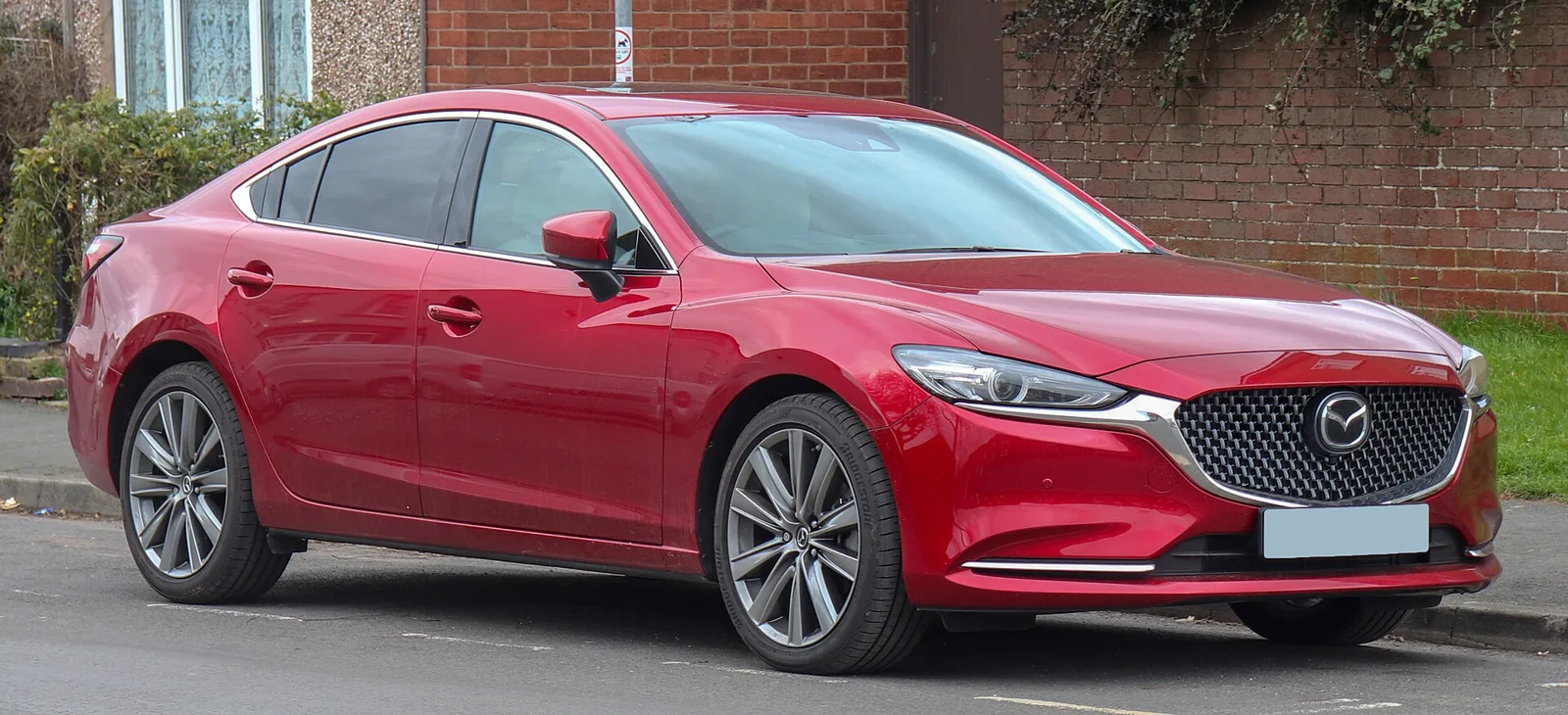
Sold as the Atenza in Japan, the Mazda6 replaced the 626, opened the 'Stylish, Insightful and Spirited' design range and ran until 2024.
The Mazda6 was a mid-size sedan produced by Mazda from 2002 to 2024, replacing the long-running Capella and 626. It was sold as the Atenza in Japan until 2019, and it was the first model in Mazda's Stylish, Insightful and Spirited design range.
Mazda's mid-size sedan was introduced in Japan as the Atenza in May 2002 and became the first car to carry the company's 'Stylish, Insightful and Spirited' design philosophy. It replaced the long-running Capella and 626, and it remained in production until 2024.
Over that run the car went through three generations, a high-performance Mazdaspeed6 and a range of regional variants. Each generation was built to suit a different set of markets, which is why the Mazda6's story is as much about regional choices as about one design.
Where did the Mazda6 come from?
The Mazda6 replaced the long-produced Capella and 626, and it was marketed as the first example of the company's design philosophy. The 2003 Mazda6 is essentially the seventh-generation 626, part of the G model code family.
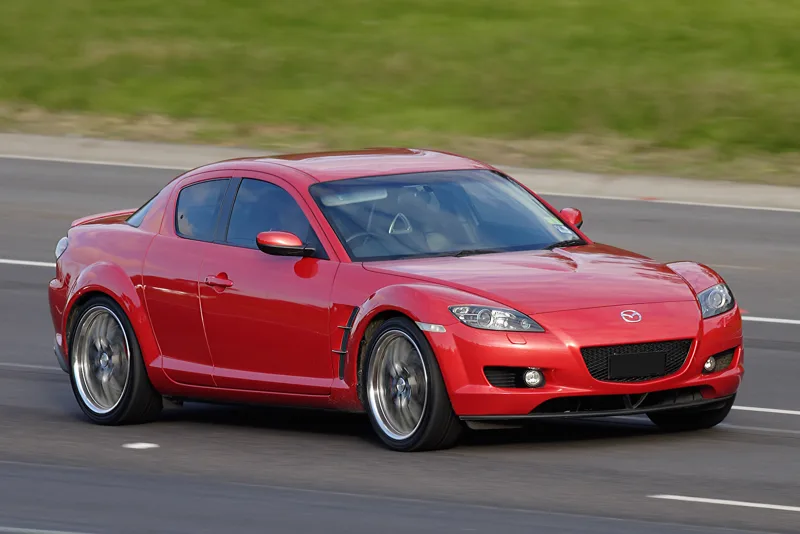
The philosophy then rolled out across the range. A small Mazda2 came at the end of 2002, the sporty RX-8 in mid 2003, and the Mazda3 early in 2004. The Mazda5 and MX-5 arrived in 2005, with the CX-7 closing out 2006.
The Japanese name Atenza comes from the Italian word attenzione, meaning attention. The car kept that name in Japan until 2019, when the Mazda6 name was adopted there as well.
A mid-size sedan that carried Mazda's design language into a long run and three distinct generations.
What body styles and engines did the first generation offer?
The first generation was sold as a four-door sedan, a four-door hatchback and a five-door wagon. In North America these were called the Sport Sedan, the 5-Door and the Sport Wagon, and the car first arrived there as a 2003 model.
Engines came from the MZR family, in 1.8, 2.0 and 2.3-litre sizes, and transmissions were a five-speed manual or a four-speed automatic with a sequential option. The US market also received a 3.0-litre Duratec 30 V6 with a five-speed manual or a five-speed automatic.
European and Australian versions could be fitted with a four-cylinder turbodiesel and a six-speed manual, which produced significantly more torque than the V6 and delivered much better fuel economy. The turbodiesel made the car attractive in those markets.
Front-wheel drive was standard in most markets, but full-time all-wheel drive was available in Japan, Europe and Australia. That choice meant the car could be ordered for more demanding conditions.
How was the first-generation Mazda6 built?
The Hofu plant in Yamaguchi Prefecture built Mazda6 models for overseas markets between February 2002 and August 2007. The first Mazda6 built at AutoAlliance International in Flat Rock, Michigan, rolled off the line on October 1, 2002, one month after 626 production ended.
Satellite plants in China and Thailand also built the Mazda6 for local markets. The Chinese programme was handled by FAW Mazda, which introduced the car in 2003 and built it at the Changchun plant.
The September 2005 facelift was the main update of this generation. It introduced a five-speed automatic and a six-speed manual, together with standard 16- or 17-inch alloy wheels and minor bodywork changes.
In China the car was known locally as the Maliu, a name that means Horse 6. More than 770,000 units were sold there by 2014, and the car remained in production at FAW's Changchun plant for years after its successors arrived.
What was the Mazdaspeed6?
The 2006 Mazdaspeed6 was a high-performance version of the first-generation Mazda6. It was known as the Mazdaspeed Atenza in Japan and the Mazda6 MPS in Europe, South Africa and Australia, and it was first shown as a concept at the 2002 Paris Motor Show.
The car used a turbocharged 2.3-litre MZR inline-four producing 272 PS (200 kW). The European version was detuned to 260 PS (191 kW) to meet stricter emissions standards, while the North American version started at 274 hp (204 kW) and was revised to 270 hp (201 kW) for 2007.
Every version had 280 lb-ft (380 N.m) of torque and a six-speed manual transmission. The all-wheel-drive system used Mazda's Active Torque Split control, which could route between a 100/0 and a 50/50 front-to-rear split depending on conditions.
The launch was originally scheduled for June 2005 but slipped to November. The car received generally positive reviews, with critics praising its impressive power and handling.
How did the second generation arrive?
The second-generation Mazda6 premiered at the 2007 Frankfurt Motor Show in September. It was based on a modified version of the first-generation chassis, which Ford also used as its CD3 platform.
Mazda kept three body styles, a four-door saloon, a five-door hatchback and a wagon. Reviewers noticed that the electrically assisted steering was considerably better than the previous generation, providing more feedback to the driver.
The hatchback's cargo area beat the larger Ford Mondeo and the Opel Insignia hatchback by 200 litres with the rear seats folded down. What Car? magazine named the model its 2010 Family Car of the Year.
How did the North American Mazda6 differ?
For the 2009 model year the North American car was redesigned, and the wagon and hatchback were discontinued there. It was a widened and lengthened version of the car sold elsewhere, and it used larger engines, including a new 2.5-litre four-cylinder and a 3.7-litre V6 shared with the CX-9.
Motor Trend recorded a 0-60 mph time of 6.1 seconds for the V6. Mazda maintained that its car still drove more sportily than rivals such as the Honda Accord, the Toyota Camry and the Chevrolet Malibu, despite the larger dimensions.
Only a sedan was sold in America, and the Mazdaspeed6 variant was never offered there. The Middle East sold a version known as the Mazda6 Ultra alongside the Japanese model.
Why were there recalls on the Mazda6?
In March 2011 about 50,000 Mazda6 vehicles from the 2009 and 2010 model years were recalled in the United States. Roughly 15,000 more cars in Canada, Mexico and Puerto Rico were added to the campaign. Yellow Sac Spiders had been building nests in the fuel line of those cars.
Media reports first suggested that the fuel vapour was strong enough to attract the spiders, but the cause was later traced to the material of the fuel line itself. Mazda reissued the recall in April 2014 for all 2010 to 2013 Mazda6 cars with 2.5-litre engines.
A larger recall in China covered over 680,000 Mazdas, including Mazda6 models made between September 2008 and January 2016, because of faulty airbags. An earlier episode in China affected 280,000 Mazda6 cars built from 2003 to 2008, with a comparable airbag fault.
Where was the second generation built?
The last Mazda6 rolled off the line at Flat Rock on Friday, August 24, 2012. That ended production on American soil and closed a 20-year joint venture between Mazda and Ford.
Mazda moved the North American production of the Mazda6 back to its Hofu factory in Japan, where it had already been building the car for international markets.
What motorsport did the Mazda6 enter?
Mazda won its first manufacturers championship in the Touring Car class in 2007. In 2009 it finished second in the manufacturers' championship with 65 points, behind Acura.
The Mazda6 was also used in the KONI Challenge Series Sport Touring class. Baglieracing last ran the car in that series in 2008, with Dennis Baglier, Chris Gleason and Marty Luffy as drivers.
A NASCAR Corona Series stock car also carried the Mazda6 name. In 2013 three Mazda6 cars raced in the short-lived Grand-Am GX class in the Rolex Sports Car Series, and that class folded after a single season.
What awards did the Mazda6 win?
The Mazda6 took second place in the 2003 European Car of the Year contest, and Car and Driver included it in its Ten Best list for 2003. Canadian Car of the Year awards went to the Sport Wagon and the Sport sedan in different categories.
In Australia the car won the Best Mid-size Car over $28,000 title in 2002 and 2003. Its placings then slipped, with second in 2004 behind the Subaru Liberty and fifth in 2005 after the Honda Accord Euro took first place.
MotorWeek gave the model its Best Family Sedan award in its 2009 Driver's Choice Awards, and What Car? gave the estate its Best Estate award in 2004.
What did critics say about the Mazda6?
Critics praised the car's edgy design and communicative steering. They also found the suspension tight, but they criticised its smaller passenger space compared with North American rivals.
Acceleration, particularly in V6 models, lagged behind the competition. The hatchback's liftback styling was considered a clever way to disguise it as a four-door saloon.
The hatchback had some success in Canada, especially in Quebec, but it did not get a 2009 refresh. Both the hatchback and the wagon were unpopular in the US, which limited their appeal.
What did the third-generation Mazda6 look like?
The third-generation sedan was unveiled at the Moscow International Automobile Salon on 29 August 2012. The station wagon followed at the 2012 Paris Motor Show, and the car was available only as a four-door sedan or a five-door estate.
Its design was previewed by two concepts, the Takeri shown at the 2011 Tokyo Motor Show and the Shinari from 2010. The third generation was also a finalist for the 2013 World Design of the Year title.
What are the Mazda6 specifications?
The table gathers the core figures across the Mazda6's generations, the Mazdaspeed6, the recall history and production milestones. Imperial figures appear in brackets alongside metric ones wherever the original data gives both, and every entry matches the figures set out earlier.
| Specification | Detail |
|---|---|
| Production years | 2002 to 2024 |
| Japanese name | Atenza until 2019 |
| First generation launch | May 2002, Japan |
| Hofu production | February 2002 to August 2007 |
| Mazdaspeed6 engine | 2.3 L MZR turbocharged inline-four |
| Mazdaspeed6 power | 272 PS (200 kW), European 260 PS (191 kW) |
| Mazdaspeed6 torque | 280 lb-ft (380 N.m) |
| Second generation premiere | 2007 Frankfurt Motor Show |
| North American V6 (2009 on) | 3.7-litre, shared with the CX-9 |
| 2011 US recall | about 50,000 vehicles |
| China Maliu sales | more than 770,000 units by 2014 |
| Third generation sedan | unveiled 29 August 2012 |
The table shows a car whose engines and markets varied widely, from the turbocharged Mazdaspeed6 to the regional diesels and the Chinese Maliu.
Frequently asked questions
When did the Mazda6 go out of production?
The Mazda6 ended production in 2024, after a run that began in 2002 and covered three generations of cars across several regions. Its Japanese name, Atenza, stayed in use until 2019.
Did the Mazda6 have a V6 in the United States?
Yes. The first generation offered a 3.0-litre Duratec V6, which was sold with either manual or automatic gearboxes, the automatic with a sequential option. The second generation's North American version used a 3.7-litre V6 shared with the CX-9, which gave American buyers a stronger engine than the four-cylinder choice.
What was the Maliu?
The Maliu was the Chinese name for the first-generation Mazda6, built by FAW Mazda at its Changchun plant. The name means Horse 6. The car also served as the base for the Bestune B70, a model that extended the first generation's life in China.
Which Mazda6 won a family car award?
The second-generation Mazda6 won the 2010 Family Car of the Year award from What Car? magazine. That result came during the car's first full years on sale in its second-generation form, and it added to the model's awards record in Europe.