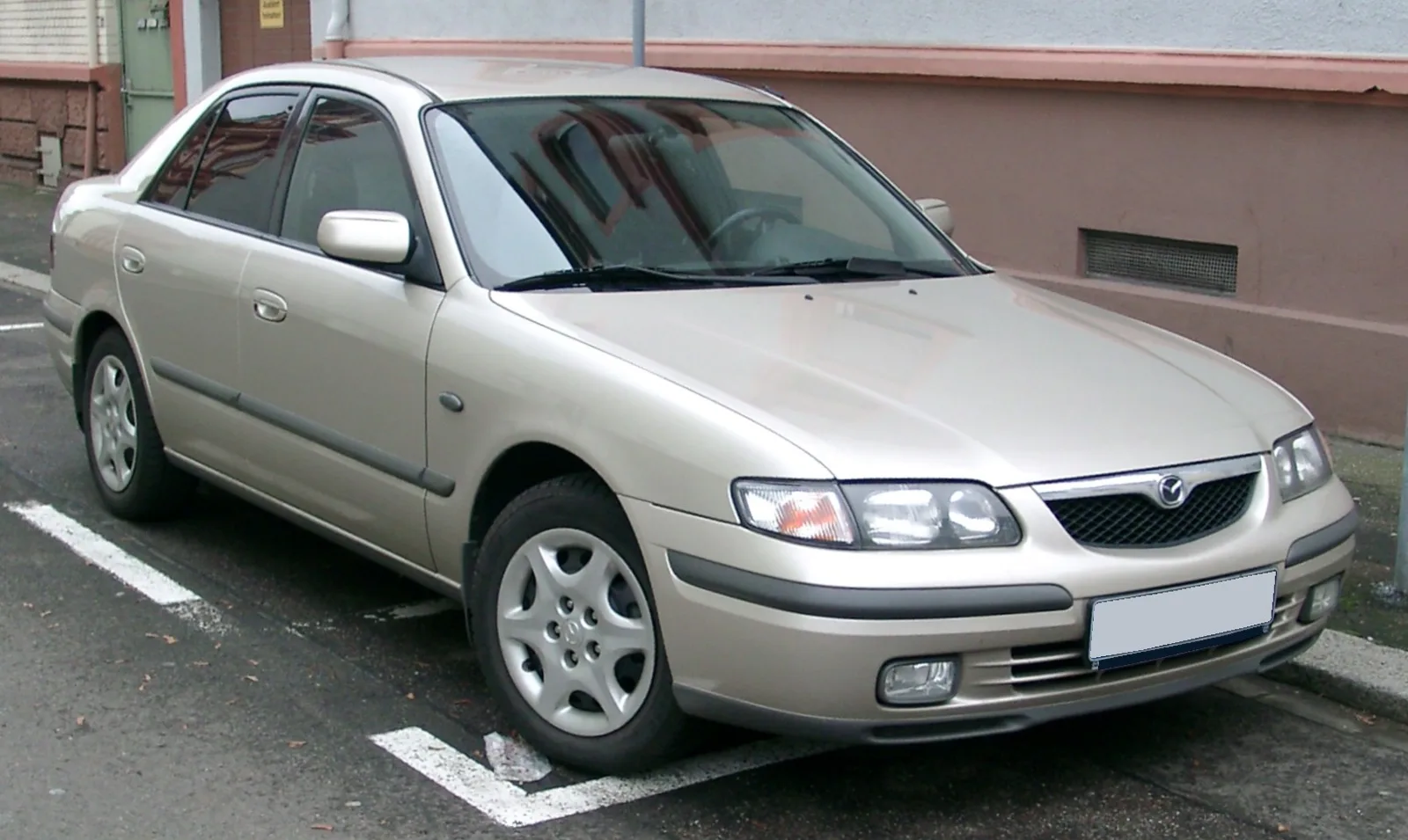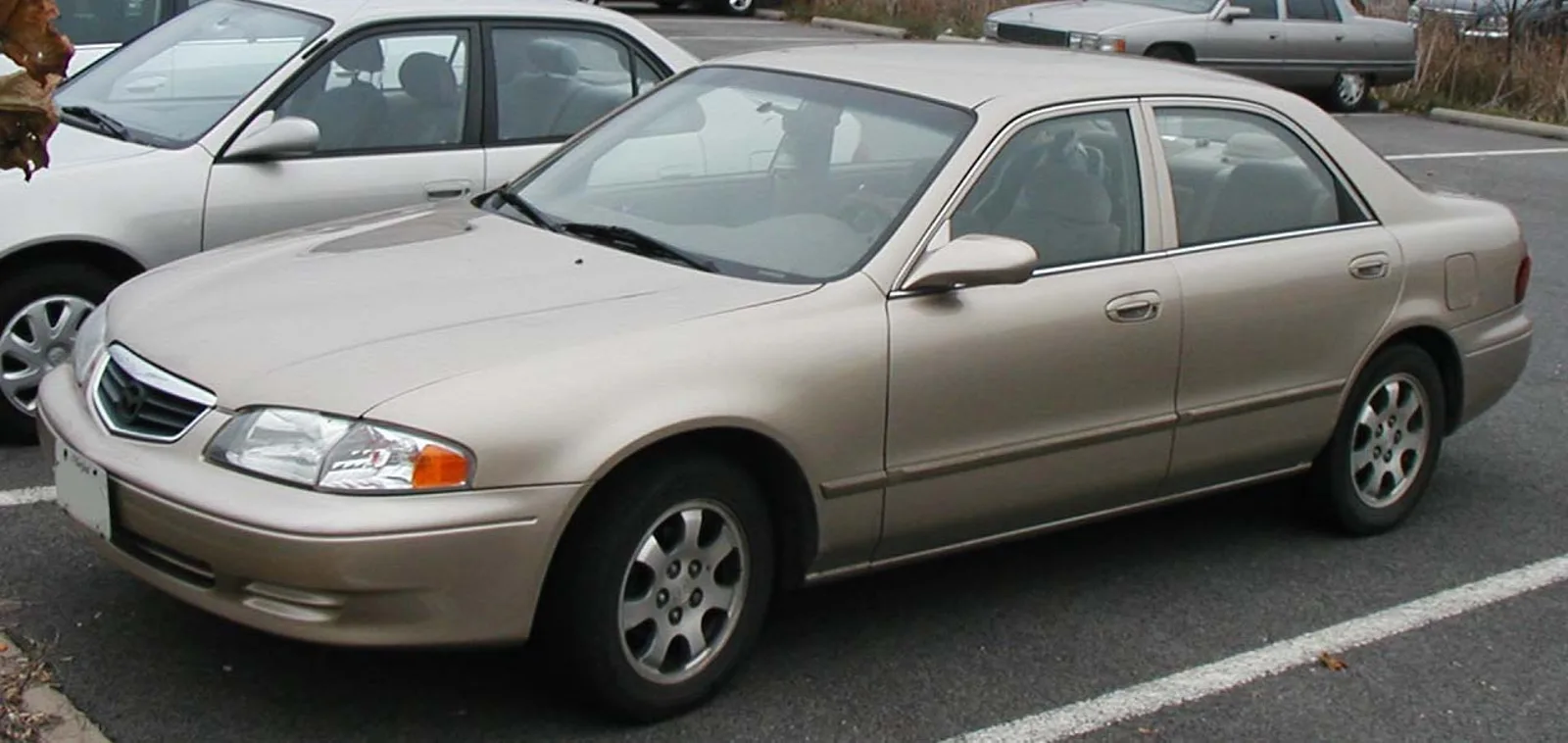
Mazda's mid-size car ran from 1970 to 2002 under the Capella and 626 names, with rotary, diesel, turbo and V6 versions along the way.
The Mazda 626, called the Capella in Japan, was a mid-size car that Mazda built from 1970 until 2002. Ford shared its platform for the Telstar and Probe, and 4,345,279 626 and Telstar models were sold worldwide before the Mazda6 took over.
Mazda's mid-size car arrived as the Capella in 1970 and carried the 626 name in most export markets until 2002. It was a rear-wheel drive car in its early life and became front-wheel drive from its third generation. Along the way it spawned rotary, diesel, turbo and V6 versions, and Ford sold a sibling on the same platform.
Where did the Capella come from?
The Capella was introduced as an intermediate option between the smaller Familia and the larger Luce. It took its name from Capella, the brightest star in the constellation Auriga. Mazda built the car from 1970 until 2002, when it finally gave way to the Mazda6.
Mazda designed the car to compete with mid-size Japanese stalwarts such as the Honda Accord, the Toyota Corona and the Nissan Bluebird. In its early years the export version was known as the Mazda 616 in sedan form.
Ford, which was Mazda's partner at the time, used the Capella platform for its own models. Those were the Ford Telstar and the Ford Probe, and the platform formed the basis of a family of cars across two brands.
A mid-size Mazda that began as a rotary-engined Capella and ended as a six-generation 626 with a V6 option.
What did the first-generation Capella offer?
The first Capella was introduced in May 1970 and remained on sale until 1978. Its four-cylinder SOHC engines displaced 1.5 or 1.6 litres, producing 92 or 100 PS (68 or 74 kW) respectively, with 144 N m (106 lb ft) of torque on the larger version.
Rotary-engined models received round twin headlamps from October 1971, and all models adopted double headlamps from 1972. The taillight design changed repeatedly over the production run, so spotting a particular year takes some care.
An optional Wankel rotary engine was offered and sold as the Capella Rotary in Japan or the RX-2 for export. The rotary gave Japanese buyers a tax advantage, because the car was more powerful than a traditional inline engine yet stayed out of the higher 1.5-litre tax bracket.
How did the first generation reach the United States?
The Mazda 616 was a major part of Mazda's United States expansion in 1971, after its rotary sibling, the RX-2, had arrived the year before. The 616 used the 1.6-litre engine that later appeared in the 808, and the car was updated and renamed for 1972.
The 1972 Mazda 618 carried a larger 1.8-litre engine. That unit was used only in the US and was unrelated to the similarly sized engine used in the rest of the world. The 618 nameplate lasted just one year, and the only federalized Capella for 1973 was the RX-2.
The RX-2 was also assembled under contract in New Zealand from 1972. It was the first and only rotary-engined car built in that country, and it came as a sedan with manual or automatic transmission and a manual-only coupe.
What changed in the second generation?
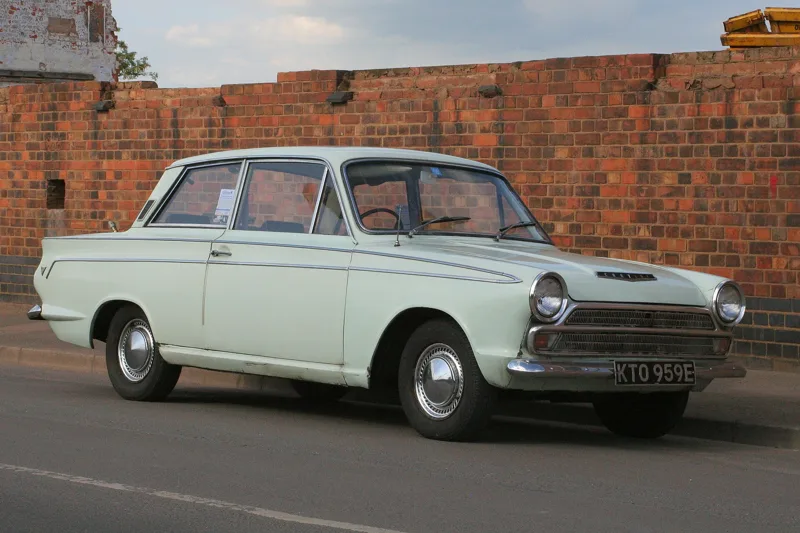
The second-generation Capella was a rear-wheel drive car sold between October 1977 and 1982, in sedan and coupe forms. In export markets it became the 626, while in the United Kingdom it was sold as the Mazda Montrose. The Montrose was named after a local Mazda dealership and offered as an alternative to the Ford Cortina.
The car was released in 1978, although most markets did not get it until 1979. Early models had two slightly different front treatments. Those with 1.6 or 1.8-litre engines had a more pronounced sloping grille, while the 2-litre models had a flusher one.
A front and rear facelift in September 1980 applied to the rest of Europe, while the Montrose kept its styling in the UK. This generation achieved a Cx value of 0.38, and it proved particularly popular in Germany.
How did the second generation's mechanicals work?
The coupe and sedan were mechanically identical. They used front MacPherson struts, while the rear was a coil-sprung solid axle on four links with a transverse Panhard rod. A five-speed manual or three-speed automatic transmission was fitted, and the steering was recirculating ball.
Japanese cars used twin-barrel carburettors on engines of 1.6, 1.8 and 2.0 litres, rated at 66, 74 or 81 kW depending on size. Most 626s used the Mazda F/MA engine family, and only the 2.0-litre was offered in the United States.
A November 1980 facelift brought flush-fitting headlamps and a new grille insert. The grille was lengthened a little and made shallower, so that it and the headlamps read as one band.
What did the Australian and American second generation look like?
In Australia the CB series launched in December 1978 with a 2.0-litre engine producing 63 kW (84 hp) from an inline-four. It came as a four-door sedan in three trims and as a two-door Super Deluxe hardtop, with transmission choices of four or five-speed manual or three-speed automatic.
In the United States the facelift arrived for the 1981 model year, bringing more black trim and a new grille and headlights. Emissions equipment, including two catalytic converters and an air pump, robbed the 2.0 four of some power. The 1981 range also gained a Luxury model with ample equipment.
What made the third generation different?
In September 1982 the third-generation Capella arrived on the new front-wheel-drive Mazda GC platform. It was the 626 in international markets, and the car won Import Car of the Year from Motor Trend. It also took the Car of the Year Japan award in 1982, and Wheels magazine named it Car of the Year for 1983.
The car placed fifth in the 1984 European Car of the Year contest, the best showing for a Japanese car until then. It sold very well across Europe straight away. Sedan and coupe bodystyles continued, and a five-door hatchback was added because of demand.
The rear suspension was now independent, so although the wheelbase stayed the same as before, the car was effectively new. The power window controls moved to the centre console, ahead of the gear selector, rather than sitting on the doors.
What engines did the third generation use?
Inline-four engines of 1.6, 1.8 and 2.0 litres were offered, and the 2.0-litre was also available with a turbo producing 145 PS (107 kW). A 2.0-litre diesel was added in September 1983 for the European market and beyond.
In North America the 2.0-litre FE engine produced up to 83 hp (62 kW), and the car received larger bumpers and sealed-beam headlights to meet federal regulations. A 626 GT, known as the Turbo in Canada, arrived in 1986 with 120 hp (89 kW) and 150 lb ft (203 N m).
The base engine in 1986 used fuel injection and produced 93 hp (69 kW). A four-speed automatic, some trim changes and five new colours came for 1987, which was the last model year of the series.
How did the Ford Telstar and Sierra fit in?
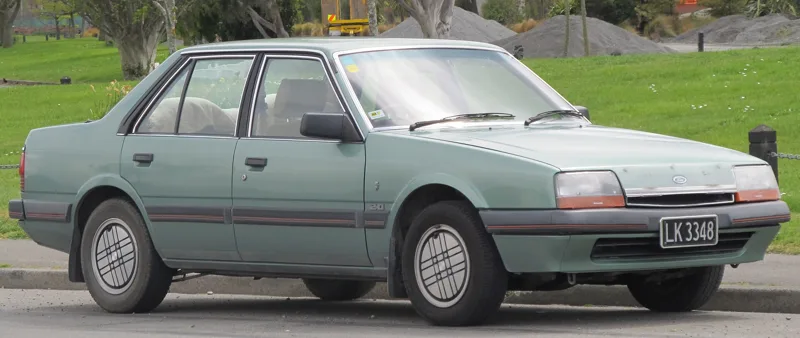
From 1983 Ford's Asia Pacific arm sold a Telstar version of the 626, with its own styling and dashboard. It replaced the European-sourced Ford Sierra in that market, although Ford New Zealand offered the Sierra wagon after the Cortina estate was discontinued.
The Sierra wagon was released in May 1984 in 1.6 and 2.0-litre versions. In New Zealand, Mazda assembled sedans and five-door models, while the Telstar line carried the same engineering with a wagon and no coupe.
What did the fourth generation bring?
The fourth-generation Capella was released in May 1987 on the updated GD platform. Engines were new, although they still emphasised torque rather than outright power. The GT model used a 2.0-litre FE-DOHC engine, rated 148 PS without a catalytic converter and 140 PS with one.
Some models used a 2.0 diesel with a pressure-wave supercharger, known as the Comprex, which had previously appeared in the Mazda Bongo commercial. In the United States the 626 arrived for the 1988 model year in DX, LX and Turbo trims, with a fuel-injected 2.2-litre SOHC four as standard.
The coupe was renamed MX-6 for North America and Australia, and the station wagon arrived in the northern spring of 1988 on the related GV platform. Four-wheel drive came in July 1987 for some versions, but was never offered on the coupe or in North America.
Why did the MX-6 and Probe share a plant?
The MX-6 came out of AutoAlliance International in Michigan, sharing its line with the Ford Probe. North American 626s were still imported from Japan at that stage. The base model used a 110 hp (82 kW), 2.2-litre SOHC engine, and the new turbo was rated at 145 hp (108 kW).
Four-wheel steering arrived on the 626 Turbo liftback in 1988, marking the first four-wheel steering system for the US market. The 626 also gained motorised seat belts for the American market in 1990, and consumer response was strong.
What did the fifth generation change?
For the fifth generation, the GE series sedan and hatchback dropped the Capella name, although export markets kept the 626 title. In Japan the sedan and hatchback were sold as the Mazda Cronos and the Efini MS-6, both launched in November 1991 and both slightly narrower than the export cars.
Mazda was at the start of an expansion plan to double sales through five brands. The GE platform spawned five cars, including the Ford Telstar, the MX-6 coupe and the Autozam Clef, launched under four brands in Japan over two years. Most of them ended production early as the Japanese economy slowed.
European sales of the new 626 began in January 1992, and the car won Wheels Car of the Year for a second time in 1992. The export models differed from North American versions in several details, including headlamps and fog lights.
How was the fifth-generation car built in the United States?
Mazda's first US-built car of this kind was the 626, which began production at Flat Rock, Michigan, on 1 September 1992 for the 1993 model year. Mazda's 2.5-litre V6 debuted to strong reviews, and the 1994 four-cylinder cars used the Ford CD4E automatic transmission.
The CD4E was built at Batavia, Ohio, in a joint venture between Ford and ZF Friedrichshafen. It had a reputed higher failure rate in the 626, and Mazda issued several technical service bulletins for it. The transmission was produced until 2008 and was never officially recalled in any application.
A passenger-side airbag was added in 1994. For 1996 and 1997 the cars received a redesigned hood and a chrome grille fairing, along with the OBD-II diagnostics revision.
What was the Japanese CG Capella?
The Capella label had been used only for the GV wagon and van until the new CG series launched in August 1994. It sat on a platform first designed for the upscale Mazda Lantis and Eunos 500, and it came only as a four-door saloon.
Its engines were a 1.8-litre and a 2.0-litre inline-four. The CG made 85 kW (115 PS) in 1.8 form and 92 kW (125 PS) in the 2.0-litre, and four-wheel drive came only with the larger engine. The reduced width was a response to Japanese tax rules, which taxed exterior dimensions and engine size.
In August 1997 the Capella was replaced by the GF model, which matched the 626 sold outside North America.
What was the sixth generation?
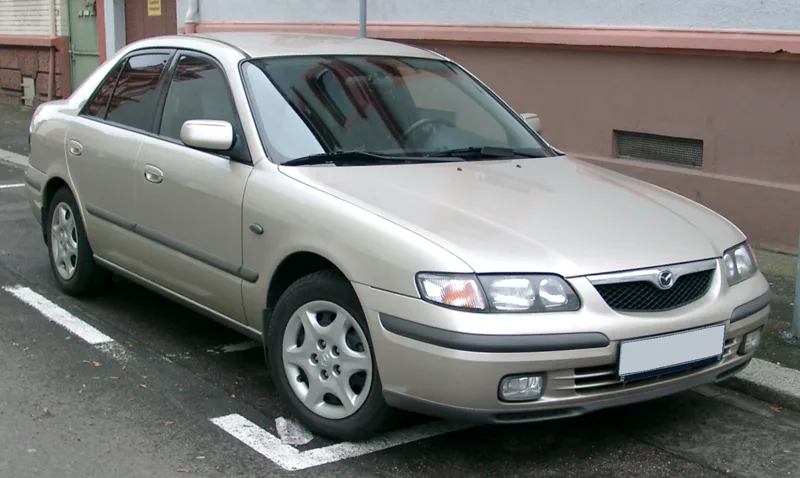
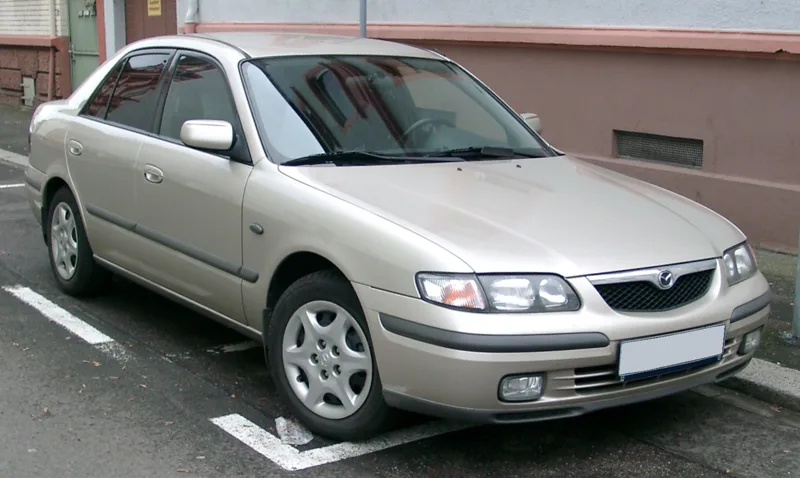
The sixth generation arrived in 1997 on the GF platform. The Cronos name was dropped, and the Capella, 626 and Telstar went back to a shared platform. All-wheel drive was optional in Japan, and the hatchback was popular in Australasia and Europe but was not sold in Japan.
The station wagon returned on the slightly modified GW platform in 1998. Its wheelbase was 60 mm (2.4 in) longer than the sedan's, and a V6 engine was offered. Ford was by then bringing European models to Australasia, and the Mondeo took over from the Telstar in most markets.
A light 1999 update refreshed the inside and outside, added cabin air filtration and a turbo-diesel, and introduced an Activematic automatic with optional EBD and DSC. In 2000 Mazda showed the 626 MPS concept at the Geneva Motor Show, but the car was never produced.
How did the North American sixth-generation 626 compare?
The North American car, introduced in 1997 for the 1998 model year, was different from the car sold elsewhere. Built at Flat Rock, it looked like its predecessor but lacked the edge of the export car. It was also much bigger and heavier.
LX and ES models were offered with 2.0-litre and 2.5-litre V6 engines. Unusually, the V6 could be had with a manual transmission. Reviewers found the car bland, and Edmunds said it was too small for families and too tame for enthusiasts.
Front side airbags became optional for 2000, along with larger wheels, four-wheel discs and rear heat ducts. The final 626 rolled off the Flat Rock line on 30 August 2002.
What are the Mazda 626 specifications?
| Specification | Detail |
|---|---|
| First introduction | May 1970 as the Capella |
| First-generation engines | 1.5 or 1.6-litre SOHC four; 92 or 100 PS (68 or 74 kW) |
| First-generation torque | 144 N m (106 lb ft) on the larger engine |
| Japanese second-generation power | 90, 100 and 110 PS JIS (66, 74 or 81 kW) |
| Australian 2.0-litre | 63 kW (84 hp) inline-four |
| Third-generation turbo | 145 PS (107 kW) |
| US fourth-generation base | 2.2-litre SOHC four, 110 hp (82 kW) |
| Japanese CG power | 115 PS (85 kW) in 1.8 form; 125 PS (92 kW) in 2.0-litre |
| Sales worldwide | 4,345,279 626 and Telstar models |
| Last car built | Flat Rock, Michigan, 30 August 2002 |