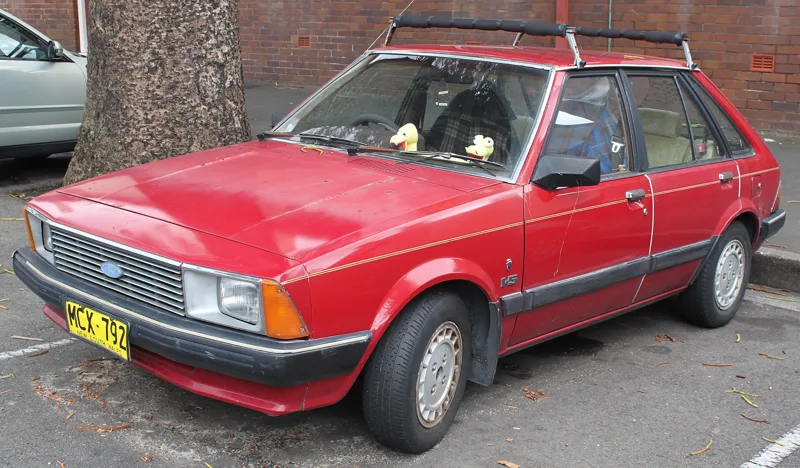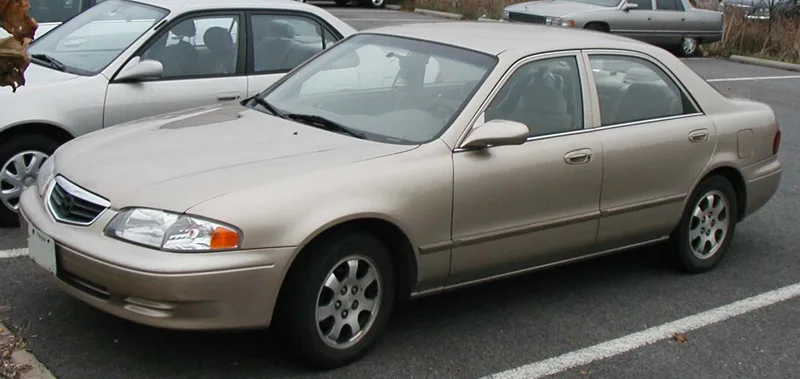
A rebadged Mazda 626 that Ford sold across Asia, Australasia and Africa for most of the 1980s and 1990s, with a turbo flagship and a racing-tyred Radisich.
The Ford Telstar was a Mazda 626-based family car that Ford sold across Asia, Australasia and Africa, starting in Japan in 1982. It reached Australia in 1983 to replace the Cortina, and it was built in New Zealand, Malaysia and Taiwan. The Mondeo eventually succeeded it in most markets.
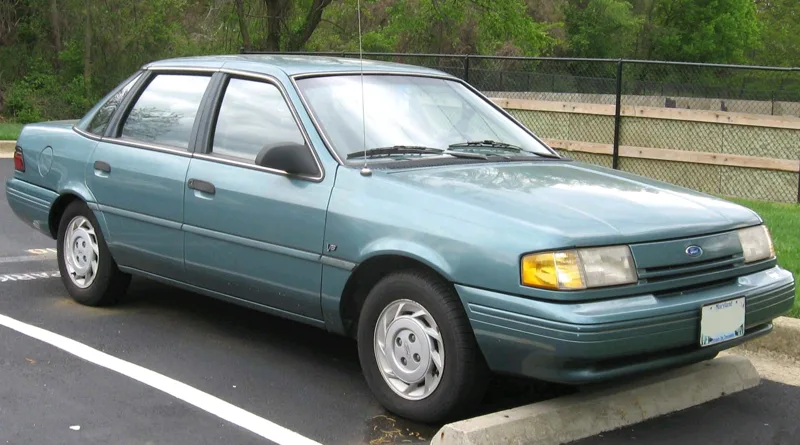
The Ford Telstar was a family car sold by Ford in Asia, Australasia and Africa, and it was built on a Mazda 626 that Ford rebadged and lightly restyled. The first model went on sale in Japan in 1982, reached Australia in 1983 and eventually gave way to the Ford Mondeo. It was comparable in size to the European Ford Sierra and the North American Ford Tempo.
What is the Ford Telstar?
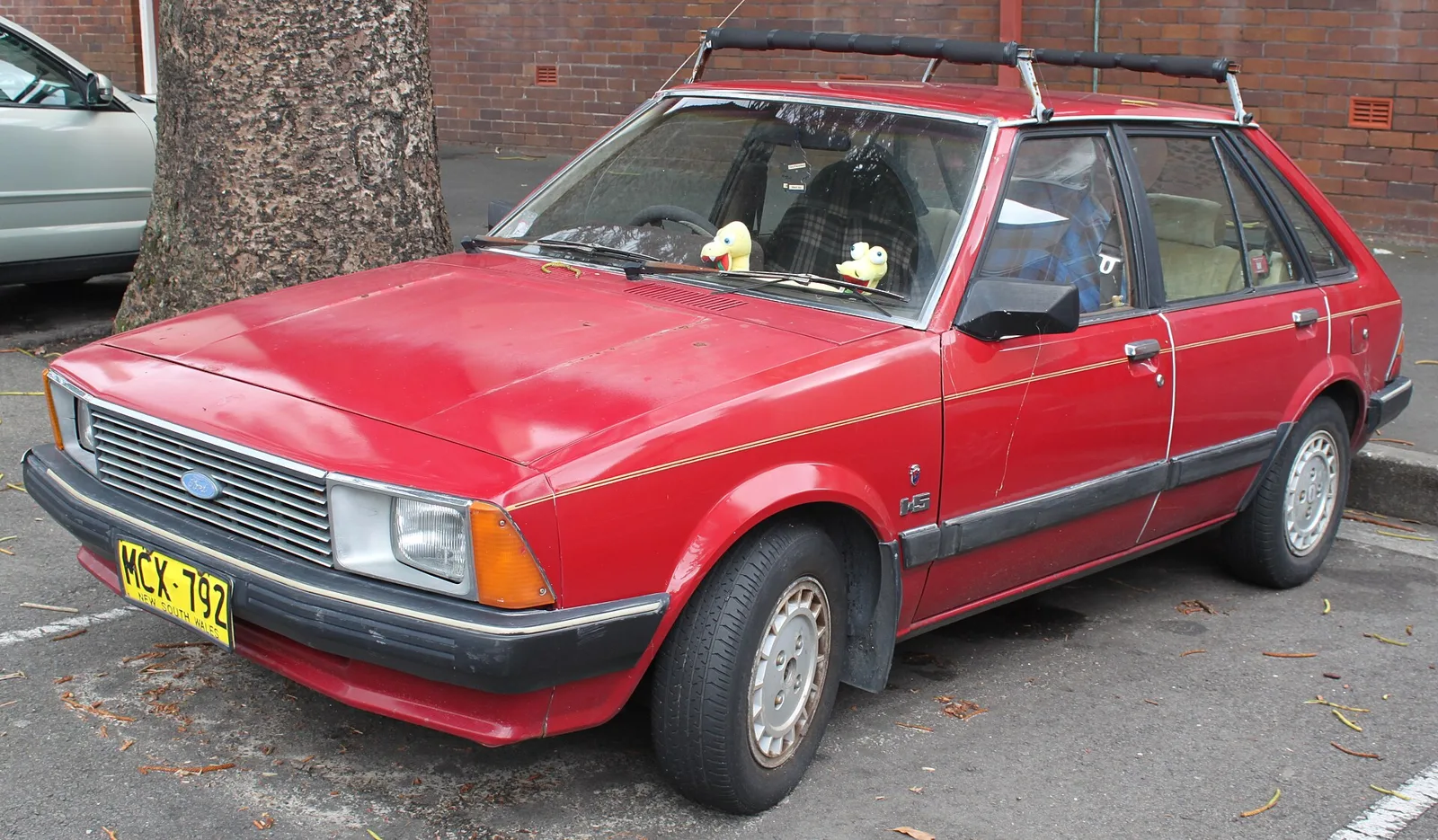
The Telstar was a front-wheel-drive five-door hatchback or four-door sedan in its early Australian form, with the hatchback sold as the TX5. The name came from the Telstar satellite. Like the smaller Ford Laser, the car was based on a Mazda product from Japan, and the two shared a platform with the Mazda Capella and 626.
Ford used the Telstar across several generations and several markets, so the car was never a single product. Its story covers Japanese and Australian engineering, New Zealand assembly, Malaysian and Indonesian versions, and a Japanese range that continued until 1999.
A Mazda 626 underneath, a Ford badge on the nose and a Telstar name that travelled across Asia, Australasia and Africa.
Where did the Telstar come from?
The Telstar came from Mazda's front-wheel-drive design, which Ford took on as its own family car. The first model was launched in Japan in October 1982 as the AR series, a rebadged and lightly restyled version of the Mazda 626 (GC) that was built at Mazda's Hofu production line.
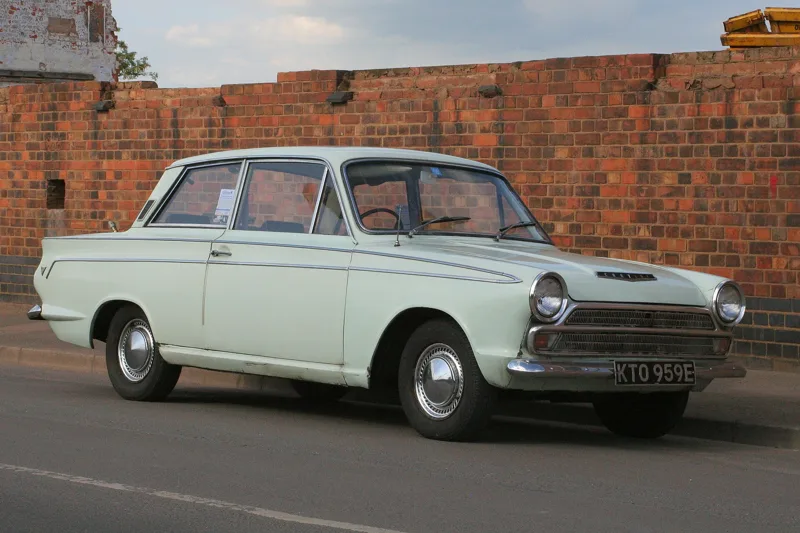
In Australia the Telstar was positioned to fill a gap left when the TF Cortina went out of production in 1981. The Ford Meteor sedan had been used as a stop-gap, although it sat in the segment below. The Telstar then took over the Cortina's role in Ford's range when it arrived in 1983.
How did the first-generation Telstar differ in Australia?
Ford Australia carried out the restyling that made the Telstar distinct from the Mazda, and that work was part of a A$150 million investment in the car. The spending also covered setting up local production facilities. The AR hatchback reached a drag coefficient of Cd=0.36.
The AR Telstar went on sale in Australia in May 1983 in GL, S and Ghia sedans, plus the TX5 and TX5 Ghia hatchbacks. Local assembly took place at Ford's Broadmeadows plant from complete knock-down kits. When Broadmeadows needed space for the Falcon XF, production of the TX5 moved to Japan, and the first shipments reached dealers in February 1985.
Several features were unique to the TX5 Ghia at launch, including an electric driver's seat with adjustable side bolsters. The dashboard carried an LED tachometer and a digital speedometer, while fluorescent vertical bars showed fuel level and engine temperature. Air conditioning was optional on all models, and power steering was optional on everything except the GL, S and TX5 manuals.
What engines and gearboxes did the first generation use?
The AR range had only one engine, a 2.0-litre carburettor four rated at 70 kW (94 hp) and 158 Nm (117 lb ft). Ford initially imported the engines, then started making them at its Norlane plant in Geelong in late 1983, where it replaced the former V8 powerplant. The four-speed manual was standard on the GL, and the five-speed was standard on the other models.
A three-speed automatic was optional on every AR model, while the TX5 Turbo later used a five-speed manual.
How was the Telstar's suspension and braking set up?
The suspension was fully independent, with a coil and strut system. It included anti-dive and negative offset geometry, intended to aid stability on slippery roads and under heavy braking. Anti-roll bars were fitted front and rear, and Australian models received local changes including seat modifications and suspension tuning for better headroom and handling.
The TX5 added electronic variable shock absorbers, which the driver could set to normal, automatic or sport using dashboard buttons. At the AS update the Ghias gained four-wheel disc brakes, while the GL and TX5 kept front discs and rear drums.
What changed with the AS facelift?
A facelifted model, the AS, arrived in Australia in September 1985. It had minor restyling at the front and rear, a fully updated interior, improved suspension and revised trim. The most visible change was relocating the indicators from the headlamp units to the bumper, with side repeaters on its curved ends.
The AS also brought analogue instrumentation across the range, dropping the digital set used by the TX5 Ghia. The centre console was reworked, and Ghia models gained an armrest console with a smoked acrylic lid. Ventilated front disc brakes and semi-metallic pads were fitted across the range, with brake cooling ducts in the front valance to reduce fade and squeal.
How well did the Telstar sell in Australia?
Ford sold 20,982 Telstars in Australia in 1985, which made it the eighth best-selling nameplate in the country for that year. The car also shared Wheels magazine's Car of the Year title for 1983 with the Mazda 626 on which it was based.
In March 1986 the TX5 Turbo flagship launched in Australia. It used an 87 kW (117 hp) engine with 200 Nm (150 lb ft) of torque, tied to a five-speed manual gearbox. Standard equipment over the Ghia included two-tone paint, alloy wheels, a rear spoiler, air conditioning, power steering and a Pioneer sound system.
What did the second-generation Telstar bring?
The original generation was replaced in Australia in October 1987 by the AT series, which Ford rebadged and lightly restyled from the Mazda 626 (GD). A station wagon built on the GD-based GV platform was also offered, but it was unique to Japan and New Zealand. The facelifted AV model followed in January 1990 with a new grille, trim and wheels.
In Australia the range was now imported from Japan, freeing the Broadmeadows line for the Capri convertible. The base GL carried over a 2.0-litre inline-four with 68 kW (91 hp), while the Ghia used a 2.2-litre 12-valve four with 84 kW (113 hp). The flagship TX5 Turbo produced 108 kW (145 hp) on premium fuel and 100 kW (130 hp) on regular.
Telstar sedans in Australia were discontinued in October 1989 because importing them from Japan had become expensive. Ford replaced them with the locally assembled Corsair, a rebadged and facelifted Nissan Pintara. The Corsair proved far less popular than the Telstar had been, and it lost sales sharply during 1991.
Which Asian markets built the Telstar?
In Malaysia, Amim Holdings resumed assembly after a short break, and the car returned to showrooms in March 1988. It came as a 1.8-litre five-speed manual Ghia sedan or a 2.0-litre automatic TX5 hatchback. A facelift in 1990 brought a smaller grille and modified taillights.
Taiwan assembled the Telstar in left-hand drive from 1983, using complete knock-down kits from the local joint venture Ford Lio Ho. The car was also sold in Hong Kong, Singapore, Indonesia, Cyprus and the Philippines. In Indonesia the second generation was marketed as the Telstar Grand sedan and the Telstar Thunder liftback, with a five-speed manual as standard.
Japan sold the Telstar from May 1987 until October 1991, and the station wagon arrived in September 1990. The wagon continued to be built until October 1997. The Japanese range offered petrol fours, a 2-litre Comprex diesel and, from June 1989, a twin-cam 1.8-litre engine rated at 115 PS (85 kW).
What did the third-generation Telstar offer?
The third generation followed the GE-platform Mazda 626 into Japan in October 1991, where it was sold through Japanese Ford dealerships called Autorama. Japanese cars came as sedans with four-cylinder and V6 engines, while the TX5 hatchback was only offered with a V6. The GF platform replaced it in 1997.
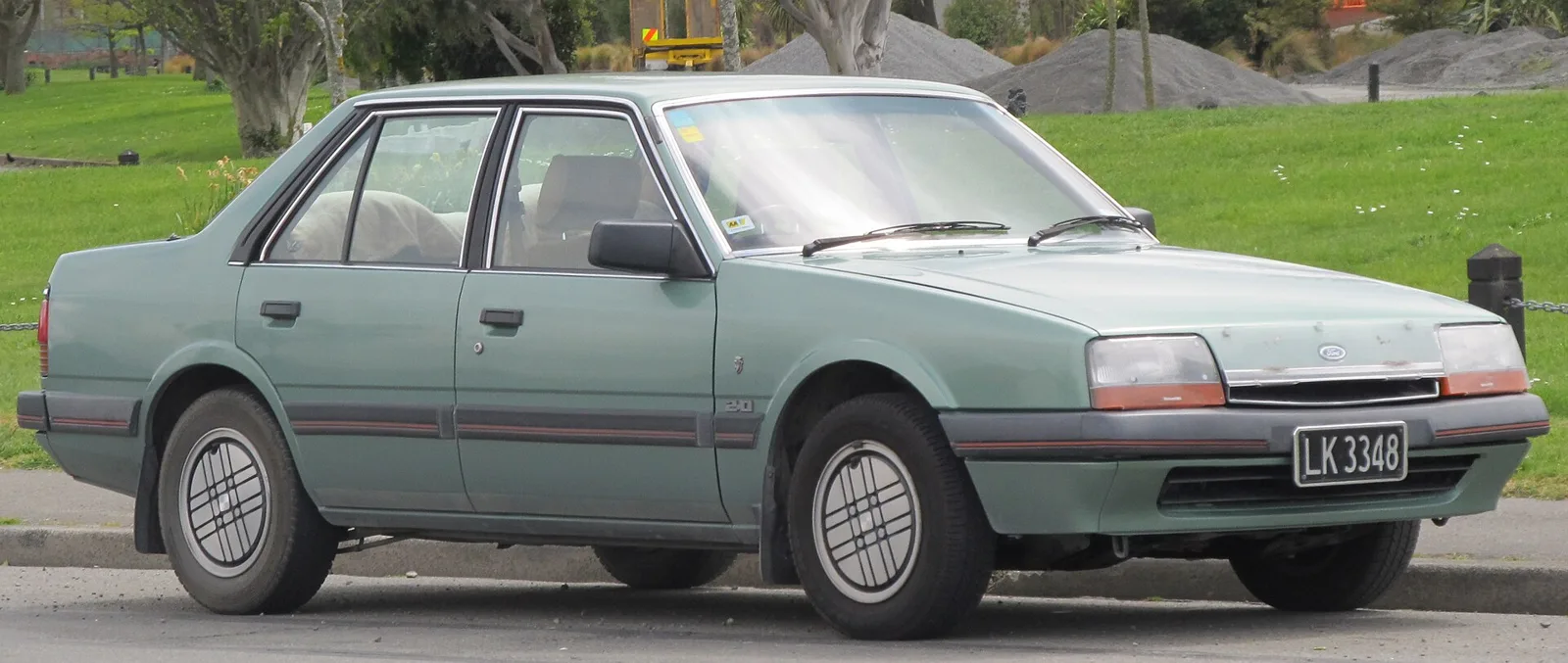
The AX series reached Australia in 1992, when Nissan ended Pintara manufacturing there and Ford's Corsair was discontinued. The Telstar became Ford's sole offering in the mid-size segment. The model won Wheels magazine's Car of the Year for 1992, and trims were GLX, Ghia and Ghia 4WS, with four-wheel steering offered on the top-of-range TX5.
The AY facelift followed in August 1994, and the Telstar was then replaced in Australia by the Mondeo.
How was the Telstar sold in New Zealand?
In New Zealand the Telstar was assembled locally from 1983, replacing the highly successful Cortina range. The car launched there in July 1983 at Ford's Seaview plant near Lower Hutt, and later moved to the Ford and Mazda joint venture at Wiri in Auckland. The venture was called Vehicle Assemblers of New Zealand, usually shortened to VANZ.
The first generation came in sedan and TX5 hatchback forms, and no station wagon was offered at first. Because there was strong demand for wagons, Ford New Zealand introduced the Sierra wagon in 1984, despite its higher cost. It continued to assemble the Cortina wagon in the meantime.
New Zealand received the AX Telstar in 1992 and the AY in late 1994. Local models included GLi, GLEi, Ghia sedan and TX5i and TX5 XRi hatchbacks. A lower-priced sedan called the Telstar Orion, which was Ford-only, kept the earlier design on sale for entry buyers.
What special editions were built?
The Telstar Radisich was a limited-edition V6 sedan with tuned suspension and unique trim. It was named after New Zealand racing driver Paul Radisich and released in two runs of 100 cars each, in 1994 and 1996. It featured 16-inch alloy wheels, an aero body kit and Radisich decals.
The Telstar was always a popular seller for Ford New Zealand. Assembly there stopped in 1997 when the VANZ Auckland plant closed, and the Belgian-built Mondeo replaced it in every form.
How did the Telstar end its life?
The last Telstar was based on the GF platform and launched in 1997, but it was available only in Japan. Ford was then marketing the Mondeo across the Asian-Pacific region, so the Telstar was a Japanese-only model. It came only as a sedan and a wagon, with no liftback.
Ford of Japan dropped the Telstar in 1999 to differentiate itself from Mazda by focusing on European and American Ford models. Telstars were also briefly available with Mazda's four-wheel steering.
Key specifications at a glance
| Item | Figure |
|---|---|
| First generation | AR and AS, 1982 to 1987 |
| Second generation | AT and AV, 1987 to 1992 |
| Third generation | AX and AY, 1991 to 1997 |
| Base engine (AR) | 2.0-litre, 70 kW (94 hp), 158 Nm (117 lb ft) |
| Turbo flagship | 87 kW (117 hp), 200 Nm (150 lb ft) |
| Platform | Mazda 626 family |
| Australian sales, 1985 | 20,982 units |
| Successor | Ford Mondeo |
Is the Telstar worth remembering?
Few Ford models covered so many markets with one Mazda-derived design. The engineering came from the Mazda 626, but Australian restyling, New Zealand assembly and separate Malaysian, Indonesian and Taiwanese builds gave each market a version of its own. Read in order, the generations show how far one platform could be stretched before Ford moved on to the Mondeo.