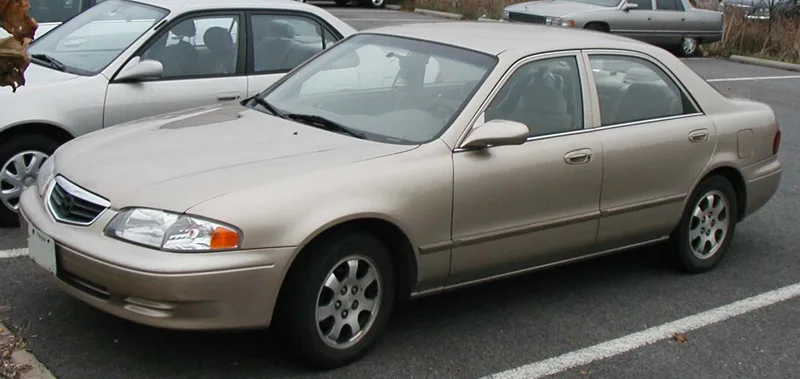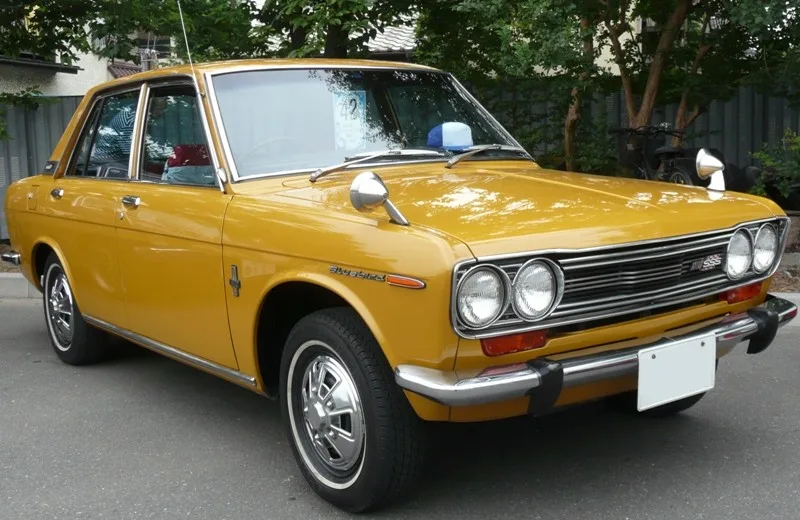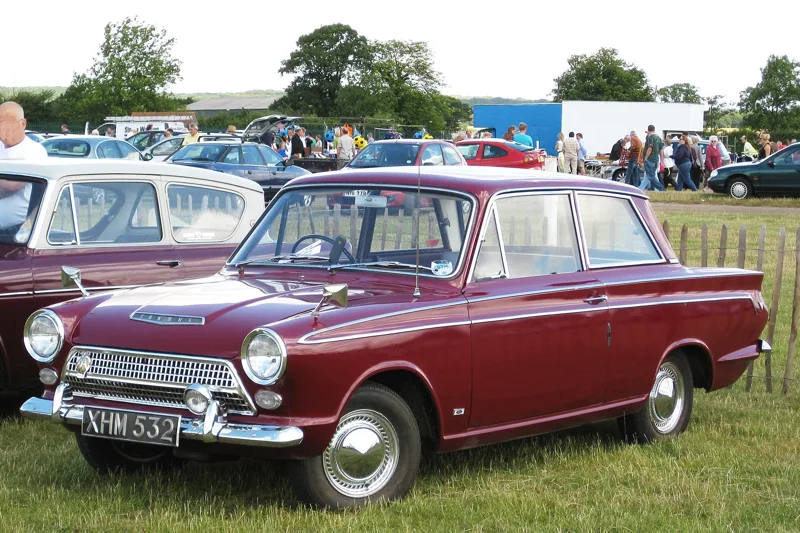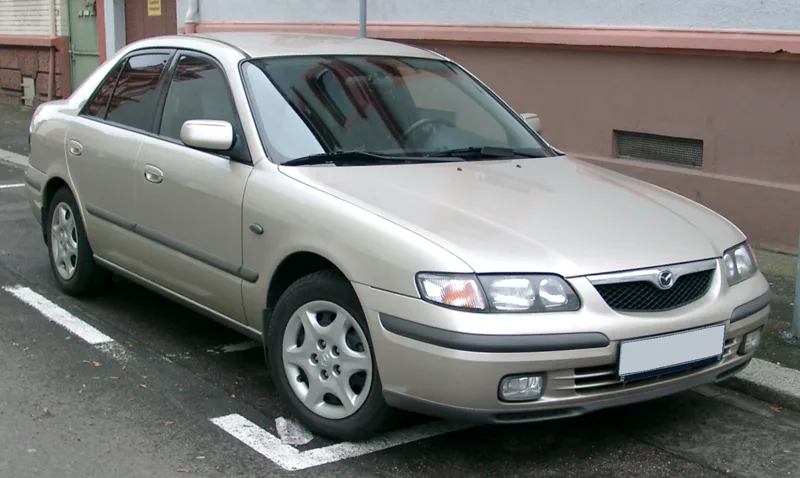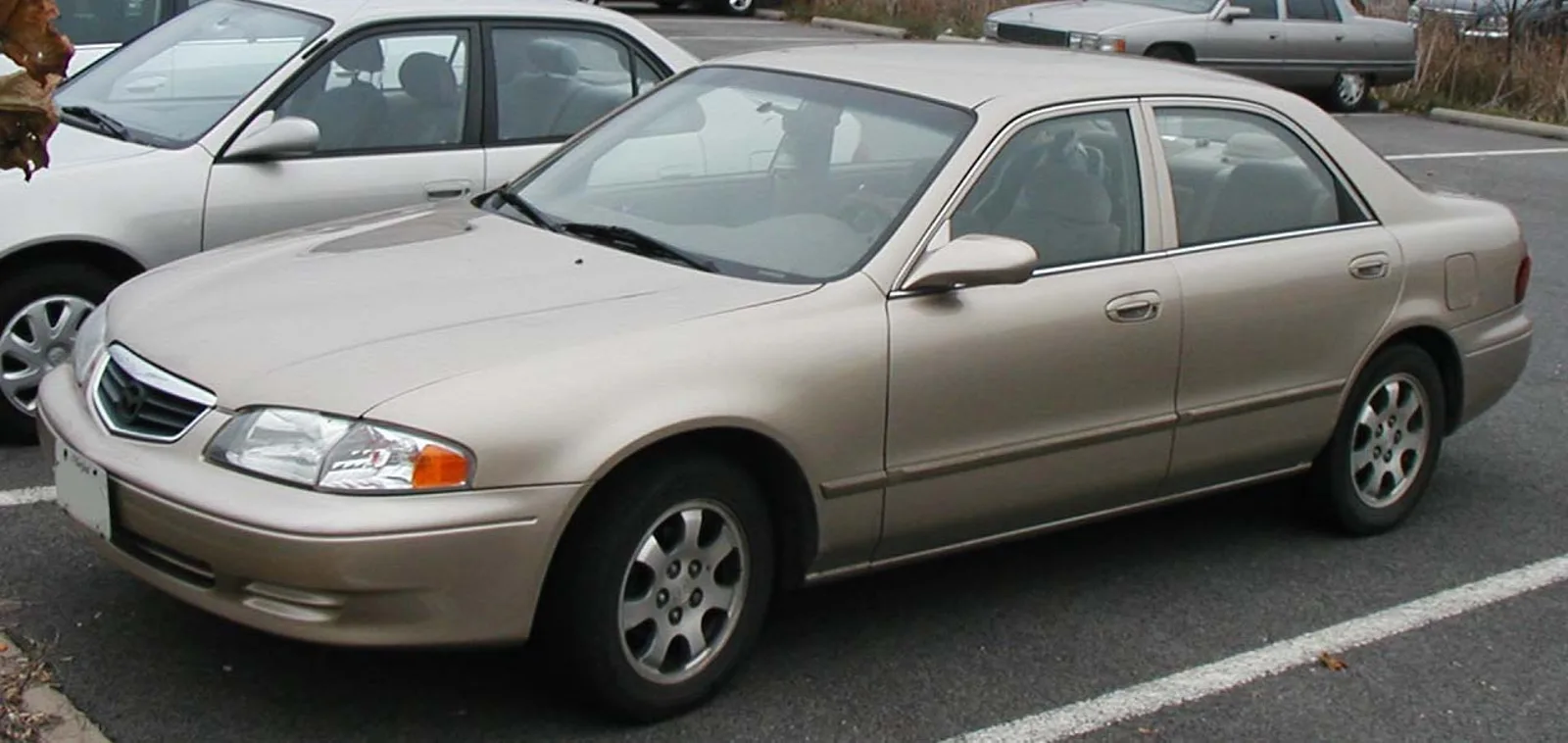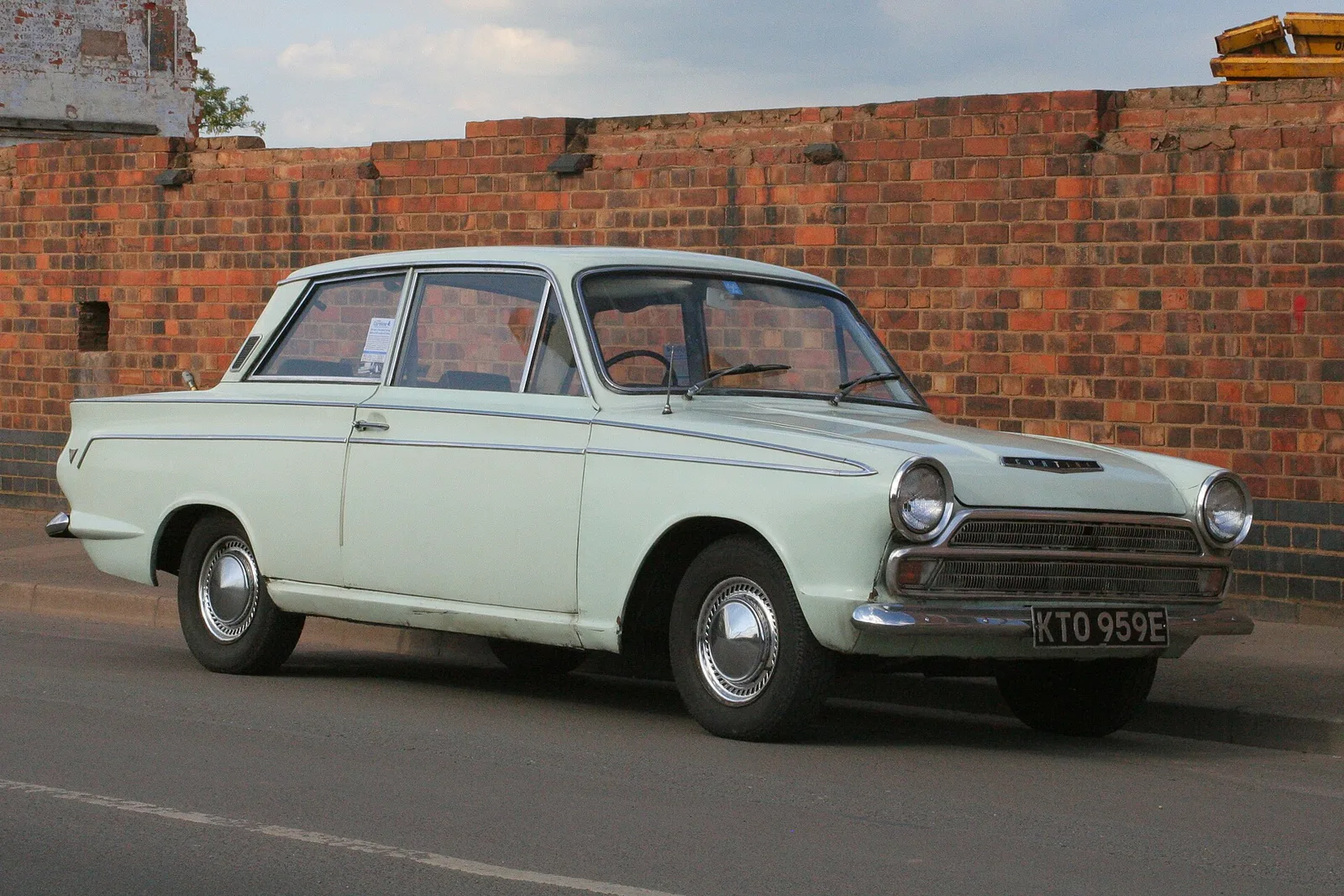
The Cortina was a British Ford family car for two decades, and the Mazda 626 was built on a platform Ford later used for the Telstar, so the two cars meet in the record through Ford's own products.
The Cortina was a British Ford family car from 1962 to 1982, and the Mazda 626 was a Mazda mid-size car from 1970 to 2002. The 626-based Ford Telstar later took the Cortina's place in Asia and Australasia. The two are linked by that replacement and by the Montrose badge.
The Ford Cortina and the Mazda 626 were both medium-sized family cars, but they belonged to different companies, different decades and different sides of the world. The Cortina was a British Ford built from 1962 to 1982, while the 626, sold as the Capella in its home market, was built by Mazda from 1970 until 2002.
The two cars meet in the record through Ford's own products. The 626 was the platform behind the Ford Telstar, which took the Cortina's place in Asia and Australasia. This comparison covers origins, engines, body changes, North American sales, export names and the figures available for each car.
Did the Cortina and the 626 ever compete?
Not head to head, since the Cortina was a British Ford for most of its life and the 626 was a Japanese Mazda. The Cortina was replaced in Asia and Australasia by the 626-based Ford Telstar, and in the United Kingdom the Montrose was a rival to the Cortina.
The record does not show the two cars sold against each other in a single showroom. What it does show is a chain of replacement, with the Cortina's market share in some countries passing to a car that Mazda had developed.
A British family favourite and a Japanese family car, linked by one Ford platform and one replacement badge.
How did the Cortina begin?
Ford of Britain in Dagenham developed the Cortina under the project name Archbishop, aiming to build a family-sized car that could sell in large numbers. The car was launched on 20 September 1962 against the Morris Oxford Farina and the Vauxhall Victor.
The chief designer was Roy Brown Jr., who had designed the Edsel and was sent to Dagenham after that car failed. The Cortina was also made from 1962 at Ford's factory in Lower Hutt, New Zealand.
The name came from Cortina d'Ampezzo, the Italian ski resort that hosted the 1956 Winter Olympics. Ford staged a publicity stunt in which several Cortinas were driven down the resort's bobsled run.
What engines did the Mark I Cortina use?
The Mark I launched with a 1198 cc three-bearing engine, an enlarged version of the 997 cc unit in the Ford Anglia. A 1498 cc five-bearing engine followed in January 1963 in the Cortina Super, and the GT appeared in spring 1963 with a claimed 78 bhp (58 kW; 79 PS).
The 60 bhp (45 kW; 61 PS) Cortina 1500 Super sat below the GT, which had lowered suspension and a tuned engine. The engines shared one pushrod design, known as the pre-crossflow version, in which the inlet and exhaust ports sat on the same side of the head.
The GT engine had a different camshaft, a larger-port cylinder head, tubular exhaust headers and a Weber 28/36 DCD carburettor made under licence by Ford. Front disc brakes became standard across the range in 1964.
What did the Mark II change?
The second Cortina, designed by Roy Haynes, was launched on 18 October 1966. It was fractionally shorter than before, at 168 in (4,267 mm), but 64 mm of extra width and curved side panels gave more interior space. It shared some styling elements with the third-generation US Ford Falcon.
A 1300 cc five-bearing engine arrived for the UK and some other markets, and the 1500 was dropped in July 1967 for a crossflow 1600. An 1100 cc crossflow from the Escort went to markets such as Greece, where higher engine capacities were heavily taxed.
The Cortina was Britain's most popular new car in 1967, which interrupted the long run of BMC's 1100 and 1300 range at the top of the sales chart. Period reviews of both styling and performance were favourable.
How did Cortina sales go in North America?
Ford United States imported both the Mark I and the Mark II. The Mark II sold 16,193 cars in its first year, 1967, then 22,983 in 1968 and 21,496 in 1969. Sales slumped to 10,216 in 1970, and Ford dropped the model that year.
The US-produced Ford Pinto subcompact of 1971 effectively took over the Cortina's role. Ford sold 352,402 Pintos for model year 1971, and English Fords ceased to be sold in the United States afterwards.
In Canada the Cortina was the second most popular imported car during the 1960s, behind only the Volkswagen Beetle.
What did the Mark III change?
The third-generation Cortina, the Mark III, was developed in the late 1960s as the German Taunus and British Cortina platforms converged. Ford UK had wanted another name, but the Cortina name stuck, and the car's internal code was TC1, standing for Taunus-Cortina.
Although it looked much larger than the boxy Mark II, the Mark III was the same overall length and 4 inches (100 mm) wider, and its wheelbase was lengthened by more than 3 inches (76 mm). That gave the cabin a slightly roomier feel.
The design borrowed the fluted bonnet and beltline of Detroit's coke-bottle styling, and the Mark III replaced both the Mark II Cortina and the larger Ford Corsair. It also offered more trim levels and bigger engine options than its predecessor.
How did the Mazda 626 begin?
The Mazda Capella, known as the 626 in Europe, North America and Southeast Asia, was made by Mazda from 1970 until 2002. Ford, Mazda's partner at the time, used the Capella platform for the Ford Telstar and Ford Probe, and the record gives 4,345,279 of the 626 and Telstar sold worldwide.
The car was named after Capella, the brightest star in the constellation Auriga. It was designed to compete against the Honda Accord, Toyota Corona and Nissan Bluebird, and the Mazda6 (Atenza) succeeded it in 2002.
The first generation, from 1970 to 1978, sat in the middle of Mazda's line-up, below the Luce and above the Familia. Its first models had rectangular headlights, while the rotary models received round twin headlamps from October 1971.
What engines did the 626 use?
The first-generation 626 used four-cylinder SOHC engines of 1.5 or 1.6 litres, rated at 92 or 100 PS (68 or 74 kW). The larger engine produced 144 N m (106 lb ft) of torque, and a Capella 1500 joined the range in October 1970.
The February 1974 facelift lengthened the front end by 110 mm and redesigned the dashboard. An optional 1.8-litre (1769 cc) engine became available for some markets, and the 1500 was no longer offered.
The second generation came with 1.6, 1.8 and 2.0 litre engines in Japan, while the GC added a turbocharged 2.0 with 145 PS (107 kW). A 2.0 diesel with 66 PS (49 kW) arrived in September 1983.
Output varied by market, with 101 PS (74 kW) in Finland and 95 PS (70 kW) in Switzerland. In North America the 2.0 FE gave up to 83 hp (62 kW), and the 626 GT of 1986 produced 120 hp (89 kW) and 150 lb ft (203 N m).
In Australia the 2-litre FE produced 70 kW (95 PS; 94 hp) at 5,000 rpm.
How did the 626 reach other markets?
The Montrose was the 626's name in the United Kingdom, where the second-generation Capella was released in 1978 and the name honoured a local dealership in Montrose. The Montrose gave British buyers a choice against the Ford Cortina, which sold strongly at the time.
Ford Asia Pacific sold the 626 as the Telstar from 1983, with slightly different styling and dashboard. In Asia and Australasia the Telstar was therefore the car that stood where the Cortina had been.
In Japan the second-generation CB produced 90, 100 and 110 PS JIS (66, 74 or 81 kW). Its aerodynamic Cx value was 0.38, a figure the record gives for the CB alone.
Side-by-side specifications
| Specification | Ford Cortina | Mazda 626 (Capella) |
|---|---|---|
| Introduced | 20 September 1962 | May 1970 |
| Production end | 1982 | 2002 |
| Generations in the record | Five (Mark I to Mark V) | Three (first, CB and GC) |
| Early engine | 1198 cc and 1498 cc pushrod four | 1.5 or 1.6 L SOHC four, 92 or 100 PS (68 or 74 kW) |
| Later engine | Not given | GC 2.0 turbo 145 PS (107 kW); diesel 66 PS (49 kW) |
| Performance version | GT with 78 bhp (58 kW; 79 PS); Lotus 1558 cc twin-cam | Not given |
| Body styles | Two- and four-door saloon, estate; GT and Super trims | Sedan and coupe; five-door hatchback in the GC |
| Export names | Consul Cortina at launch; Telstar in Asia and Australasia | 616 and 618 in the US; Montrose in the UK; Telstar in Asia Pacific |
| North America | Mark II sales 16,193 (1967), 22,983 (1968), 21,496 (1969), 10,216 (1970) | 616 in 1971; 618 in 1972; RX-2 for 1973 |
| Price | Not given | Not given |
| Top speed | Not given | Not given |
| Built | Not given | 4,345,279 of the 626 and Telstar |
| Assembly | Lower Hutt, New Zealand from 1962; South Africa until 1984 | New Zealand (RX-2 from 1972); South Africa (Illings, then Sigma) |
Read down the table and the gaps are clearer than the figures. The record is detailed on engines and dates, and thin on price, speed and total production.
Which buyer suits each car?
On the figures available, the Cortina suits a buyer who wanted a British family car that sold in very large numbers, with estate and high-performance GT or Lotus versions. The 626 suits a buyer who wanted a mid-size Mazda with a choice of petrol and, in its first generation, rotary power.
Neither car is shown to be better overall. The record gives Cortina sales for the United States but no total production, while the 626 and Telstar carry a worldwide total of 4,345,279.
A buyer comparing the two should note that the Cortina's five generations and the 626's three in this record cover different periods, so the comparison is between families of cars rather than single models.
What does the record leave open?
The record gives no price for either car and no top speed for either. It also gives no Cortina total production figure, so the volume comparison is partial. Those gaps are marked as not given in the table rather than estimated from other sources.
The gaps matter most for a buyer comparing value or performance, because the record covers design history in much more detail than cost.