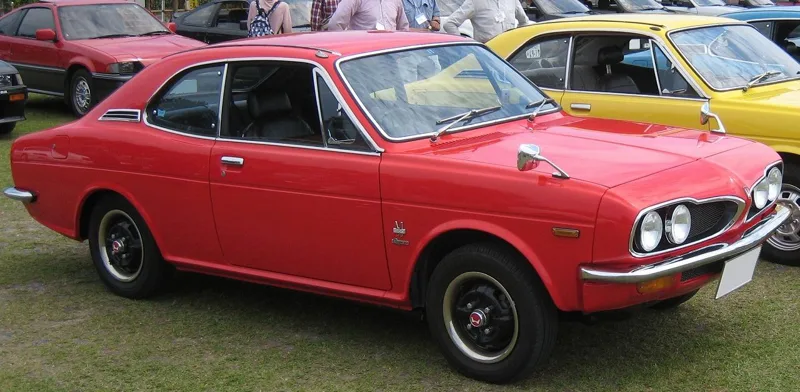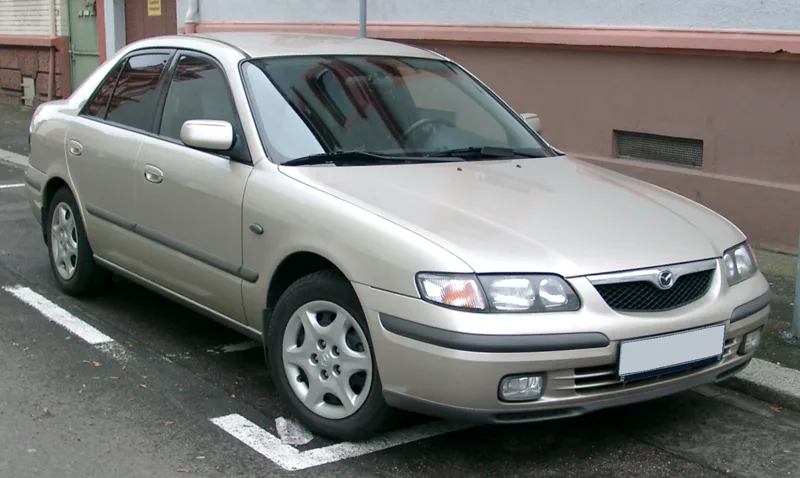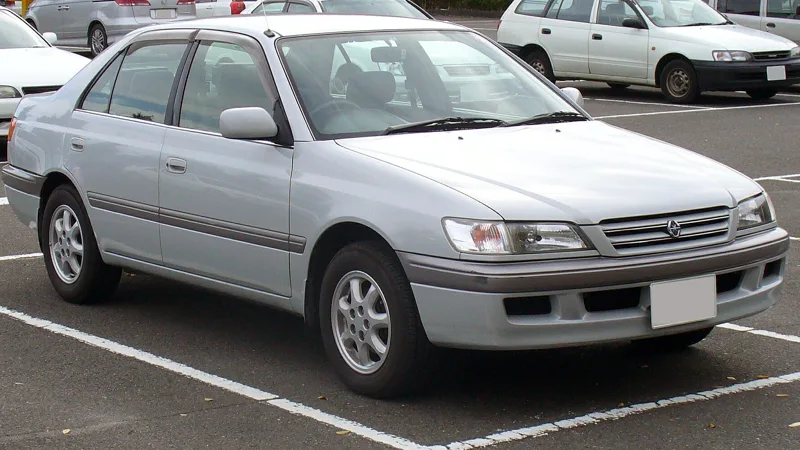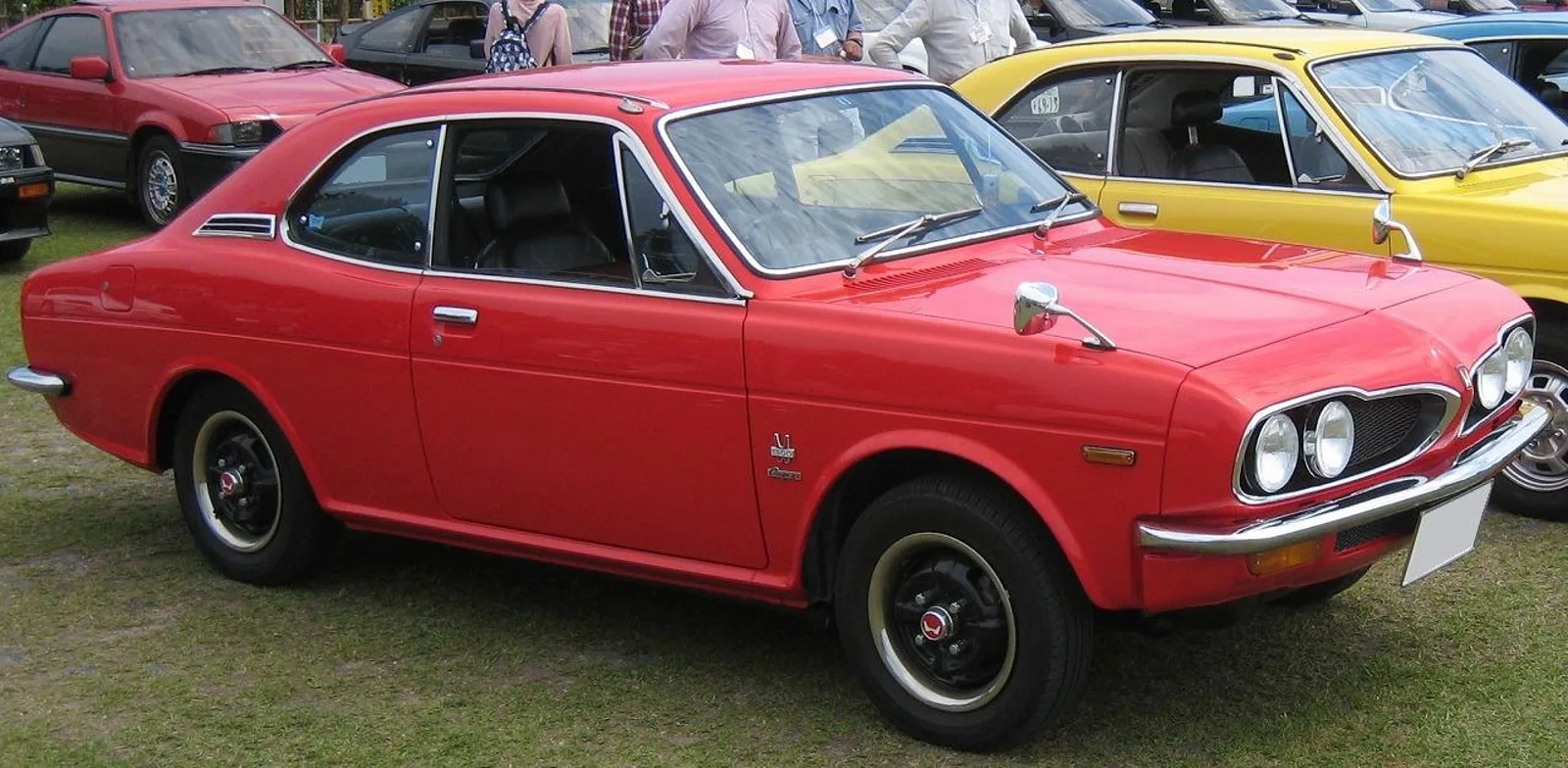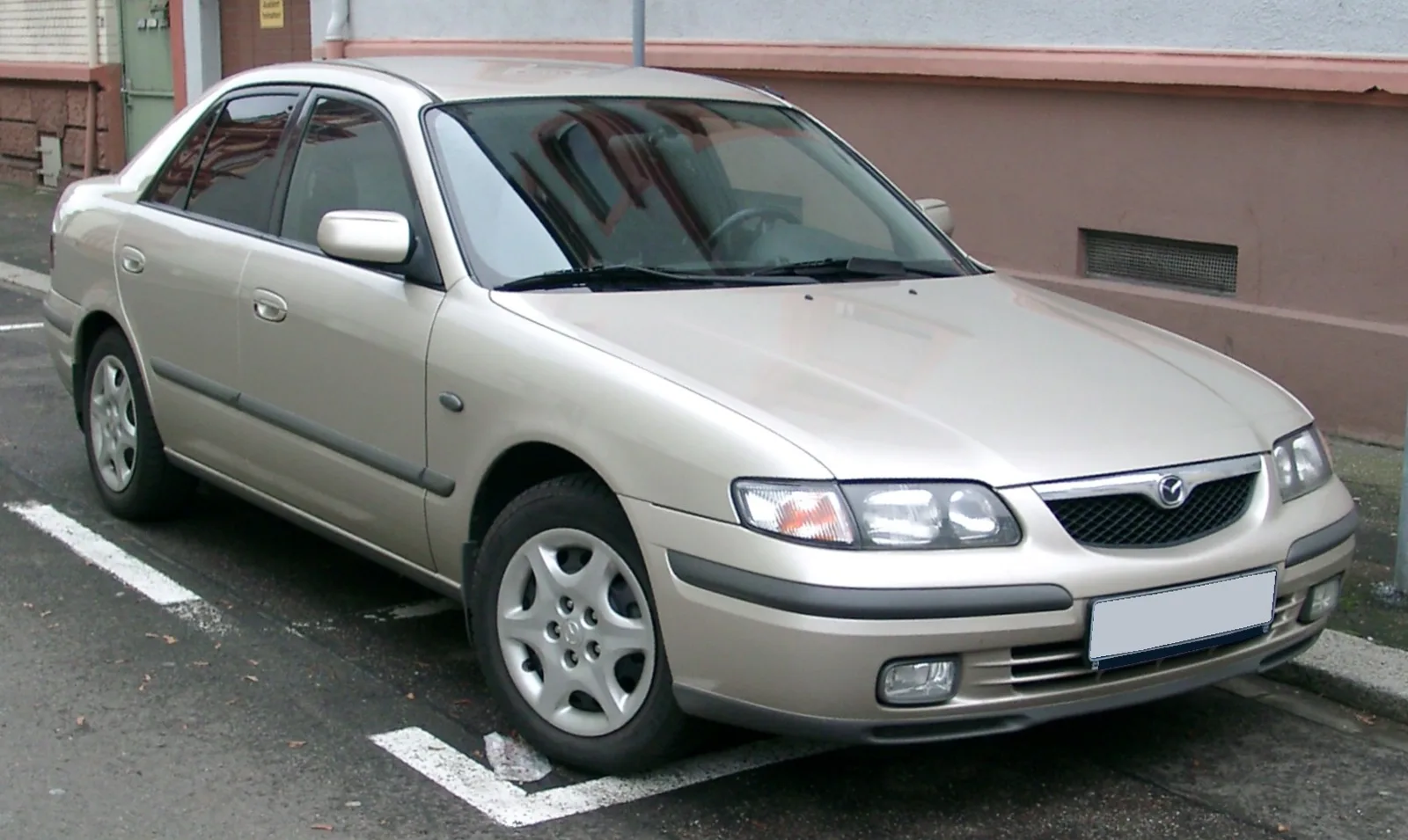
The Capella, sold as the 626 abroad, and Toyota's Corona, both built to beat each other in the Japanese and export mid-size market, compared on engines, growth, North America and longevity.
The Mazda Capella, sold as the 626 abroad, ran from 1970 to 2002 as a mid-size car. The Toyota Corona began in 1957 and ran until 2001, and it was the car the Capella was designed to beat.
The Mazda Capella, sold as the 626 in Europe, North America and Southeast Asia, and the Toyota Corona were built to compete with each other. The Capella ran from 1970 to 2002, while the Corona had already begun in 1957 and ran until 2001, which gave the two cars more than three decades on the same market shelves.
This comparison covers origins, engines, performance, North American sales, later generations and longevity. Where a figure exists for only one car, the gap is shown rather than estimated, and metric figures come first with imperial values in brackets.
Were the 626 and Corona rivals?
Yes. The record says the Capella was designed to compete against Japanese mid-size stalwarts such as the Honda Accord, the Toyota Corona and the Nissan Bluebird. The Corona was Toyota's second-highest product at launch, just below the Crown, and it was marketed through Toyota's Toyopet Store dealership channel in Japan.
The two cars shared a long overlap, from 1970 until the Corona's later generations, and the Corona outlived the Capella by a year. The record describes the Capella as succeeded by the Mazda6 in 2002, while the Corona was replaced in Japan by the Premio, in Europe by the Avensis and elsewhere by the Camry.
Two mid-size Japanese cars built to beat one another, with the Corona leading in North America and the Capella carrying the rotary badge.
How did the Corona begin?
The first-generation Corona, introduced in May 1957, was designed with parts from the previous Crown and Master after a major restyle and enlargement of the Crown. It was offered as a four-door sedan, and a three-door van, the Toyopet Coronaline, arrived in October 1958.
The Corona's name derives from the Latin word for crown, which fitted a sedan that sat just below Toyota's flagship, the Crown. Exports to other global markets began with it, and the smaller Corolla followed.
How did the Capella begin?
Mazda placed the first Capella, introduced in May 1970, between the smaller Familia and the larger Luce. It was named after Capella, the brightest star in the constellation Auriga, and it was sold in export markets as the Mazda 616 in sedan and coupe configurations.
The Capella was powered by four-cylinder SOHC engines of 1.5 or 1.6 litres, producing 92 or 100 PS (68 or 74 kW). The 1.6 also gave 144 N m (106 lb ft) of torque, and the optional Wankel engine was offered as the Capella Rotary in Japan and the RX-2 for export.
What engines did the Corona use?
The first Corona was fitted with the old sidevalve S engine, rated at 33 PS (24 kW). In October 1959 it was replaced by a 997 cc OHV P series engine, which produced 45 PS (33 kW) at 5,000 rpm and let the sedan reach 105 km/h (65 mph), 15 km/h (9 mph) faster than the earlier car.
The second-generation Tiara, sold in the United States, used a 1.0-litre P engine of 45 PS (33 kW) when introduced in March 1960, with a top speed of 110 km/h (68 mph). A 1.5-litre R series engine followed in March 1961, and a 1.9-litre in 1964.
How did the Capella's engines compare?
A 1.8-litre (1769 cc) engine arrived for some markets in 1974. In Japan that engine carried the AP suffix, for anti-pollution. The 1500 was no longer available after that facelift. The 1972 Mazda 618 used a 1.8-litre (1796 cc) VB engine in the United States, which was not used elsewhere in the Capella range.
The Corona's third generation, introduced in September 1964, used a 1,198 cc 2P engine of 55 PS (40 kW) at 5,000 rpm, and the 4R 1,587 cc engine delivered 90 bhp (67 kW; 91 PS) with the Toyoglide automatic. The record gives the Corona's 0-97 km/h (0-60 mph) time as 15.1 seconds, and the Capella figure is not given.
How fast were the cars?
The Corona was tested on the Meishin Expressway, where a new model covered 100,000 kilometres (62,137.1 mi) and sustained 140 km/h (87 mph). Its 1.2-litre version reached a top speed of 110 km/h (68 mph) in the early years, and its 0-97 km/h (0-60 mph) time was 15.1 seconds.
The record gives no top speed for the Capella, so the two cars cannot be compared at the top end. The Corona's performance grew over its generations, and the 1600GT of 1967 offered 110 PS (81 kW) from a DOHC engine.
What did the Corona's sporting versions add?
In August 1967 Toyota installed a 1,587 cc DOHC 9R engine in the RT55 1600GT. It used the 4R block with a Yamaha-built DOHC head derived from the 2.0-litre 3M engine of the 2000GT, and it produced 110 PS (81 kW). The 1600GT was offered as a junior version of the 2000GT.
Only 2,222 examples of the 1600GT were made in 13 months, in colours shared with the 2000GT. The hardtop coupe with its limited-slip differential was Toyota's answer to rivals such as the Nissan Bluebird SSS and the Prince Skyline 2000GTB.
How did the Corona sell in North America?
Toyota had entered the North American market in 1957 as Toyopet, but it withdrew in 1961. It returned in June 1964 under the Toyota name, with a third-generation Corona that had more modern technology and standard features. The Corona's first television commercial was among the company's first American adverts.
Reviewers liked it, and it took the 1969 Road Test Import Car of the Year award. The Corona helped push Toyota's US sales above 20,000 units in 1966, a threefold increase, and by 1967 the company was the third-best-selling import brand in the United States.
How did the Capella do in North America?
The Mazda 616 was a major part of Mazda's United States expansion in 1971, and it was preceded by the rotary RX-2 the year before. The 616 was less popular than the rotary car, and the American Capella was renamed the 618 in 1972.
The 618 lasted only a single year as a name in the United States. The only federalised version of the Capella for 1973 was the RX-2, so the Capella's North American story was short compared with the Corona's.
How did the Corona and Capella change in later generations?
The Corona Mark II arrived in September 1968 as a larger model with more equipment, sharing features with the Crown. It was longer than the Corona, at 4,295 mm (169.1 in) against 4,125 mm (162.4 in) for the sedan, and its width of 1,610 mm (63.4 in) was greater than the 1,549 mm (61 in) of the standard car.
The T80 Corona of February 1970 was a complete redesign on a separate platform from the Mark II, and the Corona itself stayed focused on fuel economy. The Capella's second generation, the CB, arrived in October 1977 as a rear-wheel-drive car, and the third-generation GC of 1982 moved to front-wheel drive.
How did each car spread overseas?
The Corona was assembled in New Zealand from February 1967 at Steel Brothers' Motor Assemblies in Christchurch, and it was built by Shinjin Motor in South Korea from 1966 to 1972. In South Africa, where assembly began in 1966, the Corona reached fifteenth place on the 1967 sales charts.
The Capella spread through licensed plants as well. The RX-2 was assembled under contract in New Zealand from 1972, and in South Africa the Capella was assembled first by Illings and then by Sigma.
Side-by-side specifications
| Specification | Mazda 626 (Capella) | Toyota Corona |
|---|---|---|
| Introduced | May 1970 | May 1957 |
| Production end | 2002 | 2001 |
| Generations | Five by 2002 | Eleven, 1957 to 2001 |
| Early engine | 1.5 or 1.6 L four, 92 or 100 PS (68 or 74 kW) | Sidevalve S, 33 PS (24 kW); 997 cc P, 45 PS (33 kW) |
| Later engine | 1.8 L (1769 cc) from 1974; RX-2 rotary | 1,587 cc 4R, 90 bhp (67 kW; 91 PS); 1600GT 110 PS (81 kW) |
| Torque | 1.6 L 144 N m (106 lb ft) | Not given |
| Gearbox | Five-speed manual; three-speed automatic on CB | Toyoglide automatic from 1967 |
| 0-60 mph | Not given | 15.1 seconds (third generation) |
| Top speed | Not given | 110 km/h (68 mph) on early Tiara |
| Length | Not given | 4,125 mm (162.4 in) sedan; Mark II 4,295 mm (169.1 in) |
| Width | Not given | 1,549 mm (61 in) sedan; Mark II 1,610 mm (63.4 in) |
| North America | 616 and 618 in the US; RX-2 from 1973 | Entered 1964; 20,000 units in 1966; Road Test Import Car of the Year 1969 |
| Sales | 4,345,279 of the 626 and Telstar | Not given overall |
| Assembly | Licensed plants in New Zealand and South Africa | New Zealand, South Korea, Australia, South Africa |
| Successor | Mazda6 (Atenza) from 2002 | Premio, Avensis and Camry |
Which buyer suits each car?
On the figures available, the Capella suits a buyer who wanted a Mazda mid-size car with a rotary option and a long run of generations. The Corona suits a buyer who wanted a Toyota with a strong North American record, a range of body styles and sporting versions such as the 1600GT.
Neither car is shown to be better overall, because the material measures them against different markets. The Corona has the stronger North American record, while the Capella has the rotary option and the bigger later sales figure in the material.
What does the record leave open?
Several points are missing. The record gives no price for either car, no Capella top speed and no Corona weight for its later generations. It also gives no combined sales total for the Corona across all its generations. The Capella's North American sales and the Corona's 1960s engine figures are not fully set out either.