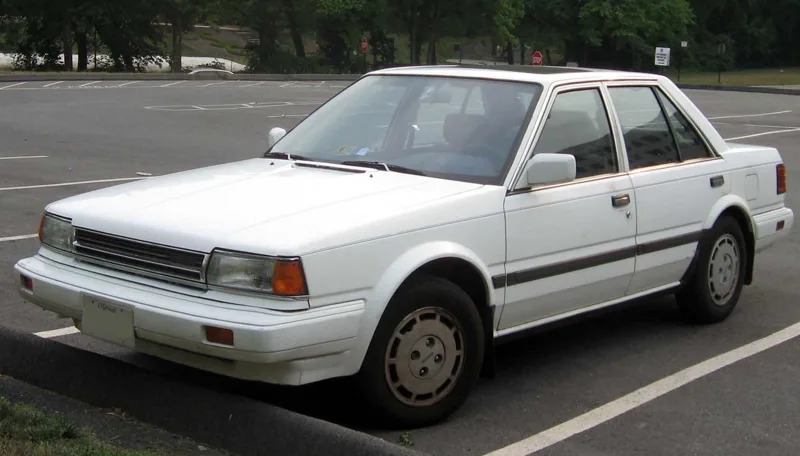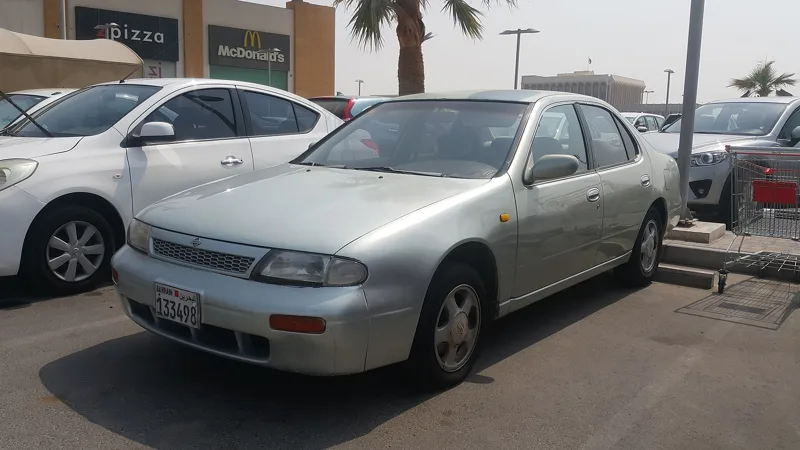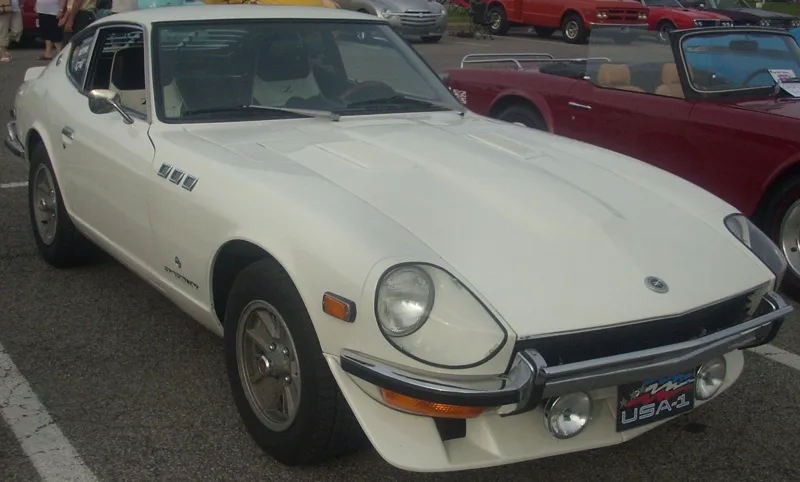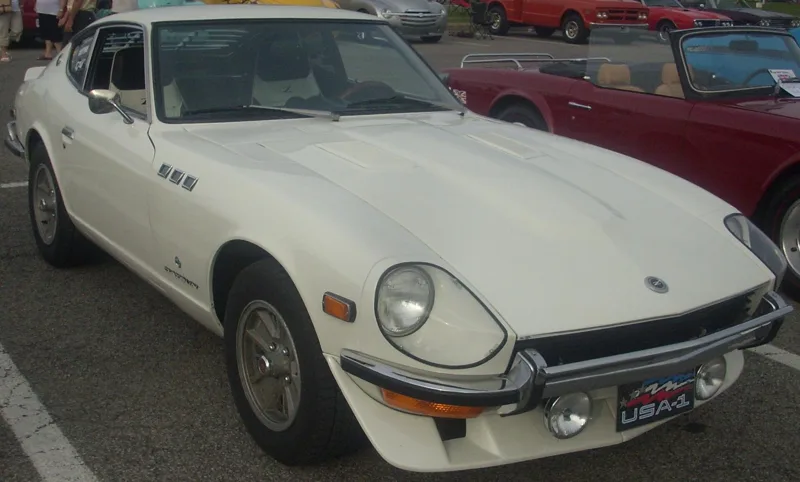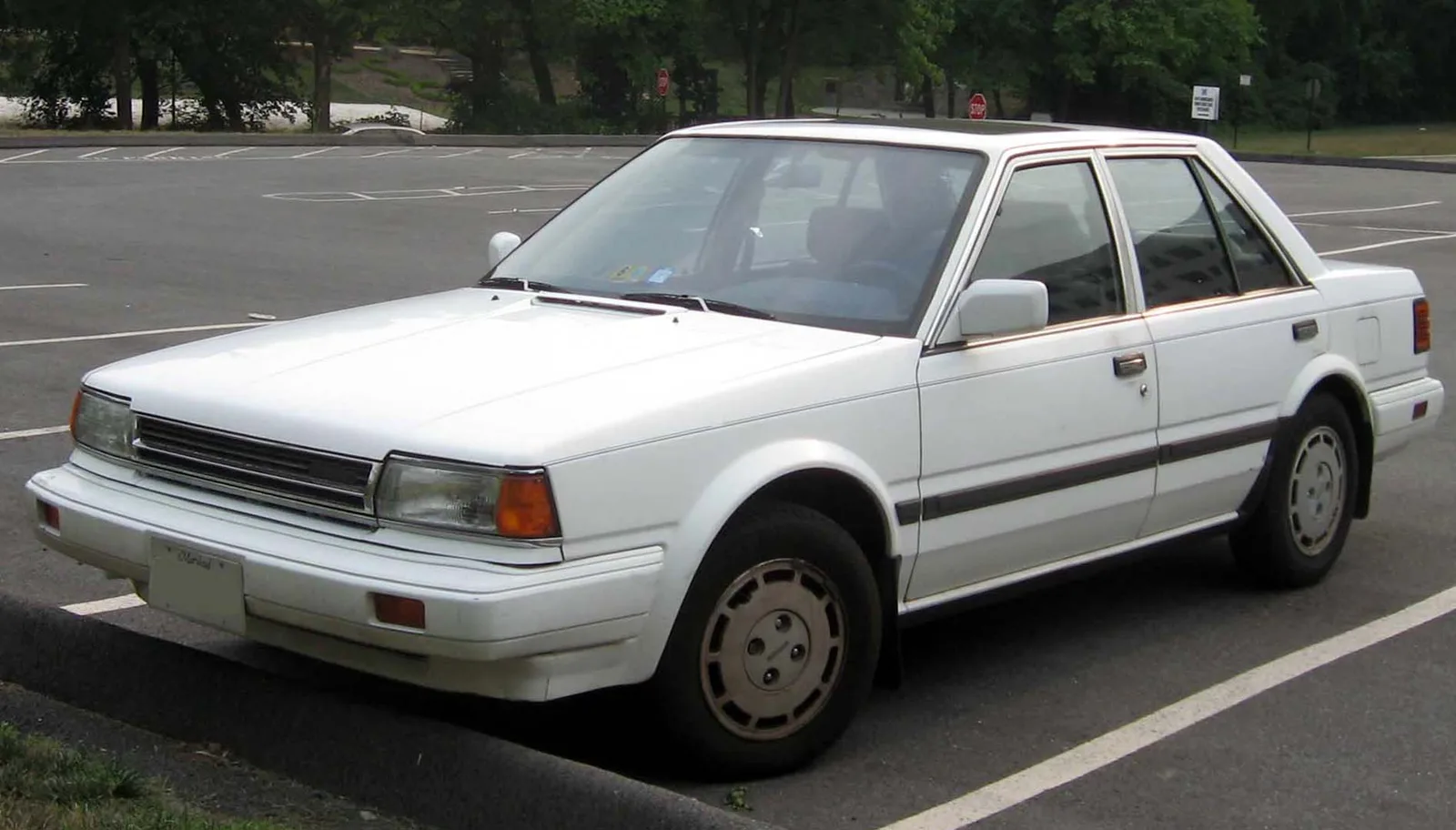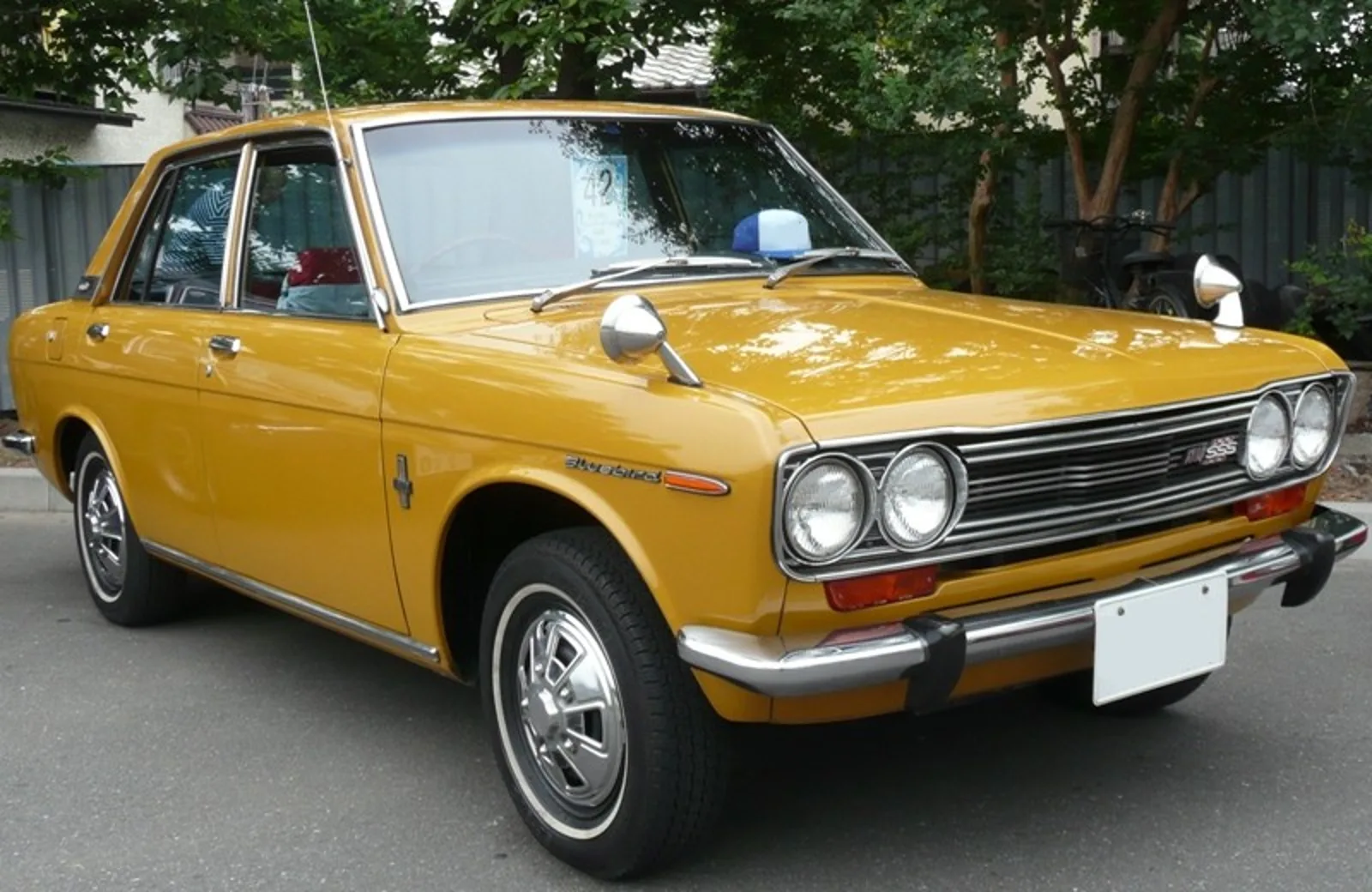
The 1968 to 1973 Bluebird that Nissan sold as the 510 in America, won rallies with abroad and still wins race classes today.
The Datsun 510 was the third-generation Datsun Bluebird, built by Nissan from 1968 to 1973 with rear independent suspension and overhead-cam engines. It was sold in the United States under the 510 name, became a rally favourite and is still raced in amateur classes.
The Datsun 510 was the third generation of the Datsun Bluebird, built from 1968 to 1973. The 510 was Nissan's internal model code, and the car became a cult favourite for its rally wins and its cheap, sound engineering. Enthusiasts still chase the car around the world.
What was the Datsun 510 called?
In Japan the car was sold as the Bluebird, a name that also appeared in some export markets. Elsewhere it wore Datsun 1300, 1400, 1500, 1600 or 1800 badges depending on the engine, although advertising often mentioned the Bluebird. In Canada it was sold as the Datsun 1600, and in the United States the 510 number itself became the name.
The car was rear-wheel drive, with an overhead-camshaft engine and independent suspension. Its layout drew on European sedans, particularly the 1966 BMW 1600-2, and the styling is credited to Datsun in-house designer Teruo Uchino.
A Bluebird with a BMW-inspired chassis that gave Nissan rally wins and a lasting place in amateur racing.
Where did the 510's engineering come from?
The design began with Prince Motor Company, which merged into Nissan in 1966. The Bluebird had been Datsun's smaller car, but the arrival of the 1-litre Sunny that year allowed Nissan to move the Bluebird into the mid-size class. Nissan USA president Yutaka Katayama pushed for a larger overhead-cam engine with more power than the models before it.
At the front the 510 used MacPherson struts, and the rear wheels had semi-trailing arms. These were the sort of parts that appeared on far pricier European cars of the period, while rivals such as the Ford Cortina still ran live rear axles.
When did the 510 reach each market?
The 510 went on sale in Japan on August 15, 1967. The United States received it in October 1967 as a four-door sedan, and a two-door sedan followed in June 1968. A five-door wagon and a two-door coupe came in November 1968, and the Canadian market used the Datsun 1600 name.
The model's fame grew from Nissan's rallying results outside Japan, and those wins helped the company build its sales around the world. It was the success that gave Datsun its international reputation.
What engines and gearboxes did the 510 have?
Buyers chose between a four-speed manual and an optional three-speed automatic. Some markets had 510s with twin Hitachi side-draft carburettors, a smaller relative of the SU design fitted to Jaguars and MGs. Those engines also had revised compression and camshaft profiles for extra power.
SSS models, which were never offered in North America, came with upgraded instruments, interior trim and appropriate exterior badges. The North American cars used a Hitachi downdraft carburettor on a 1.6-litre L-series straight four, rated at 96 hp (72 kW) gross.
How did the Japanese cars differ?
The Japanese car was shown at the 1967 Tokyo Motor Show with a 1.3 overhead-camshaft engine, rated at 72 PS (53 kW). Nissan claimed it was stronger than Toyota's 1.5-litre unit, but it was paired with a three-speed manual, which held it back. North American buyers always had the larger 1.6 and a four-speed all-synchro gearbox.
By October 1968 Japanese customers could also have a 1600 cc engine. Export markets in South America, Asia outside Japan and Africa received pushrod J-series engines of 1.3 or 1.5 litres, sold as the Datsun 1300 and 1500, and their sedans and two-doors kept a leaf-sprung solid rear axle.
In September 1970 the 1.3 and 1.5 engines gave way to 1.4-litre units. In September 1971 the larger Bluebird U, code 610, appeared, while the 510 continued as a lower-priced compact with the chassis code changed to 510N.
What set the North American 510 apart?
The 1968 cars were distinctive, with a stainless steel grille, inward pivoting wipers and small amber front indicators, and they had no rear side marker lights. The two-door sedan appeared only in a limited introduction that summer, which makes the 1968 two-door the rarest American 510.
For 1969 the grille was redesigned with an unpainted stainless centre, the wide DATSUN lettering gave way to an upright rectangle with a D, and round rear side markers appeared. Larger all-red taillights followed, and tinted glass came from 1970. The ignition moved onto the steering column in the same period.
Unitised bodies rusted badly in the Rust Belt, so surviving cars are most common on the West Coast, where Japanese cars first gained a foothold.
How did the 510 sell in Europe?
The first European imports arrived shortly after the car was announced in Japan, and UK imports were revealed at the October 1968 Motor Show. The L16 saloon came first, followed by the estate, and the L13 arrived in early 1969. The L14 replaced the L13 in October 1970, and the 510 gave way to the 610 in May 1972. The 610 proved far more successful in the UK.
Nissan imported about 4,000 510s into the UK. The dealer network was only put in place as the model was ending, and the car never received the recognition it earned elsewhere. Octav Botnar was central to the brand's later success in Britain. UK imports were limited to saloons and estates.
Why did the 510 matter in Oceania and South Africa?
Australia first received the Datsun 1600 as full imports in 1967 and early 1969, and then cars were assembled locally from local and Japanese parts. Only the four-door sedan and station wagon were offered there, and the last P510 left Australian lines in 1972. Rallying made the survivors scarce today.
In New Zealand, Nissan-Datsun had four-door sedans assembled from 1968 by Campbell Motor Industries in Thames, with about 40% local content. The 1970 facelift brought a safety-style dashboard and larger tail lamps. Automatic versions were a special import, built up only under a limited import licence, and a few SSS sedans came fully assembled. The 1600 was sought after for modification and racing, and it was replaced by the 180B in 1972.
South Africa built the P510-series Datsun 1600 in Pretoria between 1969 and 1974, and this generation ended the Bluebird badge there. The SSS, introduced in July 1969, had twin carburettors and 109 hp (81 kW) SAE. The sedans came as the 1600 DeLuxe, 1600 SSS, 1600GL and 1600GL SSS, all with independent rear suspension, and the coupes were the 1600 GL and 1800 GL. Ewold van Bergen, a Nissan Japan test engineer based in Pretoria, rallied these cars extensively.
Which variants and special versions exist?
The P510 was the right-hand-drive model, and the PL510 was the left-hand-drive version that dominated many export markets, including the United States. A 1969 KP510T two-door coupe went in small numbers to right-hand-drive markets, mainly Japan. K-prefix cars were coupes, while W-prefix cars were wagons.
In Taiwan the car was built as the Yue Loong Bluebird 706 with a J13 engine and leaf-sprung rear suspension. For 1974 the four-door 510 sedan was dropped in favour of the PL610 cars.
How did the 510 perform in motorsport?
In the United States the 510 earned its reputation in the Trans Am Series under the 2500cc class. John Morton won the 1971 and 1972 championships in Pete Brock's BRE Racing 510. Today it remains one of the most popular production cars in numerous SCCA amateur classes.
Nissan's American parts network supports that racing life, with replacement parts from its distribution centres and special parts through its Los Angeles master depot. The Datsun 1600 was also highly competitive in the Australian Rally Championship, winning outright and class titles through the 1970s and 1980s.
What happened to the 510 name after 1974?
The Datsun 510 name returned in Canada and the United States from 1974 to 1981, but the cars were quite different, with updated styling, solid rear axles and rectangular headlights. The 1981 model used a 2.0L L20B engine rated at 96 HP. In 1982 the badge gave way to the Nissan Stanza.
Nissan had already tried to recapture that glory with the unrelated A10 Violet, sold in North America between 1978 and 1981, a move reviewers largely considered a failure. In 2013 and 2014 the company showed the Freeflow IDX and NISMO IDX concepts, which were said to draw on the 510.
Why did the 510 stay popular?
Affordable performance and simple mechanicals kept the 510 popular with enthusiasts long after production stopped. Collectors can be found around the world, with significant numbers in the United States, Australia and New Zealand, and Hot Wheels has produced several versions of the car as toys.
Many of its parts were interchangeable, so engines, gearboxes and suspension could be swapped with minor modifications. Owners moved from the 1.6-litre L16 to the L18 and later to the L20B, and they fitted five-speed gearboxes from the early 200SX and HL510 with their 63 mm shaft-centre distance, or the 71 mm units used in the 280-series Z cars, the 810 and the Skyline C210 and R30 series.
The 71 mm five-speed also appeared in the 620, 720 and D21 pick-up trucks, in both long and short extension-housing versions. That parts flexibility is a large part of why the car still attracts builders and racers.
What are the Datsun 510 specifications?
| Specification | Detail |
|---|---|
| Years built | 1968 to 1973 (third-generation Bluebird) |
| North American engine | 1.6-litre L-series straight four, 96 hp (72 kW) gross |
| Japanese launch engine | 1.3-litre overhead-camshaft, 72 PS (53 kW) |
| Export engines | J-series pushrod 1.3 and 1.5-litre (Datsun 1300 and 1500) |
| Gearbox | Four-speed manual or three-speed automatic |
| Rear suspension | Semi-trailing arms; leaf-sprung solid axle on some export sedans and wagons |
| Claimed top speed | 100 mph (North American car) |
| South African SSS | 109 hp (81 kW) SAE, twin carburettors |
| UK imports | About 4,000 cars, saloons and estates only |