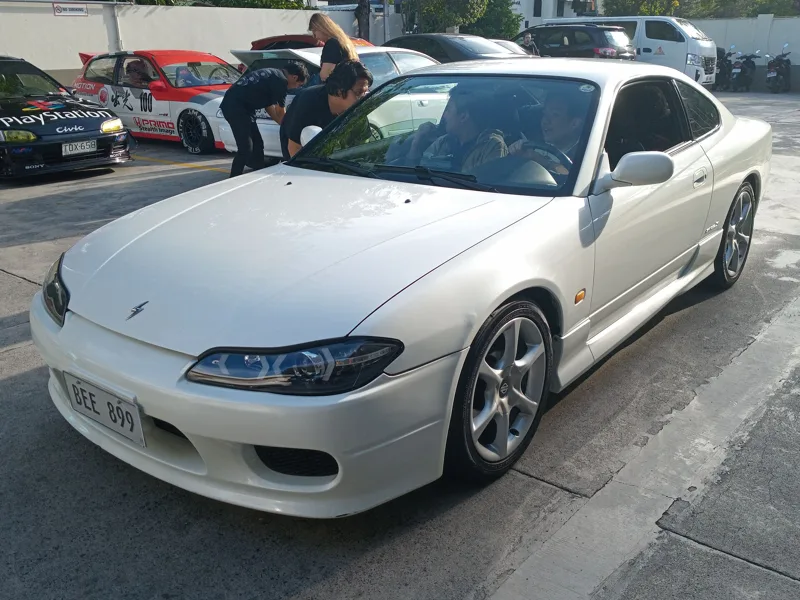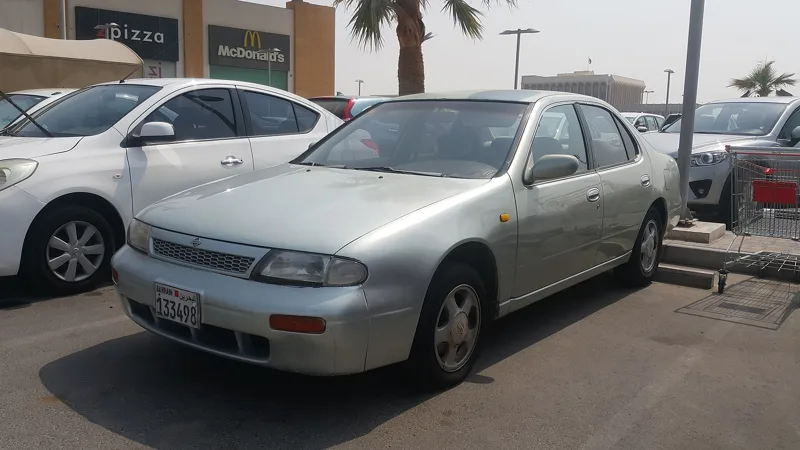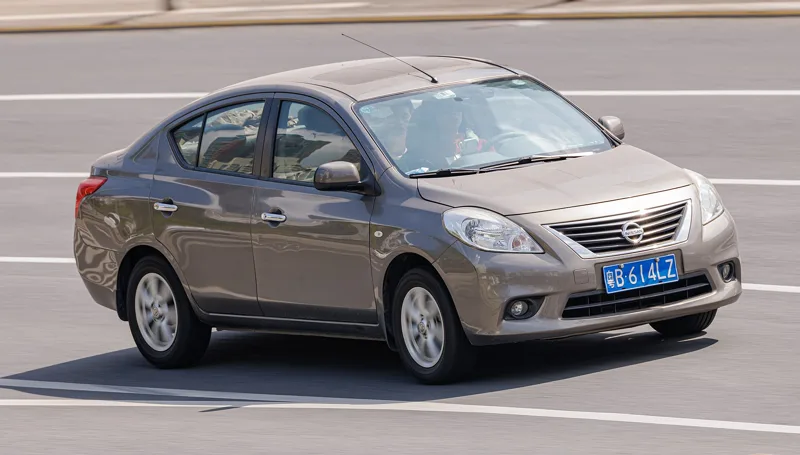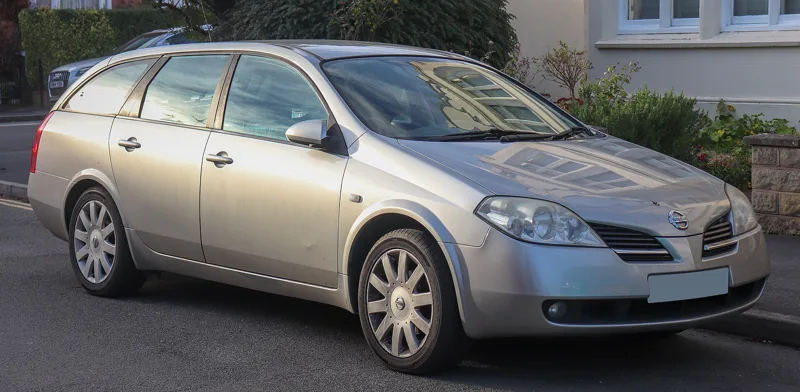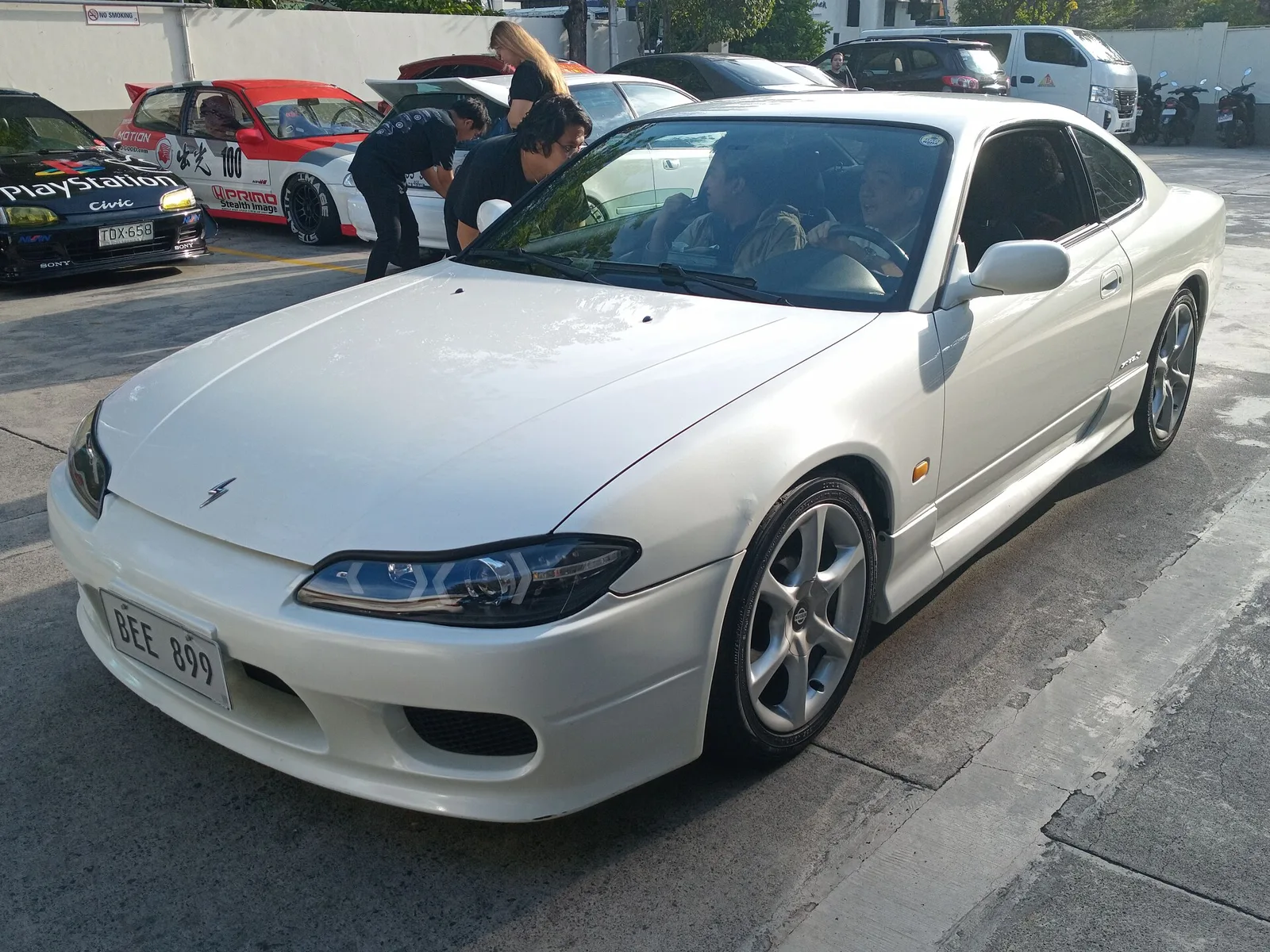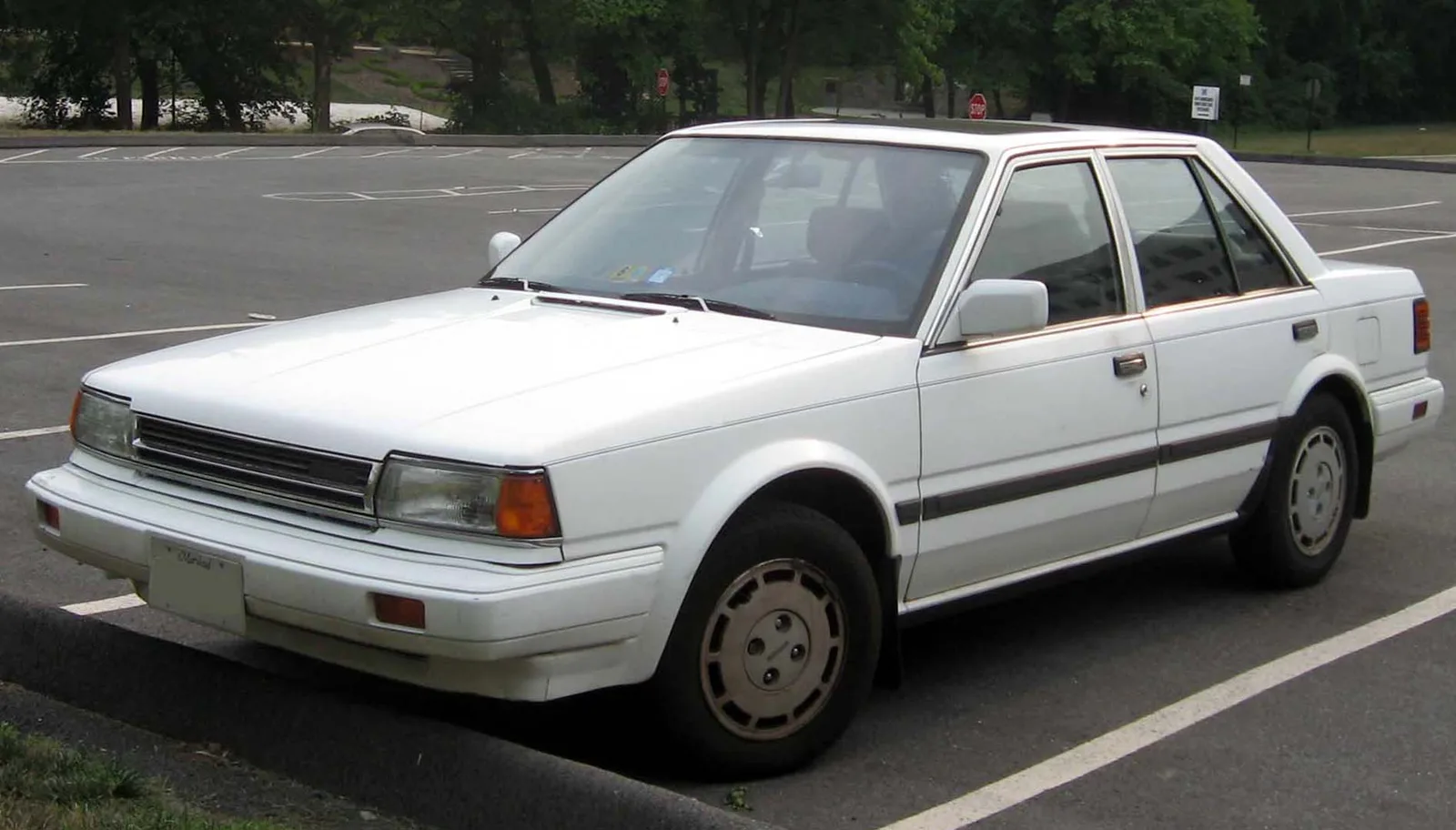
From the coke-bottle 710 to the A10 Datsun 510 and the front-drive Stanza, a compact family car that rallied and sold across the world.
Built from 1973 to 1992, the Violet spanned three generations, the 710, A10 and T11 series. Sold abroad as the Datsun 140J, 160J, 710 and 510, it also won Safari Rally events in Kenya in the late 1970s and early 1980s.
The Nissan Violet was a compact car sold by Nissan from January 1973 until 1992. It began as a larger companion to the Nissan Cherry, and it grew through three generations, from the 710 series to the A10 and T11 cars. Its name later passed to the Stanza, which carried the family on into the 1990s.
Where did the Violet fit in Nissan's range?
The first Violet was a smaller version of the Datsun Bluebird 610 and was launched exclusively through Nissan's Cherry Store dealerships in Japan. Outside Japan it was sold as the Datsun 140J or 160J, although in the United States it carried the Datsun 710 name. Its body styles were a two-door saloon, a two-door coupe, a four-door fastback, an estate and a van.
The Violet let Nissan widen the Bluebird's dimensions without making the Bluebird itself larger. It was built to fill the space between the small Cherry and the larger Bluebird.
A compact that began as the Bluebird's smaller sibling, then gave Nissan a rally winner and a 510 name that carried on to the 1980s.
Why was the 710 Violet so controversial?
The original four-door had a swoopy body with a fastback line and "coke bottle" styling, an approach that had appeared across the industry in the 1960s and early 1970s. It was among the first Nissan products to use it, but the look brought complaints about limited rear vision and a dark rear cabin, especially for children.
Taxi companies stopped buying the Violet, and Nissan responded in February 1976 with a drastic facelift. The whole rear end, including the roof panel and doors, was replaced with more traditional notchback bodywork. That gave passengers more room and reduced blind spots, and the revised cars took the chassis code 711.
The 1976 change also brought revised engines to meet Japan's new emissions standards. The coupes and vans kept their original bodywork, while the two-door sedan was discontinued and the coupe continued alongside the four-door 711.
What engines did the 710 Violet use?
In Japan the most powerful model was the fuel-injected 1600 SSS-E, which produced 110 PS (81 kW) JIS at 6,200 rpm. Export versions of the 160J SSS used twin carburettors and claimed 95 PS (70 kW) DIN, five more than the regular 160J. In October 1975 an 1800 cc engine arrived in Japan, running only on LPG and aimed at taxi use.
North America took a different route. Its first Violets used a 1770 cc engine producing 90 hp (67 kW), and the 1974 model year switched to the 2-litre L20B, the same unit used in the Datsun 610. The 1975 American cars made 97 or 94 hp (72 or 70 kW) SAE Net, depending on specification, and the California car used a catalytic converter and unleaded fuel.
The American wagon carried a smaller petrol tank than the sedans, 11.9 US gal (45 L) against 13.2 US gal (50 L), but the California wagon oddly matched the sedan tank.
How did the Violet sell overseas?
In Taiwan the car arrived in 1973 as the Yue Loong Violet 707 and replaced the successful Datsun Bluebird there, staying in production until 1982. Its VIP Brougham version added leather seats and wood trim. The Taiwanese cars usually used the overhead-valve J16 engine.
In Mexico the 710 Violet was built from 1973 to 1978 at Nissan's CIVAC plant near Cuernavaca. Mexican buyers gave it the nickname bolillo, after the bread roll its rounded shape resembled. The Mexican range offered only the four-door saloon and the wagon, both with a 1.6-litre carburettor engine and a four-speed manual.
New Zealand's temporary relaxation of import licensing led to considerable imports of the Datsun 140J sedan and 160J two-door in 1973 and 1974. Duties of up to 55% and sales tax of up to 60% had made supply tight, so several hundred 140J sedans landed through the Port of Timaru, and they were presold before arrival. Early units differed in small details, such as amber park lights and Violet badges.
In South Africa the 1976 facelift arrived as the 711 in October 1976 and stayed in production longer than in Japan, sold as the 160U or 180U.
What was the A10 generation?
The first Violet was replaced in May 1977 by a more rational and slightly larger car, with the glass area increased by ten percent. It arrived with two badge-engineered siblings. The Auster, sold through Nissan Prince Stores, aimed at buyers wanting quality and youthfulness, with a different grille, round gauges and an optional five-speed manual.
The more European Stanza followed in August 1977. It came only in higher trims and had a different bonnet and single rectangular lights where the Violet and Auster used twin round units. The Stanza was sold through Nissan Satio Store locations, while the more basic Violet, positioned one level above the Sunny, sold at Nissan Cherry Stores.
The engines were revised as well. The 1.4-litre L14 gave way to a new A-series engine producing 80 PS (59 kW) at 6,000 rpm, and North American cars received a two-litre version to offset emissions and safety weight. In May 1978 the car was facelifted and became the A11, with the cross-flow Z16 replacing the L16 and the new NAPS emissions technology. In November 1978 a 1.8-litre NAPS-Z engine appeared at the top of the range, rated at 105 or 115 PS (77 or 85 kW) depending on carburettor or injection.
Five body styles were on offer by then, including a three-door coupe with a folding rear seat. Five-door bodywork reached the Violet and Auster in April 1980, and it was built for only fourteen months before the next generation replaced it in June 1981.
Transmissions included a four-speed manual, a five-speed manual and a three-speed automatic. This generation competed directly with the Toyota Celica Camry and the Honda Accord in Japan.
How did the A10 sell in North America and Australia?
In the United States and Canada the Violet was sold as the Datsun 510, a name chosen to trade on the reputation of the earlier 510 Bluebird. The two-litre L20B was the main engine, although 1980 American cars received the NAPS-Z version of the same size. The four-speed manual was standard, with a five-speed manual or three-speed automatic as options. The 510 name lasted until the T11 Stanza replaced it for the 1982 model year.
In Australia the A10 was called the Datsun Stanza. The Stanza was assembled there from 1978 to 1982 as a 1.6-litre four-door saloon, mainly to fill a gap between the Sunny and the 200B, in GL, GX and sporty SSS trims. Motoring journalists, particularly at Wheels magazine, criticised it as unadventurous, although buyers liked it. In 1979 a batch of 120 two-door coupes was assembled by mistake and sold out without promotion.
What did the Violet achieve in motorsport?
The Violet 160J was Nissan's most successful World Rally Championship car. It won the Safari Rally in Kenya from 1979 to 1982, with Shekhar Mehta at the wheel each time. The 1979 and 1980 winners used an SOHC engine, while the 1981 and 1982 winners were Violet GT models with a DOHC engine.
Timo Salonen drove a Violet to victory at the 1980 Rally New Zealand, and the car also won the 1981 Rallye Cote d'Ivoire. Nissan later homologated the Silvia coupe as a bodystyle variant of the Violet, under the name Violet GTS, which still confuses the competition histories of the two cars.
What came after the Violet?
A front-wheel drive Stanza arrived in 1981 as the T11 series. It was the first middle-class Datsun with that layout and the first Japanese car in the class built to principles established in Europe. Traditional Japanese buyers still preferred rear-wheel drive Bluebirds, but the T11 became the norm for Nissan in the sector.
After 1982 Nissan standardised the Stanza name in export markets while phasing out the Datsun marque. The US T11 Stanza replaced the 510 for the 1982 model year, and in 1984 the carburettor CA20S gave way to the fuel-injected 2.0 L CA20E. The Datsun name was dropped completely in Europe in 1984.
In Britain the Stanza went on sale from January 1982, alongside rear-drive Bluebirds, and it remained until 1986, when the nameplate was dropped in Europe and rebadged as a Bluebird. The Stanza was the only time a Nissan was rated more reliable than the Toyota Camry in the United States, between 1983 and 1986.
Taiwan built a car closely based on the T11 Stanza as the Yue Loong Feeling 101, later facelifted as the Feeling 102. Both were sedans and hatchbacks, and they were the first indigenously developed Taiwanese cars, exported in small numbers. Indonesia used the T11 Stanza 1.6 L as a popular taxi in the mid-1980s.
The T12 Stanza and Auster arrived in 1986 with squared-off styling, and the Stanza was replaced in North America for 1990 by a basic Bluebird wearing Stanza badges. The Stanza was finally discontinued after the 1992 model year, with the last American car assembled on 27 March 1992. Its nameplate went on the first-generation Altima, marketed as the Nissan Stanza Altima.
What are the Nissan Violet specifications?
| Specification | Detail |
|---|---|
| Launch | January 1973, 710 series |
| Japanese top engine (710) | 1600 SSS-E fuel injected, 110 PS (81 kW) JIS |
| North American engine (710, 1974 on) | 2-litre L20B |
| North American output (1975) | 97 or 94 hp (72 or 70 kW) SAE Net |
| A10 A-series engine | 80 PS (59 kW) at 6,000 rpm |
| A10 top Japanese engine | 1.8-litre NAPS-Z, 105 or 115 PS (77 or 85 kW) |
| North American A10 engine | 2.0 L L20B, 92 hp (69 kW; 93 PS) at 5,200 rpm |
| Gearboxes (A10) | Four-speed manual; five-speed manual or three-speed automatic |
| Final Stanza model year | 1992 |