A front-drive sport-compact from 1983 to 1991, with a 16-valve engine, nimble handling and a racing record that outlived its production run.
The Honda CR-X was a front-drive two-seat sport-compact built from 1983 to 1991, with nearly 400,000 made. Its handling, fuel economy and VTEC variants made it popular, and it was succeeded by the Civic-based del Sol in 1992.
The Honda CR-X was a front-wheel drive sport-compact that Honda built from 1983 to 1991, with nearly 400,000 produced. It was launched in Japan as the Ballade Sports CR-X and sold elsewhere as the Civic CRX, and it became known for nimble handling, performance and strong fuel economy.
What was the Honda CR-X?
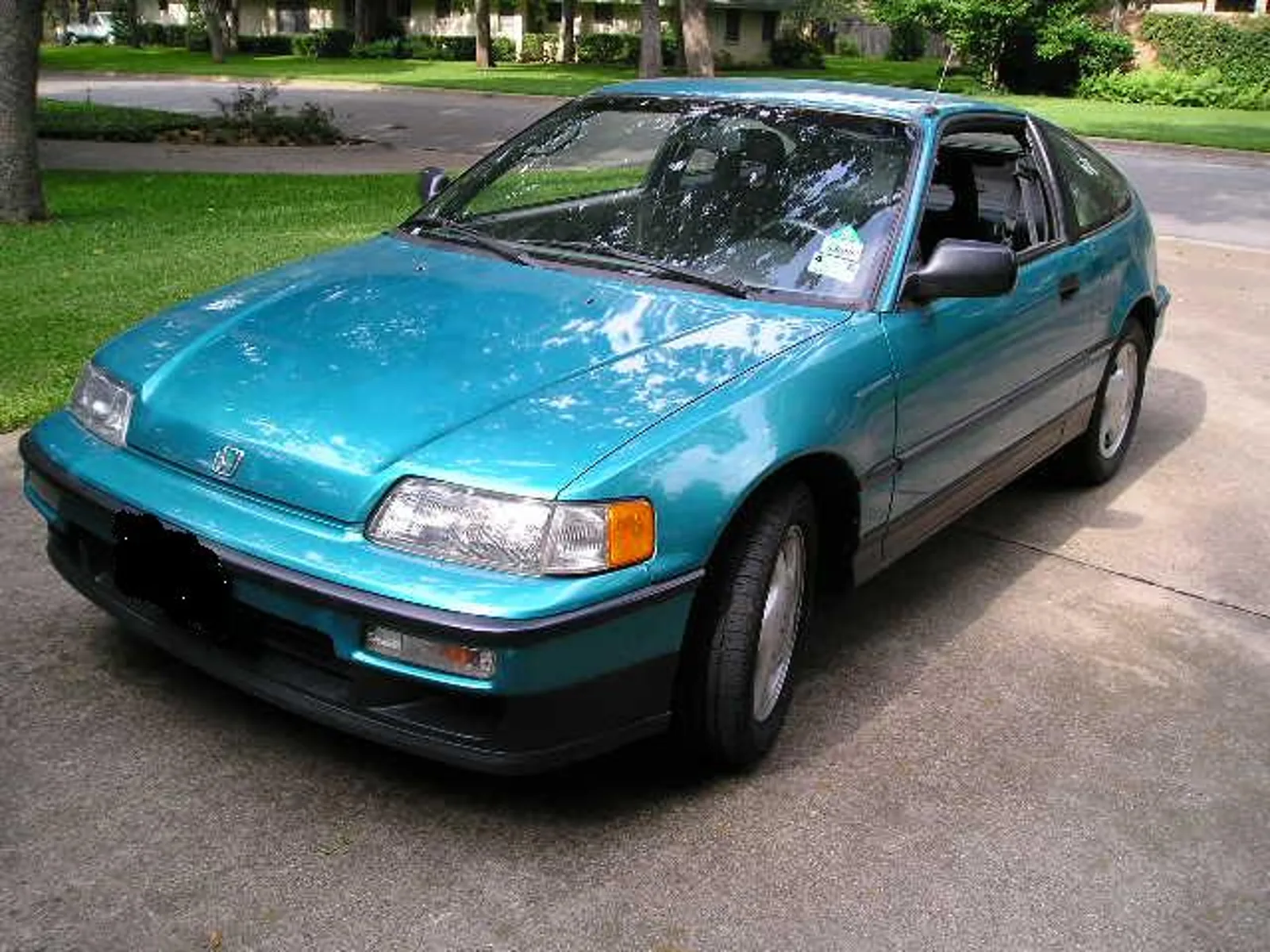
The CR-X was an all-new two-seater that Honda introduced in 1983 for the 1984 model year. It shared its drivetrain with the third-generation Civic but had unique styling and interior furnishings. In North America it was marketed as an economy sport two-seater, while Japanese and European cars came with a 2+2 seating arrangement.
Honda described the small rear seat as a one-mile seat, meaning it was for emergency use only. The name is most widely explained as Civic Renaissance Experimental, though other definitions have been suggested.
A front-drive two-seater built on Civic parts that became a racing favourite and inspired the CR-Z.
Where did the CR-X's design come from?
The designer's own Alfa Romeo GT Junior Zagato was the starting point for the CR-X look.
In Japan the car was sold through Honda Verno dealerships, alongside the Vigor, the Quint and the Prelude. It was also marketed as part of the Civic range, and briefly as a Ballade.
What engines did the first CR-X have?
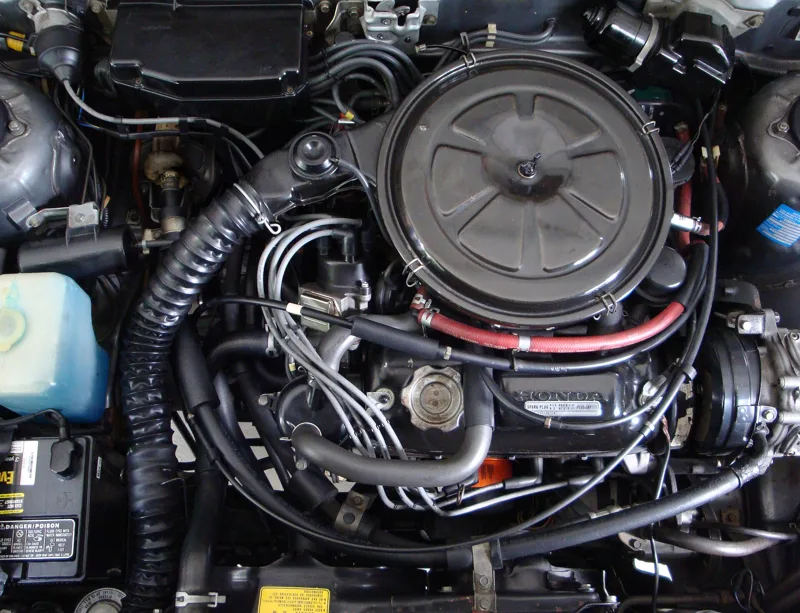
In Japan the base model had a 1.3-litre carburettor four-cylinder, while the flagship used a 1.5-litre fuel-injected four. A digital instrument option was also available. In North America the economy model used an aluminium 1.3-litre CVCC four, and the sportier model featured a 1.5-litre 12-valve engine.
The 1.5-litre sport model came with a five-speed manual or a three-speed automatic. Digital instruments and the roof ventilation hatch were not offered in North America at launch.
How did the first-generation range develop?
For 1985, Honda North America replaced the economy model with the HF, short for high fuel, which used a 1.5-litre engine with an aluminium block and the two-valve cylinder head from the 1984 engine. In spring 1985 the Si arrived with a 1.5-litre SOHC PGM-FI fuel-injected four.
The Si had a power sunroof, dual remote exterior mirrors, a rear wiper, 13-inch alloy wheels and a ducktail spoiler on the hatch. For 1986 the car received aerodynamic headlights, and the Si gained body-coloured lower cladding, a revised rear spoiler and 14-inch alloy wheels. The interior added a centre console with cassette storage.
Why did the first generation end in 1987?
The 1987 model was virtually unchanged from 1986, and it was the final year of the first-generation CR-X. The car was then replaced by a redesign for the 1988 model year, which was completed in late 1987.
The first generation had built a strong reputation by then, combining good fuel economy with sporting handling.
How did the Japanese and European engines differ?
The Japanese Si and the European 1.6i-16 used a 1.6-litre 16-valve DOHC four-cylinder. In the UK specification it produced 135 PS (99 kW; 133 hp), while the Japanese version made 140 PS (103 kW; 138 hp). The Japanese engine was stamped ZC, and the European engine ZC1.
Outside North America, the second generation used a 1.5-litre SOHC four or an updated 1.6-litre DOHC ZC engine. Some left-hand-drive European cars could also be ordered with a twin-carburettor D14A1 and a four-speed automatic.
How economical was the CR-X?
The original 1.3-litre car, chassis code AE532, had an EPA highway rating of 52 mpg-US (4.5 L/100 km; 62 mpg-imp) in 1984. It was reported to achieve over 70 mpg-US (3.4 L/100 km; 84 mpg-imp) in favourable conditions.
The later 1.5-litre American HF, with chassis codes EC1 and AF, was rated by the EPA at 42 mpg-US (5.6 L/100 km; 50 mpg-imp) city and 51 mpg-US (4.6 L/100 km; 61 mpg-imp) highway. It offered that efficiency at no price premium over the base model.
What changed with the second generation?
The CR-X was completely redesigned by late 1987 for the 1988 model year. Its wheelbase grew by 10 cm (4 in), its length by 3.2 in (81 mm) and its width by nearly 2 in (51 mm). The suspension was also redesigned, with a four-wheel double wishbone arrangement replacing the earlier torsion bar front and trailing-link rear.
The larger design brought better handling and more passenger and cargo space than the first generation. The front-drive car was popular for its performance, nimble handling and good fuel economy.
What did the 1990 refresh bring?
The CR-X received a mild refresh for the 1990 model year. The VTEC models had a makeover with new bumpers, lights, hood, brakes, suspension and dashboard design, and some of these changes were added to the non-VTEC models too.
Japanese buyers could also specify a glass roof, a fixed glass panel running from the top of the windscreen to the top of the hatch opening. Such cars are now sought after in other markets.
When did VTEC arrive?
In September 1989 Honda added the 1.6-litre 16-valve DOHC VTEC B16A four to the range outside North America. The VTEC system, which combined variable valve timing and lift, gave more power at high engine speeds while still delivering low fuel consumption and smoother idling.
The B16A produced 160 PS (118 kW; 158 hp) in the Japanese SiR and 150 PS (110 kW; 148 hp) in the European 1.6i-VT. It was only the second model to get a DOHC VTEC engine, following the Integra XSi by a short interval.
How did the twin-cam engines change the bonnet?
Twin-cam engines were taller than single-cam units, so CR-Xs fitted with them needed a different bonnet. The 1.6-litre DOHC unit was only slightly taller than the SOHC engine and needed a bonnet with a bump on one side to clear the cam gear cover.
VTEC cars had a bonnet that was raised across most of the engine bay to give more clearance for the taller engine.
How were the US trims set up?
In the US the second generation came in three trims, with the base car, the HF and the Si. Each used a different engine, and the choice of transmission depended on the trim.
| US trim | Engine | Transmission |
|---|---|---|
| Standard (DX) | 1.5-litre 16-valve D15B2, dual-point injection | 5-speed manual or 4-speed automatic |
| HF | 1.5-litre 8-valve D15B6, multi-point injection | 5-speed manual only |
| Si | 1.6-litre 16-valve D16A6, multi-point injection | 5-speed manual only |
The base and HF cars had adjustable headrests, while the Si had high-back bucket seats. Air conditioning and the audio system were dealer-installed options on every model.
What did the Si add in the second generation?
The Si had a power-sliding sunroof, a rear wiper and 14-inch alloy wheels. Underneath it had a rear anti-sway bar and variable-ratio rack-and-pinion steering. From 1990 and 1991 the Si received four-wheel disc brakes, instead of front discs and rear drums.
Power also rose over time. The 1989 Si was rated at 108 bhp (81 kW), up from 105 bhp (78 kW) in 1988, after a revised camshaft was fitted.
How did the model years change in detail?
The second generation began in 1988, and in 1989 the Si and base models moved to door-mounted seatbelts to meet federal rules. In 1990 the HF moved to door-mounted seatbelts, the hazard switch moved to the dashboard, and the headlights, bumpers and taillights were slightly revised.
Colours changed each year. Blade silver was replaced by Torino red in 1990, Superior blue gave way to Celestial blue, and in 1991 Barbados yellow became Tahitian green on the Si. Polar white was replaced by Frost white, and 1991 was the final year of the second generation.
What replaced the CR-X?
In 1992 Honda replaced the CR-X with the del Sol, a targa-topped model based on the Civic. It carried the Civic del Sol badge, later shortened to del Sol in some markets, and it was called the CR-X in others, which is why some enthusiasts treat it as a third-generation CR-X.
The del Sol came in S, Si and VTEC trims in the US, and in Japan the SiR offered a 1.6-litre 170 PS (125 kW) B16 SiR-II VTEC four. Production ended in 1997 in North America and in 1998 elsewhere.
Did the CR-X have a successor?
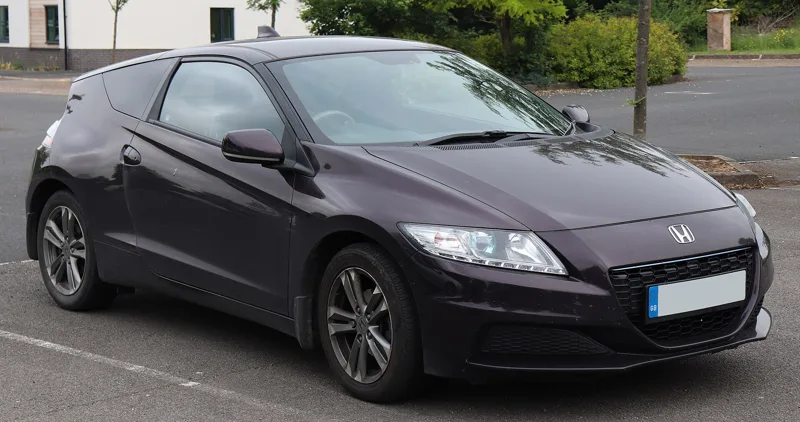
In 2010, thirteen years after CRX production ended, Honda released the CR-Z, which is regarded as the spiritual successor to the CR-X. The earlier Insight was often compared with the CR-X, since both used a Kammback aerodynamic design.
What awards did the CR-X win?
The first-generation CRX was named Motor Trend's Import Car of the Year in 1984 and included in Car and Driver's 10Best in 1985. The second generation made the 10Best in 1988, and the Si was named Motor Trend's Import Car of the Year that year and one of Road and Track's Ten Best Cars.
Motor Trend gave the import award to the CRX again in 1990. Consumer reporter David Horowitz tested the claim of 60 mpg made in CRX advertising on his Fight Back! programme, and measured 65 mpg, which passed the test.
How safe was the CR-X?
In Australia, Used Car Safety Ratings 2006 judged the 1988 to 1991 CR-X to offer side-impact protection well below the average for its era. Both versions received good marks in the NHTSA 1997 US NCAP crash tests, with 4 and 5 stars.
US second-generation cars with side-impact door beams can be identified by where the seatbelts are mounted. If the belt is mounted in the door, the beams are present. Cars sold outside the US had B-pillar mounted restraints.
How did the CR-X perform in motorsport?
Like the Civic, the CR-X was popular in motorsport because parts were widely available. In the UK a one-make series for the second generation ran from 1988 to 1994. Its celebrity car was raced by names including Roberto Moreno, Derek Warwick and Patrick Head.
The car entered the Nurburgring 24 Hours in 1986 and 1988, and scored a class podium at the 1989 Spa 24 Hours. Warwick later ran a team and raced briefly in the 1990 season.
What was Project Synchronicity?
Project Synchronicity, featured in the May 1985 issue of Car and Driver, was a collaboration between American Honda and Racing Beat. It fitted a second 1.5-litre engine with automatic transmission into the hatchback cargo area. The installation took six months and cost $20,000.
A planned second phase, called Super Synchronicity, would have used two 1.8-litre engines from the Honda Accord, with upgraded suspension, a Mugen body kit and better wheels.
Were there factory convertibles?
There were no factory convertibles, but R. Straman Company of Costa Mesa, California, converted 310 CRXs into open cars from 1984 until 1987. The Straman-built CRX Spyder was the cover car of the July 1984 issue of Road and Track.