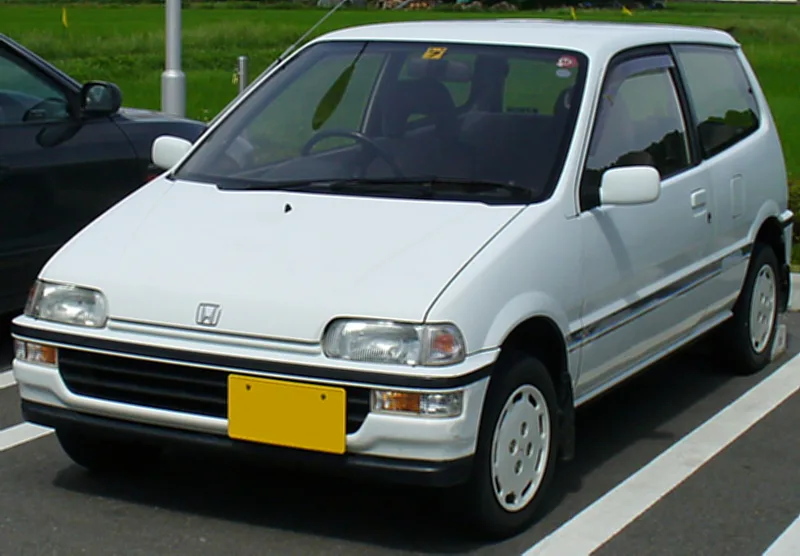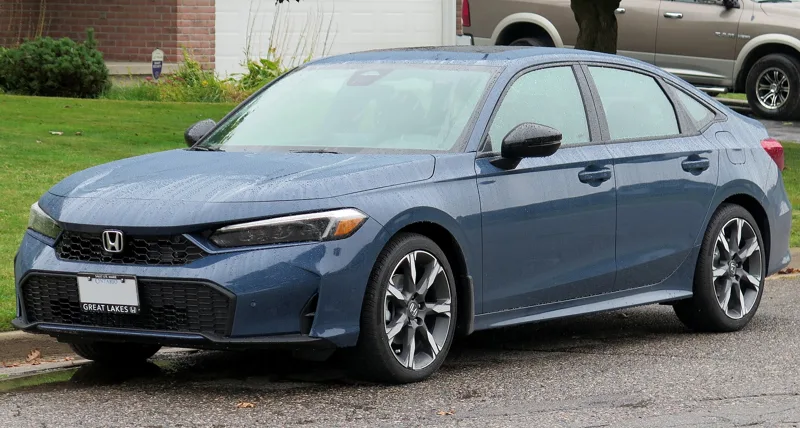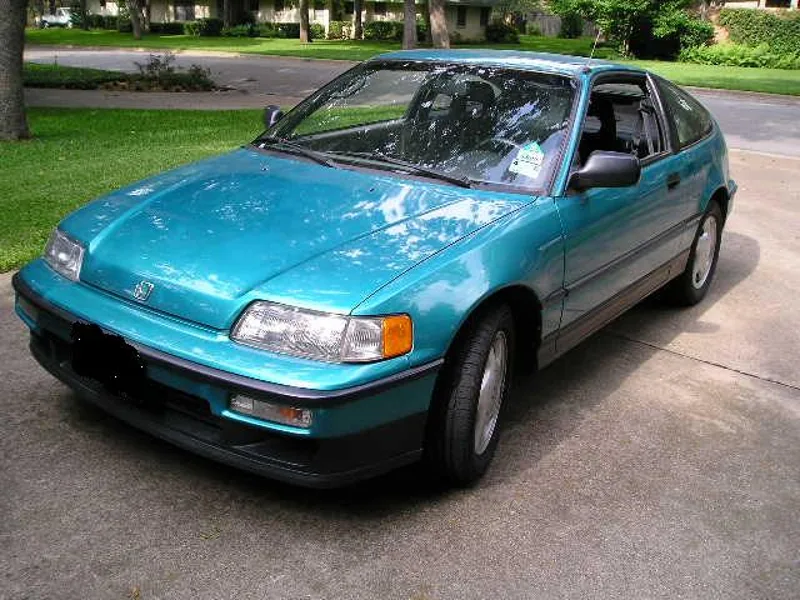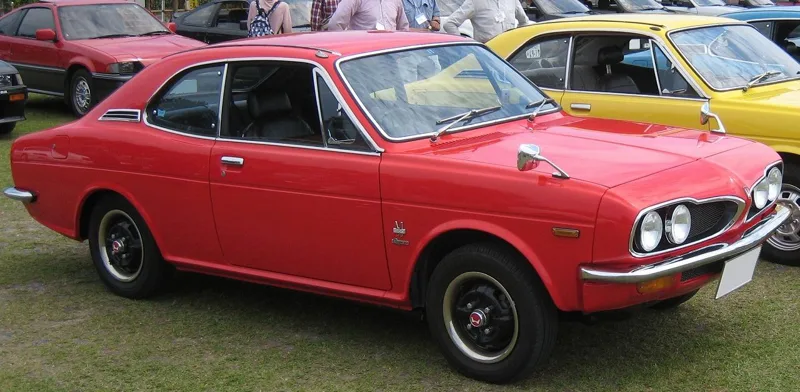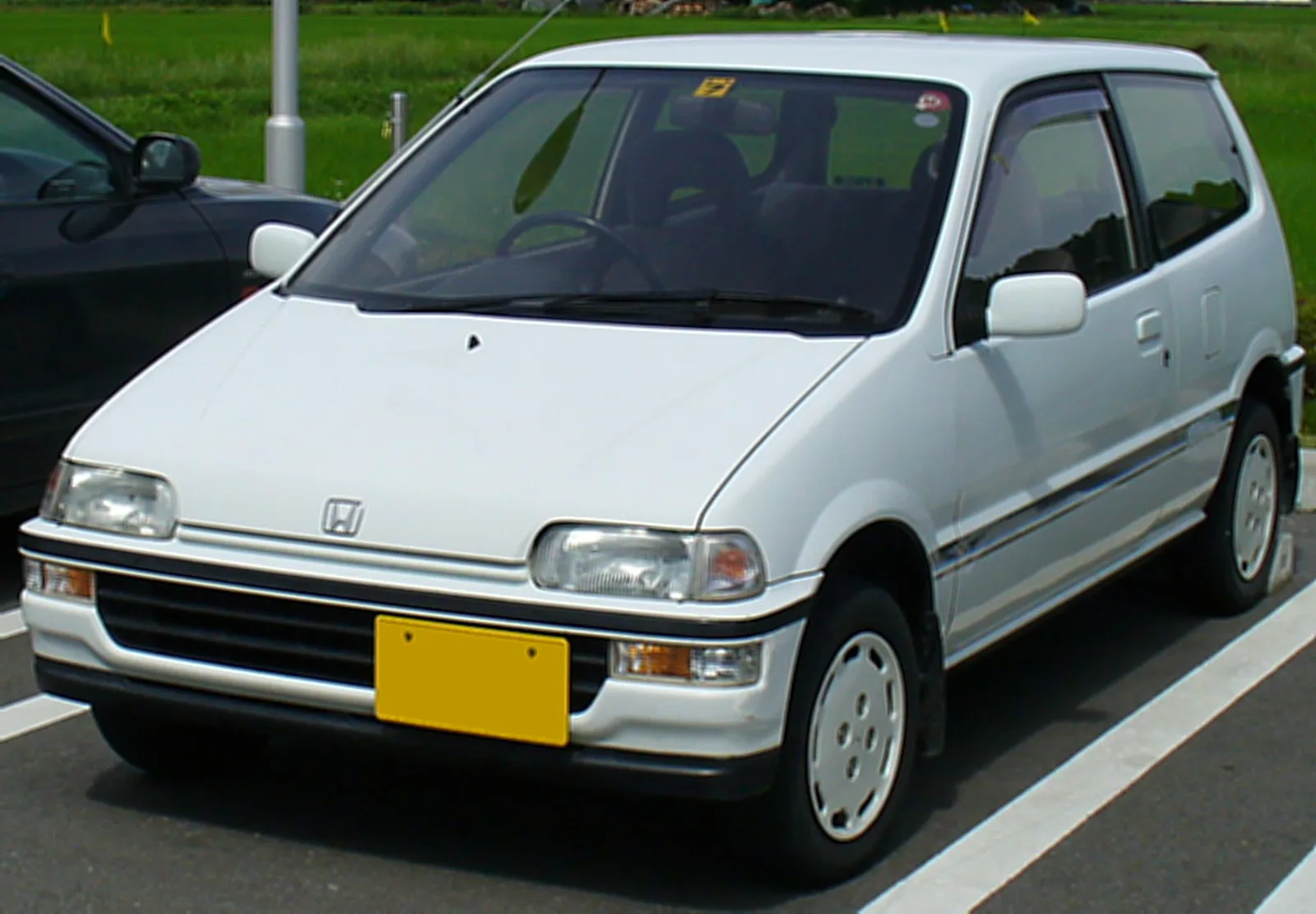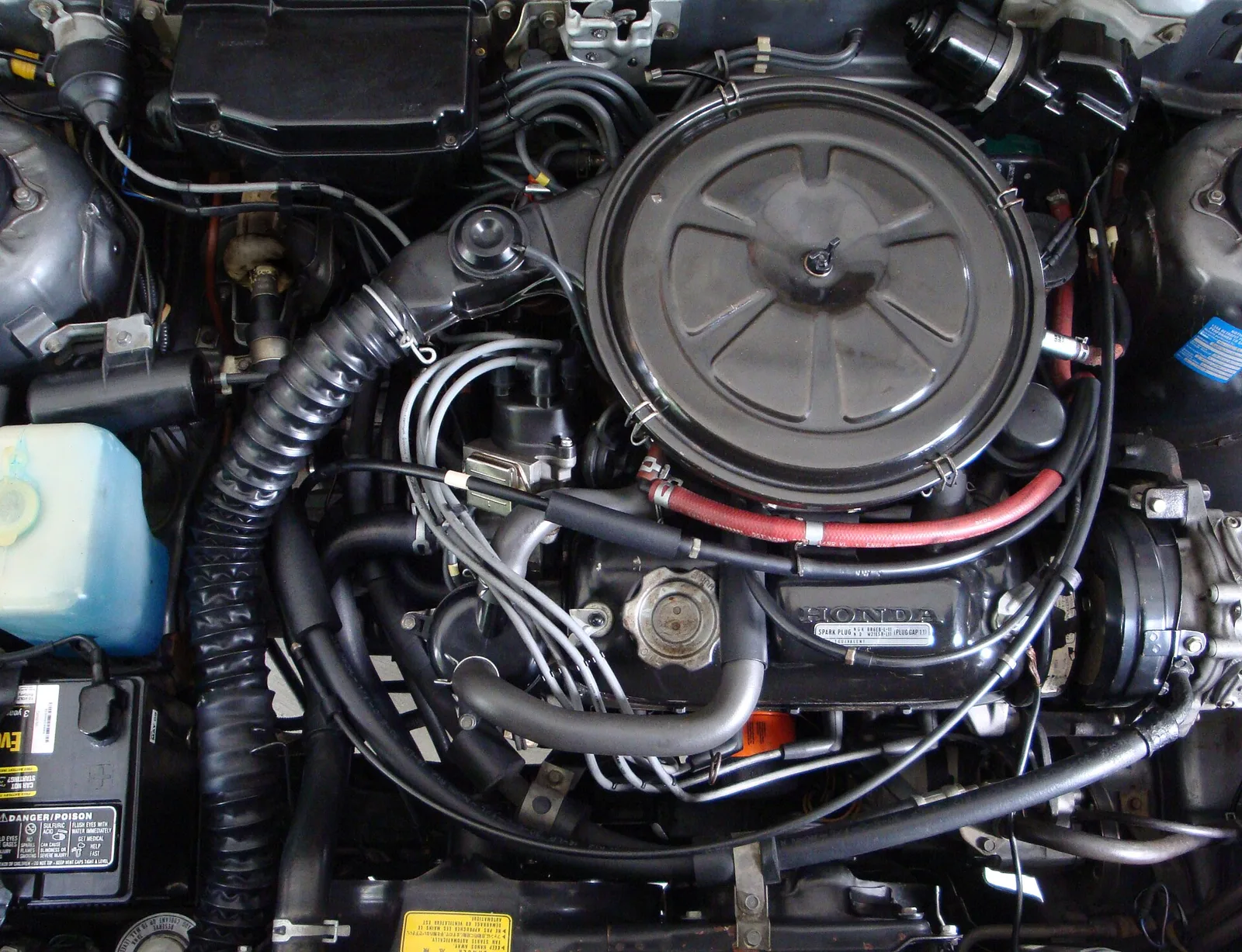
The 1970s and 1980s E-series, from the CVCC ED1 that met emissions rules without a catalytic converter to the EW and ER engines that followed.
The E-series spanned inline-four engines from the 1970s and 1980s. CVCC, introduced in the 1975 Civic ED1, met emissions rules without a catalytic converter, and the family's successor was the D series. The EW variant was renamed D15A in 1987.
Honda's E-series inline-fours powered its cars across the 1970s and 1980s. The most talked-about feature of the family was CVCC combustion technology, which debuted in 1975 and let Honda meet tough emissions standards without a catalytic converter.
What was the E-series?
Honda designed the E-series as a line of inline four-cylinder engines, and it saw service from the early 1970s into the 1980s. Its best-known feature was CVCC technology, first introduced in the ED1 engine for the 1975 Civic, which satisfied 1970s emissions rules with no catalytic converter.
The family covered a wide range of capacities, from small water-cooled units to large-bore fours and even a turbocharged engine for the City. Names did not always mean separate designs. The EP, for instance, was essentially an EL block fitted with an EK cylinder head.
The ED1 was placed on Ward's list of the best engines of the twentieth century.
One clever combustion idea and a long run of small fours that kept Honda's emissions story moving through two decades.
What was CVCC and why did it matter?
CVCC was the combustion approach that allowed the ED1 to meet emissions rules without a catalytic converter. It was introduced in the 1975 Civic, and it later appeared across many E-series engines that used an auxiliary valve arrangement alongside the main valves.
The Japanese market knew the engine as COMBAX, an acronym for COMpact Blazing-combustion AXiom. Early CVCC engines were SOHC units with 12 valves, and the carburettors varied from single barrels to three-barrel Keihin units, depending on the model.
The EK was the last CVCC configuration that Honda built. Its cylinder head went through several iterations, moving from a six-port design to an eight-port layout, and the valve order changed in 1982 before CVCC production ended in 1985.
Where did the small EA and EB engines fit?
The EA was a water-cooled 356 cc inline-two that replaced the air-cooled 354 cc engine from the N360. Its SOHC layout used a timing belt where the N360 had a chain, and the design was derived from an air-cooled motorcycle engine.
Its bore measured 67 mm and its stroke 50.6 mm. The standard Honda Life tune gave 30 PS (22 kW) at 8000 rpm, while the twin-carburettor version used in the Life Touring and the Honda Z reached 36 PS (26 kW) at 9000 rpm.
The EB series used an aluminium block in the first Civic, although the cast-iron EB5 went into the short-lived Honda 145. The EB1 displaced 1,169 cc, with cylinders measuring 70 mm x 76 mm, and it was rated 69 PS (51 kW; 68 hp), peaking at 5500 rpm.
Two further EB variants, the EB2 and EB3, displaced 1,237 cc with a larger cylinder size and different valve diameters. Their cylinders measured 72 mm x 76 mm, and they produced 64 PS (47 kW; 63 hp), with torque of 10.6 kg m (104 Nm; 77 lb ft) at 3000 rpm.
The EB5 was larger again, at 1,433 cc, with 70 mm x 88 mm cylinders. It came with either a two-barrel carburettor or fuel injection, and the output range ran from 79 PS to 90 PS at 5500 rpm depending on the spec.
The EH was a water-cooled SOHC two-cylinder of 545 cc whose 72 mm bore matched the horizontally opposed Gold Wing GL1000 motorcycle engine. It powered the Honda Acty from 1977 and the Honda Today from 1985, at up to 31 PS (23 kW).
Mugen built a 1.3-litre racing version of the EB called the MF318. It was Mugen's first product and was successful in the Japanese FJ1300 series, although it was not particularly reliable.
What were the early CVCC engines?
The early CVCC line began with the ED series, a 1.5 L unit of 1,488 cc with an SOHC 12-valve head. Its three-barrel version delivered 9.4 kg m (92 Nm; 68 lb ft) of torque, and the ED1 fitted the 1975 Civic CVCC.
The ED family continued with the ED2 wagon and the ED3 and ED4 variants for 1976 to 1979. The EE applied CVCC to a 1.2 L engine of 1,237 cc, and it made 63 PS (46 kW) before the 1.3-litre EJ replaced it in 1978.
The EC was the non-CVCC sibling of the ED. It was a 1.5 L with 74 mm x 86.5 mm cylinders, an 8.1:1 compression ratio and 65 PS (48 kW; 64 hp) at 5500 rpm. The 1979 Civic Van version raised its output to 76 PS (56 kW; 75 hp).
The EF was a 1.6 L of 1,599 cc with 74 mm x 93 mm cylinders. It produced 82 PS (60 kW; 81 hp), reaching its peak at 5300 rpm, and it was fed by a three-barrel Keihin carburettor. It powered the US-market Accord CVCC from 1976 to 1978.
The EG, by contrast, was a non-CVCC unit: a 1.6 L of 1,598 cc with an SOHC eight-valve head and a two-barrel carburettor. It made 69 PS (51 kW; 68 hp) and went into non-US Accords from 1976 to 1978.
The EJ was a 1.3 L (1,335 cc) CVCC engine that delivered 68 PS (50 kW; 67 hp). It appeared in the 1978 Civic 1300, and the EJ1 variant took over from July 1979 in the Civic CVCC.
How did the mid-1980s engines differ?
Through the early 1980s the E-series spread across the Civic, Accord, Prelude and CR-X. The EN, EP, EV and EW covered capacities from 1.3 L to 1.6 L, while the ES and ET brought 1.8 L engines to the Prelude and Accord.
The EN had an aluminium block and head, with a single overhead cam and eight valves. The single-carburettor EN1 produced 61 PS (45 kW; 60 bhp) in the Civic, and the twin-carb EN4 reached 72 PS (53 kW; 71 bhp) in the Civic S and the Triumph Acclaim.
The EP was an SOHC 12-valve unit of 1.6 L (1,601 cc). It produced 95 PS (70 kW; 94 hp) and was used in the Quintet in Japan and in early Accord and Vigor models from 1980 to 1982.
The ES displaced 1.8 L (1,829 cc) in three forms. The ES1 used dual sidedraught carburettors, the ES2 had a standard three-barrel carburettor, and the ES3 introduced PGM-FI fuel injection for the Accord SE-i.
The ET was also a 1.8 L of 1,829 cc with an SOHC 12-valve head. The ET2 used dual sidedraught carburettors and a 4-2-1 exhaust, and Japanese-market versions with PGM-FI were rated 130 PS (96 kW; 128 hp).
The EV was a 1.3 L (1,342 cc) with a 74 mm bore and 78 mm stroke. The US version peaked at 5500 rpm with 61 PS (45 kW; 60 hp), while the Japanese version had 12 valves and auxiliary CVCC valves for 80 PS (59 kW; 79 hp).
The EM was a 1.5 L of 1,488 cc with an auxiliary CVCC valve and a two-barrel or three-barrel carburettor. Its first form peaked at 5500 rpm with 80 PS (59 kW; 79 hp), and the 1981 to 1983 Civic version gave 64 PS (47 kW; 63 hp).
The EL was a 1.6 L of 1,602 cc, an SOHC eight-valve unit with a two-barrel carburettor. North American output was 79 PS (58 kW; 78 hp), and the same engine went into non-US Accords and the Prelude in Australia and Canada.
The EW arrived in September 1983 alongside the third generation Civic. Early three-barrel EW1 units made between 58 and 76 hp, while the fuel-injected EW3 and EW4 reached 92 PS (68 kW; 91 hp). The EW5 used a third throttle plate to feed a fifth injector for the CVCC ports, and the CR-X version of it had twin exit pipes.
What role did the ER and City engines play?
The ER was a long-stroke inline four with five crankshaft bearings. A cogged belt drove its overhead camshaft, and the engine powered the City and Jazz from 1981 until 1986. A turbocharged version was developed together with IHI for the Turbo and Turbo II models.
The lower-powered commercial City Pro used lower compression and a distributor in place of the coil pack fitted to passenger cars. The Turbo II carried an intercooler and a computer-controlled wastegate, which helped it cope with boost.
Composite connecting rods arrived on the naturally aspirated ER engines in March 1985, a claimed world first for a production car. The change made them lighter and stronger at the same time, and it was part of a wider effort to cut fuel use.
What were the main E-series specifications?
| Engine | Application | Displacement | Output |
|---|---|---|---|
| EA | Honda Life, 1971 | 356 cc | Peak 8000 rpm, 30 PS (22 kW) |
| EB1 | First-generation Civic | 1,169 cc | 69 PS (51 kW; 68 hp) |
| ED1 | 1975 Civic CVCC | 1,488 cc | Peak 5000 rpm, 53 PS (39 kW; 52 hp) |
| EF | 1976-1978 Accord CVCC (US) | 1,599 cc | Peak 5300 rpm, 82 PS (60 kW; 81 hp) |
| EK | Last CVCC configuration | 1,751 cc | Peak 5500 rpm, 97 PS (71 kW; 96 hp) |
| ES3 | 1985 Accord SE-i | 1,829 cc | Peak 5800 rpm, 102 PS (75 kW; 101 hp) |
| EW5 | Civic and CR-X, Japan | 1,488 cc | 100 PS (74 kW; 99 hp) to 110 PS (81 kW; 108 hp) |
| ZA1 | Civic, Europe | 1,187 cc | Peak 6000 rpm, 62 PS (46 kW; 61 hp) |
What was the legacy of the E-series?
The E-series was followed by the D series, and the EW family was renamed D15A in 1987. Honda also moved the engine stamp to the front of the block from 1988, which set the layout for the modern D-series units.
The E family was tuned for economy. It used higher gearing in many applications, and later engines brought in computer-controlled variable lean burn, a control approach that carried forward into Honda's later designs.
Some codes outlived their engines. EK, for example, also names the chassis of several sixth-generation Civic variants, which shows how the letters stayed in use after the engine itself had gone.