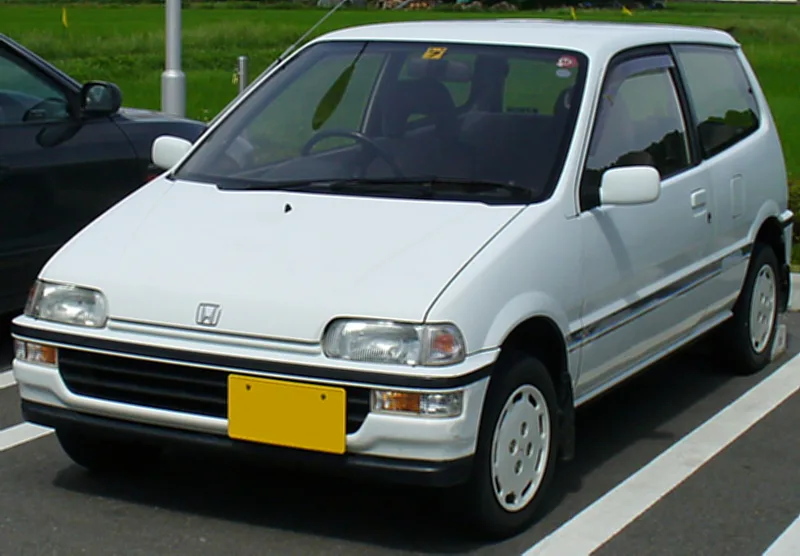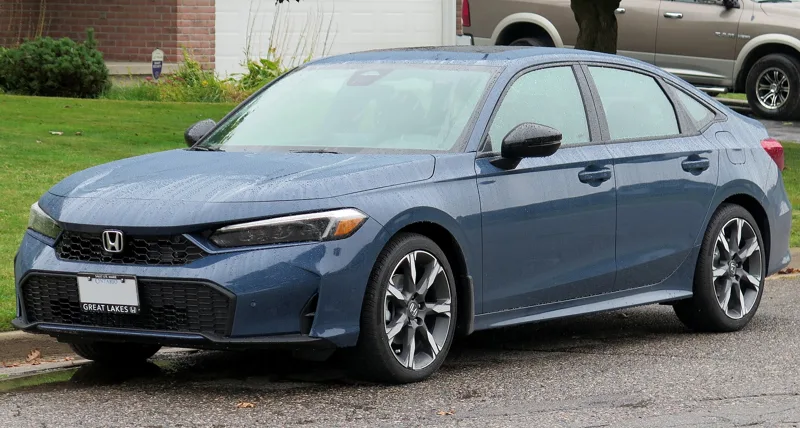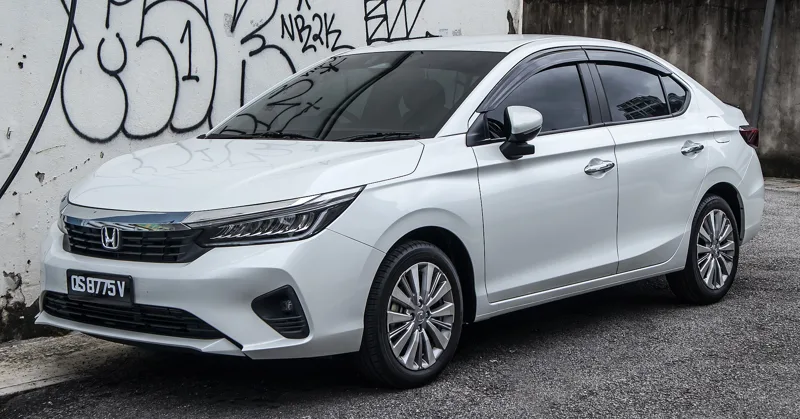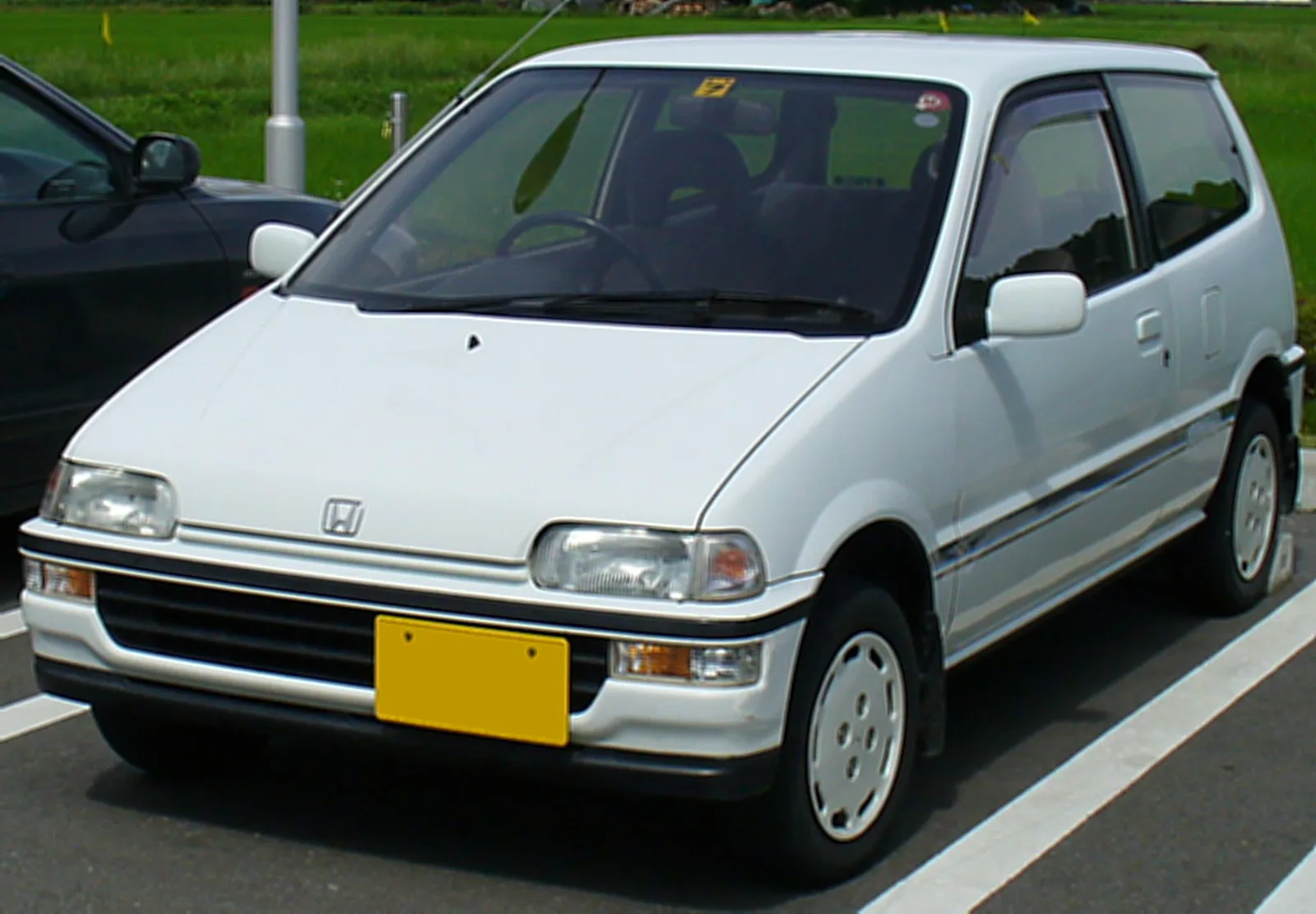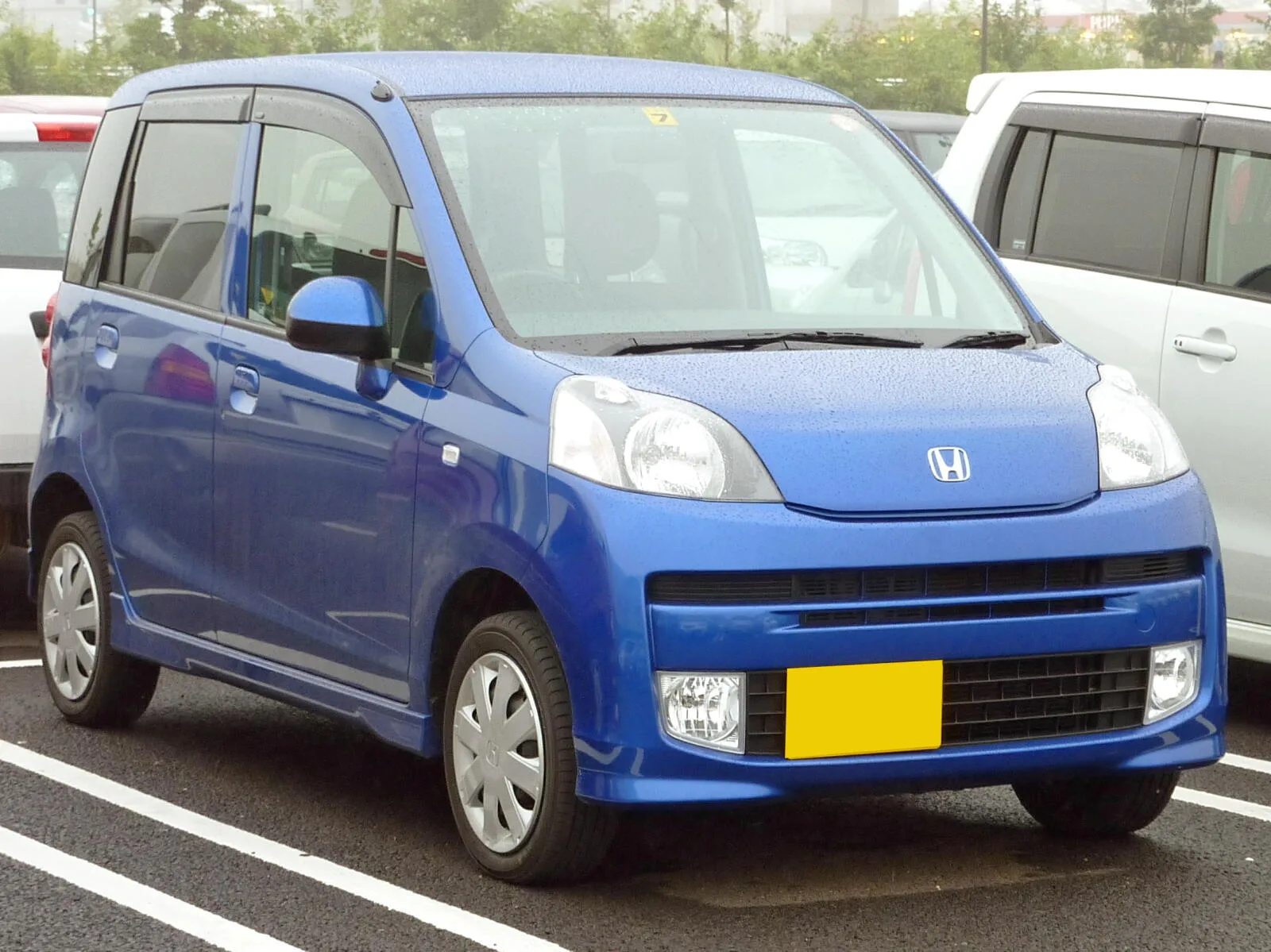
A water-cooled 356 cc sedan from 1971, a tall Step Van that outlived its maker's first kei run and a 2014 finale that rode on Honda's Today platform.
The Honda Life was a Japanese kei car sold in five generations, from a water-cooled 356 cc sedan in 1971 to a fifth-generation model that ended in 2014. It was built as sedans, vans, pickups and a tall Step Van. The name was revived in 1997 and later applied to a rebadged Fit in China.
The Honda Life is a nameplate Honda used on kei cars across five generations, covering passenger cars, microvans and kei trucks. The first series was built between 1971 and 1974, and the name returned in 1997 for a car that remained on sale until 2014. The Life has rarely been sold outside Japan, which keeps it a domestic favourite rather than a global export.
What is the Honda Life?
The Life is a kei car, a small Japanese class of vehicle with strict limits on size and engine capacity. Honda used the name for sedans, wagons, vans, a tall Step Van and a pickup, so the Life is better understood as a family of kei vehicles than as a single model. Its later life also reached China, where a rebadged version of the Fit carried the name until 2025.
Across the generations the car moved from a water-cooled two-cylinder making 30 PS to three-cylinder engines with turbocharged variants. The bodies changed from low sedans to tall wagons, which reflected changes in Japanese kei regulations as much as design fashion.
A kei car built to feel roomier than its size, which then set the tall-wagon template the whole class later followed.
Where did the first-generation Life come from?
The Life emerged as the successor to the Honda NIII360. It was developed from 1 June 1971, and its designers aimed to make a kei car as habitable as a 1-litre car of the period. The wheelbase of 2,080 mm (82 in) was eight centimetres longer than the predecessor's, which gave the cabin more room.
Compared with earlier Honda minicars, passenger comfort was a clear priority. The new car was offered as a two-door or four-door sedan and as a three-door wagon, which was also sold as a commercial van. A four-door version entered the Australian market in the middle of 1972, while the two-door N360 and N600 remained on sale alongside it.
How did the first-generation Life engine work?
The whole Life range used a water-cooled Honda EA 356 cc engine, which usually produced 30 PS (30 hp; 22 kW) at 8,000 rpm. The engine began as an air-cooled unit borrowed from the Honda CB450 motorcycle, and the change to water cooling removed the heater smell that air-cooled engines drew into the cabin.
A balance shaft reduced vibration, and period testers described the engine as refined and as quiet and smooth as some four-cylinder units. The gearbox was separate from the engine, which differed from the N-series, where the gearbox sat in the sump. Like the larger Honda Civic, the Life also adopted a timing belt for its overhead camshaft.
How quick was the first-generation Life?
The sedan had a top speed of 105 km/h (65 mph), and its sprint to 100 km/h (62 mph) took 34.9 seconds in a period test. Those figures were modest even by the standards of a kei car, but the Life was built for practicality rather than performance.
The Life Town version used a lower-revving engine with 8.0:1 compression instead of the 8.8:1 of the standard unit. Its output dropped to 21 PS (15 kW; 21 hp) at 6,500 rpm. It came with three speeds, which limited its top speed to 90 km/h, and it was offered as a no-cost option across the range.
What body styles did the first-generation Life offer?
The first generation covered a sedan, a van and a wagon, and each added a different role to the range. A three-door commercial Van arrived on 6 September 1971, with unique bodywork from the B-pillars back. It was slightly taller than the sedan and could also be fitted with the full automatic gearbox.
A private-use wagon with the chassis code WA followed on 25 October 1971. It was priced midway between the two-door and four-door sedans, and it could also be equipped with the three-speed automatic. Buyers could tell the van from the wagon by the luggage rails visible through the rear windows.
An all-new three-speed fully automatic transmission had been offered from 20 July 1971. Its shifter was mounted on the column, unlike the manual's.
What was the Life Step Van?
The Life Step Van was a tall, unusually shaped vehicle that went on sale on 20 September 1972 with three or five doors. Its front-wheel-drive layout and bonneted design were novel at the time, but the arrangement put the entire drivetrain up front. That allowed a very low and flat load floor that rear-drive rivals could not match.
The Step Van drew influence from the DKW Schnellaster built in Europe. Its appearance was not admired when new, but the tall wagon style it introduced is now the standard approach for kei products from Japanese manufacturers. Its clamshell rear gate was split horizontally, and the Step Van had a four-speed manual as its only transmission.
The Step Van weighed 605 kg (1,334 lb) and could carry 300 kg (661 lb) with two occupants, falling to 200 kg (441 lb) with a full complement of four. Production ended in 1974, with 17,165 vehicles built, which fell well short of the 2,000 units a month that had been projected.
What did the Life Pickup add?
The Life Pickup was released on 21 August 1973 as a kei pickup with the PA chassis code. Despite weighing only 550 kg (1,213 lb), the pickup was rated for a 350 kg (772 lb) load. Output stopped in 1974 at no more than 1,132 vehicles, since buyers preferred the TN7 cab-over truck and its longer bed.
How did the Touring range change the Life?
On 1 May 1972 Honda added a sporty engine with twin constant velocity carburettors for a new Touring range. Output rose to 36 PS (26 kW; 36 hp) at 9,000 rpm. The GS sat at the top of the range and used a dogleg five-speed box suited to the higher-revving unit. The Touring GS could reach 120 km/h (75 mph).
The all two-door Touring line-up consisted of the SS, SL and GS, and four-door Touring versions appeared in September 1972. A minor facelift with redesigned grilles arrived on 15 June 1972, and production of the lower-powered Town engine came to an end during the same year.
Why did Honda end the first-generation Life?
The Civic proved much more popular in Japan and abroad, and the Life was only built for four years. At the time the Life was priced at 350,000 yen, while the Civic cost 400,000 yen, but the Civic also had the advantage of size, which made it safer in a collision.
Kei classes were shrinking while emissions rules became tougher, so manufacture of the Life series ended in October 1974, along with the Z360 and Z600. That ended Honda's kei passenger car participation until the arrival of the Today in 1985.
How did the second-generation Life differ?
The Life name returned in 1997 on a new line of small, front-wheel-drive five-door MPV-style cars. It was a rebodied JA4 Honda Today that also took the Today's place, sold exclusively in Japan through Honda Primo dealerships. Its tall styling answered the popularity of the Suzuki Wagon R, which had many buyers.
The engine was the E07A, carried over from the Today. It was a 656 cc three-cylinder with four valves per cylinder and Honda's PGM-FI fuel injection, producing 48 PS (35 kW) at 6,300 rpm. It came with a five-speed manual or a three-speed automatic, and a driver-side SRS airbag was among the options.
Changes to the kei rules made this generation outdated quickly, so it was built for only about a year and a half. The car was introduced on 18 April 1997, and production ended in September 1998 before sales faded out the following month. Because of this brief run, the second-generation Life is now a rare car.
What did the third-generation Life bring in 1998?
New legislation made the 1998 model, the JB1, bigger than its short-lived predecessor in length as well as width. The car was introduced on 8 October 1998, with sales beginning the following day. Its length rose to 3,395 mm (133.7 in) and its width to 1,475 mm (58.1 in), which improved collision safety.
The engine changed from the E07A to the improved E07Z, which gave about 20 percent more torque at low engine speeds and met low-emission vehicle requirements. Peak power rose slightly to 50 PS (37 kW). The five-speed manual and three-speed automatic carried over, although the automatic gained a column-mounted shifter.
The third generation also introduced the option of four-wheel drive, which carried the JB2 chassis number. The three trims were the basic B, the more comfortable G and the well-equipped T, which was renamed L in May 2000 and gained tinted rear glass.
What were the Life Dunk and Kei-Mover?
In December 2000 Honda introduced a turbocharged variant called the Life Dunk. It had more aggressive headlamps, a large opening in the front bumper and an asymmetric grille. Forbes listed the Life Dunk, along with the Honda That's, among the weirdest car names, and its front-wheel-drive and four-wheel-drive models received the codes JB3 and JB4.
A practicality-focused version called Kei-Mover also joined the range, with the emphasis placed on safety, practicality and environmental performance rather than on styling. Its special editions, such as the Minuet and the Super Select, kept the model fresh with new equipment and trim options.
How did the fourth-generation Life look and drive?
September 2003 brought a full model change with a new 660 cc three-cylinder engine. An optional turbocharger was paired with a four-speed automatic, and four-wheel drive remained available. The launch carried a goal of 15,000 monthly sales.
The new engine, the P07A with i-DSi, produced 52 PS when naturally aspirated and 64 PS with the turbo. The body was a more rounded style built around the advertising theme of Honda's design. Easy-grip circular door handles and a multifunction display were among its features, and the grades were C, F and D.
In 2005 Honda introduced the DIVA model, with aerodynamic styling and aluminium wheels. The turbo models lost their separate Life Dunk name in this generation, and the 2007 changes added Honda Smart Parking Assist, the first use of that system in a production Honda.
What did the fifth-generation Life offer?
In November 2008 Honda introduced the fifth-generation Life, available as C, G, PASTEL, PASTEL turbo, DIVA and DIVA turbo. A sibling with different sheet metal, the Honda Zest, aimed at a younger crowd and was built from 2006 until 2012. It shared all of its mechanical parts with the Life.
The fifth generation kept the P07A engine, rated at 52 PS (51 hp) at 7100 rpm naturally aspirated and 64 PS at 6000 rpm with the turbo. The body was about 40 kg lighter than its predecessor's, and its overall height of 1,610 mm was raised further, with front-wheel-drive models standing 35 mm taller than before, which helped interior volume.
Smart features on this generation included a rear-view monitor and a Honda Smart Parking Assist system that guided steering in both forward and reverse. Safety was addressed with an i-SRS airbag system, and an ECO button encouraged eco-friendly driving.
How was the Life sold in China?
The Life nameplate was also used by Dongfeng Honda for the Chinese market, applied to a renamed fourth-generation Fit built by Guangqi Honda. It was introduced in 2020, and its differences from the Fit lie in the front bumper design and the rear taillight tint, which is a clear smoked colour on the Life.
The Chinese Life remained in production until 2025, which made it the last chapter of a nameplate that began life in Japan more than half a century earlier.
Key specifications at a glance
| Item | Figure |
|---|---|
| First generation | 1971 to 1974, 356 cc engine |
| Second generation | 1997 to 1998, JA4, E07A 656 cc |
| Third generation | 1998 to 2003, JB1, E07Z engine |
| Fourth generation | 2003 to 2008, 660 cc three-cylinder |
| Fifth generation | 2008 to 2014, P07A engine |
| First-generation output | 30 PS (30 hp; 22 kW) at 8,000 rpm |
| Third-generation length | 3,395 mm (133.7 in) |
| Third-generation width | 1,475 mm (58.1 in) |
What is the Life's legacy?
The Life is remembered as a small Japanese family car that kept reinventing itself to fit kei rules. Its tall Step Van layout later became the standard approach for Japanese kei products, and the name carried a wide range of body styles through several regulatory changes.