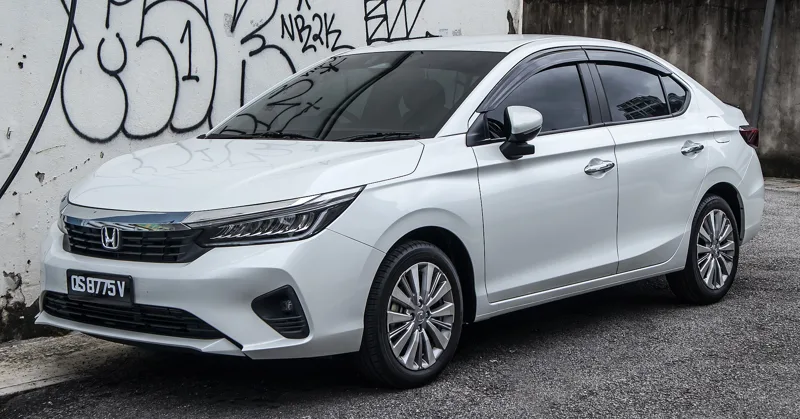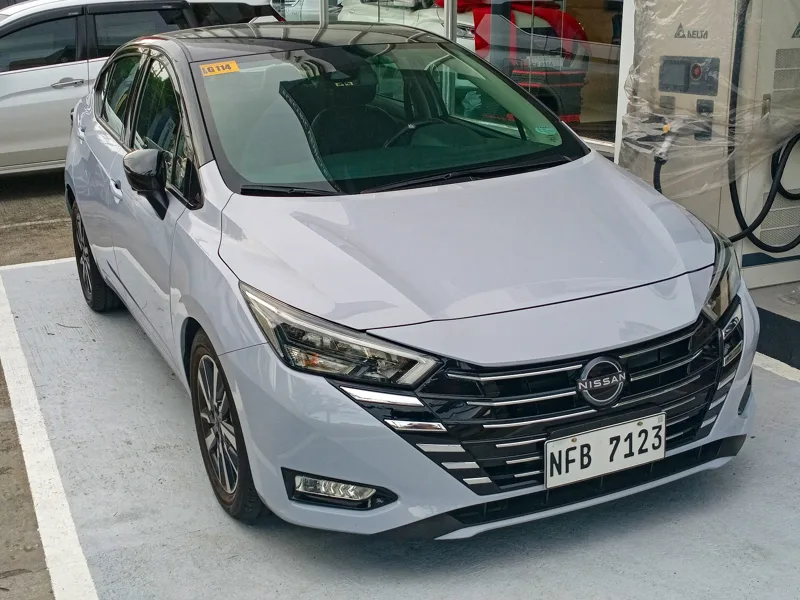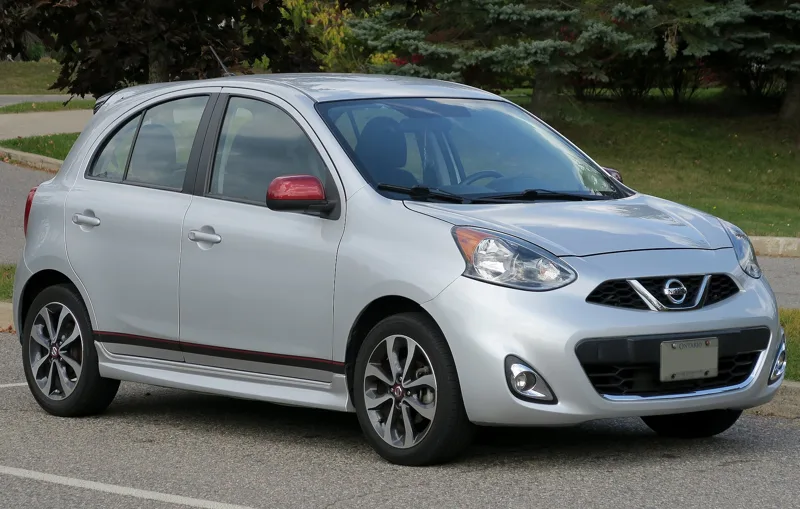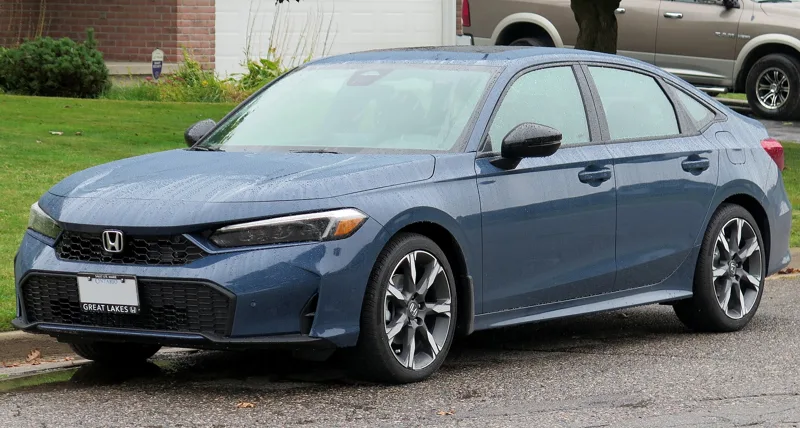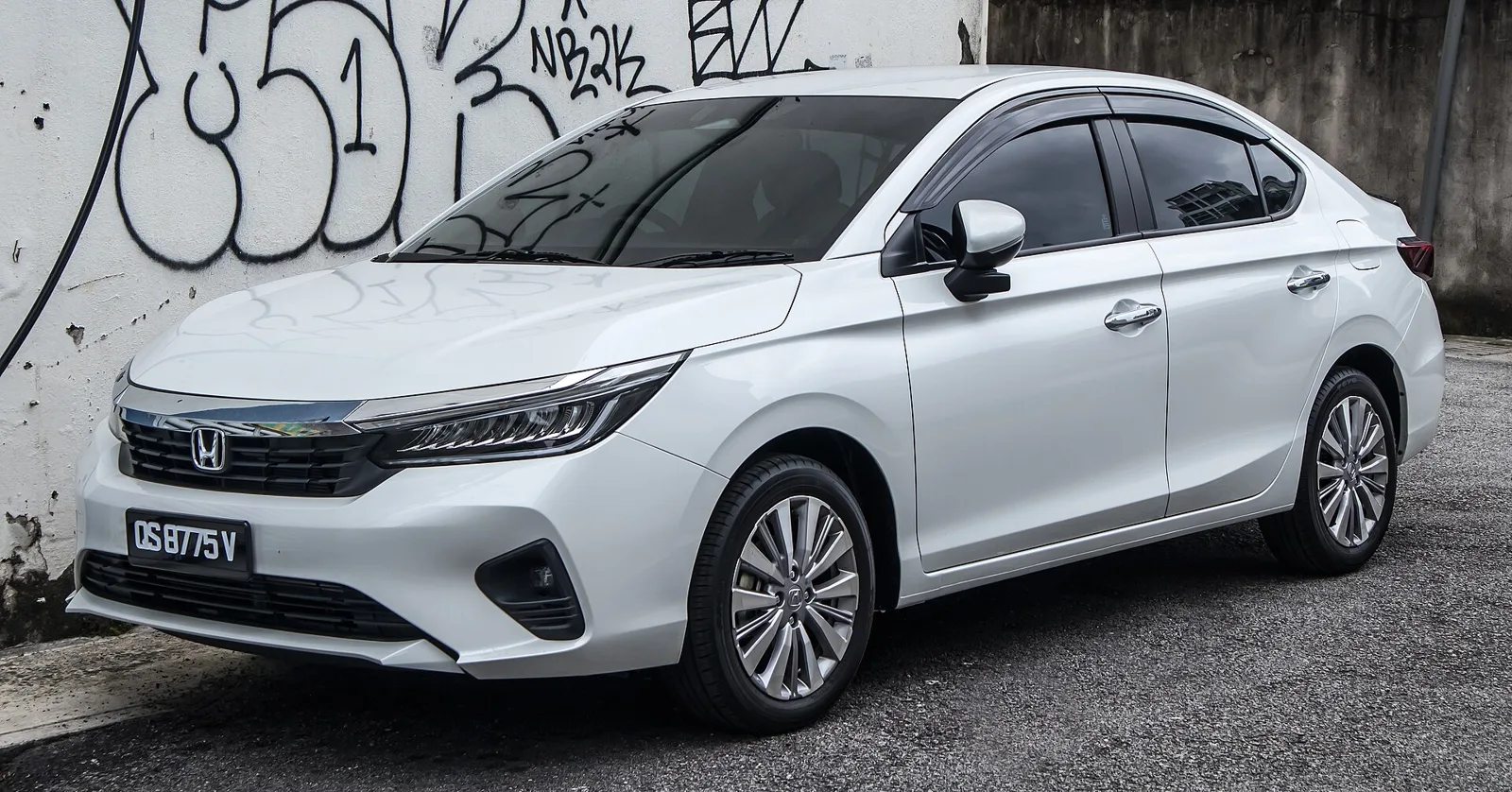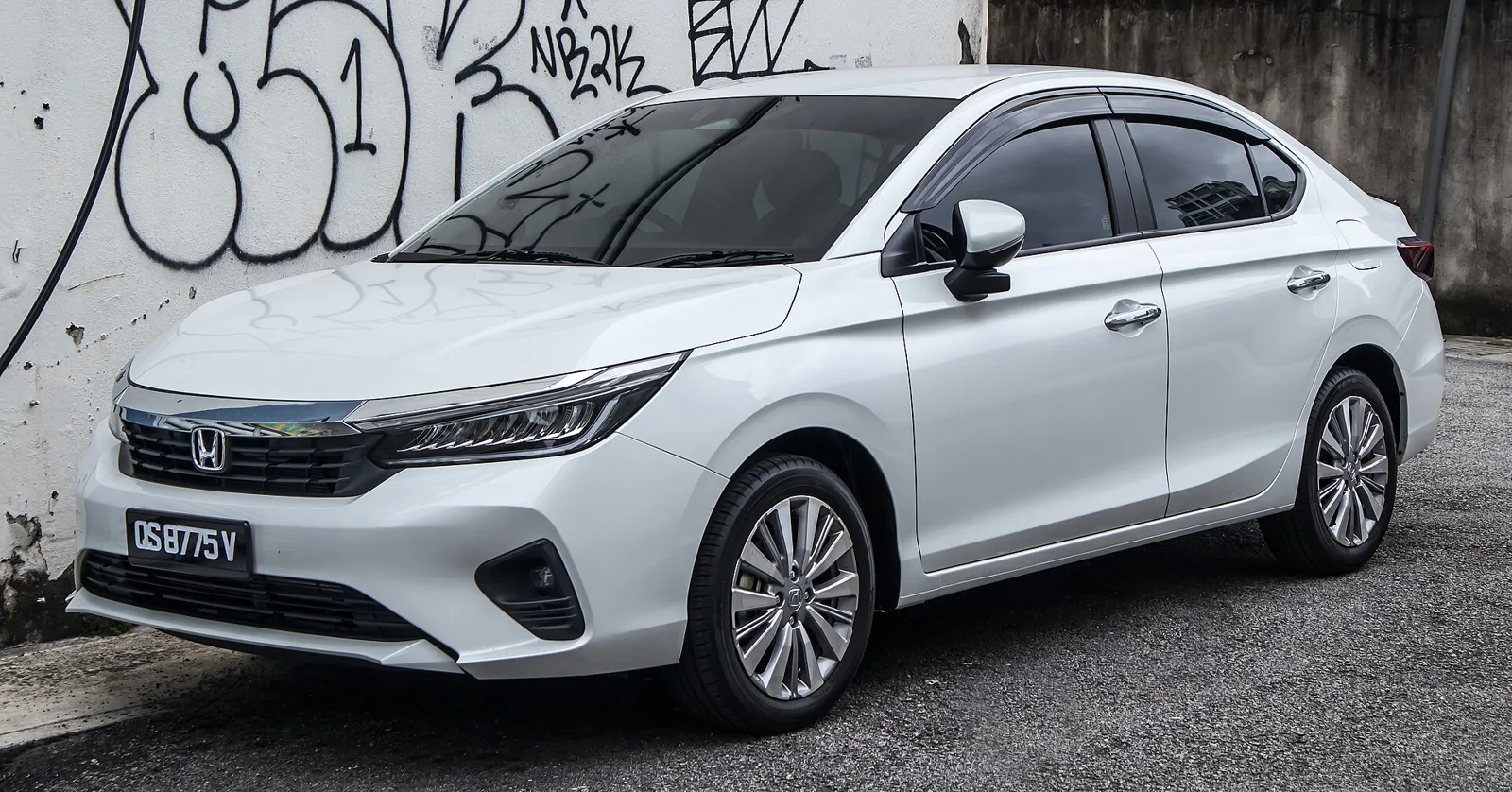
Honda's City and Nissan's Tiida were built for the same compact space, and their paths crossed most clearly in Southeast Asia, where both sold as sedans and hatchbacks.
The Honda City began in 1981 as a tall three-door hatchback and became a Thai-built subcompact sedan. The Nissan Tiida arrived in 2004 as a compact hatchback and sedan, and the two competed in the same Southeast Asian compact class.
The Honda City and the Nissan Tiida were both compact cars built for buyers who wanted value and space. The City began in 1981 as a tall, short hatchback and later became a Thai-built subcompact sedan. The Tiida arrived in 2004 as a Nissan compact sold as a hatchback and sedan. Their paths crossed most clearly in Southeast Asia, where both were sold against each other from the early 2000s.
Were the Honda City and Nissan Tiida rivals?
Yes, in Southeast Asia, where both were sold in the same compact class. Malaysia's Latio sedan and hatchback competed in the segment that the City had helped define.
The City's fourth generation was built in Thailand and sold across the region, while the Tiida's first generation was produced in several markets. The two cars were therefore aimed at the same growing compact-car buyers in Asian cities.
Nissan positioned the Tiida between its smaller and larger models, and the City's third generation similarly slotted beneath the Honda Civic in Honda's range.
Two compact cars from opposite ends of Asia's market, one a Honda that started as a tall hatchback and the other a Nissan named for the sun.
When did each car go on sale?
The first-generation City was introduced in November 1981 as a three-door hatchback. Its third generation was revived as a four-door subcompact sedan, with first production in Thailand in April 1996, and its fourth generation debuted in Bangkok in November 2002.
The Nissan Tiida was produced from 2004 to 2023 across three generations. The first generation debuted in Japan in 2004 as the Tiida hatchback and the Latio sedan, and it reached Europe in some countries in 2007.
The two cars overlapped in Asia from 2004 to the late 2000s, when the City's fourth generation and the Tiida's first generation were both on sale in Thailand, Malaysia and Indonesia.
How were the two cars built?
The City's third generation was based on the EF Civic platform to cut costs, and it was designed for Southeast Asia. Its bumpers were built in three pieces to ease shipping from Japan, and it reached more than 70 percent local content in Thailand.
The Tiida's first generation was based on a stretched-wheelbase variant of the Nissan B platform, and it was produced as a five-door hatchback and a four-door sedan. The Tiida sat between the subcompact and compact classes, acting as an intermediate model in Nissan's line-up.
The City's fourth generation was developed by Honda Thailand, and it was launched in Japan as the Fit Aria, imported from Thailand. The Tiida's C12 second generation later shared the Nissan V platform with the Sylphy.
What are the Honda City and Nissan Tiida specifications?
| Specification | Honda City (fourth generation, 2002) | Nissan Tiida (first generation, C11, 2004) |
|---|---|---|
| Body styles | Four-door sedan; five-door hatchback from 2020 in a later generation | Five-door hatchback and four-door sedan (Latio in some markets) |
| Platform | Honda Global Small Car platform, shared with the Fit | Stretched-wheelbase Nissan B platform |
| Drive | Front-wheel drive; four-wheel drive version in Japan as the Fit Aria | Not recorded in this comparison |
| Base engine | 1.3 L L13A i-DSI, lean-burn | 1.5, 1.6 or 1.8 litre four-cylinder |
| Top engine | 1.5 L L15A VTEC, with a 7-speed Multimatic CVT | 1.8 litre at 122 hp (91 kW) in the North American Versa |
| Third-generation engine | 1.3 L D13B at 95 PS (70 kW), 0 to 100 km/h in 11.3 seconds | Not recorded for the same generation |
| Price | Not recorded | US$9,990 in the US in 2008; C$12,498 in Canada at launch |
| Built in | Thailand; the Everus S1 was built in China | Mexico for North America; China and Taiwan for Asia |
| Successor | Honda Grace in Japan from 2014 to 2020 | Second generation C12, a hatchback from 2011 |
How did the engines compare?
The City's fourth generation launched with a twin-spark, lean-burn i-DSI engine, designed for fuel economy. The VTEC version arrived in 2004 with 15-inch alloy wheels and solid rear disc brakes.
The Tiida's first generation used a 1.5, 1.6 or 1.8 litre four-cylinder, with the larger unit available with a six-speed manual. In North America the Versa 1.8 produced 122 hp and 127 ft-lbf, and the Versa 1.6 made 107 hp and 111 lb-ft.
The City's third generation had a 1.3 litre D13B at 95 PS, which gave a claimed top speed of 171 km/h and a 0 to 100 km/h time of 11.3 seconds.
What did the City's 1980s variants add?
The original City was built as a tall, short hatchback with a range of trim levels. Honda also offered a Pro-series of van versions with either two or four seats, and a high-roof R Manhattan Roof version with a roof 10 cm taller.
The City Turbo of September 1982 used a turbocharged version of the 1231 cc ER engine, and the Turbo II of October 1983 kept the same engine with 110 PS more output on wider fenders. Its nickname, the Bulldog, came from those wider dimensions.
The Pininfarina-designed Cabriolet arrived on 4 July, using the wider fenders and bigger bumpers of the Turbo II but only the naturally aspirated 67 PS engine. Exports went mainly to Europe, where the car was renamed the Honda Jazz because Opel had trademarked the City name.
Which car was cheaper?
The Tiida's North American prices are on record, and the Versa arrived in fall 2008 with a base price of US$9,990. A price cut to the Hyundai Accent later usurped that title by $20.
The Versa 1.6's Canadian base price of $12,498 also undercut its competitors at launch. Those are the only Tiida prices recorded in this comparison.
The City's prices are not recorded here, so a direct pricing verdict between the two cars cannot be given.
How did the City's Asian markets develop?
The City's third generation sold strongly in Asia. It had a dominant position in the market in Thailand, and after its entry into India in 1998 it became a segment leader.
The City was also built in India, Indonesia, Malaysia, Pakistan, the Philippines and Taiwan. In Pakistan it received a lukewarm reception at first, but the third generation became a massive hit.
The fourth generation was resurrected in China as the Everus S1 by Guangqi Honda, a budget brand that ran from 2011 to 2014. It made Honda the first foreign carmaker to develop cars under a brand owned by a local joint venture.
How did the Tiida's markets develop?
In Malaysia the first-generation Tiida was sold as the Latio, in sedan and hatchback forms. Four sedan variants were offered at first, and a limited Tuned By Impul edition followed in 2008.
In Singapore the Tiida and Tiida Latio were sold alongside the older and cheaper Sunny and the bigger and more expensive Sylphy. In Indonesia the 1.6 sedan was sold mainly for taxi fleets, imported from Thailand.
In Taiwan the Tiida hatchback and sedan were produced by Yulon, and the sedan stayed in production until May 2018. Hong Kong police used the Tiida for patrol and airport duties.
How did the Tiida's name and nameplates evolve?
The name Tiida is Okinawan for sun, continuing a naming tradition that began in 1966 with the Nissan Sunny. Nissan initially wanted every market to use the Tiida nameplate, but Australia insisted on the more familiar Pulsar.
The US market chose a new nameplate, the Versa, short for versatile space. That decision set a precedent for Australia to use the Pulsar nameplate on the second generation.
The second generation C12 was a hatchback only, marketed as a C-segment car worldwide, and the sedan role passed to the Almera, Latio and Sunny.
How did the Tiida's safety ratings compare?
Latin NCAP ratings for the Tiida varied widely by version. The most basic Latin American hatchback, with one airbag, received three stars for adults and one star for toddlers in May 2011.
Adding a second airbag lifted a hatchback to four adult stars in November 2011, although the child rating stayed low. The Tiida sedan in its most basic version, with no airbags and no ABS, received zero stars for adults in April 2015.
The sedan with two airbags and no ABS received four stars for adults and two stars for toddlers in September 2015. Those results show how much the airbag count mattered to the ratings.
What did the Tiida's electric prototype show?
The EV-11 prototype was based on the Tiida and used an 80 kW (107 hp) electric motor with 280 N-m of torque. Its 24 kWh lithium-ion battery pack was rated for 160 km (99 mi), and it carried a navigation system and EV remote monitoring.
The prototype was unveiled at Nissan's Yokohama headquarters on 8 February 2009, and the production version was set to go on sale in the US and Japan in 2010.
Which car sold more?
Neither car's total sales are recorded in this comparison, so a complete sales race cannot be called. What can be said is that the City's third generation was a top seller in its segment, with a dominant position in Thailand and a strong run in India.
The Tiida's record is shaped by its changing names. In the United States the Versa sold as a new model, while in Australia the Tiida name gave way to the Pulsar, which was a long-standing and popular nameplate there.
The Tiida's second generation was not sold in Japan at all, and its successor sedan roles passed to other Nissan models. The City's later Japanese naming, from Fit Aria to Grace, also meant that the two cars rarely shared a single identity across markets.
Which car suits which buyer?
The City suits a buyer who wanted a Honda-badged compact sedan or hatchback with a strong Asian reputation and, in its early years, a tall and roomy body.
The Tiida suits a buyer who wanted a Nissan compact with a choice of hatchback or sedan, a range of four-cylinder engines and, in North America, one of the cheapest new cars available.
The figures do not settle which was the better car, because they were sold in different markets for different reasons. The City had the longer Asian history, while the Tiida had the wider choice of body styles.