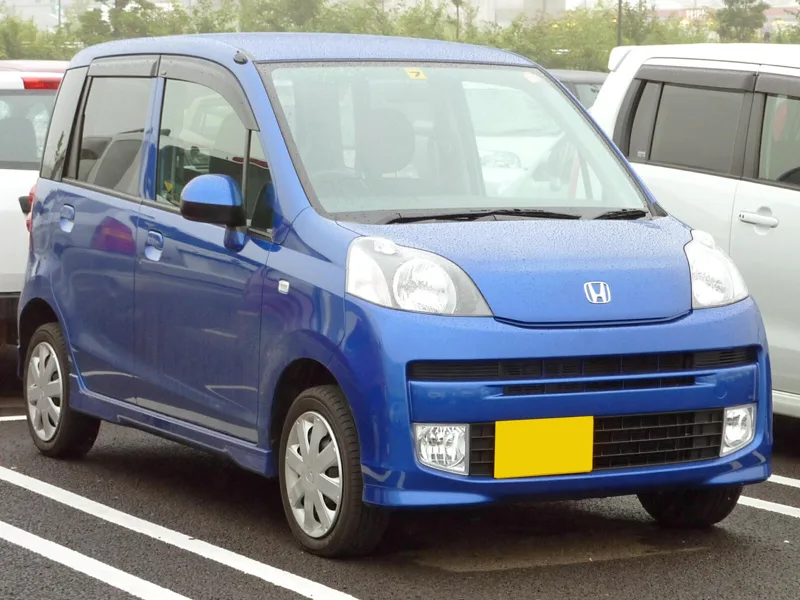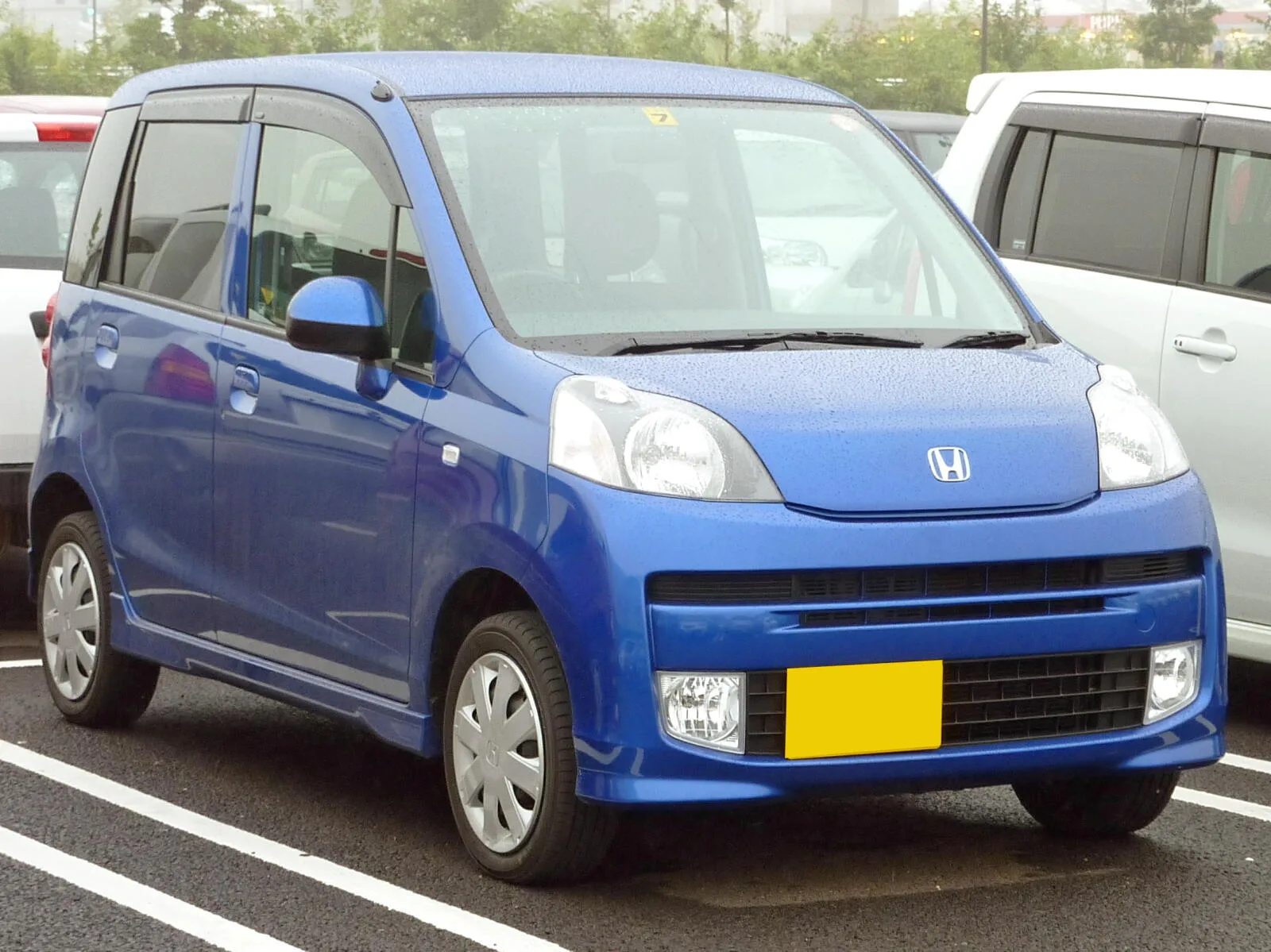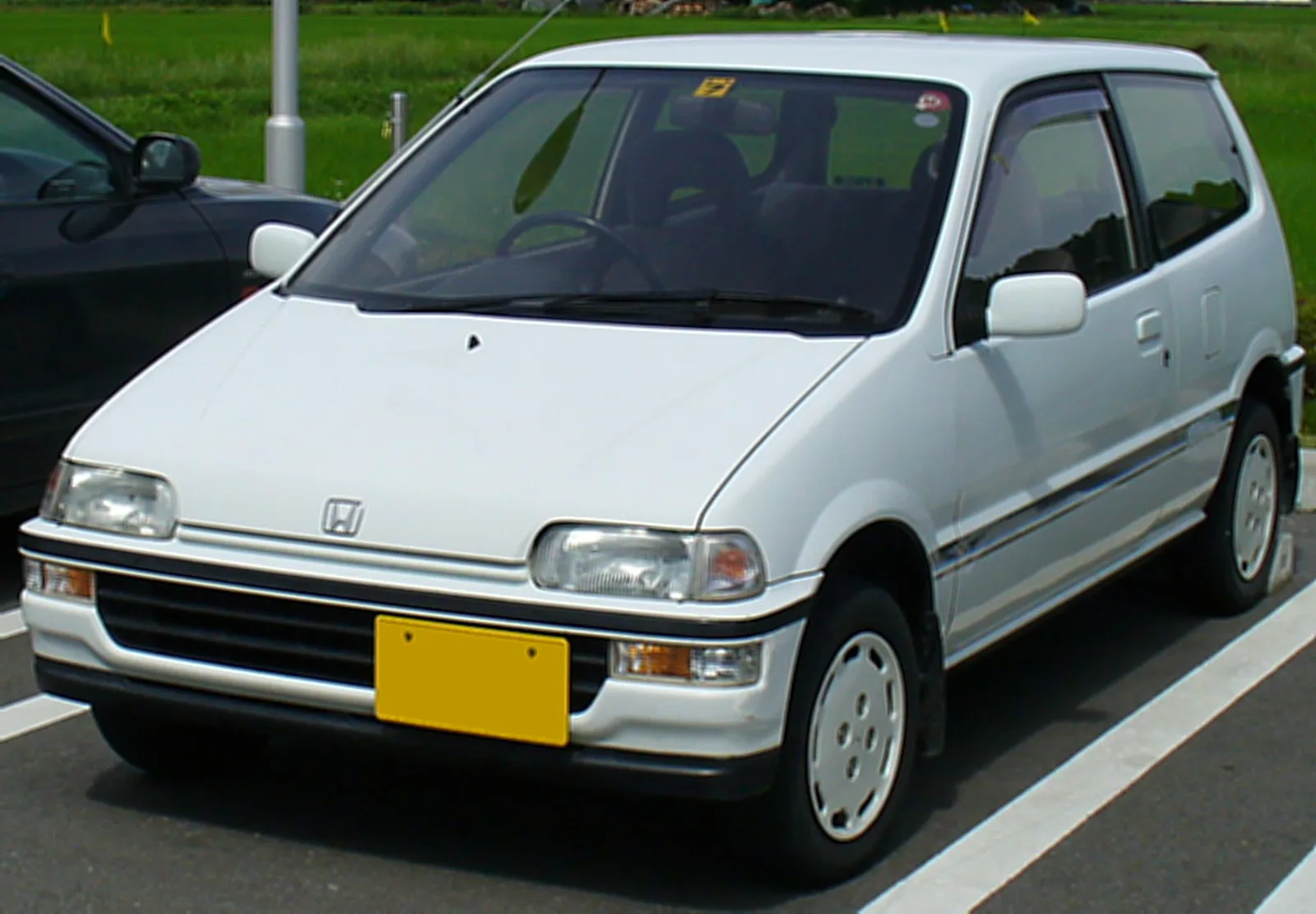
A tiny three-door kei car that began as a commercial van, gained a passenger version and was replaced by the Life in 1998.
The Honda Today is a Japanese kei car built by Honda from 1985. The first generation was a three-door hatchback with a 545 cc two-cylinder engine, later enlarged to 656 cc. The second generation was designed as a passenger car, and the Today was replaced by the Honda Life in 1998.
The Honda Today was a Japanese kei car that Honda built from 1985 until 1998, when the Life took over its place in the range. It marked Honda's return to kei passenger cars after a decade without one. The first generation began life as a light commercial van, and a passenger version followed in 1988.
Why did Honda return to kei cars?
Honda had dropped kei passenger cars in 1975, leaving the Civic as its smallest car until the City arrived in 1981. The City was a supermini with an engine too large for kei rules, so the Today became Honda's return to kei car production in September 1985.
Honda had kept the Acty kei truck and the Street microvan in production throughout that gap. The Today therefore brought the company back to passenger cars within the class.
A kei car that started life as a van and grew into a passenger hatch with a single windscreen wiper.
How was the first generation Today built?
The first generation, code JW1, was a three-door flat-roof hatchback that Honda first offered as a light commercial van, because the tax structure favoured such vehicles. It was sold only in Japan at launch, through newly established Honda Primo dealerships, and the three launch trims were F, M and G.
Honda gave the car a wheelbase of 2,330 mm (91.7 in), the longest of any kei car at the time. Its short overhangs and efficient packaging meant the cabin filled more than three quarters of the body's length. The underside was asymmetrical, and the handbrake sat left of centre, which freed up room for the driver.
Front struts carried forward-reaching control arms, while the rear axle was a coil-sprung torsion beam.
What engine did the first Today use?
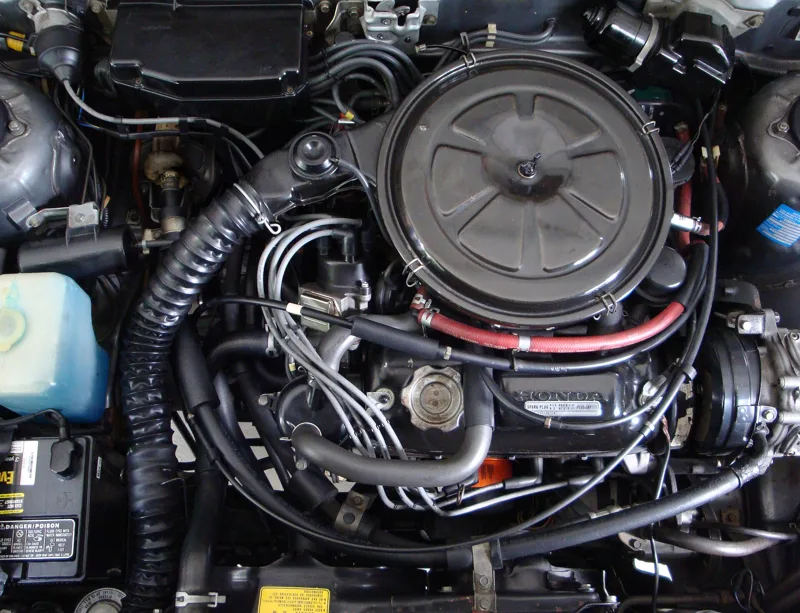
The original car used a 545 cc water-cooled two-cylinder engine called the EH, producing 31 PS (23 kW). It was Gold Wing-derived and matched the output of the Acty kei truck, feeding through a single-barrel Keihin carburettor. As a commercial vehicle it needed no catalytic converter, so an EGR system handled emissions.
Buyers chose between a manual with four speeds and a two-speed Hondamatic at first, and a three-speed automatic with a torque converter followed in 1988. That February the EH gave way to a 547 cc three-cylinder E05A with four valves and a single overhead camshaft. The engine grew to 656 cc in March 1990 under revised kei rules.
Power depended on the body style and equipment. Fuel-injected commercial models made 44 PS (32 kW), while the lower-end models produced 36 PS (26 kW). After 1990, carbureted models reached 42 PS (31 kW) and fuel-injected versions reached 52 PS (38 kW).
The Pochette arrived as a February 1987 special edition based on the M trim, with special colours aimed at female buyers. It became a regular model by 1990 and stayed on sale into the second generation.
What changed in the 1988 facelift?
In February 1988 the Today received a facelift that replaced the round headlights with aerodynamic lenses matching the rest of the Honda range. The bootlid gained a small spoiler and the rear windscreen grew, and a regular three-speed automatic replaced the earlier Hondamatic.
The hood was made taller to fit the bulkier engine, and the sales targets at the time were 9,000 per month for the van and 1,000 per month for the private car. The rear lamp design later found its way onto second and third generation Acty vans and stayed in production until mid-2018.
How did the second generation differ?
The second generation arrived in 1993 as a passenger car from the outset, with a softer suspension, a downward-opening tailgate and a wraparound rear window. Its driver seat was wider than the passenger seat, reflecting the single young women who were its main buyers.
Honda's research suggested most owners drove alone and rarely needed cargo room or extra seats. The layout was shaped around that finding, with the wraparound glass giving wide side views while also stiffening the bodyshell.
The 1993 range offered a standard 656 cc three-cylinder E07A engine, and a higher-output MTREC version for the sportier Xi trim. MTREC gave each cylinder its own throttle body, a design borrowed from the Honda Beat and tuned here for more low-end torque. Four-wheel drive with Honda's Realtime system was offered on the Qi trim only.
The standard engine made 48 PS (35 kW) at 6300 rpm, against 58 PS (43 kW) at 7300 rpm for MTREC cars. Torque was rated at 5.8 kg-m (57 N-m; 42 lb-ft) and 6.1 kg-m (60 N-m; 44 lb-ft) respectively, and both engines stayed largely unchanged for the rest of the run.
The February 1996 facelift swapped the tailgate for a conventional hatchback door, which meant a new rear end. The five-door followed a month later under the plain name Today. It dropped the MTREC engine because buyers preferred economical models.
Buyers who disliked the missing rear hatch had the well-equipped Humming models, which proved more popular than the newer Today. The Pochette trim, named after the French word for pouch, described how the original tailgate opened.
What were the main Honda Today specifications?
Each figure is tied to the engine, trim or model it belongs to, so standard and MTREC outputs are never mixed together. Metric figures come first, with imperial values in brackets. The table covers the first generation and the 1993 range that followed it.
| Specification | Detail |
|---|---|
| Launch | September 1985, first generation JW1 |
| Replacement | Honda Life, 1998 |
| Body | Three-door hatchback at launch; five-door from 1996 |
| Wheelbase | 2,330 mm (91.7 in) |
| Length | 3,295 mm (129.7 in) after 1990 changes |
| First generation engine | 545 cc two-cylinder EH, 31 PS (23 kW) |
| Engine from 1988 | 547 cc three-cylinder E05A |
| Engine from 1990 | 656 cc; 42 PS (31 kW) carbureted, 52 PS (38 kW) fuel-injected |
| Second generation engine | 656 cc E07A; 48 PS (35 kW) at 6300 rpm, or 58 PS (43 kW) at 7300 rpm with MTREC |
| MTREC torque | 6.1 kg-m (60 N-m; 44 lb-ft) at 6200 rpm |
| Transmissions | Four-speed manual, two-speed Hondamatic, three-speed automatic, five-speed manual (four-wheel drive only from 1994) |
| Top speed | 111 km/h (69 mph), road test |
| 0-97 km/h (0-60 mph) | 34.2 seconds, road test |
How fast was the Today?
A road test of a Hondamatic-equipped car from the General Motors Test Fleet recorded a top speed of 111 km/h (69 mph). The 0-97 km/h (0-60 mph) sprint took 34.2 seconds, and the standing quarter mile took 23.9 seconds. The test car was an early model, so these figures describe the first generation.
The same test recorded a closing speed of 90 km/h (56 mph) at the end of the quarter mile. Power varied by version, with automatic passenger cars making 40 PS (29 kW) in 1988, against 44 PS (32 kW) for fuel-injected commercial models.
Why was the Today replaced by the Life?
Honda reintroduced the Life name in 1997 after the success of the Suzuki Wagon R. When kei rules changed in October 1998 and required a redesign, the tallboy Life was updated and the Today was discontinued. The new Life was a modern version of Honda's 1970s StepVan microvan, so it carried that name forward.
Why do enthusiasts still value the Today?
The low-slung JA4 and JA5 models have built a strong following among racers and tuners, thanks to a comparatively rigid body. Their appeal is supported by a thriving aftermarket, which has grown partly because the Today shares its engine with the Beat.
One part common to every generation and model was the single windscreen wiper. The design never succeeded in a market where tallboy designs were prevalent.