A 1.5 L hybrid coupe sold from 2010 to 2016, with a standard six-speed manual, a CVT option, tuner builds and a Super GT racing career.
The Honda CR-Z was a sport hybrid coupe built from 2010 to 2016. It used a 1.5 L engine with Honda's motor assist system, came with a standard six-speed manual or an optional CVT, and later raced in Japan's Super GT series.
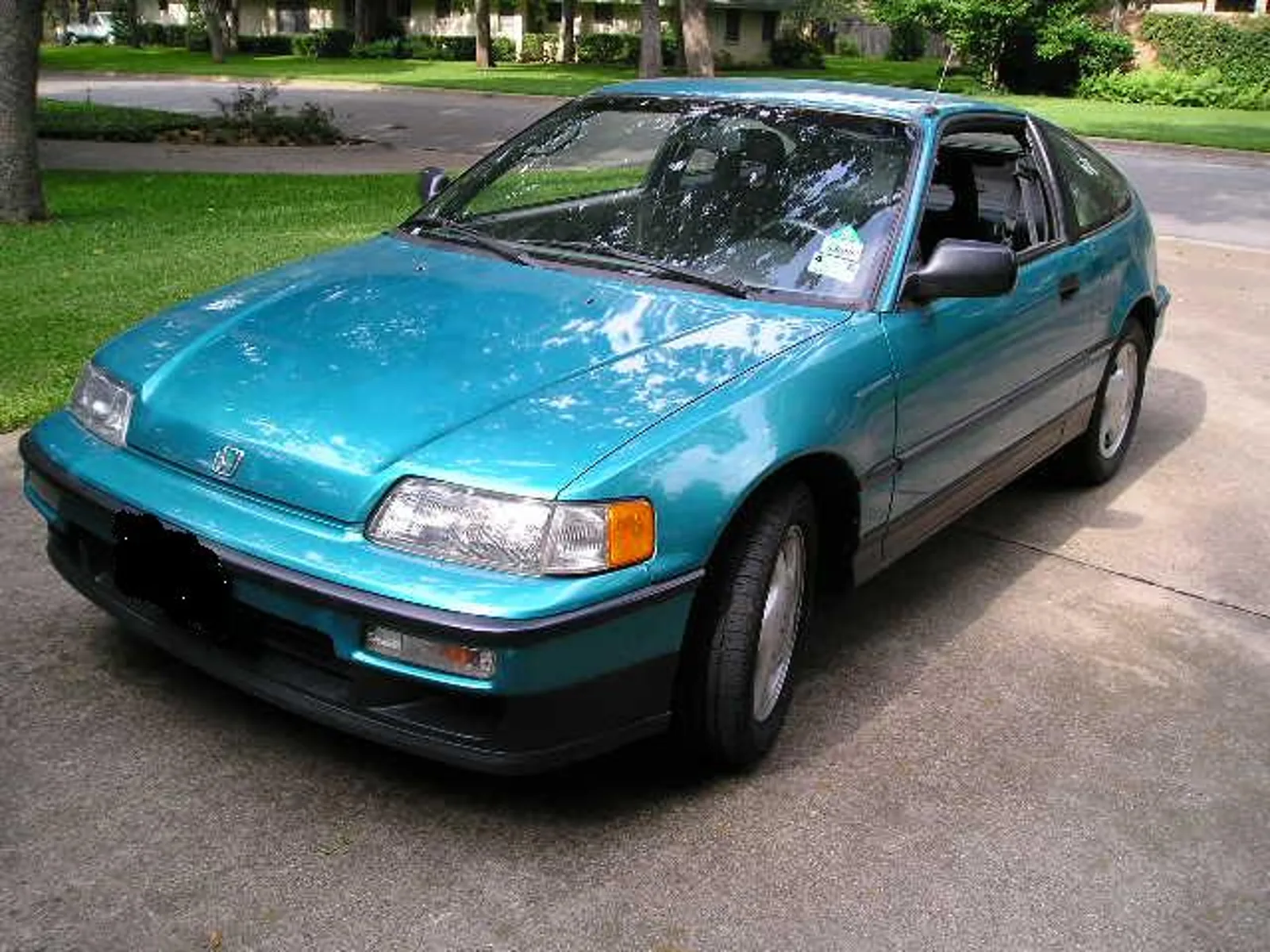
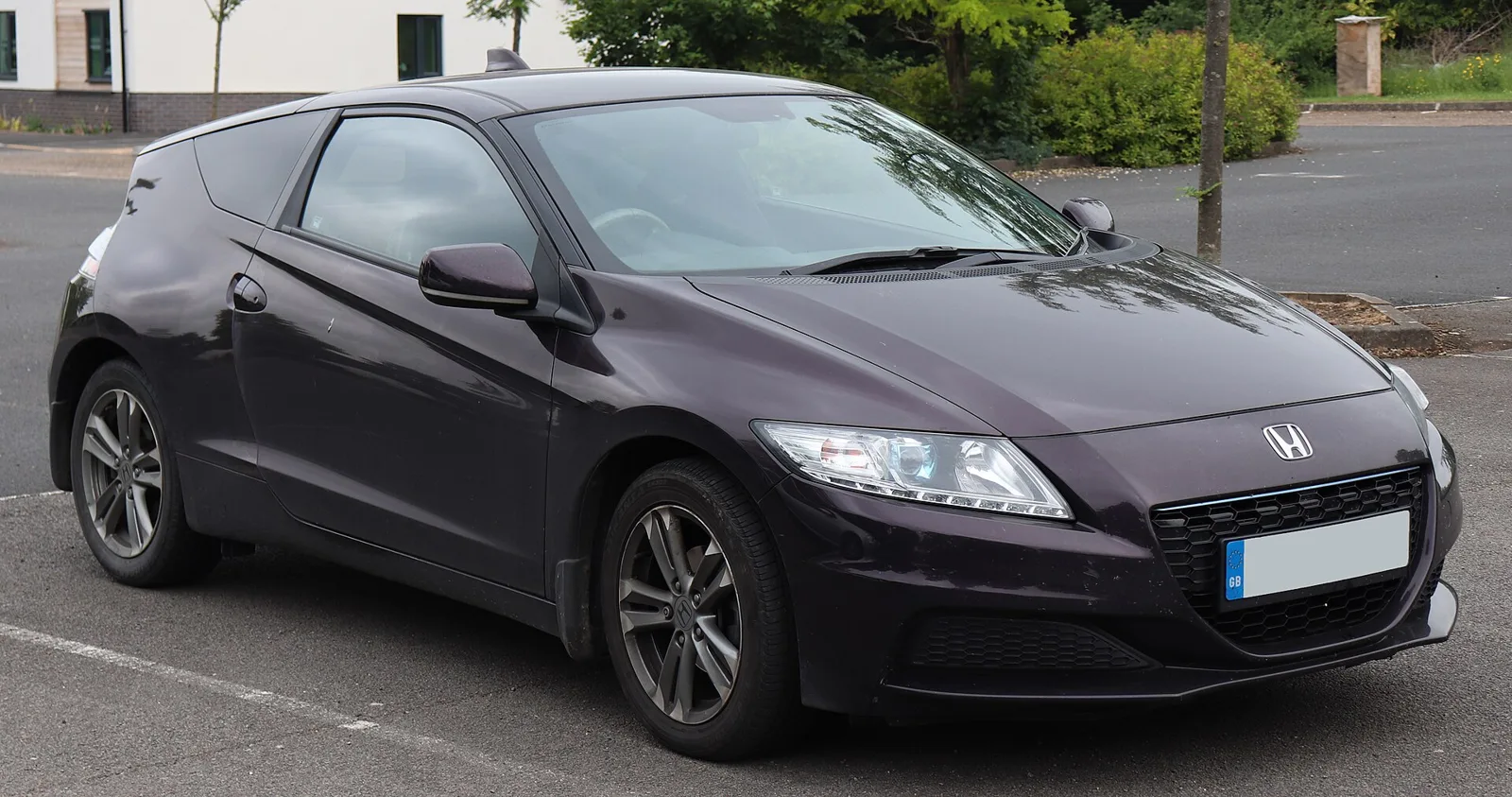
The Honda CR-Z was a compact sport hybrid coupe sold from 2010 to 2016, built around a 1.5 L (1,497 cc) i-VTEC engine and Honda's integrated motor assist system. It was seen as a spiritual successor to the second-generation Honda CR-X, and it was the only hybrid in its class to offer a manual transmission.
Where did the CR-Z come from?
The CR-Z grew out of a run of concepts. The Honda Remix appeared at the 2006 Los Angeles Auto Show, the Small Hybrid Sports concept followed at the 2007 Geneva Motor Show, and the concept that led to the car debuted at the 2007 Tokyo Motor Show on 23 October 2007.
Honda said the name stood for Compact Renaissance Zero. A revised CR-Z Concept shown at the 2009 Tokyo Motor Show was close to the production design, and the production model followed at the 2010 North American International Auto Show.
CEO Fukui said the car should be sporty, incredibly efficient and inexpensive. Those three goals shaped the package that reached showrooms, and prototypes were tested on European roads at each stage of development.
The car won Japan Car of The Year for 2010-11 on introduction. Japanese sales began on 24 August 2010 at 2.3 million yen before subsidies, and Honda received over 10,000 orders in under one month.
A hybrid coupe that offered a manual gearbox when no rival in its class did.
How did the CR-Z hybrid system work?
The CR-Z used the sixth generation of Honda's Integrated Motor Assist system, pairing a 1.5 L (1,497 cc) i-VTEC SOHC 16-valve four with an electric motor. The 2010 motor produced 10 kW (13 hp; 14 PS) at 1,500 rpm, and the system as a whole produced 121 bhp (90 kW; 123 PS) at 6000 rpm.
Torque for the 2010 system was 128 lb-ft (174 N m) between 1000 and 1500 rpm. The gasoline engine in the CVT car made 111 bhp (83 kW; 113 PS) at 6000 rpm, and CVT-equipped models produced 123 lb-ft (167 N m) of torque.
The electric motor sat alongside the engine rather than replacing it, so the hybrid assistance added to the petrol unit rather than taking over from it. That layout is what the later model built on.
What changed for the 2013 model?
The 2013 car raised the electric motor to 15 kW (20 hp; 20 PS) and used a 0.6 kWh lithium-ion pack at 144V. Output rose to 130 hp (97 kW; 132 PS) at 6,000 rpm, with 140 lb-ft (190 N m) of torque, although CVT cars made 127 lb-ft.
The 2013 model was released in the United States on 21 November 2012. It also brought the New Plus Sport System as standard equipment, along with a larger clutch and lower final drive ratio on manual cars.
Read together, the two versions show the same basic hybrid layout gaining a larger motor and more output over its life.
How quick was the CR-Z in tests?
A Japanese road test recorded 0-100 km/h in 10.5 seconds, and an early Japanese-market test recorded a quarter mile in 17.6 seconds. Inside Line measured 0-60 mph in 8.8 seconds, while Motor Trend recorded 8.3 seconds for the same sprint.
The S+ button adds acceleration for up to five seconds above 18 mph (29 km/h). It needs battery charge above 30 percent to work, so the function depends on the state of the pack at that moment.
How economical was the CR-Z?
In Japan's 10-15 mode the CVT car was rated at 4.0 L/100 km (59 mpg-US), and the manual at 4.4 L/100 km (53 mpg-US). In the 2011 EPA ratings the manual returned 31 mpg-US in the city and 37 on the highway, while the CVT managed 35 and 39.
The Japanese 10-15 mode figures and the US EPA figures come from different test cycles, so the two sets of numbers should be read separately rather than compared line by line.
Real-world drivers averaged nearly 39 mpg overall. The CR-Z ranked fourth on the 2011 EPA top ten for CVT cars and tenth for manual cars, a placement that reflects how efficient the package was in everyday use.
Did the CR-Z come with a manual gearbox?
Yes. The six-speed manual was standard, and a CVT was offered as the alternative. No other hybrid in its class offered a manual transmission, which set the CR-Z apart in the market.
For 2013 manual cars received a larger clutch and a lower final drive ratio, which is the kind of detail that mattered to drivers who chose the manual over the CVT.
What are the CR-Z specifications?
| Specification | Detail |
|---|---|
| Body style | Sport compact hybrid coupe; 2+2 seating, two-seater in North America |
| Engine | 1.5 L (1,497 cc) i-VTEC SOHC 16-valve four, code LEA |
| Electric motor (2010) | 10 kW (13 hp; 14 PS) at 1,500 rpm |
| Electric motor (2013) | 15 kW (20 hp; 20 PS) |
| Battery (2013) | 0.6 kWh lithium-ion, 144V |
| Output (2010 system) | 121 bhp (90 kW; 123 PS) at 6000 rpm |
| Output (2013) | 130 hp (97 kW; 132 PS) at 6,000 rpm |
| Torque (2013) | 140 lb-ft (190 N m); 127 lb-ft on CVT cars |
| Transmission | Six-speed manual standard; CVT optional |
| 0-100 km/h | 10.5 seconds in a Japanese road test |
| Combined economy (Japan 10-15 mode) | 4.0 L/100 km (59 mpg-US) CVT; 4.4 L/100 km (53 mpg-US) manual |
| Launch price (US, 2011) | US$19,950 base |
How much did the CR-Z cost?
The base CR-Z was priced at US$19,950 in North America for 2011, the EX at US$21,510 and the EX with navigation at US$23,310. In Australia it launched in December 2011 at A$34,990 base, plus on-road costs.
What did the 2016 refresh change?
The 2016 refresh changed the bumpers and interior, and it added the EX-L trim to the range. The LX started at US$20,295 with a manual, the EX at US$22,140 with a manual and the EX-L at US$24,440 with a manual.
The refresh arrived late in the car's run. Production ended at the end of 2016, so the updated model had only a short life before the line closed.
How did CR-Z sales perform?
Sales started strongly in Japan, where more than 19,000 CR-Z units had been delivered by the end of August 2010. In the United States 3,349 cars sold by the end of October 2010, and sales reached 5,249 units in 2010 and 9,635 units through August 2011.
US pricing undercut the market leader, the Toyota Prius. US hybrid sales ranked eleventh for 2010, and the 2011 ranking rose to number four.
Malaysia saw over 300 orders within a month of its 3 November 2011 launch, and Malaysian orders exceeded three times the launch target. Australia, by contrast, recorded only 69 sales in 2014, and Honda announced in January 2015 that it would stop selling the CR-Z there.
When did the CR-Z reach Europe and other markets?
The CR-Z reached European buyers in mid-2010, after its reveal at the 2010 Geneva Motor Show. Asian launches followed in Malaysia, Indonesia and the Philippines, and the Philippine range was split into standard, Modulo and Mugen trims.
The overseas rollout ran over several years, with the last of the launches arriving in 2013. Each market received the car on its own schedule rather than all at once.
How did the CR-Z race in Super GT?
The CR-Z GT raced in the GT300 class of Japanese Super GT from 2012, using a 2.8 L HR28TT twin-turbo V6 borrowed from Honda's LMP2 cars. Team Mugen's car won the GT300 championship in the 2013 Super GT Series, with drivers Hideki Mutoh and Yuhki Nakayama taking the title.
The GT car raced until the end of the 2015 Super GT Series, and it ran with Team Mugen and Autobacs Racing Team Aguri across three seasons. Team Mugen's GT car used a hybrid system developed exclusively for it.
Two CR-Z racers entered the 25-hour Thunderhill race in December 2010. One of them came back from a near 10-lap deficit to finish second in class, despite taking two five-minute stop-and-hold penalties from refuelling problems.
What performance versions were built?
Several tuners built faster CR-Z versions. The CR-Z Mugen used a supercharged 1.5 L with an aero package and sports suspension, while the Mugen RZ produced 156 hp (115 kW) with an adjustable wing and adjustable suspension.
Reports put the CR-Z Mugen at 178 hp, with 0-60 mph in 6.1 seconds and a top speed above 130 mph (209 km/h). Those figures were rumoured rather than confirmed.
HPD, Honda North America's racing division, released a supercharger kit on 21 August 2014 for manual cars. The kit was estimated at 197 HP and 176 ft-lb on 91 octane fuel, and its parts were sold through North American Honda dealers.
Spoon Sports produced a version 135 kg (298 lb) lighter. Bisimoto's SEMA 2010 car claimed 533 hp from a 64mm billet turbo, with custom pistons and valvetrain.
What awards and safety ratings did the CR-Z earn?
The CR-Z won the 2010 Good Design Award from the Japan Industrial Design Promotion Organization, the 2010 Green Car of the Year from Motoring UK and the 2011 Wheels Car of the Year. Each award came from a different body, which is why the list mixes design, environmental and car-of-the-year honours. Its safety ratings differed from one model year to the next.
The 2011 model received 3 out of 5 stars for frontal crash safety. Models from 2012 onward earned 4 out of 5 stars frontal and 5 out of 5 rollover.
Japanese media compared the early sales with the 1990s NSX, a comparison that shows how strongly the launch was received at home.
How did production end and what came next?
Production ended at the end of 2016 to make room for the Accord Hybrid and Clarity. A second generation was considered for 2018 but never came to fruition.
The Australian withdrawal was announced in January 2015, before the global run ended. The 2016 refresh came in the final stretch of production, and the line closed at the end of that year.