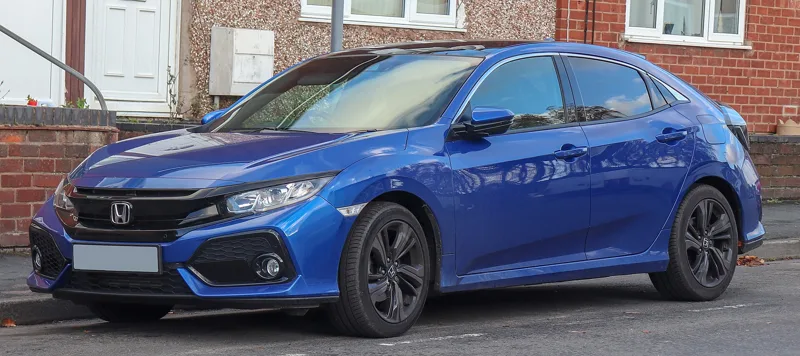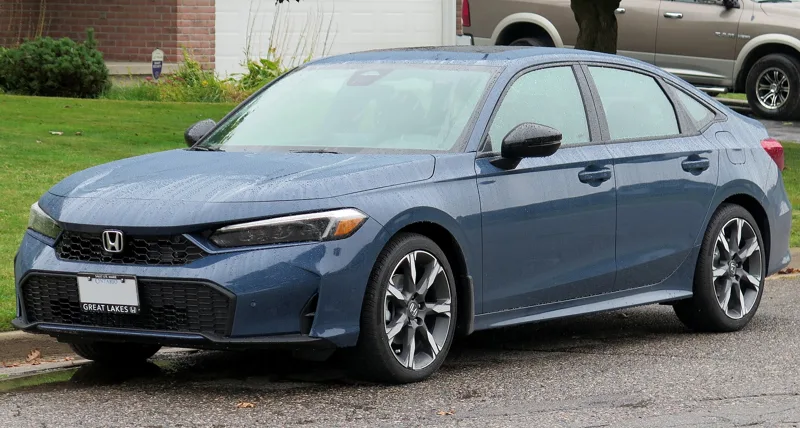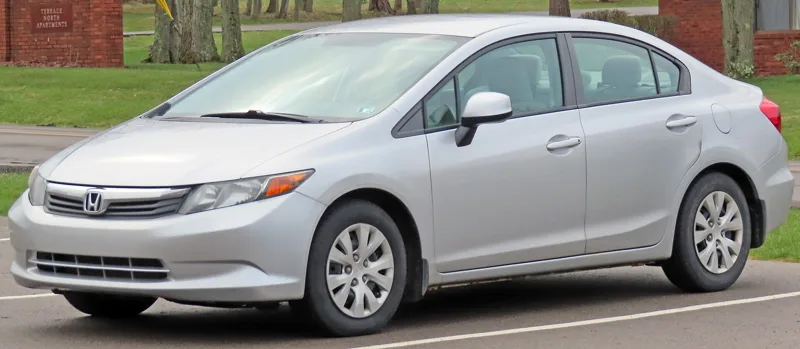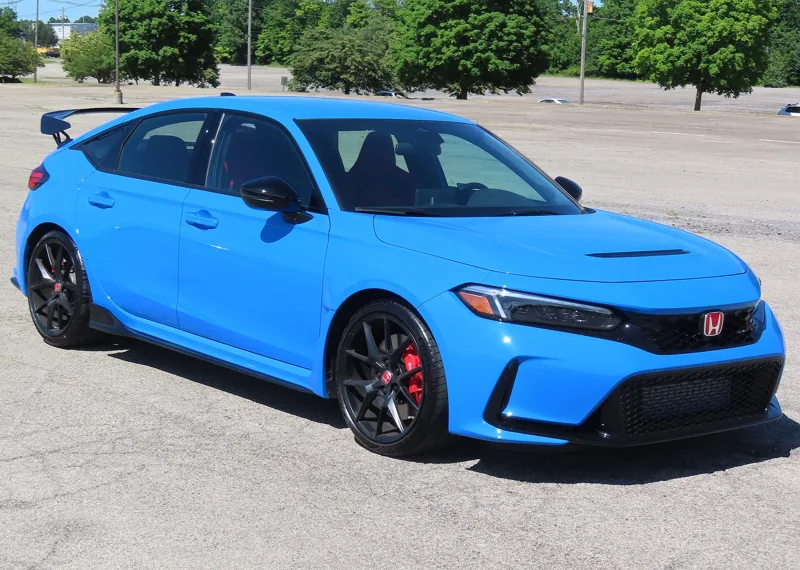
The compact family that carried the Civic from 2005 to 2012, with its Si, hybrid and Type R versions and a long run of market-specific models.
The eighth-generation Honda Civic was a C-segment compact sold in sedan, coupe and hatchback forms from 2005 to 2012. It came with 1.8 and 2.0-litre petrol engines, a hybrid, a sporty Si and a Type R, and more than 1.5 million had been sold by 2011.
The eighth-generation Honda Civic was a compact range built between 2005 and 2012, and it replaced the seventh-generation car in the same segment. Its sedan, coupe and hatchback forms were sold across many markets, and a hybrid, a Si performance trim and a Type R joined the family along the way.
Where did the eighth-generation Civic come from?
The eighth-generation Civic replaced the seventh generation as a C-segment compact from Honda, built from 2005 to 2012. Four body styles were offered, covering a sedan, a coupe and two hatchbacks with three and five doors. The sedan itself came in two styles for different markets, and the hatchbacks formed a separate European range.
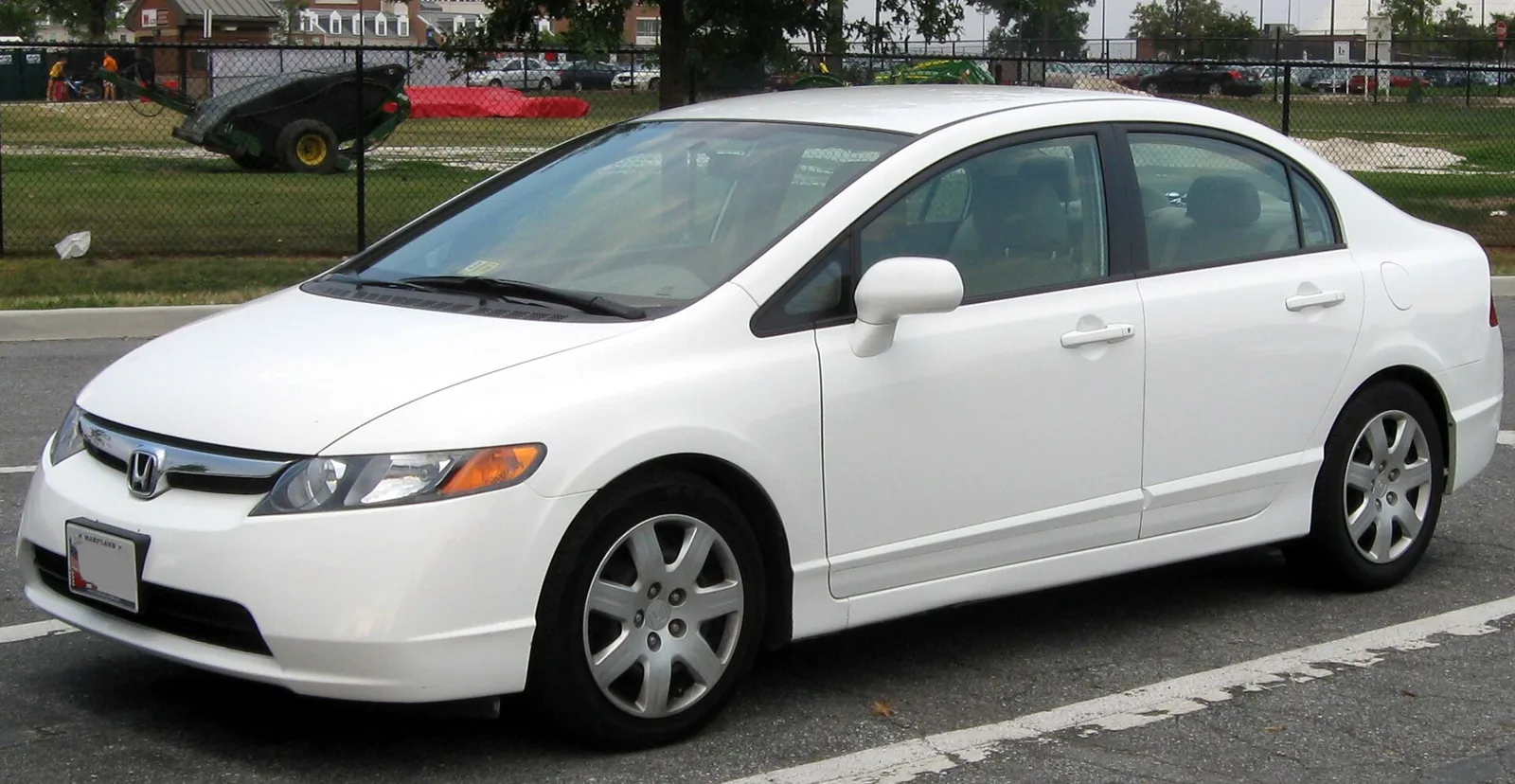
The sedan was sold in most parts of the world, and in some European countries it sat alongside the hatchback. Honda gave it two looks. One matched the Canadian-market Acura CSX and went to Asia-Pacific, Africa, Europe and Russia, while China and the rest of the Americas received the North American sedan. The coupe was available in some countries, but in limited numbers.
The Type R performance model arrived in 2007 for the sedan and three-door hatchback. The four-door version reached buyers mainly in Japan and a handful of other Asian markets.
A compact that spanned sedan, coupe and hatchback forms, plus a hybrid, a Si and a Type R, from 2005 to 2012.
What changed in the chassis and dashboard?
The eighth-generation Civic brought a longer wheelbase, larger wheels and tyres, and a new four-channel anti-lock braking system. Its instrument panel adopted a two-tier design, with an electronic upper panel and an analog tachometer below it. Together these changes aimed at more stable cornering and a smoother ride.
Honda moved the steering gear box lower to improve rigidity and cut friction. Steering angles, bushings, material stiffness and spring and shock tuning were all revised, which Honda said produced a more linear suspension movement in corners.
At the rear, the multi-link double wishbone layout was reworked for more rebound stroke and a better damper position. Honda said this helped the car absorb harsh road surfaces while also keeping it stable.
The upper panel carried a digital speedometer in the centre, with coolant temperature and fuel shown as linear segmented gauges on either side. The lower tier held a backlit tachometer, the odometer and the trip computer. Brightness could be adjusted for each display and saved separately, with the headlights on or off.
How did the North American range develop?
In North America the sedan and coupe were offered from the 2006 model year, after the sedan arrived in September 2005. Trim levels ran from base DX up to EX with Navigation, and the sedan was designed in Japan and the coupe in Ohio.
The trims in the United States and Canada followed a shared ladder, with some names used in only one market:
- DX, with LATCH, an immobiliser, power windows, daytime running lights and 15-inch steel wheels. Air conditioning was optional, and it was sold as DX-A in Canada.
- VP, the American Value Package, which added air conditioning and a 160-watt, four-speaker AM/FM/MP3 stereo with CD player.
- DX-G, the Canadian version with air conditioning, power door locks and remote keyless entry, later given cruise control and 15-inch alloy wheels in 2008.
- LX, with cruise control, a 60/40 rear folding seat from 2008 and a remote anti-theft system on US models.
- EX, with a power moonroof, four-wheel disc brakes, 16-inch alloy wheels and a 350-watt six-speaker stereo on the coupe.
- EX with Navigation, the first Civic to offer a voice-activated navigation system.
- LX-SR, a Canadian model from 2008 that sat between the LX and EX and added a power moonroof.
- EX-L, which introduced leather to the Civic in 2008 along with heated front seats.
Coupes came with a rear lip spoiler as standard. They used firmer springs and thicker anti-roll bars than the sedans, which gave them a sportier feel. Civics with a moonroof had slightly less interior space because of reduced headroom.
More than 95 percent of US sales in 2010 were built in North America, at plants including Greensburg, Indiana and Alliston, Ontario. Production at East Liberty, Ohio ended early in 2009 so that the company could focus on its crossover models.
What made the Civic Si different?
The Si used a 2.0-litre K20Z3 i-VTEC engine rated at 197 hp (147 kW; 200 PS), with a six-speed manual and a helical limited-slip differential. On factory numbers the Si covered 0-60 in 6.7 seconds, quicker than any other Civic Si. Handling was sharpened by stiffer springs, dampers and sway bars.
Cornering grip reached 0.90g, or 8.8 m/s2, on the skidpad. Other kit included a sunroof, a 360-watt stereo with seven speakers, 17-inch alloy wheels on all-season tyres and keyless trunk access.
Brazilian Si models used a K20Z5 version of the K20 engine, rated at 192 hp (143 kW; 195 PS). In Canada the Acura CSX Type-S arrived in 2007 with the Si's engine and drivetrain, but it added leather seating and other luxury options.
When did the Si sedan and Mugen arrive?
Honda introduced the Si sedan for North America in 2007, after Japan had been the only market to get Si sedans. For 2008 the limited-edition Mugen Si Sedan followed, with production capped at 1000 units and painted in Fiji Blue Pearl.
The Si sedan concept at the Chicago Auto Show had 18-inch alloy wheels, four-piston Brembo brakes and big cross-drilled rotors, but the production car dropped those extras. It was mechanically almost identical to the coupe. Its weight rose by 60-pound (27 kg), offset by a slightly better front-to-rear balance of 60/40 against the coupe's 61/39.
The Mugen car brought a freer-flowing cat-back exhaust, sport suspension proven on track, an exclusive Mugen grille and shift knob, Mugen forged GP wheels and a body kit designed for the American trim. Car and Driver found its acceleration roughly matched the standard Si coupe.
How did the 2009 facelift change the Civic?
For 2009 the North American Civic received a facelift. The US LX-S trim gained 16-inch alloy wheels from the pre-facelift EX, a lip spoiler, cruise control on the steering wheel and black upholstery with silver-coloured stitching.
The sedan's front bumper and grille were restyled, and its taillights changed from red lenses to transparent lenses with amber turn-signal bulbs. The sedan's steering wheel moved from a two-spoke design to the three-spoke layout of the coupe and Si. The Canadian LX-SR was renamed the Sport.
The coupe got a new front end, with a bumper and grille that echoed earlier Civic coupes. The 2009 Si gained clear-lensed amber-bulb turn signals and a clear third brake light, while the 2010 Si changed only its engine cover, which went from silver to black.
How did the Civic Hybrid work?
The Civic Hybrid used the fourth-generation Integrated Motor Assist system, pairing a 1.3-litre i-DSI petrol engine with an electric motor. Combined output was 110 hp (82 kW), and the continuously variable transmission was the only gearbox offered. Its EPA rating for 2008 was 40 mpg-US city and 45 mpg-US highway.
Engine output rose to 93 hp (69 kW), reached at 6,000 rpm, up from 83 hp (62 kW), and the motor produced 20 hp (15 kW). Honda's three-stage i-VTEC with cylinder management could shut off all four cylinders at moderate cruise, so the car could run on electric power alone.
The battery was a 158.4 V nickel-metal hydride pack with a 5.5 Ah capacity and about 12% less volume than before. The CVT ratio range ran from 2.52 to 0.421:1, a 9% wider spread for better acceleration and lower engine speed at higher pace.
The engine alone made 121 N-m (89 lb-ft) at 4,500 rpm, and the combined figure was 167 N-m (123 lb-ft) at 2,500 rpm. The car weighed 2,875 lb (1,304 kg), which was light for a hybrid with a nickel-metal hydride pack.
Car and Driver found the second-generation hybrid faster and more refined than its predecessor. It was quieter at highway speed and had a stiffer body, along with a revised suspension that handled bumps better.
Fuel economy, claims and lawsuits
Honda estimated that, compared with a 2006 gasoline Civic sedan with an automatic transmission, the hybrid gave about 63% better fuel economy in city driving and about 27% better on the highway. The CVT was designed to reach its highest efficiency at a given rpm.
A 2012 class action alleged that Honda overstated the hybrid's fuel economy. At least 36 small-claims suits had also been filed by May 2012, according to the Los Angeles Times. Some owners said mileage fell after a software update that cut motor output to protect the battery.
Battery life and warranty
Consumer Reports later reported, in 2014, that battery failures were common among 2009-2010 cars, and over 30% of owners said they had needed a new battery in the past year. Honda acknowledged problems with 2006-2008 batteries and issued software updates to prolong their life.
The pack used 132 nickel-metal hydride cells, which could be monitored only in 12-cell sub-packs and not charged individually. Over years of use the cells drifted out of balance, and the weakest cells then limited the usable capacity of the whole pack.
In 2015 Honda extended the IMA battery warranty on all 2009-2011 Civic Hybrids to 10-year / 150,000 mile cover.
How did the Civic sell in South America and China?
In Brazil the eighth-generation Civic was sold only as a sedan, with 1.8-litre engines of 140 PS (103 kW) and a 2.0-litre Si at 192 PS (143 kW). In China Dongfeng Honda built the sedan from April 2006 and relaunched it in April 2012 as the Ciimo 1.8.
China had its own sedan from April 2006, built locally by Dongfeng Honda fitted with a 1.8-litre i-VTEC unit. It had amber tail turn lights, but otherwise shared the North American exterior. In April 2012 the model returned as the Ciimo 1.8, with front and rear styling taken from the Japanese market model, which made it slightly longer. Production ended in 2016.
What was the European hatchback like?
The European Civic hatchback, built at Swindon in the United Kingdom, came as a three-door and a five-door with a more aggressive look. It used a simpler torsion beam rear suspension in place of the double wishbones of the sedan and coupe, which kept a large interior despite a shorter length.
Designed by Toshiyuki Okumoto, the European car replaced the grille with a perspex cover resembling a lamp cluster. It had triangular fog lamps, dual triangle exhaust tips and a race-inspired exposed metal fuel cap. On the five-door, the rear door was hidden behind the window line, which created the look of a two-door coupe.
The rear seat used a folding system that Honda called magic seats. The cushions could be raised in part or full width for a tall load area, or the backrest could fold flat like a conventional hatch. Fuel was carried under the front seats, which freed space beneath the rear seat, and a hidden compartment sat under the boot floor.
The 2009 update dropped the entry-level 1.4 i-DSI for a 100 PS 1.4 i-VTEC, and the 2011 update brought standard alloy wheels and a new Bronze colour. Honda discontinued the diesel engine from 2011.
What were the Civic Type R models?
The Type R was a high-performance Civic first shown as a European concept at the 2006 Geneva Motor Show. The production European car had a 2.0-litre inline-four making 201 PS (148 kW; 198 hp), peaking at 7800 rpm, and UK sales began in February or March 2007.
The suspension used MacPherson struts at the front and a torsion beam at the rear. The car was at first expected to do without traction control for a purer drive, but Honda eventually fitted a modified version of its VSA stability system tuned to the car.
The Japanese four-door Type R went on sale on 29 March 2007 with a K20A 2.0-litre i-VTEC uprated to 225 PS (165 kW), peaking at 8000 rpm. Other markets had 201 PS, plus a sports suspension and new Brembo brakes.
Mugen's Civic RR was a further-uprated Type R sedan sold in Japan. It shed 10 kg (22 lb) from the standard car, weighed 1,255 kg (2,767 lb) and produced 240 PS (177 kW), peaking at 8,000 rpm. A new bodykit, upgraded brakes, a retuned suspension and Recaro sport seats completed the package, and the run was capped at 300 cars, every one in Milano Red.
How did the Civic perform in motorsport?
The Civic Hybrid entered the 24 Hours Nurburgring in 2007 and finished 108th out of 220 teams starting. A Group N Civic Hybrid took second in class at the Jim Clark Rally, and in 2011 Matt Neal won the British Touring Car Championship in a Civic BTCC.
Which awards did the eighth-generation Civic win?
The range won the 2006 North American Car of the Year and the Motor Trend Car of the Year award. The Canadian AJAC gave it Car of the Year and an Alternative Power Vehicle award, the World Green Car title followed in 2006, and the car won the 2007 Irish Car of the Year.
What recall and reliability issues affected the Civic?
In March 2008 Honda announced a recall of 79,000 eighth-generation Civics over a potential fault with the handbrakes. Hybrid owners later faced a class action over fuel economy claims, and a 2014 Consumer Reports study flagged frequent battery failures among 2009-2010 cars.
Consumer Reports had said in April 2006 that hybrids would not pay for themselves over five years, but the calculation had overstated depreciation. Once corrected, the Civic Hybrid's payback was slightly under five years. In October 2010 Vincentric put the 2010 hybrid at an extra $1830 over five years compared with the EX coupe, assuming 15,000 miles a year.
Autoblog put a replacement hybrid battery at $2,100 in August 2010.
What are the eighth-generation Civic specifications?
| Specification | Detail |
|---|---|
| Built | 2005 to 2012, compact C-segment |
| Body styles | Sedan, coupe, three-door and five-door hatchback |
| European hatchback plant | Swindon, United Kingdom |
| Standard petrol engines | 1.8-litre R18A i-VTEC 140 bhp (104 kW; 142 PS), peaking at 6300 rpm; 2.0-litre K20Z2 155 bhp (116 kW; 157 PS), peaking at 6200 rpm |
| Si | 2.0-litre K20Z3 197 hp (147 kW; 200 PS); 139 lbf-ft (188 N-m); 6-speed manual |
| Civic Hybrid | 93 hp (69 kW) engine and 20 hp (15 kW) motor; 110 hp (82 kW) combined |
| Hybrid weight | 2,875 lb (1,304 kg) |
| Hybrid EPA (2008) | 40 mpg-US city, 45 mpg-US highway |
| European Type R | 2.0-litre engine making 201 PS (148 kW; 198 hp), peaking at 7800 rpm |
| Japanese Type R | K20A, 225 PS (165 kW) at 8000 rpm |
| Mugen RR | 240 PS (177 kW), peaking at 8,000 rpm; 1,255 kg (2,767 lb) |
| Sales | More than 1.5 million by 2011 |