A smaller, lighter Civic designed during the 2008 financial crisis, which struggled in the US before a 2013 rebuild and a Type R hot hatch.
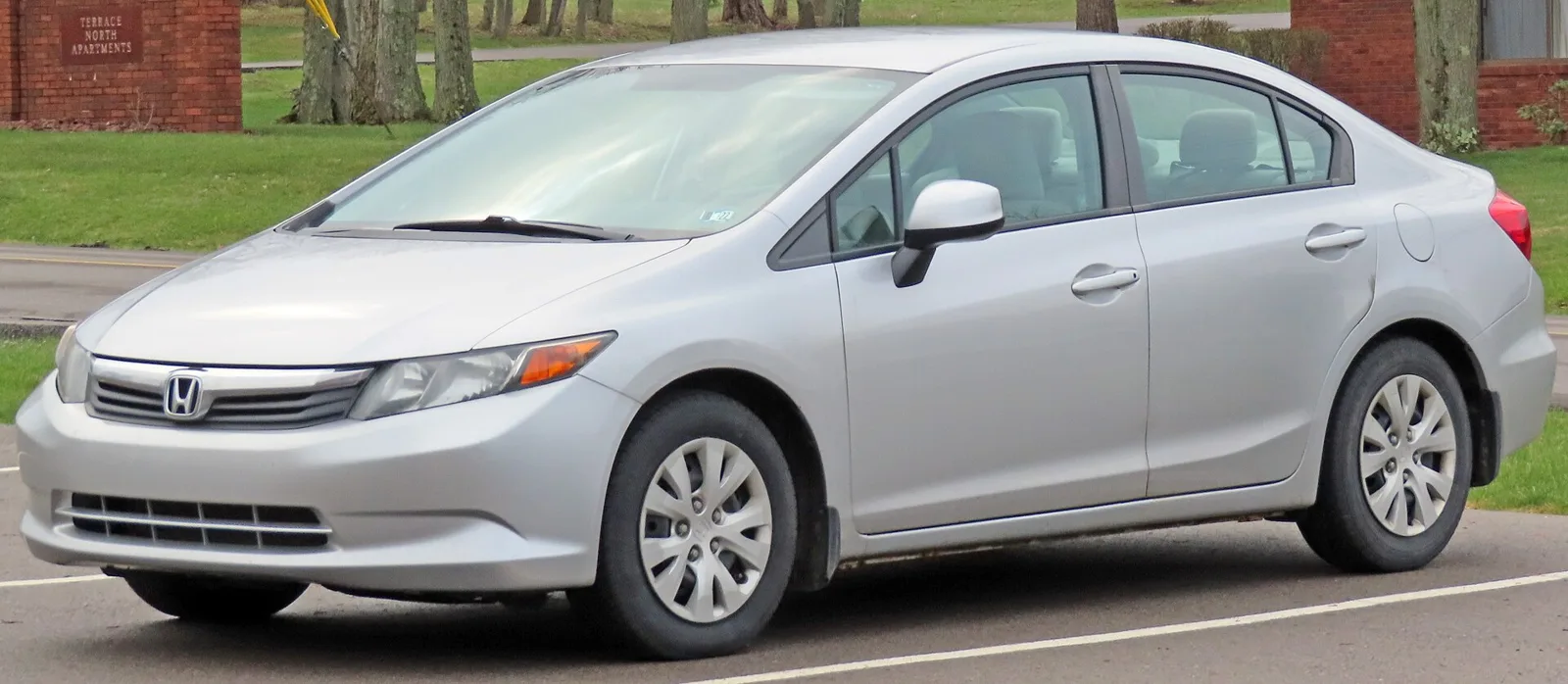
A compact sedan, coupe, hatchback and Tourer estate, the 2011 to 2016 Civic was smaller and lighter than its predecessor. It gained a Si, a hybrid and a Type R, and it was rebuilt for 2013 after weak reviews. It was sold in North America from April 2011.
The ninth-generation Honda Civic was a compact car built from 2011 to 2016 and sold as a sedan, coupe, hatchback and Civic Tourer estate. It replaced the eighth-generation car, and it was smaller and lighter than the model it succeeded. Its North American launch in April 2011 was followed by Europe in 2012, and the Type R hot hatch arrived in 2015, drawing on the European hatchback.
What was the ninth-generation Civic?
The ninth-generation Honda Civic was a range of compact cars made by Honda between 2011 and 2016. It replaced the eighth-generation car, arriving first in North America and then in Europe and Asia-Pacific, and came in four body styles: sedan, coupe, hatchback and a station wagon called the Civic Tourer.
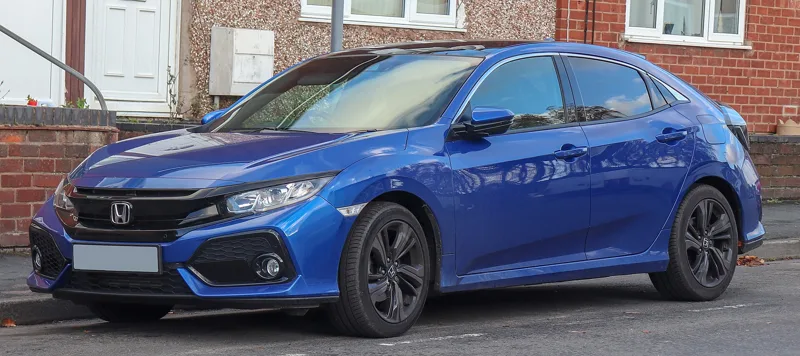
The hatchback formed the basis for the Civic Type R (FK2), released later in 2015. Apart from the 750-unit limited run of Type R cars, no versions of the ninth-generation Civic were sold in Japan, which left a seven-year gap before the tenth generation returned there in 2017.
A smaller, lighter Civic born in a financial crisis that stumbled at launch, recovered with a rebuild, and ended with a Type R.
Why was the ninth-generation Civic delayed and redesigned?
In May 2010 a Honda executive said the new Civic would slip into 2011, citing shifting markets and stricter efficiency and emissions rules. Honda unveiled a sketch in December 2010, describing the car as energetic, sleek and aerodynamic. The production North American car was shown in concept form in January 2011.
The Civic was originally planned to grow, but after the global crisis of 2008 Honda decided to make it smaller, lighter and more fuel-efficient while increasing interior space. Chief executive Takanobu Ito later said the company had believed buyers would give up upscale content if the car was efficient and affordable. That view backfired as rivals raised the quality and features of their compact cars, and sales of the Ford Focus and Hyundai Elantra rose in the US. Ito took responsibility for the car's poor performance there.
How did the North American Civic perform?
The production version of the North American Civic went on sale on 20 April 2011 as a 2012 model. Petrol, hybrid and natural gas variants were offered, and the petrol range included a sedan and a coupe, both in Si performance versions. The sedan's interior grew by 3.8 cubic feet, to 94.7 cubic feet of passenger volume.
Aerodynamics and weight reduction were central to the fuel economy push. Aero parts were placed under the engine bay, fuel tank and rear underbody, and a new flat underfloor lowered drag by 3.4 per cent. High-strength steel rose to 55 per cent of the sedan's body, and a thinner-walled fuel tank and lighter steering and subframe cut weight further.
What was the Civic HF?
The Civic HF was a sedan with aerodynamic and efficiency improvements, revived from the 1991 CRX HF. It used the R18 1.8-litre inline-four and a five-speed automatic, tuned to return 41 mpg-US on the highway. It had 15-inch alloy wheels with low rolling-resistance tyres, extra underbody covers and a rear decklid spoiler.
The HF was the most fuel-efficient petrol-only Civic in the lineup, with 41 mpg-US on the highway against 36 mpg-US for the previous generation. Its combined rating was 33 mpg-US, a clear improvement on the model it replaced.
What was the Civic Si?
The Civic Si, available as a coupe and a sedan, was powered by a new 2.4-litre K-Series inline-four, the K24Z7. It made 201 hp (150 kW) and 170 lb-ft (230 N-m) of torque, and Honda retuned its exhaust in early 2014 to raise output to 205 hp. The redline was 7,000 rpm, with fuel cut at 7,200 rpm.
The Si came with a six-speed manual and a helical limited-slip differential, the only transmission option. Its new i-MID gained a rev limit indicator and a power meter. Its EPA highway figure was 31 mpg-US, up 2 mpg-US, and in 2012 Honda recalled 50,000 Civics because a driveshaft retaining clip had not been properly seated.
What was the Civic Hybrid?
The hybrid was the third iteration of the Civic Hybrid, launched in the US and Canada in 2011 as a 2012 model. It used a 1.5-litre i-VTEC engine producing 90 hp and a lithium-ion battery. A new 20 kW motor sat between the engine and the transmission, and the EPA rating was 44 mpg-US for city and highway driving.
Honda's ECO Assist technology added feedback on driving style, which Honda said improved hybrid economy by about 10 per cent in Japan.
What changed in the 2013 facelift?
Reviews of the 2012 Civic were generally lukewarm, citing cheap interior materials, worse driving dynamics and styling changes that were not substantial. Consumer Reports removed it from its recommended list of compact cars, and Edmunds reported wind noise and a small trunk.
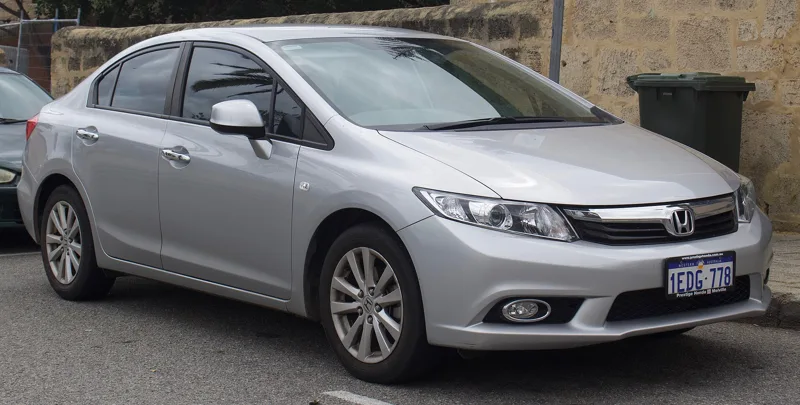
Honda responded with a heavily revised 2013 model. It featured a new front fascia with a U-shaped honeycomb grille, a redesigned bonnet and rear end, and a backup camera as standard. The DX trim was discontinued, and the car gained Bluetooth controls, Pandora radio access and better sound insulation.
What changed for 2014?
For 2014 the Civic received minor changes in North America, including exterior updates on the coupe, premium interior refinements and an optional 7-inch touchscreen. The LaneWatch blind spot camera, Smart Entry with push-button start and a new CVT for petrol models were added. The Si coupe gained a unique front bumper garnish and a larger rear spoiler.
How did Europe get the Civic?
The European five-door hatchback was unveiled at the Frankfurt Motor Show in September 2011. Honda kept the look of its predecessor, and the car was claimed to be the most aerodynamic in its class, with a drag coefficient of 0.27. The wheelbase was 30 mm shorter without losing interior space, and the boot held 470 litres.
Because Honda's Tochigi R&D centre was damaged in the March 2011 earthquake, European designers moved to the Swindon plant in the UK, where the hatchbacks were built. UK models went on sale on 1 October 2011, with a 1.4-litre petrol, a 1.8-litre petrol and a 2.2-litre i-DTEC diesel, plus a 1.6-litre diesel later in 2012.
The Civic Tourer, the estate version, was unveiled at the 2013 Geneva Motor Show and went on sale in February 2014. It was the largest-capacity Civic estate in its class, with 624 litres of boot space and additional storage under the floor. Overall length was 235 mm longer than the five-door hatchback.
What was the Civic Type R FK2?
The Type R was a version of the Civic five-door hatchback for Europe, with a direct-injection turbocharged 2.0-litre VTEC Turbo engine from Honda's Earth Dreams range. It produced 310 PS (228 kW; 306 hp) and 400 N-m (295 lb-ft) of torque at 2,500 rpm, with a red line at 7,000 rpm. Honda quoted a 5.7-second sprint to 100 km/h.
Honda claimed a Nurburgring lap of 7:50.63 for the Type R, beating the Renault Megane 275 Trophy-R. The record did not last, as VW's GTI soon broke it again. Only 750 Type R units were exported to Japan, making it the only ninth-generation variant officially sold there.
How did the ninth-generation Civic race?
Honda entered the 2012 World Touring Car Championship with a racer built on the 2012 European Civic hatchback, powered by a bespoke 1.6-litre direct-injection turbocharged engine. Tiago Monteiro raced the car late in 2012, and a second car driven by Gabriele Tarquini joined for 2013.
In 2013 Honda's Civic race cars swept the first three places in races in Slovakia and Shanghai, and Honda won the manufacturers' championship. Tarquini finished second in the drivers' title. Honda also entered the British Touring Car Championship in 2012, where Gordon Shedden won the title, and in 2014 a Civic Tourer raced in the series.
How did other markets receive the Civic?
Chinese models went on sale on 29 October 2011 with 1.8-litre and 2.0-litre engines. Turkish Civics later became available as a factory LPG model from September 2015, while Pakistan's locally assembled ninth-generation car launched in September 2012 for the 2013 model year.
After the 2011 floods, Civics for the Philippines came from Japan at first, and production later moved to Thailand, which gave the market its full line-up. The facelifted sedan came to Southeast Asia and Australia in 2014, with a redesigned grille and wheel design.
Civic ninth generation specifications at a glance
| Specification | Detail |
|---|---|
| Production | 2011 to 2016 |
| Body styles | Sedan, coupe, hatchback, Civic Tourer |
| North American launch | April 2011, 2012 model year |
| Si engine | 2.4-litre K24Z7, 201 hp (150 kW), 170 lb-ft |
| Hybrid engine | 1.5-litre i-VTEC, 90 hp, 44 mpg-US EPA |
| Type R engine | 2.0-litre turbo, 310 PS (228 kW; 306 hp) |
| Type R torque | 400 N-m (295 lb-ft) at 2,500 rpm |
| Type R 0-100 km/h | 5.7 seconds |
| Hatchback boot | 470 litres |
What was the 2015 hatchback facelift?
The hatchback was facelifted at the 2014 Paris Motor Show and went on sale in March 2015. Changes included retuned electric power steering for more secure control at higher speeds, revised front and rear dampers, and realigned rear toe and camber to sharpen handling.
Styling and trim changes added tinted privacy glass to the lower rear window, glossy black accents around the number plate, a black front bumper, new alloy wheels, darker arch trim and white stitching on the seats and wheel, with the tailgate and lower bumper also reworked.
Where was the North American hybrid built?
Production of the Civic Hybrid sedan moved from Suzuka, Japan, to Greensburg, Indiana, in early 2013, following the start of Acura ILX hybrid production at the Indiana plant in April 2012. That plant's capacity had been expanded to 250,000 units.
What did the fuel economy claims cover?
Honda said all Civic models had better EPA fuel economy than the 2011 versions, by as much as 8 per cent on the highway for automatics. Two versions reached 41 mpg-US on the highway or above in government testing, and the Si's highway figure was 31 mpg-US.
What about the Civic GX natural gas model?
The Civic GX NGV, a natural gas variant offered alongside the petrol and hybrid versions, had been available since late 2011. Honda expected the GX to gain 7 per cent in fuel economy, and all models except the base DX received the Intelligent Multi-Informational Display.
The display sat on the enlarged upper tier beside the digital speedometer, with a 5-inch colour LCD replacing the trip computer. It showed trip data, time and date, fuel economy and audio information, and the Maintenance Minder added interval reminders.