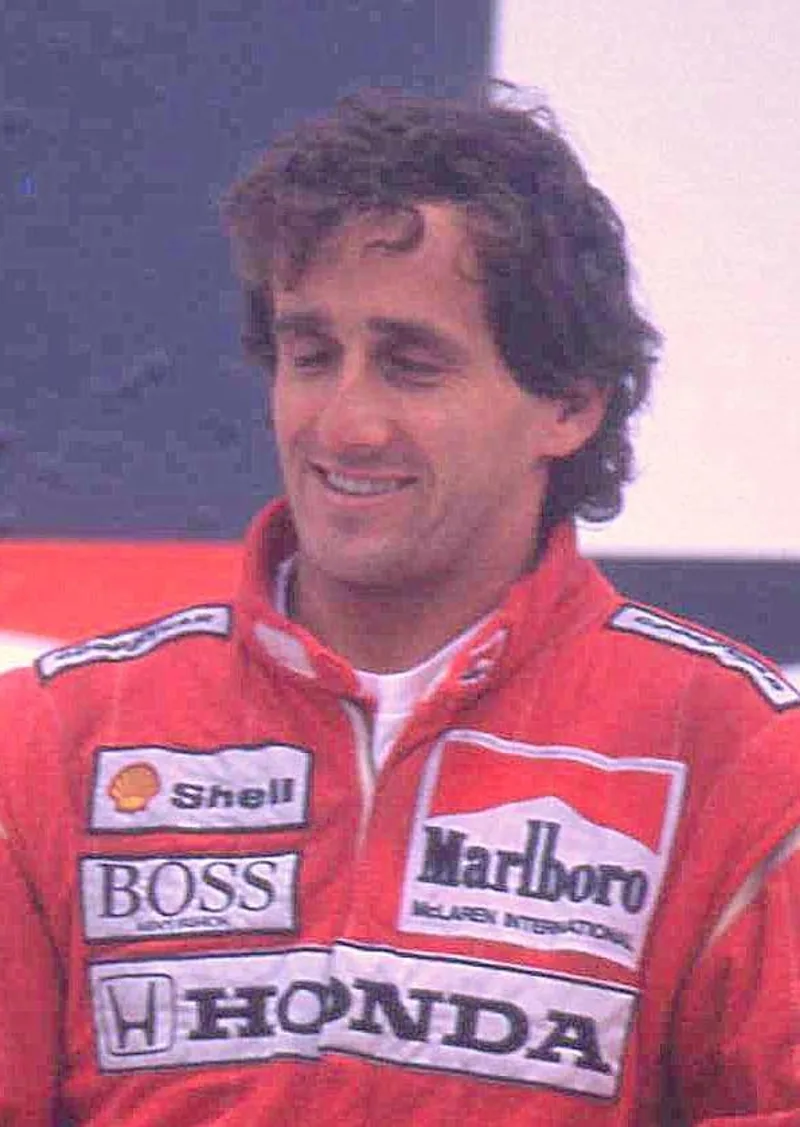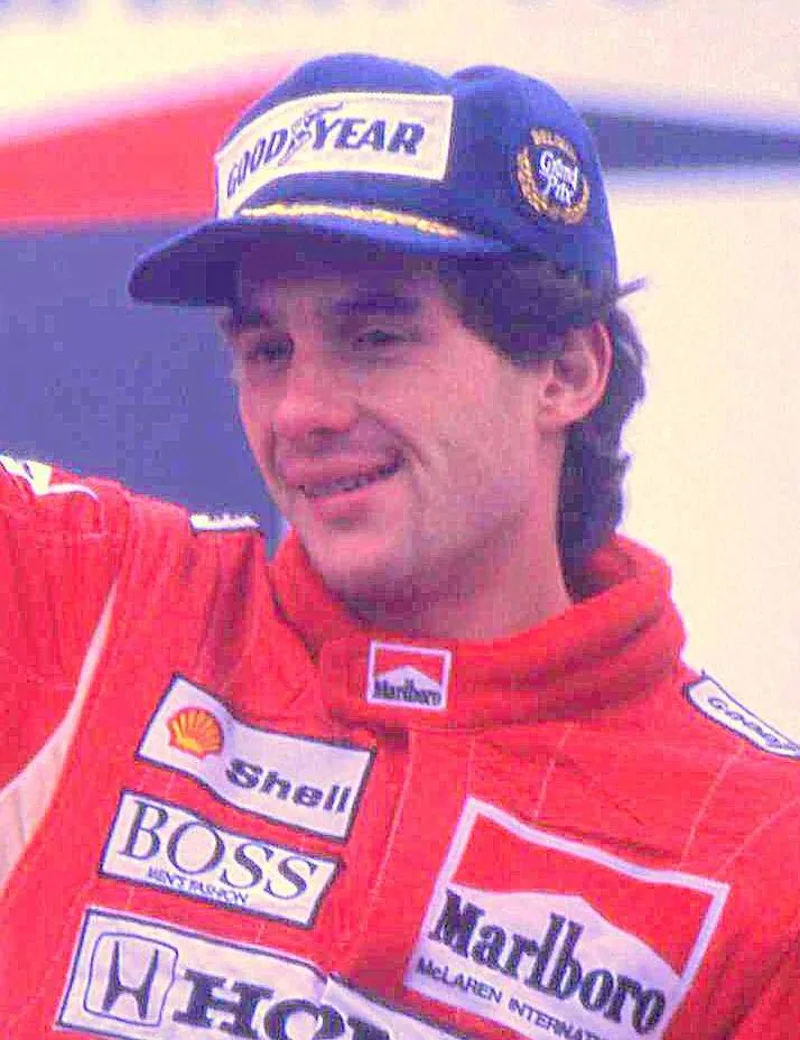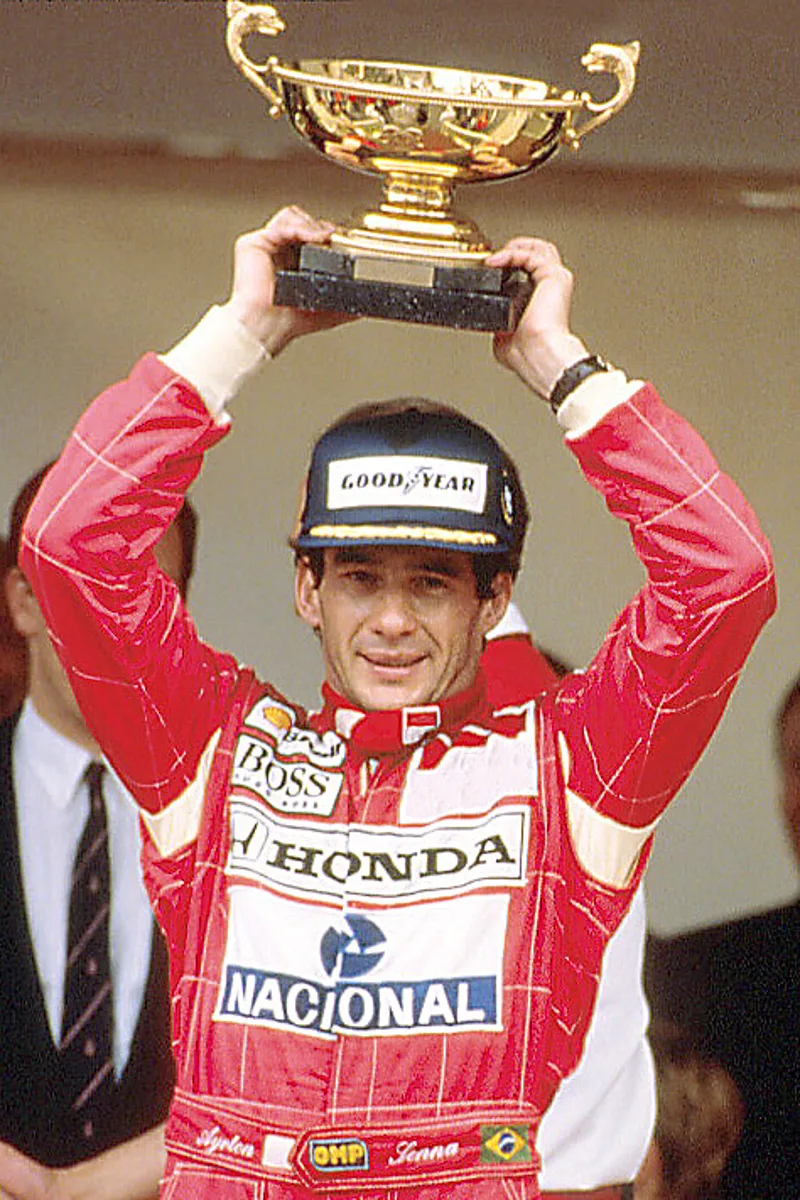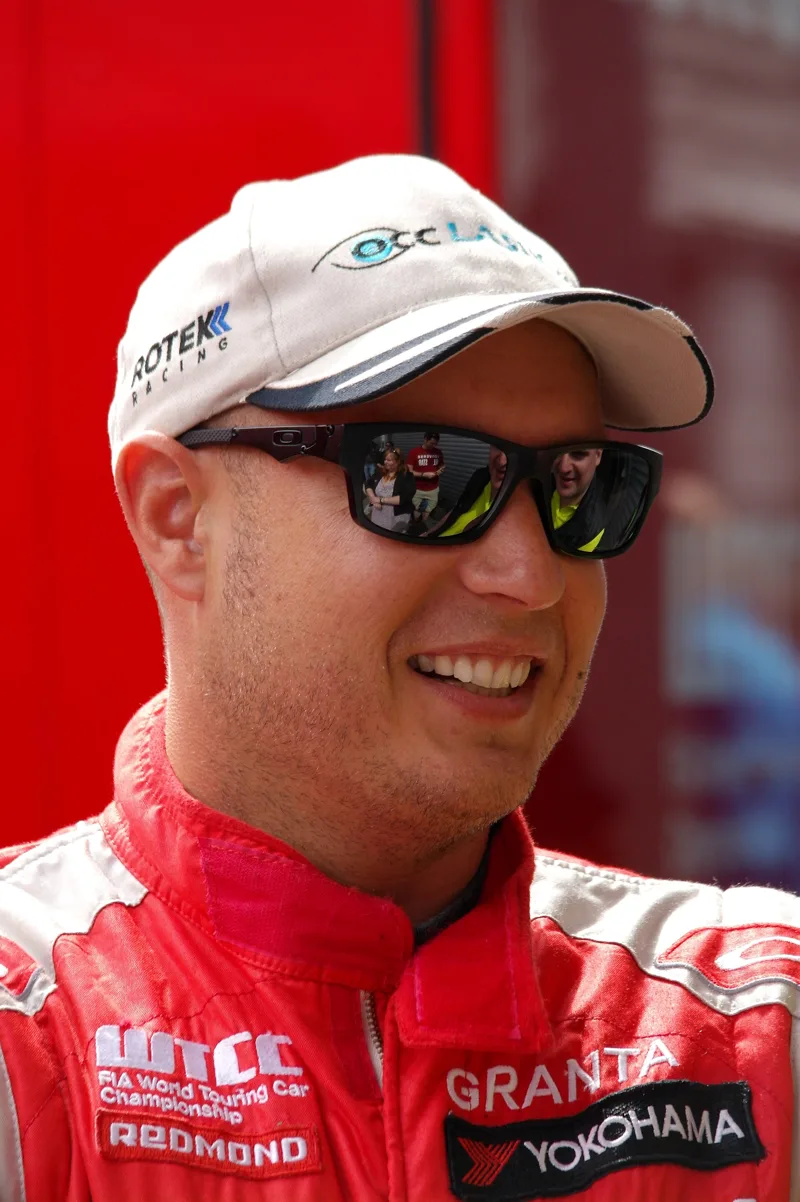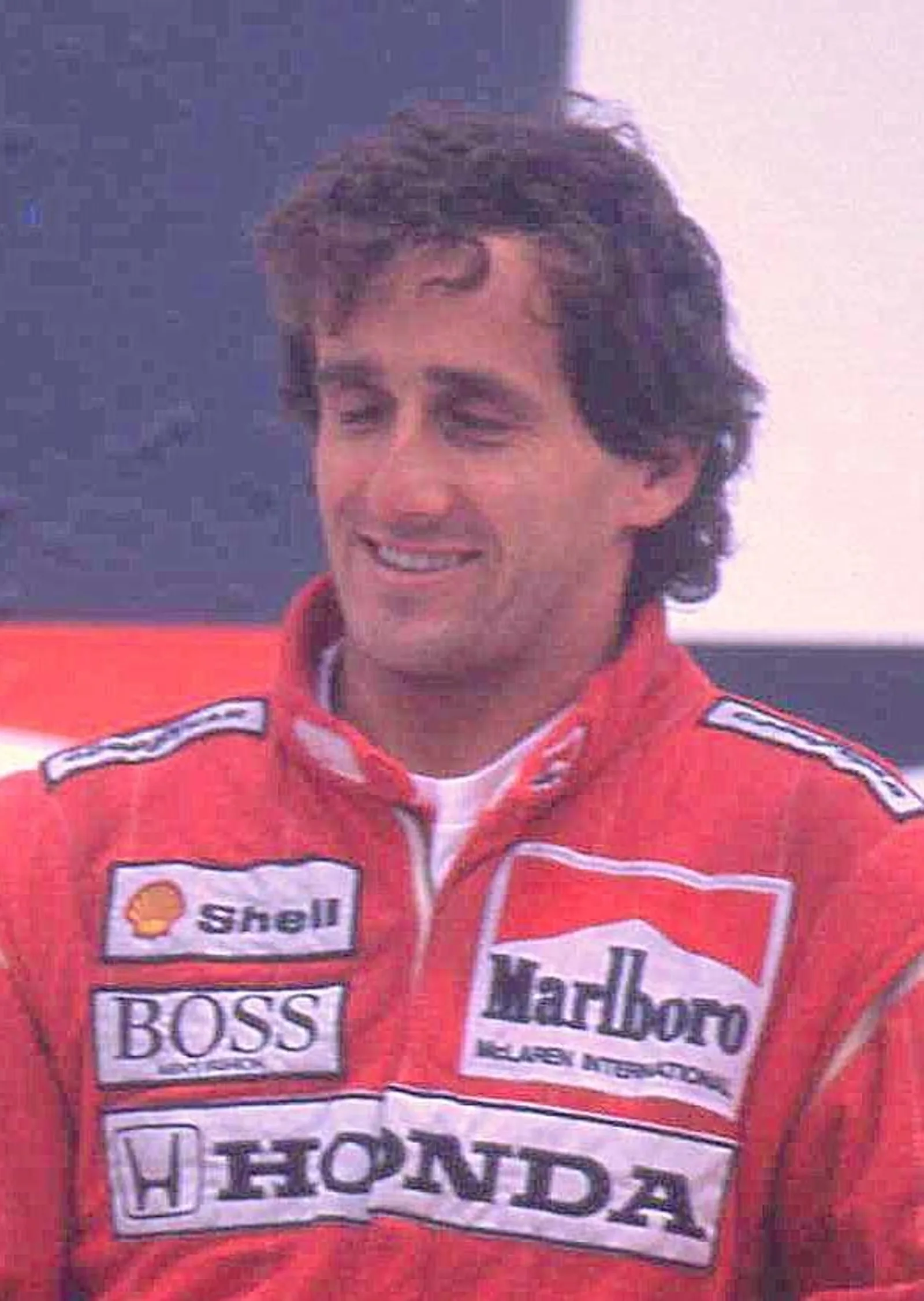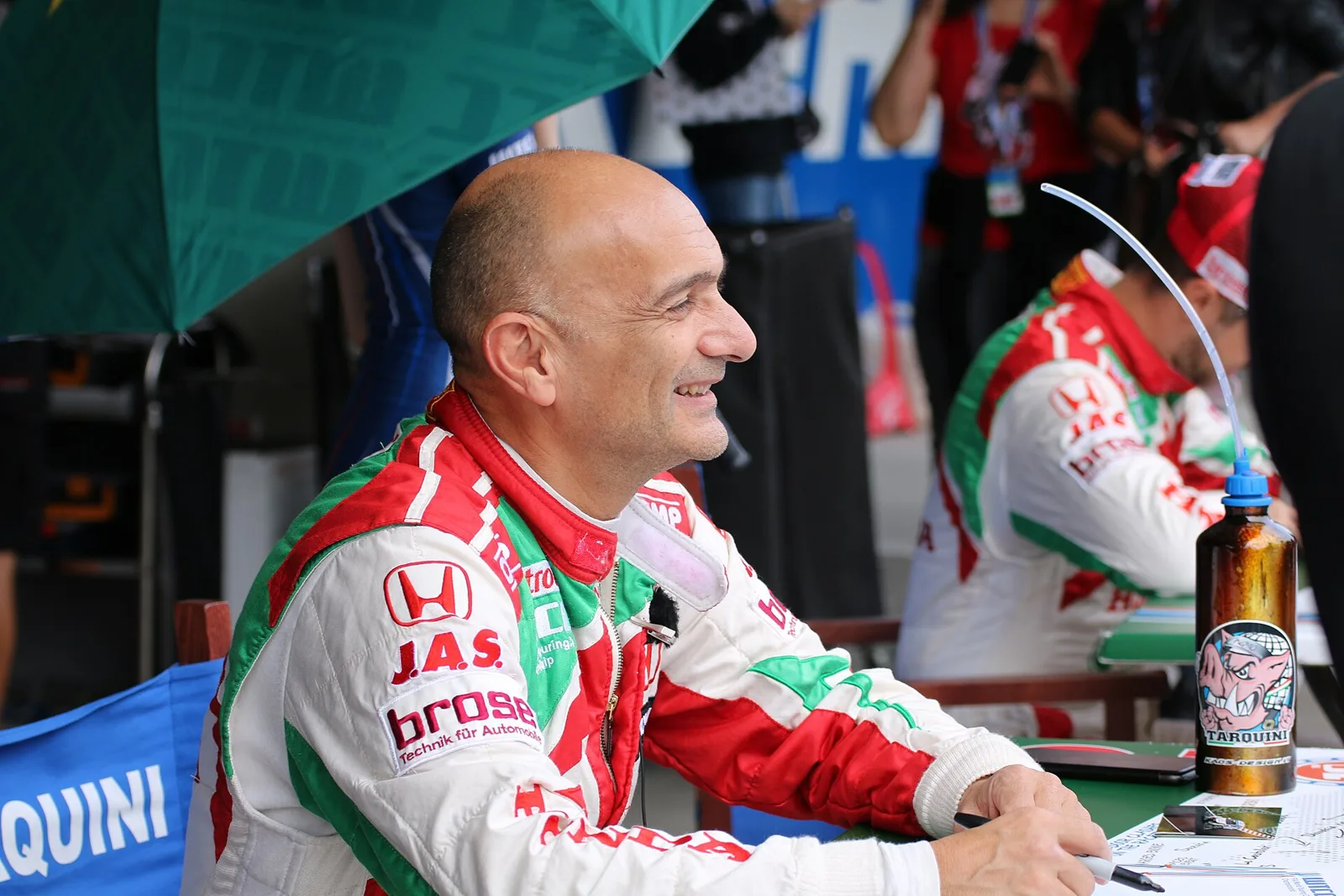
The Italian who started 78 Formula One Grands Prix, won British and European touring car titles and became the oldest FIA World Champion in 2009.
Gabriele Tarquini is an Italian former racing driver who competed in Formula One between 1987 and 1995. He won the British Touring Car Championship in 1994 and the World Touring Car Championship in 2009, and he has been sporting director of Genesis Magma Racing since 2026.
Italian driver Gabriele Tarquini raced in Formula One between 1987 and 1995, and in World Touring Car from 2005 to 2021. Titles followed in Britain, Europe and the world, and he now serves as sporting director of Genesis Magma Racing.
Tarquini's career has two distinct halves. The first was a grind through Formula One with uncompetitive teams, and the second was a long and successful run in touring cars that produced titles in three championships.
How did Tarquini start in racing?
Tarquini was born in Giulianova, Italy, on 2 March 1962. He began karting in 1976, aged 14, and by 1985 he was racing in Formula 3000 with underfunded outfits. His second place at Imola in 1987 was his best result in that category, by which point he had already made his Grand Prix debut.
Kart racing gave him his first experience of competition at a serious level, and the step up to Formula 3000 followed quickly. He spent three seasons there with underfunded outfits before his best result at Imola. The first seasons in that series were hard, because the teams he drove for lacked the money to develop their cars.
He first appeared in a Grand Prix at San Marino in 1987, filling in for Osella for a single race.
Forty failed attempts to qualify in Formula One, then a late career of touring car titles and a world crown at 47.
What was his Formula One career like?
Tarquini raced 78 Grands Prix over seven seasons with six teams. He scored a single championship point and holds the record for the most failed attempts to qualify, with 40. Much of his Grand Prix career was spent in uncompetitive machinery.
He had driven for Coloni in Formula 3000 in 1986, and he joined the team's Grand Prix programme for 1988. That season introduced prequalifying, because 31 cars had entered for a maximum of 30 places in qualifying. The slowest new entrants, including Coloni, were eliminated on the Friday morning regardless of their overall position.
Tarquini often looked faster than some of the exempt entrants, but he failed to prequalify several times. His eighth place at the Canadian Grand Prix was the best result Coloni ever achieved, and his eight starts were the most by any Coloni driver.
In 1989 his plans shifted. The FIRST team had signed him, but its car failed crash tests and he started the season without a drive. When Philippe Streiff suffered a career-ending crash in pre-season testing, Tarquini joined Joachim Winkelhock at AGS from the second round.
At AGS he finished eighth on the road at the first race he entered, and he was promoted to sixth after the exclusion of Thierry Boutsen and Alex Caffi. At Monaco he qualified 13th after threatening the top six, then ran as high as fourth before an electrical problem ended his race.
At the Mexican Grand Prix he finished sixth, but the result was tempered when Williams and Scuderia Italia won an appeal against the Imola disqualification that cost him his point. The rest of the season took the team to tracks where the AGS was less competitive.
The 1990 season was harder. AGS had to prequalify again, and Tarquini made four races, finishing only once, 13th at the Hungarian Grand Prix. In 1991 he made three races and finished eighth at Phoenix, before the team's money ran out after Monaco and the AGS car stopped appearing on the grid.
Late in 1991 the team sold his contract to Gabriele Rumi's Fondmetal outfit, in time for the Spanish Grand Prix. He signed for a full year in 1992. The Fondmetal GR02 was neat but underdeveloped, and his car finished only once, 14th at Silverstone. His qualifying was better, and he outqualified Ivan Capelli's Ferrari in Belgium.
Fondmetal folded after the 1992 Italian Grand Prix, which left Tarquini without a drive. In 1995 he was Tyrrell's test driver and replaced Ukyo Katayama for the European round. He finished 14th, six laps down on Michael Schumacher, and that was his final Grand Prix.
How did he make the switch to touring cars?
Tarquini moved into touring cars in 1993 with Alfa Romeo, finishing third in the Italian Superturismo championship behind Roberto Ravaglia and Fabrizio Giovanardi. In 1994 he won the British Touring Car Championship at his first attempt, driving an Alfa Romeo whose aerodynamic enhancements drew debate in the paddock.
The Super Touring regulations of 1993 were dominated by D-segment cars. He became Alfa Romeo's number one driver, and the following year he moved to the British Touring Car Championship.
In 1995 Alfa Corse moved him back to the Italian Superturismo championship. After two victories, four third places and six retirements, he left the series and joined Prodrive to help Alfa Romeo's British effort. The move was designed to help Alfa Romeo's BTCC results.
In 1996 he raced Class 1 touring cars for Alfa Romeo in the ITC series, achieving one victory and one second place. The end of the D1 class then prompted his departure from Alfa Romeo.
In 1997 he signed a five-year contract with Honda and raced in the BTCC again with Prodrive. He finished sixth overall, with one victory, one second place and three third places.
In 1998 and 1999 he raced in Germany with JAS Motorsport in the STW Cup, and he won two races. In 2000 he returned to the BTCC for a third stint, still with Honda, before his last season with the company in 2001. The BTCC was a championship he knew well by then, having won its title in 1994.
That final Honda season took him into the Euro STC series. He finished third behind the two Alfa Romeo drivers, Giovanardi and Larini, although he won nine races along the way.
When did he win the European and world titles?
Tarquini won the 2003 European Touring Car Championship at his first attempt in the series, after returning to Alfa Romeo. He moved to SEAT Sport for 2006 and won the 2009 World Touring Car Championship at Macau, becoming the oldest FIA World Champion at 47.
After spending 2002 without a car, Tarquini came back to Alfa Romeo in 2003 and raced in the ETCC. He won the title at the first attempt, as he had done in the BTCC nine years earlier. In 2004, the last ETCC season, he again led Alfa's drivers and finished third behind the two BMWs of Priaulx and Dirk Muller.
The ETCC had been the stage for his 2003 and 2004 results, and the championship was renamed the World Touring Car Championship in 2005. Tarquini remained with Alfa Romeo that year and finished seventh overall, with two victories.
Six drivers were signed by SEAT Sport for 2006, and Tarquini was among them, having been confirmed in November 2005. That year he finished fifth in the standings with a single victory, then eighth in 2007 with another single win. In 2008 he finished runner-up to Yvan Muller and won three races.
His biggest success came in 2009, the high point of his career in touring cars. He won the WTCC title at the last race of the year in Macau, and his age at the time, 47 years and 266 days, made him the oldest FIA World Champion in the sport's history.
What happened after his SEAT years?
SEAT withdrew from the WTCC for 2010 but funded the semi-works SR-Sport team, which allowed Tarquini to defend his crown. He scored five wins in 2010 and finished runner-up to his former SEAT teammate Yvan Muller. His crash in the second race at Japan ended his title hopes.
In 2011 he raced with Lukoil-SUNRED, with Aleksei Dudukalo as his teammate. The season opened with a SEAT 2.0 TDI unit, and from Brno onwards he ran the SUNRED 1.6T instead. He finished fifth in the standings with one win, in a season dominated by the Chevrolet RML team.
In 2012 he drove a SEAT Leon for Lukoil Racing, with the new SEAT Sport turbocharged engine. He started from pole in Italy but finished third behind Yvan Muller and Rob Huff in the first race. In the second race, contact with Huff left him 19th with damage.
In 2013 he joined the returning JAS Motorsport team in a factory-supported Honda Civic, alongside Tiago Monteiro. He qualified fifth at the season opener in Italy but took a five-place grid penalty for tapping Rene Munnich into a spin, then finished fourth and third in the two races, and the Honda team's first WTCC pole came with him at the Race of Morocco. He finished second in one race there and then retired from the other.
His last WTCC season came in 2016, when he moved to the uncompetitive Lada team. He scored two victories,.
How did his racing career end?
After a year of developing the Hyundai i30N in 2017, Tarquini raced in the new WTCR series. The category had brought together the WTCC and International TCR, and he took his place in it for Hyundai. In 2018 he won the World Touring Car Cup with BRC, aged 56.
The 2018 season saw him back in the lead battle. He had spent 2017 helping to develop the Hyundai i30N, so the title was a reward for that work. After a close fight with Muller, he won his fourth title, after the British, European and world championships. He announced his retirement at the 2021 Race of Italy,.
His standing in the sport had long been recognised. In a poll conducted by Motor Sport magazine in 2005 he was voted the 11th greatest touring car driver ever.
What does he do now?
Tarquini is sporting director of Genesis Magma Racing, a team entering the world endurance series in 2026 with the GMR-001 chassis. The team's entry marks its first season in the world endurance series.
The post is the newest stage of a career that has also included Formula Three and the World Touring Car Cup.
How did his Formula One record compare with rivals?
His numbers look poor on paper, but they reflect the teams he joined as much as his own pace. He is often compared with his contemporary Roberto Moreno, who was similarly stuck with slow machinery in the same period.
Most of his 25 failures to pre-qualify came in the pre-qualifying era, when he was a regular and his cars were usually among the slowest on the grid. Even so, he drew good notices for his performance overall.
What is Tarquini's legacy?
Tarquini's record is split between a Formula One career marked by uncompetitive cars and a touring car career that produced titles in three championships. His 40 failed qualifications remain a record, but many people consider him a talented driver held back by his machinery.
His 2009 title made him the oldest FIA World Champion, a record that stands out in an otherwise long career.
Career summary by series
| Series | Years | Teams | Standout result |
|---|---|---|---|
| Formula One | 1987 to 1995 | Osella, Coloni, First, AGS, Fondmetal, Tyrrell | 78 Grands Prix, one championship point |
| British Touring Car | 1994 | Alfa Romeo | Champion at the first attempt |
| European Touring Car | 2003 and 2004 | Alfa Romeo | Champion in 2003, third in 2004 |
| World Touring Car | 2005 to 2016 | Alfa Romeo, SEAT Sport, SR-Sport, Lukoil, Honda, Lada | Champion in 2009, aged 47 |
| World Touring Car Cup | 2018 | BRC | Title at the age of 56 |