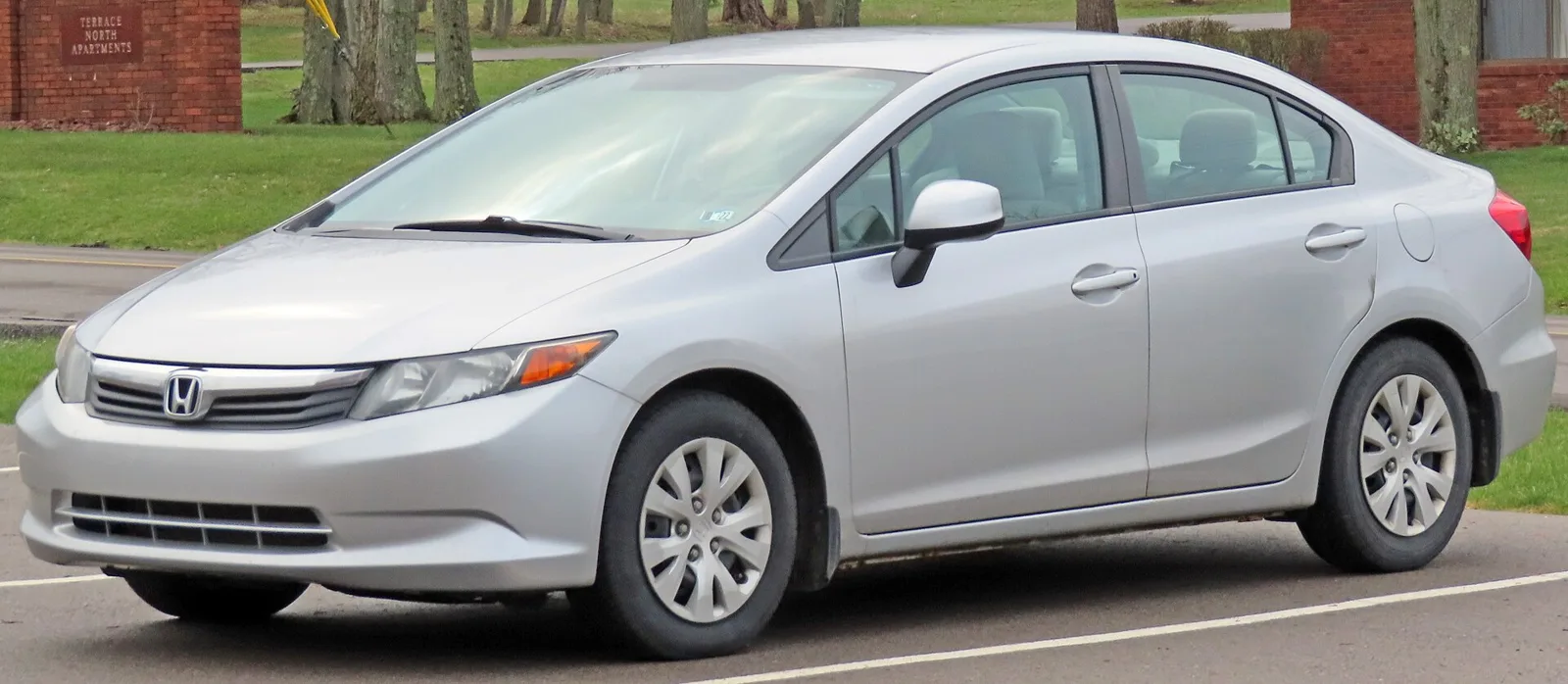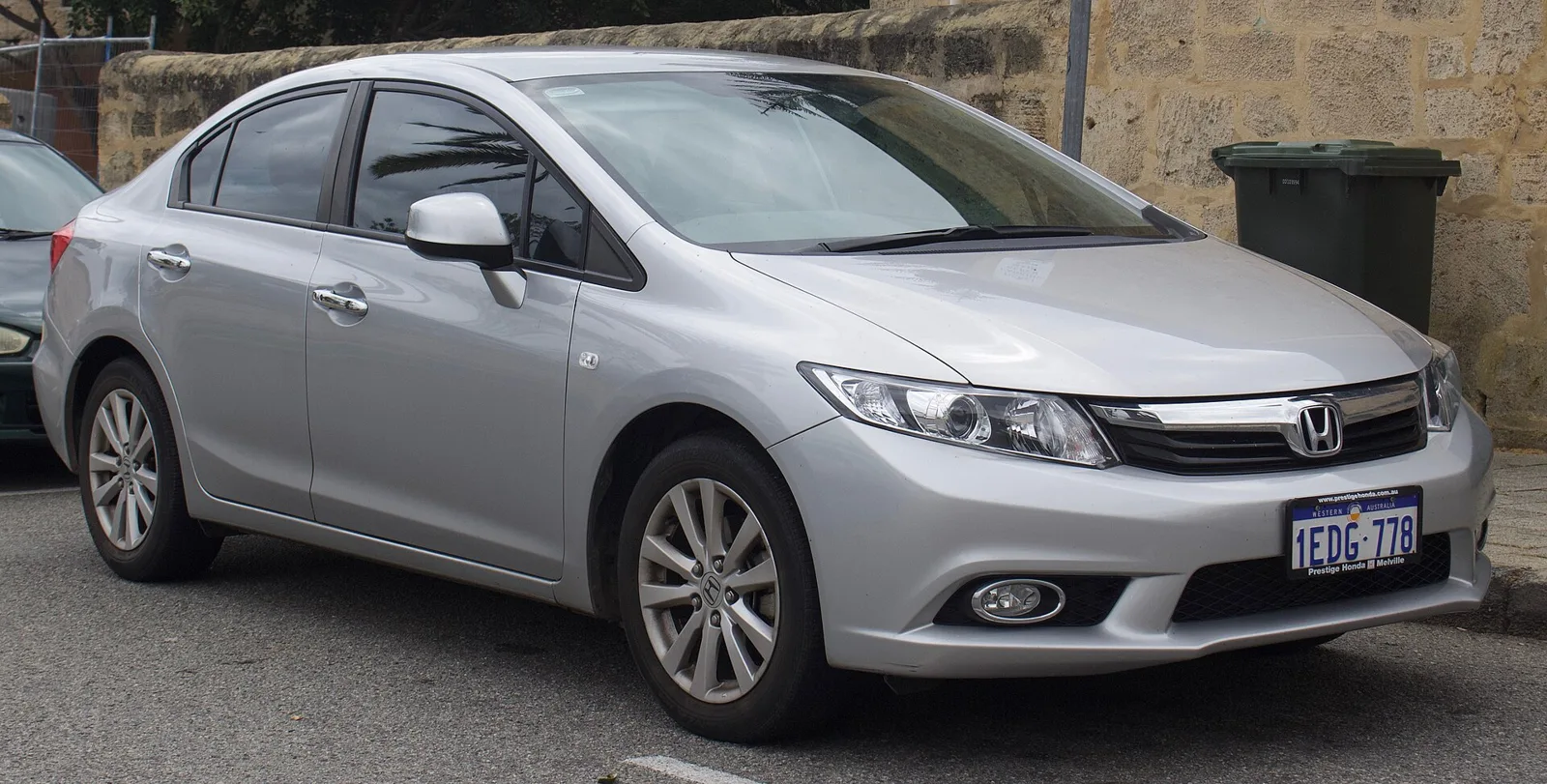
Two compact rivals that launched within weeks of each other in 2011, one leading on fuel economy and one on sales, with recall histories buyers should check.
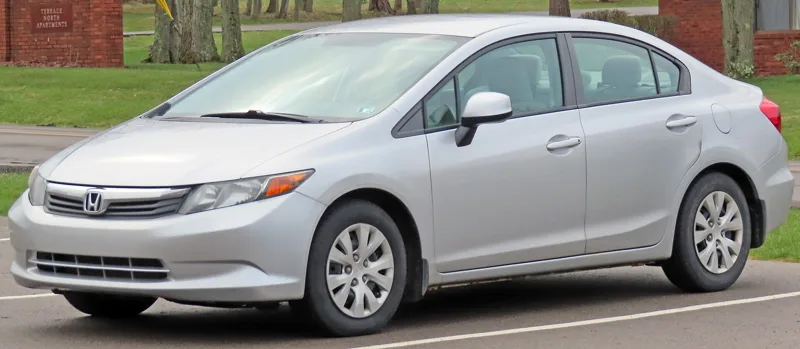
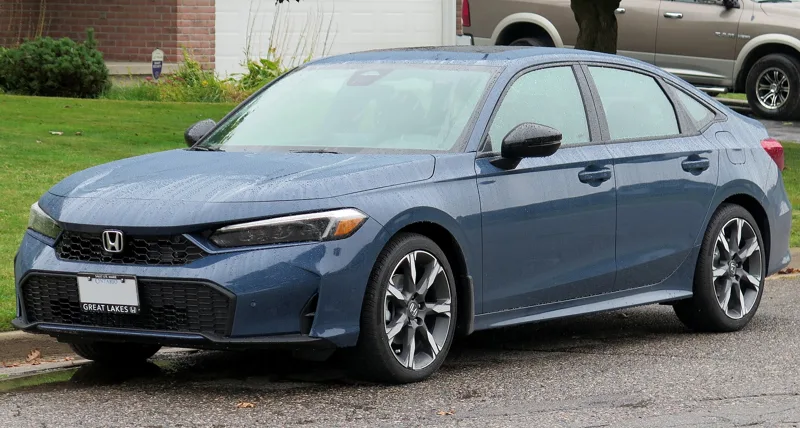
The Honda Civic ninth generation, built from 2011 to 2016, and the Ford Focus Mk III, launched in 2011, were direct compact rivals. Honda's HF sedan reached 41 mpg-US on the highway, and the Focus topped global sales in 2012.
The ninth-generation Honda Civic and the Ford Focus Mk III went head to head in the compact class from 2011. The Civic led on fuel economy, with the HF sedan rated at 41 mpg-US on the highway, while the Focus led on sales and was the best-selling car in the world for 2012. Both cars carried reliability stories that a buyer should check before choosing one.
Why were the Civic and Focus rivals?
Both cars were launched within weeks of each other in 2011 and competed for the same buyers in the compact class. The Civic was developed during the 2008 financial crisis, while the Focus was the first Ford designed under CEO Alan Mulally and his One Ford plan, which aimed to sell one car across the world.
Honda's bet on the Civic was that buyers would give up upscale content and quality if a car was efficient and affordable. Honda CEO Takanobu Ito later accepted that the bet backfired, because rival makers raised the quality and features of their compacts at the same time.
The Ford Focus and Hyundai Elantra pushed sales of Civic rivals to new heights in the US. Ito took responsibility for the Civic's poor performance there after negative reviews and falling sales figures.
The Civic led on economy and the Focus led on sales, and both carried reliability questions that buyers still ask about.
When did each car reach the market?
The Civic reached North America in April 2011, going on sale for the 2012 model year, and followed in Europe in February 2012 and Asia-Pacific in early 2012. The Focus went on sale in North America and Europe on 2 March 2011, with production starting in Europe, North America and later in Asia.
Honda's ninth-generation Civic was not sold in Japan apart from the 750-unit limited Type R, leaving a seven-year gap until the tenth generation arrived in 2017. The 2011 Thailand floods suspended production at Ayutthaya, so the sedan was built temporarily in Japan for export in early 2012.
Ford's production spread quickly. Saarlouis in Germany began building the car for Europe in December 2010, Wayne in Michigan started for North America and Chile in February 2011, and Rayong in Thailand and Chongqing in China followed in May 2012.
Chinese Civics went on sale on 29 October 2011 with 1.8- and 2.0-litre engines, and the 2.0 Type-S came with a five-speed tiptronic. Pakistan's Honda Atlas launched the car in mid-September 2012, and the Philippines first received a single 1.8 EXi automatic in early 2012 before production moved to Thailand and the range filled out.
Ford's Focus also came from Vsevolozhsk near St Petersburg from July 2011, with the estate following in January 2012. Production in Taiwan began in November 2012 and in General Pacheco, Argentina, for most of South America in 2013.
How did the two cars look and feel?
The Civic's 'one-motion' design came with a longer hood and a smaller, lighter body than the outgoing car. The Focus was built on Ford's Kinetic Design, with a trapezoidal grille, a different light shape at the front and hatchback tail lights set lower, similar to the Fiesta.
Honda cut body weight by 7% by raising the share of high-strength steel to 55% on the sedan, and it lowered drag by 3.4% through underfloor and wheel-arch changes. Interior space still grew, with the 2012 sedan's passenger volume up 3.8 ft3 (108 L) to 94.7 ft3 (2682 L).
The 2012 Civic's two-tier dashboard was redesigned, with an intelligent display beside the speedometer and a 5-inch colour screen in place of the trip computer. The Maintenance Minder added service reminders for air filters, cabin filters, tyre rotations, drive belts and oil changes.
The Civic GX natural gas model has been available since late 2011, and it gained a 7% improvement in fuel economy. Its tyres had low rolling resistance, cutting it by 20%, while the HF also used underbody covers and a rear decklid spoiler.
The Focus brought a redesigned cabin, new materials and a fresh infotainment system. Ford gave it a capless fuel tank, while the sedan's space-saving gas strut trunk hinges were replaced by cheaper gooseneck hinges. Designers also wore a Third Age Suit to simulate the physical limits of an elderly person.
Which had the stronger engines?
The Civic's 1.8-litre petrol engines covered most of the range, and the Si used a 2.4-litre K24Z7 inline-four making 201 hp (150 kW) and 170 lb-ft (230 N-m). Honda retuned the exhaust in early 2014, which lifted output to 205 hp (153 kW) and 174 lb-ft (236 N-m).
Si buyers got only a six-speed manual with a helical limited-slip differential, and the car revved to 7,000 rpm. The Focus ST, a turbocharged 2.0-litre rated at 252 hp (188 kW), offered 270 lb-ft (366 N-m) and came only with a six-speed manual.
Honda's Si also got its own chassis work. Its sway bars were thinner than in the eighth-generation Si, the chassis was stiffer, and the curb weight was slightly lower. The wing spoilers differed from the outgoing car, and an intelligent display showed a rev-limit indicator and a power meter.
The Focus launched with a 2.0-litre Duratec making 160 hp in North America. A 1.0-litre EcoBoost three-cylinder arrived with the 2015 refresh, and the 2016 model added a 2.3-litre EcoBoost for the new RS trim. In Europe the 1.6 EcoBoost came with 150 or 182 hp.
The European Focus line-up also included a 1.0-litre EcoBoost three-cylinder in 100 and 125 hp forms, which replaced the 1.6-litre Ti-VCT in 2012. The 1.6 Ti-VCT came in 85, 105 and 125 hp versions, and the 1.6 Duratorq diesel offered 95 hp in its basic form and 115 hp at the top of the range.
Diesel buyers could also choose the 2.0-litre Duratorq with 150 or 185 hp, available with PowerShift. The UK range sold the Focus as a hatchback and estate in many trims, while most other European countries also offered the four-door saloon.
Honda's hybrid used a 1.5-litre i-VTEC engine with 90 hp and a lithium-ion battery. It was rated at 44 mpg-US combined, which was 3 mpg-US better than the previous generation hybrid.
Which car used less fuel?
On the figures, the Civic had the stronger economy story. The HF sedan reached 41 mpg-US (5.7 L/100 km; 49 mpg-imp) on the highway and 33 mpg-US combined, and it was the most efficient petrol-only Civic in the range.
Honda's Eco Assist, borrowed from the Insight, gave drivers visual feedback on efficient driving and came on most Civics except the Si. It was the first petrol-only Honda to use the system in North America, and Honda said it had improved hybrid economy by about 10% in Japan.
Honda also made a point of the HF's weight savings. Its electric power steering was 1.3 kg (2.9 lb) lighter, the front subframe 1.7 kg (3.7 lb) lighter, and a thinner-walled fuel tank saved 1.0 kg (2.2 lb), so the LX with an automatic came out almost 50 lb (23 kg) lighter.
The Focus's EPA figures were 28 city and 38 highway MPG for the six-speed automatic, and 26 city and 36 highway for the five-speed manual. The SFE package, available only on the SE sedan with the PowerShift automatic, reached 40 MPG on the highway.
Other petrol Civic sedans and coupes were rated at 39 mpg-US on the highway and 28 mpg-US in the city, while the Civic Si managed 31 mpg-US on the highway.
How did the critics respond?
The 2012 Civic drew lacklustre reviews. Critics cited cheap interior materials, weaker driving dynamics and styling changes that were too modest, and Consumer Reports dropped it from its Recommended list after many years on it.
Edmunds added wind noise, cheap interior plastics and a small trunk to the complaints. Honda answered with a heavily revamped 2013 Civic, with a U-shaped honeycomb grille, a reworked rear end, a standard upgrade in equipment and better sound insulation.
The Focus was not immune to criticism, and its first-year cars had their own build problems. Rust appeared under the bonnet because of a seam sealer problem, and the trunk lid of the hatchback suffered paint wear from a plastic insert.
Specifications side by side
| Specification | Honda Civic (ninth generation) | Ford Focus Mk III |
|---|---|---|
| Launch | North America April 2011; Europe February 2012 | North America and Europe 2 March 2011 |
| Body styles | Sedan, coupe, hatchback and Tourer wagon | Four-door sedan and five-door hatchback in North America; estate elsewhere |
| Base engine | 1.8-litre petrol | 2.0-litre Duratec, 160 hp |
| Performance model | Si, 2.4-litre K24Z7, 201 hp, later 205 hp | ST, turbocharged 2.0-litre, 252 hp |
| Hybrid | 1.5-litre i-VTEC, 90 hp, 44 mpg-US combined | Not given |
| Highway economy | 41 mpg-US (HF); 39 mpg-US (other petrol models) | 40 MPG (SFE package); 38 MPG (six-speed automatic) |
| Transmissions | Five-speed automatic; six-speed manual on the Si | Six-speed automatic, five-speed manual, PowerShift dual-clutch |
| Recalls | 50,000 cars in 2012 over a driveshaft retaining clip | 2017 EcoBoost recall; 29 engine fires in the US and Canada |
| Critical reception | Dropped from Consumer Reports' Recommended list | Best-selling car in the world for 2012 |
How did trims and running changes differ?
Ford's 2012 Focus Titanium, which had been automatic-only, could be ordered with a manual gearbox, and a non-touch MyFord option replaced the MyFord Touch system on Titanium models from March 2012. The MyFord Touch cost $995 on the SEL and the PowerShift automatic cost $1095 on the S and SE, with no discount for manual or non-Touch Titanium cars.
For the 2013 model year the SE gained standard SYNC and alloy wheels, and the SEL was replaced by an SE Appearance package. The SFE pack remained the last automatic-only Focus apart from the direct-drive electric. Colour choices were limited during summer 2011 by supply problems after the Japanese earthquake and tsunami.
The Focus was first planned to spawn a compact sedan for Mercury, reportedly to be called the Mercury Tracer and to sit below the Milan. Those plans were scrapped when Ford announced the closure of the Mercury division in the summer of 2010.
What went wrong with the transmissions and recalls?
The Focus's PowerShift dual-clutch gearbox drew heavy criticism for shuddering, and it led to several lemon law claims. Ford's remedy was to replace the clutch pack when shudder exceeded 250 rpm after a customer complaint, and it has made at least six revisions of clutch packs and control modules since launch.
Ford traced many shudder cases to an improperly installed seal that leaked transmission fluid onto the dry clutches. The US regulator, NHTSA, did not require a recall, and Ford did not issue one voluntarily, even though it released several software upgrades.
Honda had its own recall problem. In 2012 it called back 50,000 cars after an assembly step for the driver's side driveshaft retaining clip was left incomplete.
Ford's later recall covered 1.6 EcoBoost engines because of a risk of fire from a lack of coolant circulation. Ford received 29 fire reports in the US and Canada, and the recall partly contributed to a US$300 million charge.
Which car suits which buyer?
On the figures, the Civic suits a buyer who puts fuel economy and a hybrid option first, and who can live with a manual-only performance model. The Focus suits a buyer who wants a wider choice of engines, a sporty ST and the EcoBoost engines that followed.
The Civic's HF and hybrid give the best efficiency figures on paper. The Focus offers the broader range of engines, with the 1.0-litre EcoBoost, the 2.3-litre EcoBoost in the RS and an electric version announced at the 2011 Consumer Electronics Show.
Buyers should weigh the Focus's transmission history against the Civic's early reviews. A used Focus with the PowerShift needs its clutch and software history checked, while a 2012 Civic buyer should confirm which changes the 2013 revision brought in.