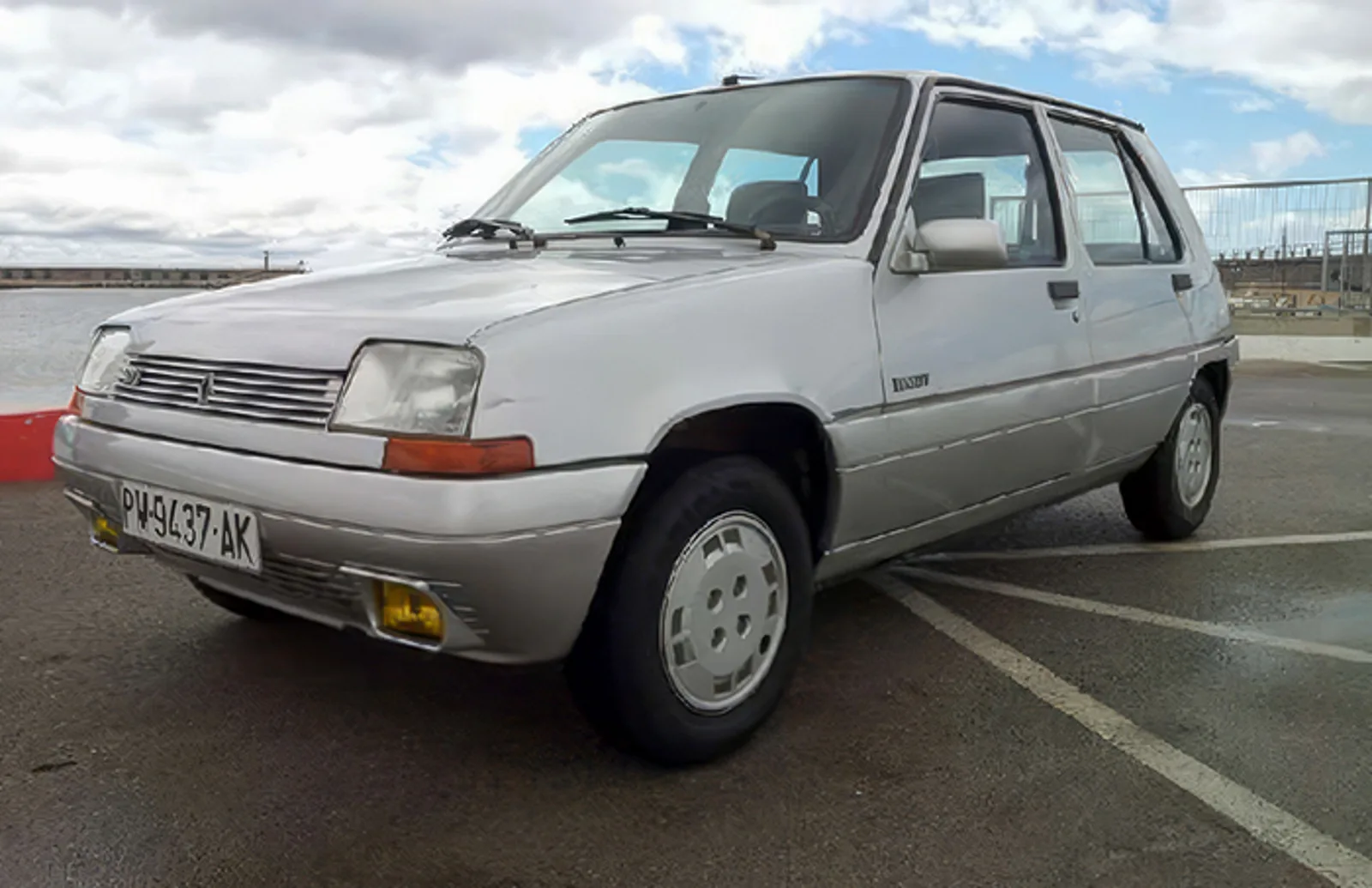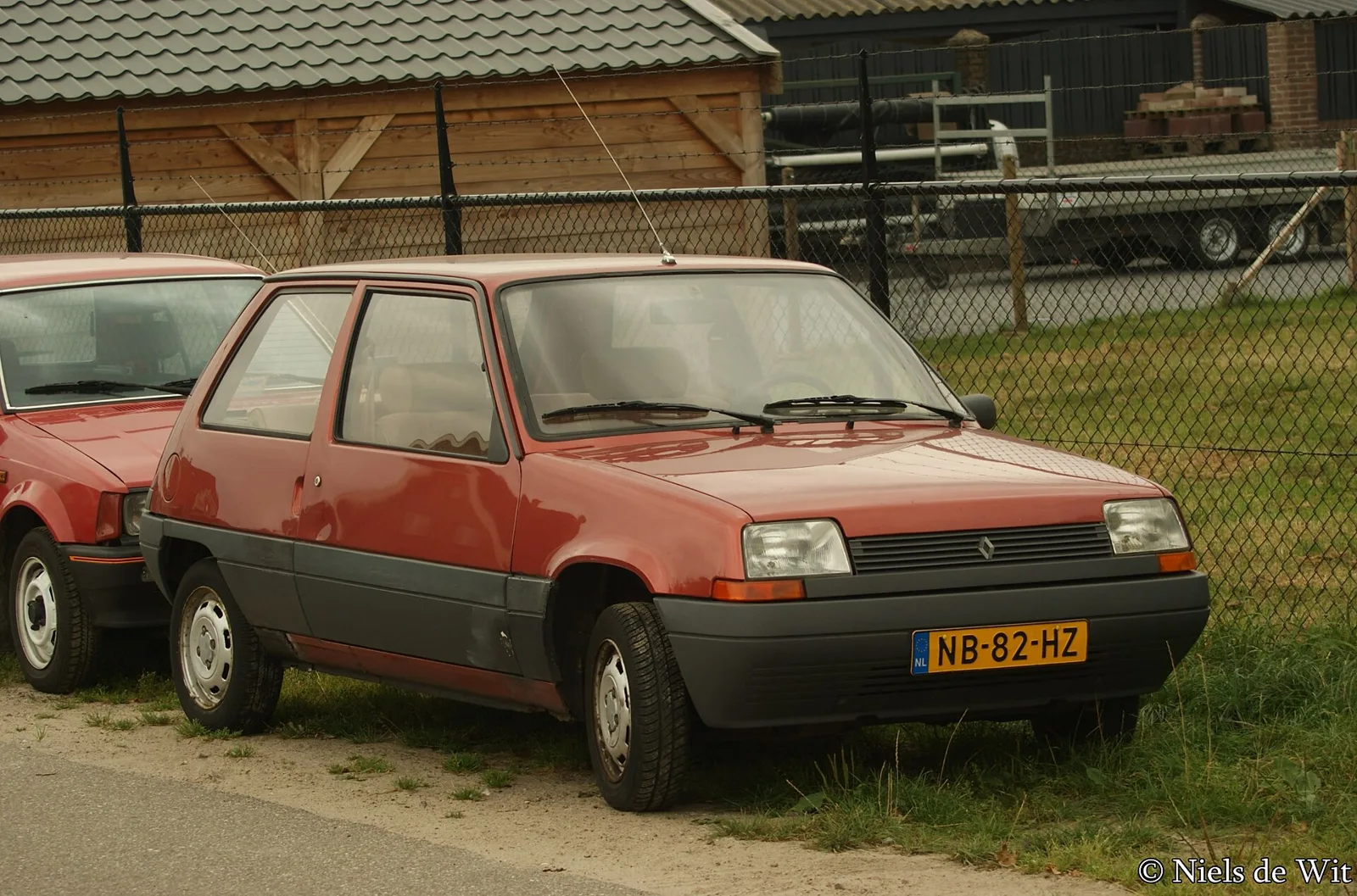
Marcello Gandini reshaped the R5 into a roomier, lower car that became France's best-selling model and won rallies with its GT Turbo.
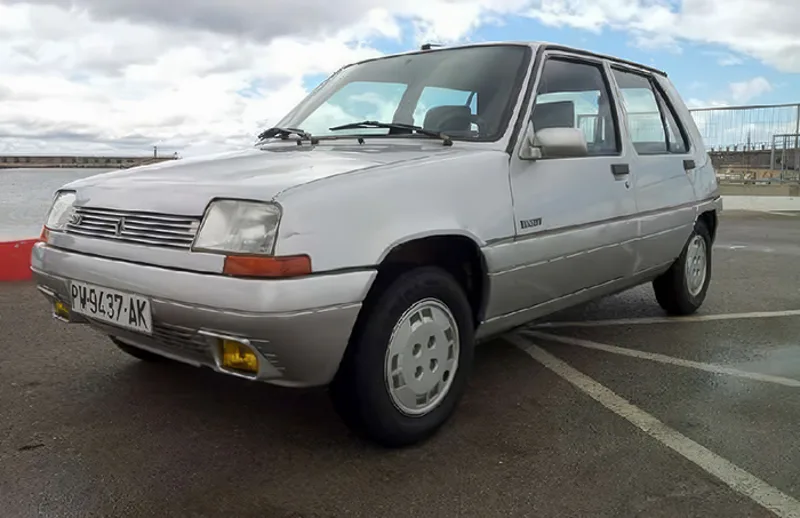
The Renault Super 5, also sold as the Renault 5, was a French supermini built from 1984 to 1996. Shaped by Marcello Gandini as a larger, lower successor to the R5, it used transverse front-wheel-drive engines from 48 bhp to 120 bhp, and total production reached 3,436,650 units.
The Renault Super 5 was a three- and five-door supermini that Renault built from 1984 until 1996, replacing the Renault 5 in the French maker's range. Marcello Gandini reshaped the older car into a longer, lower and roomier design that kept the R5's familiar profile. It became France's best-selling car for several years and remains one of the most recognised small cars of the 1980s.
Where did the Super 5 come from?
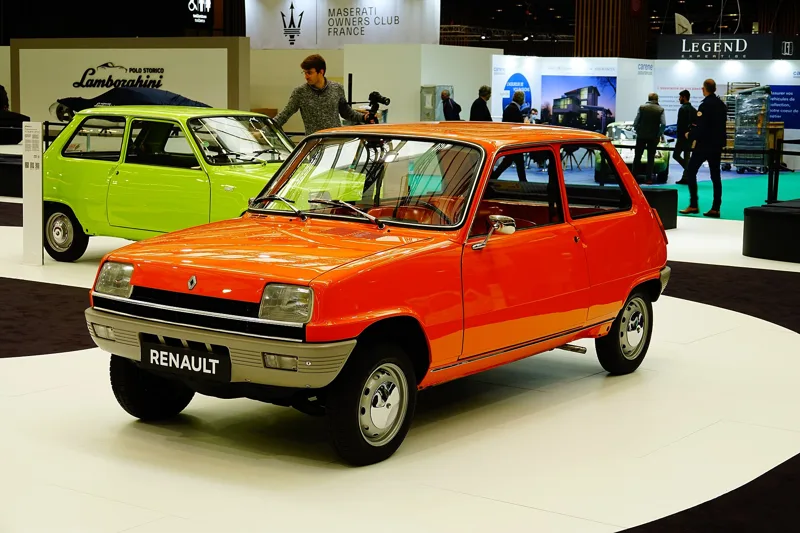
The Super 5 began life in 1978 as Project 140, a Renault programme to replace the R5, then the best-selling car in France. Development dragged on for more than six years because proposals failed to win agreement. The breakthrough came when designer Marcello Gandini joined the team and proposed a simpler route: a car that looked like its predecessor.
Gandini's approach borrowed a technique that luxury makers had used for decades, keeping the look of an established model so buyers would recognise it. Renault retained the R5's plastic bumpers and side mouldings, although the team altered them so they would not damage the paintwork. The result was wider, lower and longer than its ancestor, with a lower nose that improved airflow.
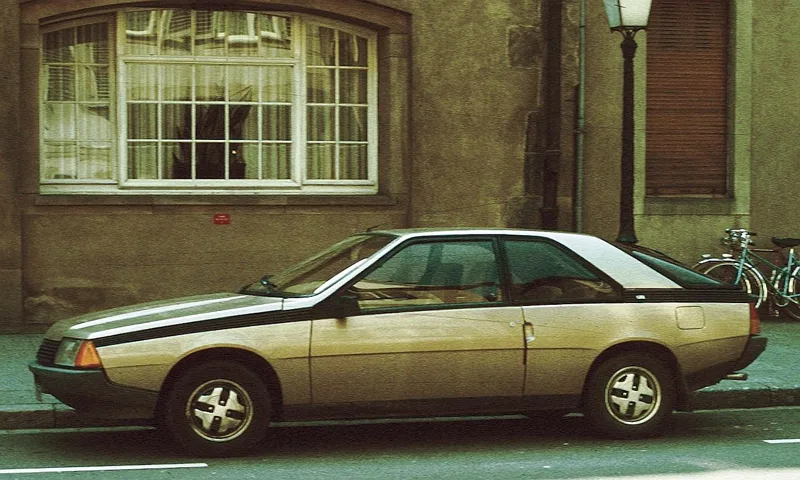
Before Gandini's involvement the team tried many prototypes built from smaller Renault models, and none pleased the testers. The Gabbiano, shown at the 1983 Geneva Motor Show, was a concept with futuristic lines that recalled the Renault Fuego. It never reached production, but a few of its elements found their way onto the Super 5.
A roomier, lower successor to the R5 that sold more than three million cars and found a second life in rallying.
How was the Super 5 launched and marketed?
Renault presented the Super 5 at the Elysee Palace in September 1984, and President Francois Mitterrand tested it. It went on public display at the Paris Motor Show that October, with a large inflatable model beside it. The 'Super 5' label was an advertising idea, since 'Renault 5' stayed on the tailgate.
Television adverts pushed the car as a 'Supercar' in the early years, and a later series cast it as Superman's car. One 1989 commercial, set to a rap song, is still remembered by fans. An earlier 1984 advert showed a personified R5 saying goodbye to viewers before handing over to its successor.
How well did the Super 5 sell?
The Super 5 finished second in its first year, behind only the Peugeot 205, and from 1986 until 1990 it was the best-selling car in France. Its peak year there was 1988, with 241,849 units sold. Across Europe it reached fourth place in 1988 with 518,910 cars.
Ahead of it in that European table were the Volkswagen Golf with 739,445 units, the Fiat Uno with 635,663 and the Opel Kadett with 622,690. Results varied by market. Shares of three to eleven per cent were common in Belgium, Slovenia, Spain, France, Italy and Portugal, while Germany, the Netherlands, the United Kingdom and Sweden stayed below two per cent. Most of the strongest markets had a Renault factory building the car, with Italy the exception.
How was the Super 5 built?
Mass production started in 1984 and ran alongside the R5, which continued as a limited series called Laureate for a few more years. By 1985 the range offered nine versions, priced in France from 38,900 to 61,900 francs, which equalled roughly 5,900 to 9,500 euros. Five-door bodies and diesel engines arrived that same year.
Output was about 500,000 vehicles a year at first, then fell from 1990, and production was cut sharply from 1994 in favour of the Clio. Eight factories took part over the car's life, from Haren-Vilvoorde in Belgium to Mariara in Venezuela. Production finally ended in 1996 after 3,436,650 units. A final limited series called Bye Bye went on sale in March 1996, and the last car left the Novo Mesto plant in Slovenia that July.
What did the Super 5 look like inside and out?
The Super 5 used a three- or five-door hatchback body built as a monocoque, with the engine in one compartment and passengers and luggage in the other. Its boot held 233 dm3 with the seats up and 657 dm3 when they were folded flat. The five-door version was 6 cm longer than the three-door.
Renault widened the seats at elbow height and turned the engine from a longitudinal to a transverse layout, which created more cabin room than the R5 offered. The fuel tank and spare wheel moved under the floor to enlarge the boot. Three-door cars lost some rear legroom because the front seats moved less freely. Much of the dashboard and the controls came from the Renault 11.
The bodywork was pressed sheet metal welded into a rigid shell, with bumpers and side mouldings in reinforced polyester. The nose was sharpened into a wedge that recalled the Peugeot 205, and the drag coefficient fell to 0.36 from 0.38 on the R5. Paint came in around fifty shades of grey, blue, red, green and light colours including white, beige and yellow.
What engines and gearboxes did the Super 5 use?
The Super 5 drove its front wheels through a transverse engine tilted twelve degrees rearward, linked to a four- or five-speed manual gearbox, with automatic versions on some models. Engines ranged from a 1.1-litre unit producing 48 bhp in the C version to a 1.4-litre with 120 bhp in the GT Turbo. Each cylinder had two valves.
The engine family was the Cleon-Fonte, nicknamed 'Sierra', in use at Renault since 1962, alongside F-type petrol and diesel units. Its age drew criticism from the motoring press, which complained of noise at speed. Cylinder heads were aluminium, and the sealed cooling system was protected down to -20 degrees C. Compression was 7.9:1.
Power output ran from 35 kW (48 PS; 48 bhp) to 88 kW (122 PS; 120 bhp), with torque between 8 and 10.4 kg.m at 5250 to 5750 rpm. The GT Turbo was quoted at 7.7 seconds from 0 to 100 km/h (62 mph). The GT Turbo2 was credited with a top speed of 204 km/h (127 mph) and reached 100 km/h in 8 seconds.
How did the Super 5 handle and brake?
The front suspension used MacPherson struts, while the rear relied on two transverse torsion bars. Front discs measured 236 mm (9.3 in) with six-piston calipers. The rear used 190 mm (7.5 in) drums, except on the Turbo, which had discs. The braking system included a limiter that varied with the load on the rear axle.
One comparative test praised the braking and found the gear change smooth and precise, but criticised acceleration after shifts. The same tester valued the comfort and interior space over the Citroen AX and Peugeot 205 in the comparison.
Which Super 5 versions were offered?
Renault offered 22 versions of the Super 5 between 1984 and 1996, alongside more than 35 limited editions. Most differences were mechanical, covering power, engine size, weight and braking. From 1988 the Renault badge moved from the centre of the grille to the right side.
Changes between models were generally small, and the most visible one is the logo position. Interior trim also varied across the run, so early and late cars can look quite different inside.
Super 5 specifications at a glance
| Specification | Detail |
|---|---|
| Body | Three- or five-door hatchback, monocoque |
| Length | 3,590 mm (141.3 in); five-door 3,750 mm (147.6 in) |
| Width and height | 1,590 mm (62.6 in) by 1,390 mm (54.7 in) |
| Wheelbase | 2,407 mm (94.8 in); five-door 2,467 mm (97.1 in) |
| Weight | 760 to 860 kg (1,676 to 1,896 lb) |
| Boot | 233 dm3 seats up; 657 dm3 seats folded |
| Engines | 1.1-litre, 48 bhp (C) to 1.4-litre, 120 bhp (GT Turbo) |
| Top speed | 204 km/h (127 mph), GT Turbo2 |
| 0-100 km/h | 7.7 seconds (GT Turbo); 8 seconds (GT Turbo2) |
| Production | 1984 to 1996; 3,436,650 units |
How did the Super 5 perform in rallying?
The GT Turbo competed in the World Rally Championship from 1986 to 1990 and then gave way to the Renault Clio in 1991. Its only world championship rally victory came at the 1989 Rallye Cote d'Ivoire, driven by Alain Oreille, who also won the World Rally Championship for Production Cars in 1989 and 1990.
The car debuted at the 1986 Rallye Sanremo, where Livio Lupidi and Demetrio Davanzo finished tenth. Oreille ran it in four rounds in 1989, and returned to Cote d'Ivoire in 1990 to take third place. Jesus Puras also won the 1986 Copa de Espana with the Super 5, the model's first success in a Spanish competition.
Renault won the manufacturers' championship in 1986, 1987 and 1988, with the Super 5 helping alongside the Renault 5 Maxi Turbo and the Renault 11, and the make finished third in 1989. In the French championship Philippe Bugalski qualified fifth in 1987 with 71 points, and Oreille repeated fifth place in 1988 and 1989.
Regional rallies in Spain also featured the car, with Galician, Asturian and Cantabrian titles among its results. Several Super 5s still appear in the classic sections of those events today, usually driven by amateur and semi-professional competitors.
What derivatives came from the Super 5?
The Super 5 spawned a van, a seven-seat people carrier and two convertible attempts. The Renault Express, a van built from 1985 to 2002, shared the car's mechanics. The EBS Cabriolet, made by Belgian coachbuilder EBS, was an expensive failure with 1,400 units built.
The Renault Express was sold as the Renault Rapid in Germany and Austria and as the Renault Extra in the United Kingdom and Ireland. It came as a van, estate or pick-up, and Renault facelifted it in 1991 and 1994. European production ended in 2000 after 1,730,000 units, and Nordex in Uruguay built it until 2002.
The Super Van 5, built by coachbuilder Heuliez and shown in 1985, lengthened the body and added a sliding rear door. It lacked a boot because two seats took its place. Yves Saint Laurent bought several for moving its products.
The EBS project began in 1984 when Renault agreed a design with Ernst Berg, head of EBS. Renault objected because a convertible priced below the Super 5 itself would undercut its own car, so Super 5 production in Belgium was ended and replaced by the Renault 21. The Belle Ile edition of 1989 followed, with a canvas rear section opened by a zip.
Why is the Super 5 remembered today?
The Super 5 is still seen as one of the defining cars of the 1980s, with admirers' associations around the world. Several factors explain why it never matched the R5's standing: it sold mainly in the late 1980s, it appeared in a crowded B-segment, and the R5 had been revolutionary.
Its standing was not built on sales alone. Spanish readers ranked it first in a 2011 list of nostalgic cars, and it finished second in the 1986 Car of the Year vote in Spain with 284 points. Scale-model makers including Ixo and Sun Star produced miniatures, and an Altaya collection from 2006 included a 1:43 model of a 1984 GTL.
The car also appeared in popular culture. It featured on the cover of the German group Dominoe's 1987 album Here I am, Paloma San Basilio released an LP of nine singles called Renault Super 5, and Bonnie Tyler drove one for much of the 1984 video for Here she comes.