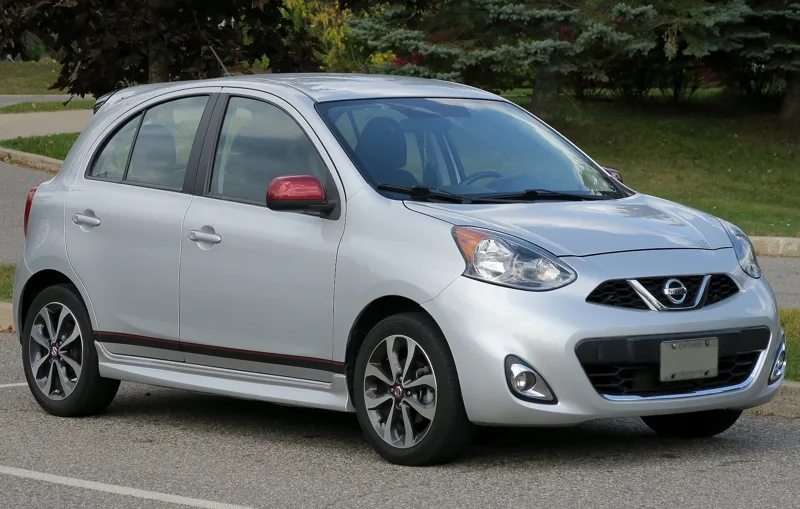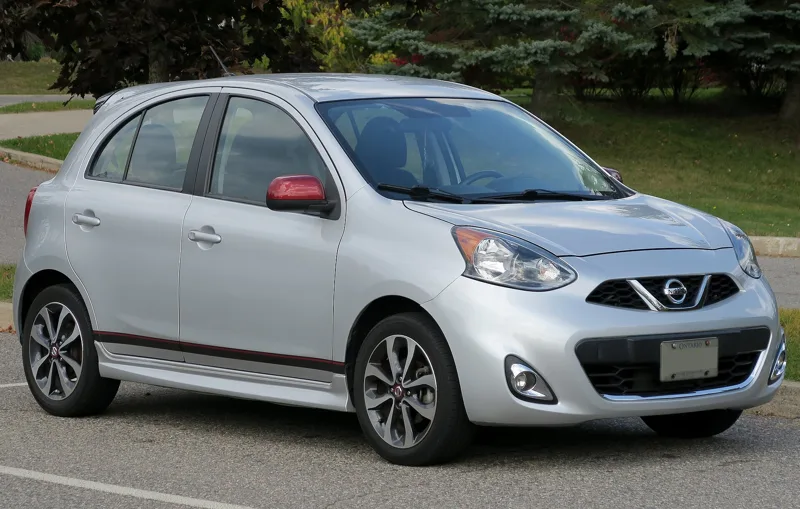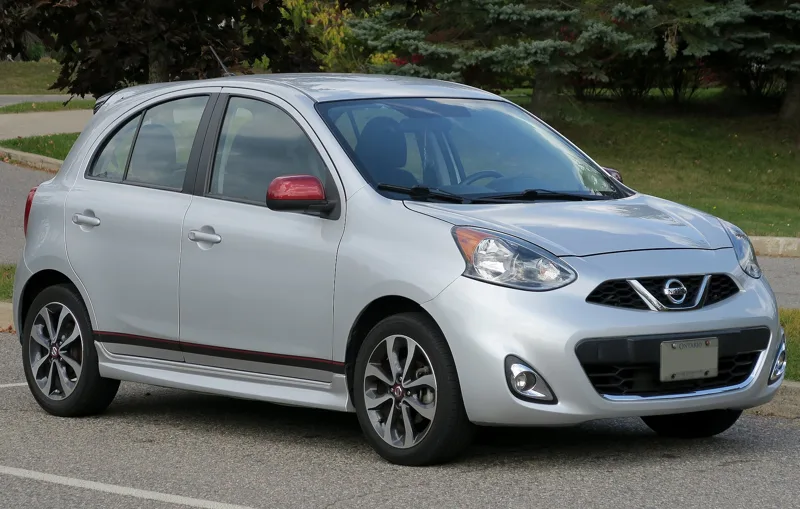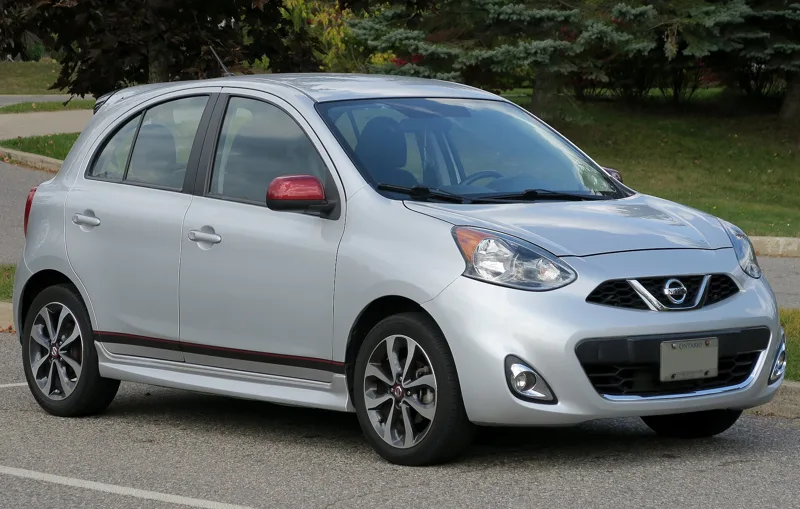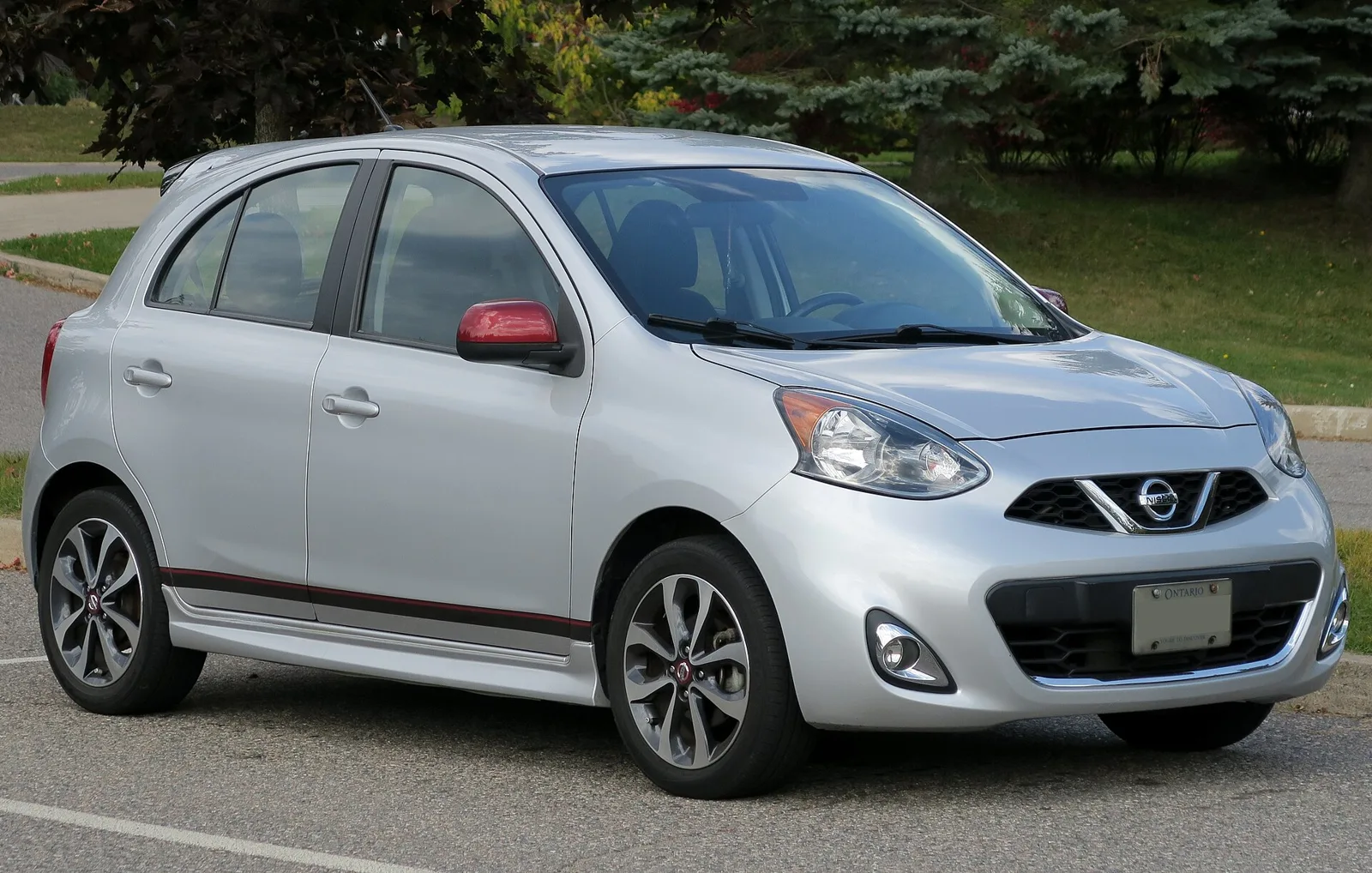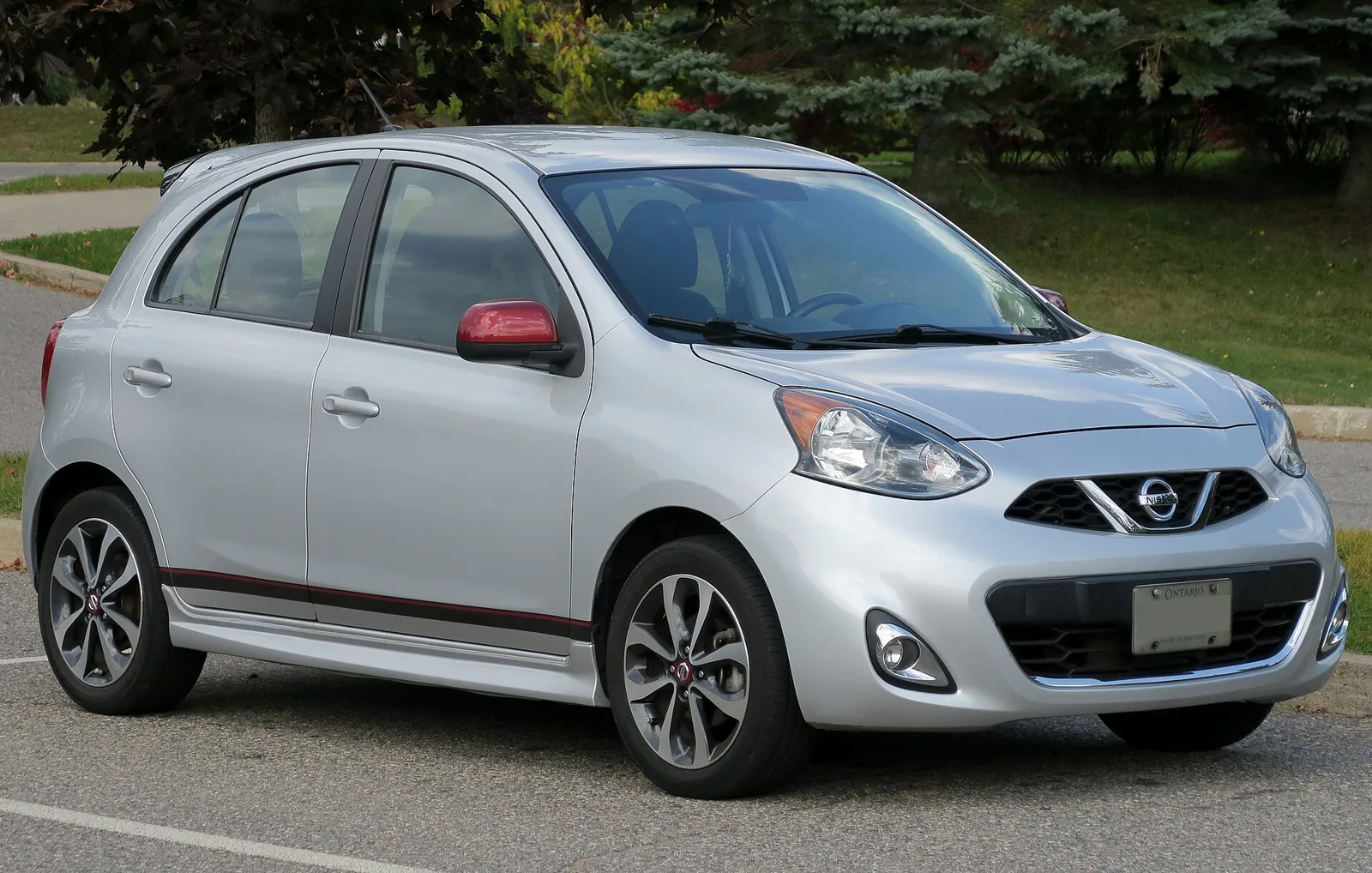
Daihatsu's Charade was already a Japanese best-seller when Nissan's Micra arrived in 1982 to challenge it.
Daihatsu's Charade appeared in 1977 and was a best-seller in Japan before Nissan's Micra arrived in 1982. Both cars later produced turbo models, the Micra Super Turbo and the Charade Turbo, and both kept going through successive generations, with the Charade's rally classes adding a sporting edge.
Daihatsu's Charade had been a best-seller in Japan for five years before Nissan's Micra appeared. The two superminis were built for the same kind of buyer, but they came from different eras of Japanese small-car thinking. The Charade arrived in 1977 and set the template, while the Micra, sold as the March at home, arrived in October 1982 and tried to take a share of the same market.
Why did Nissan build the Micra to take on the Charade?
Nissan introduced the Micra in October 1982 as a challenger in the supermini class, alongside the Honda City, Suzuki Cultus and Toyota Starlet. The Charade had been on sale since 1977 by then. The Micra was meant to replace the Cherry, which had become too large with each generation.
Its low fuel consumption came from an engine specially developed for the March and Micra, uncommonly high gearing and a low weight, which was only 630 kg (1,389 lb) in early European trim. It was also sold through Nissan Cherry Store locations in Japan, which gave the car a dedicated sales channel at home.
The Charade had a head start of five years, and the Micra needed a reputation for reliability to catch it.
How did the first Charade become a best-seller?
The first Charade appeared in October 1977, and it was a front-engined, front-wheel drive car sold at first only as a five-door hatchback. It used a 993 cc three-cylinder engine, the CB20, with 50 PS (37 kW). Japanese cars claimed 55 PS (40 kW) JIS at 5,500 rpm, and the car was a surprise best-seller in a market where tighter emissions rules had many observers writing off the one-litre car.
The Charade won the Japanese Car of the Year title for 1979. Daihatsu built 89,792 G10 and G20 Charades between November 1977 and December 1982. The three-door Runabout arrived in the autumn of 1978 with two small circular opera windows in its C-pillars, and the Series 2 car, with square headlights, followed in October 1980.
Abroad the Charade found a home in New Zealand, where General Motors assembled the facelifted version from 1981. It also found a strong following in Chile and other Latin American countries during the 1970s and 1980s. Chilean cars used a smaller engine, a development of Chile's decision to lower import tariffs for cars with engines under 850 cc in May 1979.
Daihatsu itself called the car a large compact or supermini, to set it apart from urban kei cars such as the Mira. The Charade replaced the Daihatsu Consorte, although the Charmant took over from the bigger-engined Consortes.
How did the Chilean G20 differ from the G10?
The G20 was developed for Chile after the country lowered its import tariffs on cars with engines under 850 cc, and it came with a smaller 843 cc three-cylinder CD engine producing 41 PS (30 kW) at 5,500 rpm. Its first version, from 1978 to 1981, kept the round headlights of the early G10. The car could also run on low-octane fuel or even ethanol.
The three-door Runabout was the exception in that range. It kept the larger 1-litre CB20 engine and gained a five-speed manual transmission and a tachometer. The second-generation G20, sold from 1981 to 1984, received the same facelift as the G10, with square headlights and slightly different rear lights.
Chile kept the same engine for the G21 that followed, the second-generation car sold there roughly from 1985 to 1990. Its smaller engine, rather than its body, was what made the Chilean car distinct from the Japanese and European Charades.
Micra and Charade compared on paper
| Specification | Nissan Micra | Daihatsu Charade |
|---|---|---|
| Debut | October 1982 in Japan, sold as the March | October 1977, first generation G10 |
| Body | Hatchback on a body first designed for Fiat | Five-door hatchback at launch; three-door Runabout from 1978 |
| Early engine | MA10S SOHC, 37 kW (50 PS) or 40 kW (55 PS) in Europe | 993 cc three-cylinder CB20, 50 PS (37 kW); 55 PS (40 kW) JIS in Japan |
| Weight | 630 kg (1,389 lb) in early European trim | not given |
| Transmission | Five-speed manual; four-speed or five-speed automatic | Four- and five-speed manuals; two-speed Daimatic automatic on the G11 |
| Hot version | Super Turbo, 930 cc, 110 PS (81 kW; 108 hp) | Charade Turbo, CB50 engine, 80 PS (59 kW; 79 bhp) JIS |
| Hot version performance | 7.7 seconds to 100 km/h (62 mph); 180 km/h (112 mph) | not given |
| Rally record | not given | Monte Carlo class win 1981; Safari class win 1982 |
| Second generation | K11, January 1992 in Japan | G11, March 1983 |
| Third generation | not given | G100, January 1987 |
| Production end | Micra K10 ended 21 December 1992; series quietly discontinued August 2023 | Daihatsu built the Charade from 1977 to 2000 |
What engines did the Charade and Micra offer?
The Micra's first engine was an all-aluminium MA10S SOHC unit, and European cars made 37 kW (50 PS) or 40 kW (55 PS) in their high-compression version. The Micra also offered a four-speed or five-speed automatic, called the Nissanmatic. Its 1.2-litre MA12 engine arrived in late 1987 with an electronically controlled carburettor and 42 kW (57 PS).
The Charade's early engine was a three-cylinder unit that Daihatsu kept in use for years. The G11 second generation, released in March 1983, brought a range of new 1.0-litre engines, including a turbocharged version and naturally aspirated diesel and turbodiesel options. Its base engine was a 993 cc CB series unit producing 52 to 60 PS (38 to 44 kW; 51 to 59 bhp).
Japanese G11 models came with twin carburettors as standard, while most export cars had a single unit with slightly less power. The G11 drag coefficient was Cd=0.36, and base cars took around 15 to 17 seconds to reach 100 km/h.
Where else were the Charade and Micra built?
The Charade was assembled in several countries. Alfa Romeo's South African subsidiary began building it in March 1983, and Taiwanese assembly started in 1983 or 1984. The second-generation Micra, by contrast, was built in the UK, Japan and Taiwan.
South African cars were the naturally aspirated 1.0-litre petrol model with five doors and the high roof, making 60 PS (44 kW; 59 bhp). That assembly ended in late 1985, when Alfa Romeo closed its South African subsidiary. The Charade had made up nearly half of Alfa Romeo's South African output in 1985, and some cars went on to Italy, where Japanese imports faced restrictions.
New Zealand's facelifted Charade was assembled by General Motors at Trentham, while the Turbo was imported fully built up. Greek firm Automeccanica built the Daihatsu Zebra, an off-road style torpedo design on Charade mechanicals, from 1981 to 1985.
Australia received its own body style. The range there began with a high-roofed two-seater three-door, and the high-roof van was sold as the Charade Duet to get around import quotas and some ADR rules. Taiwan's assembler later developed a longer notchback five-door called the Skywing, which earned it a three percent tax subsidy.
How fast were the turbo versions?
The Micra Super Turbo is still the fastest production Micra in Nissan's history. Its 930 cc engine combined a supercharger with a turbocharger and produced 110 PS (81 kW; 108 hp) at 6400 rpm. Factory figures gave it 7.7 seconds to 100 km/h and 15.5 seconds for the quarter-mile.
The Charade Turbo used the upgraded CB50 engine, with a very small IHI turbocharger that made 80 PS (59 kW; 79 bhp) in Japanese market cars. Because the turbo was so small, the car needed no intercooler. European export cars with the CB60 made 68 PS (50 kW; 67 bhp) DIN, and the suspension gained thicker anti-roll bars and alloy wheels.
A limited homologation run of 200 Charade 926 Turbos had come out in October 1984, with a SOHC six-valve version of the 926 cc engine producing 76 PS (56 kW; 75 bhp).
Daihatsu's ambitions went further. At the 1981 Tokyo Motor Show it showed a one-litre turbo concept developed with De Tomaso, which became the Charade De Tomaso. In October 1985 the 926R prototype followed, a mid-engined car with a 926 cc turbocharged three-cylinder that produced 120 PS (88 kW; 118 bhp). It was built to compete in a World Rally Championship class for cars under 1,300 cc, but the project was called off after Group B was banned.
Could a Charade win rallies?
Yes. The Charade won its class at the 1981 Monte Carlo Rally, finishing 28th overall out of 263 participants, and it claimed a class win at the 1982 Safari Rally. Two G10 cars had already finished first and second in the 2,400 km Tour of Malaysia Rally in 1979.
The second-generation car kept up the rally work. Charades, both turbo and normally aspirated, were entered in the Safari Rally from 1984 to 1988, winning the A5 class in 1986 and 1987. The Swiss Daihatsu importer also campaigned a Charade Turbo in the national Group A rally championship in 1985.
How reliable was the Micra?
In a 1995 survey by the German Automobile Association (ADAC), the Micra topped the small-car class for cars aged four to six years. Four-year-old Micras recorded 7.5 breakdowns per 1,000 vehicles, against 8.0 for four-year-old Volkswagen Polos. Six-year-old Micras managed 11.5 per 1,000, while the Polo recorded 15.3.
Last in that class was the Fiat Uno. Its four-year-old cars averaged 20.7 breakdowns per 1,000, and its six-year-old examples 37.3. The Micra also reached a much higher survival rate over the longer term than many of its competitors.
What did the second-generation Micra add?
The K11 Micra arrived in Japan in January 1992 with new all-aluminium 1.0 L and 1.3 L DOHC engines. A facelift in May 1997 gave it a grille blended into the bonnet, and the K11C revision followed in November 1999.
The 1.0-litre CG10DE and 1.3-litre CG13DE produced 55 PS (40 kW; 54 hp) and 75 PS (55 kW; 74 hp), both with ECCS fuel injection. Higher outputs were claimed in Japan under the JIS rating, rather than the DIN/ECE figures used in Europe.
Safety equipment was unusual for the class. A toughened safety cage and side-impact door beams were standard, while pre-tensioning seat belts and a driver's airbag were optional, although Euro NCAP gave the Mk2 car only two stars in 1997.
The Cabriolet (FHK11) was shown at the 1995 Tokyo Motor Show but went on sale only in August 1997, with an electric top, and it was built in limited numbers for Japan. The March Box estate, with a split folding rear seat, was unveiled in November 1999.
The K11C replaced the distributor with individual coilpacks, and the second facelift swapped the 1.3-litre CG13DE for a 1,348 cc unit called the CGA3DE, which Japan still referred to as a 1.3. Four-wheel drive arrived in November 1999, offered only on the hatchback with the 1.35-litre engine and CVT.
What changed in the Charade's later generations?
Styling for the G100, the third generation, came from Daihatsu's chief stylist Hiroshi Aoki and his colleague Hideyuki Ueda, and the car arrived in January 1987. Its rounder body reached a drag coefficient of Cd=0.32, and it originally offered carbureted or fuel-injected 1.0-litre three-cylinder engines alongside diesel and turbodiesel versions.
The turbocharged 1.0-litre was discontinued in February 1988, and mid-1989 in several export markets, when it was replaced by a 1.3-litre four-cylinder. Daihatsu built that engine with a hollow crankshaft and camshaft to keep the weight close to that of the three-cylinder car. The G100 also had fully independent suspension front and rear.
A permanent four-wheel drive version with the fuel-injected 1.3-litre engine was sold as the TXF, CXF or Will, on the G112 chassis, and it was exported to a few countries. The G100's turbodiesel was claimed at 2.74 L/100 km (85.9 mpg-US) at a steady 60 km/h with a five-speed manual.
Which Charade sold best outside Japan?
China is the answer that stands out. The Charade was called Xiali there and was made by Tianjin FAW, and it sold over 1.5 million units from September 1986 to 2009. Charades were also copied in China in large numbers, often using fibreglass moulding.
Chile had its own line of cars. The G20 used an 843 cc three-cylinder CD engine with 41 PS (30 kW) at 5,500 rpm, and the G21 that followed was sold there roughly between 1985 and 1990. The Micra, by contrast, peaked at more than 50,000 sales in Britain in 1989.
What became of the Micra and the Charade?
Nissan quietly discontinued the Micra in August 2023, and only its fourth generation remained in some markets. Daihatsu built the Charade from 1977 to 2000, so the two cars both ran for two decades or more under their makers' badges.