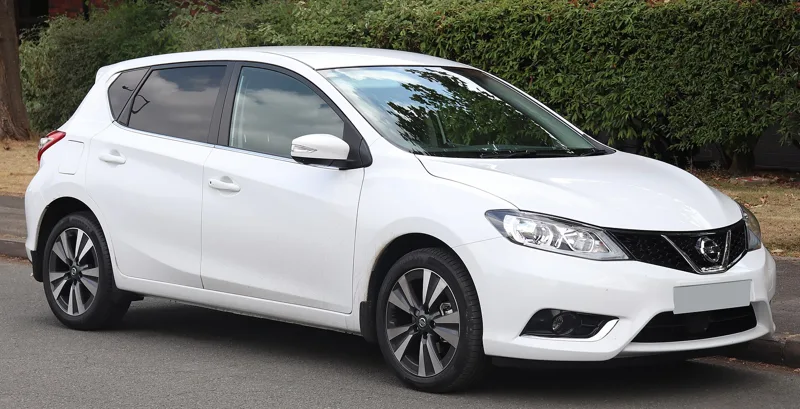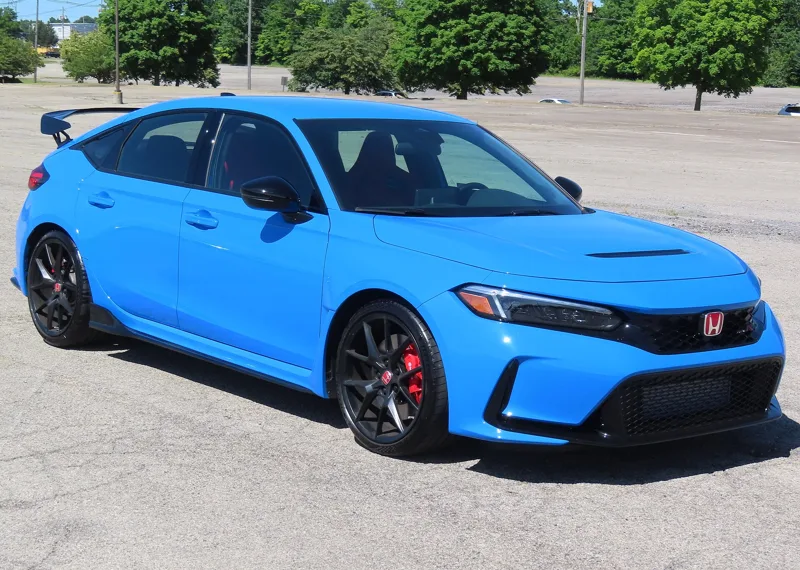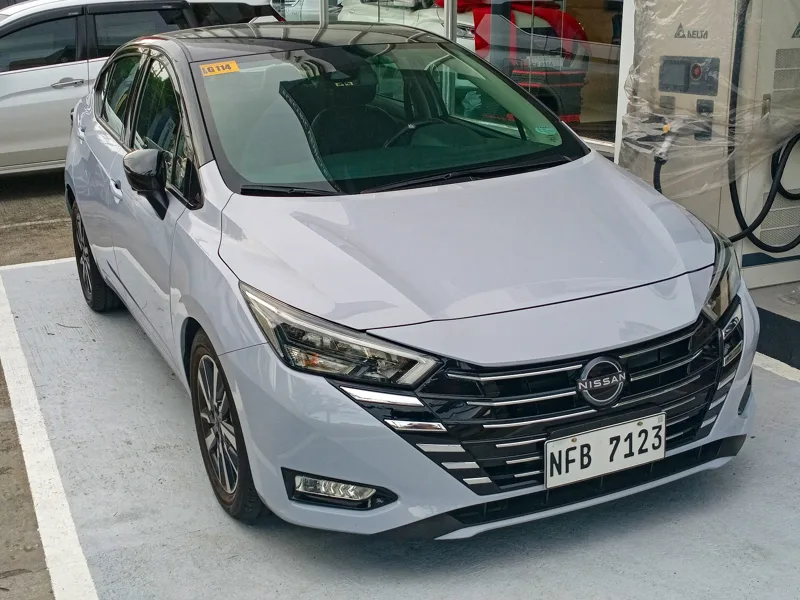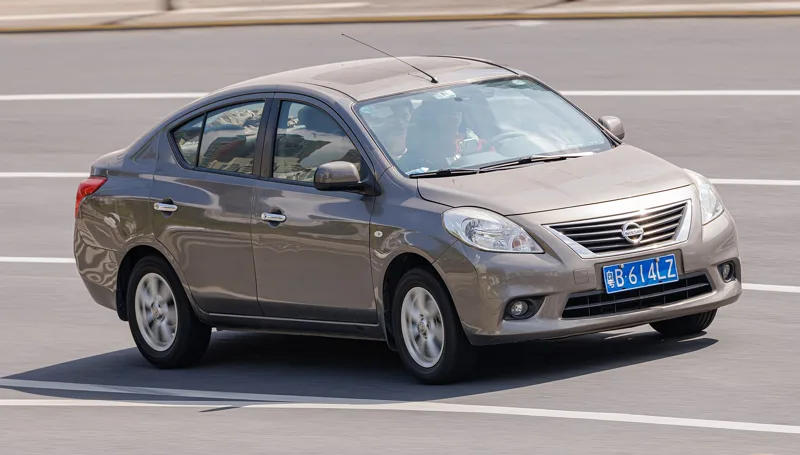
A nameplate used on hatchbacks, sedans, a rally-bred GTI-R and a European compact, spanning Japan, Australia, New Zealand, Europe and South Africa.
The Nissan Pulsar was a Japanese line built from 1978 to 2000 that later returned as a Tiida-based hatchback and a European compact. The GTI-R, built from 1990 to 1994, is its best-known variant.
The Nissan Pulsar was a line of cars that Nissan built in Japan from 1978 until 2000, and it carried the name into the 2010s in other markets. It started as a five-door hatchback sold beside the Cherry, grew into a sedan and a coupe, and produced one of the most famous homologation specials of the early 1990s, the GTI-R. Its story spans several continents and several platforms.
Where did the Pulsar name come from?
The name was taken from the pulsar, a rapidly rotating neutron star. In Japan the first Pulsar was a larger five-door alternative to the Cherry and was sold only at Nissan Cherry Store dealers. It filled a slot between the Violet and the Cherry, while other Pulsar derivatives served as base models at other Japanese Nissan networks.
Export markets received Pulsar-based cars under several labels. Some export cars wore Sunny, Cherry or Sentra badges, though they differed from the Japanese models bearing those names. Front-wheel drive was standard from the start, and four-wheel drive was offered as an option on some models in export markets.
One nameplate, many lives: a Cherry Store hatchback, a rally-bred GTI-R and a compact European Pulsar nearly four decades later.
How did the first Pulsar, the N10, begin?
The N10 went on sale in May 1978 and replaced the earlier Cherry F-II in export markets. Its engineering owed a debt to the Prince Motor Company, which had developed the Cherry before merging with Nissan in 1966. The car kept the Cherry's rack-and-pinion steering and an independent suspension with coilover struts at the front.
In Europe the car kept the Cherry name, and some markets, Belgium among them, sold it as the Cherry Europe to keep it apart from the older Cherry F-II. The Cherry-badged car was revealed in February 1979 at the Dutch AutoRAI show, and dealers were stocking it shortly afterwards. The car's long nose hinted at a plan for a longitudinal rear-drive version for developing markets, but only front-drive cars were built.
The launch line-up used 1.2 and 1.4-litre engines. Export buyers could also choose the 1.0-litre A10, rated at 45 PS (33 kW), or the 1.2-litre A12 at 52 PS (38 kW). The Greek plant of TEOKAR built the car from 1980, becoming the first passenger car Nissan assembled there.
What body styles did the N10 come in?
Buyers could pick from a three-door or five-door hatch, a brief four-door fastback saloon, a van, an export-only wagon and a coupe with wraparound rear glass. The van arrived in November 1978, and the wagon followed in early 1979 for export markets.
The sedan was dropped only a year after launch, when a five-door hatchback took its place. Many markets never received every version. In the United States buyers were limited to hatchbacks and a coupe, and most markets never saw a fuel-injected version.
The 1.0-litre A10 was never sold in Japan. It was mainly sold in markets where taxation favoured small engines. A March 1981 facelift added new E-series overhead-cam engines for the final year of production, and the N10 ceased in mid-1982.
How did the Pulsar appear in North America as the Datsun 310?
In North America the car was called the Datsun 310. Early examples had only the largest 1.4-litre engine and came in four- or five-speed manual form. Equipment was split between Deluxe and GX trims, with the three-door hatchback the only body in Deluxe trim.
A 1981 facelift in North America brought a sloping grille, rectangular headlights and a 1.5-litre pushrod engine, which made 65 hp (48 kW) in its emissions-controlled form. The 310 never gained much ground there, because the cheaper and slightly larger rear-drive 210 Sunny range always sold better. Its lack of an automatic option hurt it further.
What did the N12 generation change?
The angular N12 was announced in April 1982 and reached Europe that October. By then Nissan had broadly standardised the name, so the car was usually called the Pulsar, except in Europe, where it kept the Cherry name, and in Malaysia, where it became the Langley.
In North America the N12 hatchbacks were sold for the 1983 model year only. They used a 1.6-litre E16S engine rated at 69 hp (51 kW; 70 PS), shared with the Pulsar NX coupe. California cars received a three-way catalytic converter, and transmission options spanned a five-speed manual and a three-speed auto.
Japan introduced the N12 with three- and five-door hatchbacks, the Pulsar EXA coupe and, in June, a four-door sedan. A 1.7-litre CD17 diesel and a turbocharged 115 PS (85 kW) petrol model followed in May 1983. The Pulsar Milano trim, a three-door hatch with an Italianate air, came with the 1984 facelift, although Alfa Romeo had no role in building it.
How did the Pulsar sell in Australia and New Zealand?
The Australian N12 arrived in October 1982 as a five-door hatchback in 1.3-litre TC and 1.5-litre TS forms. Early cars were built in Japan, but in May 1983 local production began, and a sedan joined the range in October 1983. A turbocharged five-door ET followed in April 1984.
The Pulsar and Holden Astra shared a development deal under the Button car plan. The Holden Astra (LB) appeared in August 1984 as a badge-engineered twin, and it took the Japanese Langley's headlight and tail-lamp styling for the Nissan version.
In New Zealand the N12 was assembled at Wiri, South Auckland, from 1982. The hatchbacks used the 1.3-litre and 1.5-litre E-series engines shared with the locally built Sunny sedan, and a laminated windscreen became standard after the 1984 facelift.
What made the N13 different?
The N13 arrived in 1986 after Nissan's design chief asked the team for an affordable subcompact with a squarer look. It was a deliberate break from the smoother, aerodynamic styling of rival cars. The four-wheel-drive version, built around a viscous coupling, reached showrooms in May 1986.
In February 1987 a variant with three couplings, one for each axle and one between them, appeared. It was first capped at 200 cars and cost 50 percent more than the regular four-wheel-drive model. From 1988 it became a regular model, and it was closely related to the Attesa system that appeared in the Bluebird soon afterwards.
The Pulsar won the Japanese Car of the Year award in 1986. The styling also echoed the larger R31 Skyline. Overseas the EXA became a model of its own, though it kept the Pulsar NX name in the US.
In Japan the N13 came as a three- and five-door hatchback and a four-door sedan, with no turbo version. Nissan focused on multivalve engines instead, and the 1.5-litre engines changed to the new GA generation in April 1988. The Langley and Liberta Villa carried on as upmarket versions, with sportier rear ends and their own headlamps and grilles.
Malaysia sold the N13 as the Nissan Sentra from 1987, and Australia built a Pulsar Vector sedan that used the Langley as its donor body. In Europe the car was usually sold as the Sunny, although Greece kept the Cherry name.
What was the GTI-R?
The GTI-R was a three-door hatchback built from 1990 to 1994 to win homologation for Group A rallying. It used a turbocharged 2.0-litre SR20DET with 169 kW (230 PS; 227 hp) and 280 N-m (210 lb-ft) of torque, along with a large rear wing, a bonnet scoop and all-wheel drive through ATTESA.
For the period, the standard car was quick. Its 0-100 km/h sprint took 5.4 seconds, the standing quarter-mile 13.5 seconds, and the manufacturer quoted 232 km/h (144 mph) as its limit. The car weighed 1,220 kg (2,690 lb), and its engine was a specific tune with a unique variant of the SR20DET.
Nissan had to build at least 5,000 cars to satisfy the FIA rules, including 500 homologation models. The first year of production, from 1990 to 1991, was the largest, and the Pulsar GTI-R total reached 13,842 cars. The European Sunny GTI-R added 771 cars, bringing the total to 14,613.
The road cars came in several forms. The RA was the normal road car with air conditioning, power windows and ABS. The RB was a stripped-down base for motorsport, with the luxuries removed and the weight cut by 30 kg (66 lb). The Nismo Complete Car was based on the RB, and 21 were built with rally options and strengthened strut towers.
How did the GTI-R perform in rallying?
Nissan Motorsport Europe, based in Milton Keynes, ran the works Group A effort in 1991 and 1992. It competed only in selected rallies, and the expected early success did not come. The team abandoned the campaign in 1992 after nine rallies, and the GTI-R never won a Group A rally in the World Rally Championship.
Stig Blomqvist, David Llewellin and Mike Kirkland drove the works cars in 1991. For 1992 Blomqvist stayed on, and the team also signed Francois Chatriot and Tommi Makinen. Nissan then moved its resources to the Le Mans programme and the R390, while NME turned to the front-drive Sunny GTI in the WRC F2 category.
It is generally agreed that the failure came from several factors: uncompetitive tyres, a top-mounted intercooler that struggled when power rose to Group A levels, especially in hot weather, and tensions between Nissan Japan and the newly formed NME.
Away from the factory team, Nissan's help with the Nissan Belgium Rally Team, together with the Japanese privateer Nishiyama Racing, produced first and second places in the 1992 FIA Group N cup for production-car drivers. That result showed the GTI-R was competitive at production-class level even without a factory programme.
What happened with the N14 generation?
In 1990 the N14 brought a more rounded design, and the Primera took over the Langley and Liberta Villa at Nissan Prince Shop locations. In Europe the car launched as the Sunny in March 1991, and it was the last Sunny generation sold there before the Almera replaced it in 1995.
In Japan the N14 range was large, with eight models, eighteen variations, six engines and three body shapes. Engines ran from a 79 PS 1.3-litre to the SR20DET, and the range also included the 1.8-litre SR18DE at 140 PS (103 kW). Europe received the 2.0-litre GTi with the naturally aspirated SR20DE, which made 143 PS (105 kW).
Australia assembled the N14 at Clayton South, Victoria, from October 1991 to February 1993, in sedan and five-door hatchback form. Australian Wheels magazine named the N14 its Car of the Year for 1991, sharing the honour with the Honda NSX. New Zealand imported Sentra versions, and in South Africa the hatchback was sold as the Sabre until 2000.
How did the N15 and later Pulsars fit in?
The N15 Pulsar launched in 1995 as a compact car rather than a subcompact, and Europe sold it as the Almera. Both four-door and five-door bodies were on offer, but three-door cars appeared only in Europe and Japan. North America received the Sunny-based Sentra B14 instead.
New Zealand's Sentra was renamed Pulsar after the Wiri plant closed in 1998, and cars came from Japan from then on. The N-series chassis letter moved on to the Bluebird Sylphy (N16), which Japan sold from 2000, while Australia and New Zealand kept the Pulsar name.
The SSS hatchback used the SR20DE with 143 PS (105 kW; 141 hp), and the VZ-R N1 was a homologation car for the Japanese market that made 200 PS (147 kW; 197 hp) from a 1.6-litre engine. It held the highest specific output for a naturally aspirated production car until the Honda F20C arrived in the S2000.
How did the Pulsar name return?
The Sylphy sedan was sold as the Pulsar in Australia and New Zealand from 2013 until April 2017, with no direct successor. A C12 hatchback, a rebadged Nissan Tiida, carried the name in Australia, New Zealand and Thailand from 2013, and it was dropped in Australia and New Zealand in 2016.
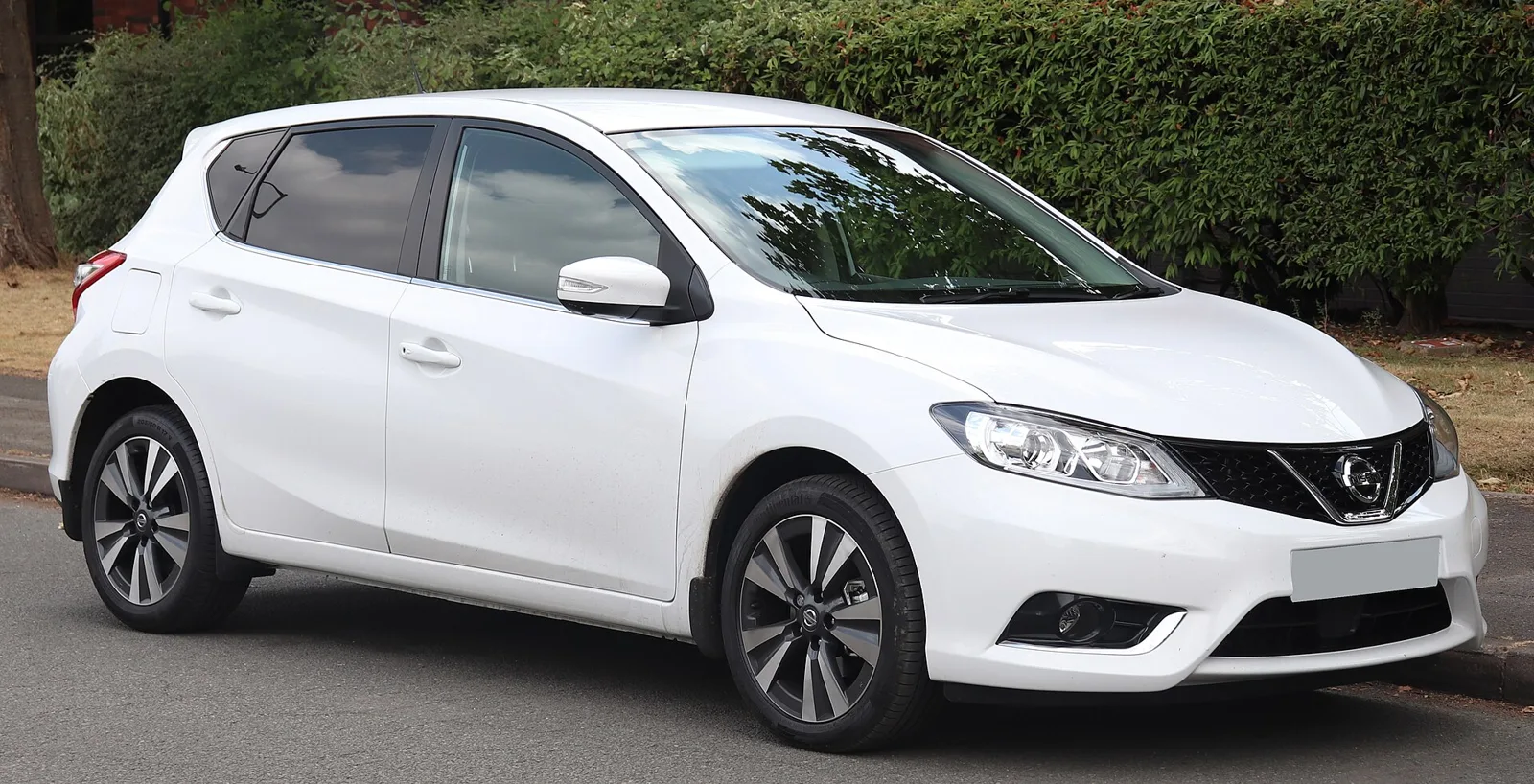
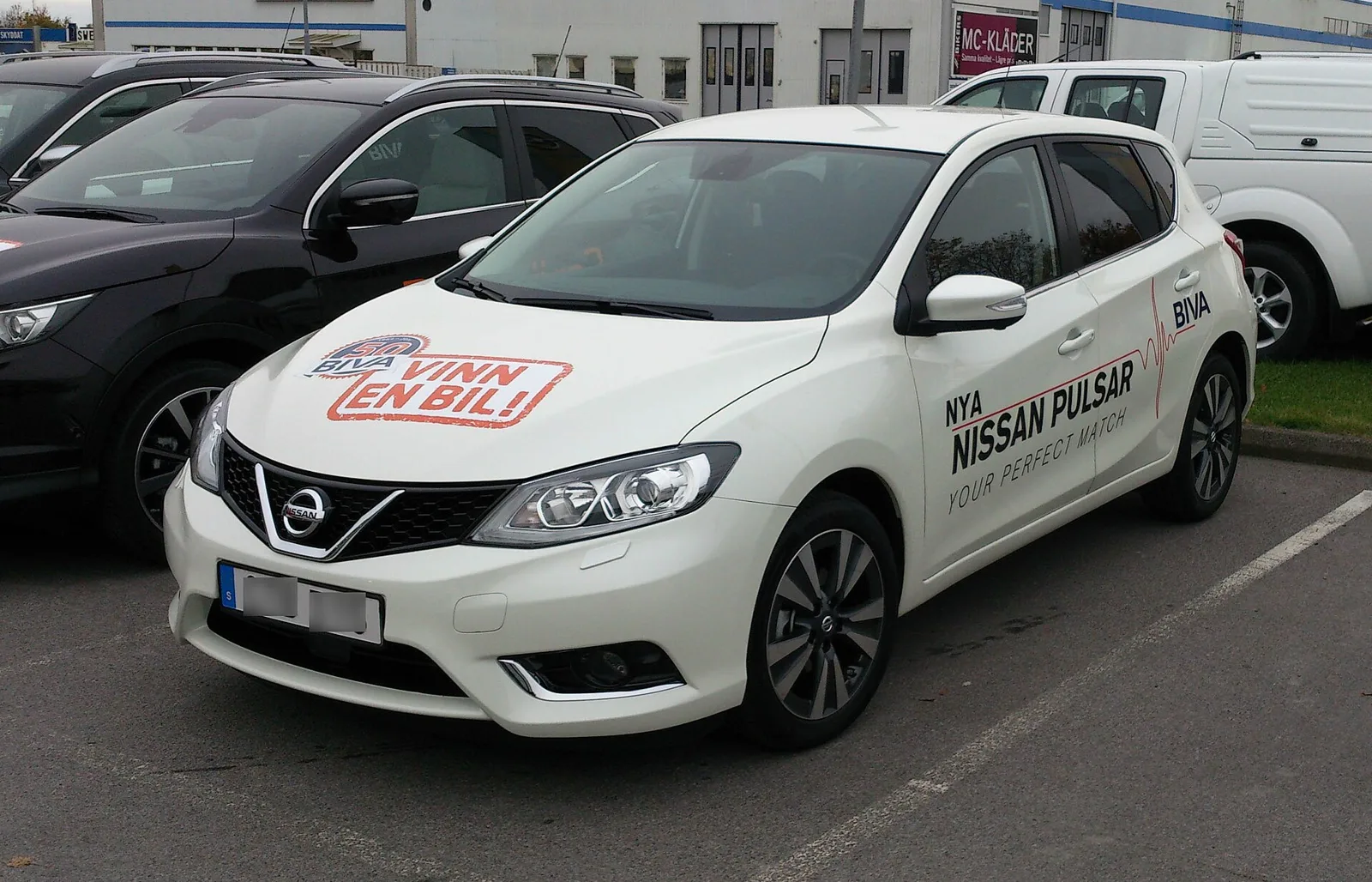
Nissan unveiled the C13 Pulsar for Europe on 16 May 2014, built on the CMF platform. It was not a replacement for the C12 but an alternative for Europe, and it was the first time the name had been used on a mainland European car. European sales began in March 2015, and the cars were built at Nissan's Barcelona plant.
Engines included a 1.2-litre DiG-T petrol with a CVT, a 1.5-litre diesel and, from October 2014, a 1.6-litre DIG-T producing 140 kW (188 hp). Nissan ended C13 Pulsar sales in Europe on 12 September 2018, as demand stayed poor.
Nissan Pulsar generations at a glance
| Feature | N10 (1978) | N13 (1986) | N15 (1995) |
|---|---|---|---|
| Introduced | May 1978 | 1986 | 1995 |
| Engines | 1.0 A10 (45 PS); 1.2 A12 (52 PS); 1.4 and later 1.5 | Multivalve GA-series engines from April 1988 | GA14DE, GA15DE, GA16DE, SR18DE, SR20DE, CD20 diesel |
| Drive | Front-wheel drive | Front-wheel drive; permanent four-wheel drive model from May 1986 | Front-wheel drive; four-wheel drive on some Japanese models |
| Known as | Cherry (Europe); Datsun 310 (North America) | Sunny (Europe); Sentra (Malaysia) | Almera (Europe); Sentra B14 (North America) |
| Performance halo | Not given | Not given | VZ-R N1 at 200 PS (147 kW; 197 hp) |