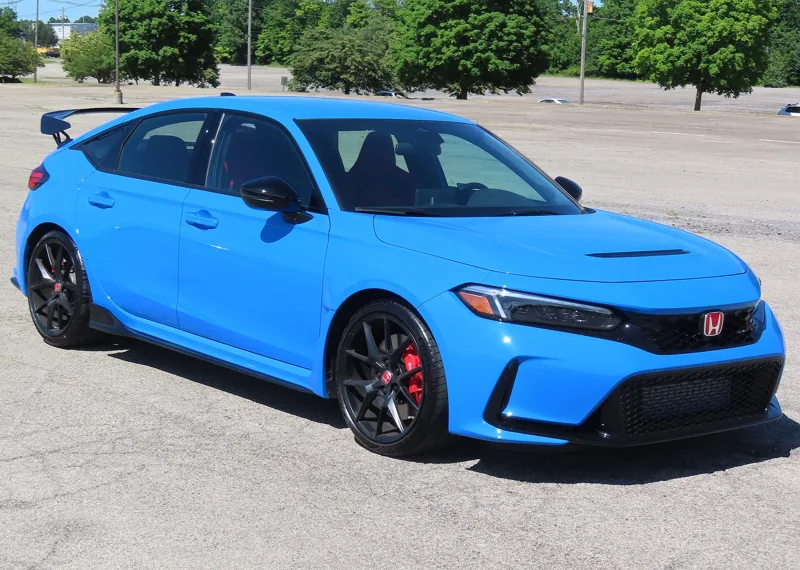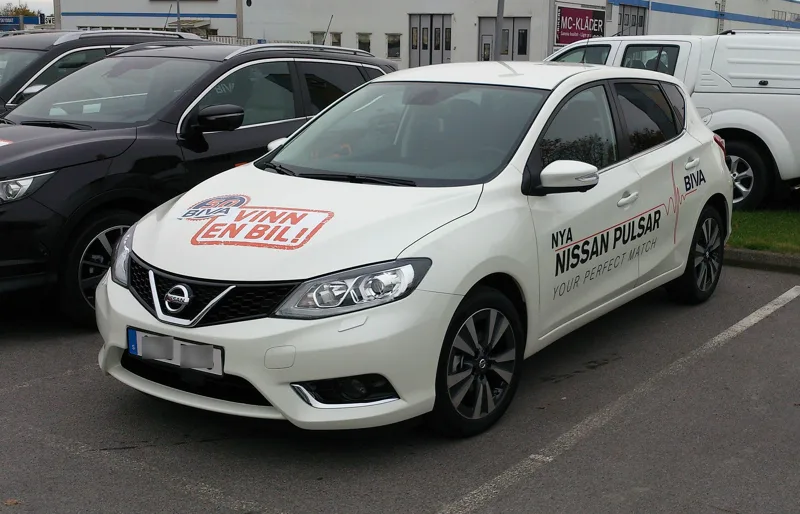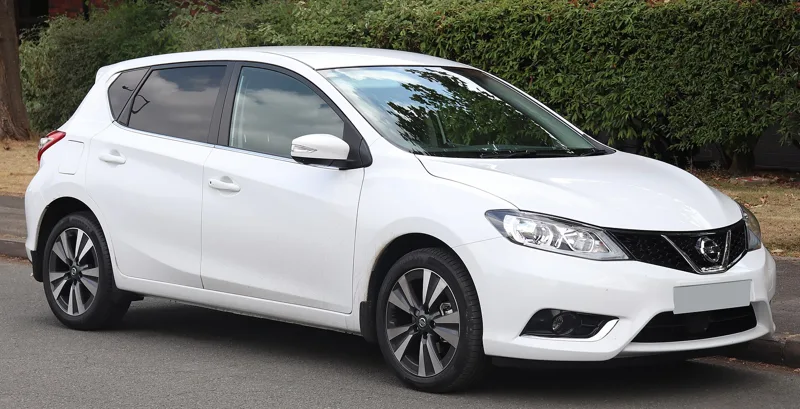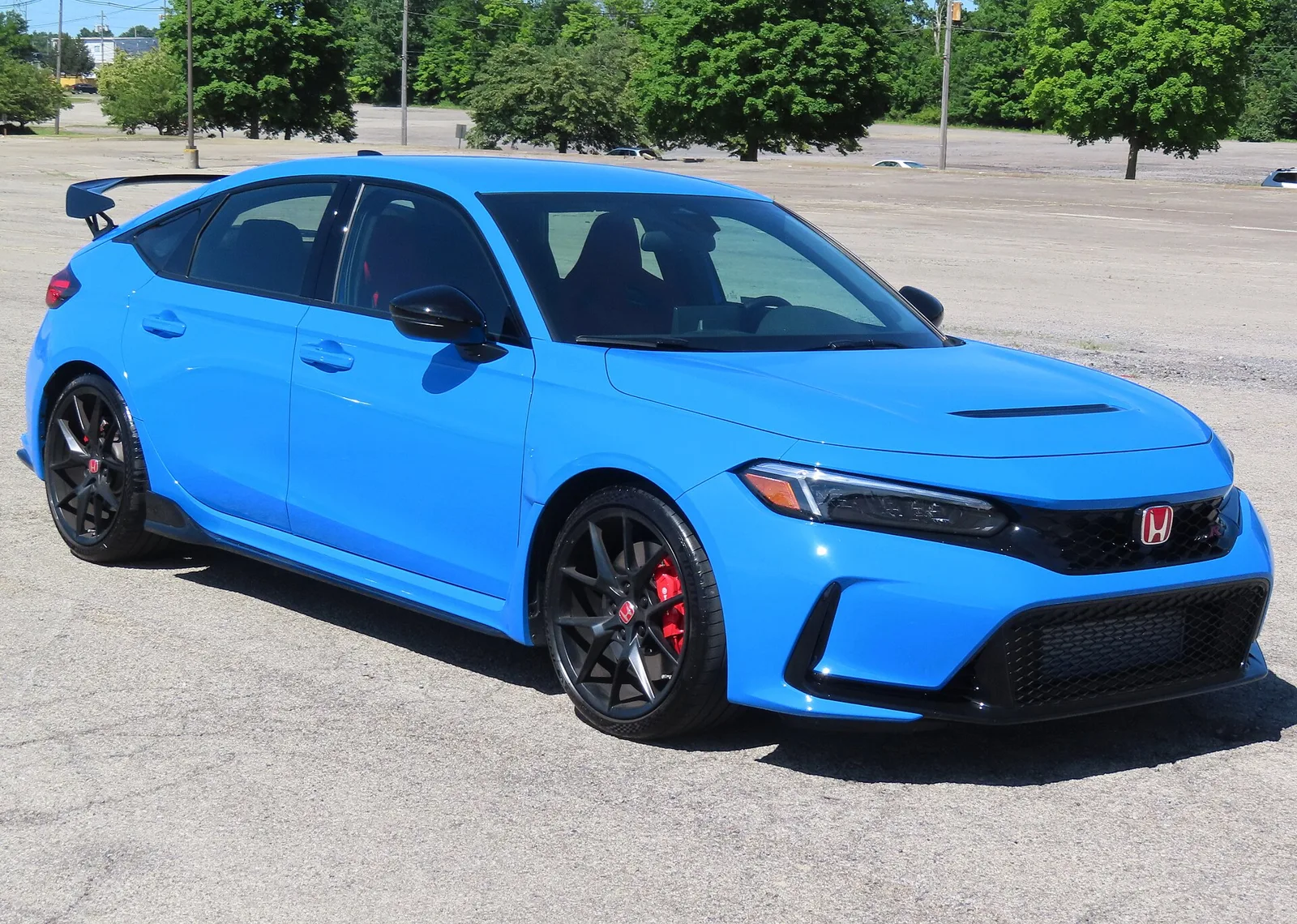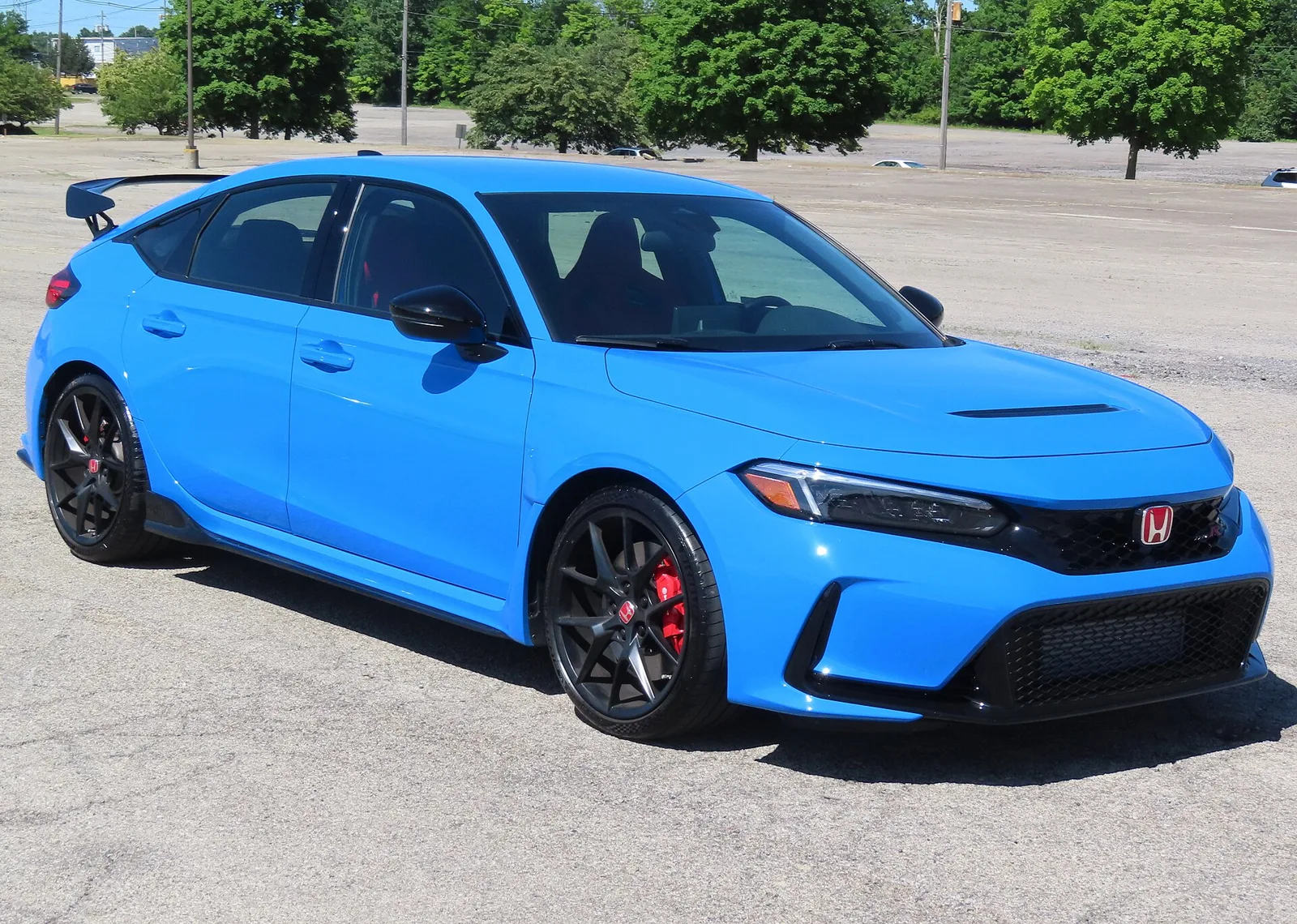
Honda's front-wheel drive Type R and Nissan's Pulsar share a front-drive layout and a Japanese home market, but they were built to do very different jobs.
The Honda Civic Type R began in 1997 as a performance version of the Civic, first the EK9 and then the EP3 and FD2. The Nissan Pulsar was a subcompact hatchback from 1978 that ran in Japan until 2000 and returned under its name in Australia and New Zealand in 2013.
The Honda Civic Type R and the Nissan Pulsar both use a front-engined, front-wheel drive layout, and both were sold in Japan. Beyond that, they were built to do very different jobs. The Type R was a performance version of the Civic from 1997 onward, while the Pulsar was a subcompact hatchback that ran for more than two decades as a practical family car.
Were the Civic Type R and the Pulsar ever rivals?
Not in the way the names suggest. The Civic Type R was built as a hot version of the Civic from day one, while the Pulsar began in 1978 as a subcompact hatchback that supported the Sunny sedan. The pairing is less about head-to-head rivalry than about two different ideas of a small Japanese car.
The Type R badge was also a family of its own. The first Civic to carry it was the third model to receive Honda's Type R badge, after the NSX and the Integra. That placed the Civic in a line of cars that Honda built for the circuit first and the road second.
Two names with very different jobs: a performance badge from 1997 and a Nissan hatchback family that ran from 1978.
How did the Pulsar start out?
The N10 Pulsar appeared in May 1978 and replaced the Cherry F-II in most export markets. It was a subcompact car to augment the Sunny sedan, and Nissan sold it through its Cherry Store network in Japan as a five-door alternative to the Cherry.
Its engineering owed a debt to Prince Motor Company, which developed the Nissan Cherry before merging with Nissan in 1966. The N10 kept the Cherry's rack-and-pinion steering and an independent suspension with coilover struts at the front and coil-sprung trailing arms at the rear.
The Pulsar was a hatchback family car from the start. The N10 came in several bodies: hatchbacks with three or five doors, a fastback sedan that lasted only briefly, a van, a wagon and a coupe. The name, Nissan said, came from the pulsar, a highly magnetised rotating neutron star.
What did the Pulsar look like in export markets?
Export markets knew the same car under other names. In Europe and most of Asia it was the Datsun Cherry, and in the United States and Canada it was the Datsun 310. The Pulsar name went to Australia, New Zealand, South Africa and Malaysia, and it entered the Australian market in October 1980.
In Japan a sporting spin-off, the Nissan Langley, was sold exclusively through Nissan Prince dealers as a mini Skyline. It had independent suspension at all four wheels, with MacPherson struts at the front, and its engines were the A14 and E15 with multi-point fuel injection.
The N10 engines started small. The 1.0-litre A10 produced 45 PS (33 kW) and the 1.2-litre A12 produced 52 PS (38 kW). The Greek plant of TEOKAR built the Pulsar from 1980, which made it the first passenger car Nissan assembled in that plant.
What was the Civic Type R's first car?
The EK9 was the first Civic to carry the Type R nameplate. It arrived on 19 August 1997 and was sold only in Japan, built on the sixth-generation EK Civic and based on the JDM SiR three-door hatchback, code EK4.
Its 1.6-litre B16B was a hand-ported DOHC VTEC four. Peak output of 185 PS (136 kW; 182 hp) came at 8,200 rpm, and torque reached 160 N-m (118 lb-ft) at 7,500 rpm. Honda's engineers left out sound deadening and other weight-saving measures, and the car came with a helical limited-slip differential and a close-ratio five-speed manual.
The figures given for the EK9 were 6.7 seconds to 97 km/h (60 mph) and a quarter-mile time of 15.3 seconds, with a top speed of 225 km/h (140 mph). A seam-welded monocoque chassis improved rigidity, and the interior had red Recaro bucket seats, red door cards, a titanium shift knob and a Momo steering wheel.
Production of the EK9 totalled 16,000 units. The 1998 Motor Sports edition went the other way, with steel wheels, manual windows and no air conditioning, and the 1999 Type Rx added a CD player, power windows and auto air conditioning.
How did the EP3 change the Type R?
The EP3 arrived in 2001 as a three-door hatchback for the UK, built in Swindon, England. Its 2.0-litre i-VTEC K20A2 produced 200 PS (147 kW; 197 hp), and it kept the seam welding, a close-ratio six-speed and upgraded brakes, but it lost the helical limited-slip differential and the red Recaro seats.
Japan received a different car. The JDM EP3, also built in Swindon and shipped to Japan, kept the helical limited-slip differential and red Recaro race seats, and it used a K20A engine at 215 PS (158 kW; 212 hp). Its gear ratios were closer, while the European version traded some high-rpm torque for more low-rpm pull.
The 2003 facelift tackled the criticism of the earlier car. Honda added quicker steering, revised suspension settings and projector headlamps, and it addressed understeer at the limit, a numb steering response and a lack of low-end torque. Mugen also developed an upgraded JDM Type R with a sport exhaust, engine tuning and anti-roll bars.
A total of 25,798 EP3s were built, with 24,334 for Europe and 1,464 for Japan. Special editions followed, including a 30th Anniversary car in 2003 with only 300 units, and the 2005 Premier Edition with Recaro Trendline seats.
What did the FD2 change for the Type R?
The Japanese FD2 went on sale on 30 March 2007 and was the first JDM Civic Type R sold as a four-door sedan rather than a three-door hatchback. It was bigger, wider and heavier than the EP3. Its wheelbase was stretched to 2,700 mm (106.3 in) from 2,570 mm (101.2 in).
The Japanese engine produced 225 PS (165 kW; 222 hp) at 8,000 rpm and 215 N-m (159 lb-ft) of torque at 6,100 rpm, against 201 PS (148 kW; 198 hp) for the European version. Honda quoted a 10 PS (7 kW; 10 hp) gain in the mid-range, and the front brakes were 320 mm discs with four-piston Brembo calipers.
The chassis was the big change. Honda claimed it was 50% more rigid than the pre-facelift DC5 Integra Type R and 25% more rigid than the facelifted version. The FD2 used independent rear suspension, where the FN2 had a torsion beam, and aluminium bonded with adhesive rather than welded. It was only 70 kg (154 lb) heavier than the JDM Integra Type R.
The interior moved away from earlier Type Rs. The bucket seats were now designed in-house by Honda rather than by Recaro, and the steering wheel was Honda-made rather than Momo. The FD2 production run ended in August 2010, with 14,062 units built.
How did the FD2 compare with its predecessor on track?
In back-to-back tests the FD2 was on average one second quicker than the DC5 Integra Type R at Tsukuba, and four seconds faster at the longer Suzuka circuit. Those were the Japanese results, and the car's chassis work was central to them.
On the UK television programme Fifth Gear, the FD2 was three seconds quicker than the UK version of the FN2 around Castle Combe in wet conditions. The FN2 managed a 13.1 second quarter mile at Killarney Raceway, so the two cars were not a clean sweep either way.
Which Mugen versions were built?
The Civic Mugen RR was a 300-unit run in Milano Red for Japan. It weighed 1,255 kg (2,767 lb) with carbon fibre bumpers and an aluminium bonnet, and its engine was rated at 240 PS (177 kW; 237 hp) with Mugen camshafts, exhaust and ECU. It went on sale on 13 September 2007.
Mugen also showed the Type-RR Experimental Spec at the 2008 Tokyo Auto Salon, with a 2.2-litre K20A rated at 260 PS (191 kW; 256 hp). The RR Advanced Concept followed at the 2009 Tokyo Auto Salon, with a dry weight of 1,095 kg (2,414 lb) and larger 340 mm brake discs.
How did the Pulsar's North American and later models differ?
The N12 Pulsar was announced in April 1982 and made its European debut that October. In North America the hatchbacks were sold only for the 1983 model year, with a 1.6-litre E16S engine rated 69 hp (51 kW; 70 PS) at 5,200 rpm and a choice of a five-speed manual or three-speed automatic.
Before that, the N10 in North America was the Datsun 310, initially sold only with the 1.4-litre engine and four- or five-speed manuals. A 1981 facelift brought a 1.5-litre pushrod engine, rated at only 65 hp (48 kW) in its desmogged form. The 310 never had a strong place in North America, where the rear-wheel drive 210 series outsold it.
In Japan the N12 gained a 1.7-litre CD17 diesel and a 115 PS (85 kW) turbocharged petrol model in May 1983. A facelift at the end of March 1984 brought wider and slimmer headlights and the Milano trim, a three-door hatchback with more equipment.
What happened to the Pulsar name?
The Pulsar name ended in Japan in 2000, when the Bluebird Sylphy took over. Australia and New Zealand kept it on rebadged Sylphy models until the Nissan Tiida arrived in 2005, and the name was then retired.
The name returned in 2013, when Australia and New Zealand received two models badged as Pulsar, based on the Sylphy sedan and the Tiida hatchback. The hatchback was also sold in Thailand as the Pulsar, and a European-only Pulsar replaced the Tiida in 2014.
Specifications side by side
| Specification | Honda Civic Type R | Nissan Pulsar |
|---|---|---|
| First model year | 1997 (EK9, introduced 19 August 1997) | 1978 (N10, introduced May 1978) |
| Basis | Sixth-generation Civic (EK9); seventh (EP3); eighth (FD2) | Subcompact to augment the Sunny sedan |
| Drive layout | Front-engine, front-wheel drive | Front-wheel drive from introduction; four-wheel drive optional on select models internationally |
| Early engine | 1.6-litre hand-ported B16B DOHC VTEC, 185 PS (136 kW; 182 hp) | 1.0-litre A10 at 45 PS (33 kW); 1.2-litre A12 at 52 PS (38 kW) |
| Later engine | FD2 Japan: 225 PS (165 kW; 222 hp) at 8,000 rpm | US N12: 1.6-litre E16S, 69 hp (51 kW; 70 PS) at 5,200 rpm |
| Transmission | Five- or six-speed manual only | Five-speed manual or three-speed automatic on the US N12; four- or five-speed manuals on the US N10 |
| Acceleration | EK9: 0-97 km/h in 6.7 seconds; quarter mile 15.3 seconds | Not given |
| Top speed | EK9: 225 km/h (140 mph) | Not given |
| Brakes | FD2: 320 mm front discs with four-piston Brembo calipers | Not given |
| Chassis | EK9: seam-welded monocoque; FD2: aluminium bonded with adhesive | N10: rack-and-pinion steering, independent suspension |
| Weight | FD2 70 kg (154 lb) heavier than the JDM Integra Type R; Mugen RR 1,255 kg (2,767 lb) | Not given |
| Production | EK9 16,000; EP3 25,798; FD2 14,062 | Not given |
| Markets | Japan (EK9 and FD2); UK-built EP3 for Europe and Japan | Japan, Europe as the Cherry, North America as the Datsun 310 and N12 hatchback |
Which buyer suits each car?
A buyer who wants a manual-only performance hatch, with a line of special editions and Mugen versions, would look at the Civic Type R. Its history is built around the circuit as much as the road.
A buyer who wants a practical hatchback with a long and varied history across markets would look at the Pulsar. Its name ran in Japan for more than two decades and returned in Australia and New Zealand in 2013.
Neither car's record gives a single winner. The Type R's figures are the stronger on paper, but the Pulsar's range and its later names tell a different story about what a family hatchback can be.