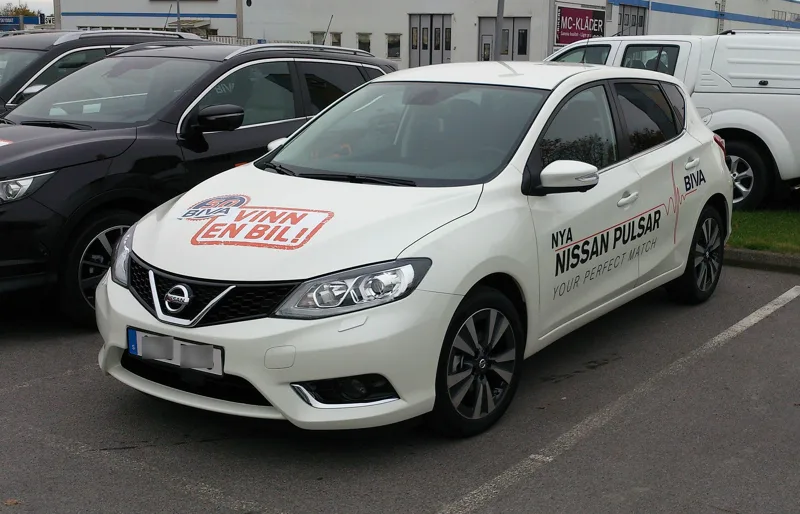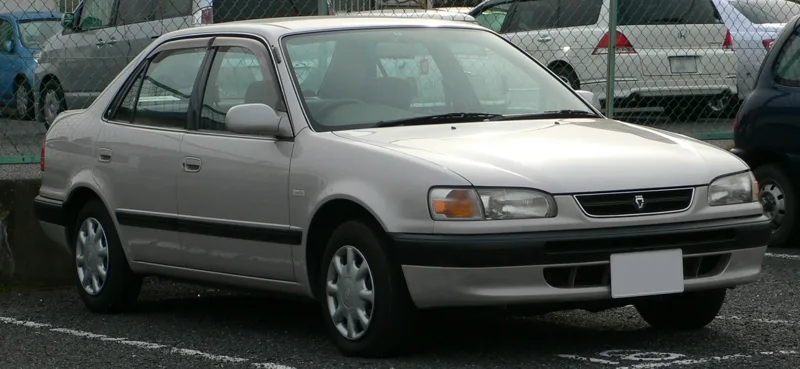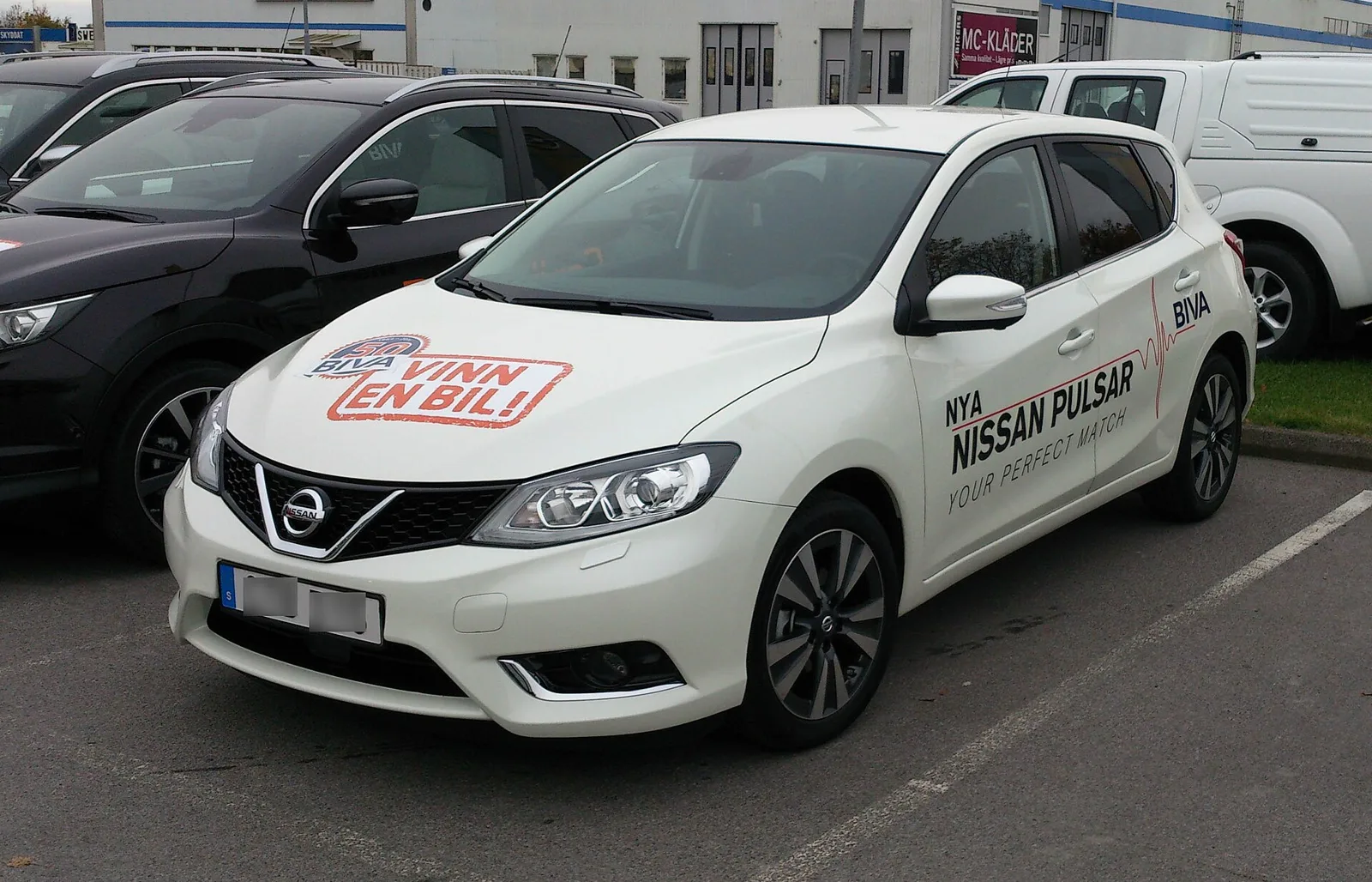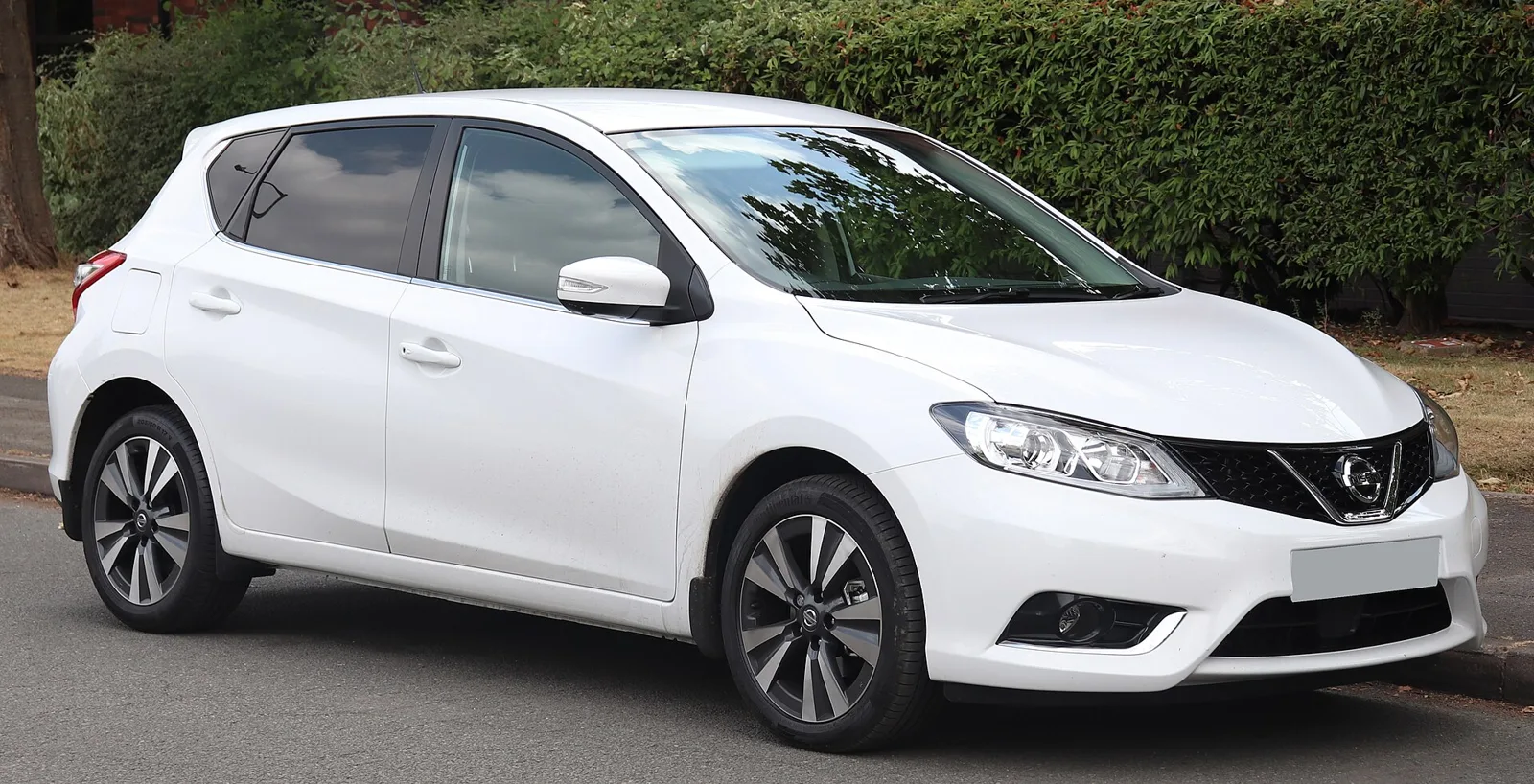
The Pulsar and the E110 Corolla came from different decades, but both Japanese names reached their end in the same year.
The Nissan Pulsar began in 1978 as a subcompact hatchback and ran in Japan until 2000. The Toyota Corolla E110 arrived in 1995 and was sold across Southeast Asia and North America, and its Japanese run also ended in 2000.
The Nissan Pulsar and the Toyota Corolla E110 came from different decades in their first generations, and they never shared a generation. Both names ended their Japanese runs in 2000, which is the most useful point of contact between them. The Pulsar was a subcompact that began life as a supporting act to the Sunny. The E110 was a Corolla that was built with cost cuts in mind and then sold across Asia and North America.
Why compare cars from different decades?
The Corolla E110 arrived in May 1995, while the Pulsar's name was still in use. The Japanese Pulsar ended in 2000, the same year the Japanese E110 gave way to the E120, so the two cars reached the end of their Japanese lives together.
The comparison therefore looks at the Pulsar's early life, from the 1978 N10, against the E110's middle years. Each car says something about what a compact car was expected to do at its moment in time.
Two compact names that reached the end of their Japanese runs in the same year, after very different first decades.
How did the Pulsar's first generation begin?
The N10 Pulsar appeared in May 1978 and replaced the Cherry F-II in most export markets. It was a subcompact car to augment the Sunny sedan, and it sold through Nissan Cherry Store dealers in Japan as a five-door alternative to the Cherry.
Its engineering owed a debt to Prince Motor Company, which had developed the Nissan Cherry before merging with Nissan in 1966. The N10 kept the Cherry's rack-and-pinion steering, and its front suspension used coilover struts with coil-sprung trailing arms at the rear.
The body range was wide. The N10 came as a three- or five-door hatchback, a fastback sedan, a five-door van, a wagon and a three-door coupe. The coupe and three-door hatchback were added in August 1978, and the five-door hatchback replaced the four-door sedan a year later.
Pulsars also went abroad under other names. In Europe and most of Asia it was the Datsun Cherry, and in the United States and Canada it was the Datsun 310. The Pulsar name went to Australia, New Zealand, South Africa and Malaysia, and it entered the Australian market in October 1980.
What did the Corolla E110 bring when it launched?
The E110 was the eighth generation of Corolla, introduced in May 1995. It shared its platform, and on some models its doors, with the car it replaced. The reason was money: Japan was in its recession of the period, and Toyota told Corolla development chief Takayasu Honda to cut costs, so the engineering was carried over.
For the general market the Corolla came in Base, XLi, GLi and SE-G trim. Japanese buyers got a different range, with a Sprinter twin, the Levin sports package and no hatchback or liftback at all.
The Sprinter was sold only through Toyota Auto Store dealers in Japan and was renamed the Toyota Allex, a five-door hatchback in place of the sedan. The Sprinter Carib wagon matched the European Corolla wagon. Japanese models received a minor update in April 1997, with new nose, tail and interior, before the E120 replaced them in 2000.
What engines did each car use?
The N10's smallest engine was the 1.0-litre A10, producing 45 PS (33 kW), and the 1.2-litre A12 produced 52 PS (38 kW). The Langley used the A14 and E15 engines with multi-point fuel injection, but only in a three-door hatchback at the top of the range.
The E110's Japanese range ran from a 1.3-litre 4E-FE rated 88 PS (65 kW) to a 1.6-litre 4A-GE with 20 valves and 165 PS (121 kW). Diesel options were a 2.0-litre 2C-III at 73 PS (54 kW) and a 2.2-litre 3C-E at 79 PS (58 kW), and the 4A-FE 1.6-litre made 115 PS (85 kW).
The N12 Pulsar brought a more varied range in Japan. In May 1983 it gained a 1.7-litre CD17 diesel and a 115 PS (85 kW) turbocharged petrol model, which put the Pulsar's top performance in the same band as the E110's 1.6-litre four.
How did the Pulsar range look in Japan?
Japan's Pulsar line grew well beyond the original hatchback. Pulsar models arrived there with three- or five-door hatchback bodies, along with the Pulsar EXA two-door coupe, and a four-door sedan followed in June 1983 for the N12.
The cheapest N12 cars received smaller rectangular headlights set deeper in the grille, while most sold had flush-fitting units. Nissan Cherry stores also sold a version of the AD Van as the Pulsar AD, because the N12 never had a van of its own.
A small rule change had a telling effect. The law had changed only two months before May 1983, and the Pulsar was the first Japanese car to take advantage of it, fitting mirrors to some doors rather than the fenders. The lowest-spec models kept fender mirrors until the end of N12 production.
Which Thai and Philippine trims mattered most?
In Thailand the pre-facelift range started with the 1.5 DXi, which had vinyl seats, 13-inch steel rims and no tachometer. The 1.6 GXi added a tachometer, power windows, 14-inch alloy rims, ABS and a driver's airbag, while the 1.6 SE-G brought a four-speed automatic and power mirrors that folded automatically.
The Philippines offered a similar ladder. The 1.3 XL, the cheapest model at launch, had a two-spoke steering wheel, wind-up windows and 13-inch steel wheels. The 1.3 XE added dual SRS airbags, 14-inch alloy wheels and a four-channel audio unit, and the GLi with its 1.6-litre engine was the top-of-the-line model when it arrived.
Specifications side by side
| Specification | Nissan Pulsar | Toyota Corolla E110 |
|---|---|---|
| Introduced | May 1978 (N10); N12 announced April 1982 | May 1995 in Japan; 1998 model year in North America |
| Body styles | Three- and five-door hatchback, fastback sedan, van, wagon, coupe (N10) | Japan: saloon, wagon and Allex hatchback; North America: four-door sedan only |
| Smallest engine | 1.0-litre A10, 45 PS (33 kW) | 1.3-litre 4E-FE, 88 PS (65 kW) in Japan |
| Largest engine | N12 turbo petrol, 115 PS (85 kW); CD17 diesel 1.7-litre | 1.6-litre 4A-GE, 165 PS (121 kW); diesel 2.2-litre 3C-E at 79 PS (58 kW) |
| North American engine | Datsun 310: 1.5-litre pushrod, 65 hp (48 kW) after 1981; N12: 1.6-litre E16S, 69 hp (51 kW; 70 PS) | All-aluminium 1ZZ-FE; 120 hp (89 kW), rising to 125 hp (93 kW) in 2000 |
| Transmission | Four- or five-speed manual on the N10; five-speed manual or three-speed automatic on the US N12 | Five-speed manual; three- or four-speed automatic in North America |
| Trim levels | Deluxe and GX in North America; Milano trim in Japan from 1984 | Base, XLi, GLi and SE-G (general market); VE, CE and LE in North America |
| Safety features | Not given | Side airbags and ABS optional on North American CE and LE; standard driver airbag on Indonesian SE-G |
| Build locations | Greek plant of TEOKAR from 1980; New Zealand assembly at Wiri, Auckland | Fremont, California (NUMMI) and Cambridge, Ontario (TMMC) for North America |
| Japanese successor | Bluebird Sylphy, from 2000 | E120, from 2000 |
How did the E110 spread across Southeast Asia?
The E110 arrived in Indonesia in December 1995, offered as the XLi, SE-G and S-Cruise, all powered by the 1.6-litre 4A-FE. The SE-G and S-Cruise came standard with a driver airbag, the first cars in Indonesia's compact segment to offer that equipment.
Indonesia's facelift arrived in March 1998 with the 1.8-litre 7A-FE, new body panels and an upgraded interior. The SE-G also gained ABS and a passenger airbag. On the island of Batam, where used Singapore imports are popular, the GLi E110 became one of the most common models in private and taxi use.
Malaysia offered the E110 from February 1996 in GLi and SE-G grades, both with the 1.6-litre 4A-FE and standard airbags. Some 7,330 Corollas were built there in 1996, and the April 1998 facelift brought the bigger 1.8-litre 7A-FE Hi-Torq engine and standard ABS on the SE-G.
Thailand launched the E110 in July 1996 with DXi, GXi and SE-G trims, using either a 1.5-litre 5A-FE or a 1.6-litre 4A-FE. Its local nickname, Tong Nueng, translated roughly as Duck-Ass. The April 1998 facelift added the 1.8-litre 7A-FE, and in June 1999 the 1.8 SE-G was rebranded as the Corolla Altis.
The Philippines received the E110 in December 1997, nicknamed Love Life or Baby Altis. Its GLi came with the 1.6-litre 4A-FE and Red Mica paint, and in 1999 TOM'S offered a turbo kit for its engine. The XL remained a rental and taxi car until May 2004, when the Vios J replaced it.
Singapore was one of the E110's best-selling markets, and it was commonly used as a taxicab. Many of those cars were later exported to Batam for taxi work in the 2000s.
What did the North American Corolla offer?
The Corolla arrived in North America in 1997 for the 1998 model year, built in Fremont, California by NUMMI or in Cambridge, Ontario by TMMC. It was offered only as a four-door compact sedan, and every car carried the new all-aluminium 1ZZ-FE engine.
The 1ZZ-FE used a timing chain instead of a belt and laser-etched valve guides in the block. A flawed piston ring design affected the engines without VVT-i, and the result was oil burning in higher-mileage cars, which is the engine's best-known weakness.
The range ran through VE, CE and LE trims. The VE came with a three-speed automatic or a five-speed manual on 175/65R14 tyres, and the CE and LE offered a four-speed automatic with overdrive or the five-speed manual on 185/65R14. Side airbags and ABS were optional on the CE and LE, though very few cars had them. Every car carried daytime running lights, and the maximum legal carrying capacity was 1,500 lb (680 kg).
The 2000 model year brought VVT-i and individual coils for each cylinder, lifting output from 120 hp (89 kW) to 125 hp (93 kW). The 2001 model year replaced the VE with a sporty S model, which took the Touring Package role and used the lightweight three-spoke steering wheel of the Celica and Matrix.
How did the Pulsar's North American range compare?
In North America the N10 was the Datsun 310, sold first with the largest 1.4-litre engine and only with four- or five-speed manuals. A 1981 facelift brought a 1.5-litre pushrod engine rated at just 65 hp (48 kW) in its desmogged form, and the 310 never had a good chance against the rear-wheel drive 210 series.
The N12 Pulsar hatchback was sold in North America only for the 1983 model year. Its 1.6-litre E16S produced 69 hp (51 kW; 70 PS) at 5,200 rpm, and buyers could choose a five-speed manual or a three-speed automatic. California cars received a three-way catalytic converter with no change in power.
Neither range lasted long on the continent, and the Corolla's later sedan was the more settled product. The Pulsar's American story was short, while the E110 had several model years to settle in.
Which buyer suits each car?
A buyer who wanted a well-established Japanese compact with a wide choice of engines, including a diesel and a 165 PS (121 kW) twin-cam, would look at the Corolla E110. Its Asian range, from taxi work to sporty grades, gave it a broad audience.
A buyer who wanted a hatchback in a wide range of bodies, or the Pulsar's sporting Langley, would have looked at the earlier car. Its bodies were varied, though the early engines were small.
Neither car is a clear winner on the figures. The E110 was the newer design and the more widely sold, while the Pulsar's history shows how one name could cover hatchbacks, vans and coupes for two decades.