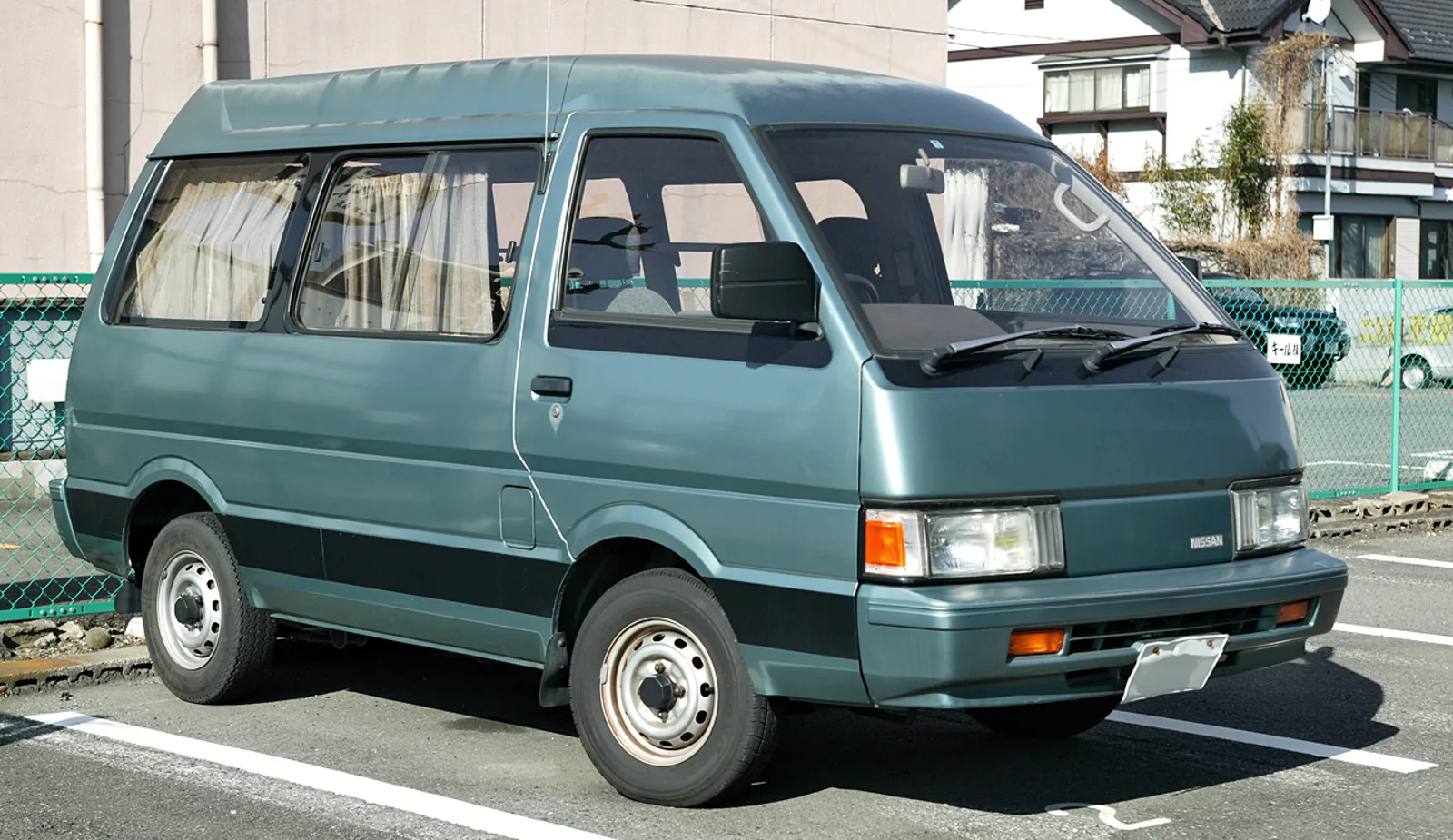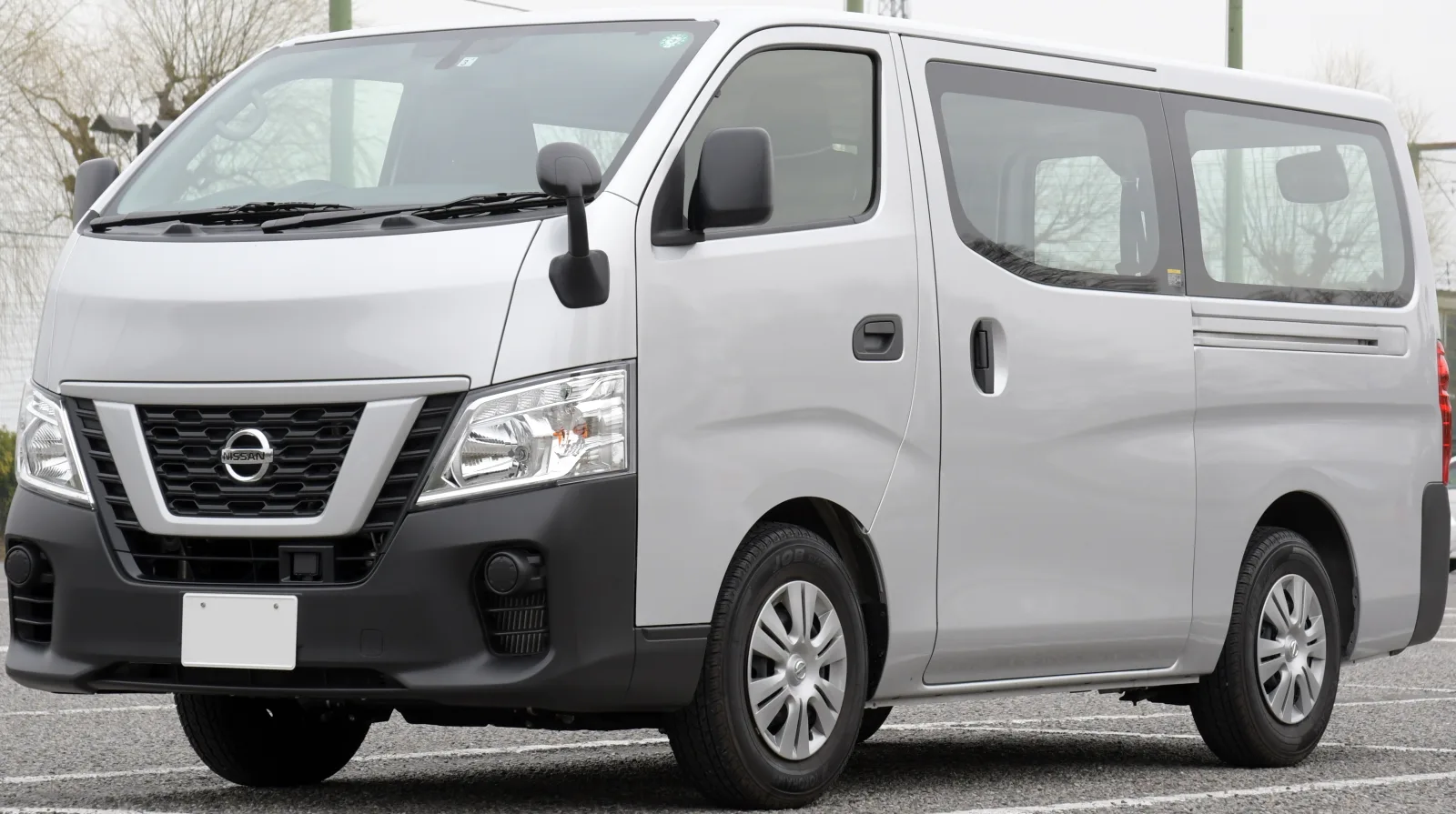
Built since 1973 and sold alongside a passenger twin called the Homy, Nissan's cabover van served fleets, emergency services and minibus operators across five generations.
Built since 1973 and sold across five generations, Nissan's cabover Caravan had a passenger twin called the Homy until 1999. Its generations ran from the E20 to the NV350-based E26, and a Mitsubishi-badged Versa reached the Philippines in 2026.
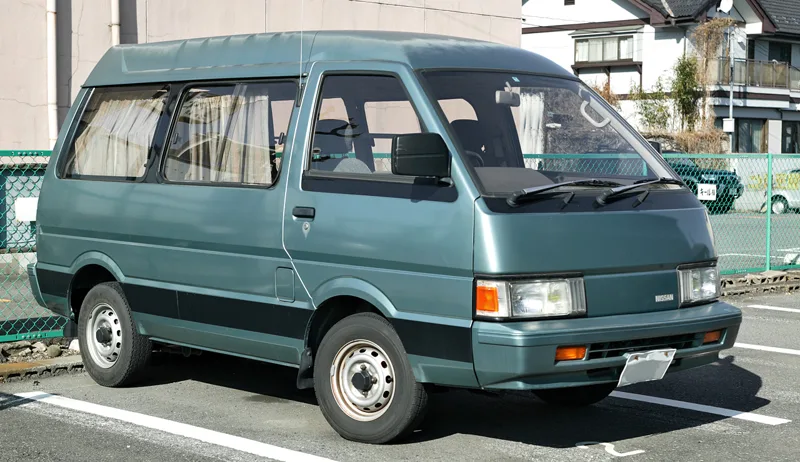
The Nissan Caravan is a cabover light commercial van that Nissan has built since 1973. Its passenger twin, the Homy, was sold through a different dealer network for much of that time, and outside Japan the van was known as the Urvan or King Van. Across five generations it became a favourite of fleet buyers, emergency services and minibus operators.
Where did the Caravan come from?
The Caravan grew out of the Prince Homy, a passenger van built by the Prince Motor Company from 1965 to 1973 with seating for up to 15 people. After Nissan merged with Prince in 1966, the Homy was badge-engineered as the Caravan, and the brand change was complete by 1970.
The Homy shared its chassis with the Prince Homer, a medium-duty cabover pickup truck. Nissan had already used a cabover van called the Caball, but the Homy replaced it, and the company lacked a large passenger platform before the merger brought the Prince range into the group.
Minibus versions of the Homy ended in 1973, while the Homer trucks and panel vans carried on until 1976. The Homy's original model code was T20, and it was sold as the Nissan Homer in most export markets.
A cabover van that shared its engineering with a passenger twin, then carried the same design into five generations and several badges.
How did the Caravan and the Homy differ?
The Caravan was sold through Nissan Store locations, while its Homy twin was sold through Nissan Prince Stores. The two vans were mechanically identical, and the only real differences lay in trim, grille and the dealer where they were bought.
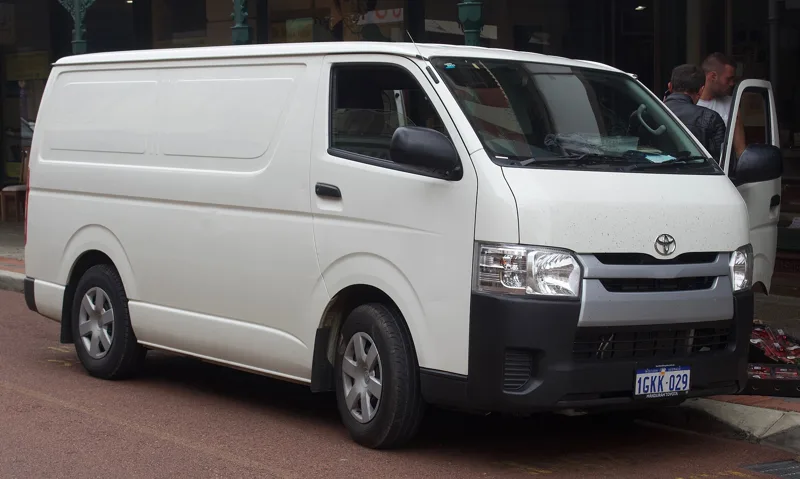
Toyota's traditional rival was the HiAce. Like every generation of the Caravan, the design used a cabover layout to maximise interior space inside defined external dimensions, and that choice gave the van a very usable load area for its footprint.
Nissan's largest passenger van, the Civilian, had been introduced in 1959. The smaller Vanette arrived in 1978 as the Caravan grew in dimensions and market positioning, giving the range a lighter option below the Caravan.
How did the first generation (E20) perform?
The E20 went on sale in February 1973, offering seats for three, five, seven or up to ten passengers. In Japan it was sold only through Nissan Stores, and it found a strong following in Europe, where fire brigades and ambulance services in certain countries bought it in quantity.
The E20 was not an easy van to drive. It was heavy to steer and power steering was not offered. The floor-mounted gear lever was nearly 80 cm (2.6 ft) long, which made shifting clumsy, although the five-speed gearbox was unusual for a van in Europe at the time.
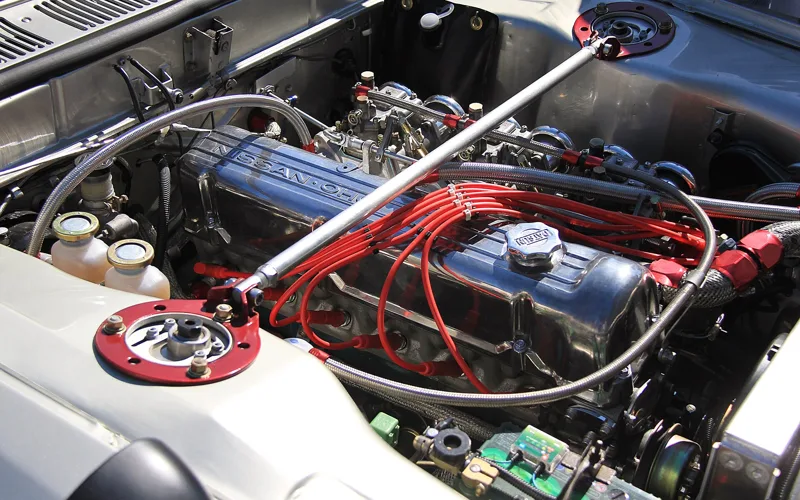
Engines were 1.5, 1.6 and 2.0-litre petrol units, plus a later 2.2-litre diesel. In export markets the first generation was sold as the Datsun Urvan until the Nissan brand replaced it worldwide.
The E20 also had a long life in South Africa. The second-generation E20 was built there until 1996, with 77,000 units sold. It gained redesigned bumpers from 1984, square headlights and an L18 engine with twin Hitachi carburettors from 1981.
The Homy's second generation arrived in January 1976 as a rebadged Caravan sold through Nissan Prince Stores. There were no mechanical differences between the two, which made the Homy a marketing choice rather than an engineering one.
What changed in the second generation (E23)?
The second-generation E23 series arrived in August 1980. The Homy kept its role as the Caravan's twin through Prince dealerships, set apart by a different grille, and the Cabstar and Homer trucks shared much of the bodywork at the front.
Engines were carried over from the earlier cars, and they included the J16 and H20 pushrod units, the overhead-cam Z20S and an upgraded SD22 diesel. Radial tyres were optional, and the van versions gained access to the loading area from the passenger compartment.
The GL trim could be had with a Nissanmatic automatic, and it also included power steering, rotating rear seats and air conditioning. The SGL Silk Road trim arrived in July 1981, and a 1982 facelift brought a new dashboard and the SD23 diesel.
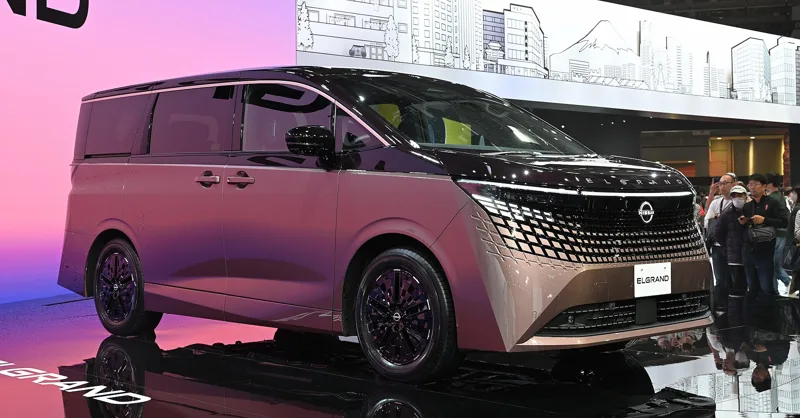
At the 1981 Tokyo Motor Show Nissan showed two concept Caravans designed to offer limousine-style accommodation for businessmen. One was the Royal, the other the Elgrand Royal Line. The Elgrand name was not used on the production van until 1997, when it was adopted for a series of luxurious minivans.
Coach versions received the turbocharged LD20T diesel. The Silk Road version, with seven captain seats, was available only with that engine. Petrol vans were given carburetted engines to meet the 1981 emissions standards for petrol cars.
How did the third generation (E24) compare?
The E24 arrived in September 1986 and stayed in production until 2001, with major facelifts in 1990 and 1995. In some Scandinavian markets it was sold as the King Van, a name chosen to match the King Cab version of Nissan's pickup.
Petrol Caravans initially used the Z20 engine, while commercial diesels used the naturally aspirated 2.3-litre TD23. Coach passenger versions used the LD20T turbo-diesel. The 1990 facelift replaced the TD27T with an intercooled 2.7-litre turbo-diesel called the TD27Ti in most applications.
The 1995 facelift upgraded the TD27Ti to the electronically controlled TD27ETi. The large QD32 four-cylinder diesel, producing 100 PS (74 kW) from 3153 cc, was added to automatic-equipped vans later in the generation.
The Homy's second full model change came in September 1986, with the Z20 petrol engine and the LD20T turbo-diesel. Four-wheel drive was added to the 2.7-litre TD27 engine in October 1987, and the premium GT Limousine arrived in March 1988 with the VG30E petrol six.
In June 1999 the passenger models and the Homy nameplate were discontinued. The petrol options became 2.0 and 2.4-litre twin-cam engines from the KA series, while the naturally aspirated QD32 diesel was the only diesel left. The Homy badge had been used on commercial models since 1965.
Which versions were built outside Japan?
The Isuzu Fargo was a rebadged Homy sold from August 1995, and it replaced the earlier Fargo line. The Isuzu Como followed in Japan from 2001 as the successor to the Fargo, and the same underlying van continued under that badge.
FAW Jiefang in China built a clone of the E24 known as the CA 6440 from 1994. Beijing later barred such older vans from entering the city under its air pollution rules, and any clone still in service was not allowed in after 10 May 2001.
Nissan intermittently listed the van in other markets, and Nissan's own export work was widespread across Asia, Europe and parts of the Americas. The Caravan's reputation as a dependable, easily converted van helped it find buyers wherever its load capacity suited the job.
What was the fourth generation (E25)?
The E25 series was built from April 2001 to 2012. In Japan it was also sold as the Isuzu Como, replacing the last Isuzu Fargo, which had been a rebadged E24 Caravan.
Mexico was the only North American country to receive Nissan Caravan vans. The E25 was the last Caravan sold there until 2010, when the US-built Nissan NV replaced it. Safety was a weak point for the generation in some markets, and New Zealand's Urvan received a one-star rating from ANCAP in crash testing.
How did the fifth generation (E26) change the van?
The NV350 Caravan, the E26, was shown at the 2011 Tokyo Motor Show and went on sale on 15 June 2012 with a diesel engine. Super long-body and wide versions followed later that year, giving buyers a wider range of loading options.
The new engine was the YD25DDTi clean diesel. Petrol versions used the QR20DE, which Nissan said delivered a class-leading fuel economy gain over Japan's fuel standards for the period. Both engine families were designed around the fuel-saving priorities of the time.
Mitsubishi Fuso and Nissan agreed the basic terms of a supply deal in September 2013, under which Nissan would build NV350 vans sold as the Fuso Canter Van in the Middle East. The Philippines received the van as the NV350 Urvan on 11 June 2015, where it was imported from Japan rather than assembled locally.
The Philippine range started with a base three-seat cargo van and included a 15-seat Standard and a 10-seat Super Elite at launch. Premium and Premium S versions followed in 2017 and 2018, and the Premium was the first Philippine Urvan with a standard automatic transmission.
In South Africa the taxi variant was sold as the NV350 Impendulo, while in Mexico the van kept the NV350 Urvan name. The E26 therefore appeared under several different badges and names across its life.
What did the 2021 facelift and Mitsubishi tie-up bring?
The second facelift launched for Japan on 20 October 2021, and the van was renamed the Nissan Caravan again. It brought a flat-bottom steering wheel, and Nissan added Mitsubishi's 4N16 diesel with a new 7-speed automatic transmission, following an OEM deal with Mitsubishi.
In the Philippines the facelifted Caravan arrived on 24 October 2022 as the Urvan. The 5-speed manual was standard across the range, while the 5-speed automatic was available only on the GX and Premium grades.
How did the Mitsubishi Versa come about?
Mitsubishi Motors Philippines confirmed on 17 October 2025 that its rebadged version of the E26 Nissan Urvan would be called the Versa. The name had last been used decades earlier on a Mitsubishi passenger van, and the Versa went on sale in the Philippines on 6 February 2026.
The Versa uses a turbo-diesel rated at 129 PS, from the same engine family as the Nissan van. The GLX manual is the model listed for the Philippines.
The Versa has 195 mm of ground clearance and rolls on 15-inch wheels fitted with 195/80 tyres. In practice it is the E26 Urvan with a Mitsubishi name.
What are the Nissan Caravan specifications?
| Specification | Detail |
|---|---|
| Class | Cabover light commercial van and minibus |
| Build period | Caravan since 1973; Homy twin from 1976 to 1999 |
| First generation (E20) | 1.5, 1.6 and 2.0 L petrol; 2.2 L diesel; seating for three to ten |
| Second generation (E23) | J16 and H20 pushrod petrol; Z20S overhead-cam; SD22 and SD23 diesel; LD20T turbo-diesel for coaches |
| Third generation (E24) | Z20 petrol; 2.3 L TD23 diesel; 2.7 L TD27Ti turbo-diesel; QD32 four-cylinder diesel from 3153 cc |
| Fourth generation (E25) | April 2001 to 2012 |
| Fifth generation (E26) | NV350; YD25DDTi clean diesel; QR20DE petrol |
| 2021 facelift | Mitsubishi 4N16 diesel with 7-speed automatic |
| Mitsubishi Versa | 129 PS turbo-diesel |
| Versa ground clearance | 195 mm |