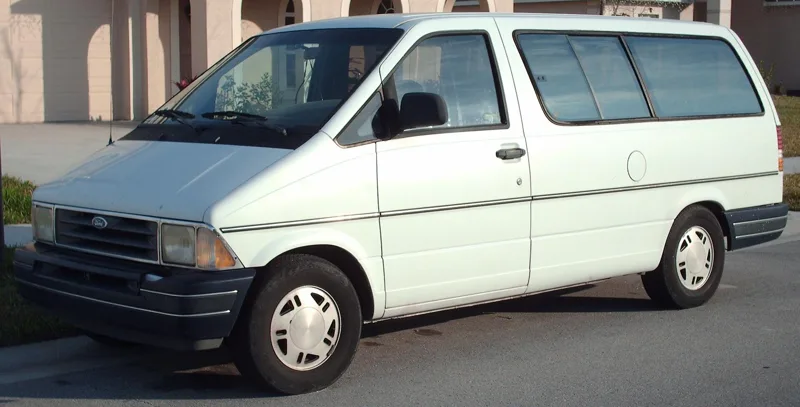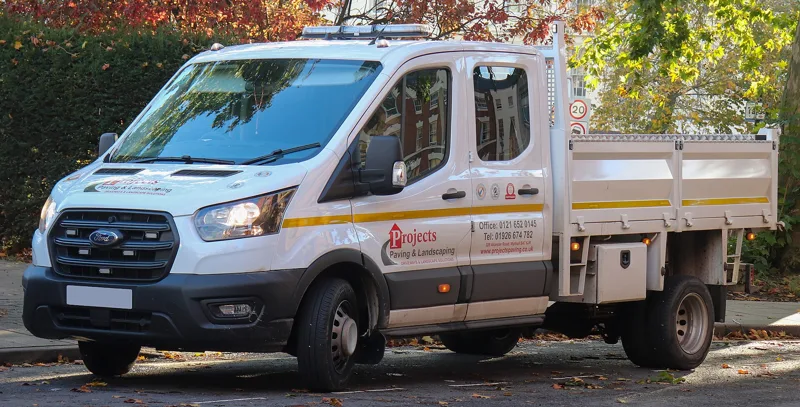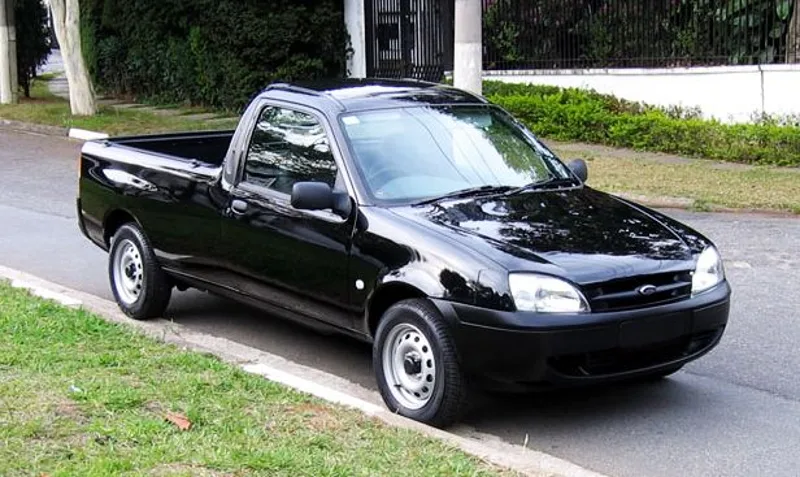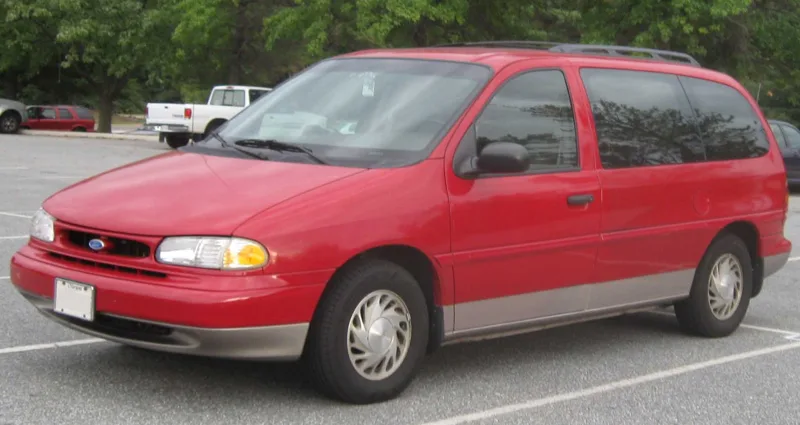
From its 2002 European launch to the 2023 North American exit, the Transit Connect was a small van with an unusual import route and a long fleet career.
The Ford Transit Connect is a compact van that Ford of Europe launched in 2002 on a purpose-built commercial platform. It was imported to North America as a passenger vehicle to sidestep a light truck tariff, and Ford ended its sales there after the 2023 model year.
Ford has built this compact van since 2002, and the Transit Connect became one of the brand's more unusual commercial models. Developed by Ford of Europe, it replaced sedan-based vans with a purpose-built commercial platform and sits between the Transit Courier and the Transit Custom in the Transit range. Its North American story turned on a tariff workaround that shaped the van's import route for its whole time on that market.
The van went through three generations, along with passenger and electric variants, and it left North America after the 2023 model year. Along the way it picked up a taxi role in New York and a large fleet contract in Canada.
Where did the Transit Connect come from?
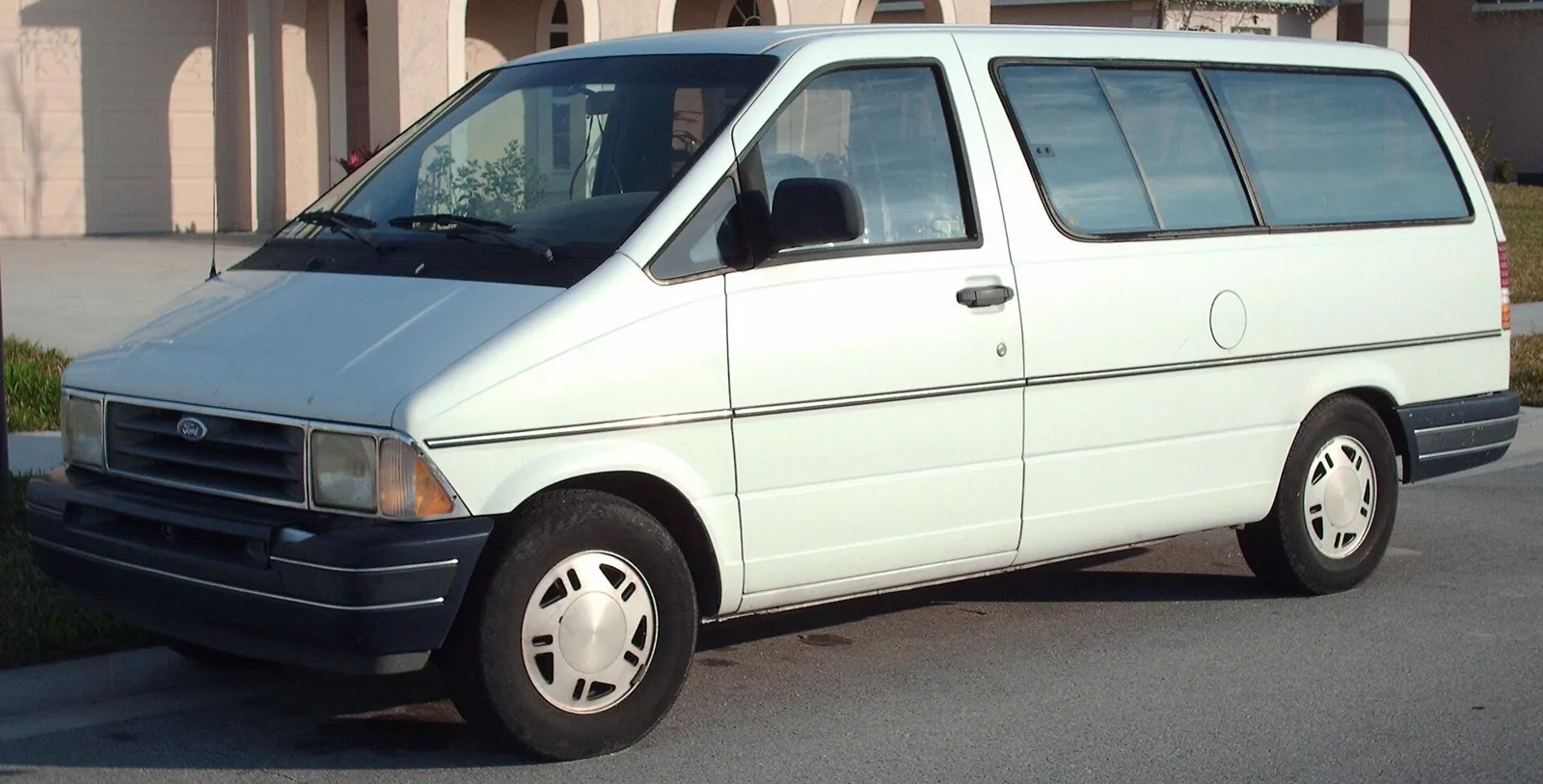
Ford of Europe introduced the Transit Connect in October 2002, taking over from an older three-door Escort-based van and the smaller Courier. Its shape followed the compact panel vans of the Opel Combo C and Renault Kangoo, and it was a purpose-built commercial design rather than a station wagon adapted for work.
The name was the only thing it shared with the full-size Transit. The first generation was a commercial version of the C170 Ford Focus, a platform then used on both sides of the Atlantic.
Two wheelbases were offered, and the long-wheelbase version could be ordered with a lifted roof. Buyers could also specify an extra sliding door, and a passenger version sold in Europe as the Tourneo Connect followed the same logic as the Tourneo name on the full-size Transit.
A small van that crossed the Atlantic as a passenger car and left North America as a commercial one.
Where was the Transit Connect built?
The first generation was assembled by Ford Otosan at Kocaeli in Turkey, with Ford Romania at Craiova also building it. The second generation moved to Ford's Valencia plant at Almussafes in Spain. The third-generation Tourneo Connect is based on the Volkswagen Caddy and is built by Volkswagen in Poland.
Vans for North America were therefore built in Europe and shipped across the Atlantic for the whole of the model's life there. That made the tariff position a live issue from the first import.
What did the 2006 and mid-cycle updates change?
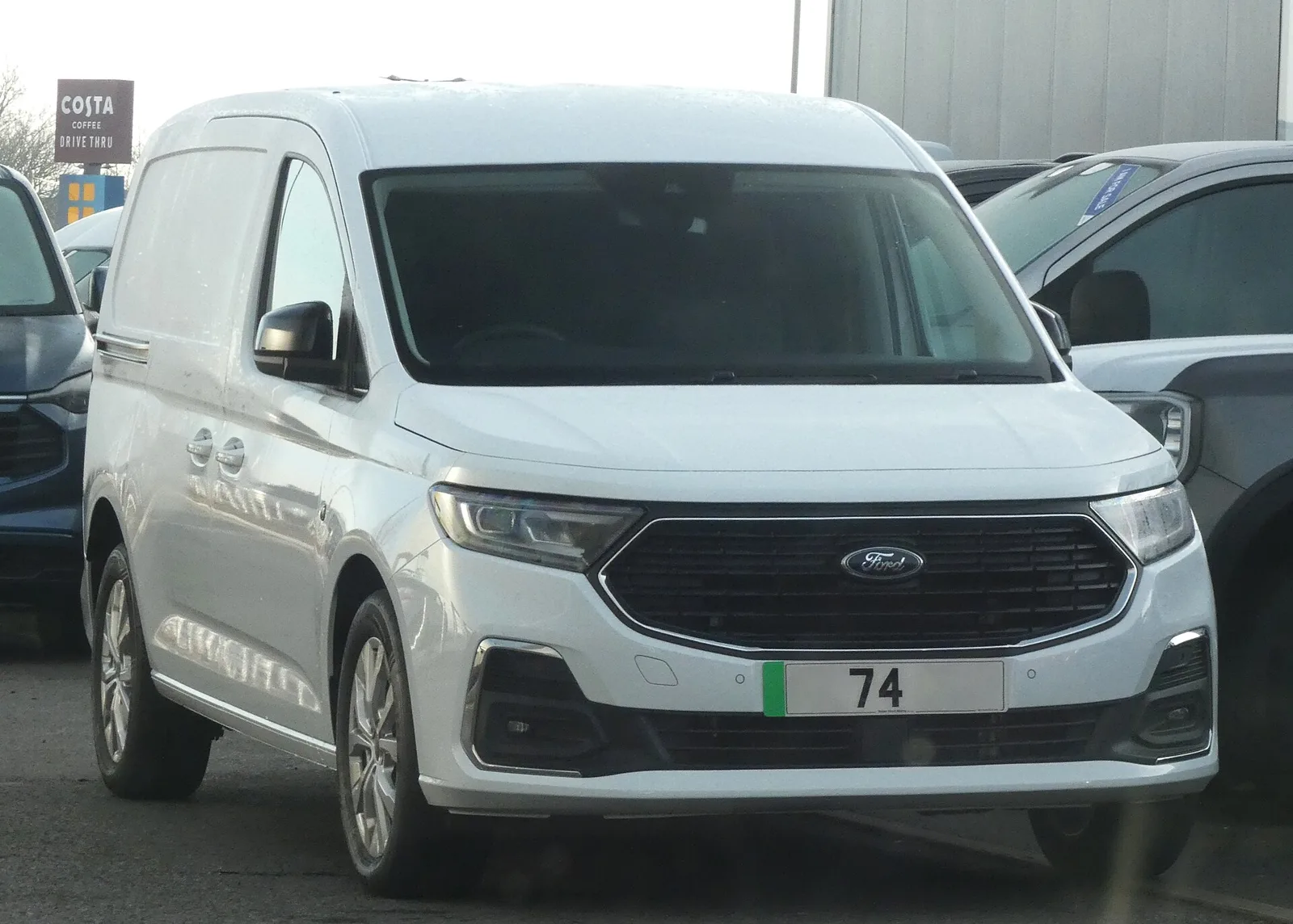
A 2006 facelift gave the van a horizontal fish-gill grille with the Ford emblem on the grille itself rather than on the bonnet. A mid-cycle update for North America brought a reworked grille, a bumper that sat further forward and a new dashboard that borrowed switchgear and an instrument pod from the C307 Focus.
The North American launch came with an early honour. In its first year on that market the van was crowned Truck of the Year at the NAIAS, the award listed as the 2010 edition.
Ford also fitted out Transit Connects as mobile showrooms and parked them in 13 US urban areas, aiming for 3,000 test drives among small business owners.
How did the tariff workaround work?
The United States charged a 25% tariff on imported light trucks, while passenger vehicles paid just 2.5%. Ford therefore imported the van as a passenger vehicle, fitted with rear side windows and rear seats, and converted the cargo examples after they landed. The conversion replaced the rear windows with metal panels and removed the seats.
The loophole rested on the customs definition of a commercial vehicle. Cargo needs no seats or rear windows, so a van carrying them was treated as a passenger vehicle. The conversion cost hundreds of dollars per vehicle, but Ford saved thousands compared with paying the duty.
First-generation vans sailed from Turkey to Baltimore on Wallenius Wilhelmsen Logistics ships, then went to a WWL facility for conversion. Only the long-wheelbase, high-roof version went to North America, which kept the process simple.
How did the second generation change the van?
The second generation was revealed on 6 September 2012 in Amsterdam, and it took on the Kinetic Design look. An optional rear liftgate joined the double rear doors that commercial buyers and wheelchair users prefer. MyKey also arrived, a key system that lets owners cap top speed and maximum radio volume.
Production moved to Valencia in Spain. The tariff approach carried on, with cargo vans shipped as passenger vehicles and converted before delivery in the United States.
What engines did the second-generation van use?
The 2014 Transit Connect came with a 2.5-litre inline-four or a 1.6-litre EcoBoost turbo four, and the only transmission was a six-speed 6F-35 automatic. Buyers who wanted an alternative fuel could have the 2.5-litre converted to run on CNG or LPG.
The 1.6 EcoBoost later became the subject of a 2017 recall covering 2013 to 2015 vans, after engine fires linked to a lack of coolant circulation. Ford later recorded a US$300 million charge, partly tied to that recall.
Wagon models in the US carried the Transit Connect Wagon name, in two wheelbases with five or seven seats. The seven-seat layout was the first seven-passenger Ford minivan since the Freestar left the range in 2007.
What changed with the 2019 update?
For the 2019 model year the van received a new front fascia and a redesigned dashboard, keeping its multiple wheelbases and body heights. The 2.5-litre gave way to a 2.0L direct-injection four, while a 1.5L EcoBlue diesel was announced alongside it. Both engines took an eight-speed automatic.
The diesel never reached North America, and the plan collapsed in July 2019 after repeated postponements. For 2020 Ford also ended the short-wheelbase passenger van, leaving a three-row body style only.
How economical and fast was the Transit Connect?
For the 2014 to 2021 models with the 2.5-litre engine, the official ratings were 12 L/100 km (20 mpg-US) in the city and 8.7 L/100 km (27 mpg-US) on the highway. The same models ran 0-60 mph in 9.5 seconds, with a top speed of 174 km/h (108 mph).
The 2022 2.5-litre dropped to 9.0 L/100 km (26 mpg-US) for highway driving. The 2019 to 2022 2.0L GDI was rated at 9.8 L/100 km (24 mpg-US) for city driving and 8.4 or 8.1 L/100 km (28 or 29 mpg-US) for highway use, depending on trim.
How did the electric Transit Connect come about?
Ford confirmed a battery-powered Transit Connect at the 2009 Chicago Auto Show. Smith Electric Vehicles was first named to fit the drivetrains and battery packs, but in October 2009 Ford partnered with Azure Dynamics instead, with Johnson Controls-Saft supplying the batteries.
Production began in December 2010. The EPA range was 56 mi (90 km), with a combined rating of 3.8 L/100 km equivalent (62 mpg-e). At US$57,400 in 2010 the electric van cost more than double the gas-powered version, even after incentives.
What were the X-Press and Tourneo Connect?
In 2004 Ford of Europe built the Transit Connect X-Press, based on a pre-production prototype and powered by a 2.0L engine from the Focus RS that produced 212 hp. It carried Focus RS front suspension, steering and four-wheel disc brakes, along with a short-wheelbase cargo body with a rear liftgate.
The cargo bay held a full-body roll cage and two spare tyres. The Tourneo Connect, the leisure version of the van, launched in the British market in 2002, and Ford forecast sales of 800 to 1000 a year, mostly to taxi operators.
It came with 60/40 split rear seats that could be folded or removed, plus twin sliding side doors, which Ford said its main rivals lacked.
Why did the Transit Connect become a taxi?
Ford pitched the Transit Connect Wagon as a successor to the Crown Victoria P70, a taxi staple that left production in 2011. Taxi versions had the rear bench shifted back for legroom and room for a divider, and rear-seat air controls and school-bus yellow paint were among the extras.
The van lost the New York City Taxi of Tomorrow competition to the Nissan NV200. That bid was for a 10-year deal to take over from the Crown Victoria. New York later took the Transit Connect on as an accessible cab, and several large American cities with organised taxi services have used it since.
How did Canada Post use the Transit Connect?
In 2010 Canada Post chose the Transit Connect to replace a large part of its Grumman LLV fleet, buying 1,175 units. Unlike the LLV, the Canada Post vans are left-hand drive, although Ford also builds right-hand-drive Transit Connects for other markets.
Why did Ford end North American sales?
Ford ended Transit Connect sales in North America once the 2023 model year closed. The van still held a significant share of the small commercial van segment, but overall small van sales had declined sharply. The Nissan NV200 and Mercedes-Benz Metris had also been discontinued.
Ford had planned a North American third generation as a possible 2024 model, built at Hermosillo in Mexico alongside the Bronco Sport and Maverick. Mexico and Canada are exempt from the tariffs, so that move would have ended the importation issue. The plan did not go ahead.
Among current Ford vans, the Transit T150 in regular length and low roof is the smallest one offered in North America. The Transit Custom does not reach the US or Canada.
What are the main Transit Connect specifications?
| Specification | Detail |
|---|---|
| Introduction (Europe) | October 2002 |
| North American imports | From the 2010 model year |
| Early North American engine | 2.0L Duratec DOHC I-4, 136 hp, with 128 lb-ft of torque |
| 2014 engines | 2.5-litre inline-four, or 1.6-litre EcoBoost turbo four |
| 2014 to 2021 2.5-litre economy | 12 L/100 km (20 mpg-US) city, 8.7 L/100 km (27 mpg-US) highway |
| 2014 to 2021 2.5-litre performance | 0-60 mph in 9.5 seconds; top speed 174 km/h (108 mph) |
| 2019 to 2022 2.0L GDI economy | 9.8 L/100 km (24 mpg-US) city; 8.4 L/100 km (28 mpg-US) or 8.1 L/100 km (29 mpg-US) highway |
| Long-wheelbase high-roof height | 79 inches |
| Electric range (EPA) | 90 km (56 mi) |
| Electric price (2010) | US$57,400 |